
La Rinconada is the highest, permanently inhabited settlement in the world at over 5,000 metres above sea level. It has grown out of an informal settlement for miners working in nearby gold mines into a small city of around 30,000 people and continues to draw hopeful workers from across the region with its promise of finding gold in the labyrinthine tunnels that have been excavated into mountains and underneath glaciers.
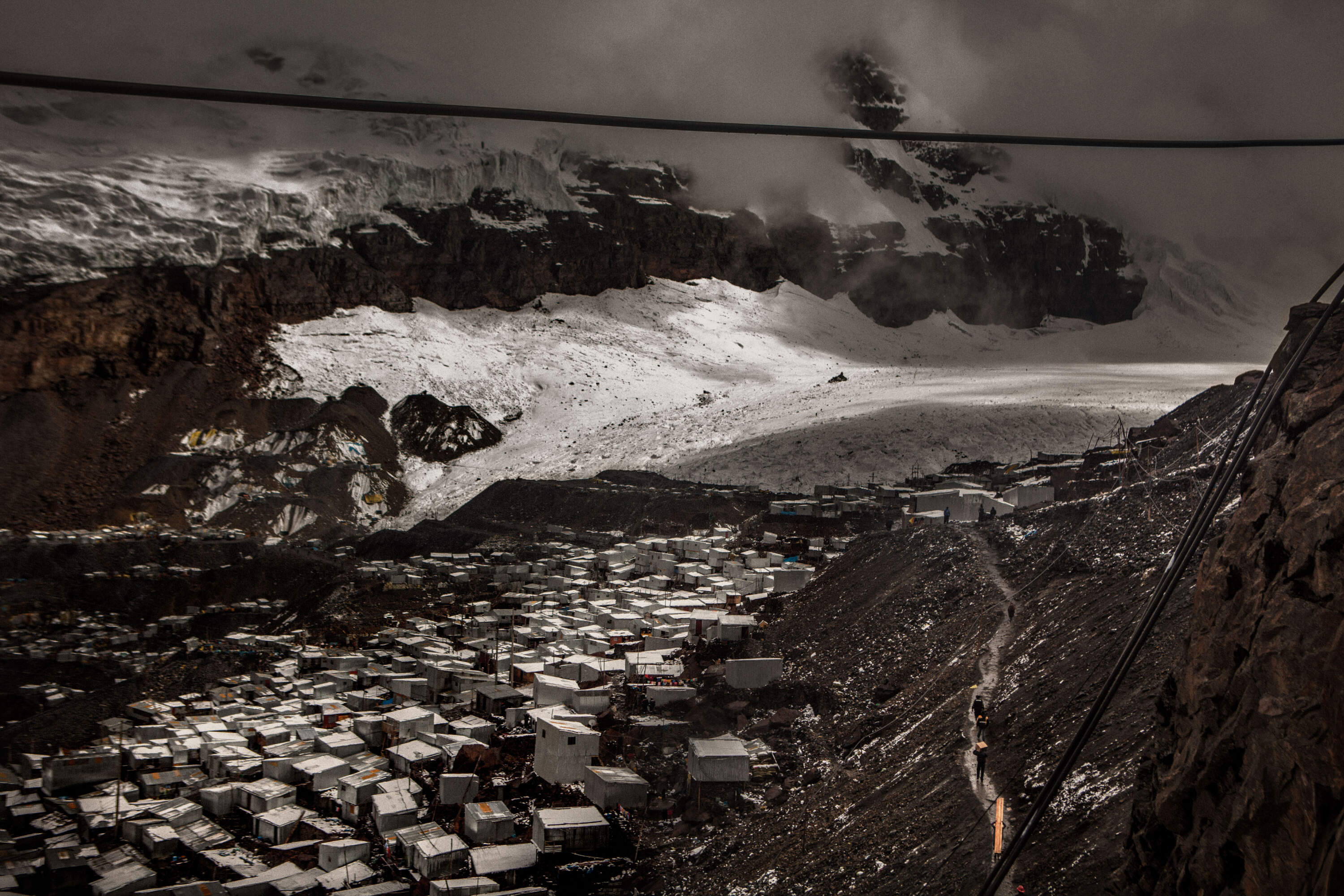
Corrugated zinc shacks, at the foot of the 'Sleeping Beauty', a mountain where a gold mine has been excavated. The miners live in these unheated, flimsy structures that also function as warehouses, restaurants and nightclubs. Thousands of miners use this camp each day where, during the cold season, temperatures can drop to 11 degrees Celsius below zero.
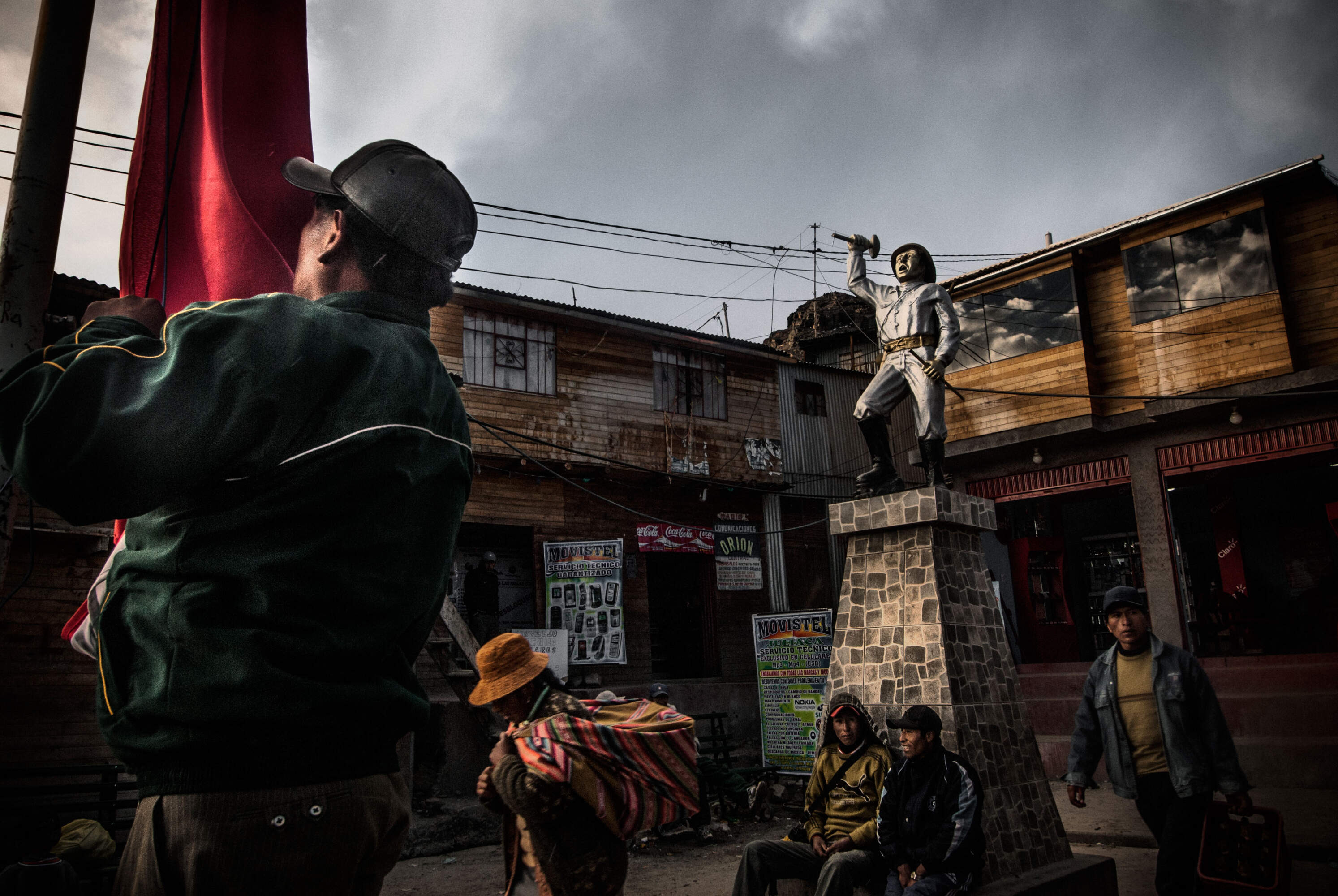
A man raises a flag in the centre of La Rinconada beside a statue honouring the informal settlement's gold miners. La Rinconada, Ananea, Peru
Often working under the 'cachorreo' regime where mining companies expect workers to work for free for 20 days in order to gain permission to look for their own fortune, the city it notorious for its lawlessness and harsh living conditions, often referred to as 'la ciudad sin ley' - the city without laws.
In his visual essay Boca Mina - literally 'the mouth of the mine' - Marco Garro explores the lives of the miners, drawn to this dangerous and backbreaking work by their hope for a better life - and the ever rising price of gold, driven by global insecurity and economic uncertainty.
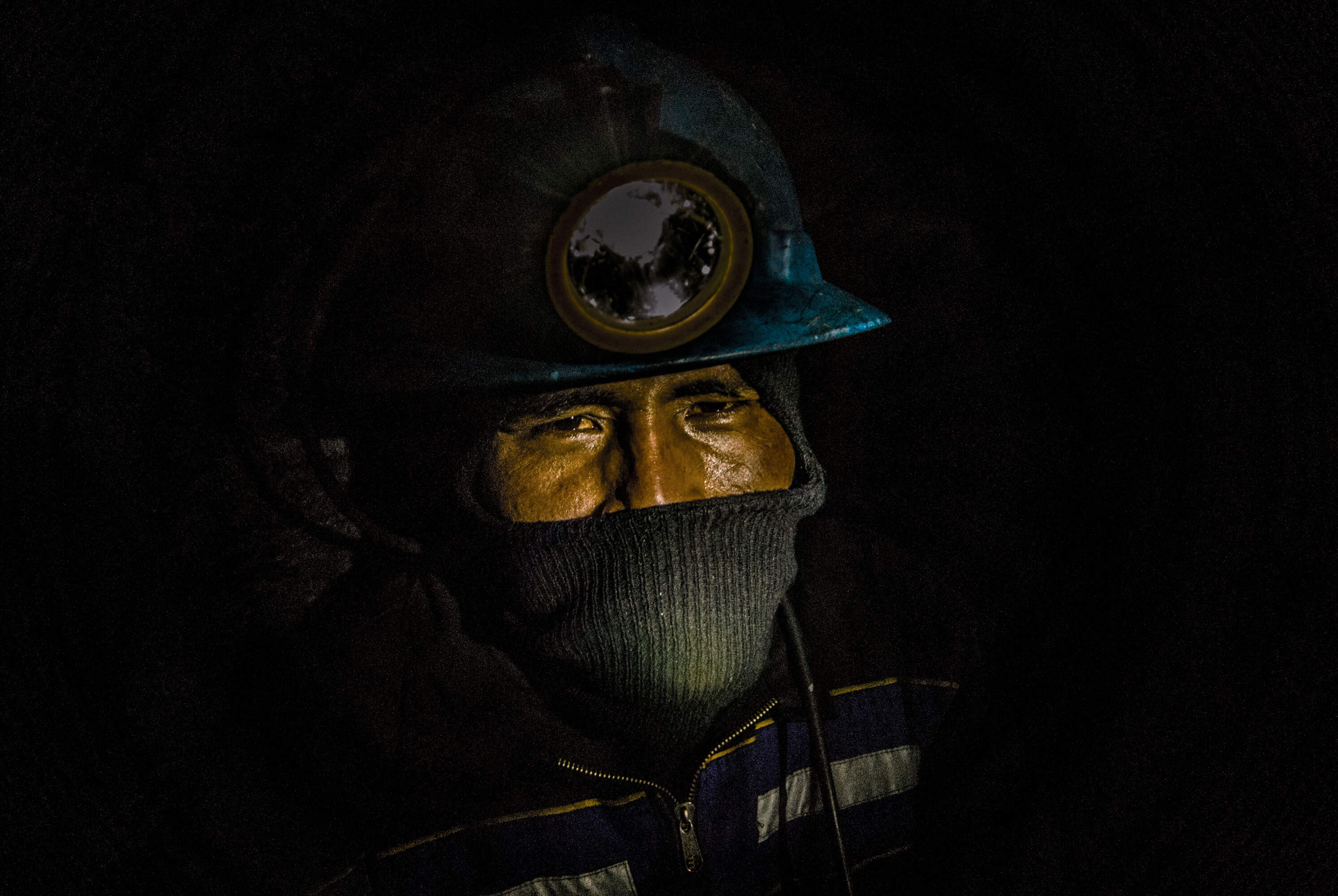
A miner, working in gold mines excavated beneath a mountain known as 'The Sleeping Beauty', dressed for the cold and wearing a safety helmet.
In Boca Mina - 'the mouth of the mine' - Marco Garro explores the lives of the miners, drawn to this dangerous and backbreaking work by their hope for a better life - and the ever rising price of gold, driven by global insecurity and economic uncertainty.
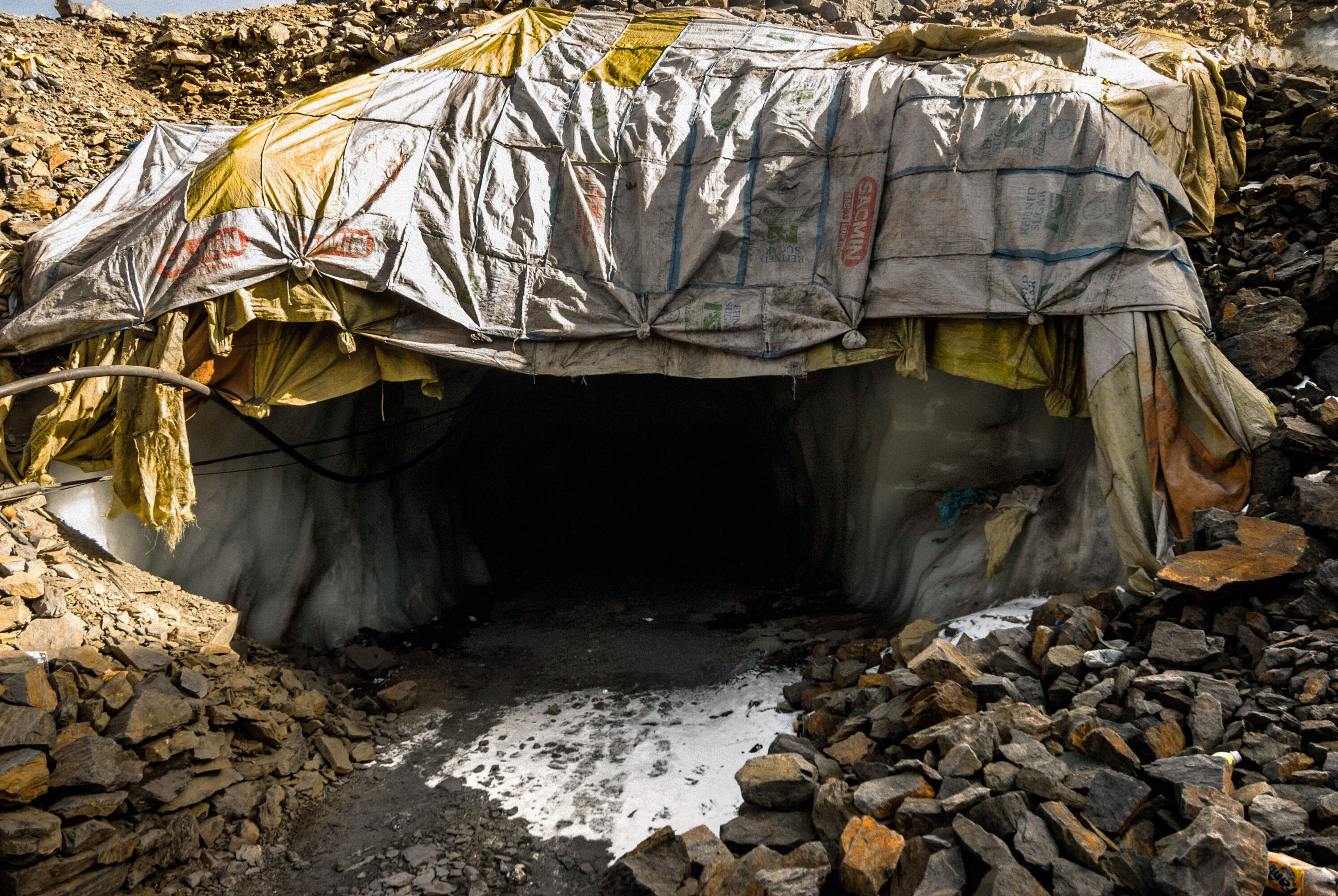
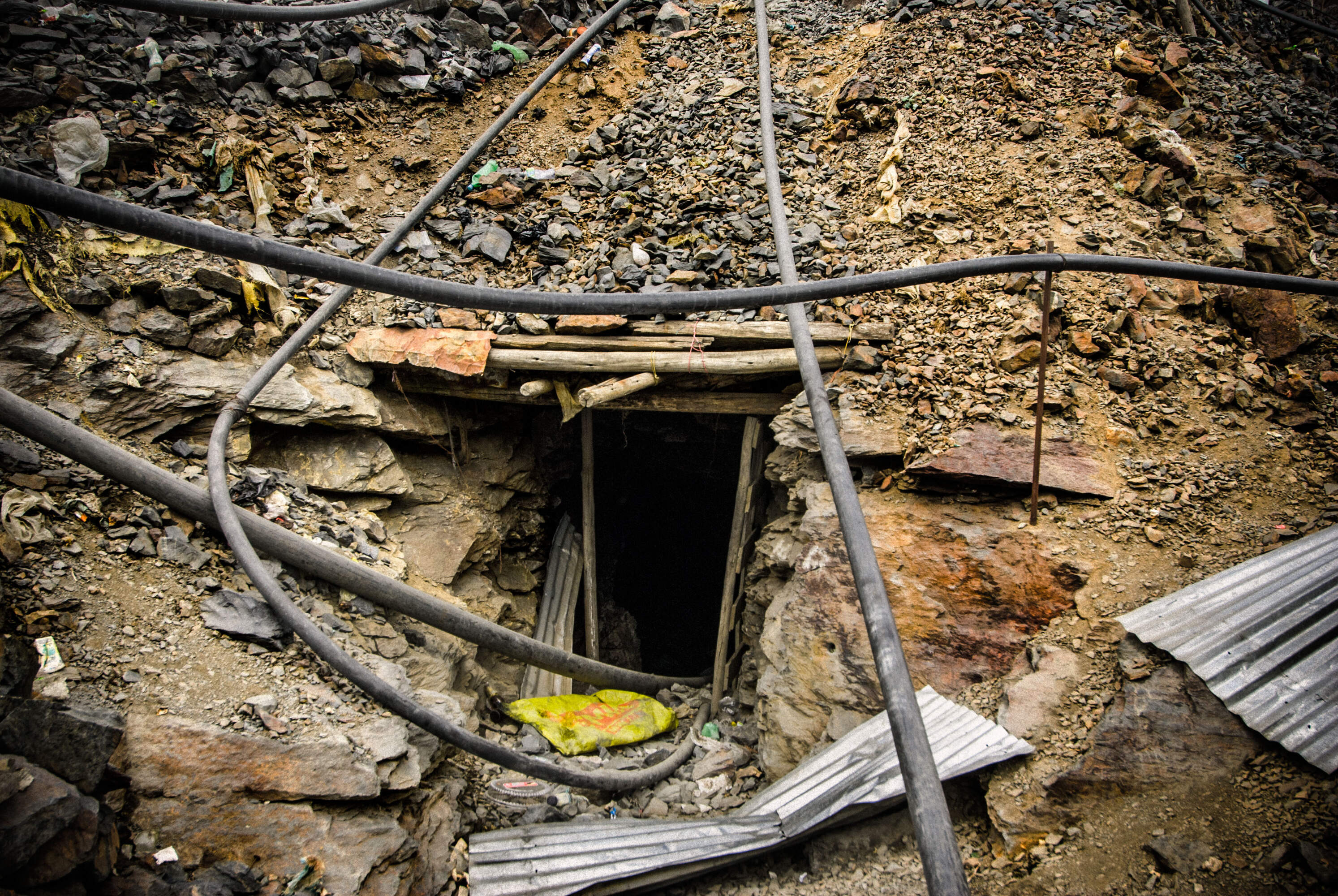
The bocaminas, or entrances to the mine shafts, open the door to an infinite time, where the sacrifice to obtain the desired metal appears endless. The miners are governed by an informal and unequal system, where daily effort does not guarantee reward.
Garro explores what drives the search for gold in such inhospitable terrain and under such dangerous conditions, offering a fascinating portrait of a frontier mining town where people eek out a living in the hope of better days ahead.
The bocaminas, as artifacts of the collective dreams of the miners who built them, represent both the promise and the reality of gold’s transformative power. Here, gold is both hope and punishment; and deep down, in the mines, the Muki - the mine’s feared spirits - wait in the shadows, evoking a popular saying amongst miners: "Inside gold, the devil lurks."
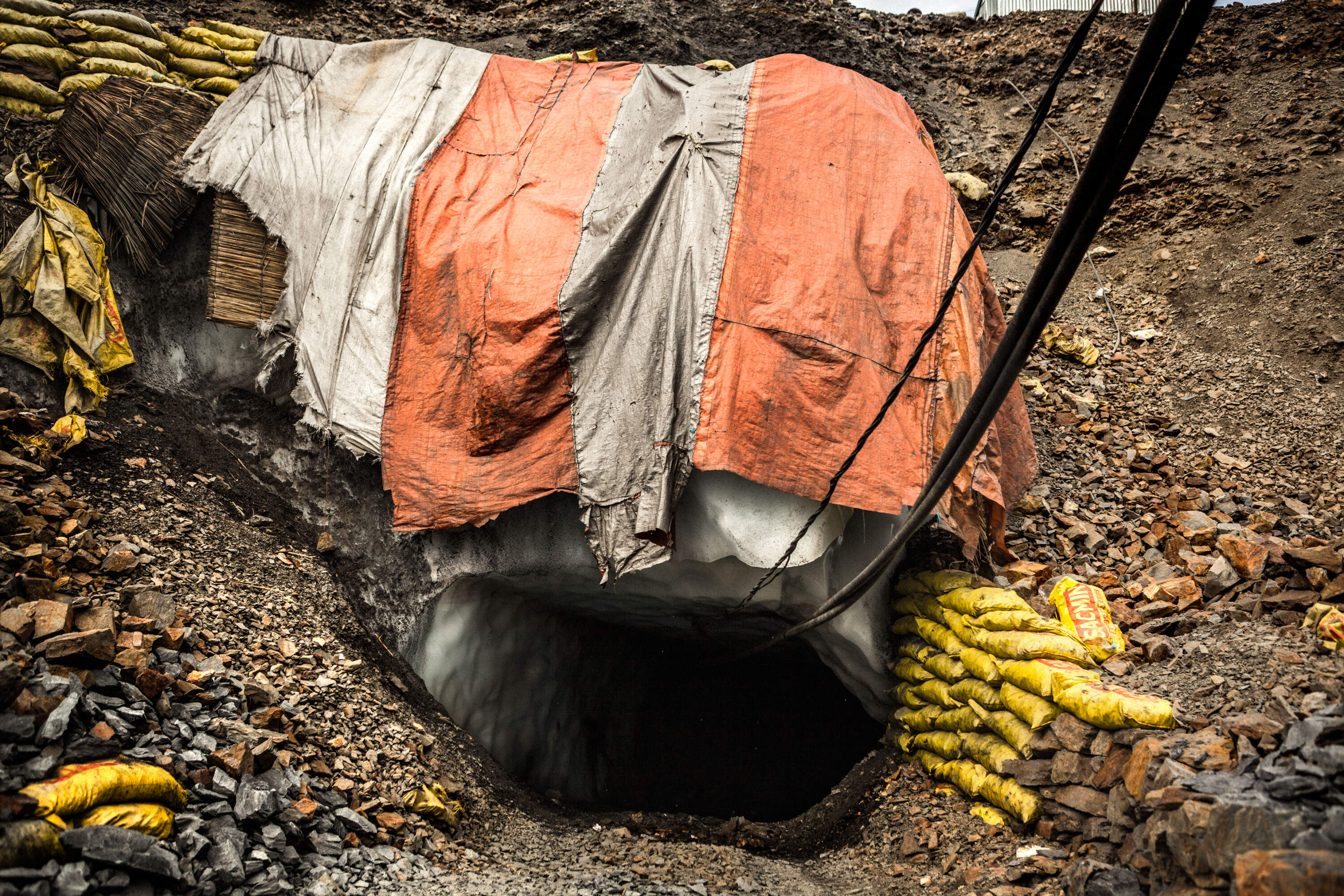
A 'bocamina', or entrance to a mine shaft, named 'Sol de Oro'.
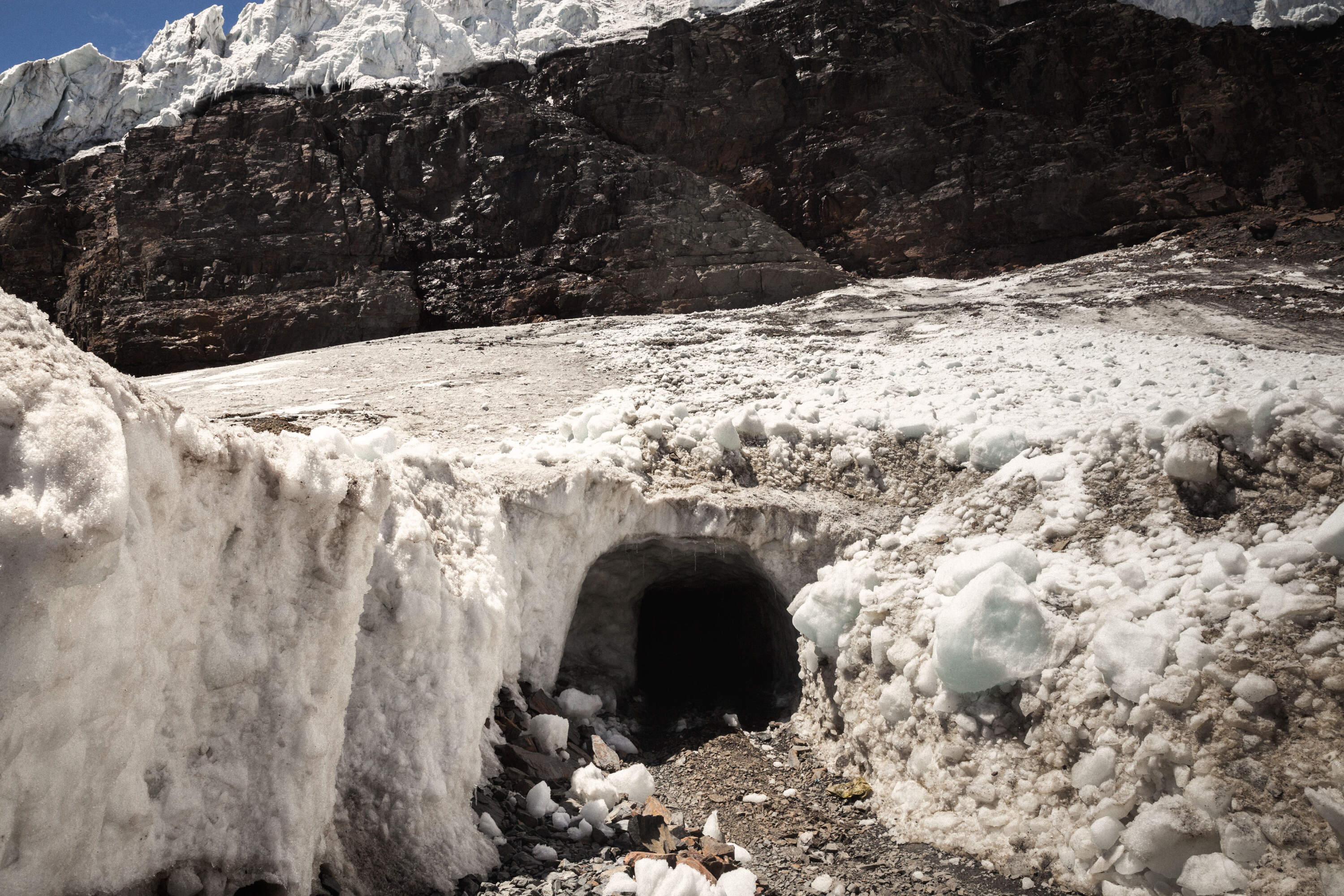
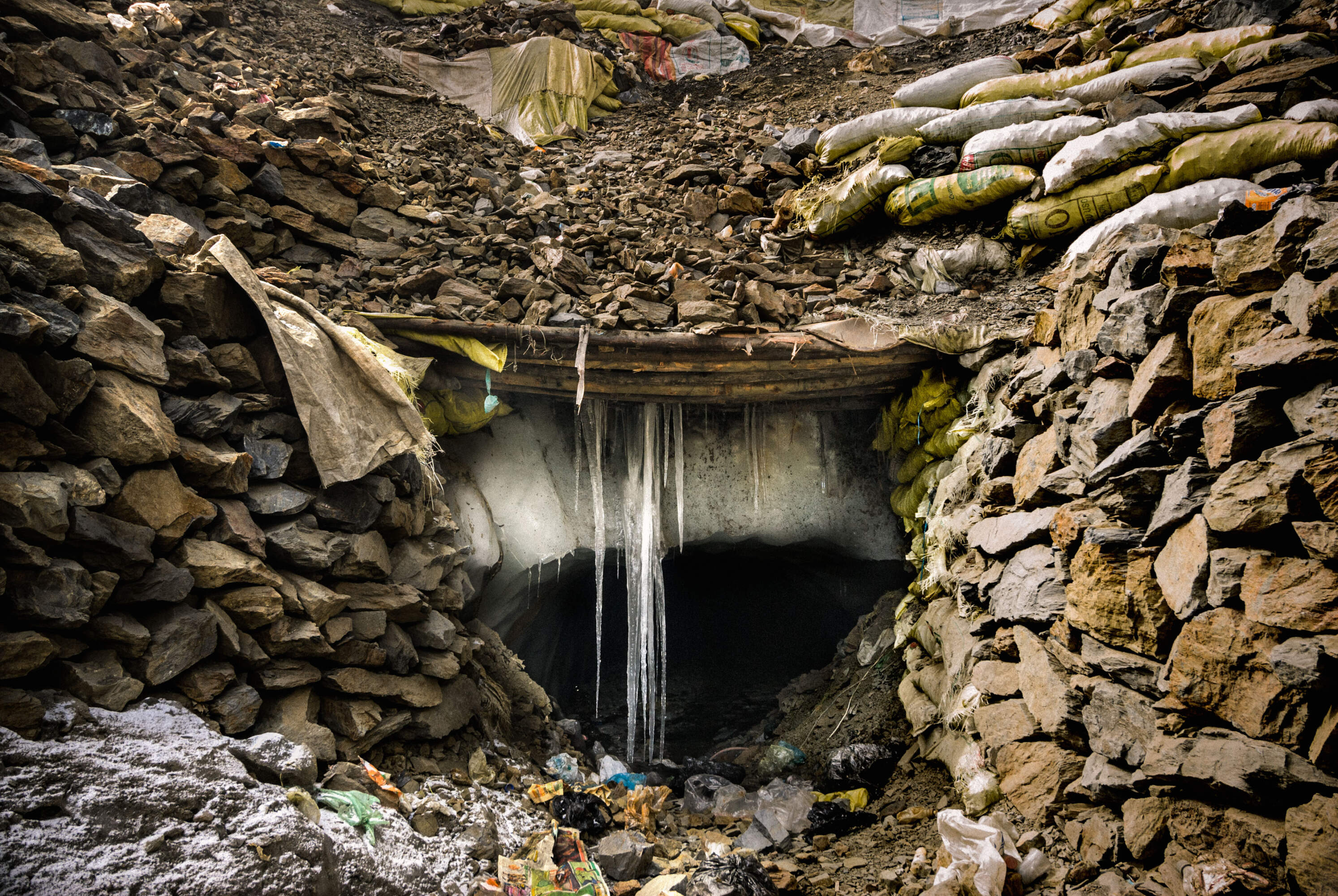
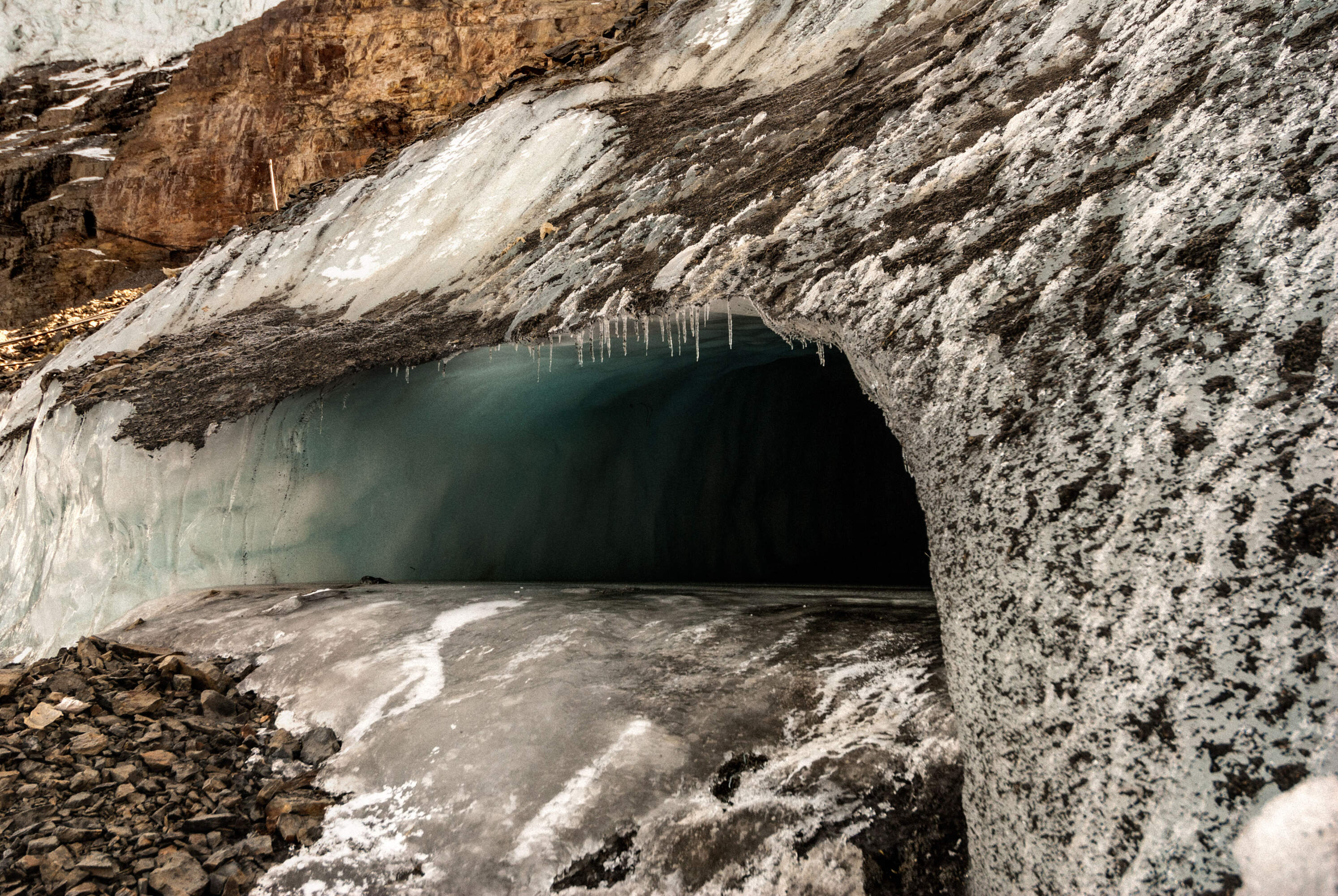
'Bocaminas' - mine shaft entrances each with their own name. From left to right 'Santa Ana', 'Ananea', 'Gina' and 'Cerro Lunar'
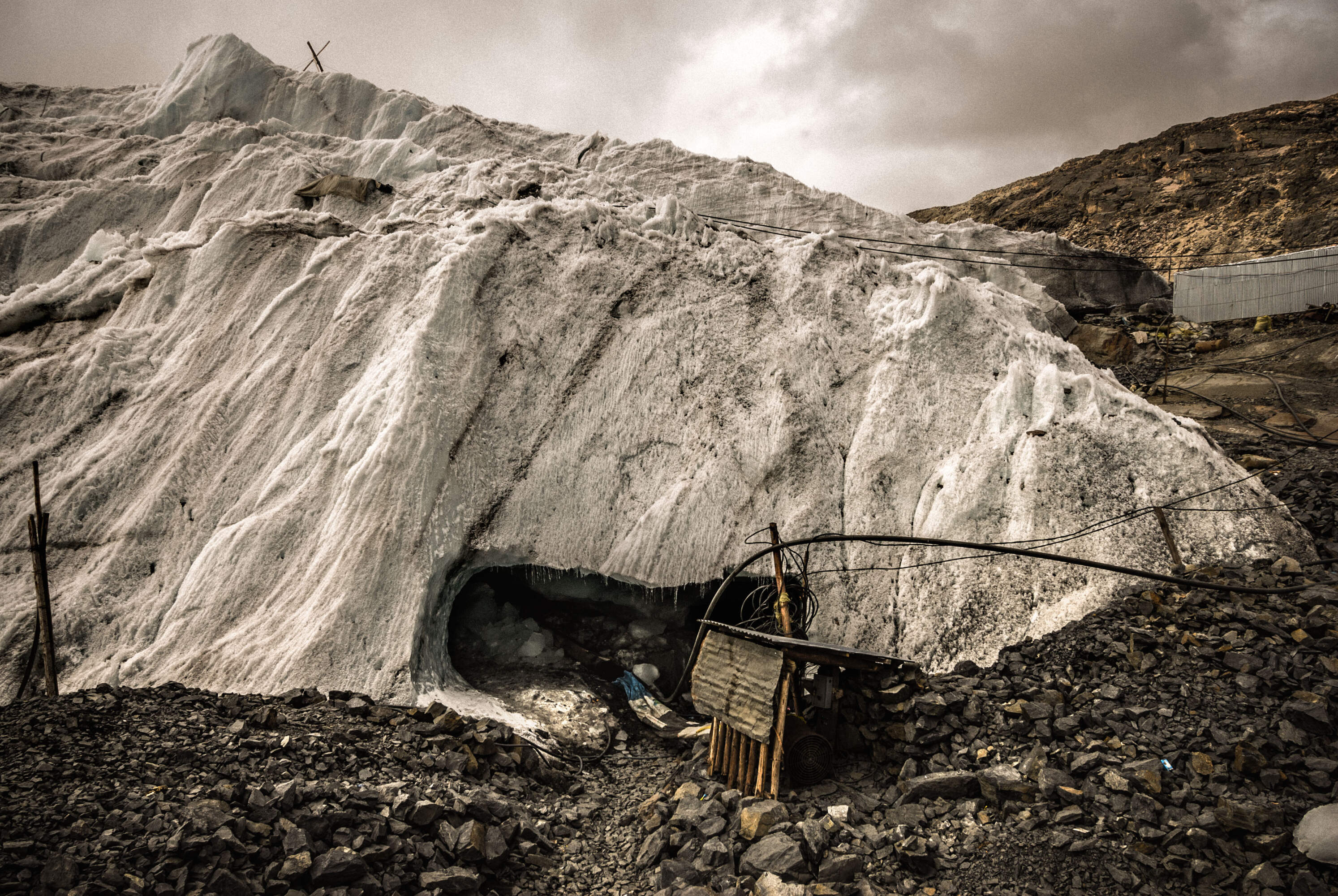
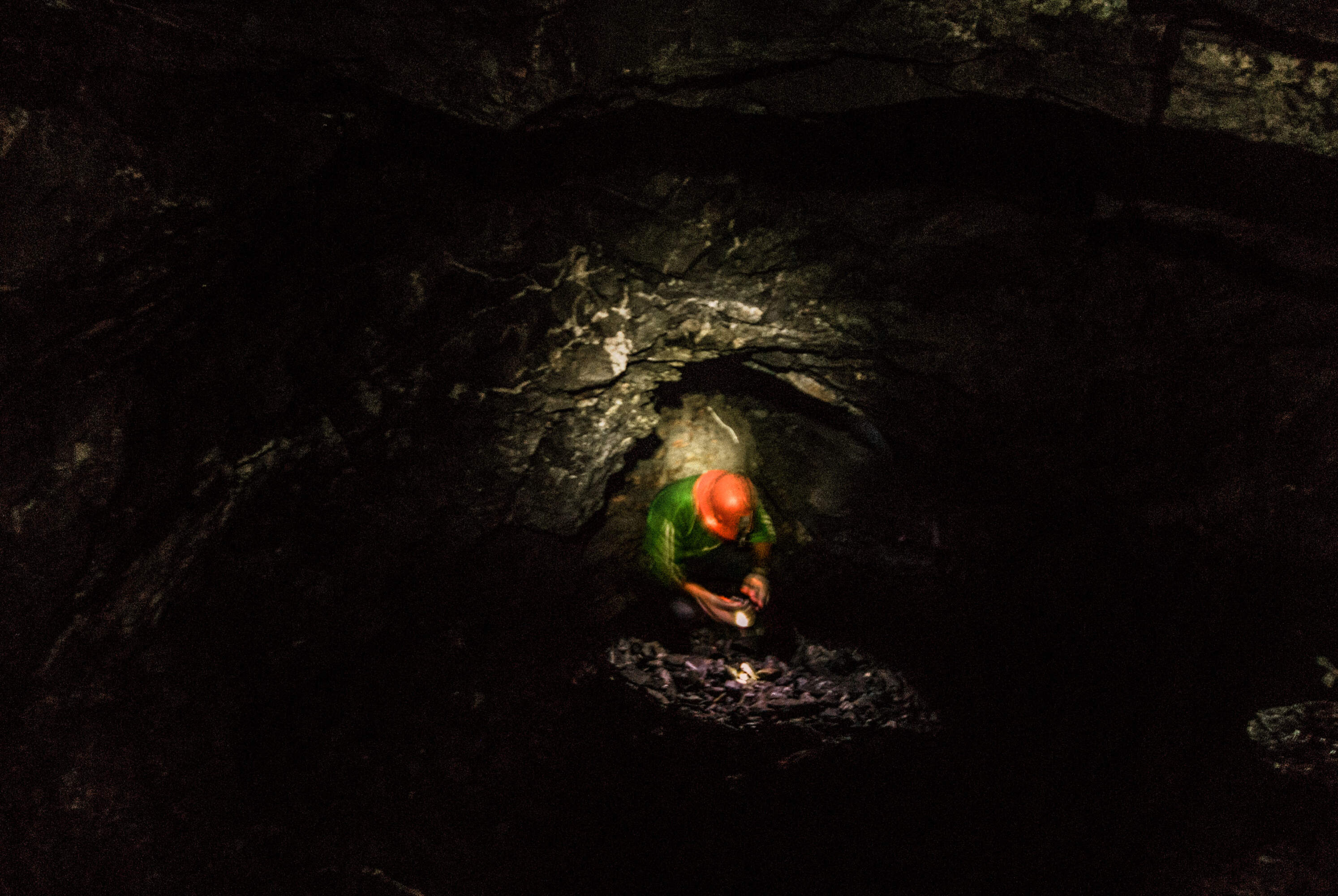
A miner looks for glimmers of gold in the rocks that have been broken up during the drilling of a tunnel at La Rinconada.
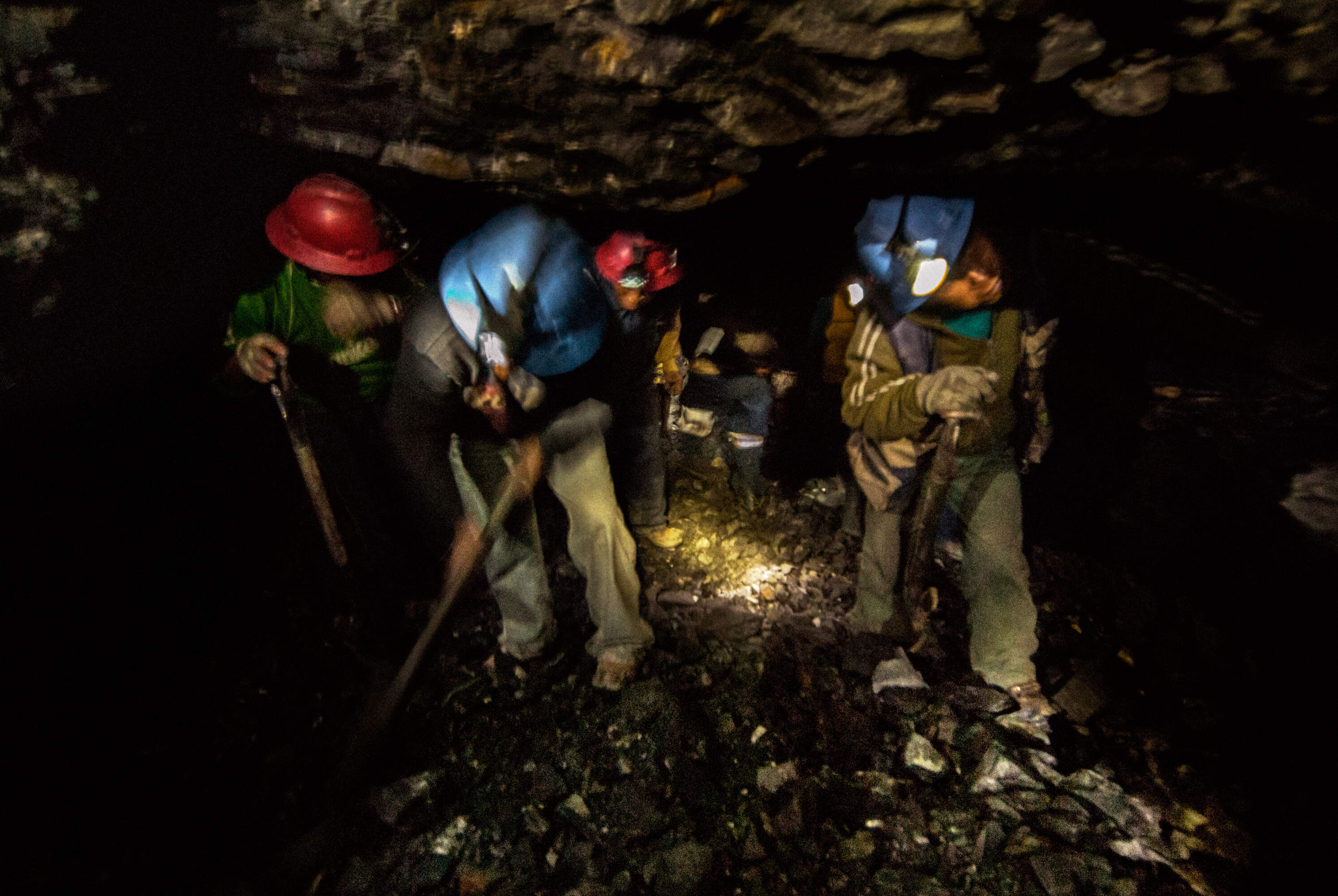
A team of miners examine rocks broken up by drilling. Miners work under an informal labor system known as 'cachorreo'. Most of the rocks they break up are kept by the owner of the mine shaft, except on a few days when they are allowed to keep everything they drill. The arrangement provides unpredictable compensation for miners but is sustained by their hope of striking it rich during their 'cachorreo' days.
A small shrine, erected in memory of a miner who died in a cave-in, marks the entrance to the tunnel where he lost his life. Months after his death, other miners still leave him offerings of beer and cigarettes as an act of remembrance and respect. These gestures keep his presence alive and honour the bond that unites those who risk their lives together underground.
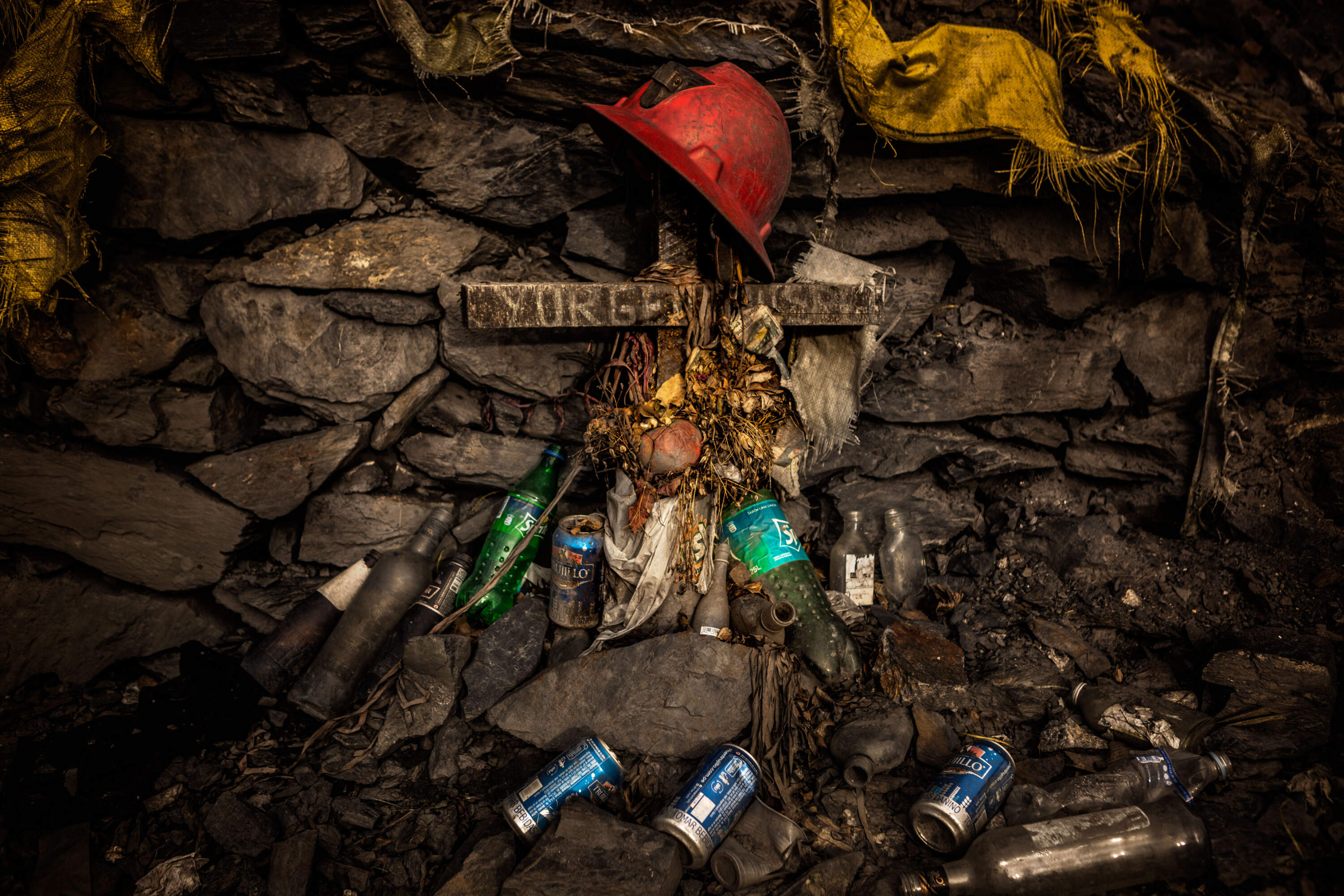
A small shrine in memory of a dead miner.
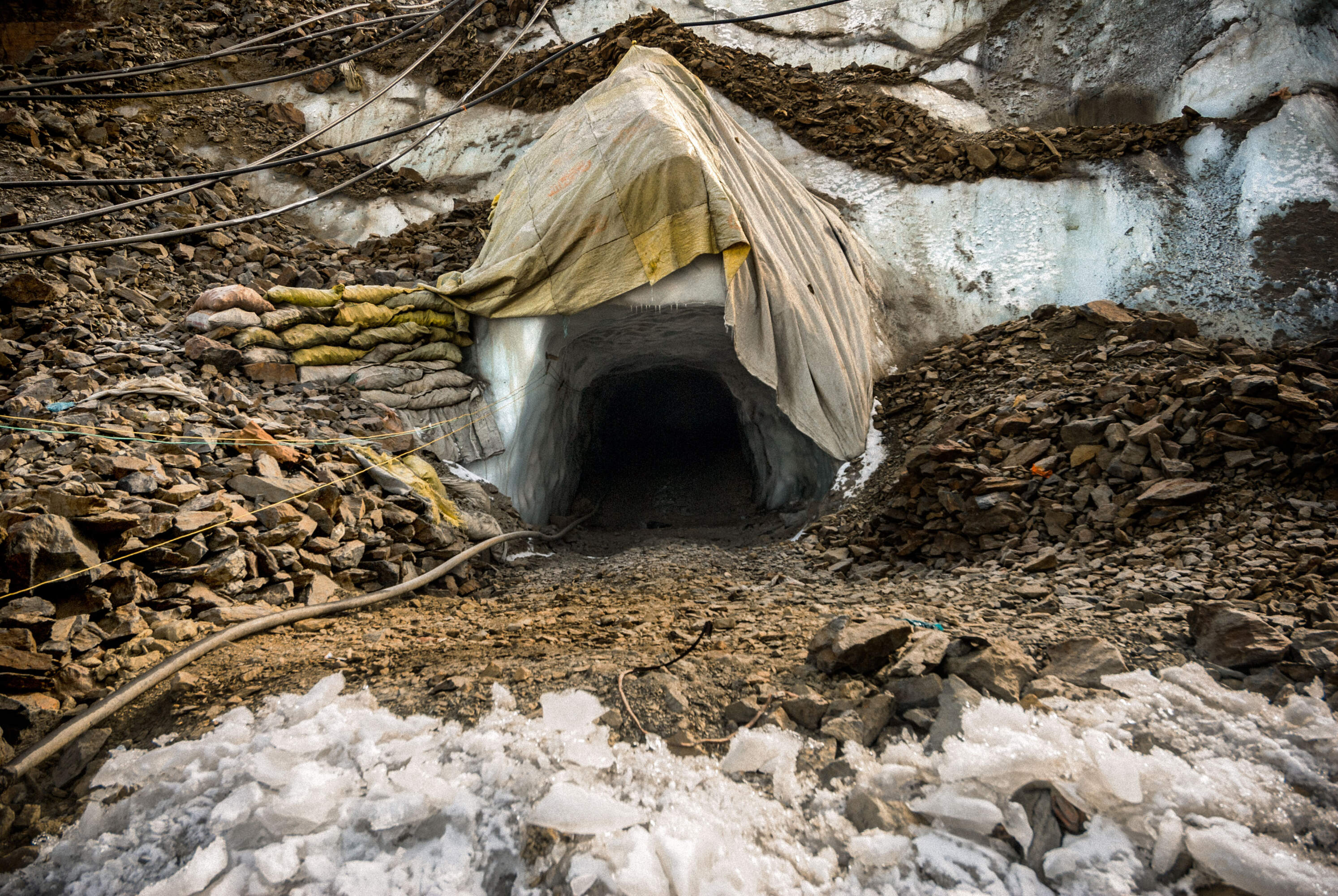
A 'bocamina', or entrance to a mine shaft, named 'Callasaca'.
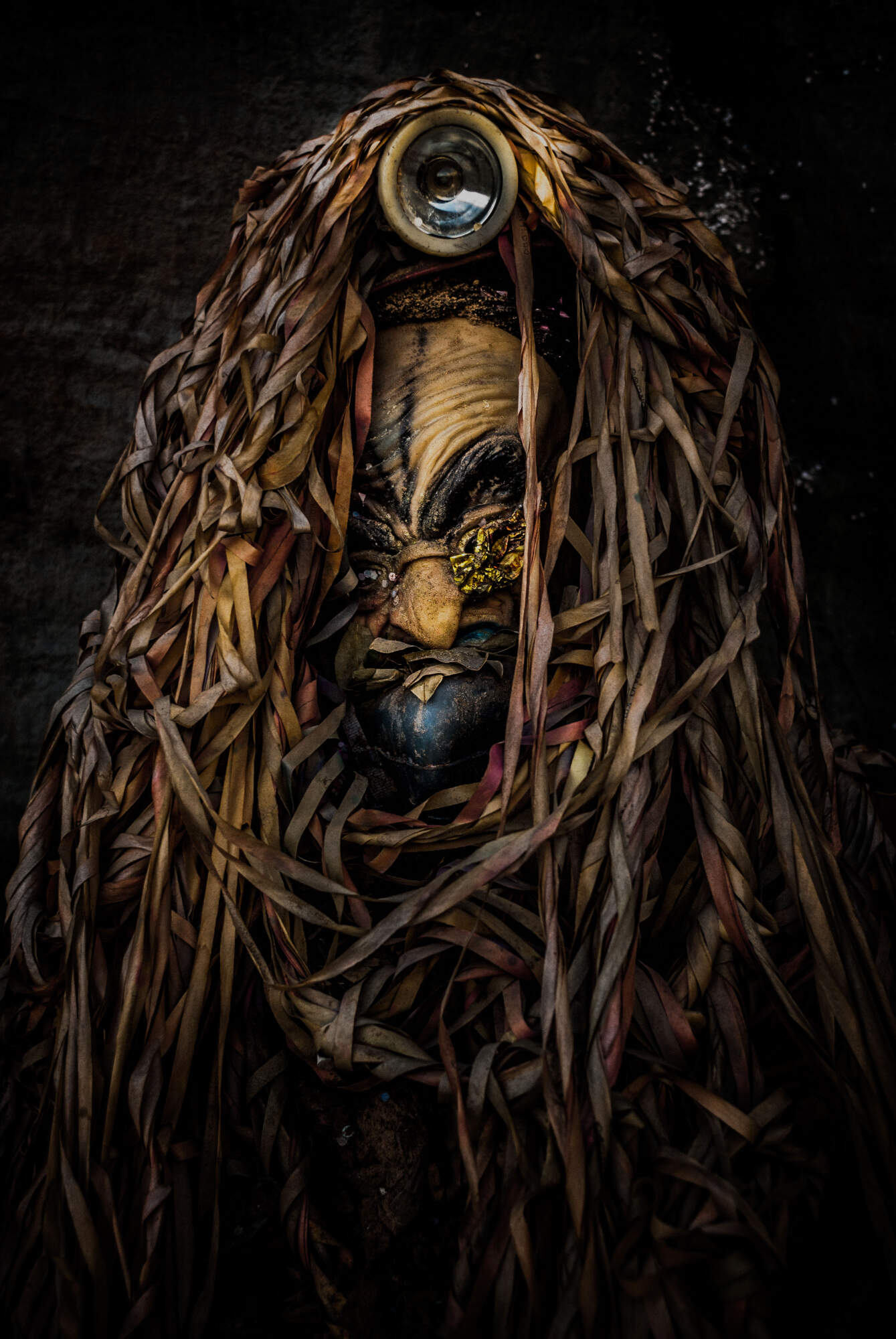
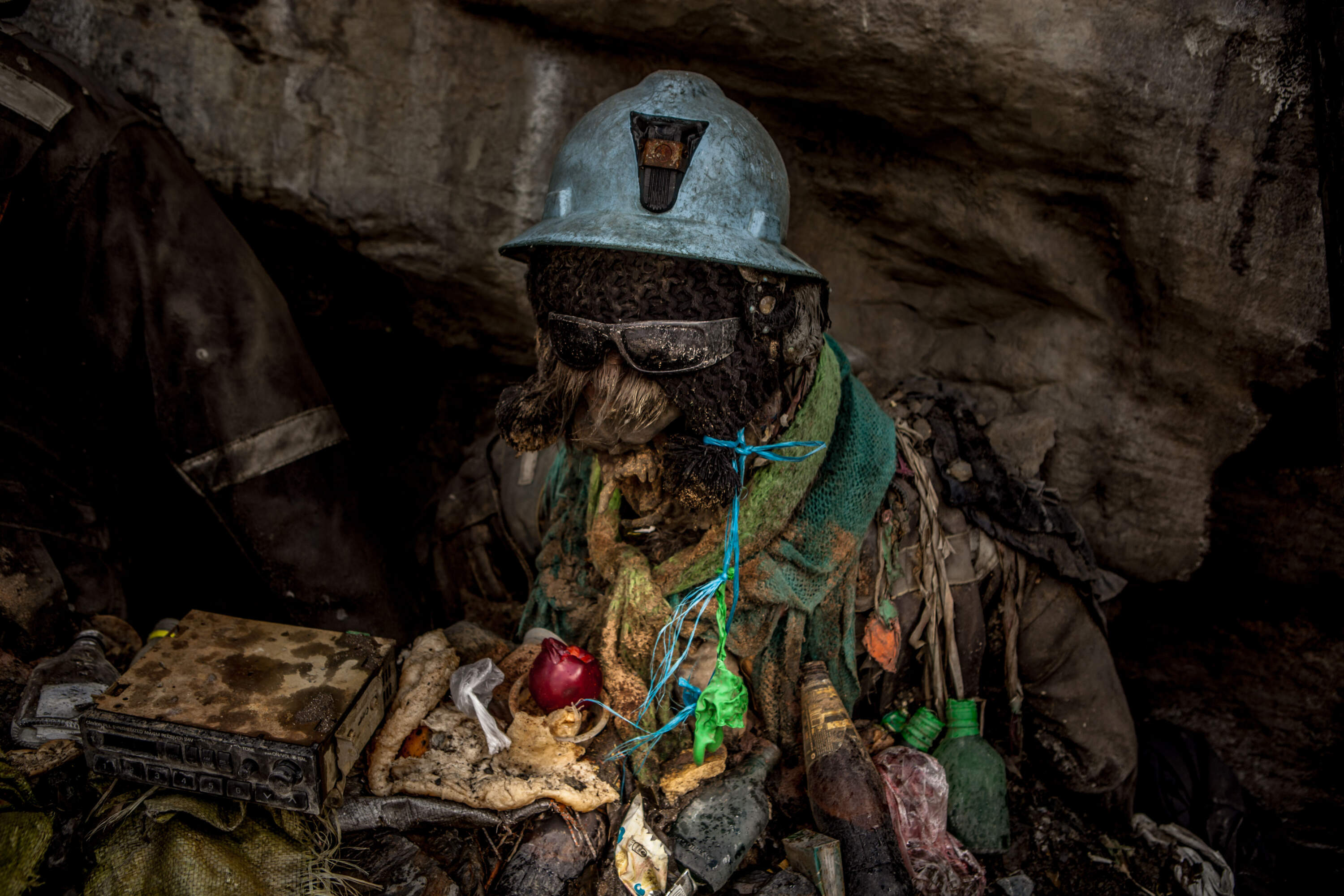
A statue of El Tio, 'The Uncle', in a mine shaft. El Tio is an influential figure in the life of Andean miners. His origin dates back to pre-Columbian beliefs about spirits of the earth, which over time merged with the image of the Catholic devil, giving rise to a feared and respected supernatural being. El Tio is considered the owner of the underground world, capable of protecting or punishing those who enter it. Miners ask him for safety, luck and access to mineral wealth. It is common to find statues of El Tio in underground tunnels decorated with streamers, coca, alcohol and cigarettes, offerings that aim to please him.
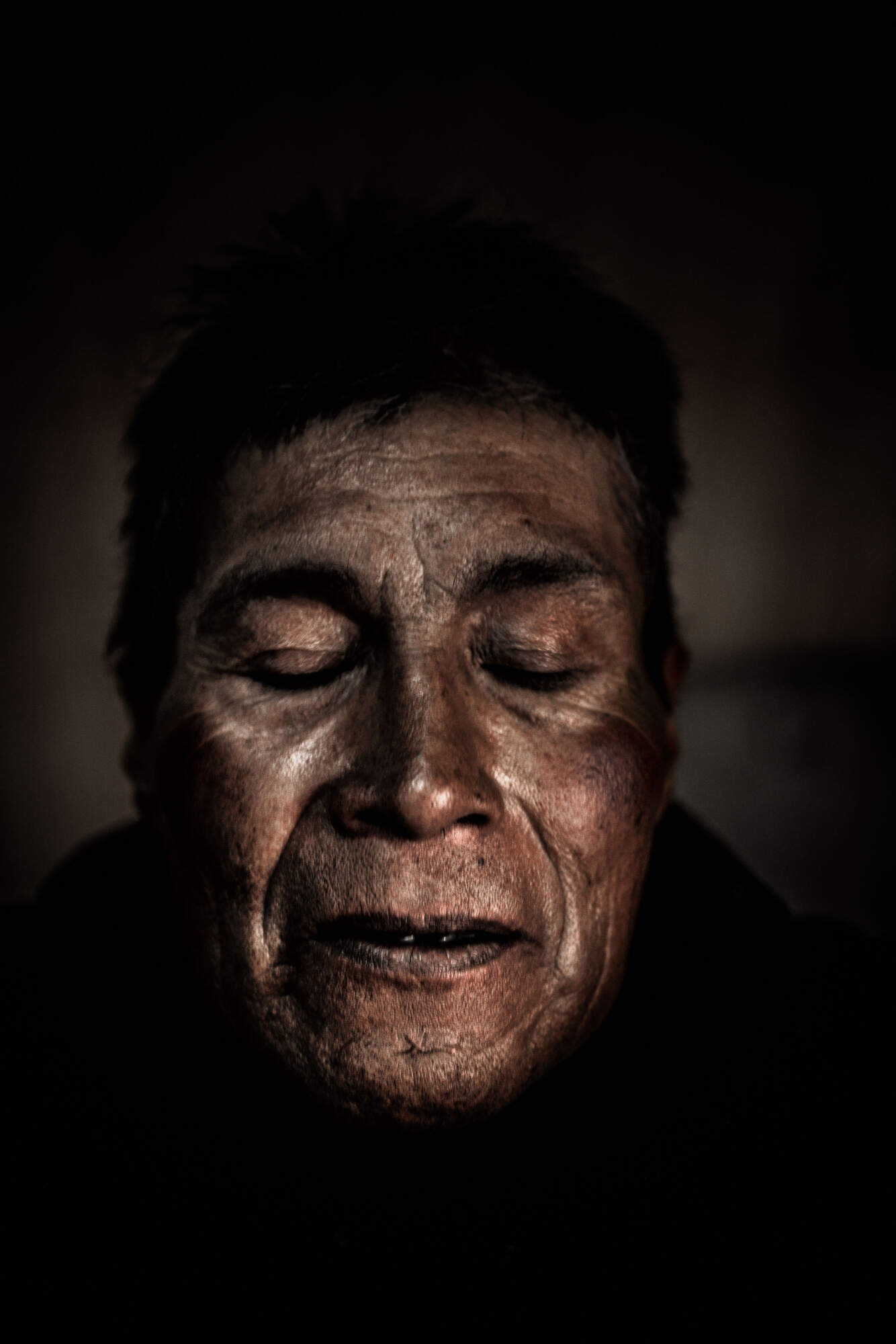
A 65-year-old miner who first came to La Rinconada when he was eight years old closes his eyes as he recalls the early days of 'Sleeping Beauty', when there were only a few mining families who had set up camps in the snow. The anonymous founding prospectors are remembered in La Rinconada as brave explorers in a hostile terrain. The tools they used were rudimentary. There was no electricity. The miners carried kerosene lamps to light their way as they dug small tunnels. The miner recalls working slowly, digging through rock and ice. But he says gold was plentiful back then and there was no competition.
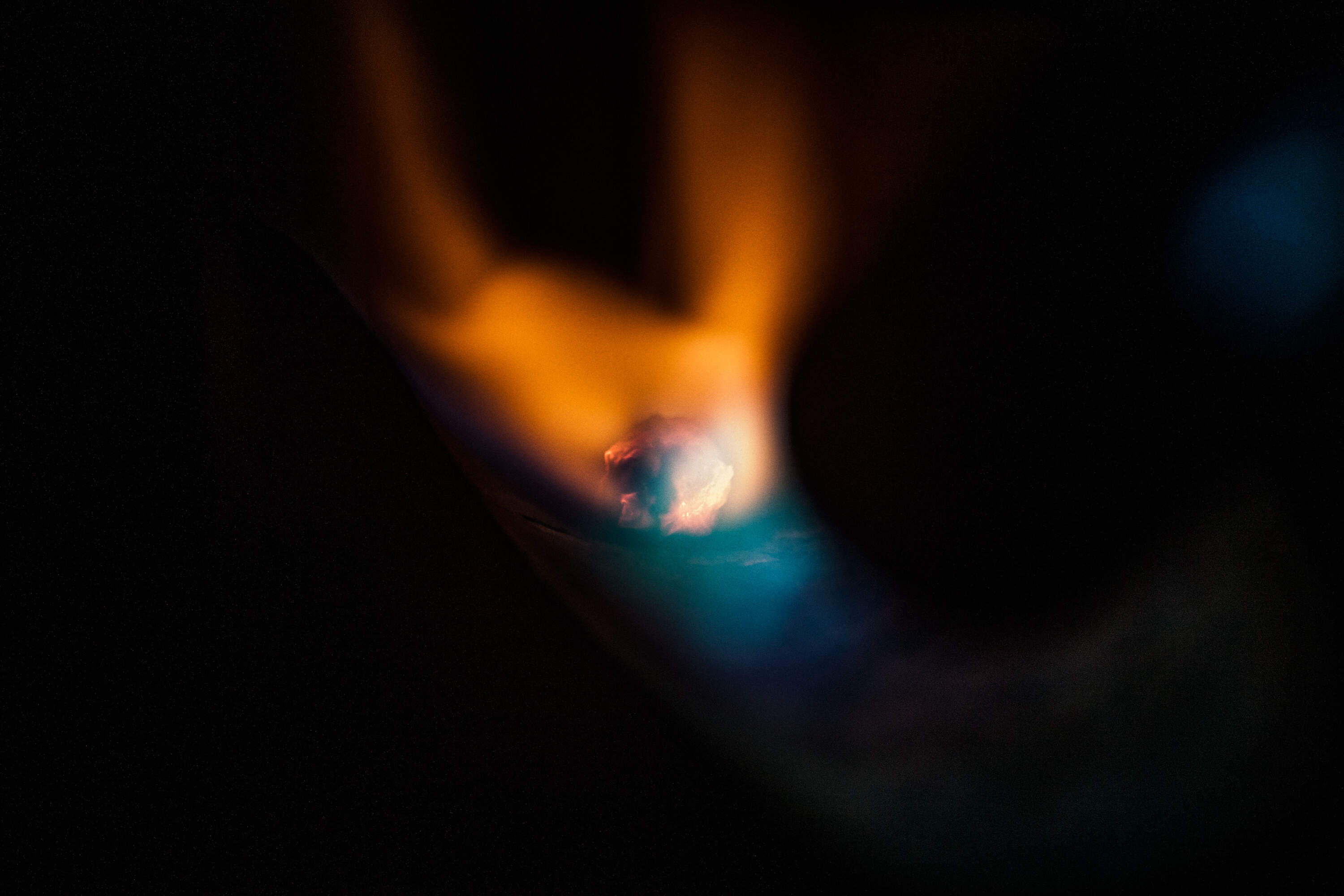
A miner heats an amalgam of gold and mercury that is used to separate gold from crushed rock. After about 20 minutes, the mercury burns off, leaving a nugget of nearly pure gold that can be sold to informal traders. Miners often handle mercury, a neurotoxin, with their bare hands, and breathe in its fumes during the refining process. One miner, when asked about the saying "inside gold, the devil lurks", said it is not the devil but mercury that drives miners mad.
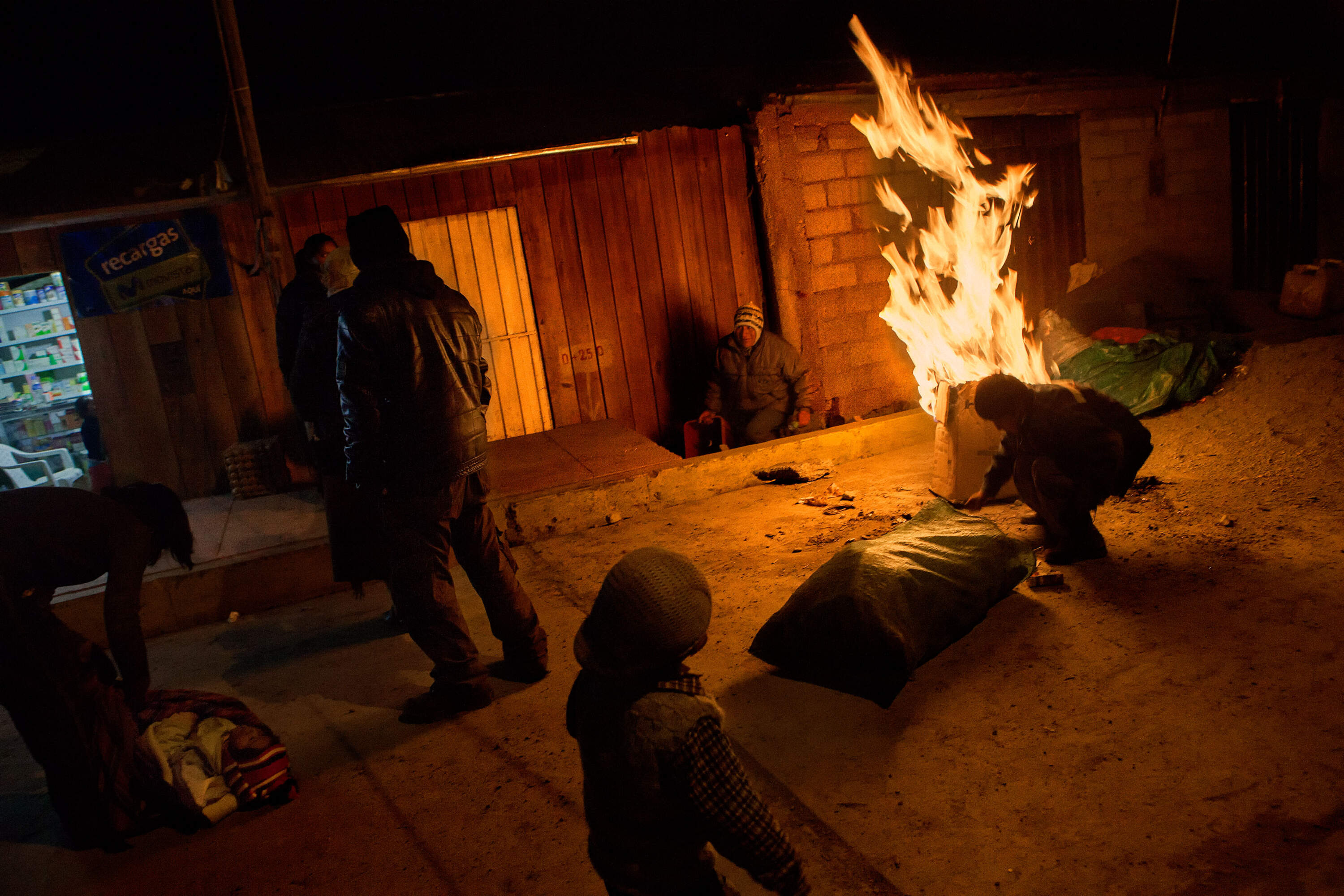
Children playing on a street in La Rinconada warm up by burning rubbish. Night time temperatures can drop well below zero degrees Celsius
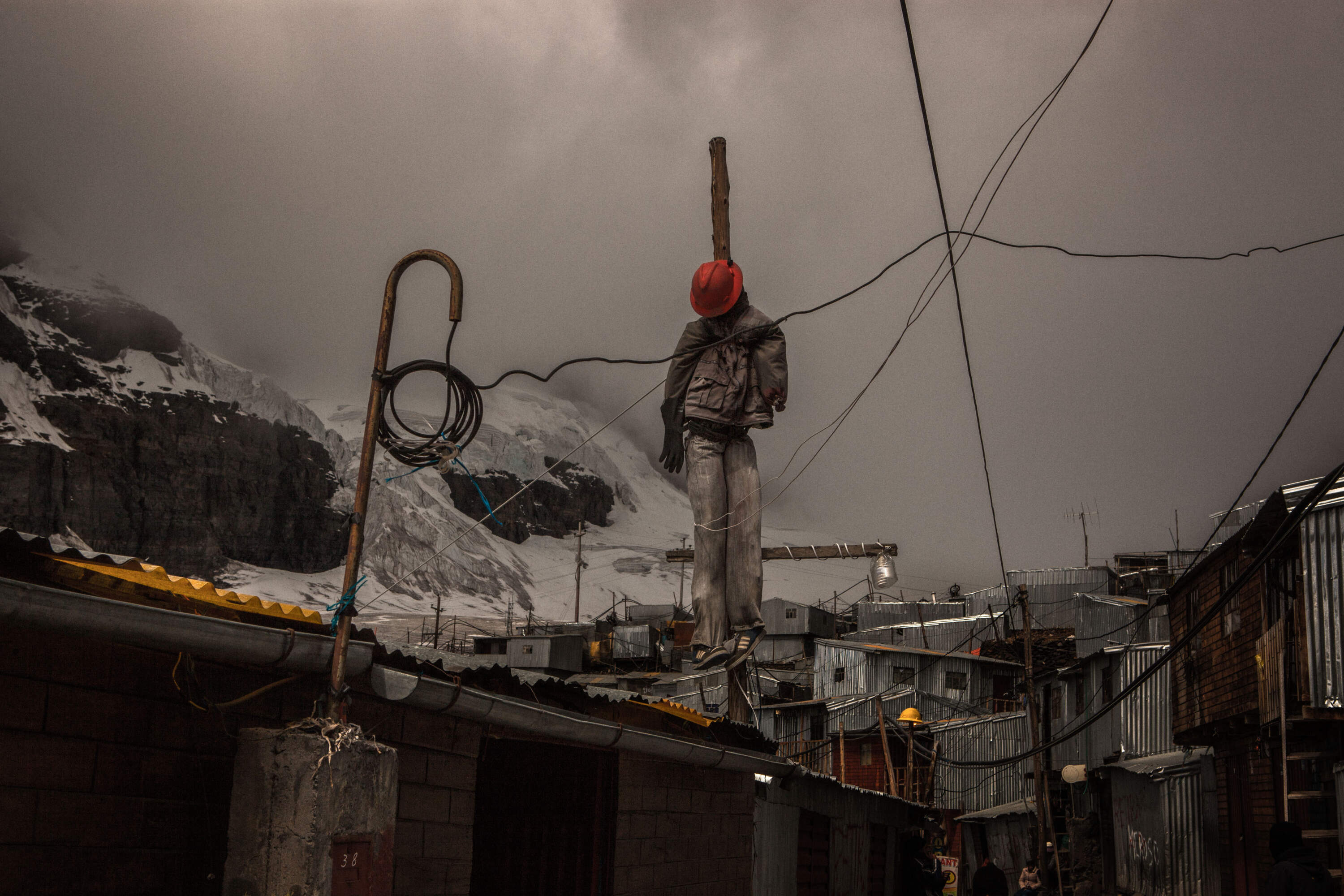
An effigy of a lynched man, made of rags, hangs from a pole at the entrance to the La Rinconada mining camp. It offers a warning to potential thieves or intruders in a town where there is virtually no formal policing.
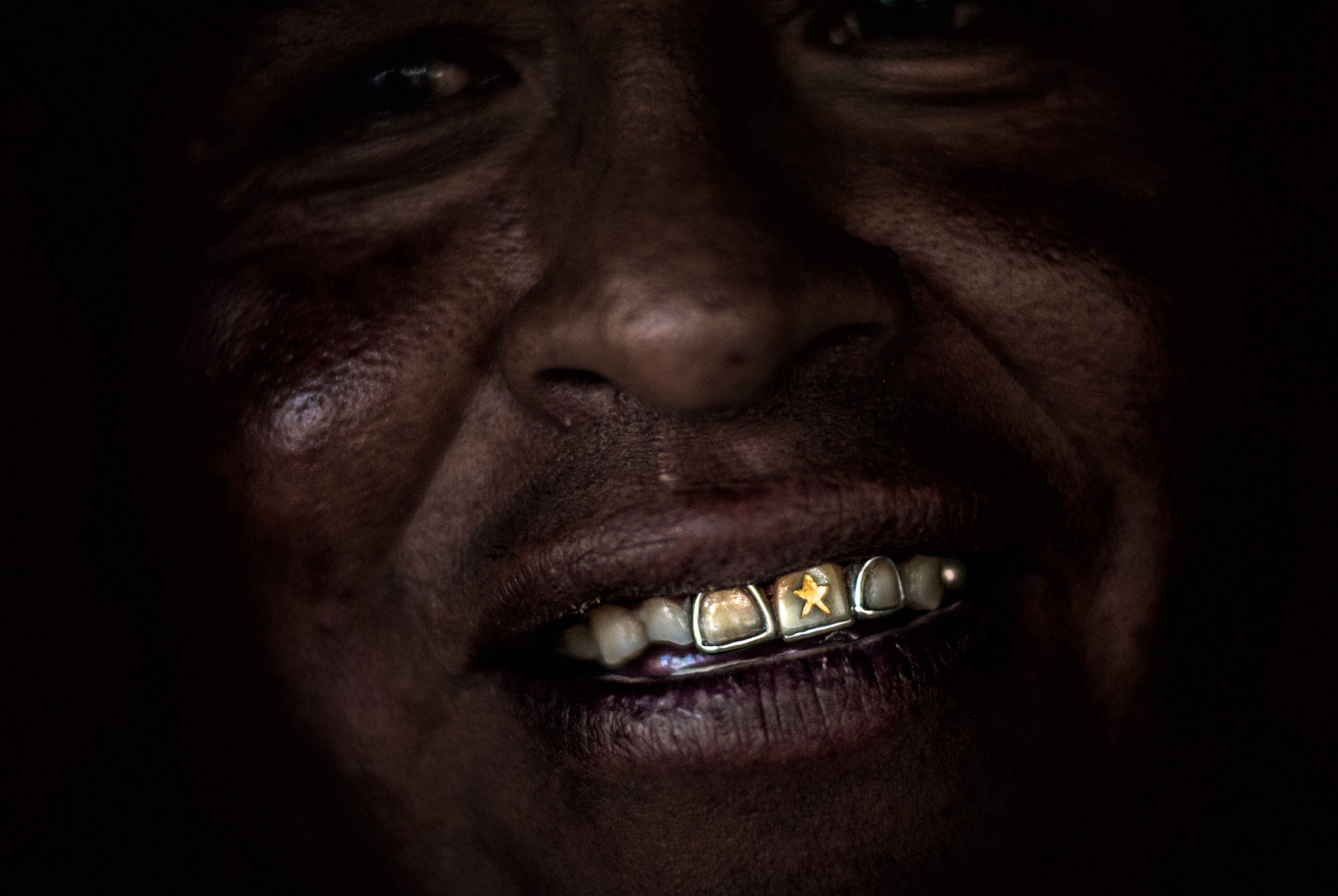
A star-shaped gold inlay in a miner's tooth reveals a widespread fashion among miners at La Rinconada. The gold used comes from mines dug beneath a mountain known as 'Sleeping Beauty'. As the fruit of their sweat and sacrifice, this modern status symbol is especially powerful.
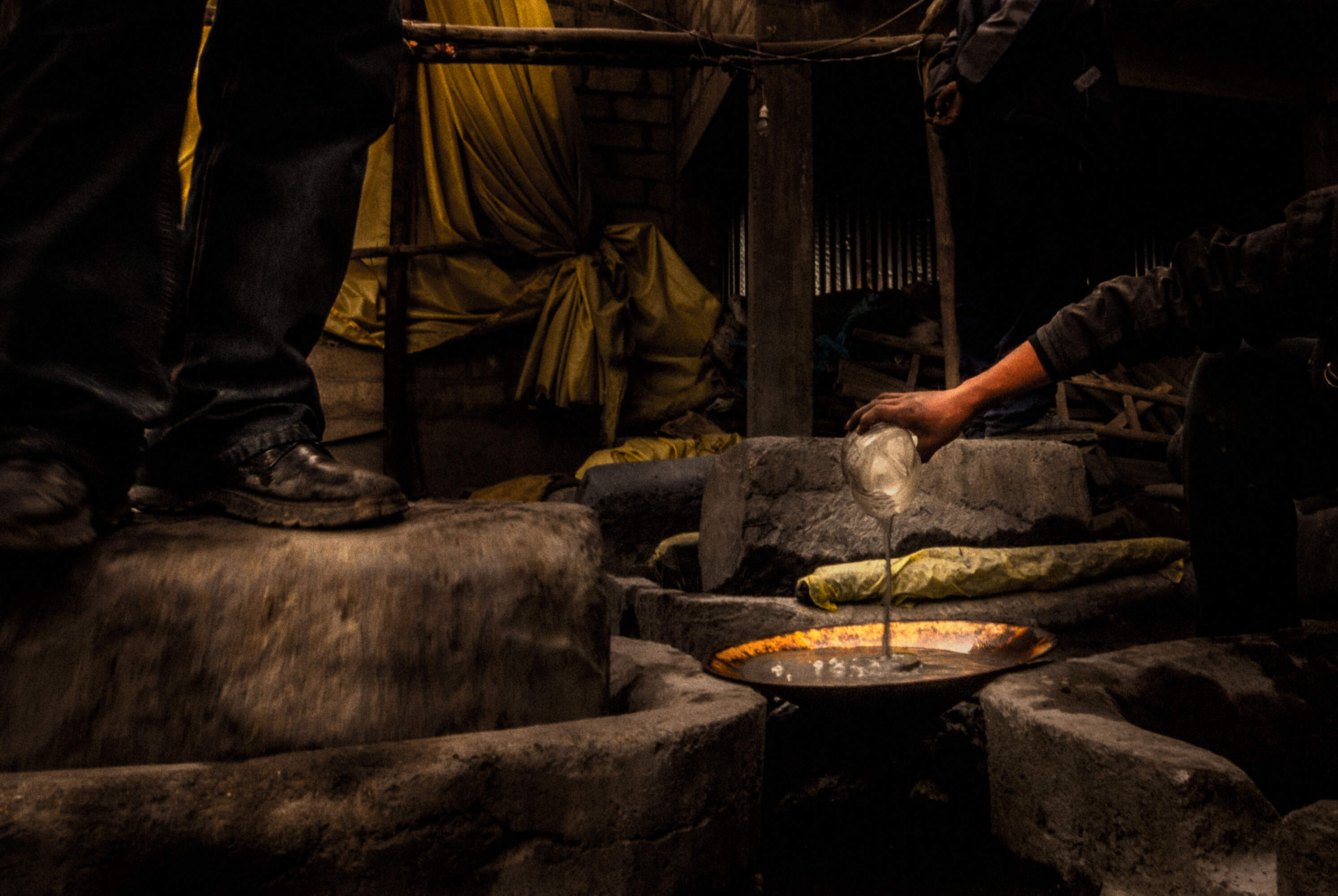
A miner processes gold ore using a preparation that includes mercury.
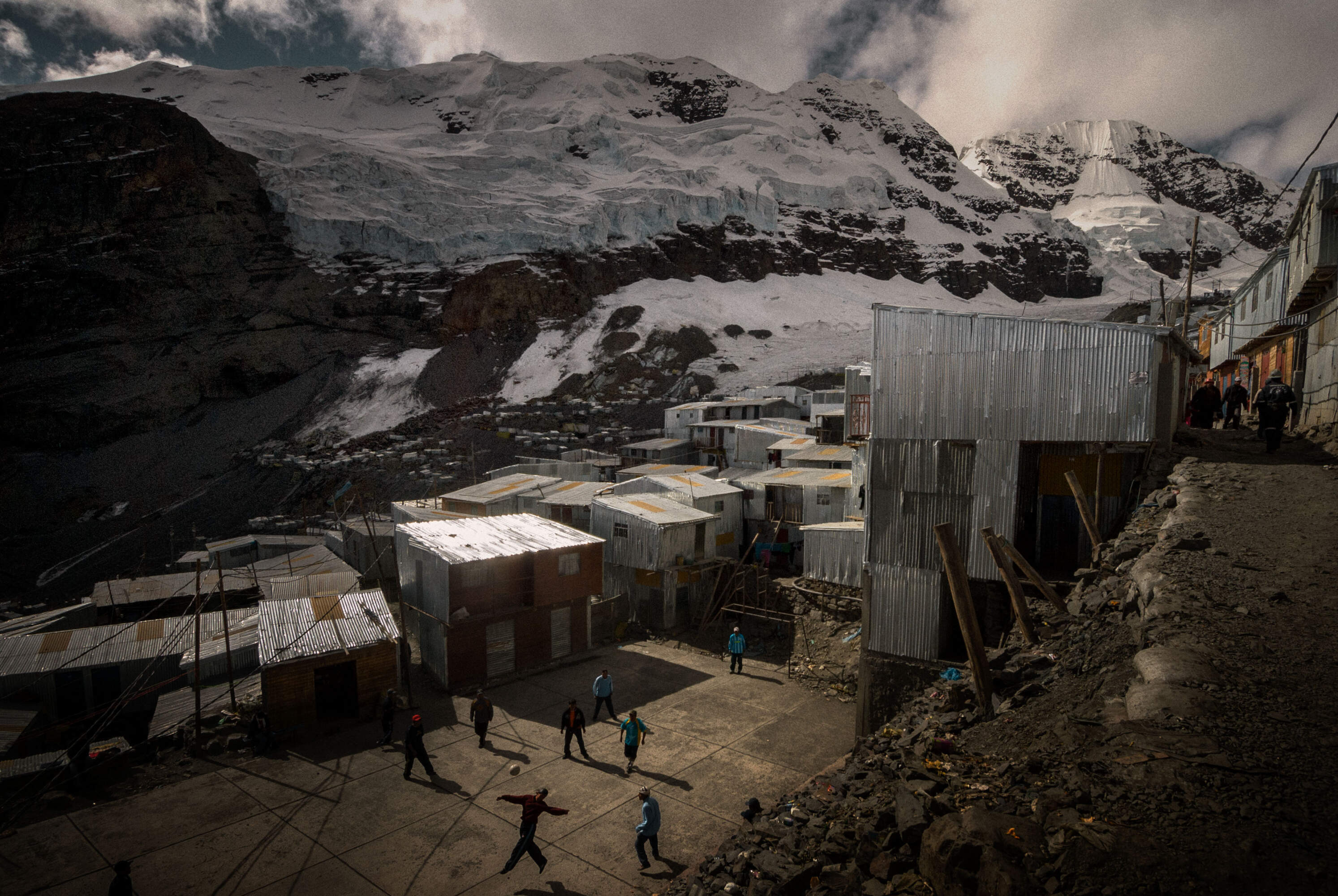
People playing a game of football on a paved mountainside terrace, surrounded by corrugated zinc buildings and overlooked by snow-covered peaks.
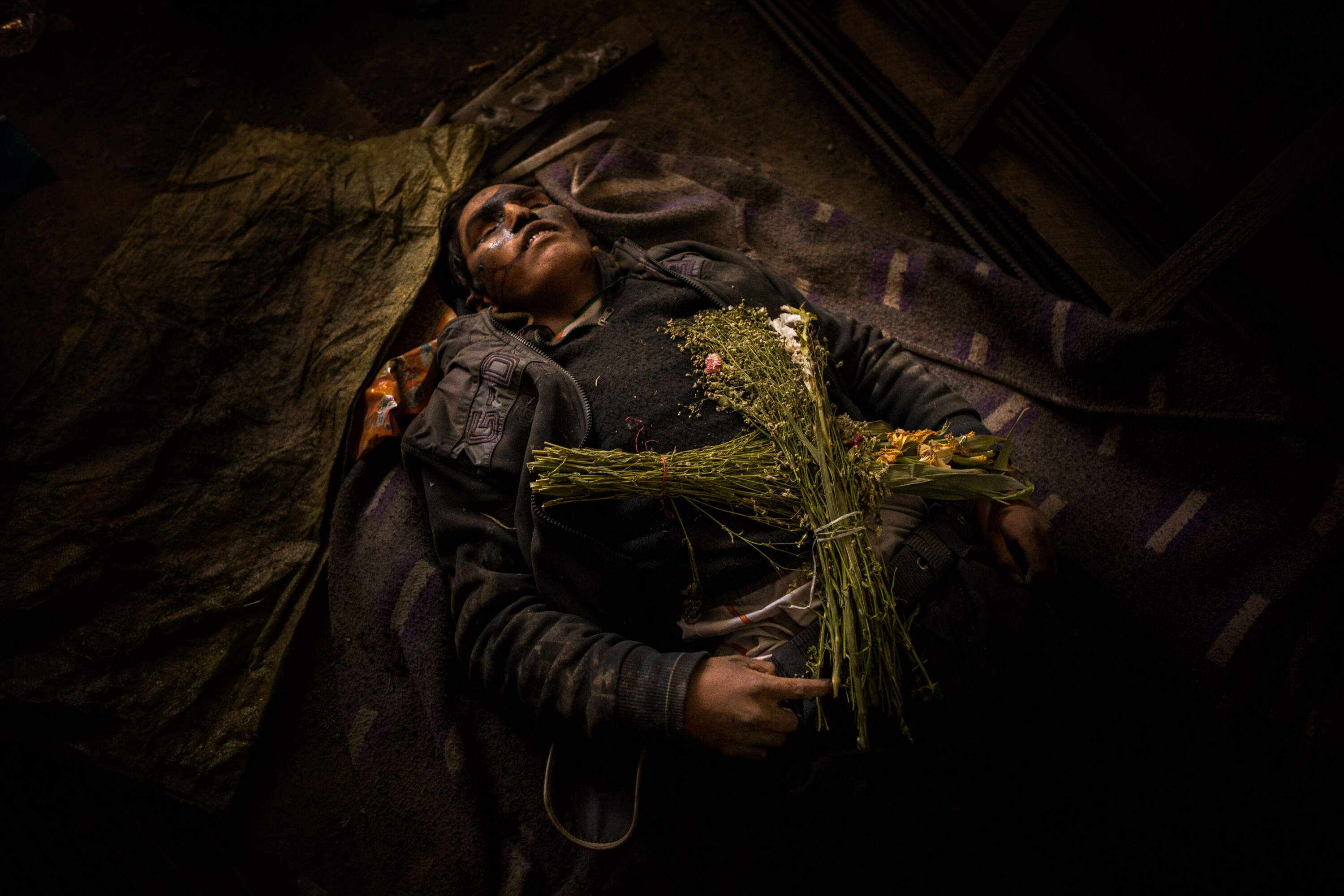
The body of an unidentified miner lies in a warehouse at the Rinconada medical post, which doubles as a makeshift morgue. None of his loved ones came looking for him, but as word spread about the arrival of a newly dead body, relatives of other missing men began to arrive. Some, with their hope and grief in tow, left flowers for him.
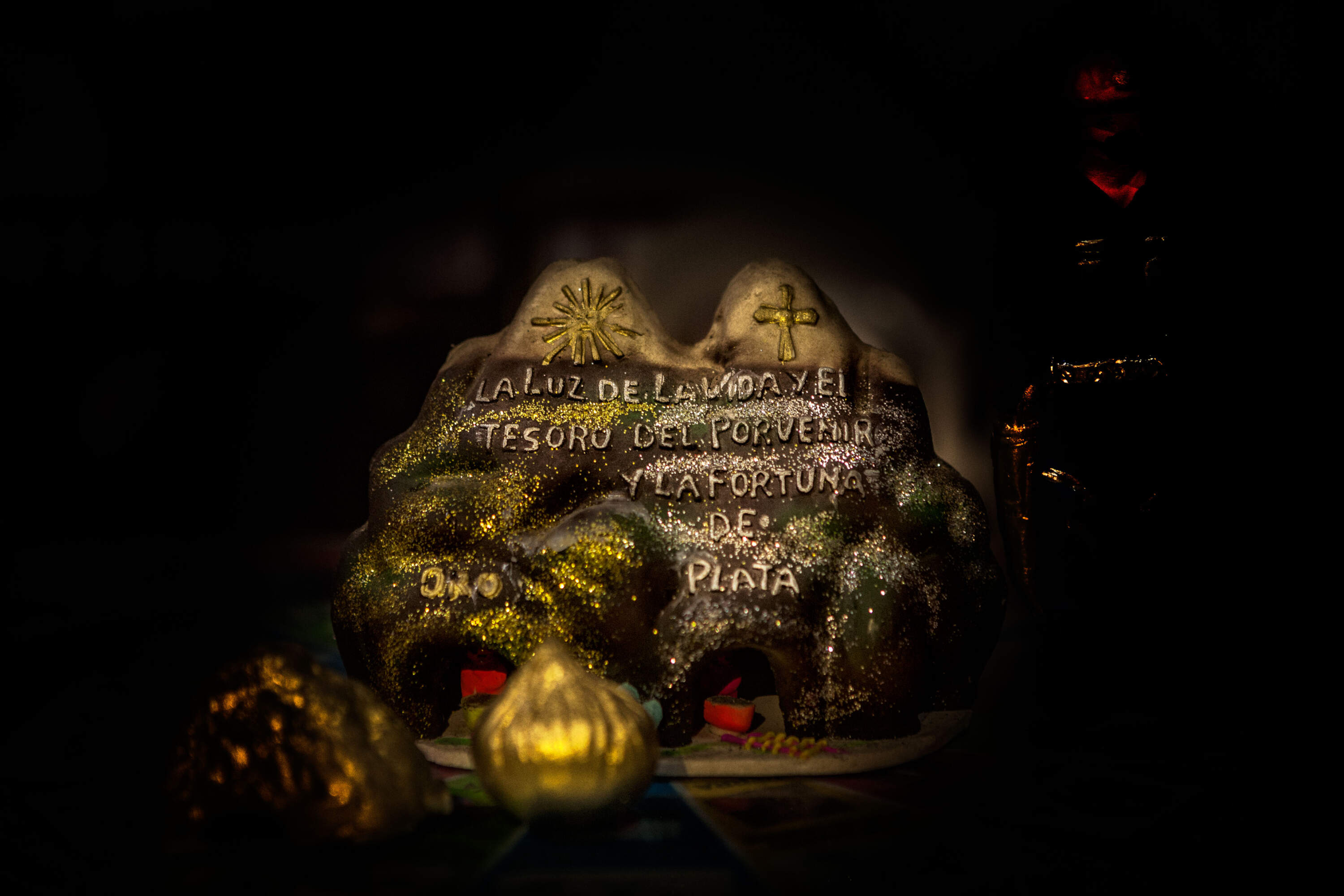
A model of a mountain inscribed with the words: "The Light of life and the treasure of the future and the fortune of money". It was made as an offering to 'Pachamama', or mother earth. In La Rinconada, miners who extract riches from the earth know that they must offer something in return. Miners perform 'payments to the earth', ceremonies to encourage the mountain to reveal its treasures to them.