
Follow explores how social media shapes the migration dreams of young West Africans and influences the way they imagine their future. Moving between West Africa, the Canary Islands, Mexico and the United States, the project follows a journey suspended between reality and illusion, hope and disappointment, dreams and nightmares.
Today, TikTok, Snapchat and WhatsApp are no longer simple communication tools. Across villages, small towns and capitals in West Africa, smartphone screens fill with images posted by those who managed to leave: stylish clothes, beaches, shopping malls, luxury brands, city lights and fragments of carefully staged success. Leaving has become part of a powerful collective imagination, associated with courage, ambition and social recognition.
The title Follow refers not only to social media culture, but also to a wider social phenomenon. When relatives, neighbours or friends migrate, others begin imagining themselves on the same path. Desire spreads from screen to screen, story to story. Social networks become both witnesses to and vehicles for the dream of elsewhere.
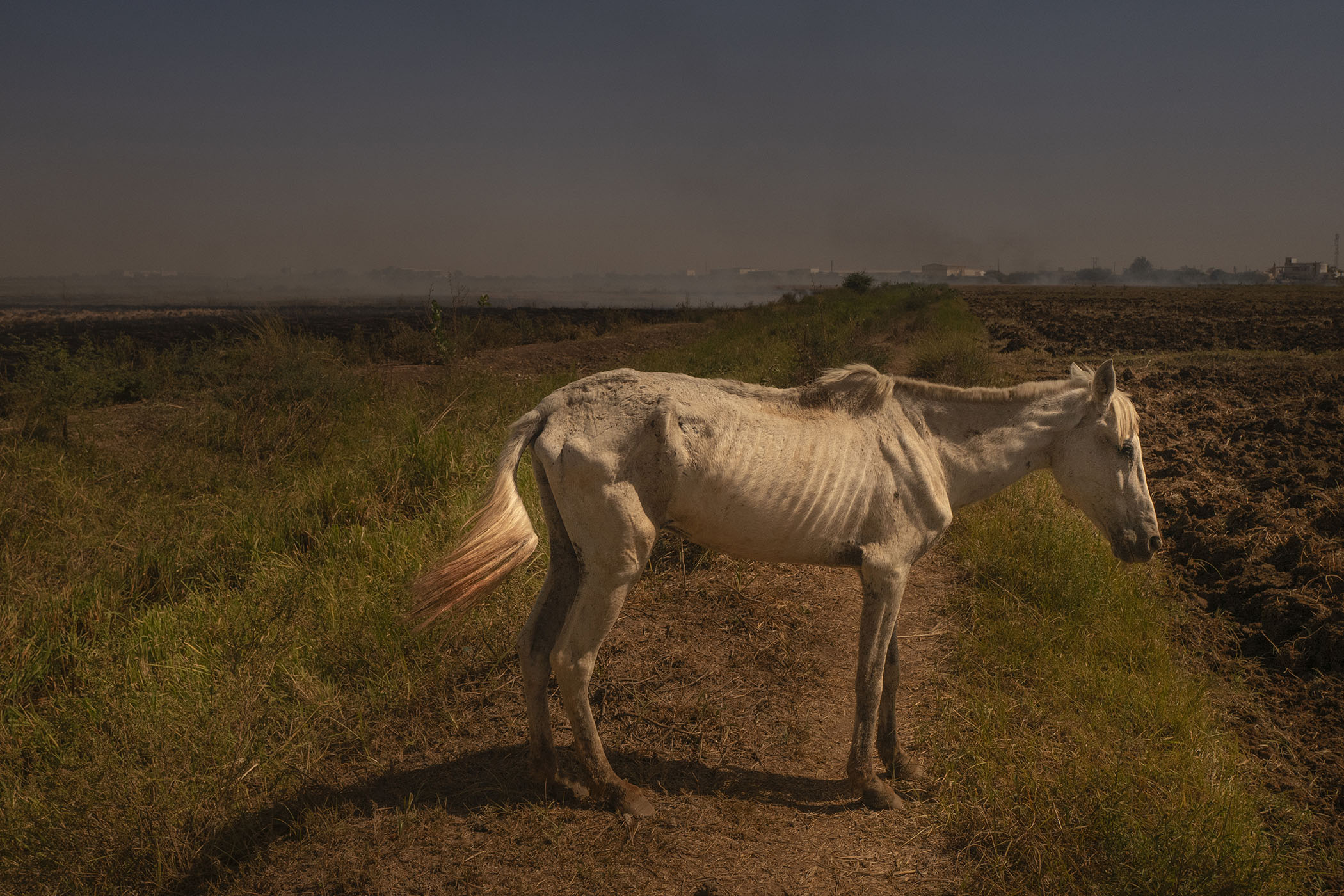
An emaciated horse stands beside a field where following the harvest the stubble from a rice crop is beiong burned. Many young men have migrated from the region, for those who remain behind, another reality often emerges, one marked by failure, despair, waiting, loss and the fear that others may die while trying to reach the Western dream. Rosso, Dagana, Mauritania
The project follows migrants before departure, during the journey and after arrival. In Mauritania, influencers film TikTok videos while young men dream of Europe or America from rice fields and fishing towns. In the Canary Islands, newly arrived migrants wander through shopping centres and beaches crowded with European tourists, confronting places they had previously only seen online. In Mexico, migrants travelling north towards the United States become part of a continuous human flow moving through jungles, shelters and border towns. In New York, many discover lives marked by exhausting work, isolation and the pressure to maintain the appearance of success for those watching from home.
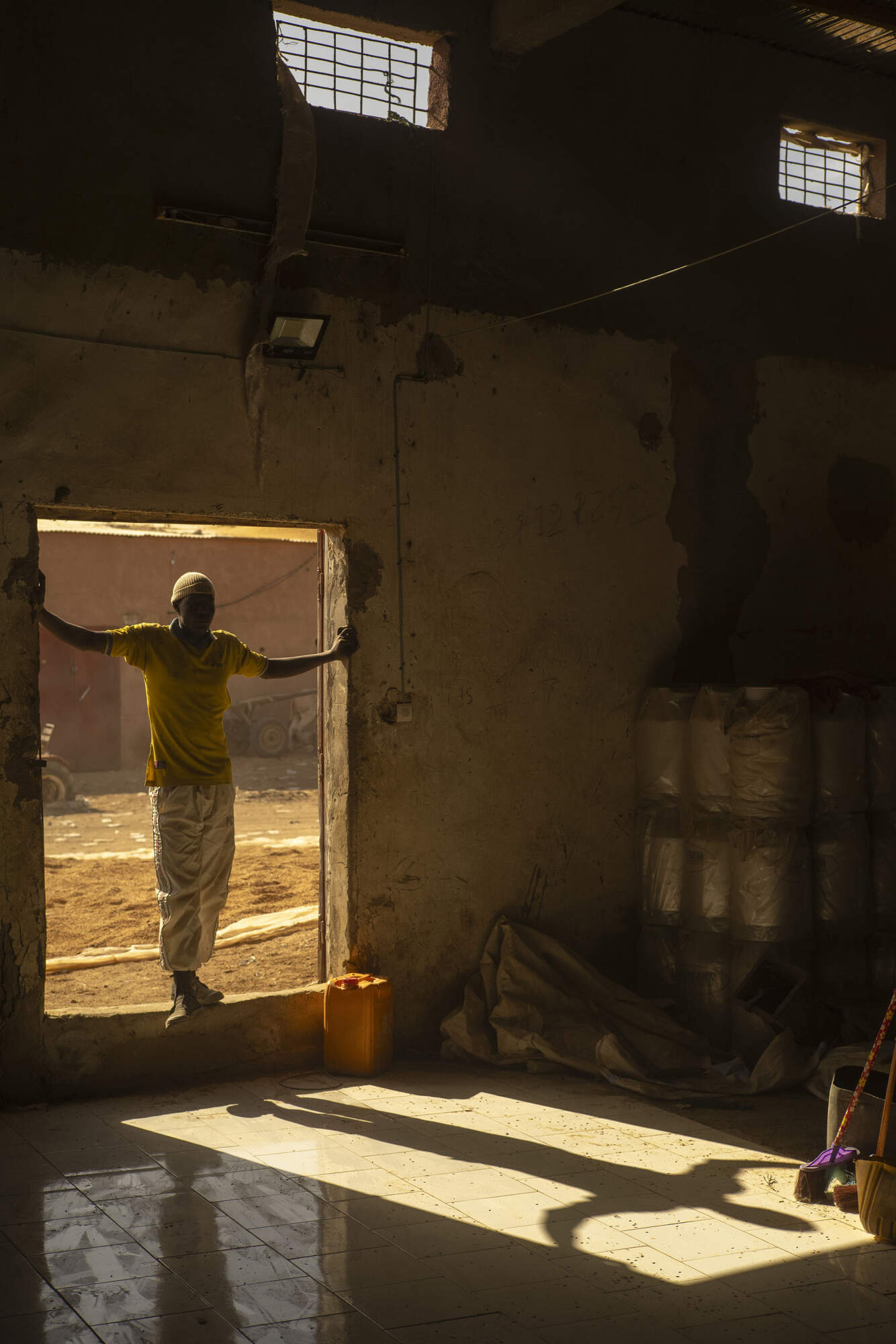
An employee at a rice factory stands in a doorway, his shadow falling across the building's floor. In around 2024, Mauritania became a major departure point for migrants attempting to reach Spain's Canary Islands via the dangerous Atlantic route, which is expected to become one of the main migration corridors from Africa to Europe in the coming years. Rosso, Mauritania
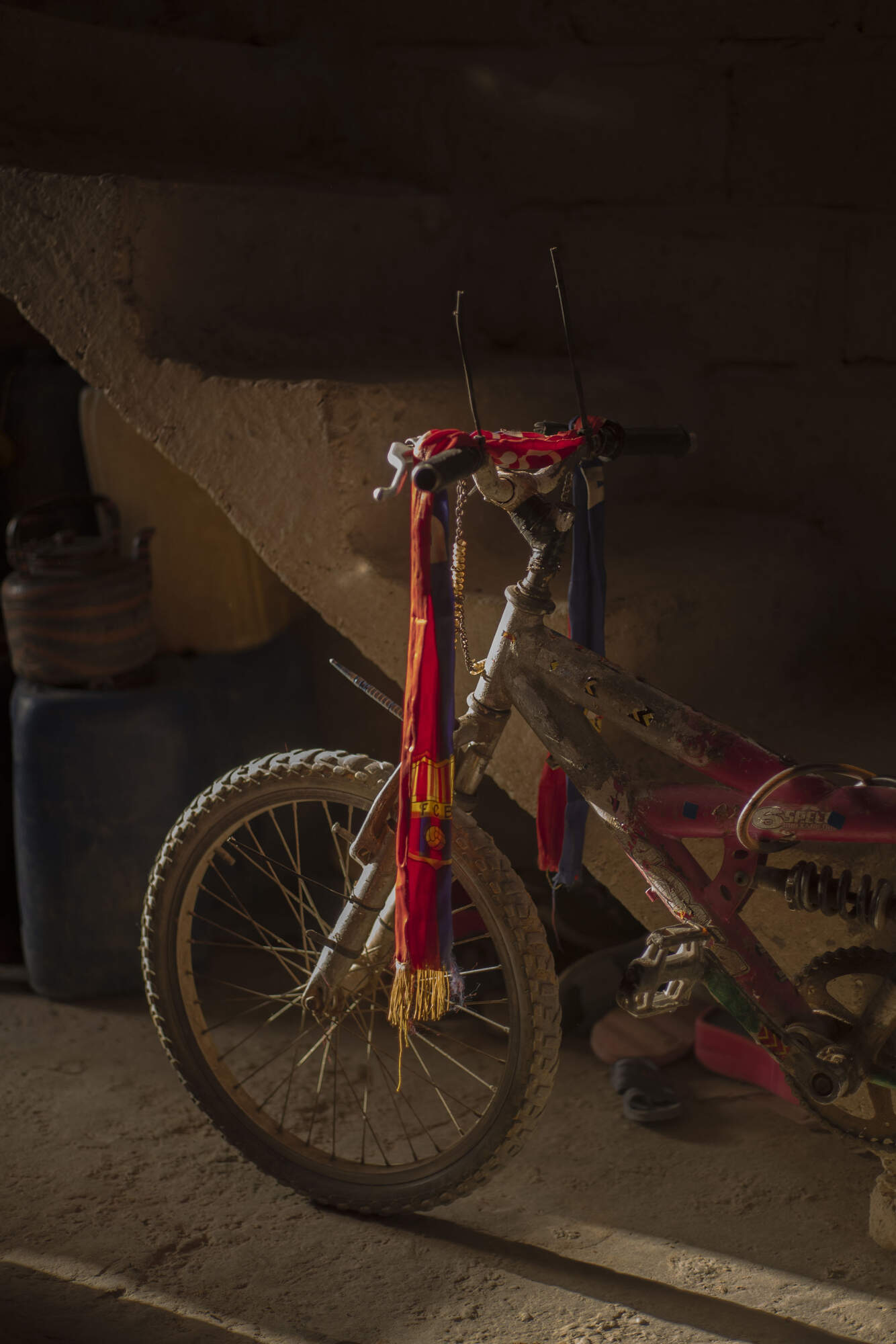
A Barcelona football team scarf tied to the handle bars of a child's bicycle. Rosso, Mauritania
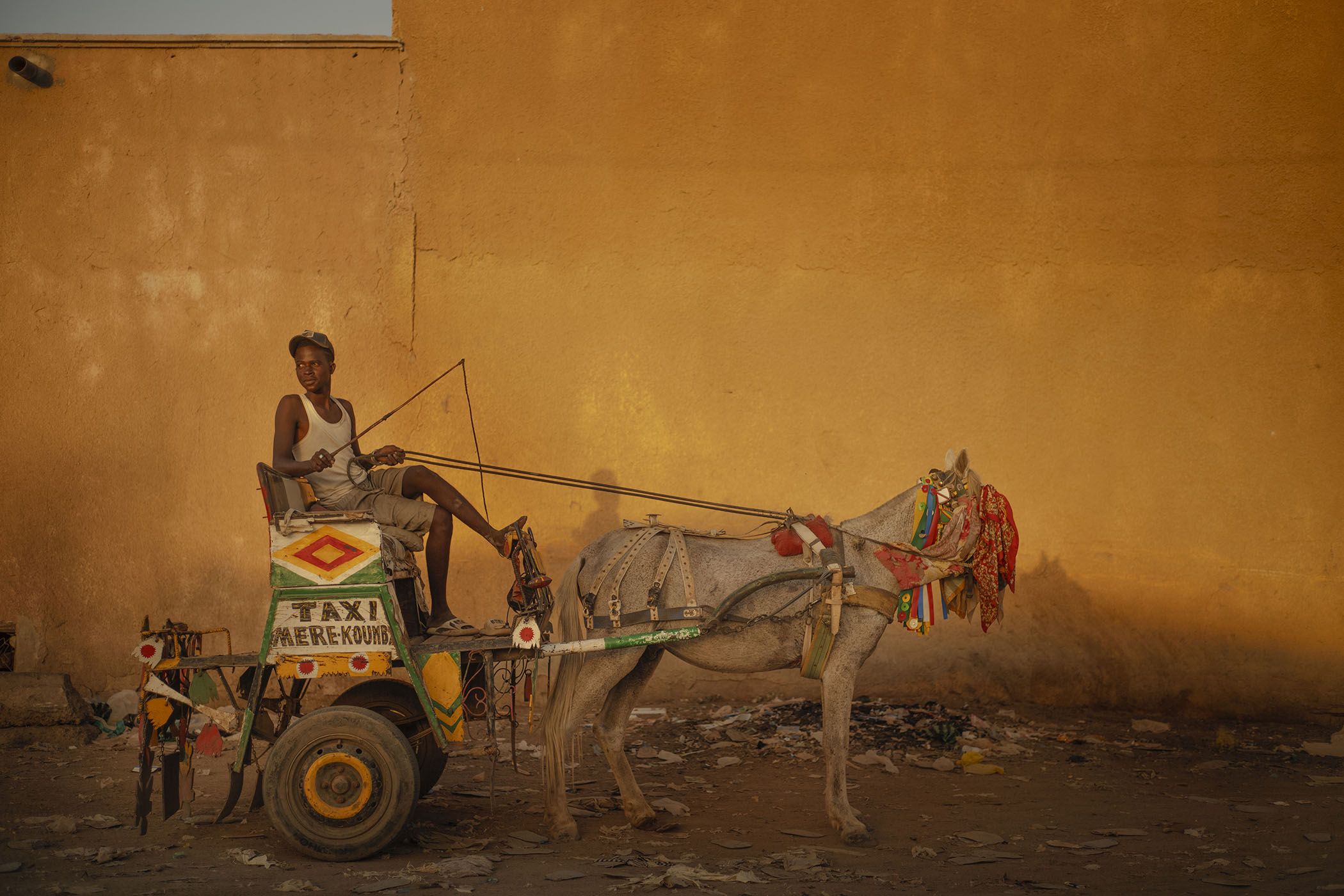
A young man waits on his horse-drawn cart, which he uses as a taxi, a few kilometres from the border with Senegal. Rosso, Mauritania

A young influencer prepares filming equipment for a video to be posted on his TikTok page. Rosso, Mauritania
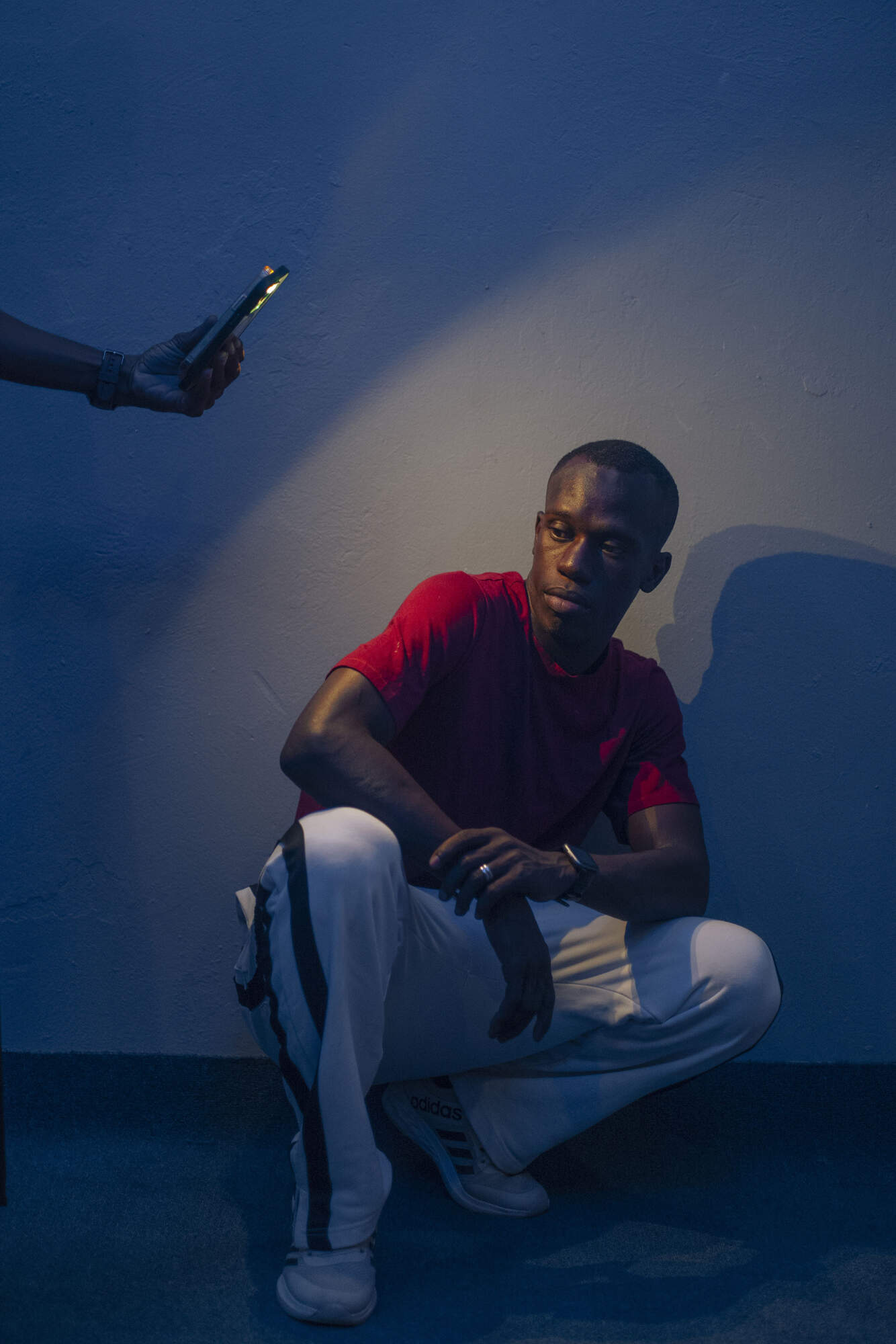
Influencer Cheick Tidjani Mamadou Thiam, known by the nickname 'Chicomary', poses in his bedroom. Rosso, Mauritania
My name is Cheikh Thiam, but I’m better known by the nickname Chicomary. If you ask for Cheikh Thiam, there’s not much chance of finding me—but when you say Chicomary, everyone will bring you here.Nowadays, everyone has TikTok, even babies watch TikTok on their parent’s telephones. Social media is essential for everything you do. If you want to get something, if you want to share information. Sometimes, I watch videos of people whose lives a proper life! I see people in Europe, well-dressed, influencers traveling everywhere, sharing their experiences—I love that!” There are tons of videos from Nicaragua of people encouraging others to go. If you just open TikTok here they are. Same with Spain, people there post, too. People think success is easy over there.” Cheikh Thiam
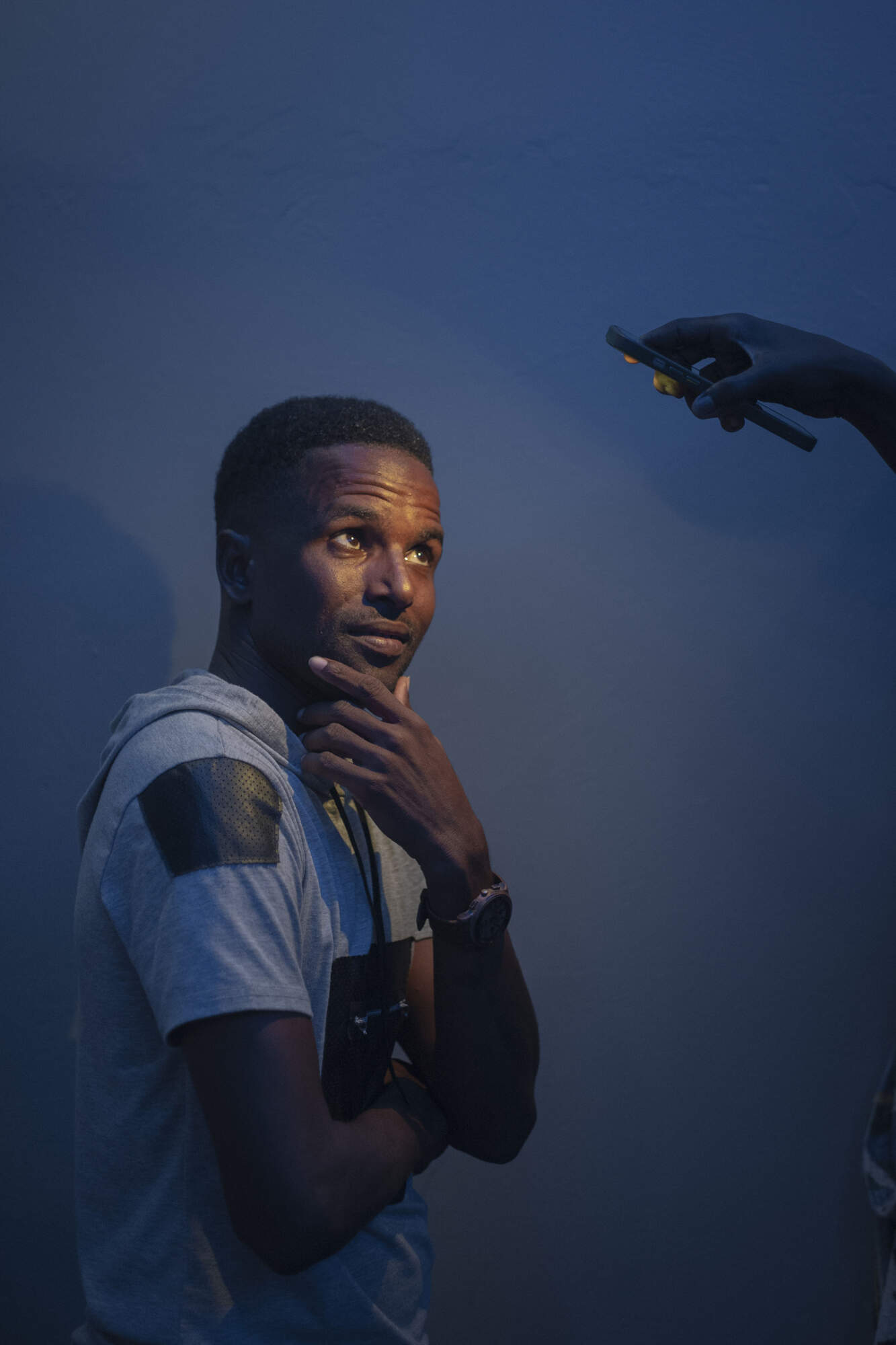
Influencer Chighali Yarba Outhman, poses for film and photographs. Rosso, Mauritania
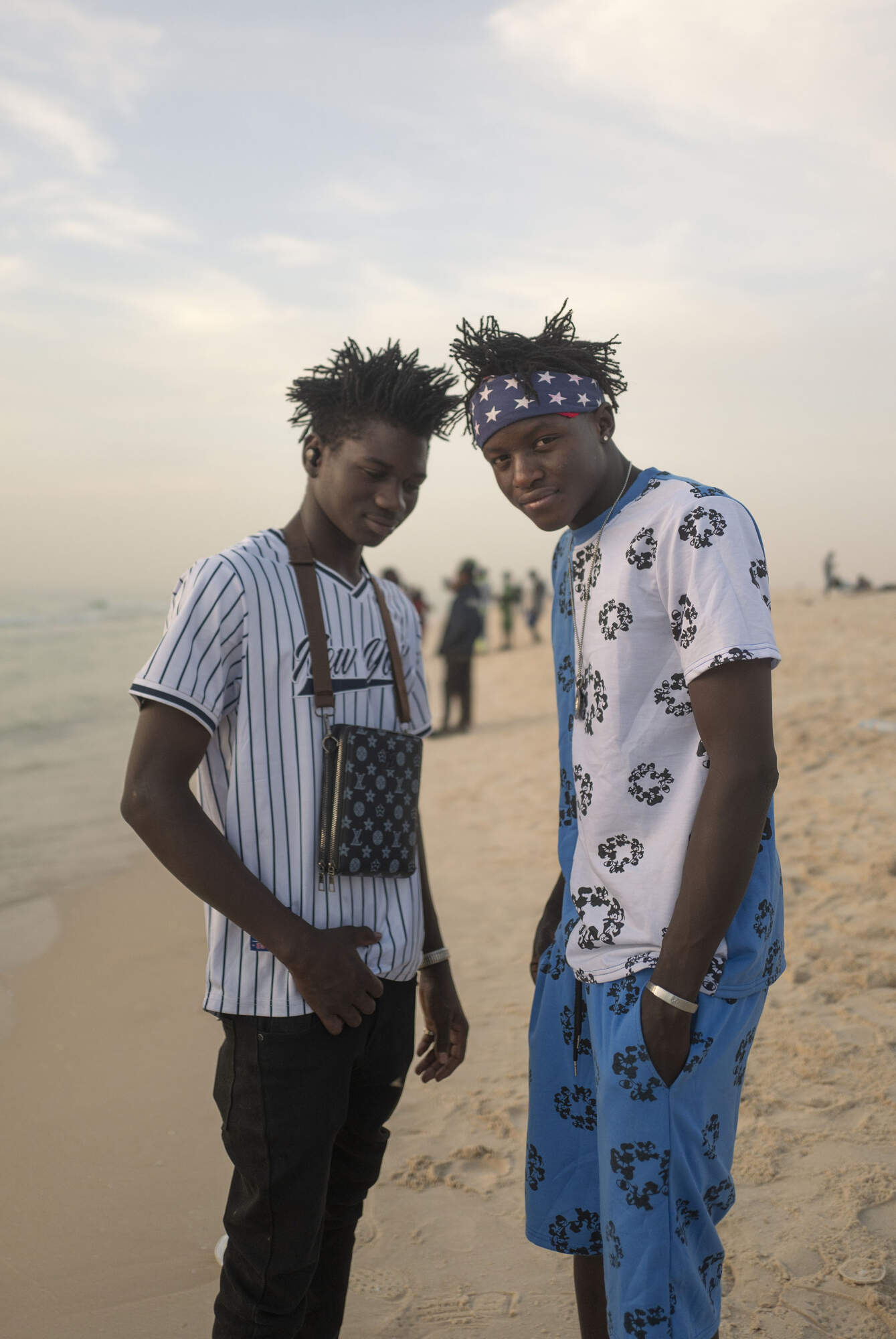
Two friends from Mali pose on the beach dressed in newly bought clothes. Nouakchott, Mauritania
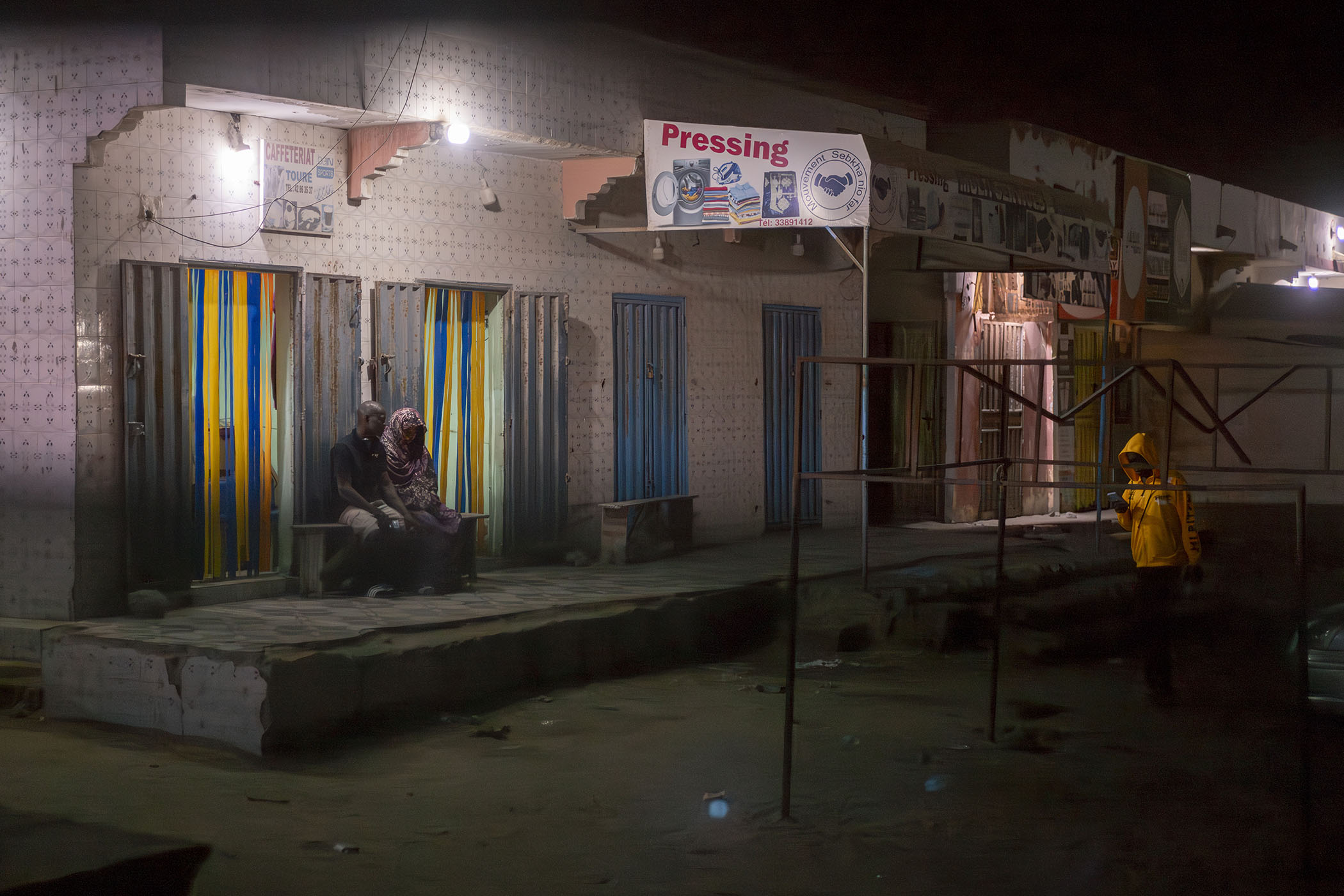
Amina, a fictitious name used to protect her identity, meets with another man involved in a migrant smuggling network. Nouakchott, Mauritania
One ticket for the pirogue ranges from €500 to €1000 and there are 60-70 people on board. Everyone knows it, I need to pay up to €14,000 for the coast guard. No departure can happen without the approval of the authorities. Without paying, they’ll catch you immediately. The pirogue won’t leave, and all the passengers will be arrested. Everyone. Everything is in God’s hands. If you make it, it’s because of God. If you don’t, it’s also beacause of God. I can’t guarantee that a passenger will arrive 100%. If someone changes his mind at last second, I talk to him for a while, help him to regain confidence, and then he leaves quickly. They’re so brave, no one actually turns back. They will keep moving forward, no matter the price. They’ll follow their destiny.” Amina
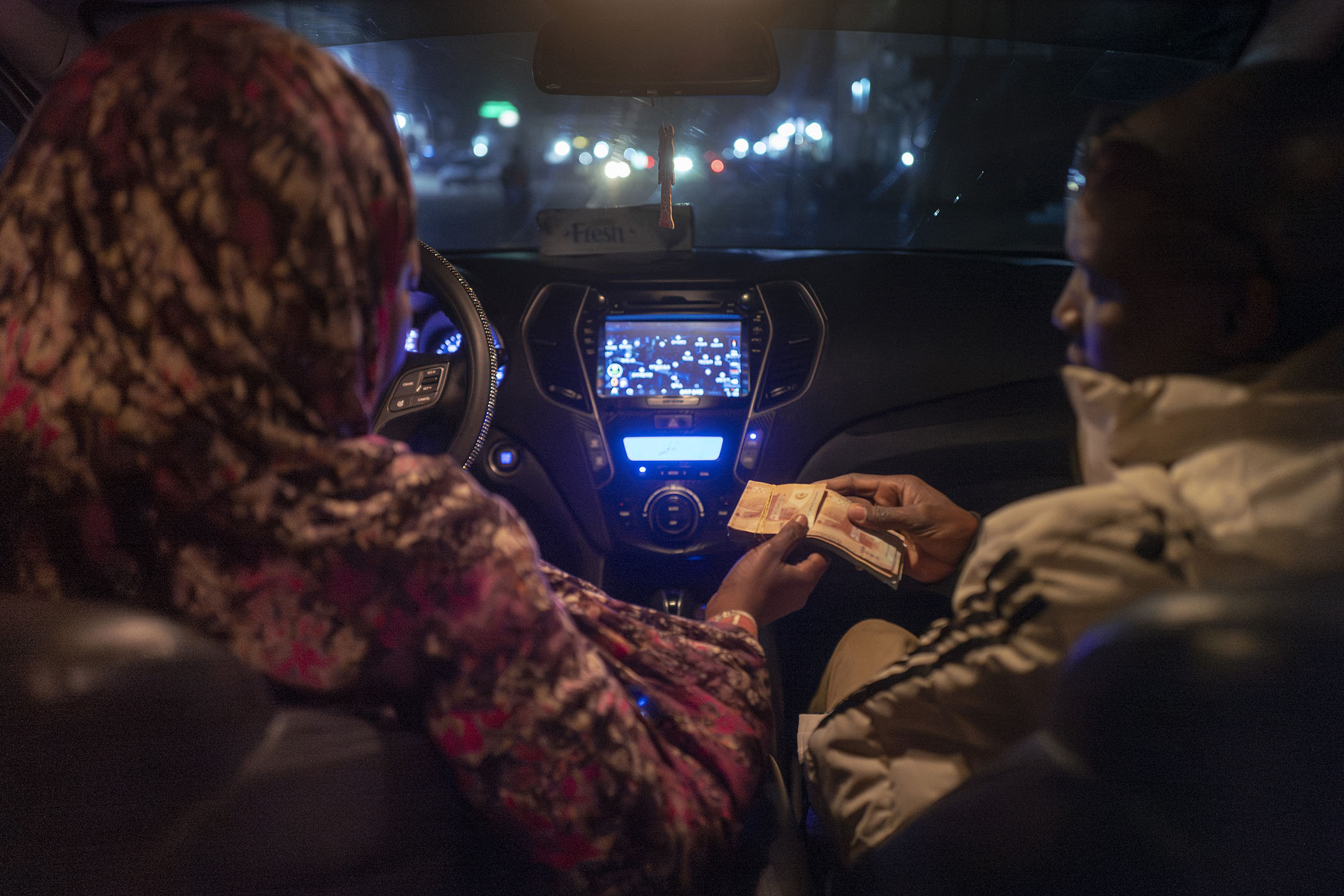
Inside a car, Amina, a fictitious name used to protect the identity of a woman involved in organising clandestine migrant departures, receives 400,000 MRU (around Euro 900) from a young man from Guinea Conakry to pay for a journey to Europe. Nouakchott, Mauritania
I’ve been traveling since 2022—Cameroon, Nigeria, Benin, Togo, Burkina Faso, Mali, Mauritania. After Mauritania, there will be another continent. Inshallah. I left for my mother. She raised us in a tough environment, and I want to give her the chance to grow old in happiness. Do you know Tupac? B.I.G.? My idols since I was a kid. They came from the same struggles I’ve been through. There’s one song I’ve been listening so much: “Dear Mama.” I used to lock myself in my room for days and dream.Do you know the first gift Tupac’s producer gave him? A real Rolex! He went on to collect many, that’s redemption! That crown became my first tattoo. I immediately felt it was mine. I feel different from the others. I am a king! I am the difference! I also have a stage name: America Black.One day, I will be an MMA fighter in the United States. I train every day to make it happen. New York, Times Square? Putain, shit, that’s a dream of a lifetime.” Chrisby – America Black
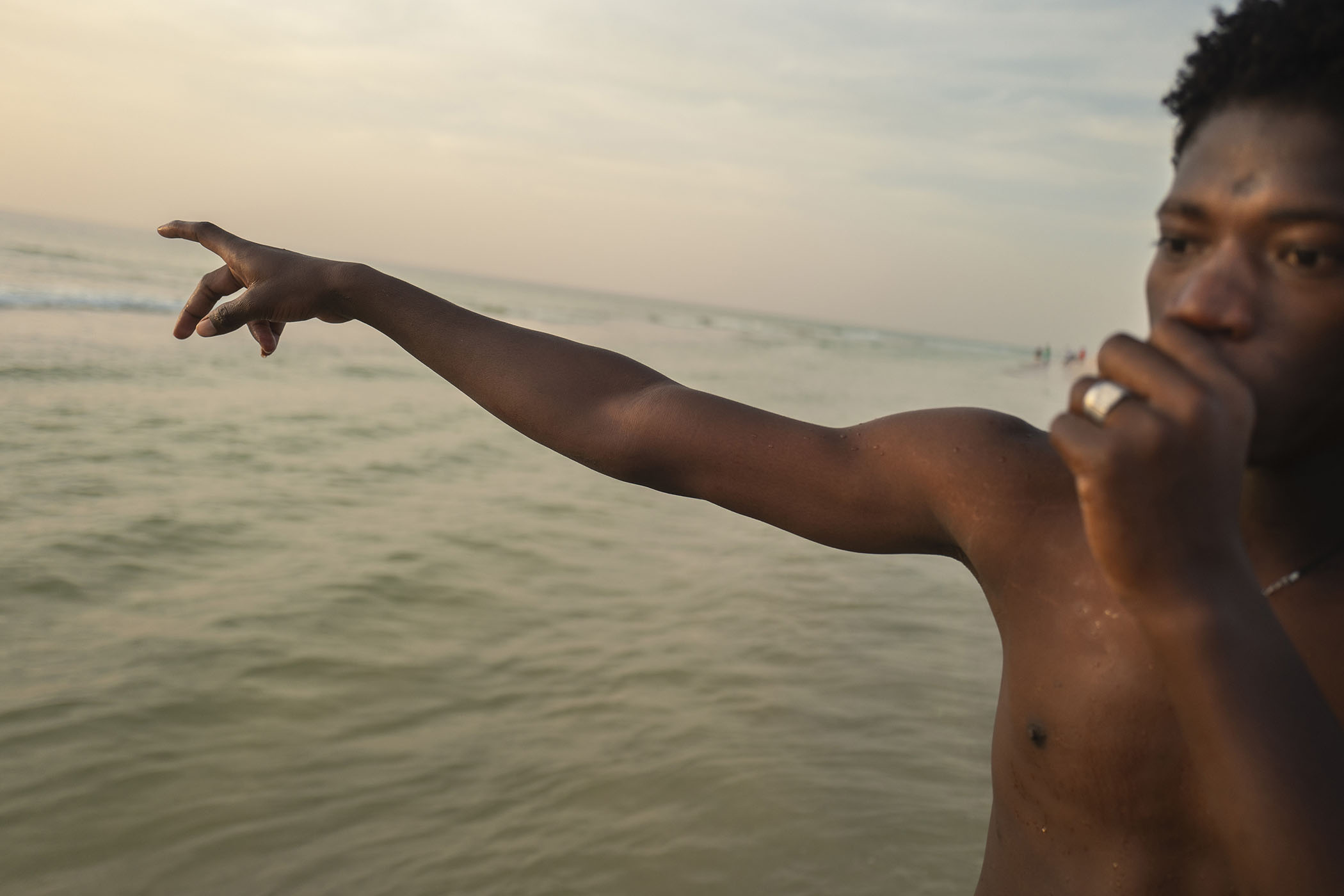
A young Malian man points towards the West as a friend takes his photograph on a beach near the capital.
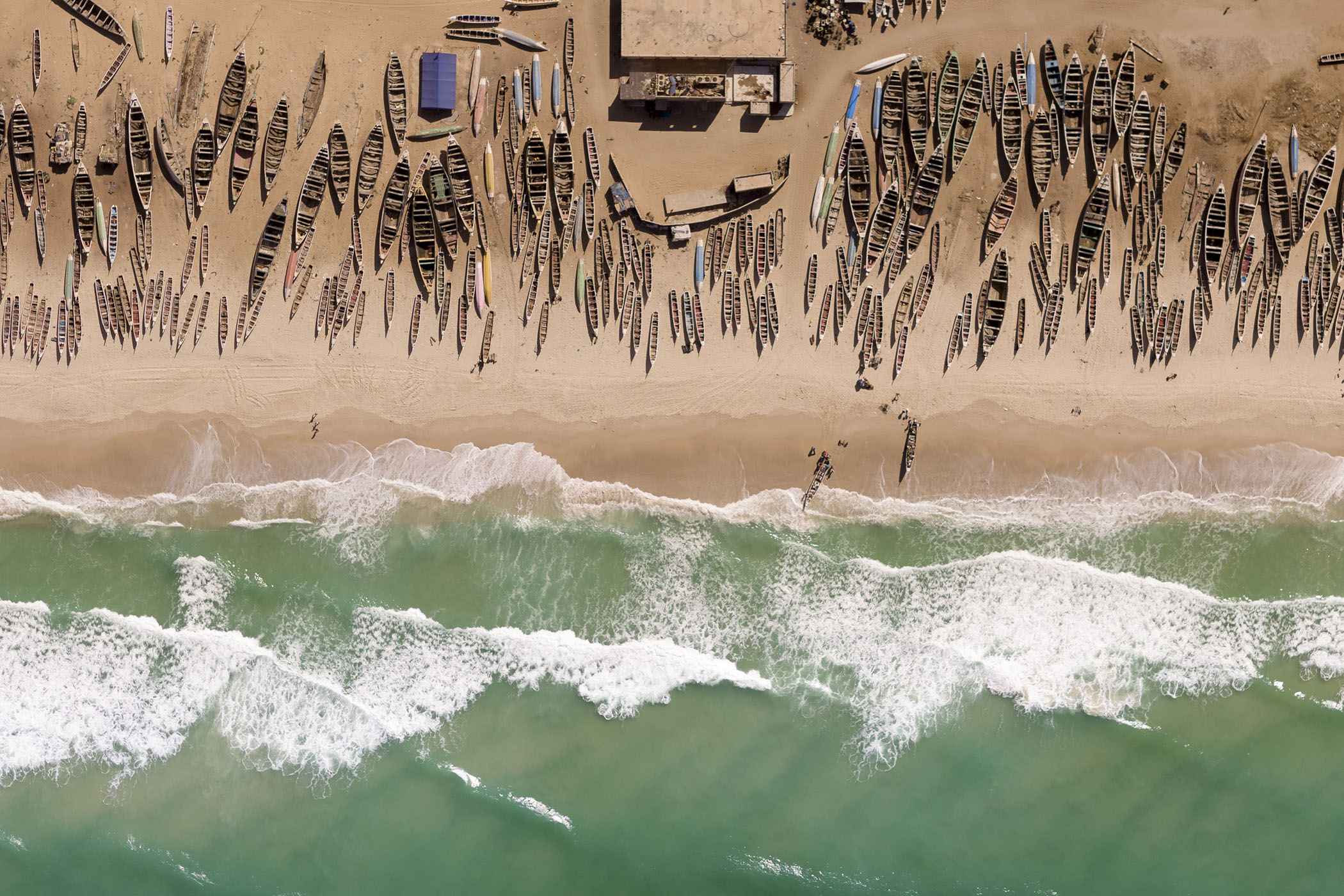
An aerial view of canoes (pirogues) moored along a beach. Nouakchott, Mauritania
Since the collapse of Libya following the fall of Muammar Gaddafi in 2011, migration routes have changed significantly. In West Africa, two major routes now dominate: the Atlantic route towards the Canary Islands and the aerial route through Latin America towards the United States, often controlled by criminal networks and cartels. Both routes are driven by the same promise: a different life.
The route begins in West Africa and reaches Europe through the Canary Islands, a Spanish territory within the Schengen area. Never before had so many migrants used this route as in 2024. According to authorities, around 46,700 people arrived in pirogues departing mainly from Mauritania, but also from Senegal and countries even farther away.
The growing presence of coastguards from both Spain and West African countries along the coastline has forced pirogues to travel farther into the Atlantic on increasingly dangerous routes. In 2025, stricter controls and forced expulsions in Mauritania pushed many departures towards Gambia, Senegal and Guinea Conakry, extending journeys to between 10 and 15 days at sea.
According to the Spanish NGO Caminando Fronteras, the number of registered victims fell from nearly 10,000 in 2024 to 1,906 in 2025. Meanwhile, the International Organization for Migration’s Missing Migrants project recorded 591 missing people along the same route. The gap between these figures reflects the uncertainty surrounding the Atlantic crossing, where it remains extremely difficult to establish how many people die during the journey.
Juan Antonio Rodríguez Verona, head of first aid operations for the Spanish Red Cross in Gran Canaria, says it is common to rescue people who have spent several days without food or water and were forced to drink seawater to survive. Harsh winter weather conditions, he adds, have worsened the situation. “Many people arrive suffering from severe hypothermia.”
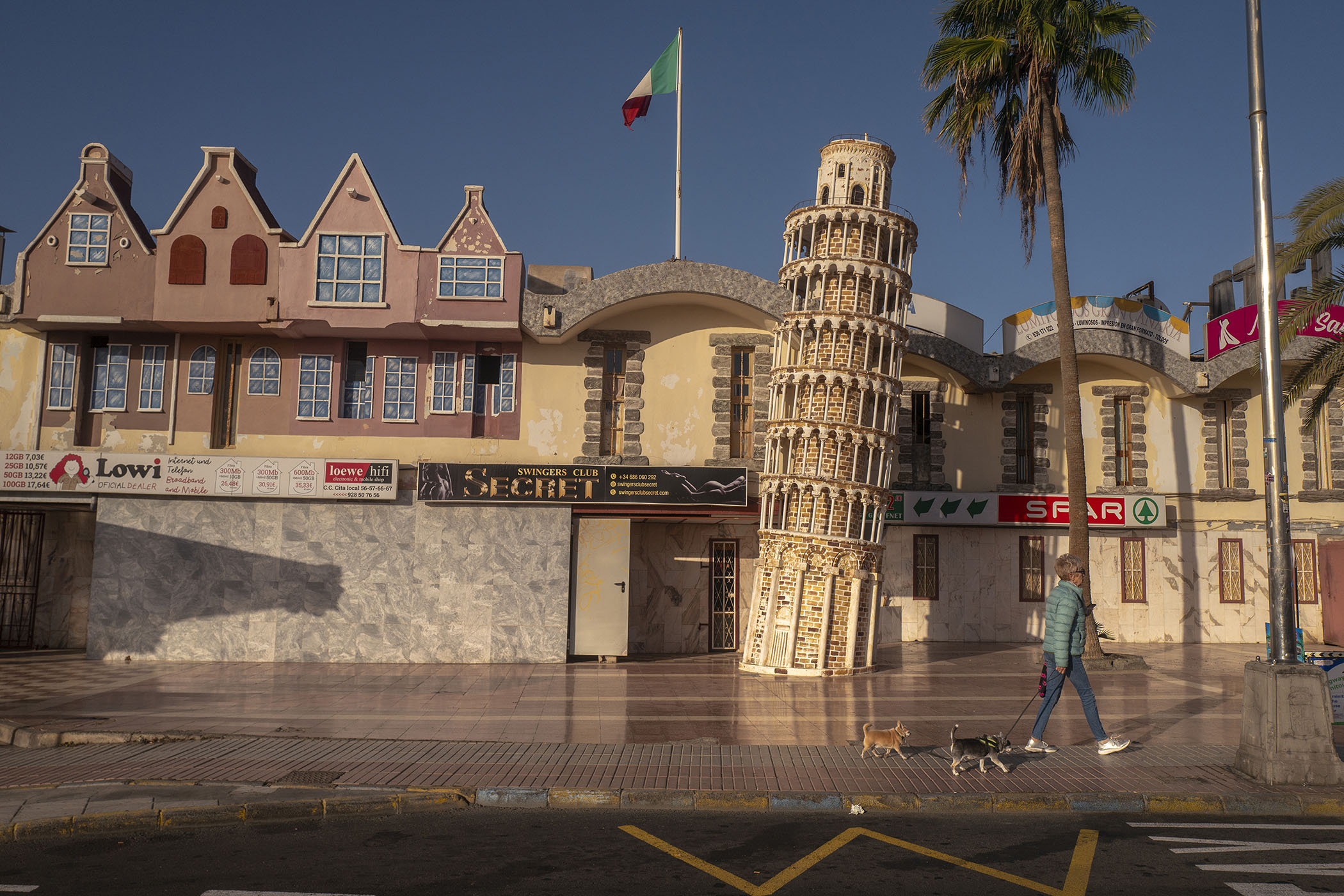
A woman walks her dogs past a replica of the Leaning Tower of Pisa. San Fernando, Gran Canaria, Spain
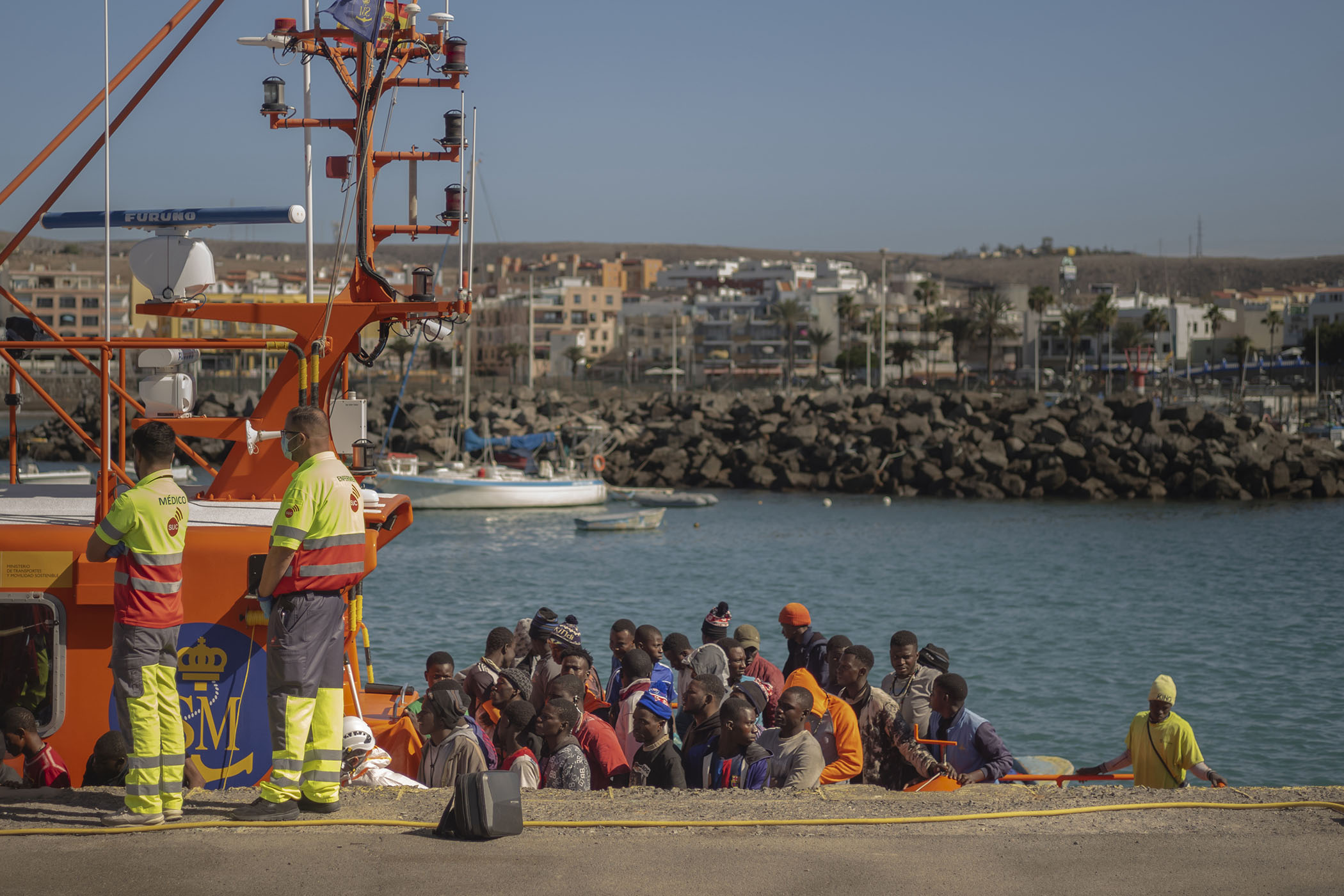
A rescue vessel, operated by Salvamento Maritimo, transports migrants picked up out on the ocean in a fishing canoe sailing from West Africa. Arguineguín, Gran Canaria, Spain
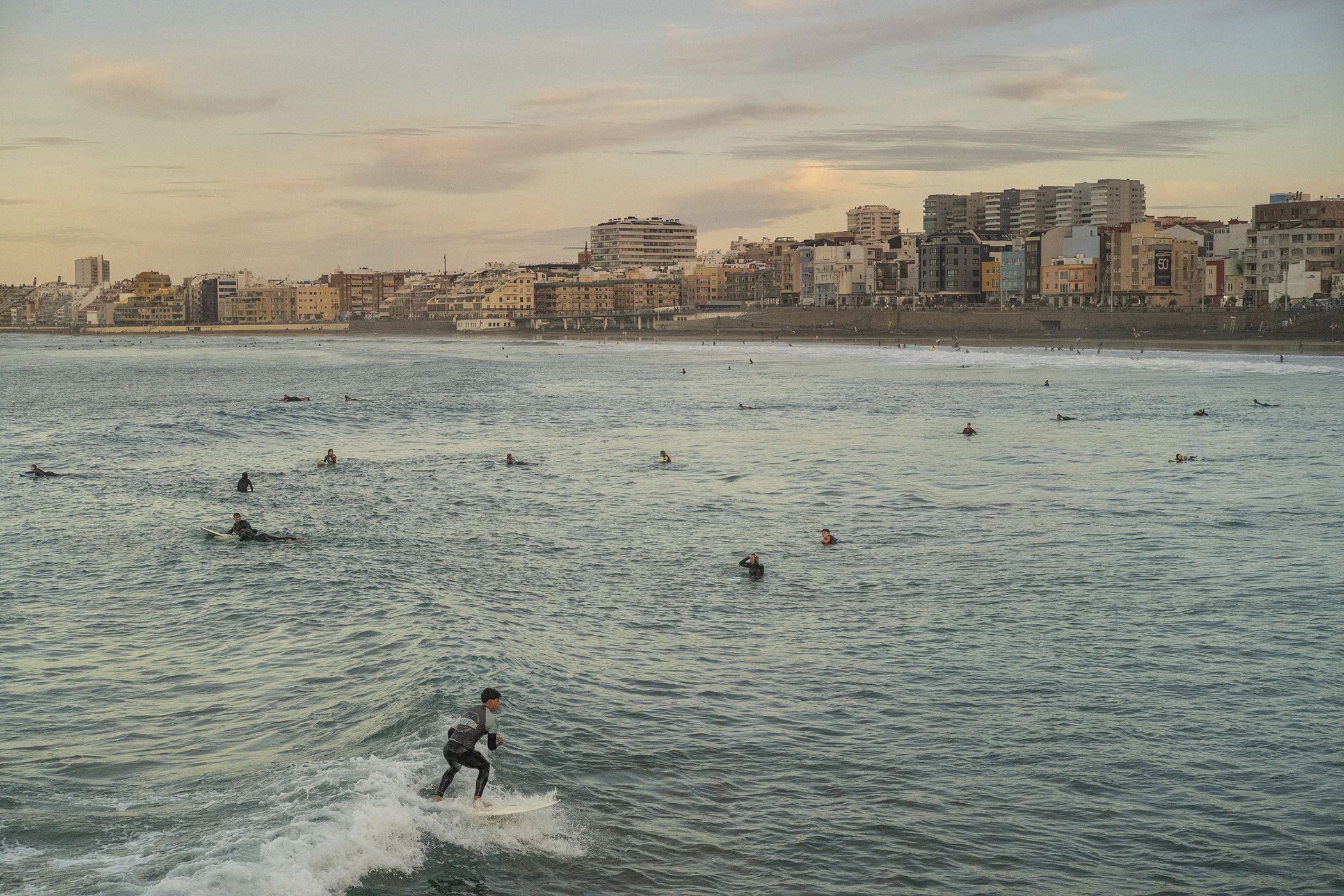
People surf at Las Canteras, one of Europe's most renowned urban beaches. Las Canteras, Gran Canaria, Spain

Daouda Diop, a Senegalese former fisherman who now works in fashion, sits in front of a display of ceramics inside his flat. Las Canteras, Gran Canaria, Spain
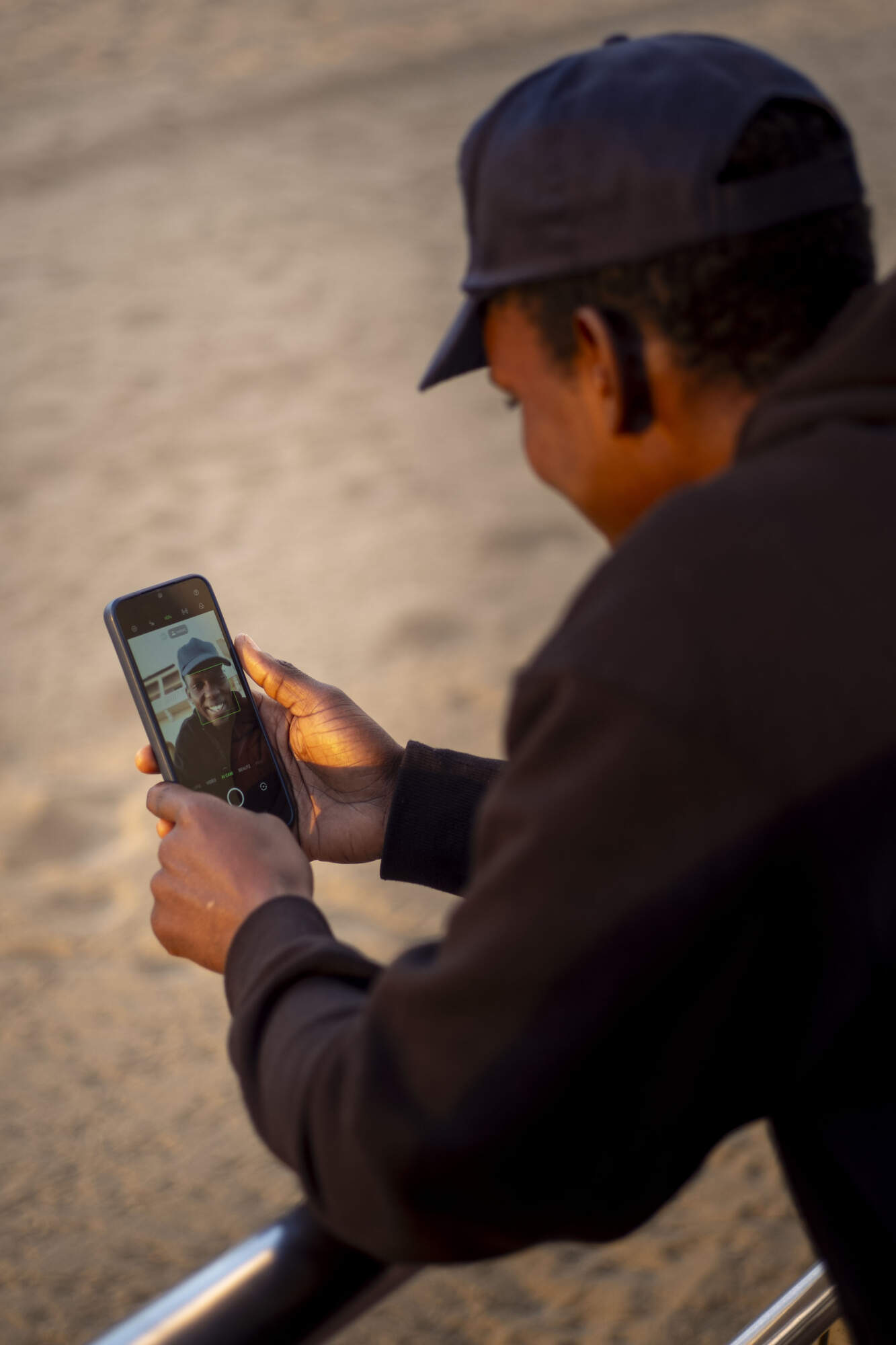
A migrant recently arrived in the Canary Islands films a video to post on his TikTok account from the beach of Las Canteras, Gran Canaria, Spain
I’ve always loved dressing elegantly—I don’t want people to look at me the wrong way because of my dresses. But people shouldn’t just stop at my photos because they look cool. You can be beautiful and poor at the same time. They might watch my videos on TikTok, believing that I got rich and decide to take a pirogue to join me. But that’s not reality, life is tough here. I won’t tell anyone to come, just as I won’t tell anyone not to come.” Daouda
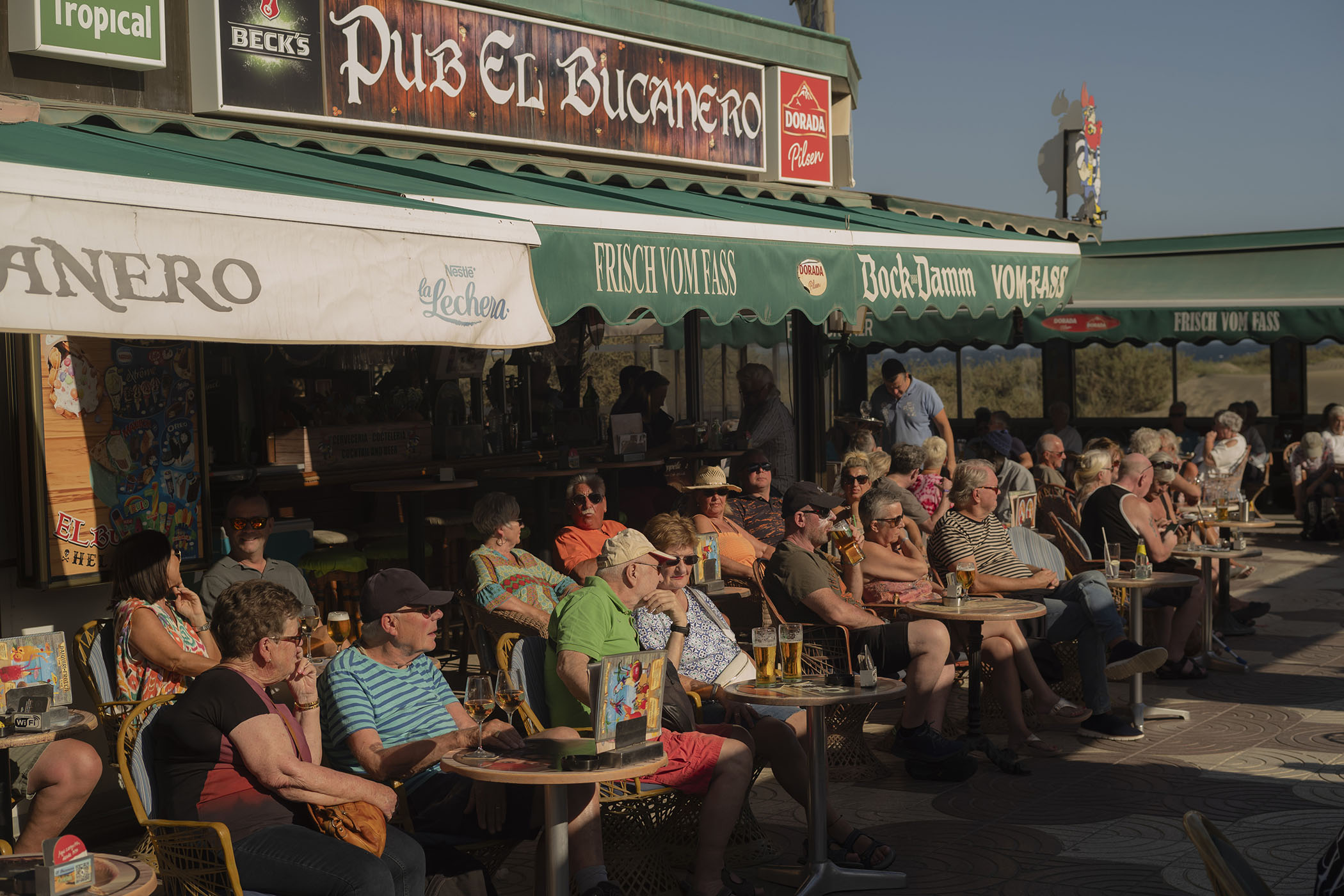
Tourists sitting at tables outside a bar beside the beach. Playa del Inglés, Gran Canaria, Spain
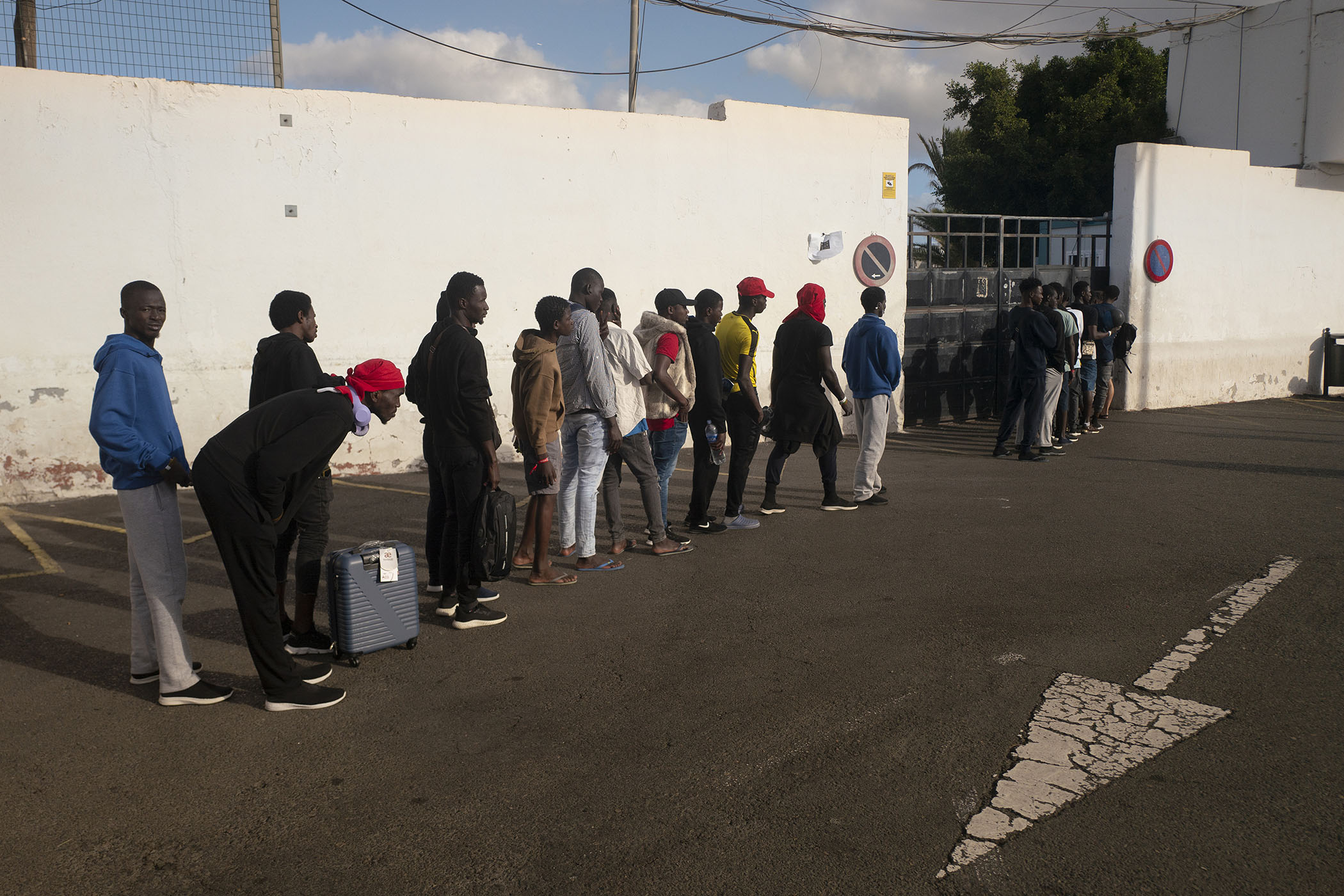
Migrants, recently arrived in Gran Canaria, queue outside a reception centre. Las Palmas, Gran Canaria, Spain
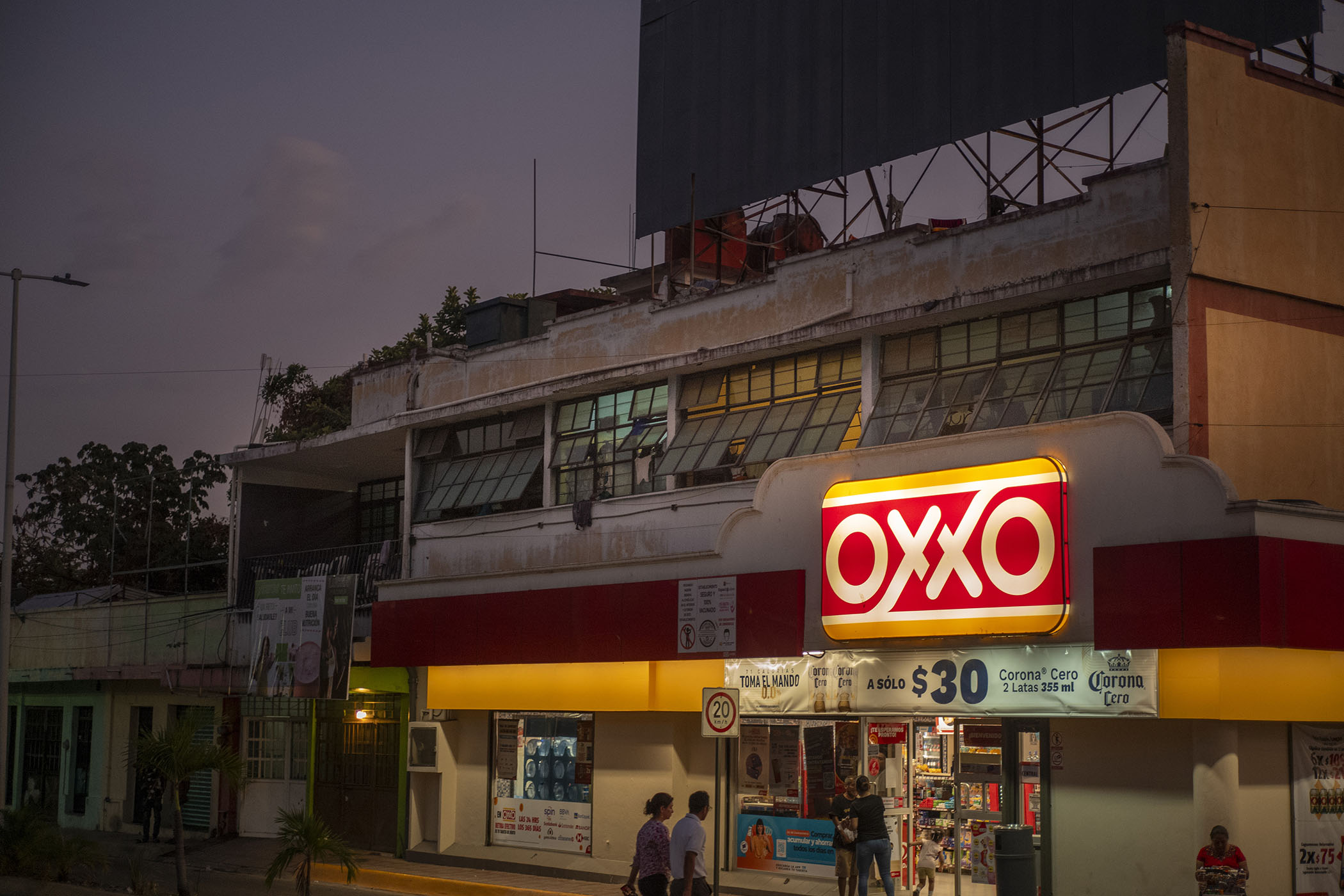
The 'Ghana House', a shelter where many young migrants from West Africa stay and hide from the police. Tapachula, Mexico
African migration towards the United States has existed for decades, often linked to work or study opportunities, but it has increased sharply in recent years. More and more West Africans are now crossing the world in the hope of reaching the United States through Latin America. In 2023, nearly 60,000 Africans attempted to cross the US-Mexico border, three times more than the previous year. Previously, another route existed through Brazil, but its length and difficulty prevented it from becoming widespread.
Many testimonies point to a turning point in 2021, when Nicaragua relaxed visa requirements for several African nationalities. In West African neighbourhoods, people began saying that the American dream could now be reached for less than €10,000. Once in Nicaragua, migrants join the constant flow of people moving north through Central America. Along the route, they encounter jungles, shelters, smugglers, checkpoints and criminal networks linked to cartels or corrupt state structures. Unlike many Latin American migrants who often leave with little preparation or savings, many West Africans sell cars, land or apartments to finance the journey.
In 2025, the return of Donald Trump to the White House and his hardline anti-immigration rhetoric discouraged many potential migrants in cities such as Dakar, Nouakchott, Bamako, Ouagadougou and N’Djamena. But for those already on the road, sometimes stranded for months, the dream remains alive.
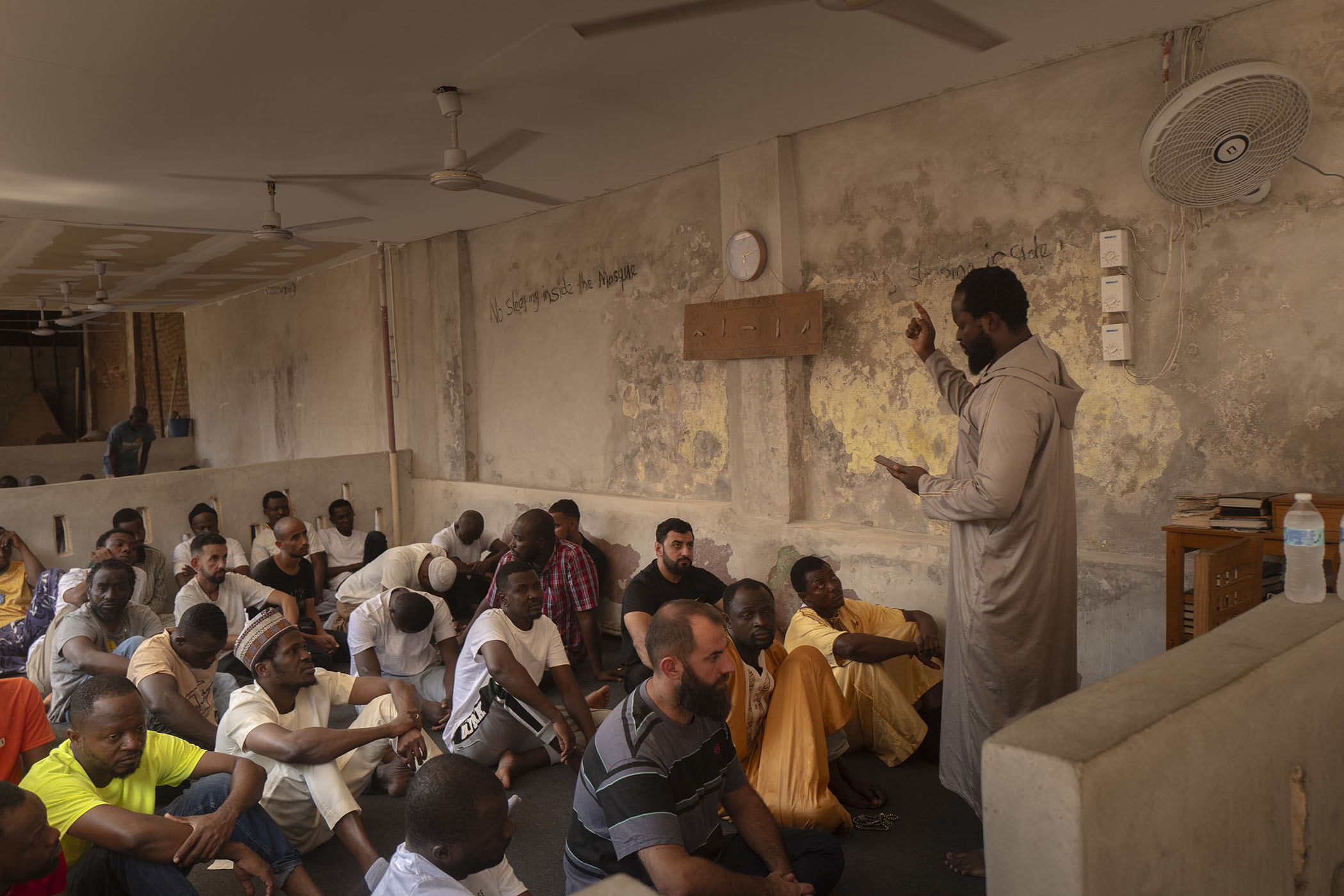
Friday prayers take place inside a makeshift mosque, a shelter relied upon by many young migrants from West Africa. Tapachula, Mexico
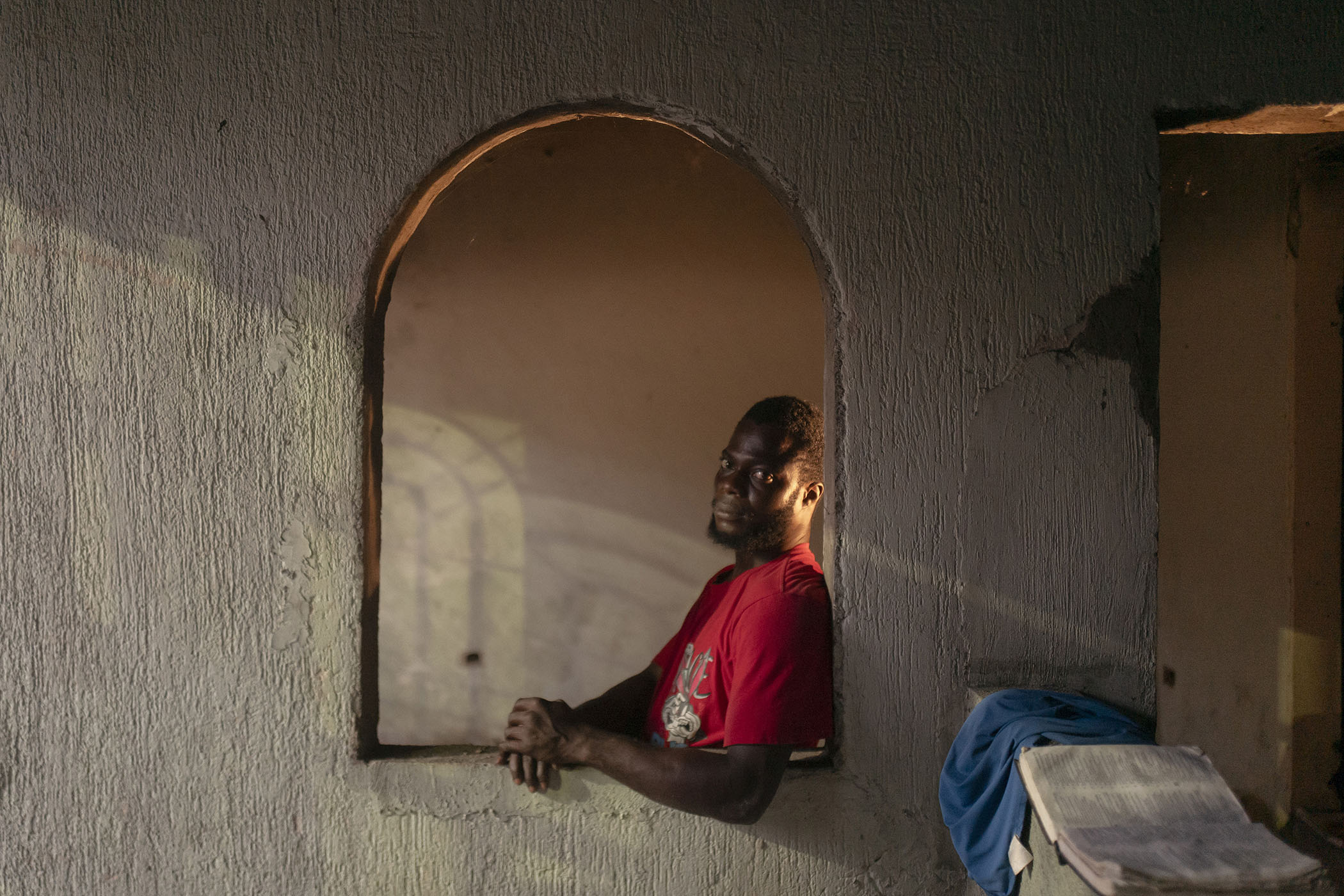
Obiniya Ego'onou, a Nigerian migrant who has been travelling for ten years, inside the abandoned house where he lives. Tapachula, Mexico
It’s been 10 years since I left Nigeria. Back there, I was a street worker, like my father. I’m alone here, bro.Few people know this, but you can call me Friday too, it’s my nickname. I live over there, in the abandoned house next to the supermarket, you know? My job is begging. Some days I work at the restaurant over there, cleaning their toilets, and they give me 100 pesos and let me take a shower. I call my family at the beginning of each month, every month. I tell them that everything’s okay, that things are going well here. I’m not on social media, just on WhatsApp. The other Nigerians don’t want me to hang out with them. I’m alone. Some days I smoke a little, sometimes I beg, sometimes I just sleep. One day, bro, I’ll be in New York…” Obiniya Ego’onou
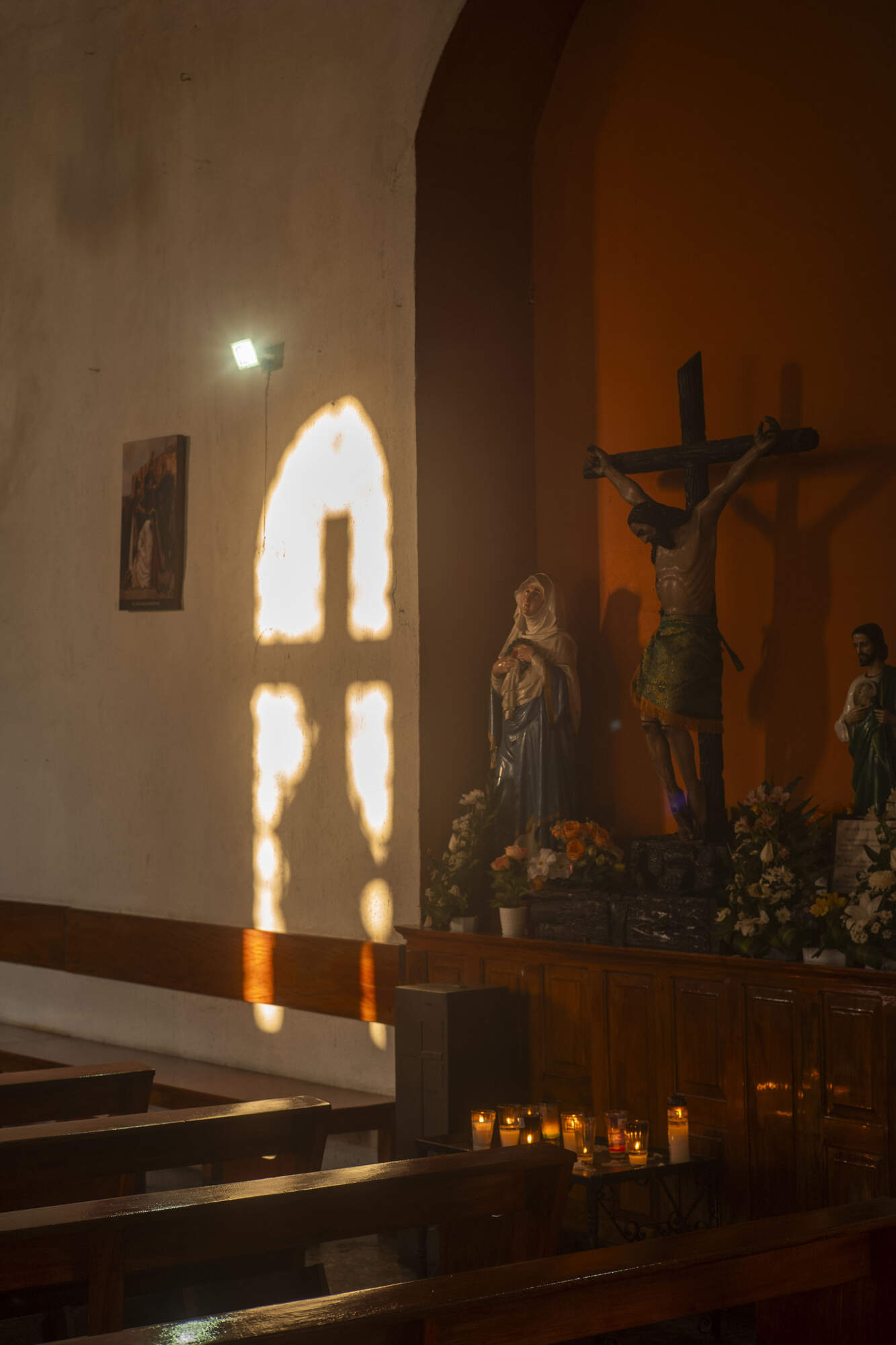
Light projects the shadow of a crucifix inside a church. Tapachula, Mexico
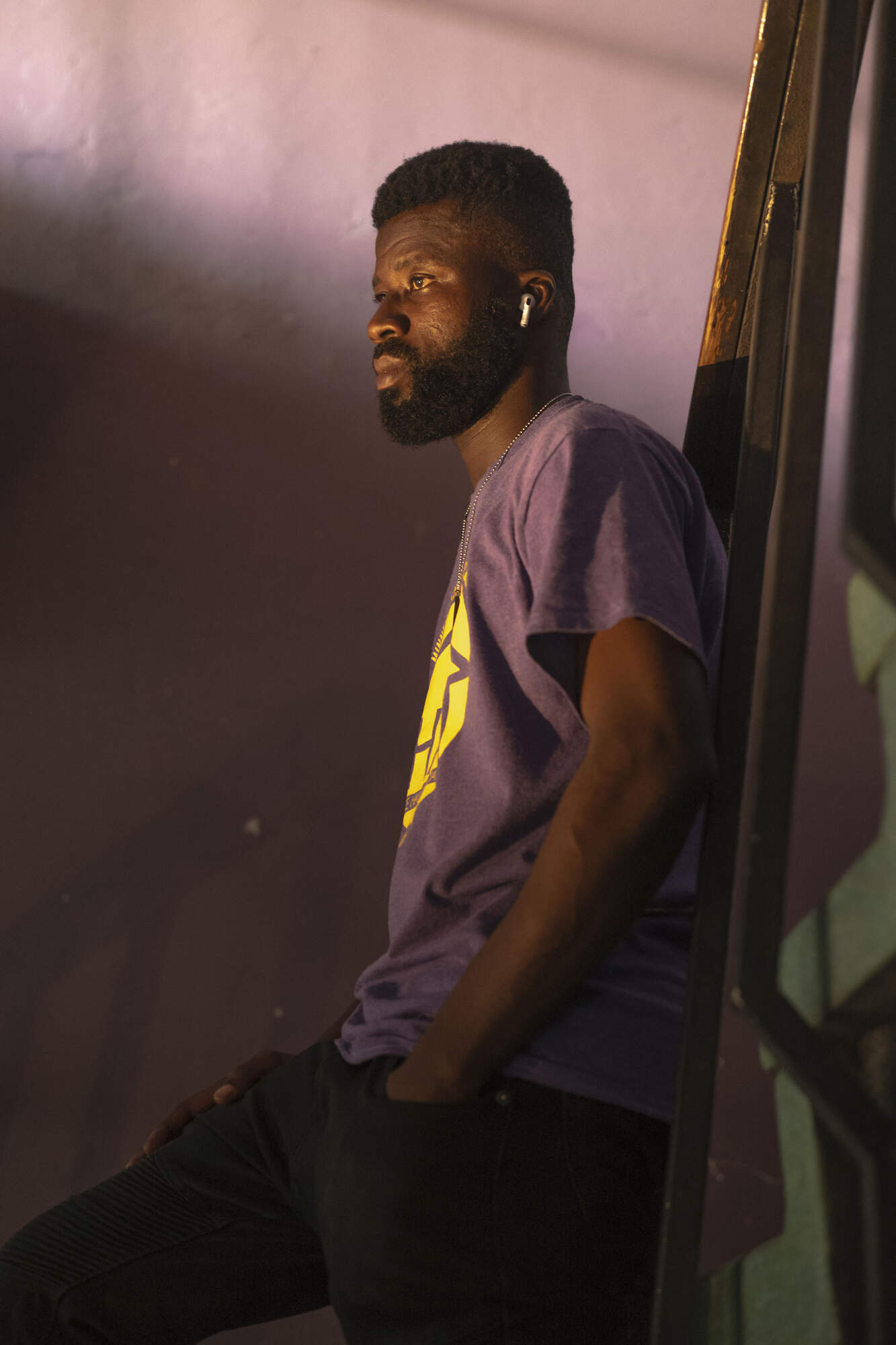
Mohamed Ayefoune Assongnibe, from Togo, who arrived in southern Mexico three months earlier, inside the apartment where he lives. Tapachula, Mexico
I arrived in Tapachula three months ago. I landed in Brazil, decided to go to the United States, and started making my way up. The hardest part? Panama. It was horrible. We had to climb on a mountain, using ropes anchored into the rock to pull ourselves up. Once we reached the top, men dressed in black, masked, and armed, were waiting for us. One of them put a gun to my head and took everything—our phones, our money. At least I was alive. My wife Aïda and my two children, Zeït and Amir, are the only ones who know I’m here in Mexico. No one else. When I lost my phone, I lost access to all my social media accounts. I decided to create new ones, but only for Aïda. I’m completely disconnected from TikTok, Instagram, all of it. As soon as I reach my goal, I’ll be back on social media. But first, I have to get where I need to go. I can’t post things while life here is still so difficult. An adventurer must always stay positive and patient. You can’t run and scratch your butt at the same time.”
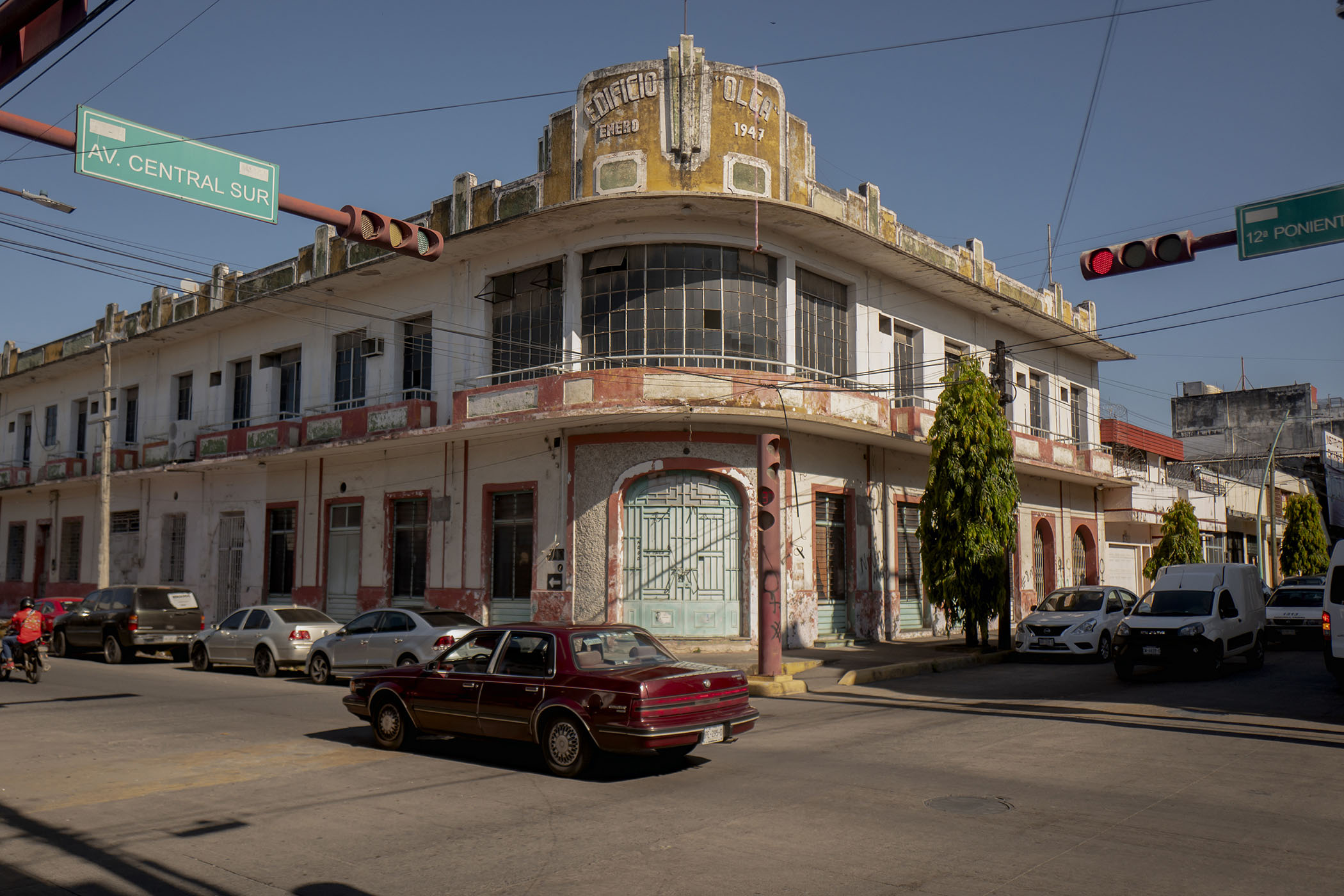
Mid-twentieth century architecture in Tapachula a crossroads for migrants travelling north through Mexico.
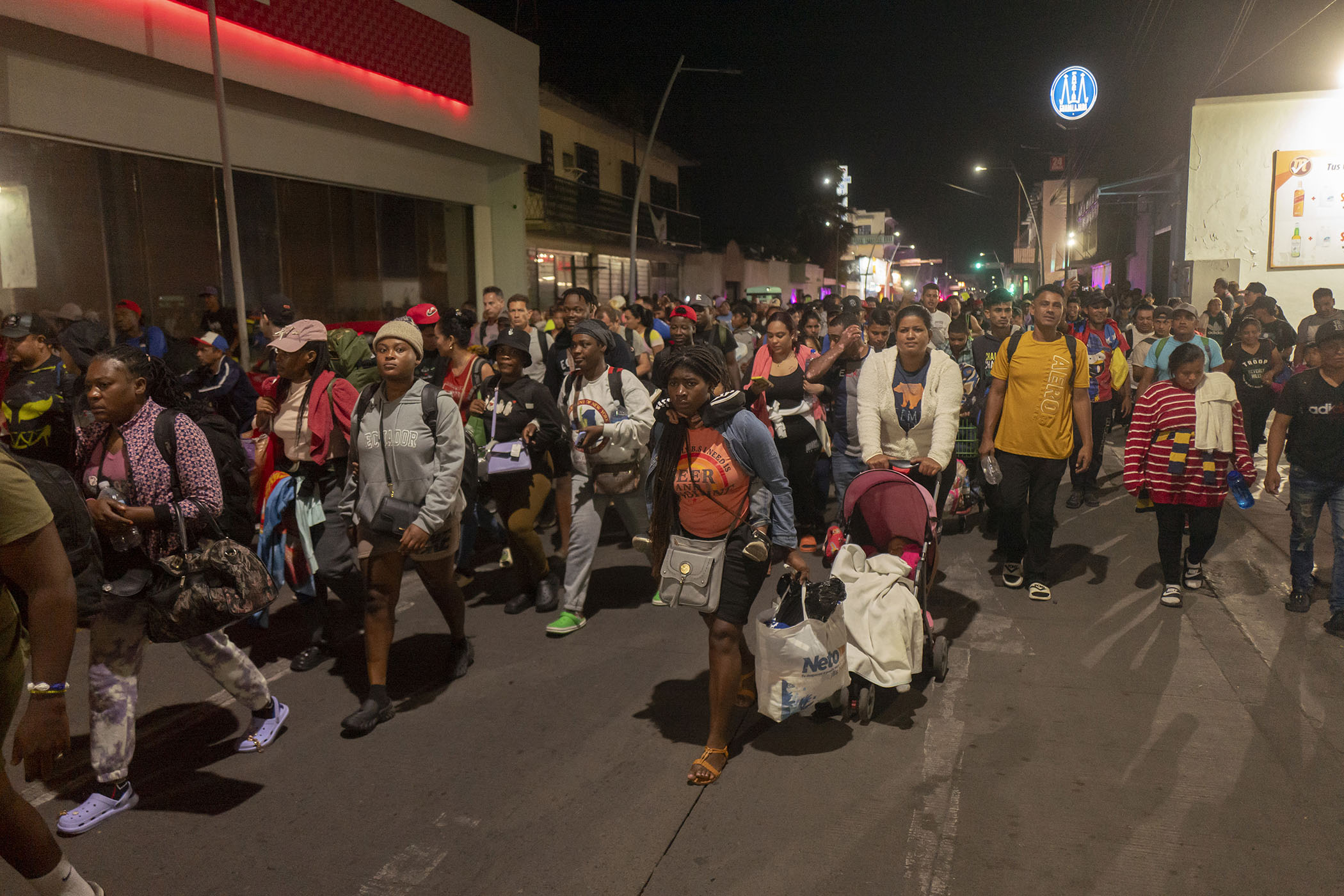
A migrant caravan on its way towards Mexico City, more than 1,050 kilometres away. Tapachula, Mexico
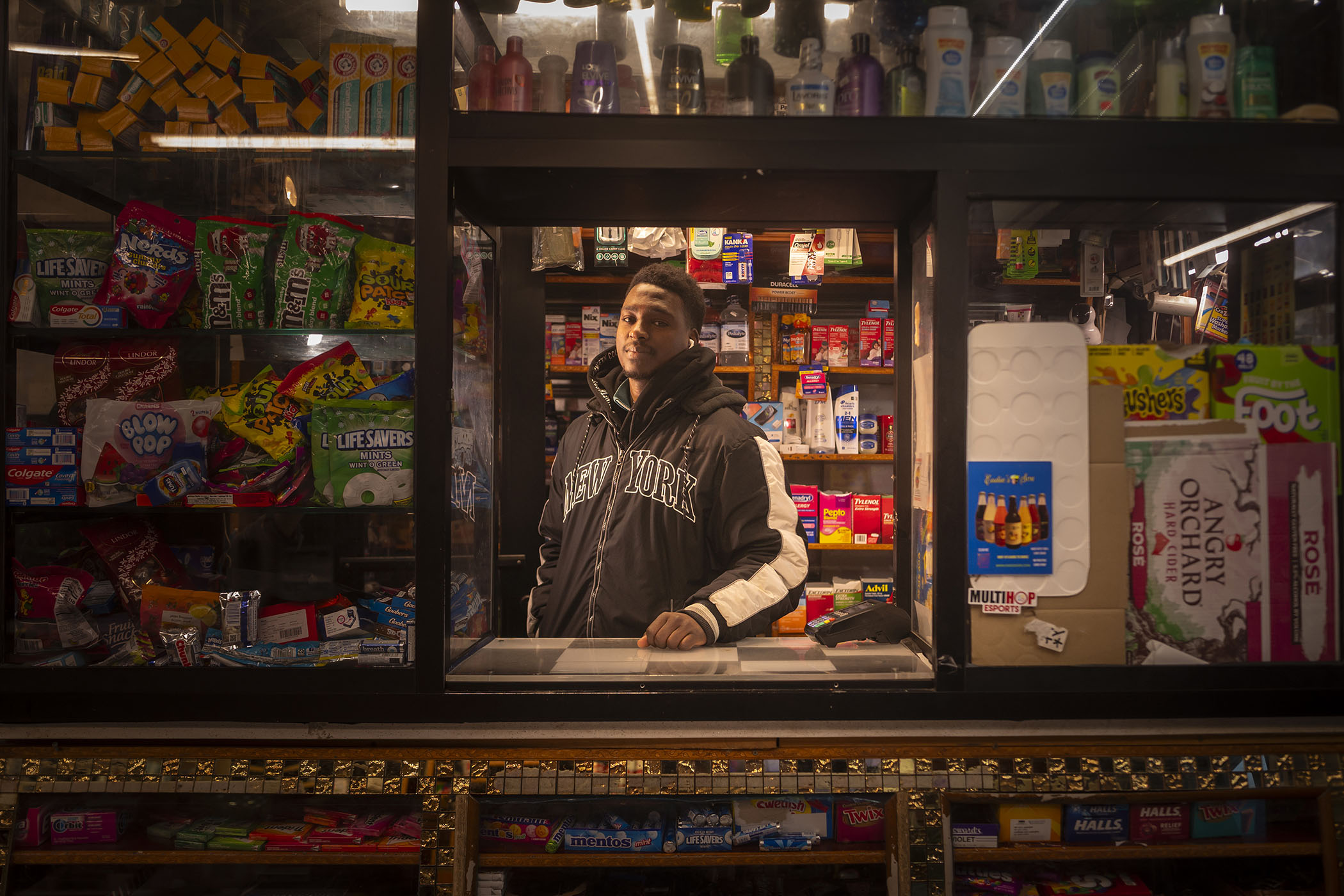
Daha, a former Mauritanian football player, stands behind the counter at a 24 hour convience store in Harlem. New York, USA
I arrived last year from Nouadhibou, Mauritania. I was a football player, the playmaker for the Falloujah team in Iraq in 2022. I was good and I had many expectations for my future, but I got injured and my career was suddenly over. When I came back to Mauritania I hesitated few months and then I left. I’m here only for working. From the money I earn, I send a little to my family, keep some for my asylum lawyer, and finally, I pay the rent for the apartment.” Daha
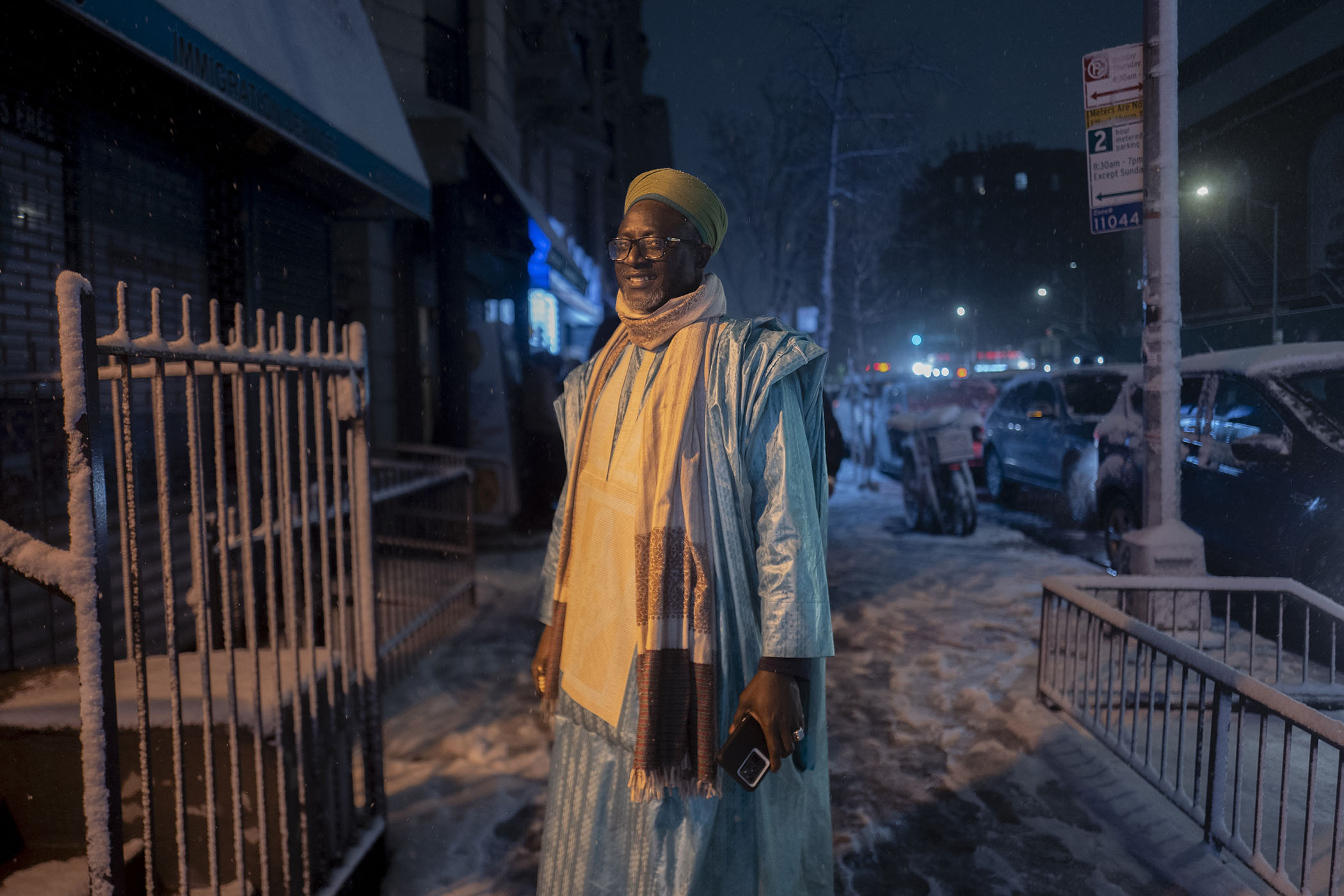
Imam Oumar Niass, grandson of Cheikh Ibrahim ibn El Hadji Niasse, one of the leading figures of West African Mouridism, outside the Association of Senegalese in Harlem. For years, Imam Omar has provided temporary accommodation to thousands of migrants at the Jamhiyatu Ansaru-Deen Islamic mosque.
If you are all here, it’s because God willed it. Perhaps, if you hadn’t come here, Trump wouldn’t be president. God decides everything. That’s why I believe Africans, especially Senegalese people, should always give thanks to God.Each of you has already submitted your papers and is waiting for the work permit. So, let’s stay calm and have faith in what we believe. Continue doing your work as usual and always respect American laws. Don’t give the police any reason to detain and deport you. If someone needs an address, whether they are in Brazil, Senegal, or anywhere else, give them the address of Baye Oumar Niass, let them come. It’s immigration and Trump who are afraid of us, but we are not afraid of them.” Imam Niass
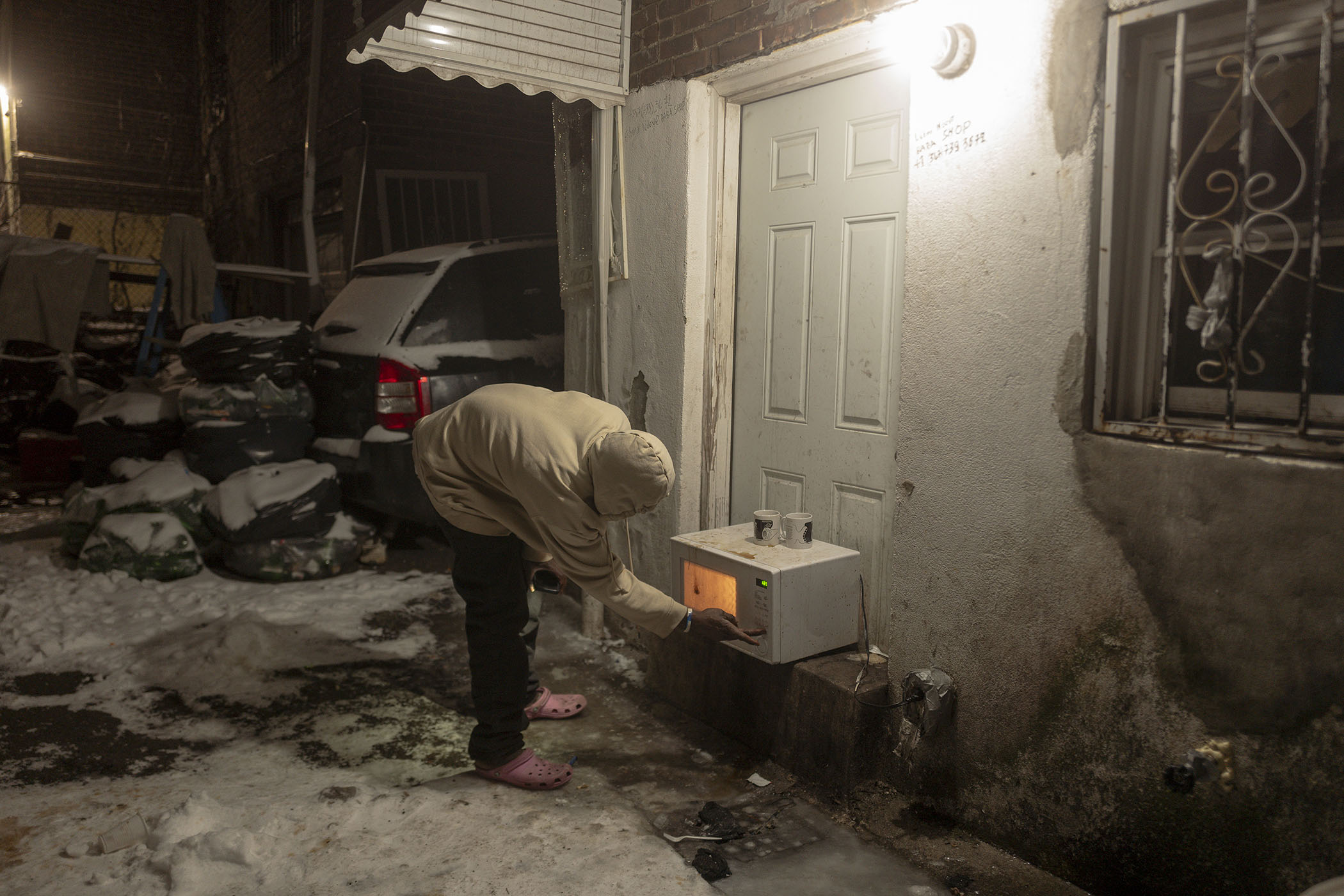
In the garden of Imam Niass' house in the Bronx, a Senegalese man heats food, donated by neighbouring restaurants, in a microwave. New York, USA
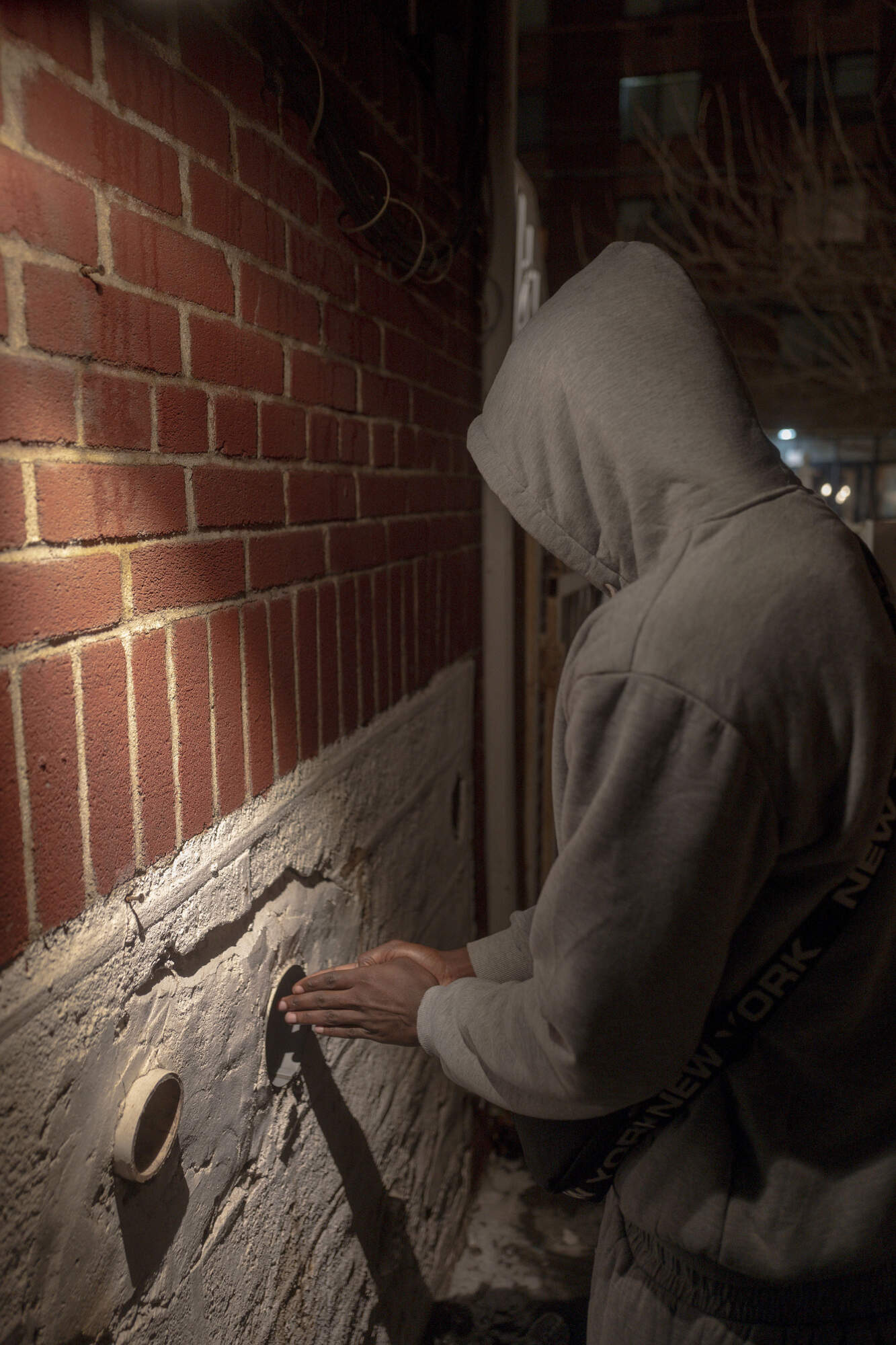
A Senegalese man warms his hands beside a vent before leaving to deliver food in temperatures of -12°C.New York, USA
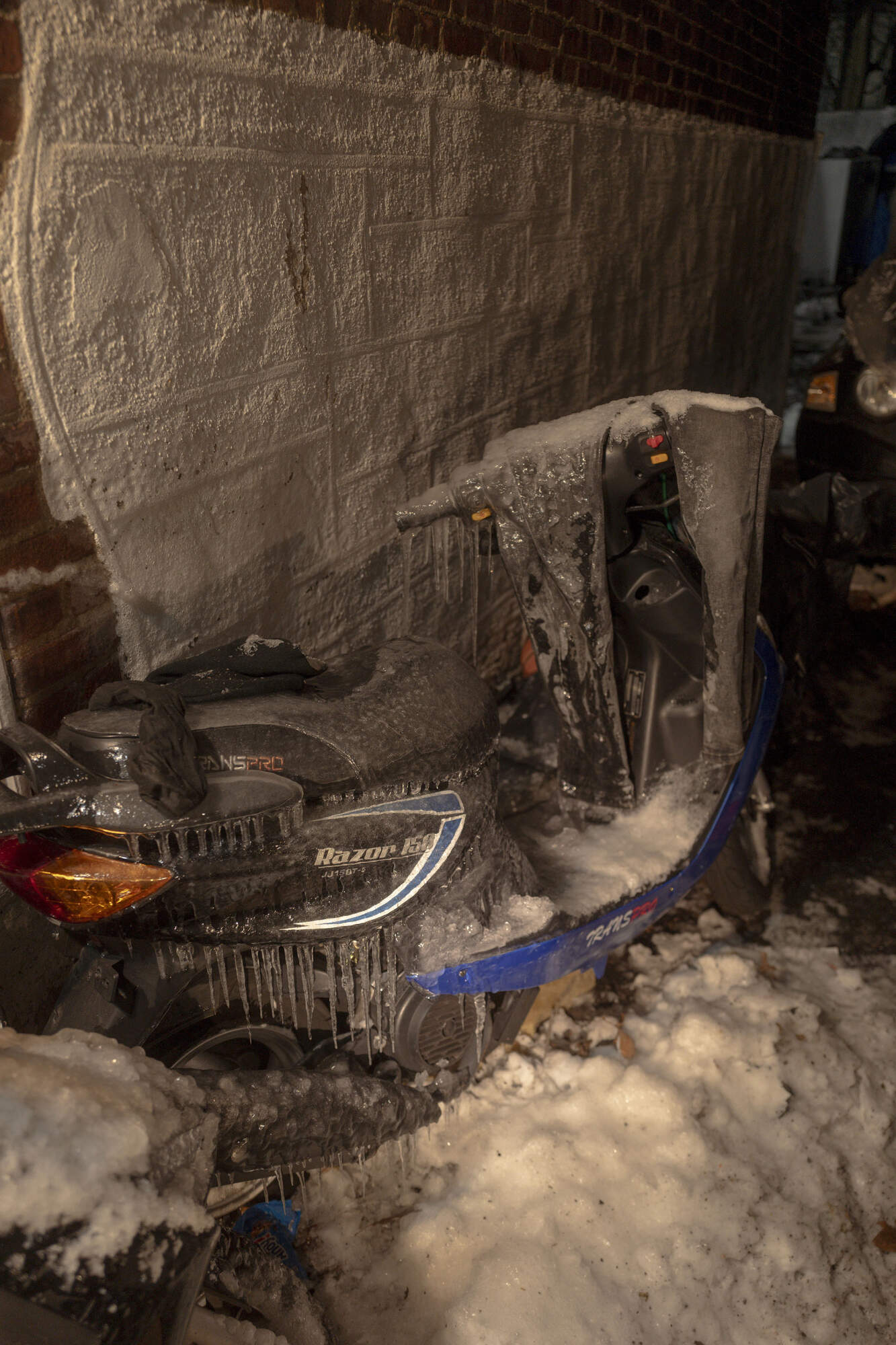
A motorscooter covered in ice during a cold night. New York, USA
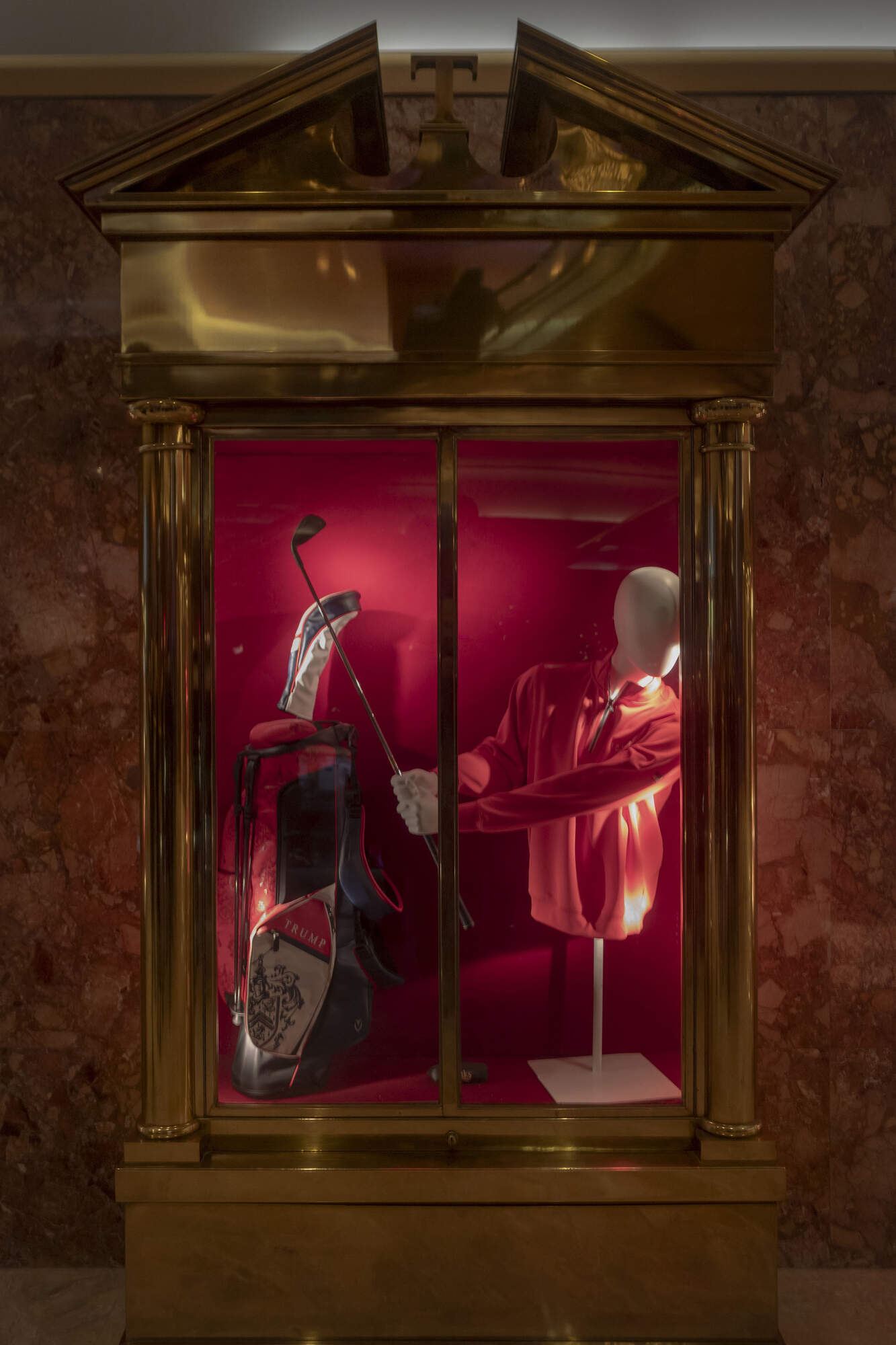
Donald Trump-branded merchandise displayed for sale inside the Trump Tower in Manhattan.
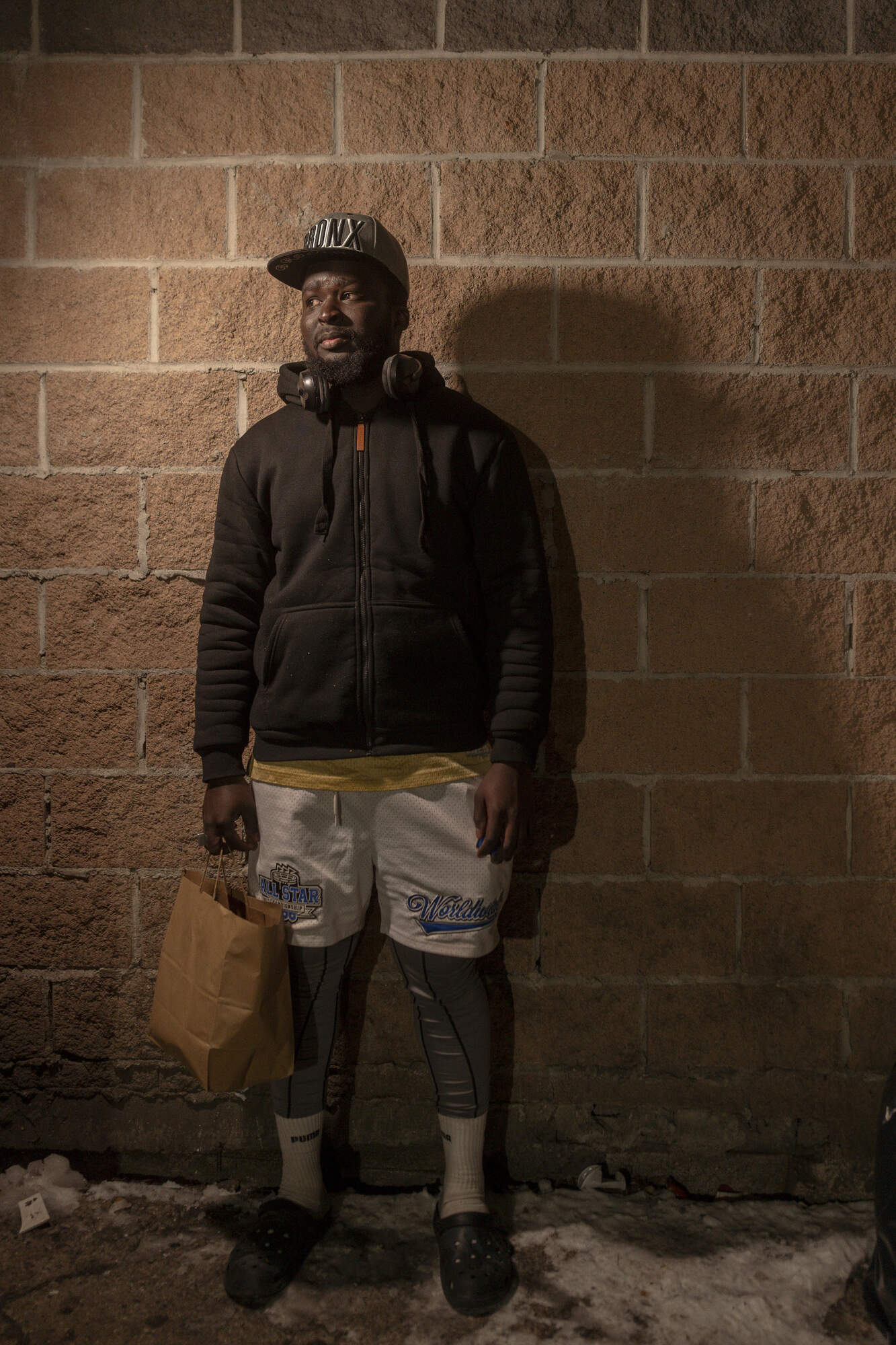
Samba, known among his friends in Dakar as 'The American' because of the way he dressed, outside the Jamhiyatu Ansaru-Deen Islamic mosque in the Bronx. After reaching the United States, he discovered that life was far more difficult than he had imagined. He now struggles to survive on the wages earned from food deliveries and feels trapped, unable to return to Senegal where he says he once had a better life.
That word echoed in my mind: America, America, America! I believed that once here I would have found money growing from the trees! Migrants lied to us. About everything! I don’t even dare now to post my photos. It’s too difficult. I don’t want to give people something to talk about. If I tell the truth they’ll think I’m being mean and that I don’t want other people to come. I understand—I used to think the same way. I know, they will ask me: “so, why haven’t you already come back home?” The reality is that I can’t come back, I have been the only one in my family who got the chance to leave. My father told me that this is part of the adventure and I have to deal with. I’m fucked! What I learnt? When you stop thinking you’re missing something, you stop desiring it.” Samba
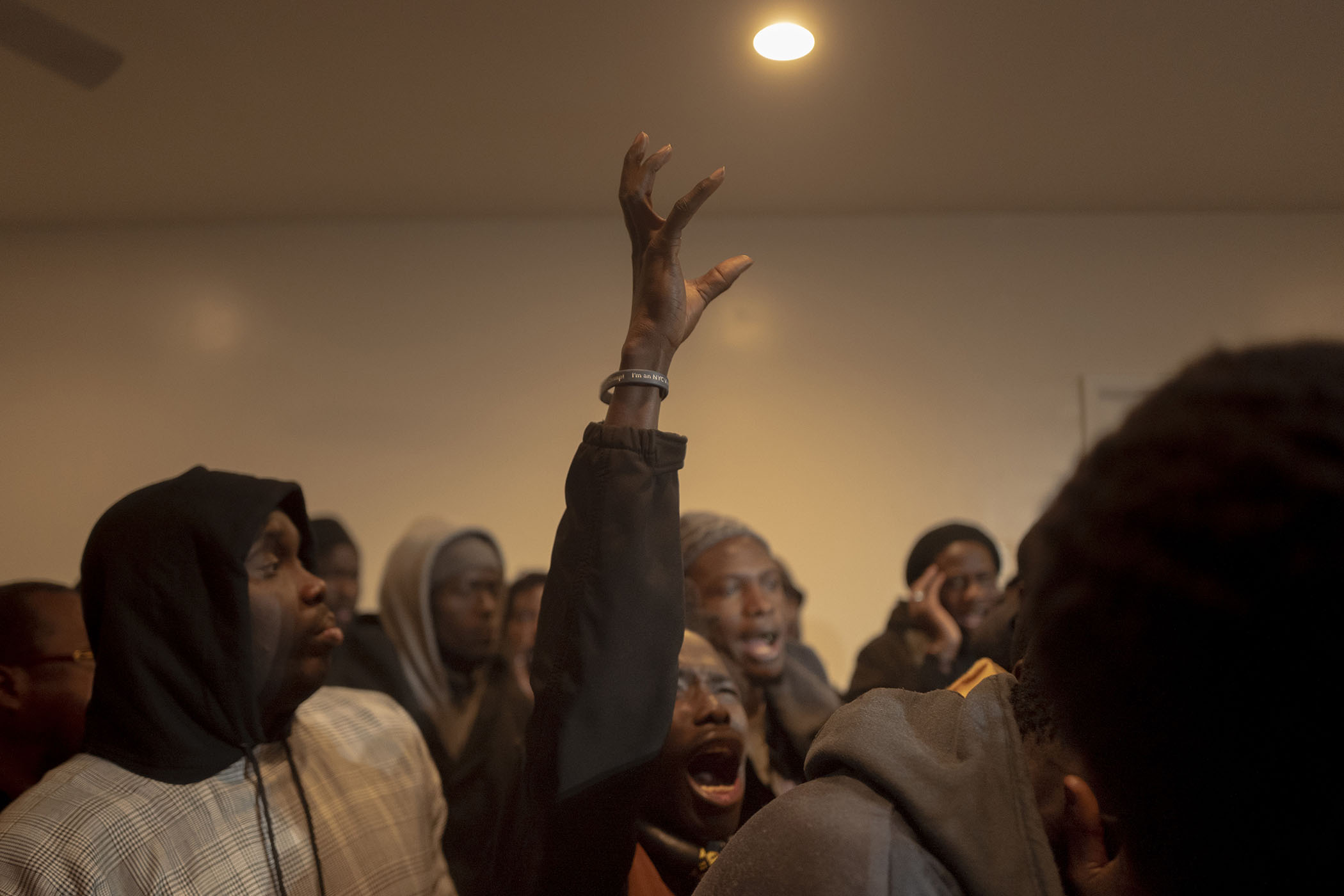
Men sing a 'Mouride', a religious chant, inside the Senegalese Association of New York, where prayers were held in honour of Magatte Sylla, a young Senegalese man who died suddenly four days earlier.
On January 16th, 2025 in New York City, Magatte Sylla, a 30 year-old man from Senegal, was suddenly struck down by an illness. In these cases, fellow countrymen organise a fundraising campaign to transport the deceased back to their country of origin. Magatte’s body was sent back to his wife and two children in Senegal.
While the plane carried Magatte above the Atlantic, about 100 Senegalese gathered in the small, cramped room of the Senegalese Association of America on 116th Street in New York. A man extended his hand and began singing a Mouride religious song a cappella. All the men followed, first in a disorganized manner, but as the minutes passed, they harmonized their voices.They squatted down, formed a circle around the first singer, sang, stood up, and swayed. For two hours, they engaged in an incantatory search for unity in prayer, beyond which nothing seemed to exist.
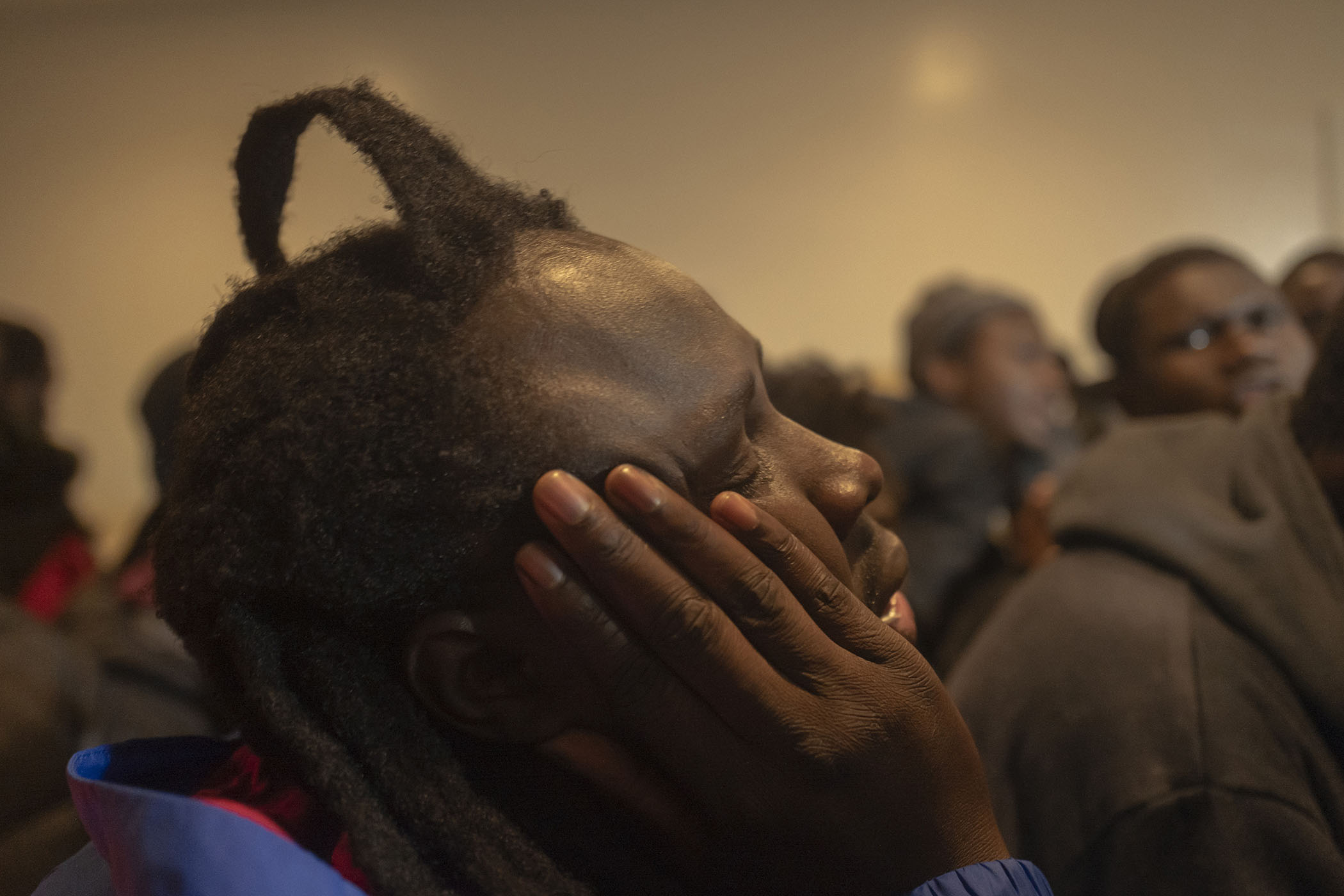
Men sing a 'Mouride', a religious chant, inside the Senegalese Association of New York, where prayers were held in honour of Magatte Sylla, a young Senegalese man who died suddenly four days earlier.
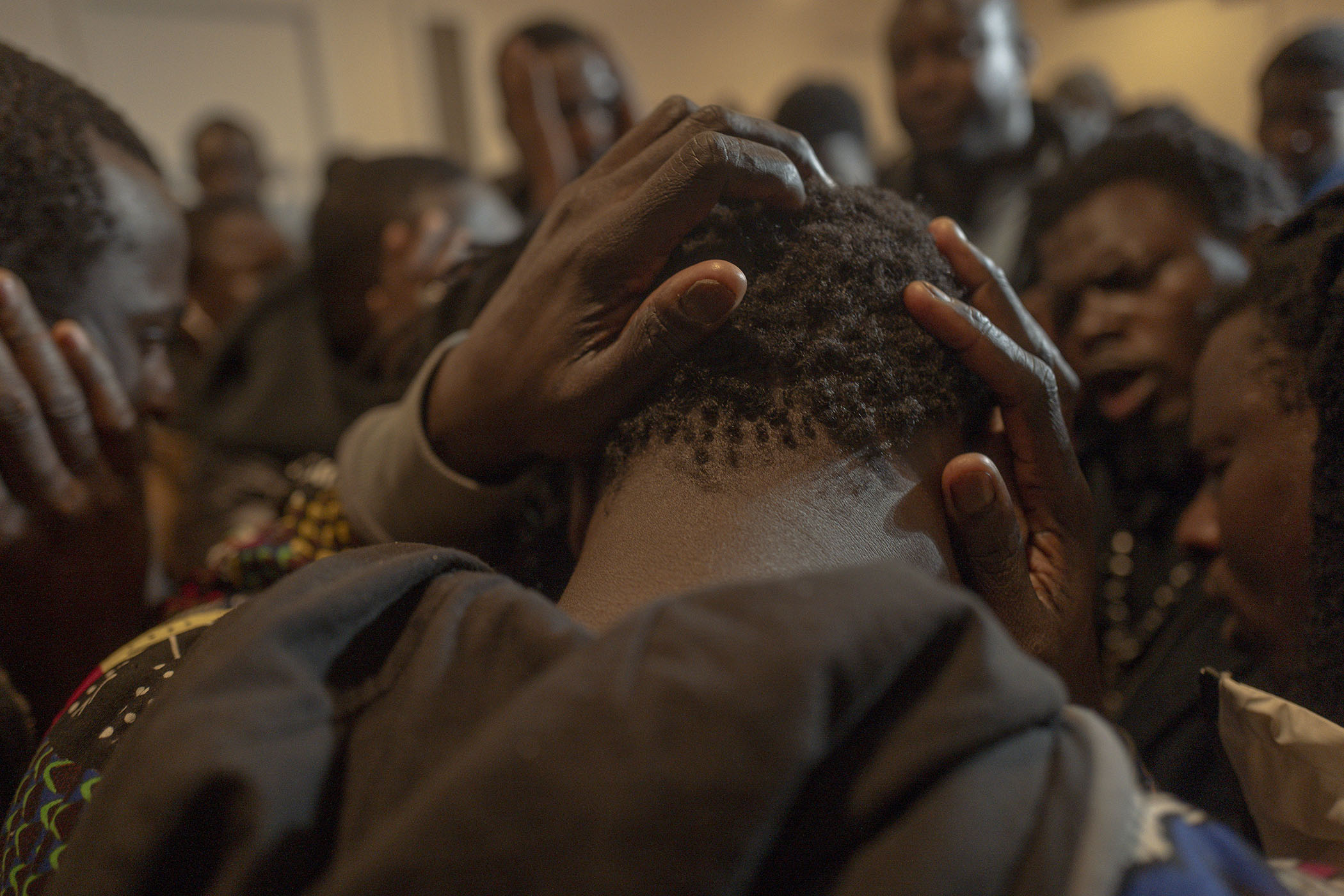
Men sing a 'Mouride', a religious chant, inside the Senegalese Association of New York, where prayers were held in honour of Magatte Sylla, a young Senegalese man who died suddenly four days earlier.
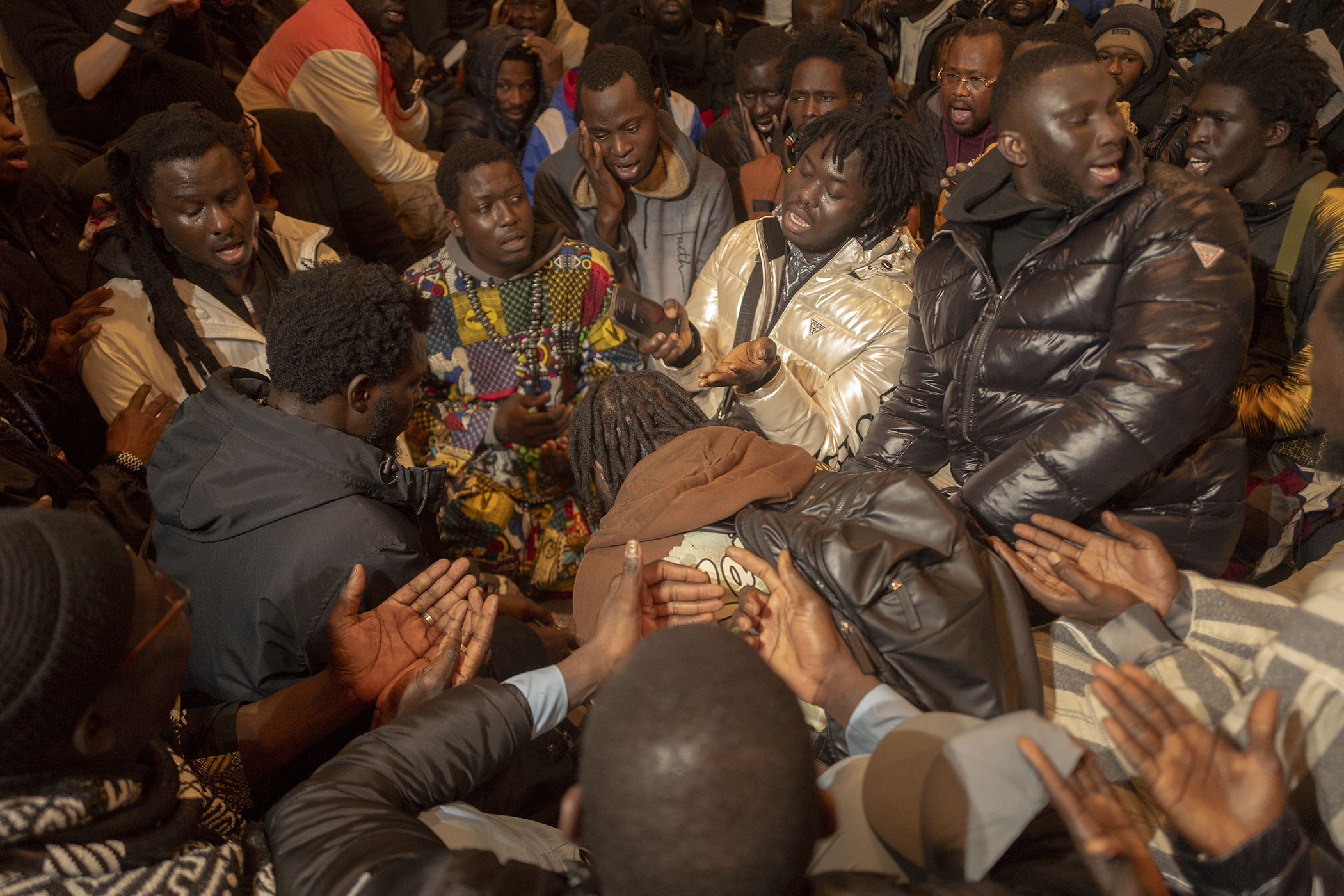
Men sing a 'Mouride', a religious chant, inside the Senegalese Association of New York, where prayers were held in honour of Magatte Sylla, a young Senegalese man who died suddenly four days earlier.
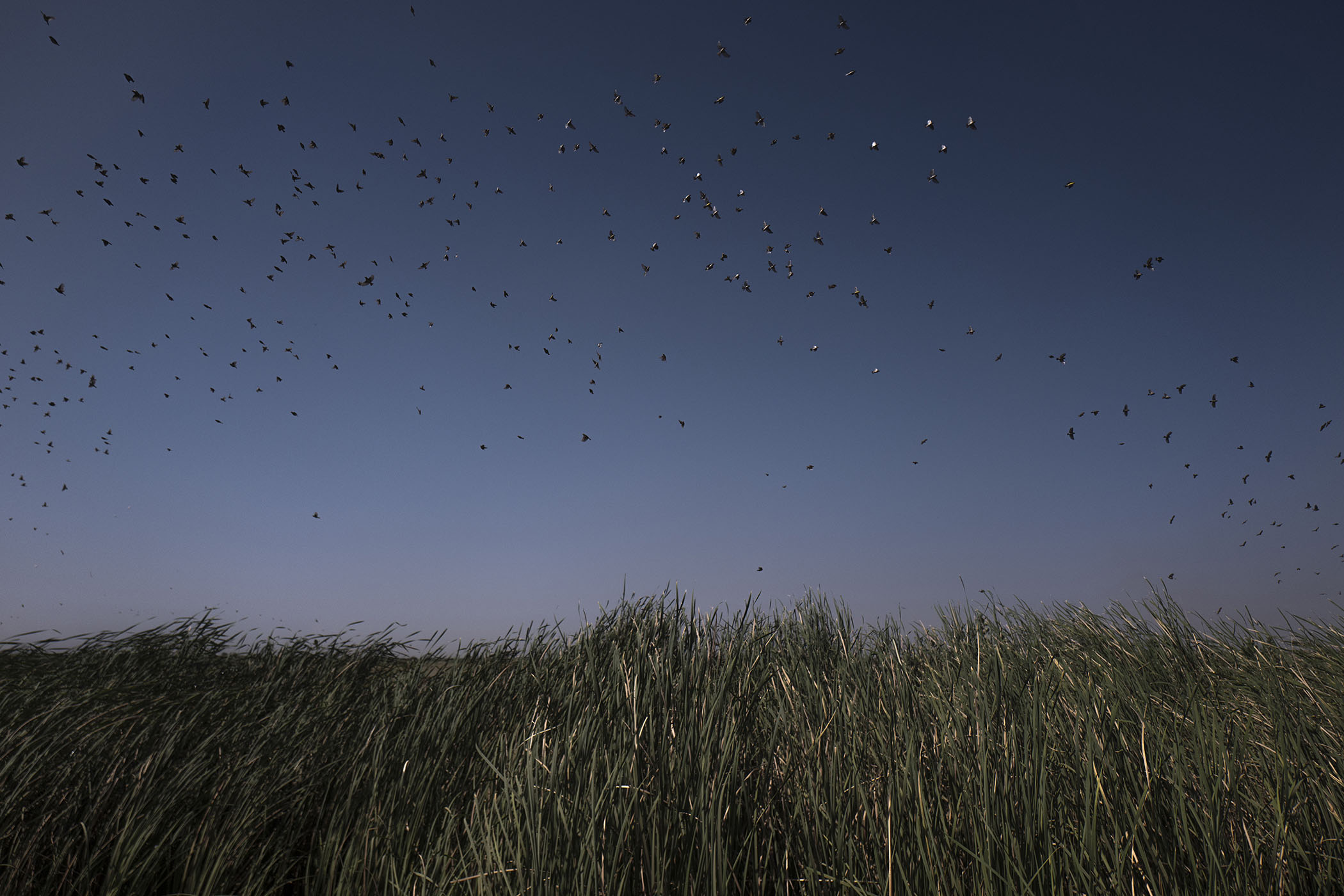
A flock of birds fly above irrigation canals running through rice fields. Rosso, Mauritania
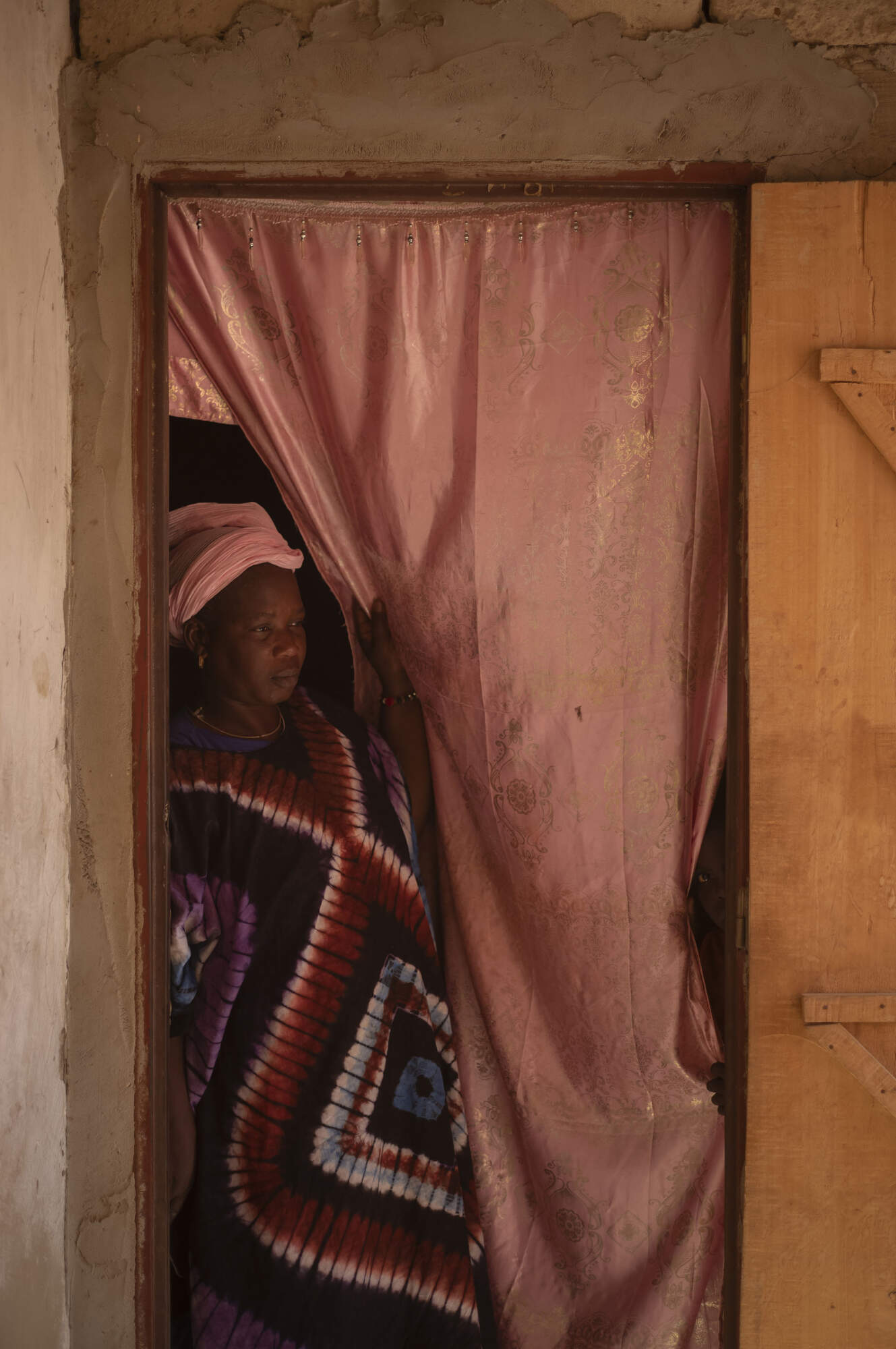
Rosso, Mauritania. Bineta looks out from behind a doorway curtain at her house. Her son, Abdoulaye Gaye, was found dead in a canoe (pirogue) floating, thousands of miles of course, in the Dominican Republicafter having drifted across the Atlantic ocean. On board, only the remains of 14 people after an attempt to reach the Canary Islands.
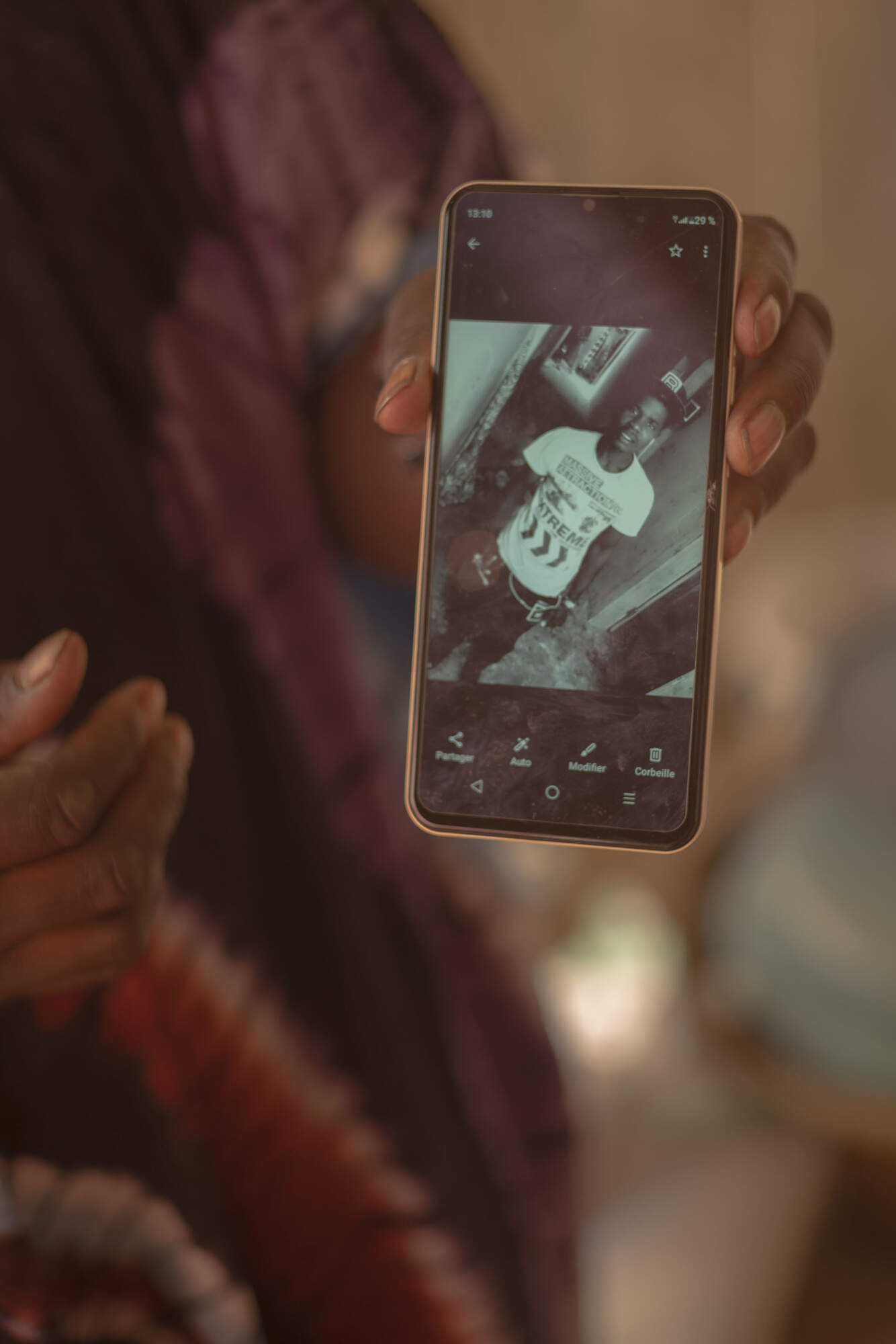
Rosso, Mauritania. Bineta shows the photo of her son, Abdoulaye Gaye, who was found dead in a canoe (pirogue) floating, thousands of miles of course in the Dominican Republic, after an attempt to reach the Canary Islands.
“Abdoulaye was my first son. His grandfather brought him to Nouakchott. One day he disappeared. He didn’t tell anyone, he didn’t even call me.I couldn’t eat or drink for days. One night, I thought of Abdoulaye, I heard the children saying they saw him on TV. So I got up, but he wasn’t on the screen. I went back to bed, but I couldn’t fall asleep again. I waited and waited. Eight months without news from him. One day Zeinabou, my sister-in-law, received a message on Whatsapp, it was his ID card. Nothing we could do. We had to surrender to God’s will—He gave him to us, and he took him back. God is always with us.”
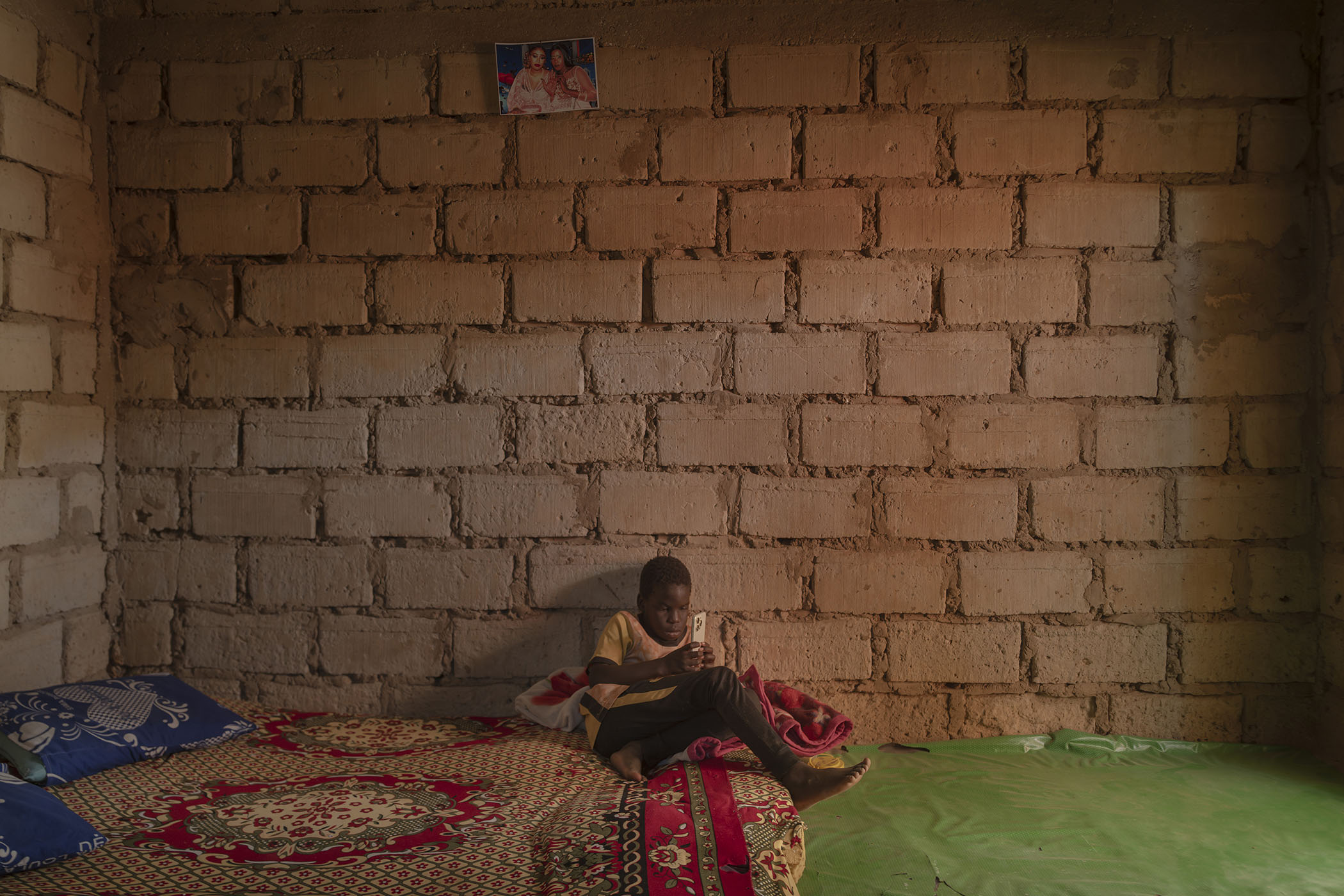
In Abdoulaye Gaye's empty room, his younger brother Amadou Ibe, sits on the bed holding a smartphone. Abdoulaye Gaye was found dead in a canoe (pirogue) floating, thousands of miles of course, after an attempt to reach the Canary Islands.