
Every year at Easter hundreds of Afro-Colombians travel up the Yurumanguí river from Buenaventura on the Colombian Pacific coast. They navigate their way through mangroves and rainforest arriving ten hours later at the remote riverside community of Juntas. Settled by descendants of enslaved Africans brought to the region in the 1700s to mine gold, the community faces threats from illegal mining, logging and armed groups.
They reunite and gather in Juntas to celebrate the Fiesta de los Manacillos, a traditional ritual held during Holy Week that blends Catholicism with African spiritual ceremonies. It is not only a celebration, the festival is a homecoming for the diaspora many of whom have been displaced by the armed conflict in the area. "it's a story about peace, about resilience, about resistance," explains photographer Ever Andrés Mercado, himself an Afro-Colombian.
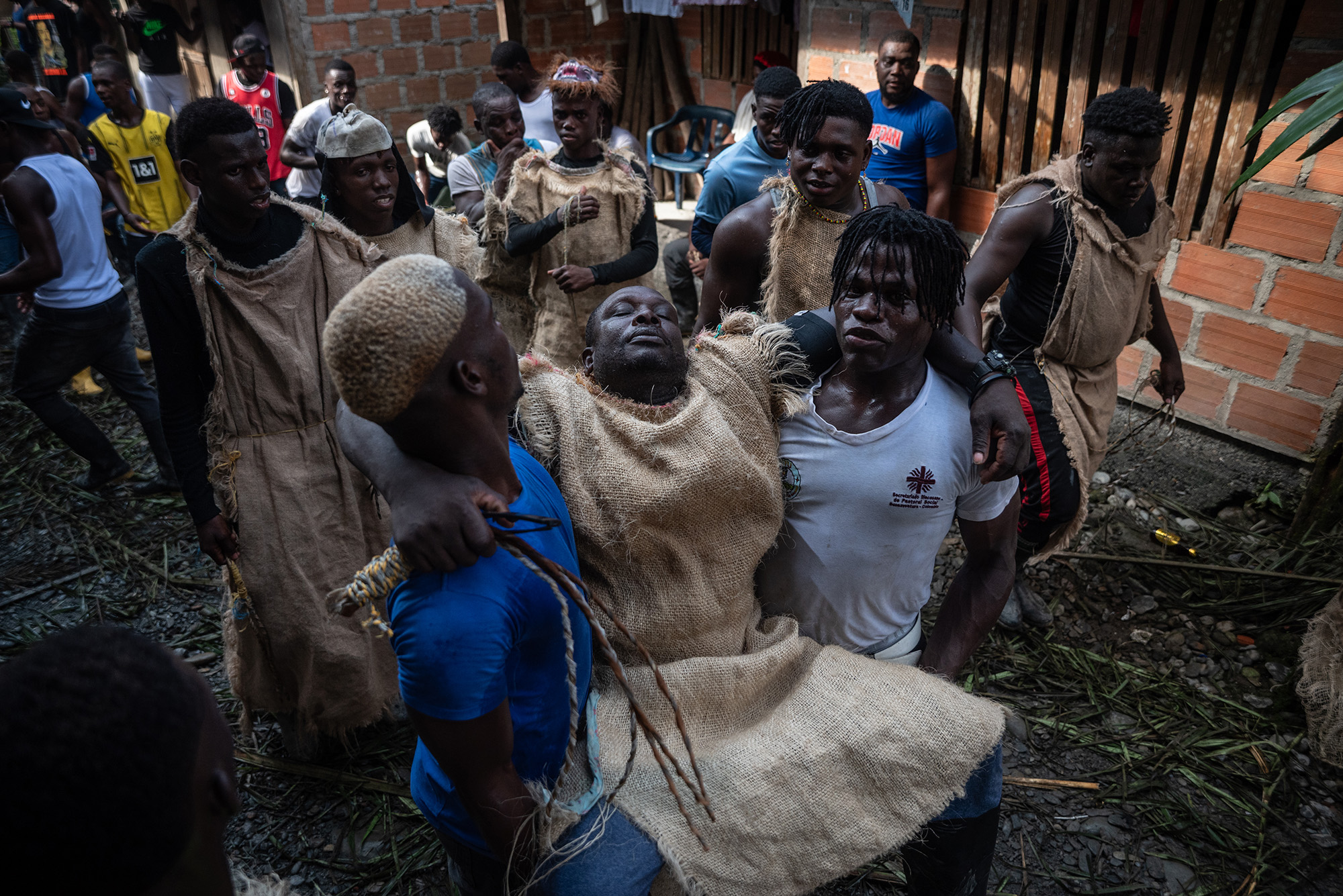
Kilinito is carried by two people after collapsing from exhaustion. The Manacillos four day fiesta is so demanding that no one rests in Juntas... especially the female singers and the Manacillos, who, after staying awake for 48 hours, begin to fall asleep (while singing and dancing) in the streets of the village as they wait for each day's activities to begin. Community of Juntas, Yurumanguí River, Buenaventura - Colombia
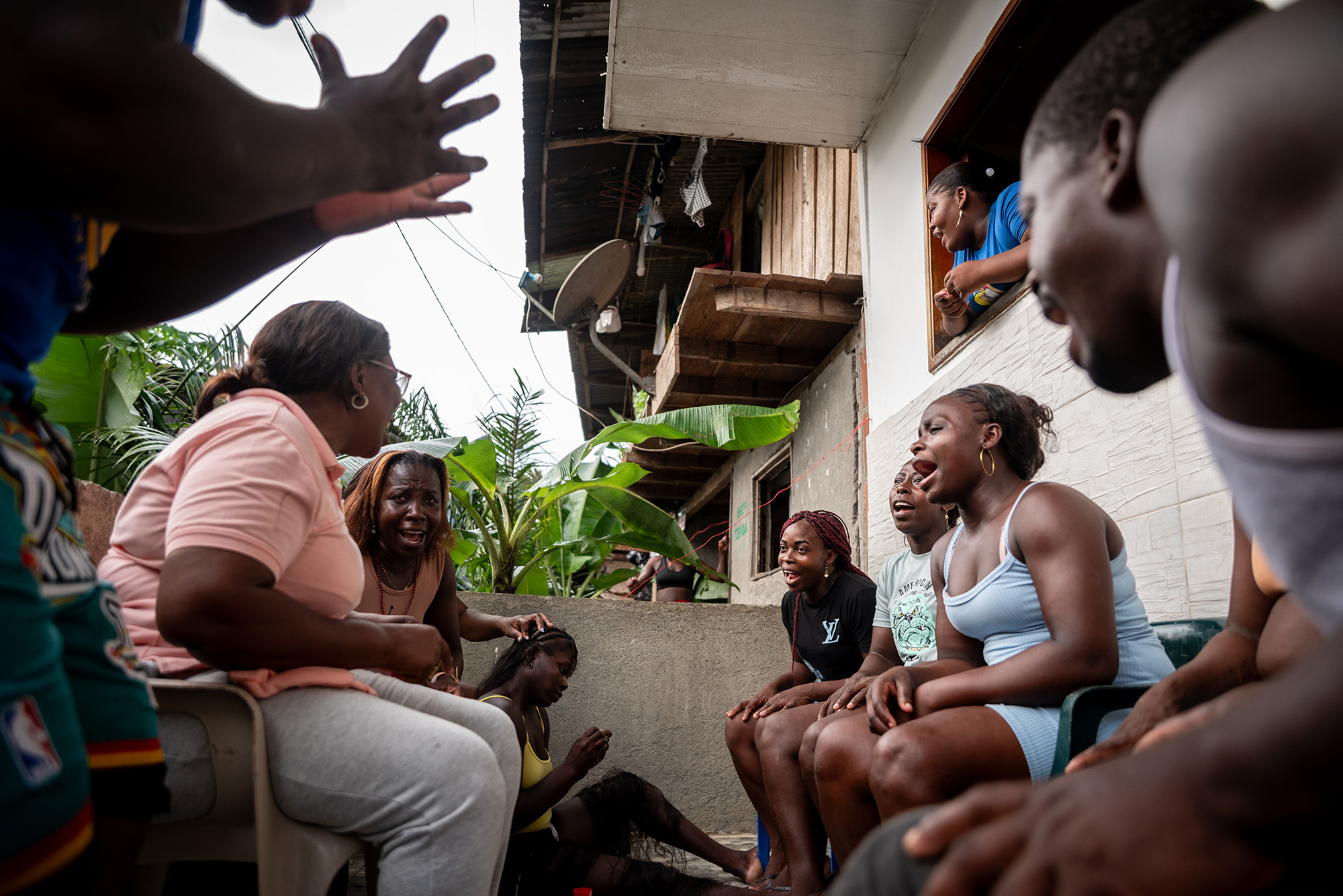
The day before Good Friday women gather to rehearse the ancestral songs (alabaos) for the Manacillos festival. Community of Juntas, Yurumanguí River, Buenaventura - Colombia
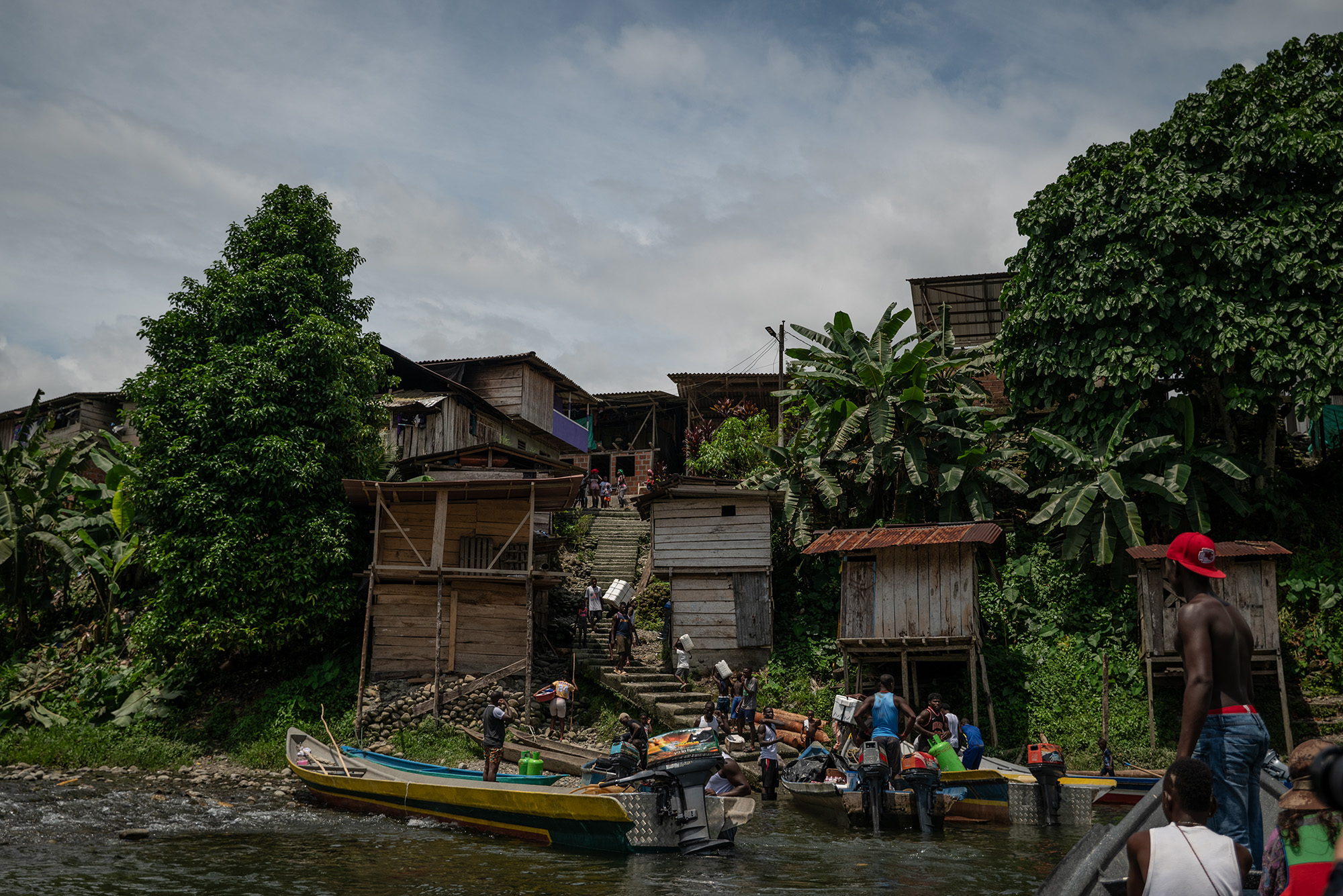
Families arriving at Juntas after travelling up river from Buenaventura and offloading supplies for the Manacillos festival. Many will not have been to the village for a year. Community of Juntas, Yurumanguí River, Buenaventura - Colombia
In recent decades thousands have fled from the area to Buenaventura and Cali in order to escape the violence.
Yet despite the intimidation each year families return to Juntas to reaffirm their claim to the land and their ancestral traditions. "They return home becuse they want to send a message that despite the problems they have faced, they will always come back to the territory to protect it. They say they are the only ones who can," says Ever. The festival is the community's most potent act of cultural expression.
The protection and defence of the territory comes at a cost. In November 2021 two community leader, Abencio Caicedo and Edinson Valencia, were kidnapped and disappeared resulting in a period of mourning and a pause in the festival until 2024 when it returned.
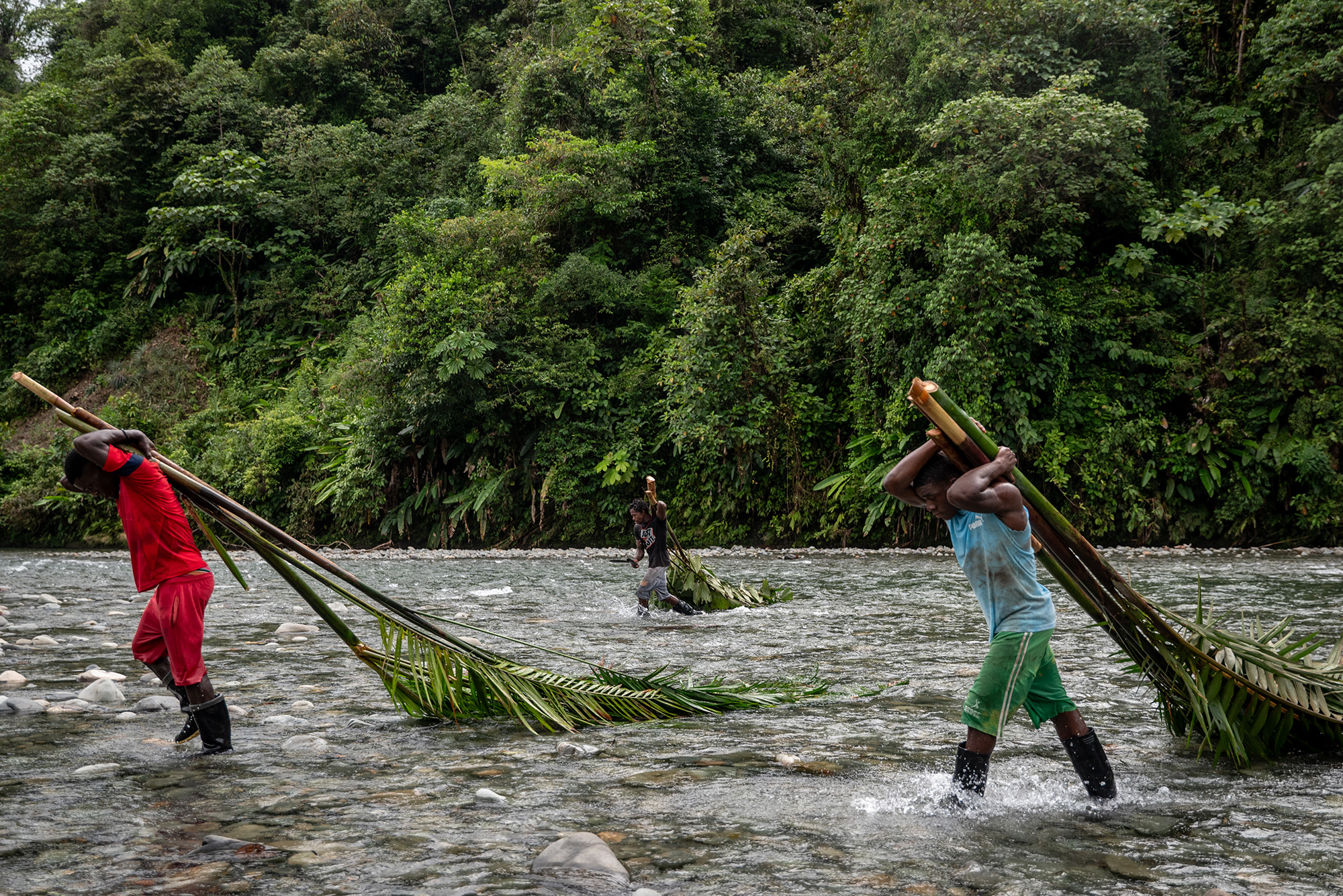
Men drag palm leaves cut from the jungle to decorate the village streets for Manacillos. Community of Juntas, Yurumanguí River, Buenaventura - Colombia
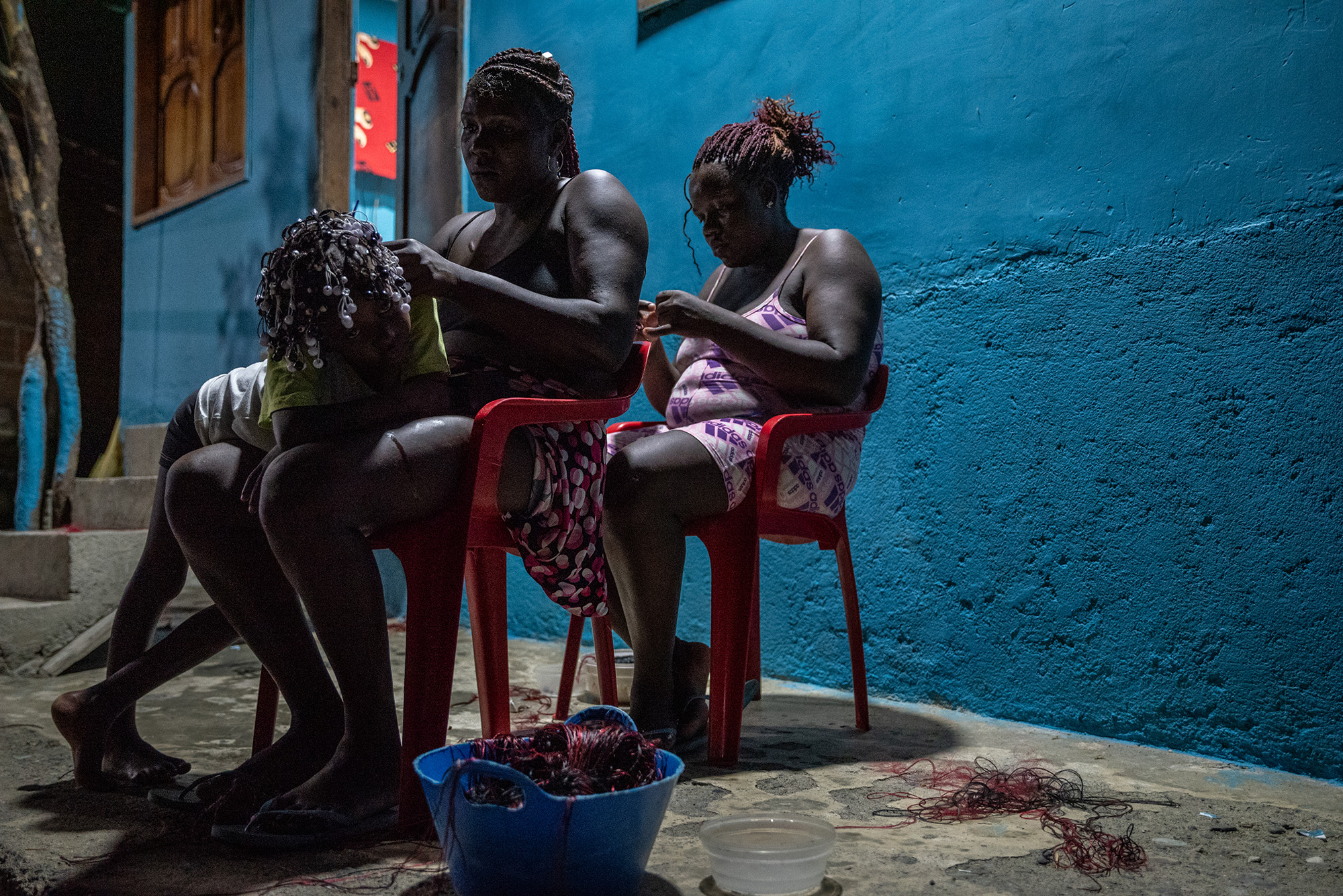
After arriving in Juntas women help eachother comb anbd prepare their hair and make up in preperation for the Manacillos - looking ones best is important. Inhabitants of the Juntas village of the Yurumanguí use this festival as an excuse to unite and to attract more people who for years had to flee the territory. Community of Juntas, Yurumanguí River, Buenaventura - Colombia
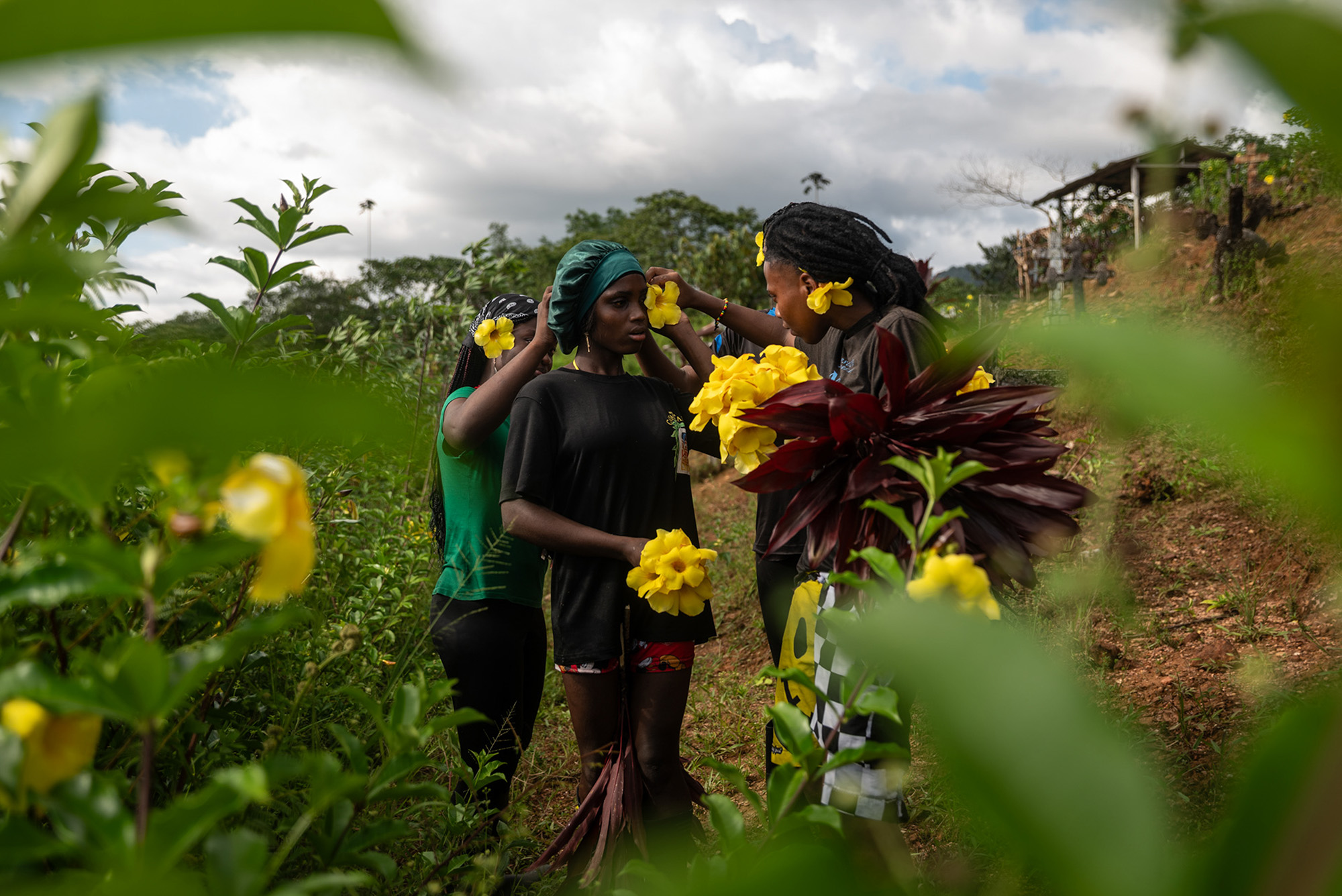
Young women who have returned to Juntas for the Manacillos festival pick flowers in the community cemetery to decorate themselves for the Manacillos festival. These flowers are only found in the cemetery and are traditionally placed on the graves to honour the dead. Community of Juntas, Yurumanguí River, Buenaventura - Colombia
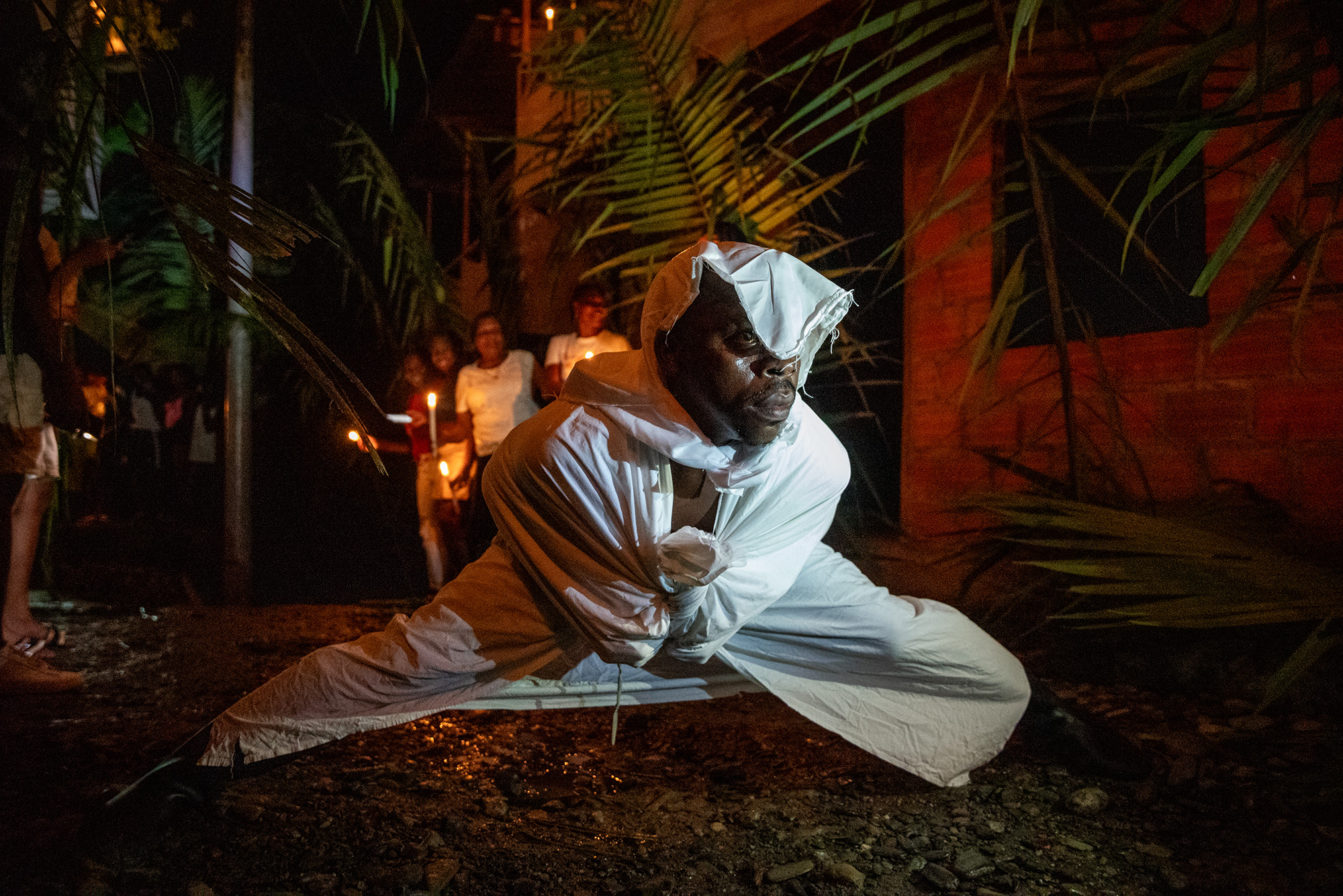
Luis Aramburo dresses in a white sheet to represent the solitary souls (animas solas) of the ancestors who warn of the arrival of the Manacillos. He walks with exaggerated or erratic movements while trembling and making whisper-like sounds to prepare people for the ritual game of whipping. Community of Juntas, Yurumanguí River, Buenaventura - Colombia
In Juntas Holy Week has a different timescale. In their tradition Jesus is crucified at midnight on Thursday not on Good Friday. The festival begins with a procession which is repeated nightly until Easter Suday during whch the village is in in darkness - only illuminated by candles.
The fiesta of the Manacillos commerates the passion, death and resurrection of Christ in a unique way. A group of up to 40 men - the Manacillos - appear on Good Friday wearing wooden masks and covered by sacks and burlap leaves. They are the spirits of the soldiers who betrayed and crucified Jesus and enact a ritual game of whipping and theft. The whipping not only represents the soldiers who judged Christ but also the slave owners who whipped their ancestors during the times of slavery. There is no age bar to becoming a Manacillo, membership is passed down from parents to sons and other close relatives when they die.
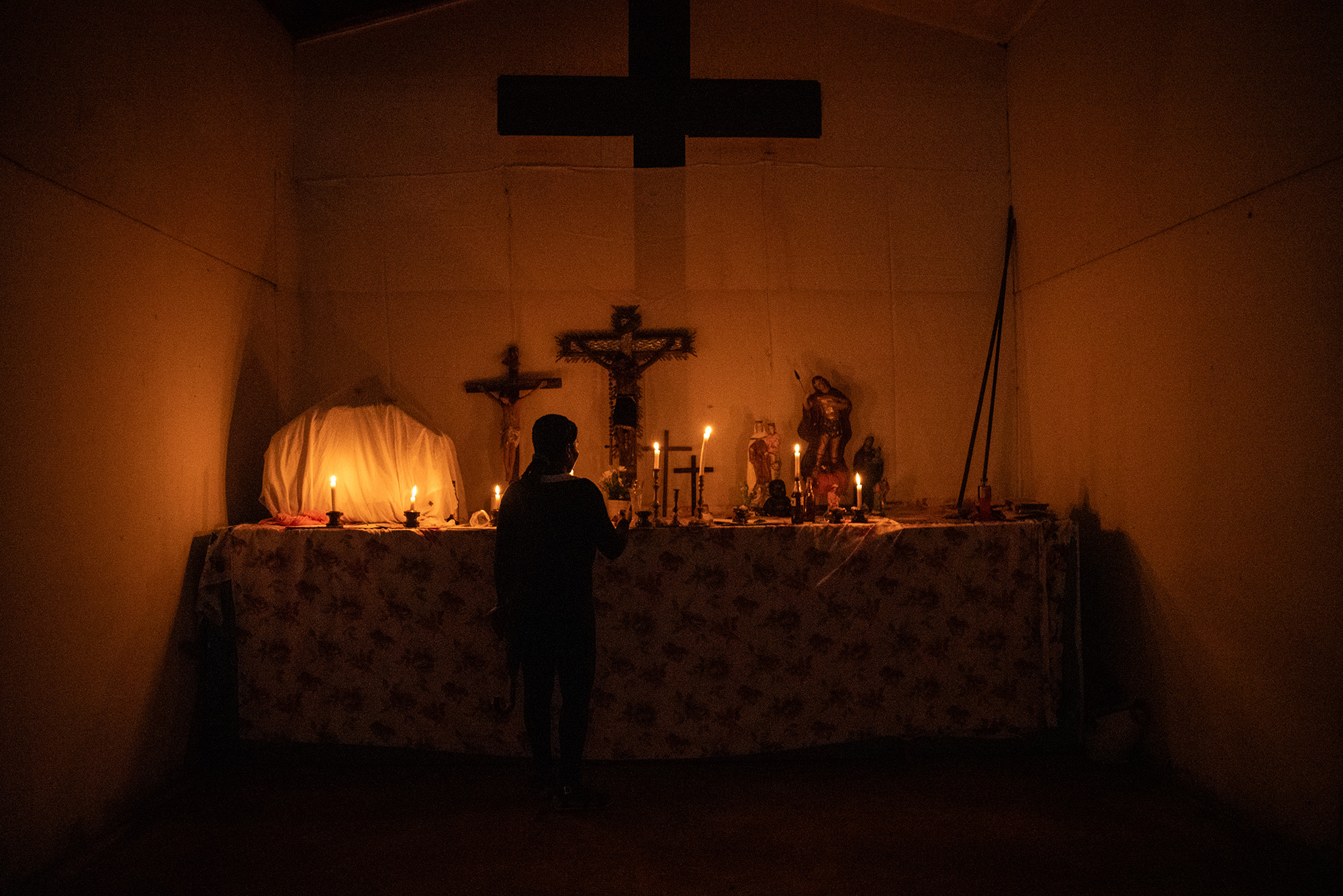
The colonial slave owners forced the community's ancestors to celebrate their Catholic religious holidays (such as Holy Week). After hundreds of years, the community blended this celebration with ancestral African practices, giving it new meaning related to Afro culture, the diaspora, and linked to the territory as a subject that welcomed and protected them. Community of Juntas, Yurumanguí River, Buenaventura - Colombia
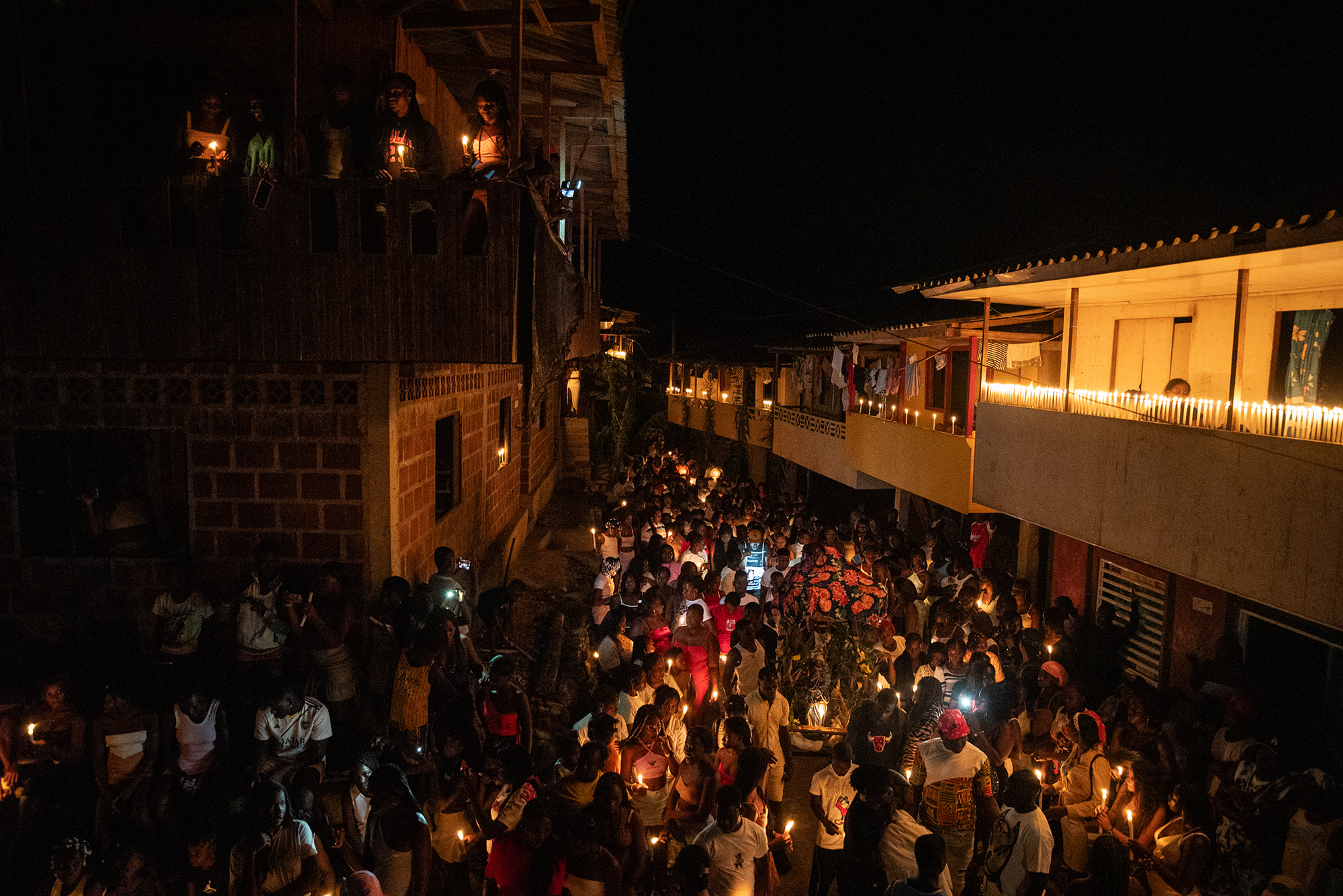
The Good Friday procession begins at night. The community gathers at the church and then processes through the town. Everything is lit by candlelight. Approximately 1,500 people gathered for the festival in 2025 - the largest in recent history. The festival serves as a catalyst for the return of families forced to flee the territory due to massacres and territorial disputes by armed groups. Community of Juntas, Yurumanguí River, Buenaventura - Colombia
Ever's project captures the Fiesta de los Manacillos not as a mere folklore perfomance, but as a political and social affirmation of a community. Valencia Rentería remembers a time when the community was invisible. "We weren't even on the map of Buenaventura. These photos protect us," he says. "With them, even those who are not there in the territory, those who can't come see there is a community that fights for collective wellbeing, for its traditions, its customs. We are telling the world, especially the Colombian state, that we still exist."
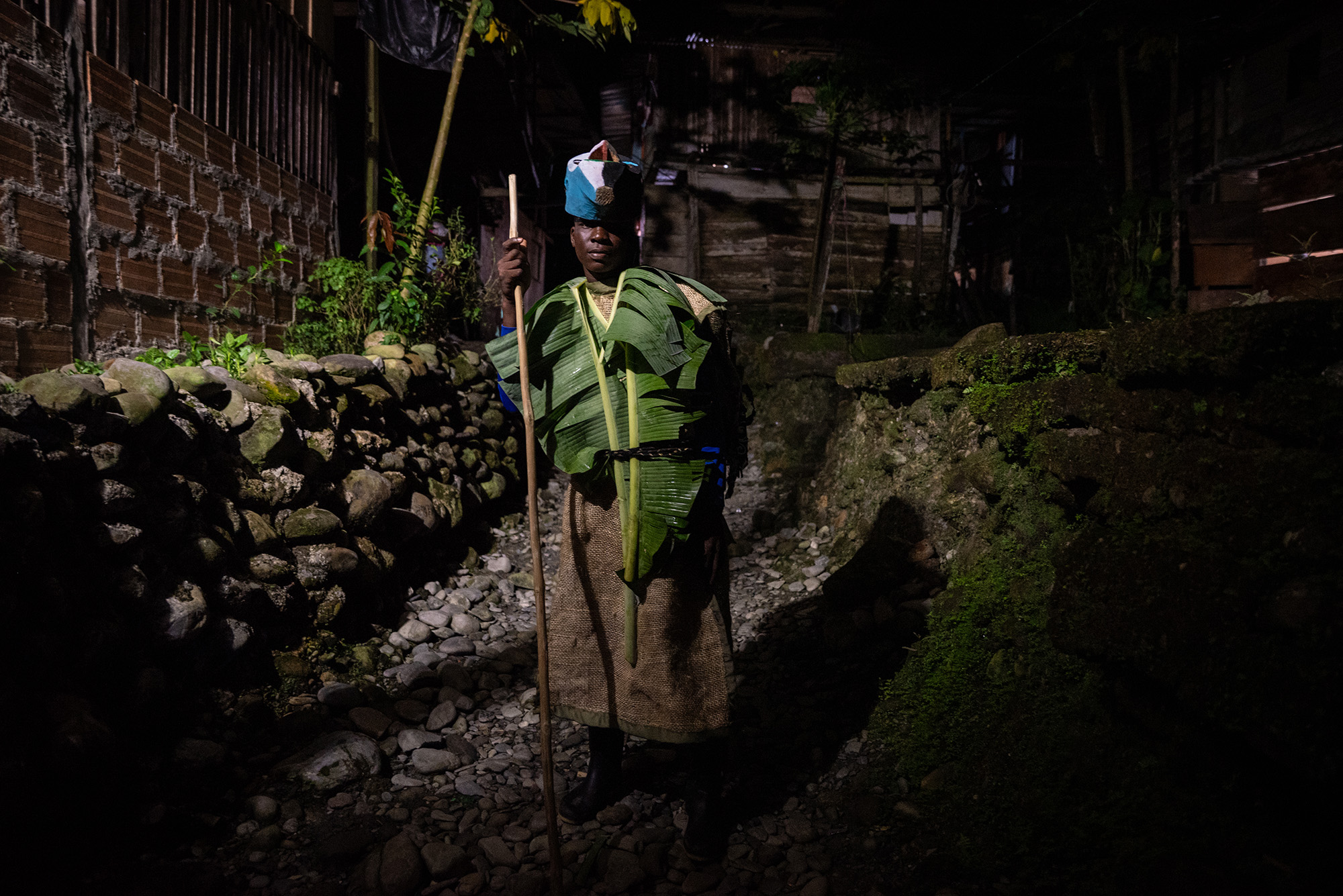
Eider Calimeño is one around 33 men—ranging in age from 10 to 60—who have inherited the legacy of being Matachines. Tradition dictates that this responsibility can only be received if the parents, grandparents, uncles, or other close relatives were Manacillo and decide to pass on their position to the next generation. Community of Juntas, Yurumanguí River, Buenaventura - Colombia
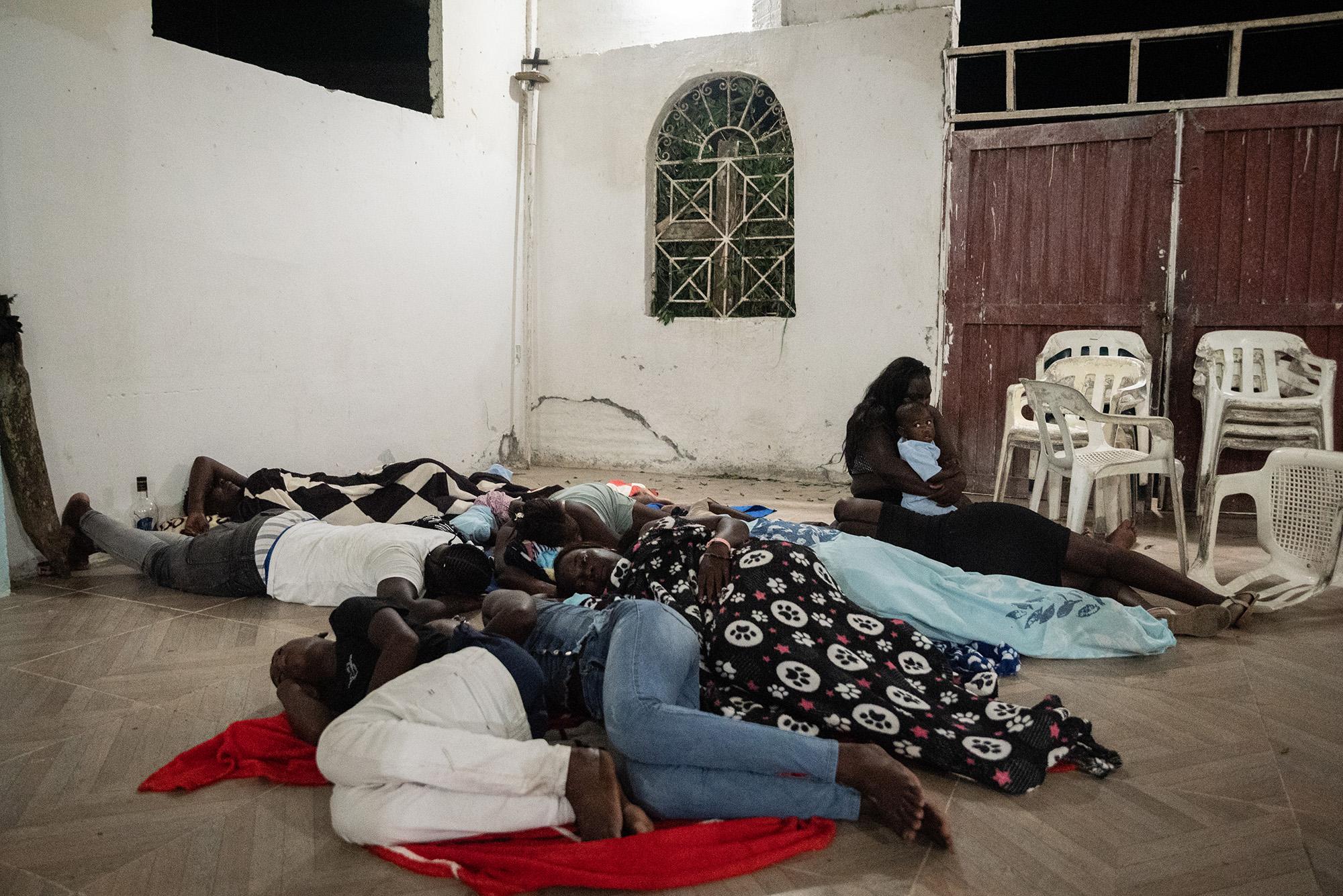
An important part of the celebration takes place during the first night of the festival, when the inhabitants of Juntas and visitors spend the night away from their homes and the whole community sleeps together in the village church. Community of Juntas, Yurumanguí River, Buenaventura - Colombia
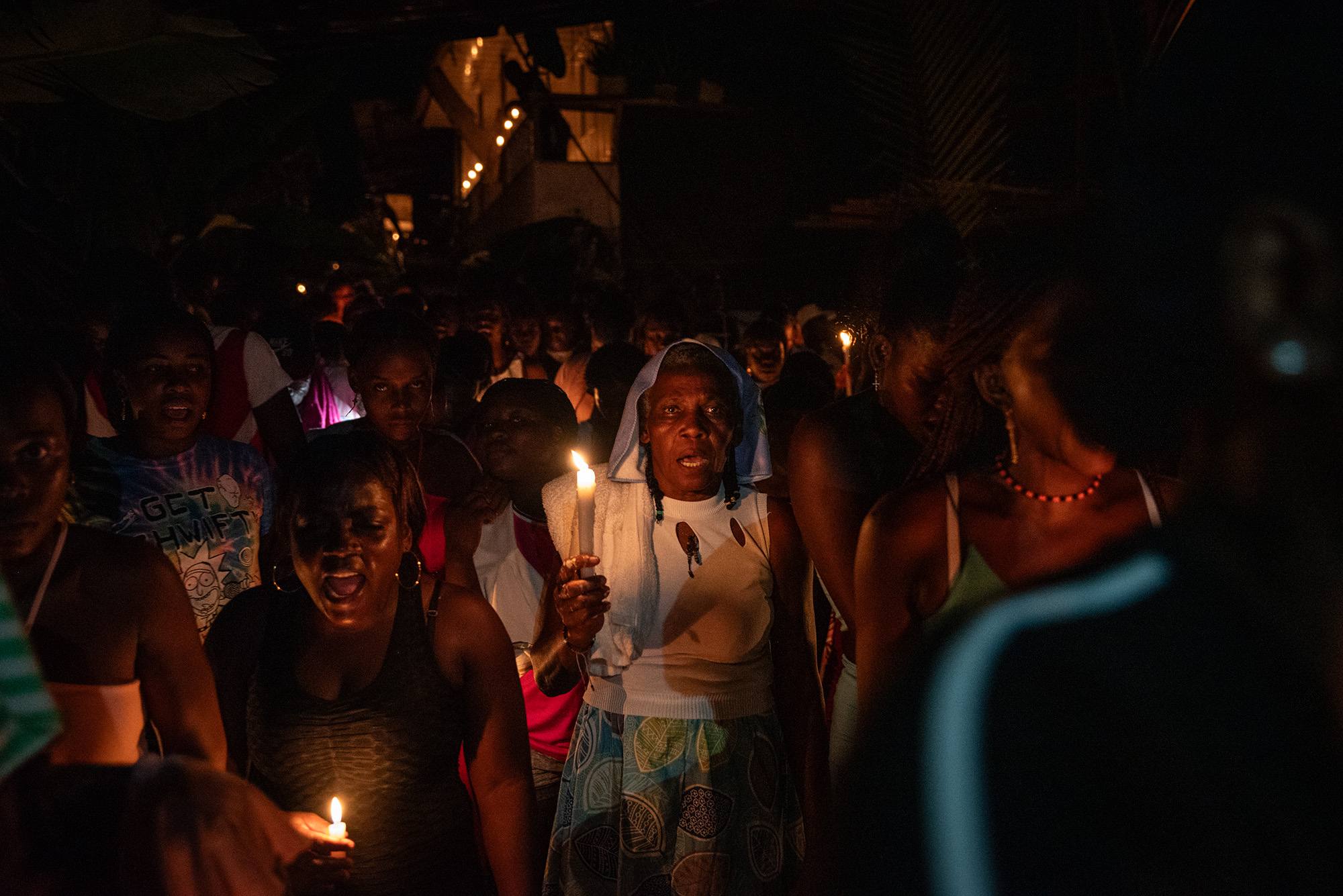
Processing by candle light throught the village. Inhabitants of Juntas use the Manacillos festival as an excuse to unite and to attract people who have had to flee the territory. Community of Juntas, Yurumanguí River, Buenaventura - Colombia
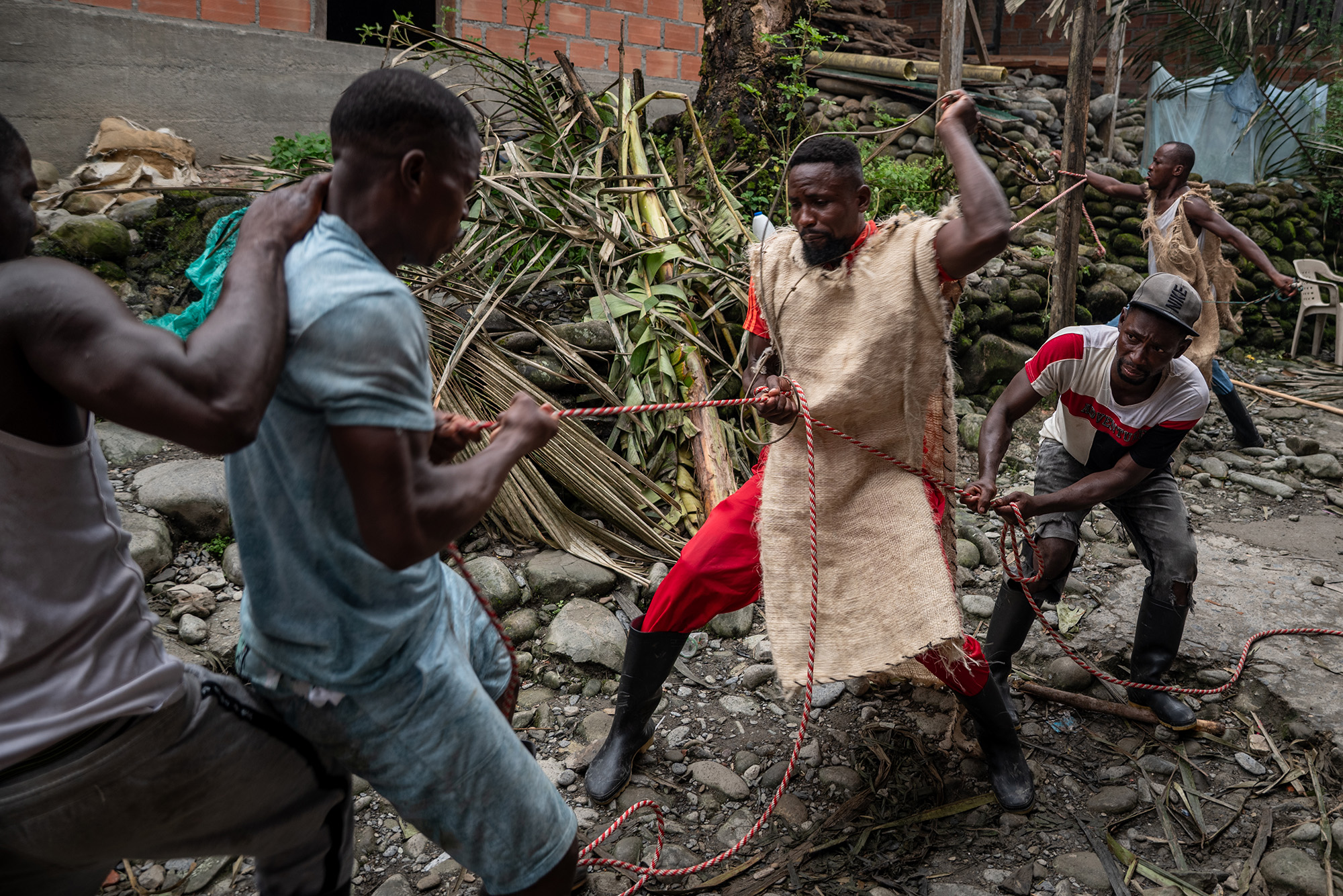
The whipping game is a symbol of the rivalry between the Manacillos (who represent the soldiers who helped in the capture and death of Jesus) and the community (who are on Jesus' side and do not want him to be captured and die on the cross). Community of Juntas, Yurumanguí River, Buenaventura
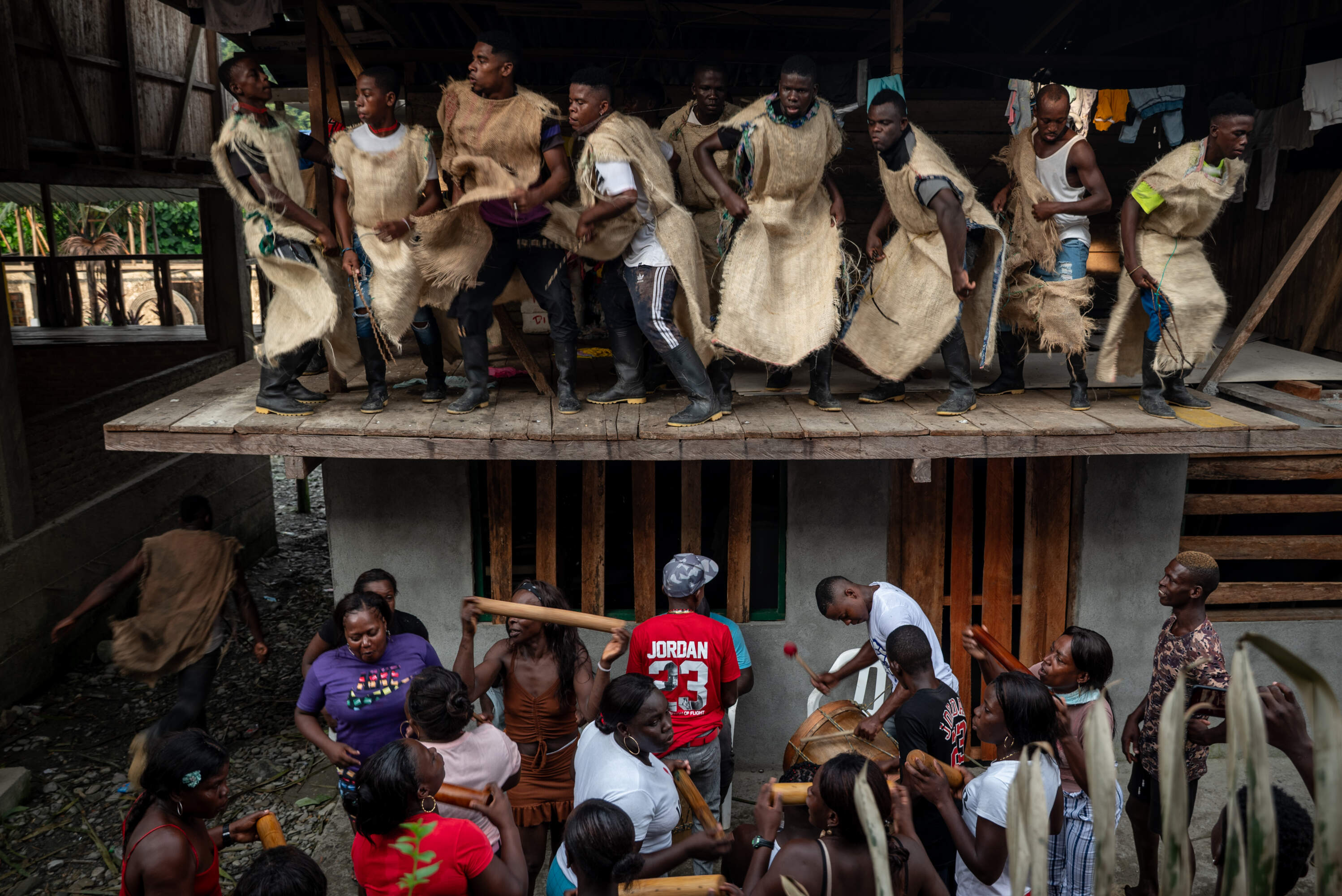
Jhony (above, sixth person from left to right) leads the Manacillos dance in one of the approximately 200 houses in the village of Juntas. This event is one of the ways in which the community strengthens its unity, as the Manacillos dance and sing ancestral songs from house to house as a way of asking for protection and as an excuse to reconnect with people who were forced to leave the area years ago, fleeing the consequences of war. Community of Juntas, Yurumanguí River, Buenaventura - Colombia
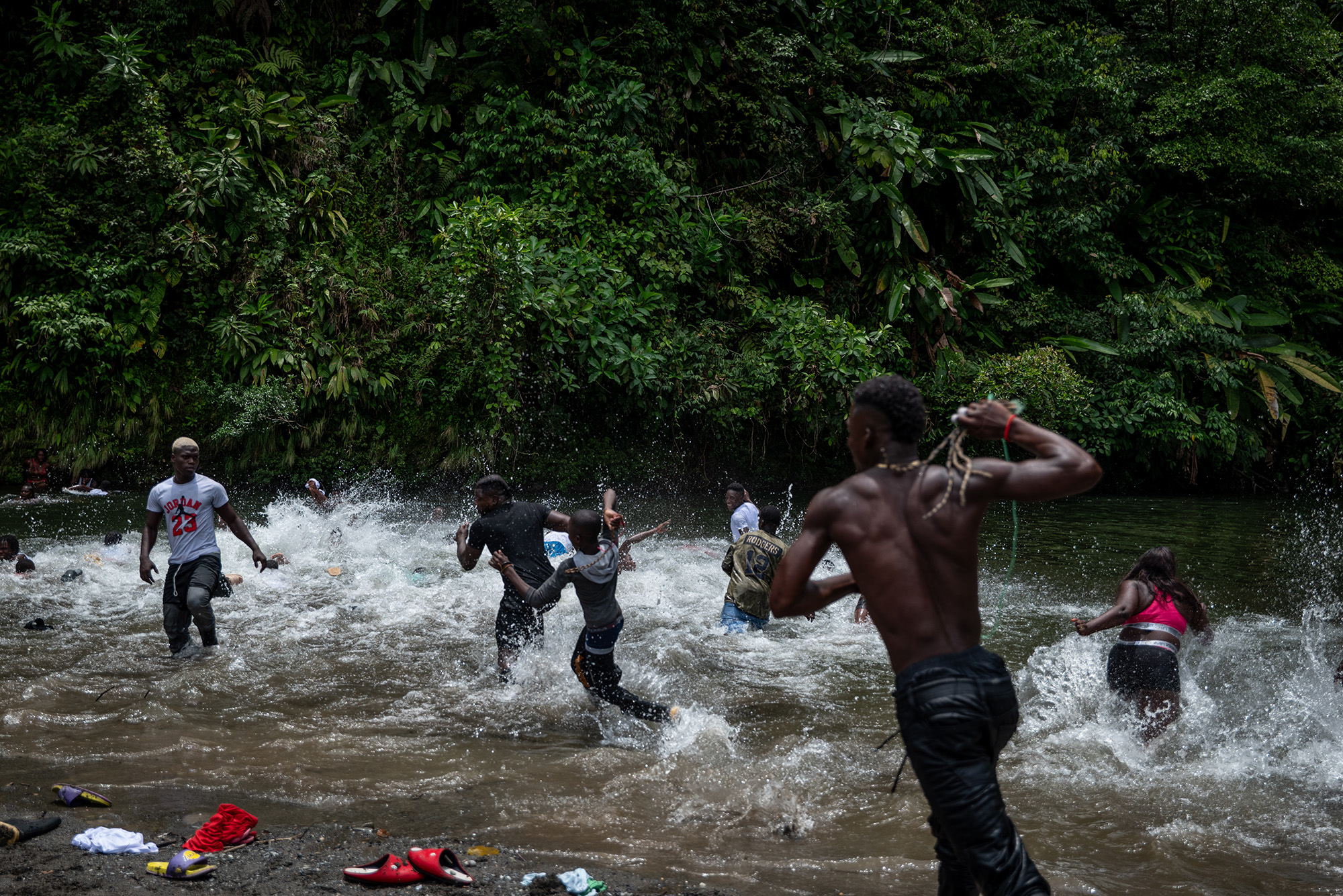
The ritual game of whipping between the Manacillos and the community is based on the rivalry represented by two elements: (1) The Manacillos represent the soldiers who helped capture and kill Jesus, and the community, which is on Jesus' side and wants to protect him. (2) In addition, the game of whipping also mockingly represents the slave owners who whipped their ancestors who came to this area of the Colombian Pacific rainforest during the times of slavery. Community of Juntas, Yurumanguí River, Buenaventura - Colombia
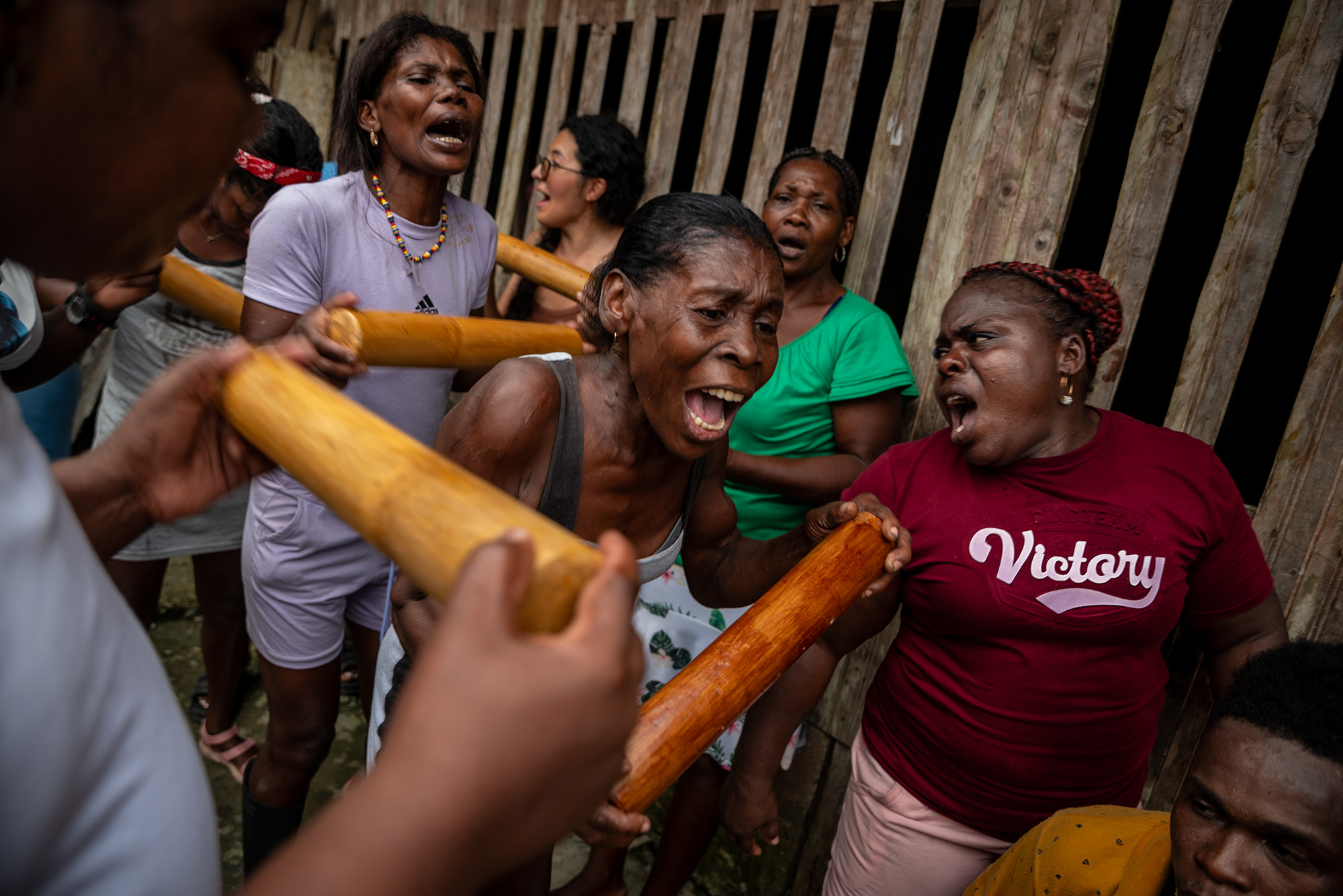
Mercedita (center) and older women sing traditional songs during the house-to-house tour on Holy Saturday and Holy Sunday in Juntas. One of the favorite songs is Manacillo, a traditional musical air in which the Passion, Death and Resurrection of Christ is commemorated. Through scenes within the song they thank and implore God and the ancestors for prosperity and projection. Community of Juntas, Yurumanguí River, Buenaventura - Colombia
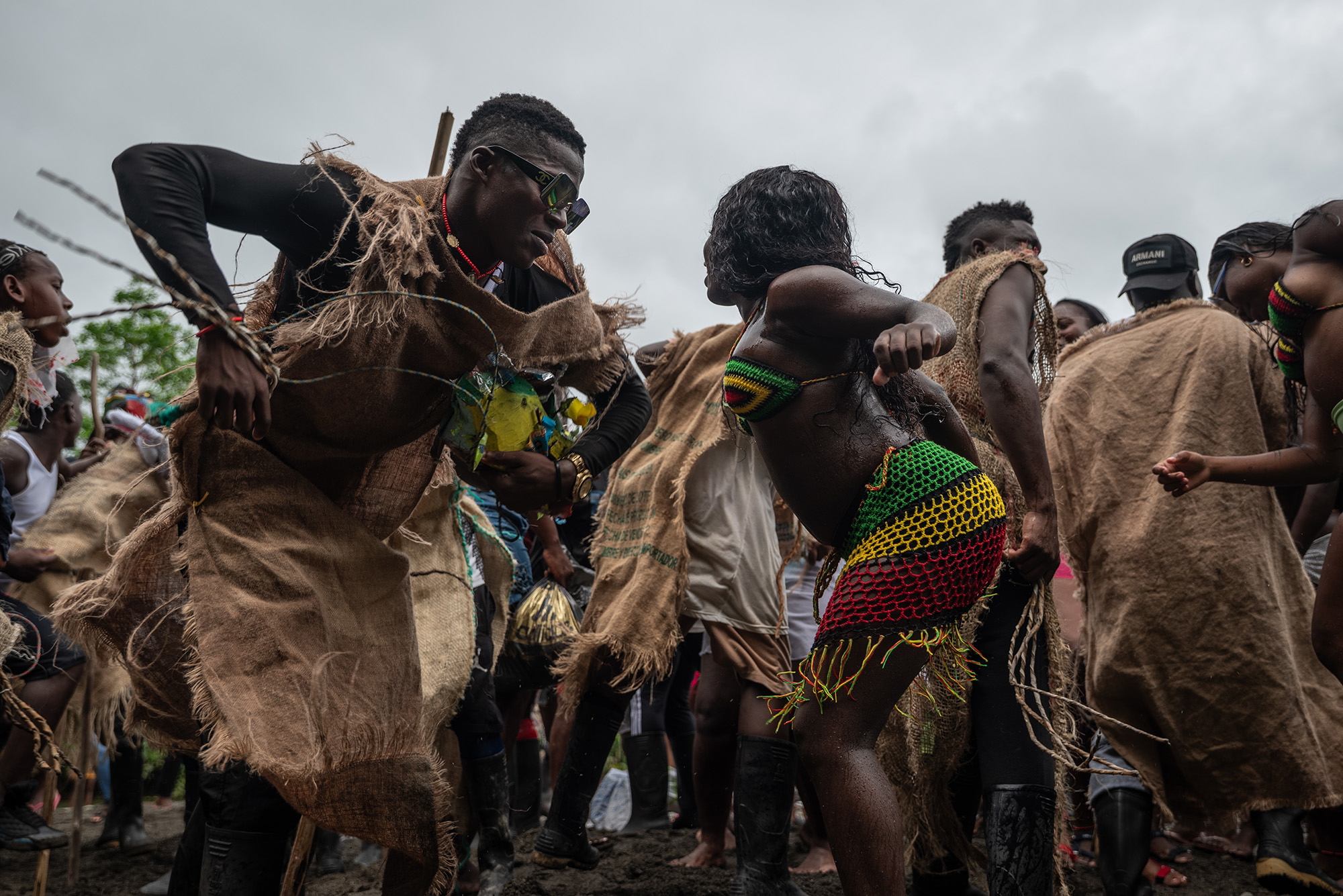
Manacillos and the singing women dancing and making their way from house to house. Community of Juntas, Yurumanguí River, Buenaventura - Colombia
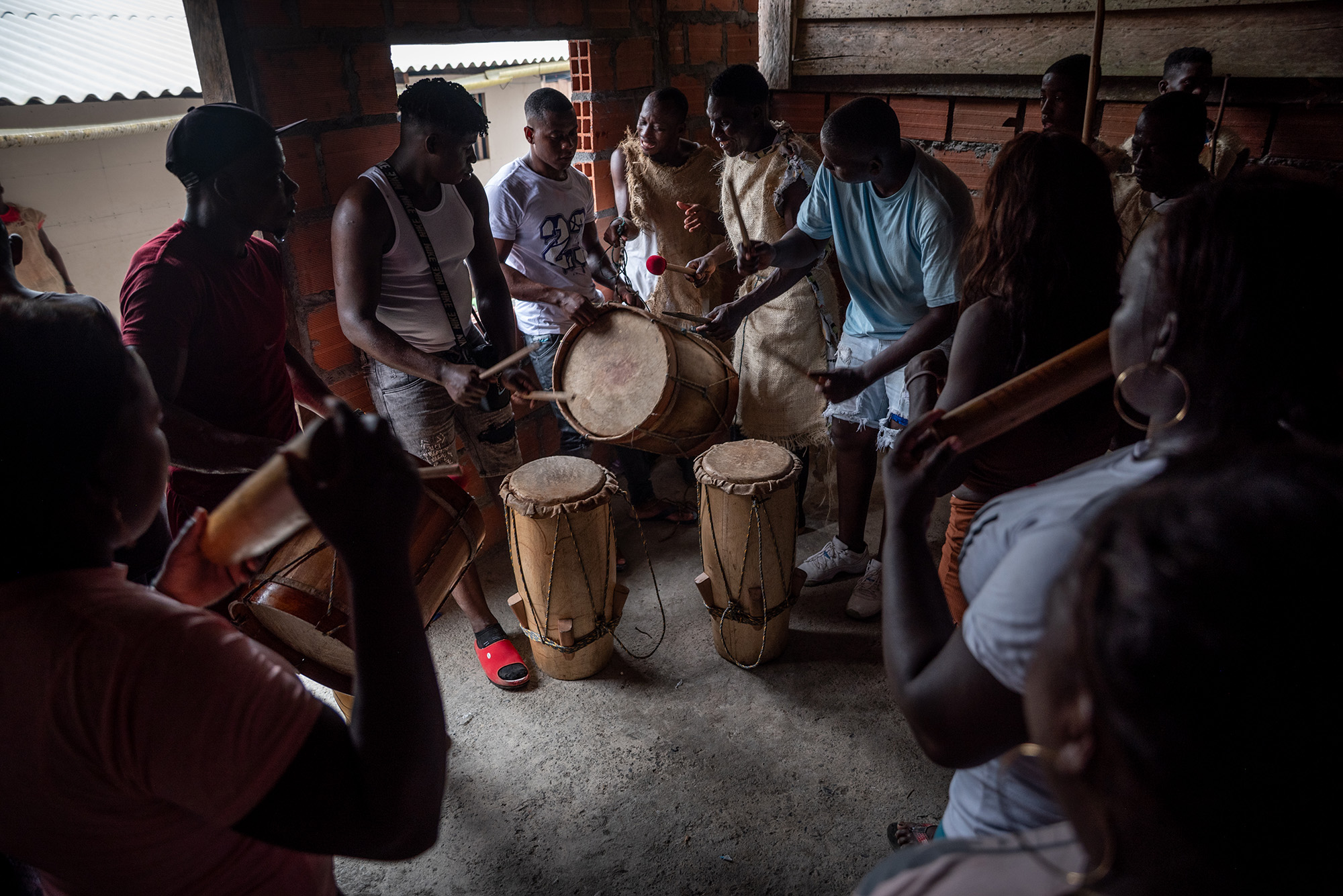
During the four days of celebration, no one in Juntas de Yurumanguí rests. Community of Juntas, Yurumanguí River, Buenaventura - Colombia
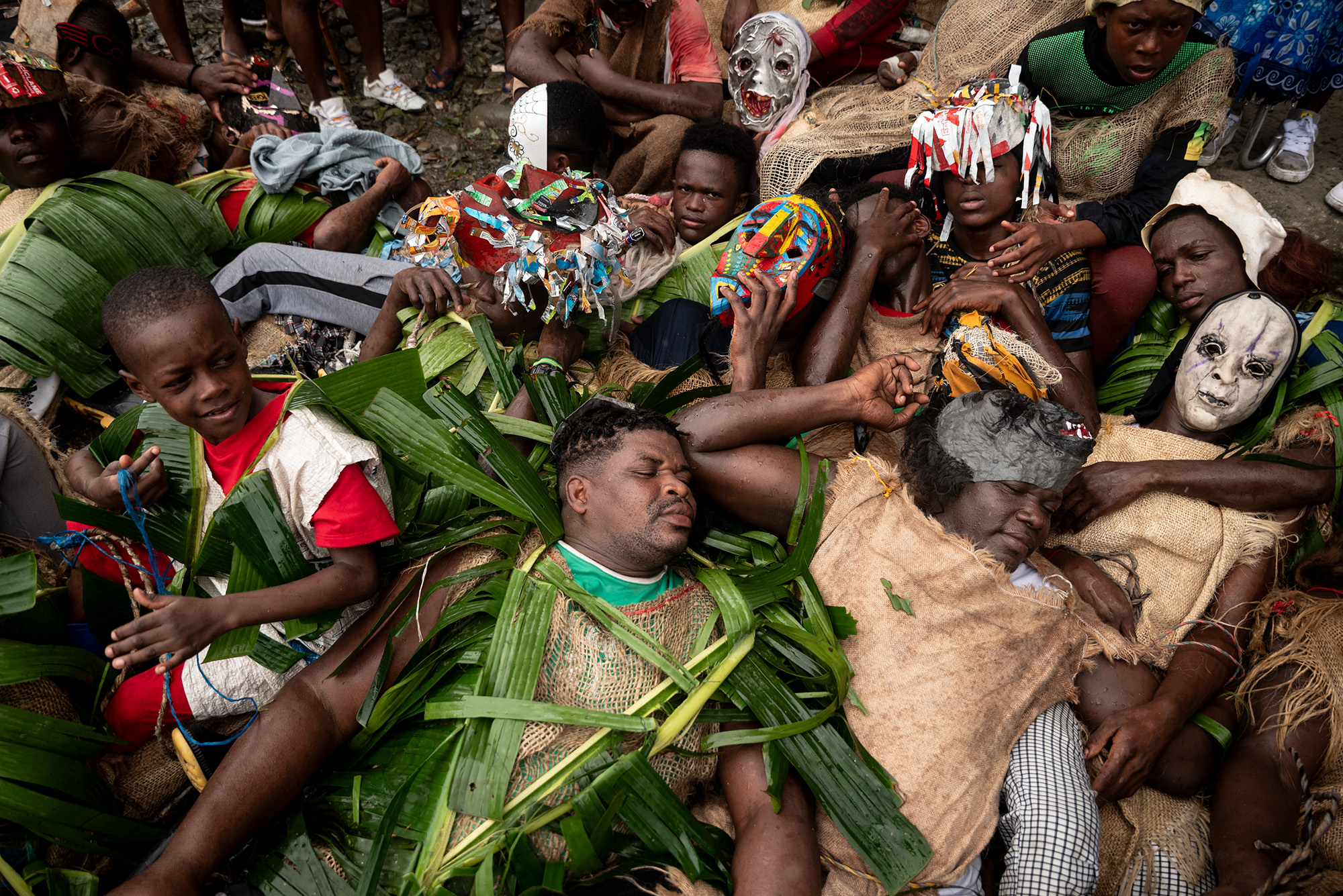
Diomedez (center) lies down next to other Manacillos of different ages. They are getting ready in preparation for a group of men to walk over them carrying the community saints. In this way, they ensure that they will protect themselves and the river from the violence visited upon them by armed groups who have displaced many people from the Juntas. Community of Juntas, Yurumanguí River, Buenaventura - Colombia
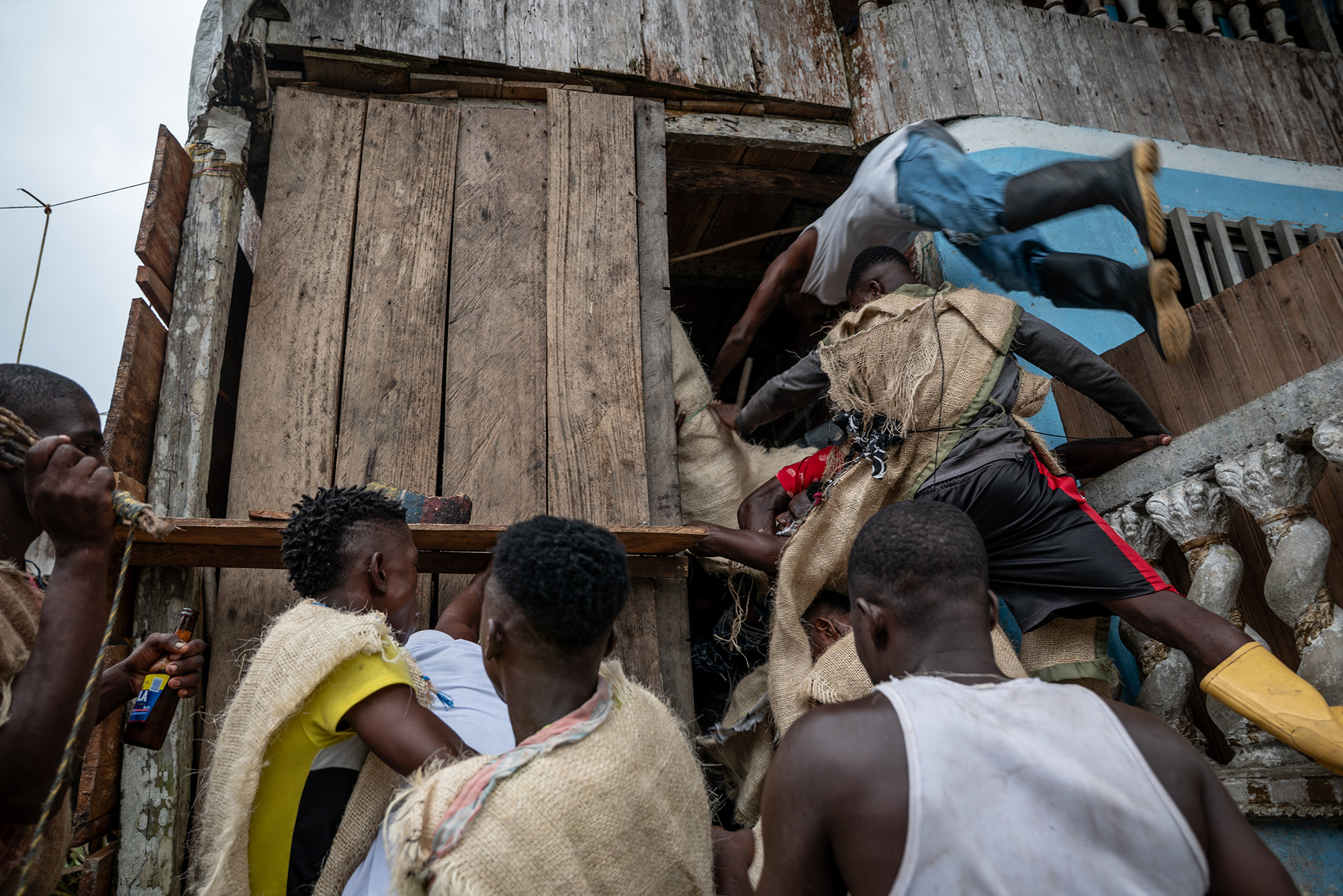
A man attempts to leap into the interior of the Manacillos' house built for the festival for the Manacillos to gather to plan and sing their traditional songs. At the moment this photograph was taken the community is in the midst of fighting the Manacillos (representing the soliders that helped crucify Jesus) and attempt to enter their house to disrupt their meeting and throw them into disarray. Community of Juntas, Yurumanguí River, Buenaventura - Colombia
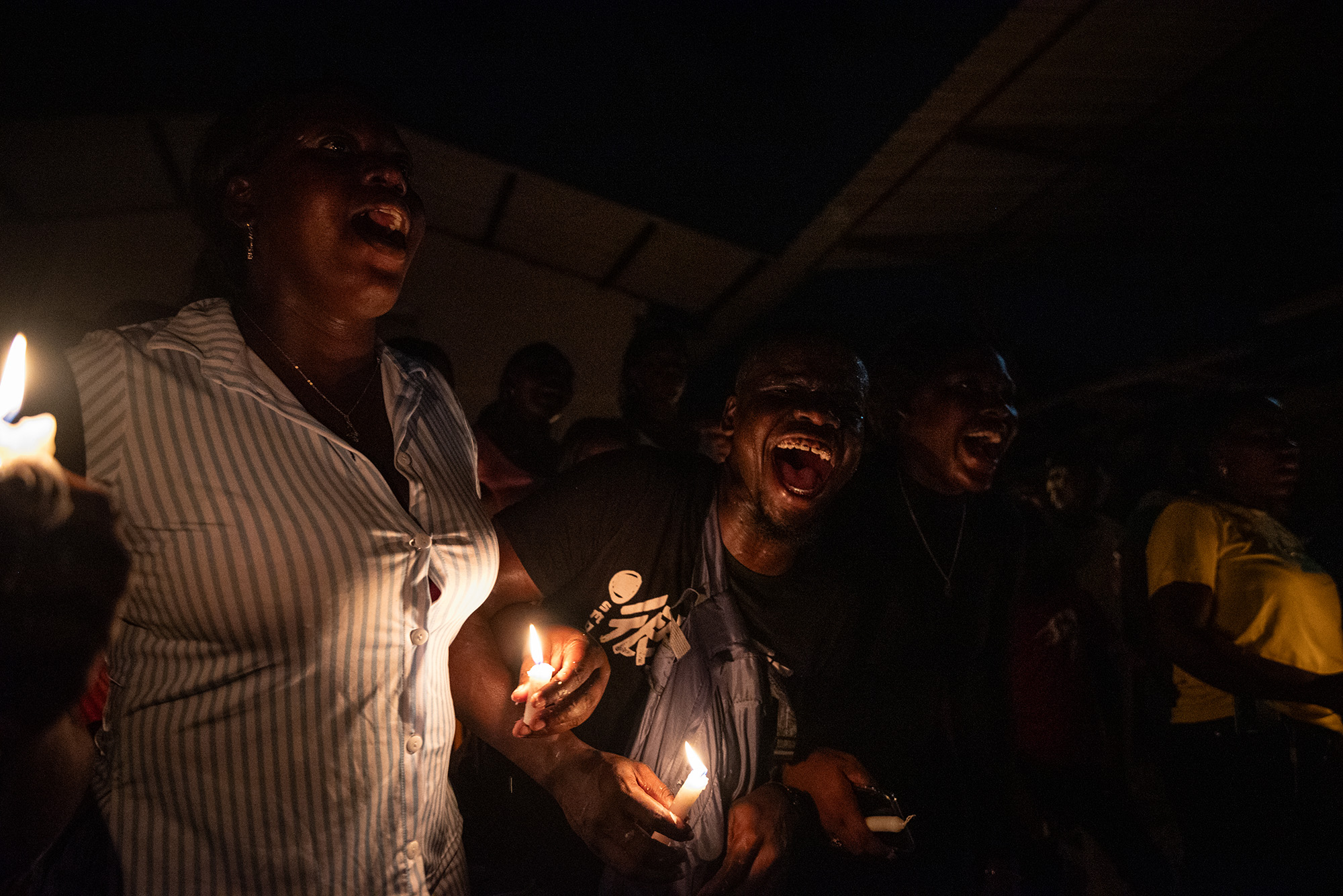
Inhabitants of the Juntas village of the Yurumanguí use this festival as an excuse to unite and to attract more people who for years had to flee the territory. Community of Juntas, Yurumanguí River, Buenaventura - Colombia
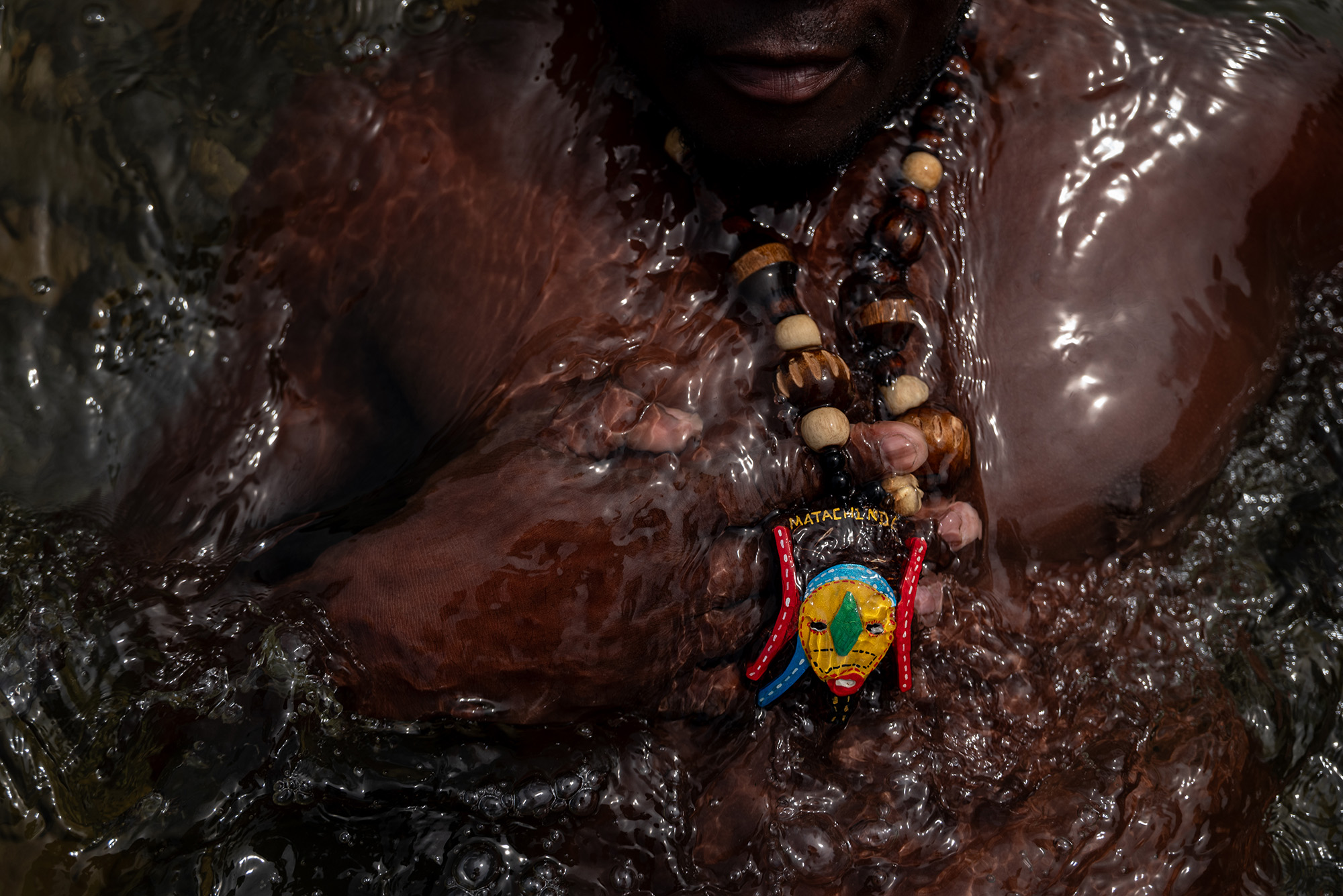
Niver (32 years old) bathes on the banks of the Yurumanguí River while wearing one of his most meaningful necklaces, featuring the mask of a Manacillo. Niver is also a member of Matachindé, a local traditional music group that sings about the importance of protecting the land. Community of Juntas, Yurumanguí River, Buenaventura - Colombia
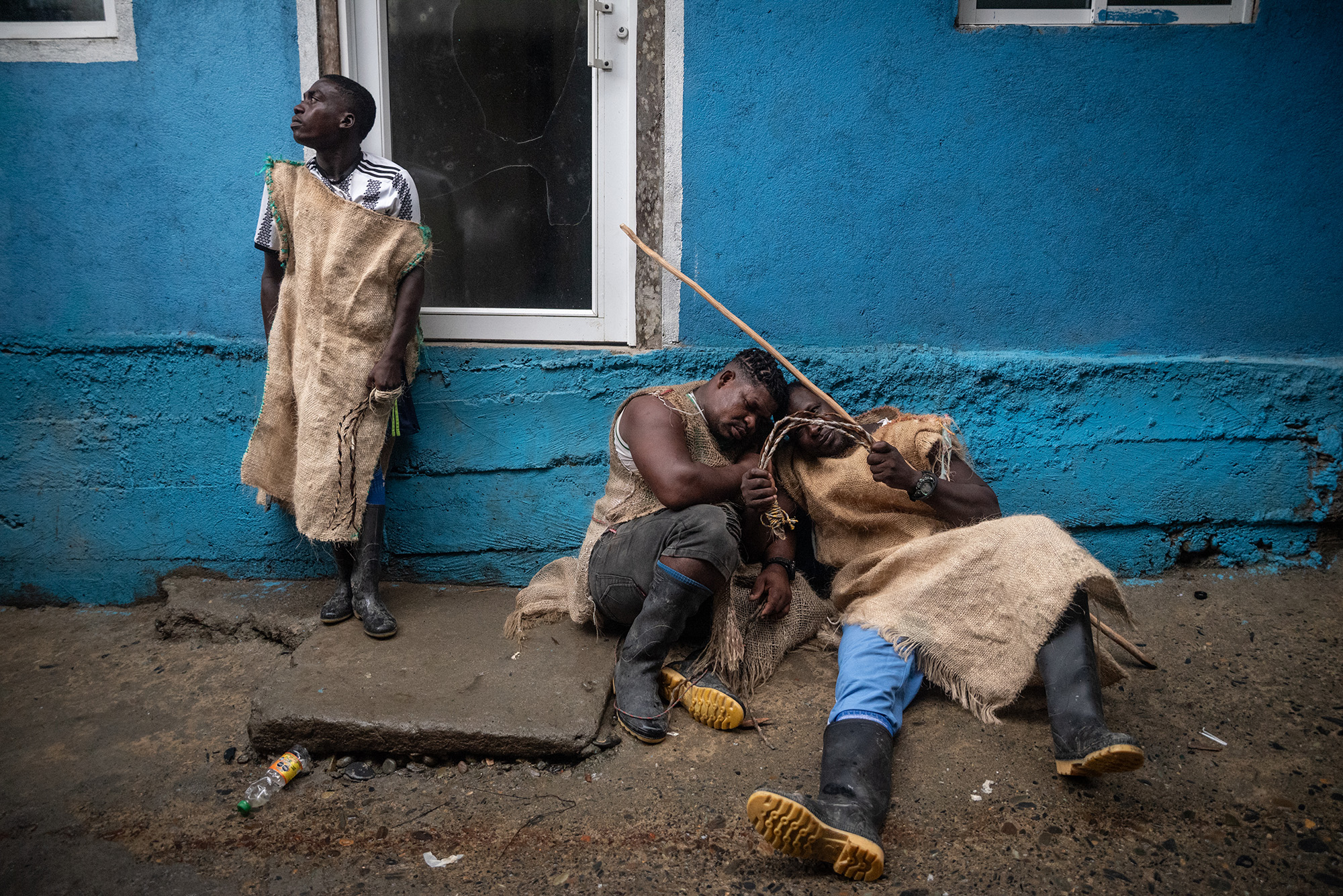
Exhausted 'Manacillos' fall asleep after 72 hours without rest. Community of Juntas, Yurumanguí River, Buenaventura - Colombia
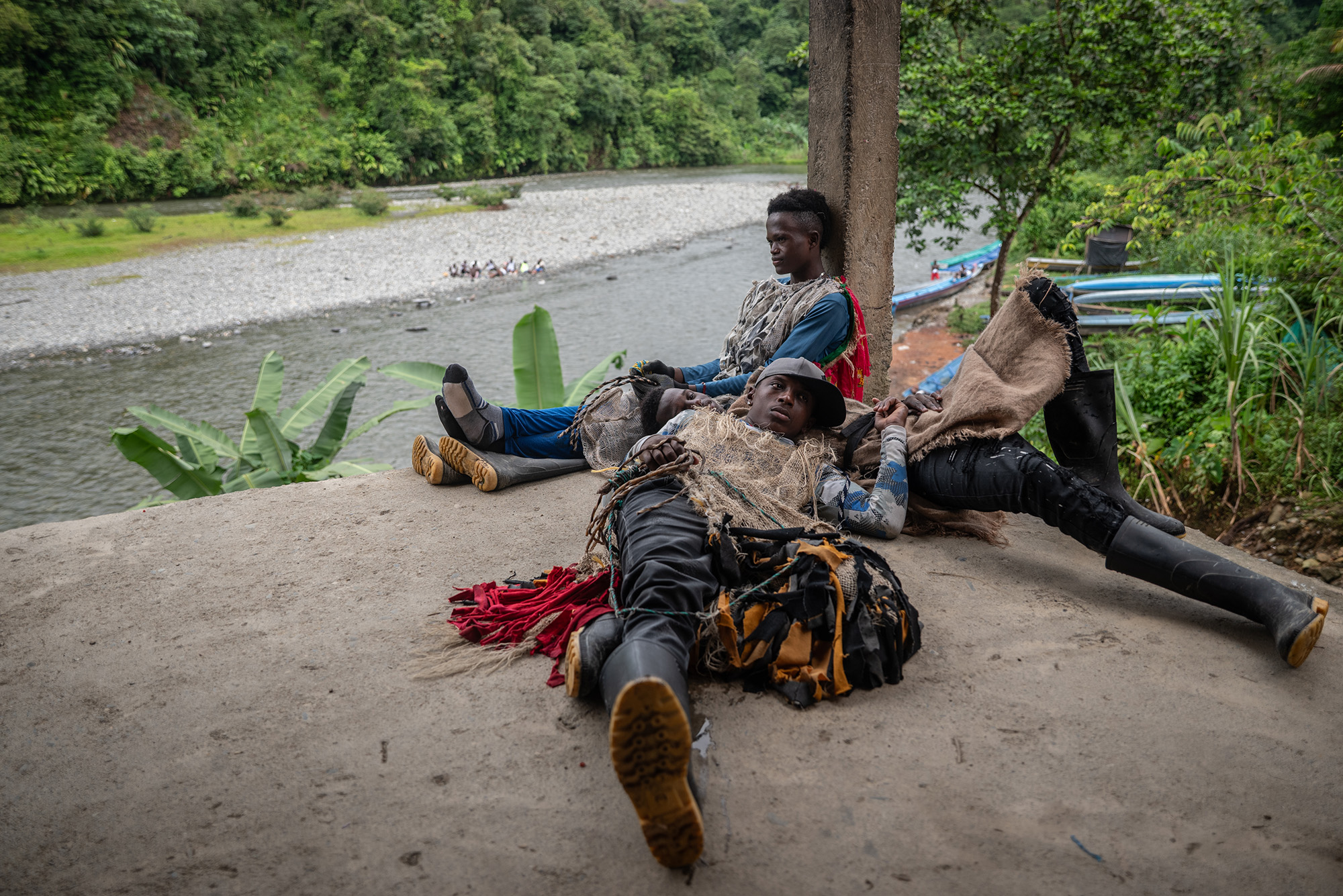
Exhausted 'Manacillos' fall asleep after 72 hours without rest. Community of Juntas, Yurumanguí River, Buenaventura - Colombia
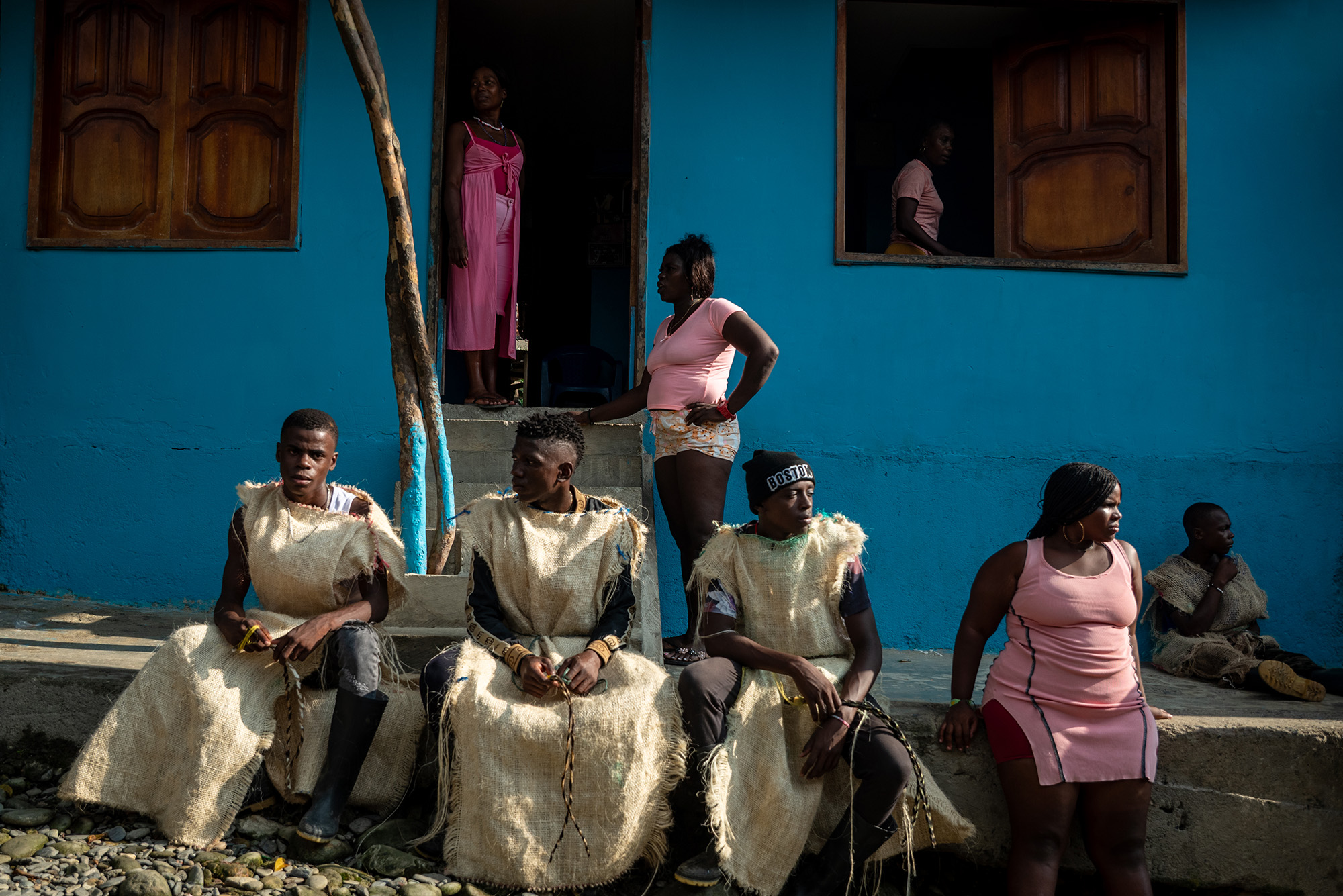
Even before forming a Community Council, the Black communities along the Yurumanguí River hadsuffered episodes of violence. The first recorded case of mass displacement involved 300 people from the village of El Firme in 2001 (this community no longer exists and is now considered a ghost town), and the partial abandonment of the nearby villages of El Barranco and El Veneral del Carmen. Community of Juntas, Yurumanguí River, Buenaventura - Colombia
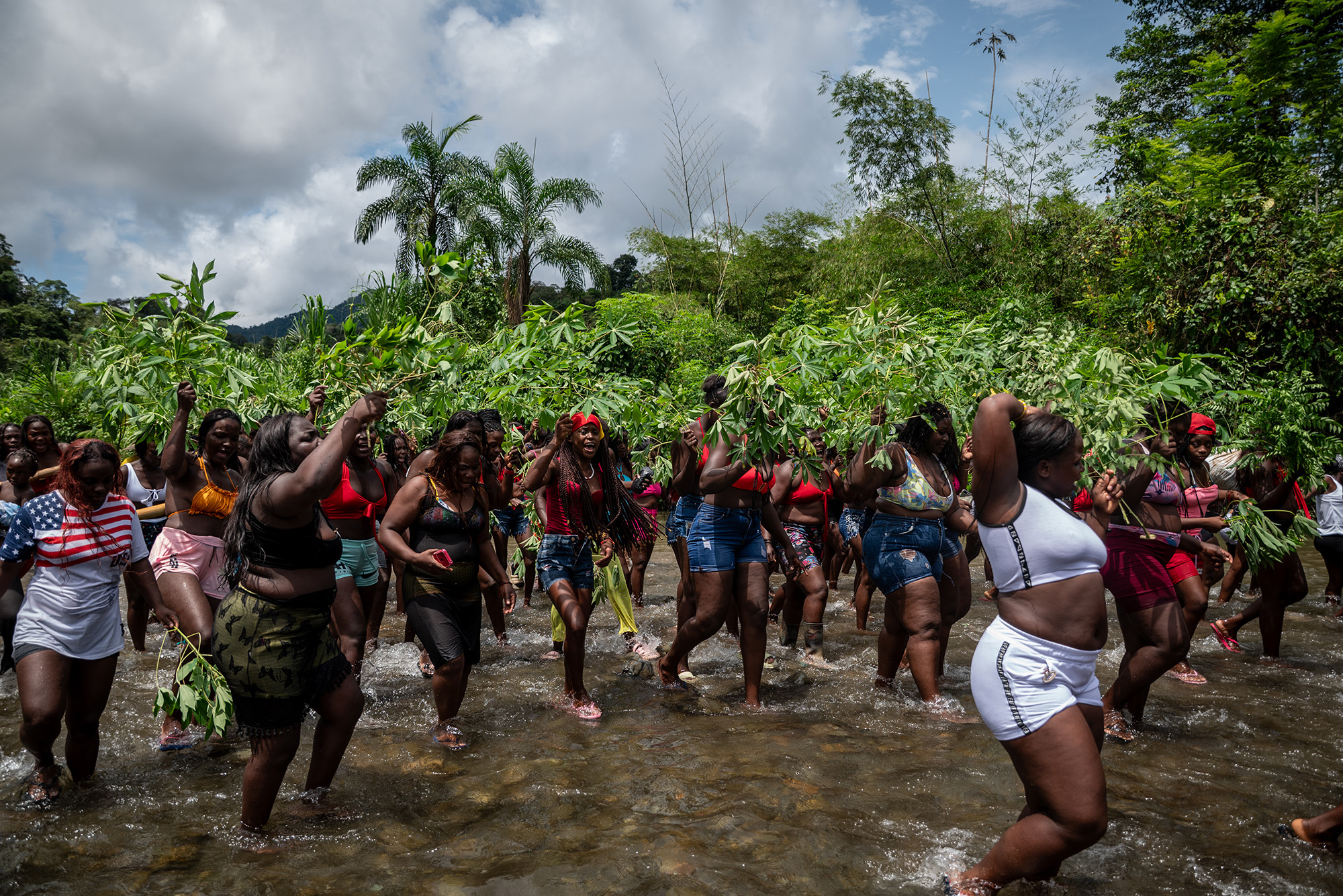
The women of the community on the final procession to mark the end of the Manacillos walk along part of the Yurumanguí River while singing traditional songs and carrying leaves as they make their way back to the community. Community of Juntas, Yurumanguí River, Buenaventura - Colombia
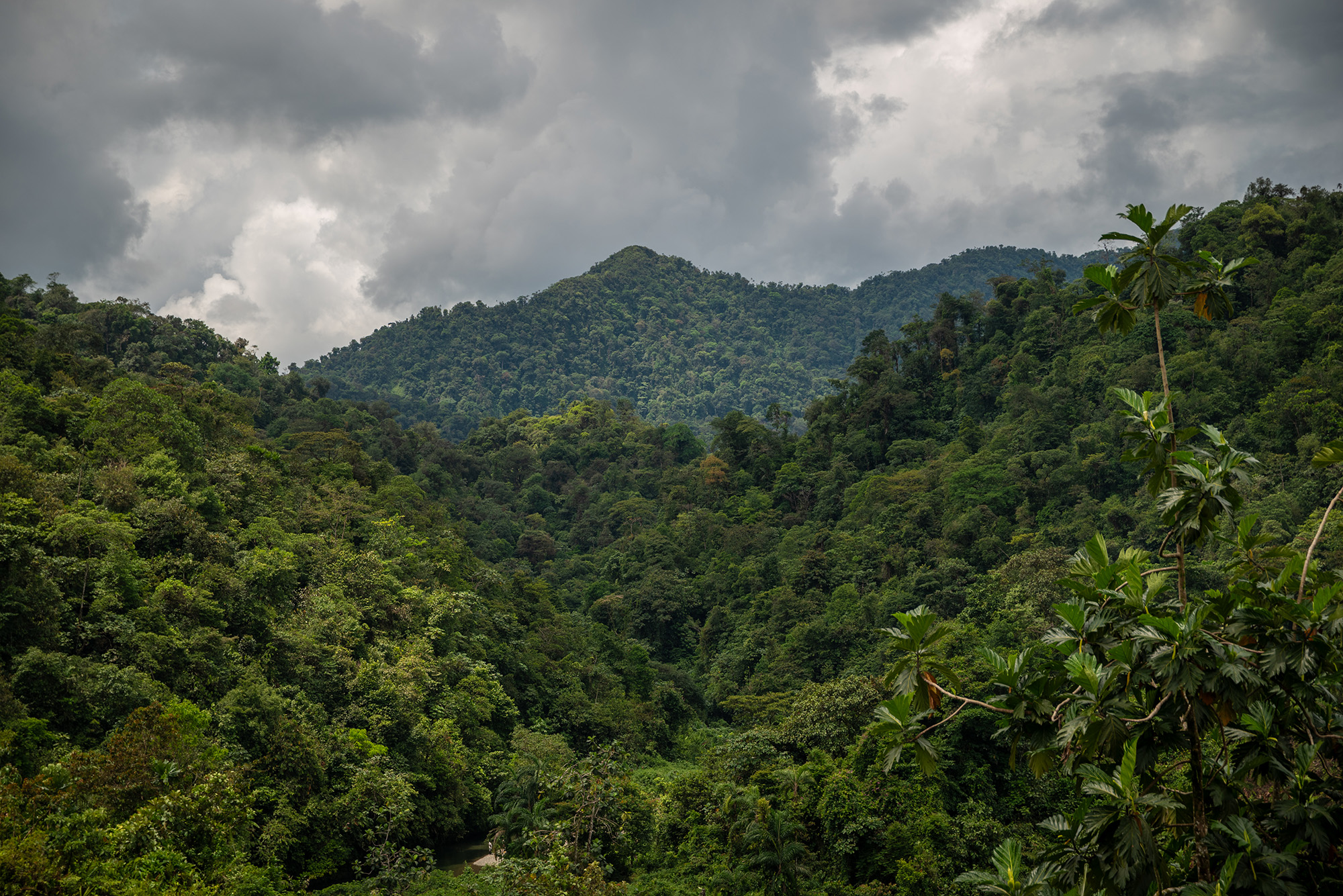
Control of the approximately 54,700 hectares that make up the territory belonging to the Yurumanguí River Community Council is the reason for the violence. Its location is seen by armed groups as a route for arms and drug trafficking. Community of Juntas, Yurumanguí River, Buenaventura - Colombia
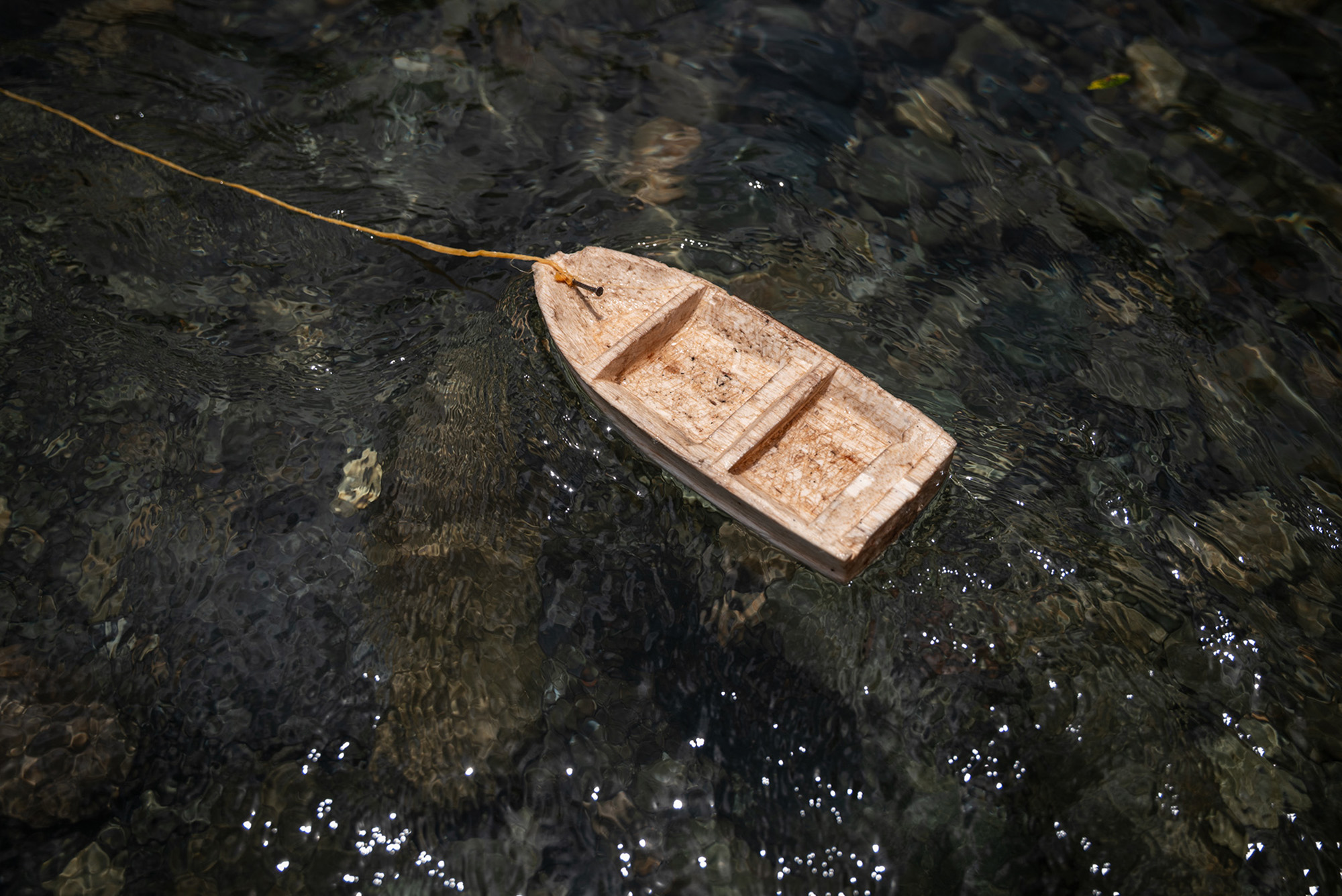
A toy boat floats in the Yurumanguí River. Community of Juntas, Yurumanguí River, Buenaventura - Colombia
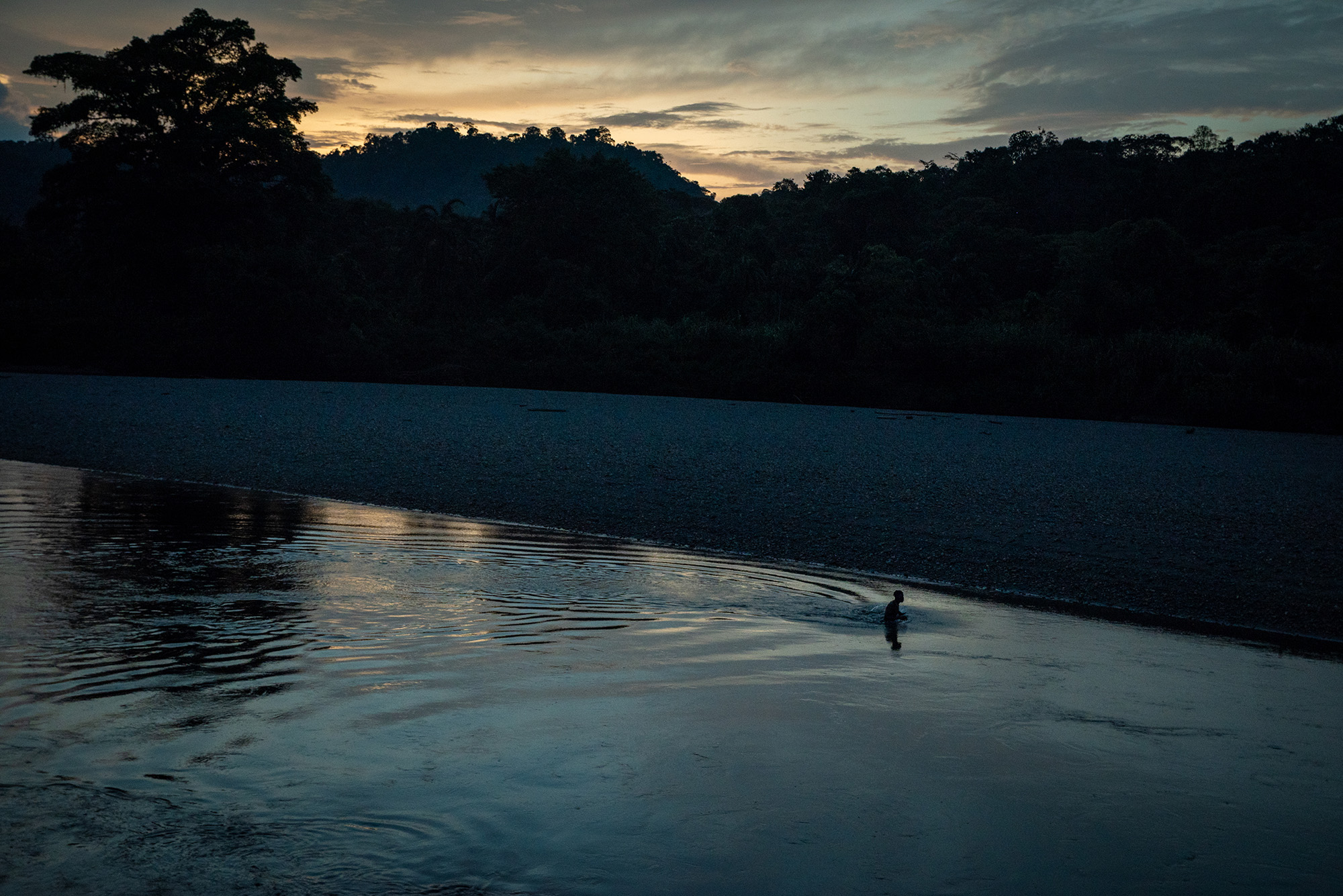
When the festival ends, those who live in the territory return to their work with the conviction that the territory is their life and must be loved and defended. And those who live outside the river leave knowing that they will return. Because no matter how far away they are from Juntas, there will always be a reason to return and reaffirm that these lands are their home. Community of Juntas, Yurumanguí River, Buenaventura