
An immunisation gap following the overthrow of Bangladesh's authoritarian government has been the catalyst for an unprecedented surge in measles cases.
Delirious with lingering fever after contracting measles a fortnight ago, one-year-old Yusuf could soon die from a disease he should be protected against. Propped up by his mother Nafisa on a temporary intensive care bed so she can keep the nebuliser over his mouth, the tiny boy is one of thousands of Bangladeshi children struck down by the worst global measles outbreak in years. For now, an IV drip and oxygen sustain his fragile, listless frame. But Yusuf – whose eyes have been bandaged over to help him sleep – has a bleak prognosis. It is, sadly, a common one in a country currently overwhelmed by measles.
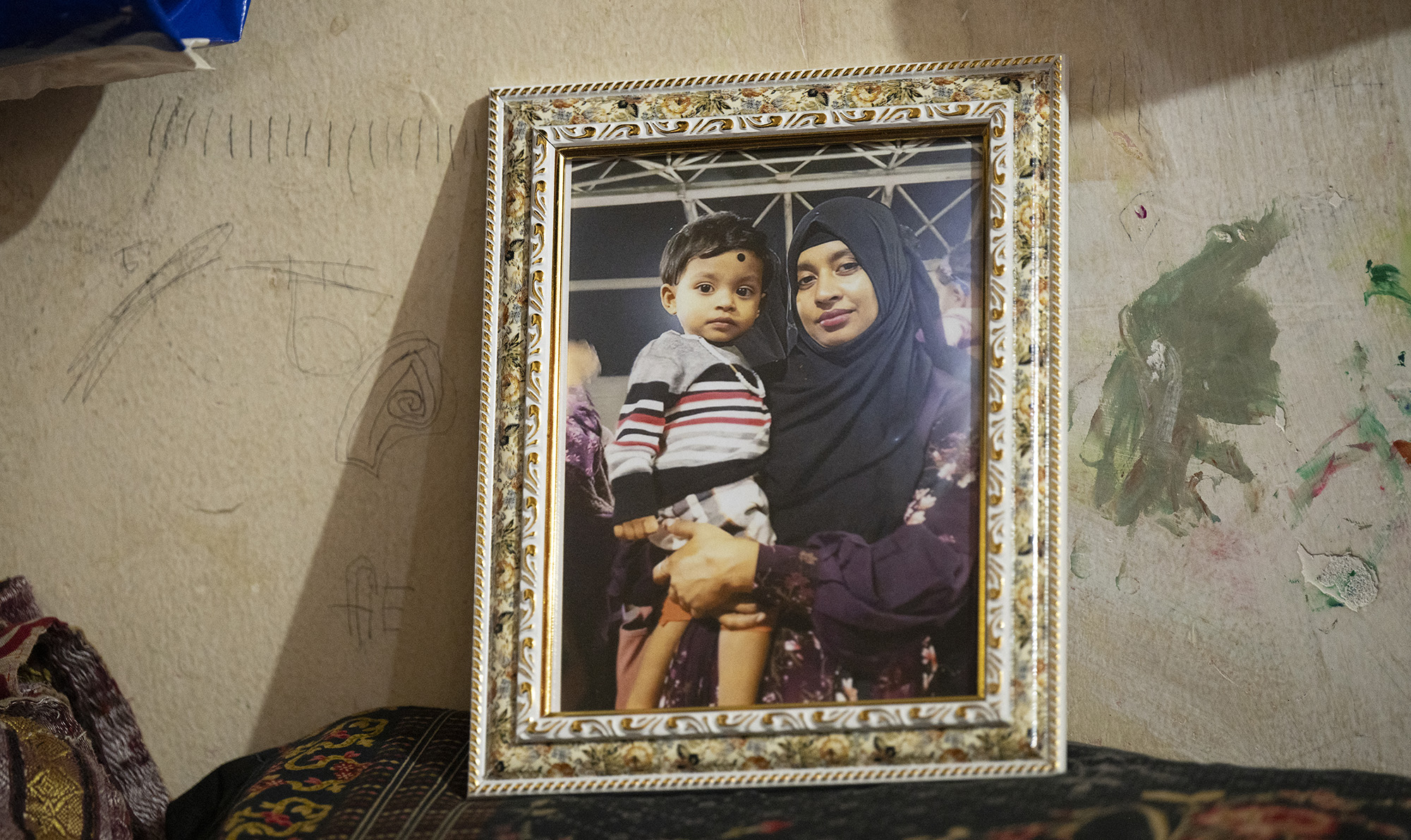
Photograph of 26 year old Moyna Khanam with her 18 month old daughter Jerin who died as a result of measles. Bangladesh's measles outbreak, which began on 15 March 2026, has become one of the countryís deadliest. As of 7 May at least 336 children have died including confirmed and suspected measles-like deaths, and tens of thousands of suspected cases have been reported nationwide. Children under five have been hit hardest, reflecting gaps in routine immunisation and vaccine access.
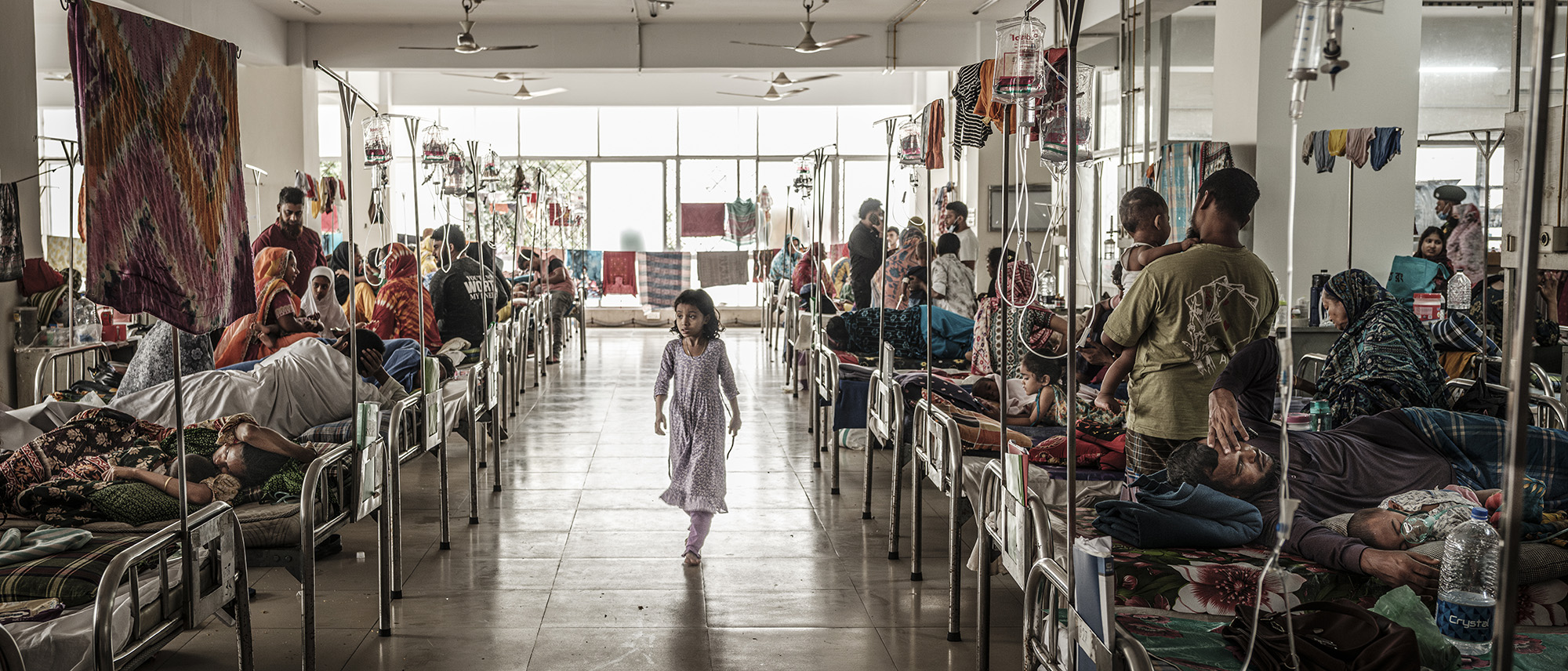
Measles ward at the DNCC repurposed dedicated Covid 19 Hospital in Dhaka. Bangladesh
An immunisation gap caused mainly by the overthrow of Bangladesh’s authoritarian government in 2024 provided the catalyst for an unprecedented surge in cases which has so far claimed at least 424 lives. More than 55,000 infections have been recorded since mid-March, according to the country’s Directorate General of Health Services (DGHS), and hospital wards are over capacity with critically ill children. Most of the victims of the epidemic are under 10, with the highest concentration among under-fives. Last week, 11 children died from measles in less than 24 hours. Simon Townsley witnessed the suffering unleashed when a whole nation’s vaccine distribution infrastructure is disrupted by bureaucratic collapse. For places where vaccine hesitancy has led to smaller recent outbreaks, including in the UK, the USA and Japan, it provides a blunt reminder of measles’ potential seriousness.
In Bangladesh, until recently praised by the World Health Organization (WHO) for its immunisation coverage, the mortality rate among children infected with the virus is high because of complications linked to malnourishment and pneumonia.
The Dhaka North City Corporation hospital is managed by the Bangladeshi military. It was repurposed for measles when the sprawling city’s Infectious Disease Hospital could no longer cope. Our escort, a uniformed army officer, tells me that in less than six weeks they have admitted more than 3,000 measles patients. “I was here during Covid and the dengue crisis in 2023,” says nurse Nazma Khan, 40. “This feels more severe because all of the patients are children. It is pitiful to see them in such a condition. They cannot express their suffering.” As with many on the intensive care ward, Yusuf, from Shariatpur, three hours outside the capital, is not receiving the treatment he needs as medical fees are too expensive for his family.
“Doctors have told me that his brain has probably been affected by the measles infection,” says terrified Nafisa, 22. “Every time I turn away, he seems to get worse. He has been in a daze for so many days now. His eyes cannot focus anymore; he can’t really eat or sleep. He missed the measles vaccine, which he should have got when he was nine months old. Now he is so desperately ill. I feel helpless. The treatment he requires we can only get at a private clinic, but that would cost us twice what my husband earns in a whole month, for just a single day.” The disparity between the healthcare haves and have-nots was underlined when on his way in Simon was shown a dedicated private intensive care room for VIP patients.
At a nearby bed, exhausted parents Abdur Rajjak, 34, and wife Joynab, 33, are struggling to cope with having three of their four children, aged eight, five and one, in the hospital with measles. Their five-year-old, Obaidulah, is being kept separately in an isolation ward. “All of my children missed their measles vaccinations,” admits Abdur. “I regret it so much. Normally, we would not be here. We are the most concerned about our son. He is in a very severe condition. Neither me nor my wife have really slept properly for ten days. It’s just the two of us. Our relatives are scared to come in because they don’t want to risk catching measles.”
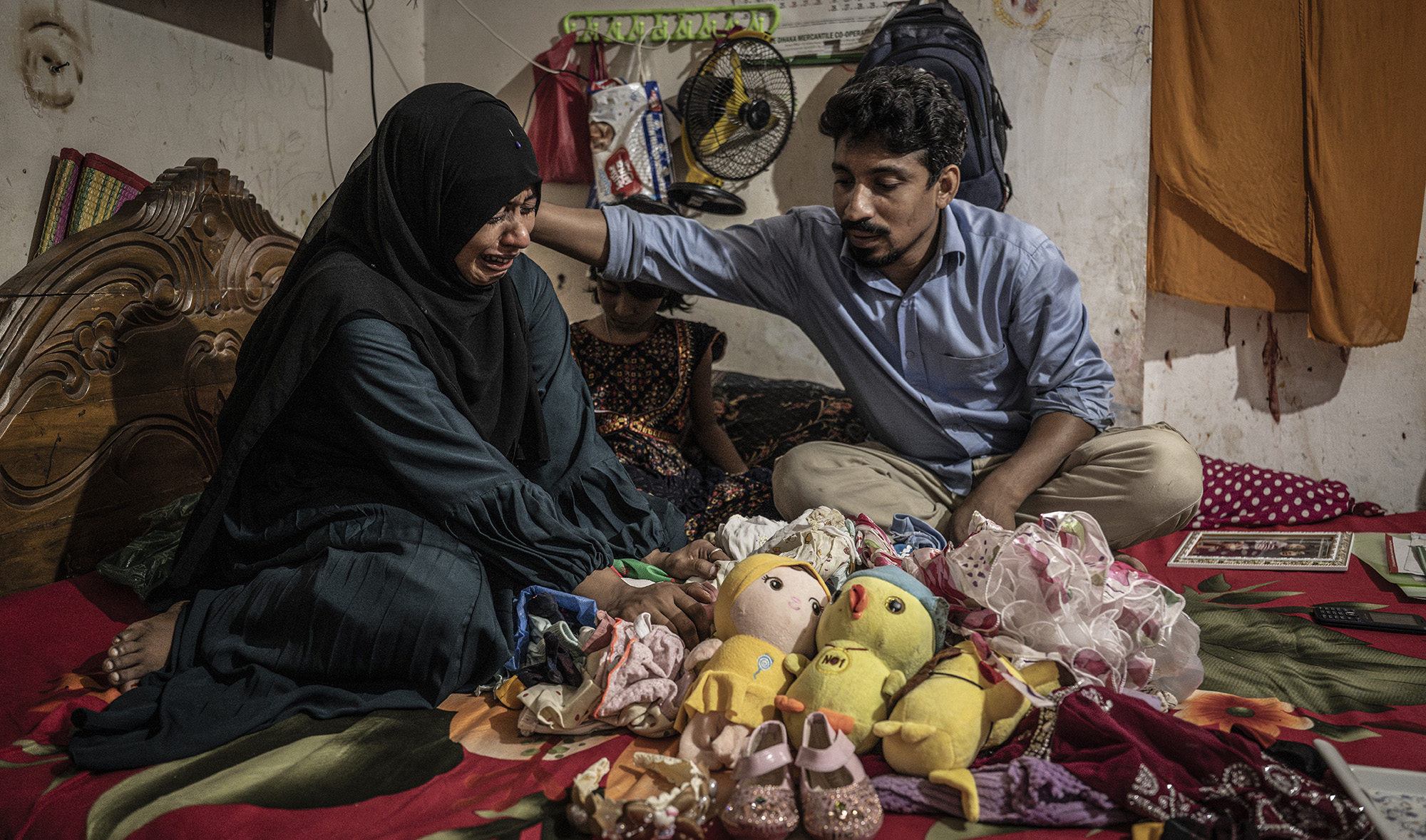
26 year old Moyna Khanam is comforted by her husband Tariqul Sabuj. overwhelmed with grief after losing her 18 month old daughter Jerin to measles. Dhaka, Bangladesh
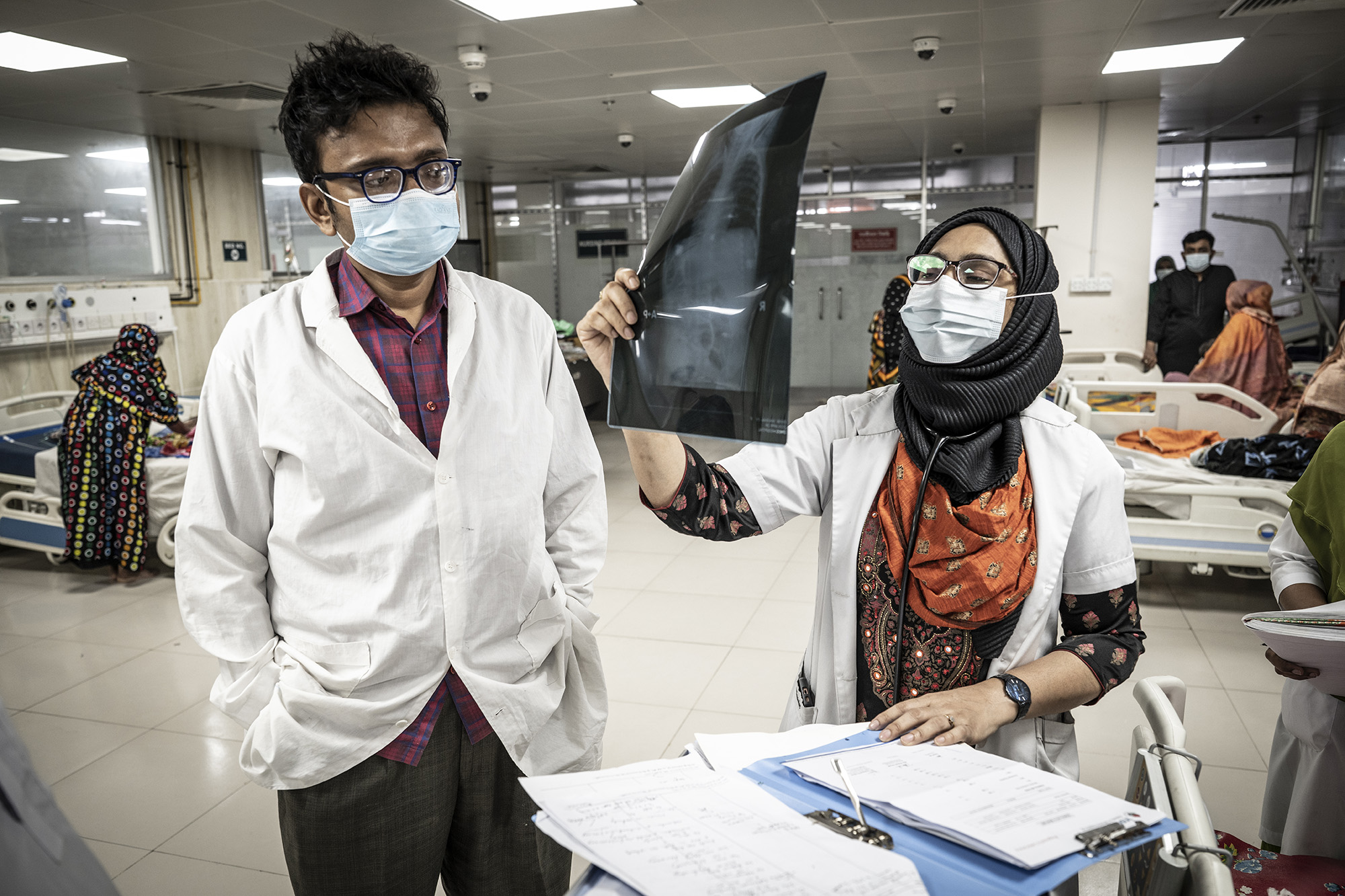
Paediatric Consultant Faria Yasmin looks at an x-ray with a colleague in the Measles Intensive Care Ward, DNCC Hospital Dhaka.
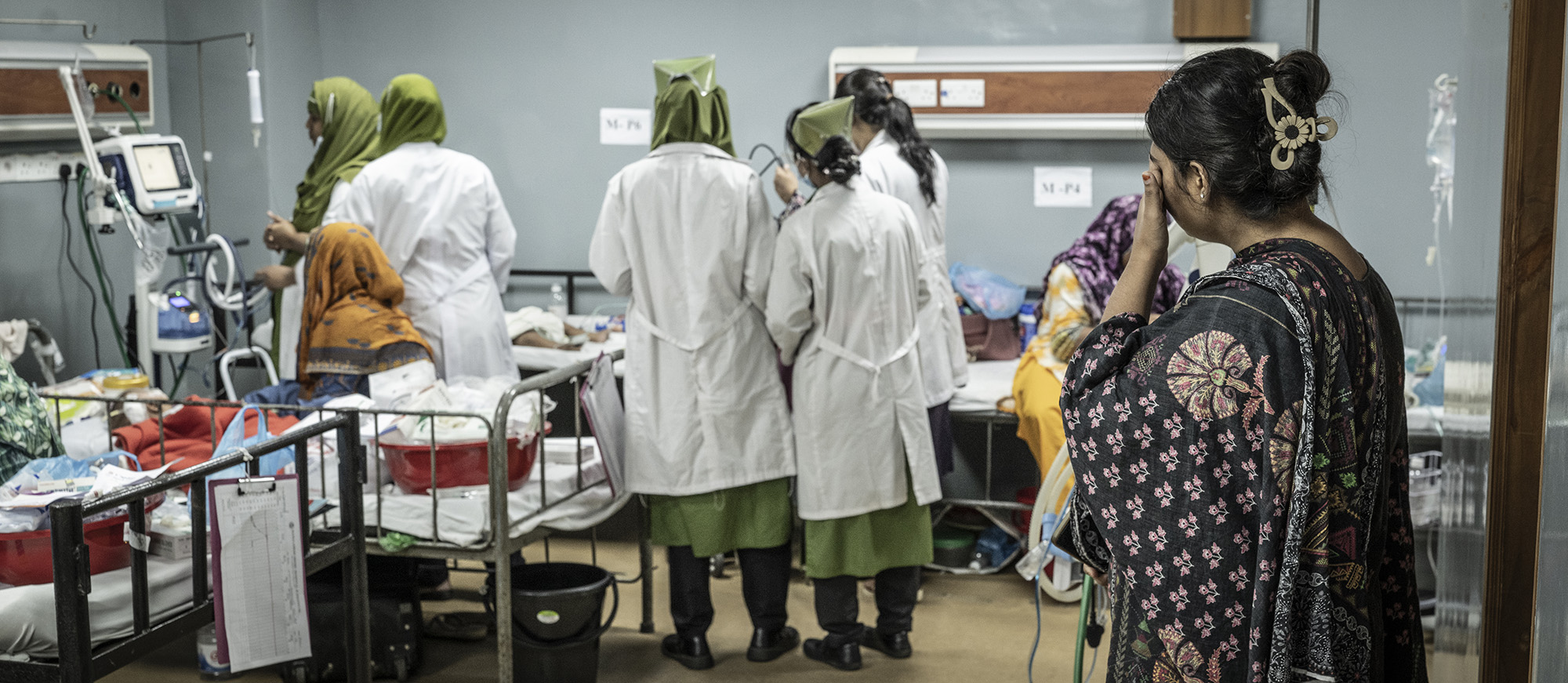
A mother watches on as her seriously ill child receives urgent attention in the measles intensive care ward, Shishu Childrenís Hospital, Dhaka. Bangladesh
Bangladesh’s deadly measles outbreak this year is extreme, but several other countries have also experienced recent surges that run contrary to the overall global downward trend towards elimination through herd immunity. Dozens of children have died from measles in Yemen, the majority unvaccinated. Last year there were 214 deaths from the disease in the war-ravaged country. In Pakistan, 71 paediatric deaths due to measles were recorded in the first four months of 2026. Health authorities there say the spike is driven by a backlog of children who missed routine vaccinations during the Covid-19 pandemic.
Mexico is also undergoing an untimely acceleration in measles infection, which has triggered alarm ahead of the World Cup next month. In the US, which is hosting the most games including all of England and Scotland’s group stage fixtures, WHO measles elimination status achieved 26 years ago is under threat from persistent outbreaks often triggered by anti-vaccine misinformation. Eighty-five per cent of people infected in Utah this year had not received the standard two doses of the measles, mumps, rubella (MMR) vaccine. Japan, granted measles elimination status in 2015, has also weathered a spike centred around Tokyo. Health authorities there suspect the virus might have been imported by foreign tourists.
Whereas the mortality rate from measles is approximately 1 in 5,000 in the UK, in Bangladesh there are around seven deaths for every 1,000 recorded cases during the ongoing outbreak.
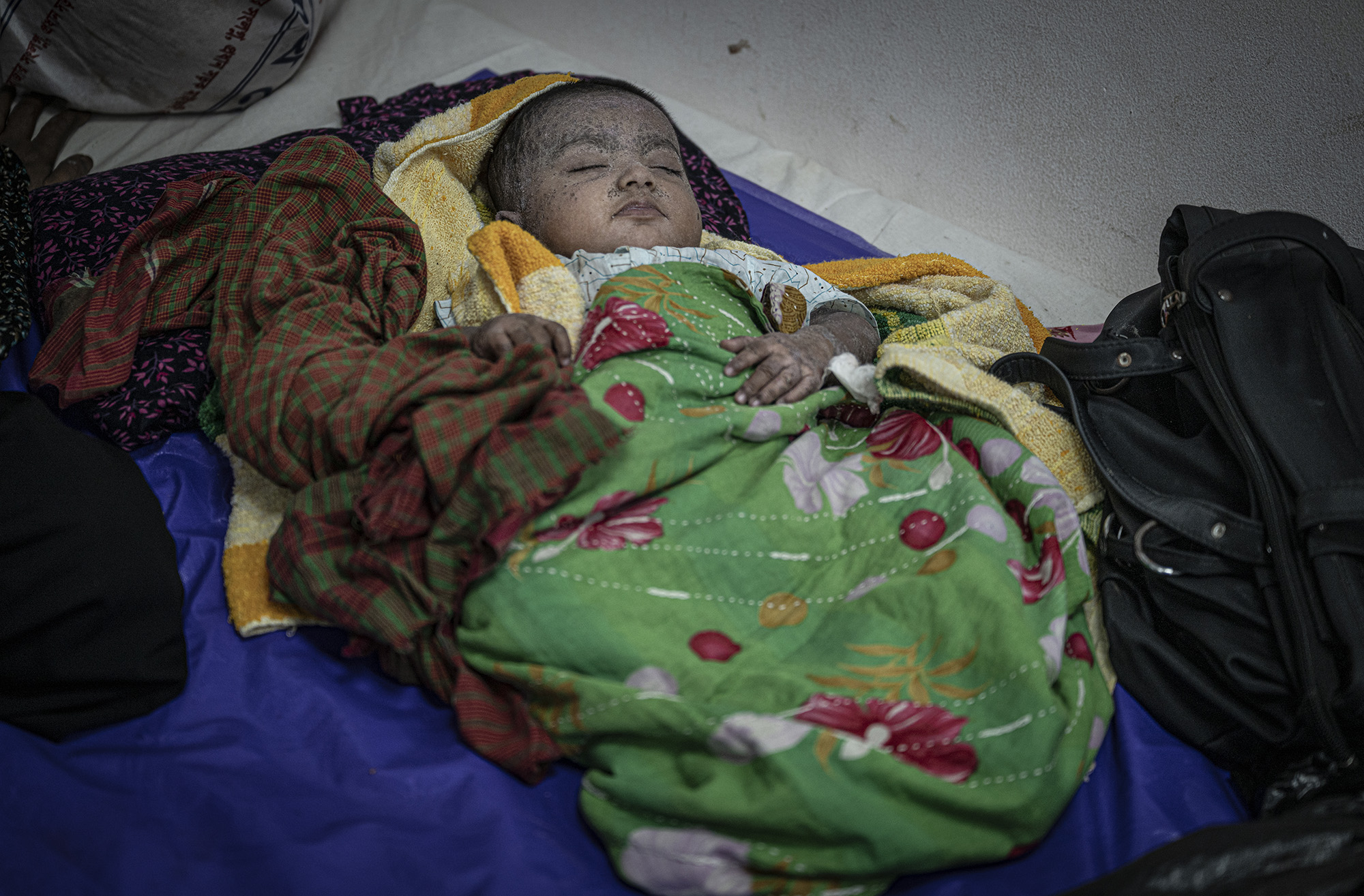
Six month old Mizanur Rahman in the measles overflow ward in an office building adjacent to Noakhali Government Hospital. Noakhali, Bangladesh
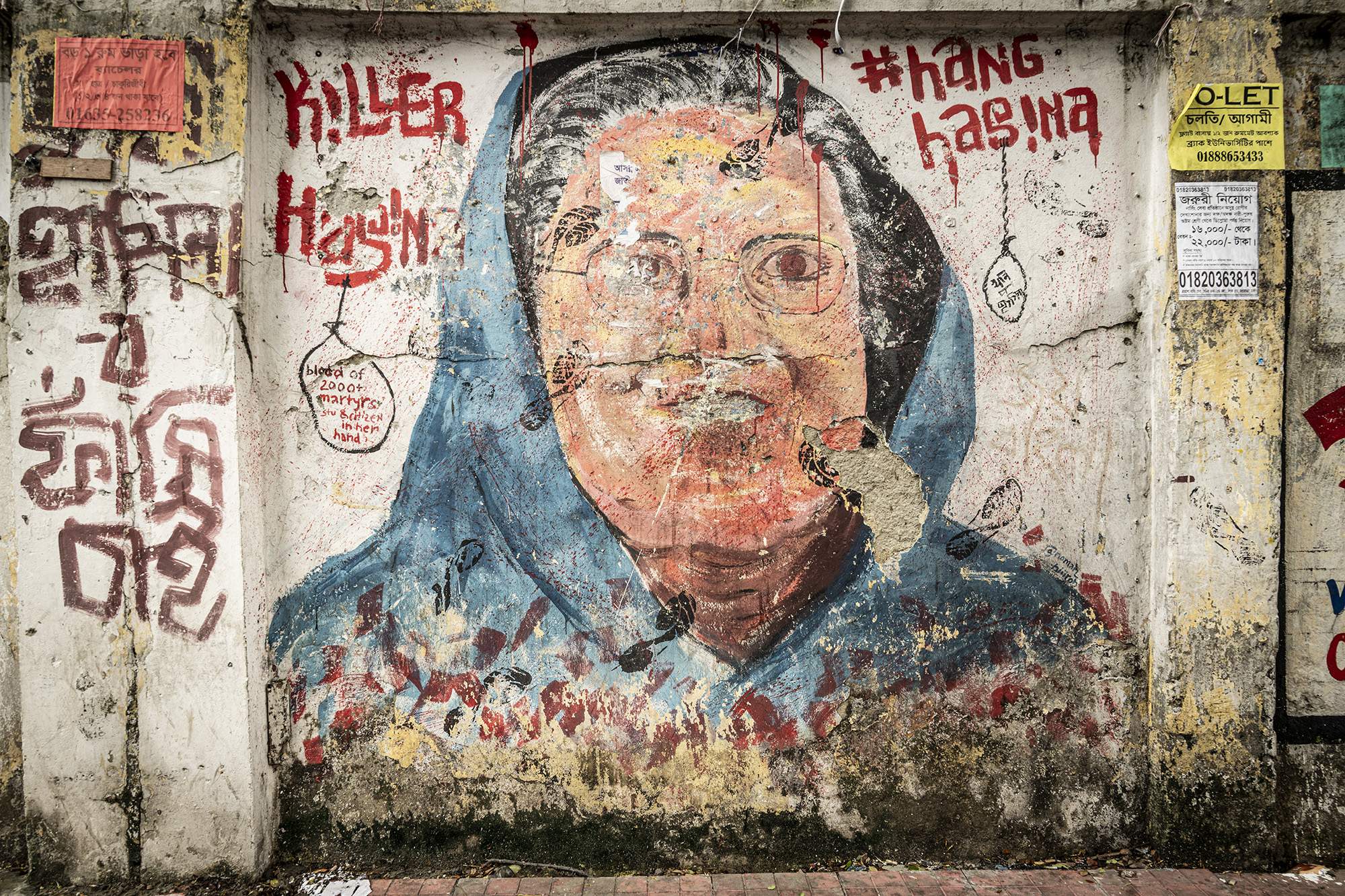
Portrait of the reviled and now deposed Sheikh Hasina Wazed who served as Prime Minister of Bangladesh and is blamed for many for the current issues facing the country. Dhaka, Bangladesh
Until the uprising that toppled despotic former Prime Minister Sheikh Hasina, Bangladesh prided itself on its strong childhood vaccination programme. According to the British Medical Journal (BMJ), the country maintained between 90 per cent and 95 per cent MMR coverage up to 2025, aside from an understandable dip during the Covid pandemic. During the period of the interim government from August 2024 to February 2026, however, the mass measles vaccination campaign which normally happens every four years was missed. The last one was in 2020. Stockpiles of vaccines became depleted as the procurement process slowed down and tens of thousands of health worker roles were left vacant.
Lacking foresight, the stand-in administration failed to react quickly enough to measles outbreaks in other countries in 2024. Another factor was that data from the private hospitals which many people in Dhaka use was not collated, the BMJ report found. It was the perfect storm. Mike Tildesley, Professor of Infectious Disease Modelling at the University of Warwick, said the difficulty facing nations with vaccination coverage problems is that the reproduction number for measles is extremely high. As a result, herd immunity as defined by the WHO is only achieved when around 95 per cent have received the MMR jab.
“The consequence of this is that vaccination coverage doesn't need to fall very much for us to observe measles outbreaks again,” Professor Tildesley explained. “We've even seen this in the UK over the last few years, that measles cases have started to increase as a result of a drop in uptake of the MMR vaccine.” Bangladesh’s new government is now playing catch-up with an emergency nationwide vaccination drive underway. Over four million children have already been reached.
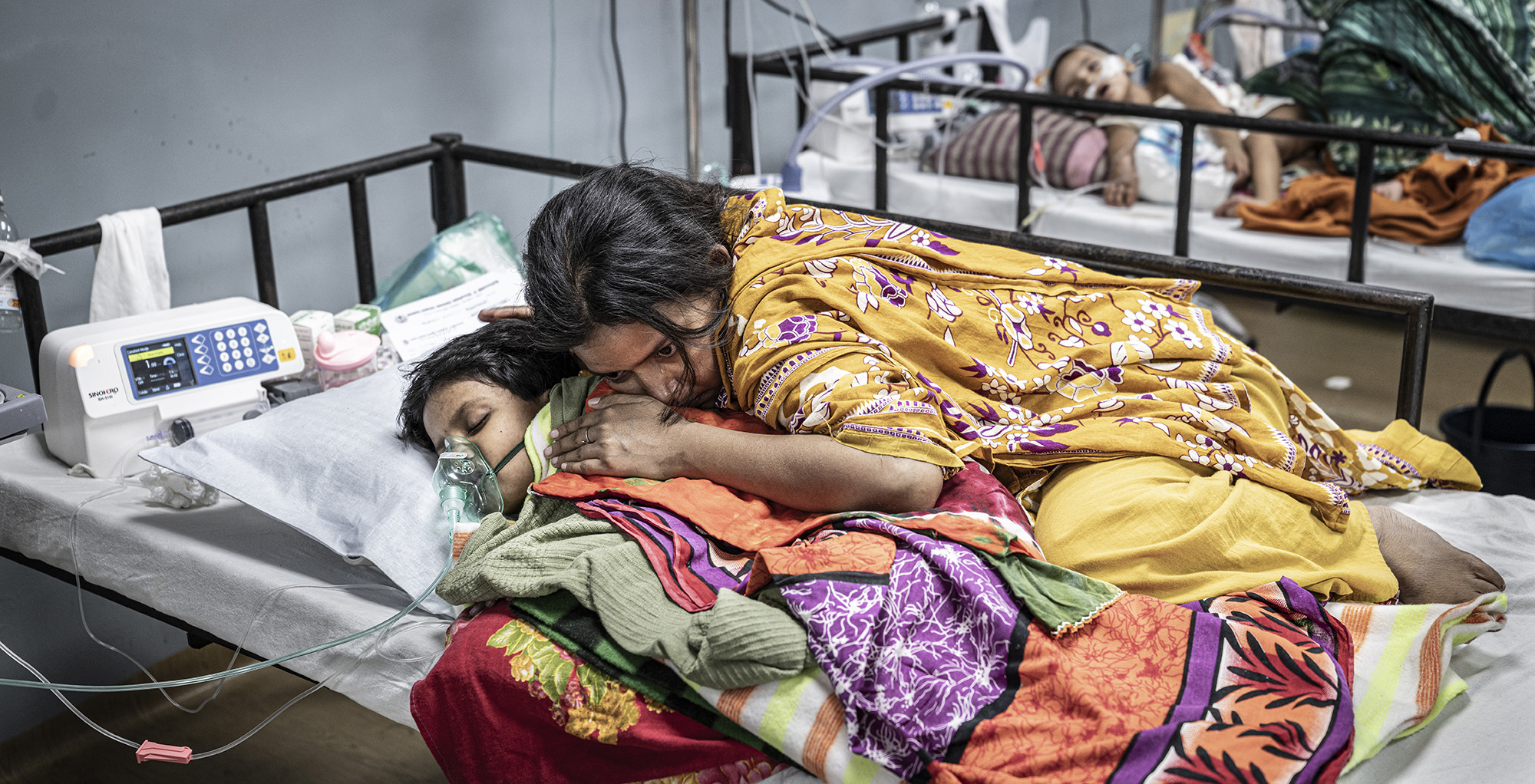
24 yr old Sheulii Akhter hugs her niece Jammatal (5) in the measles intensive care ward, Shishu Childrenís Hospital, Dhaka. Bangladesh
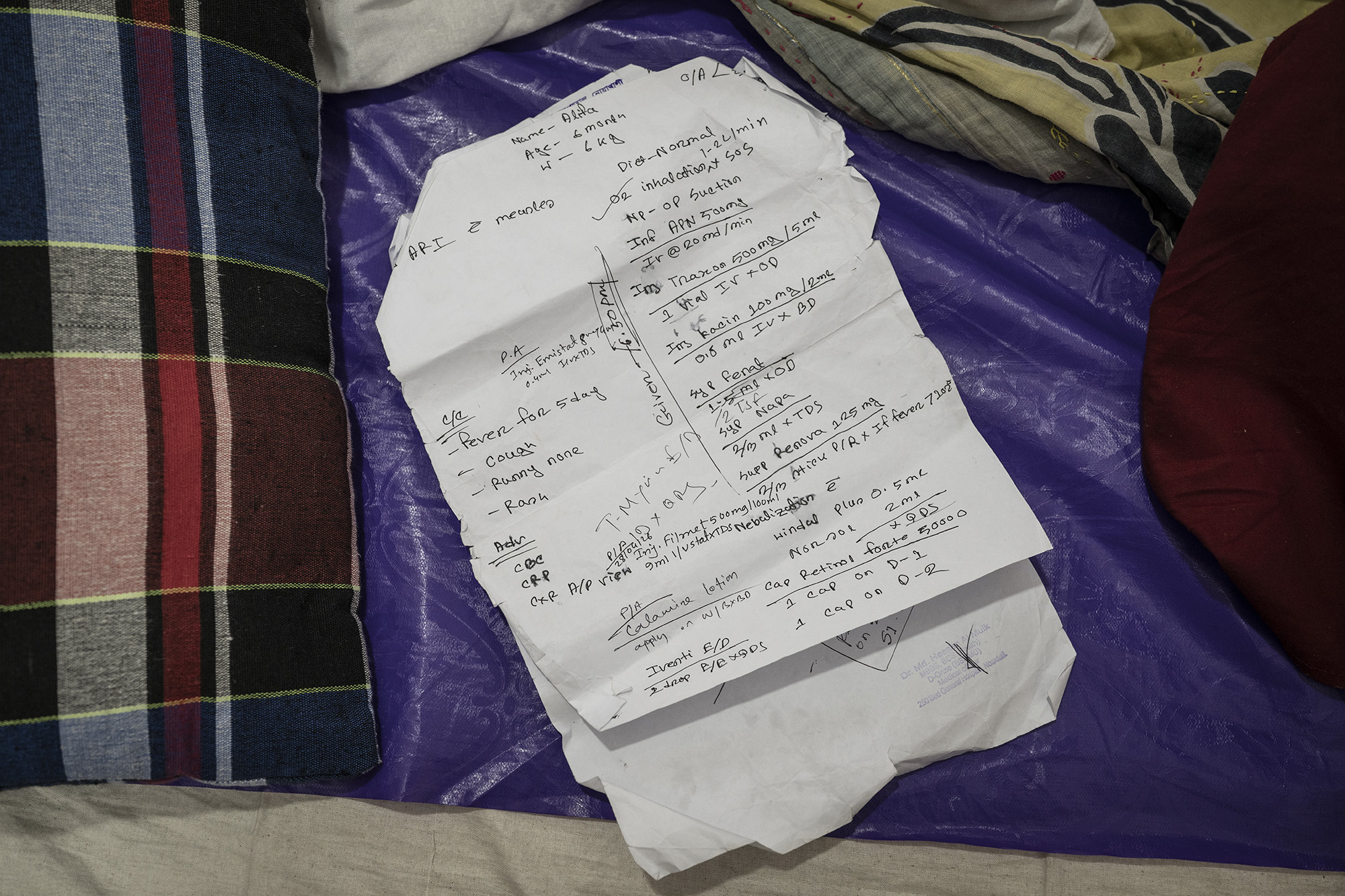
Medical notes of a child with measles, DNCC hospital Dhaka. Bangladesh
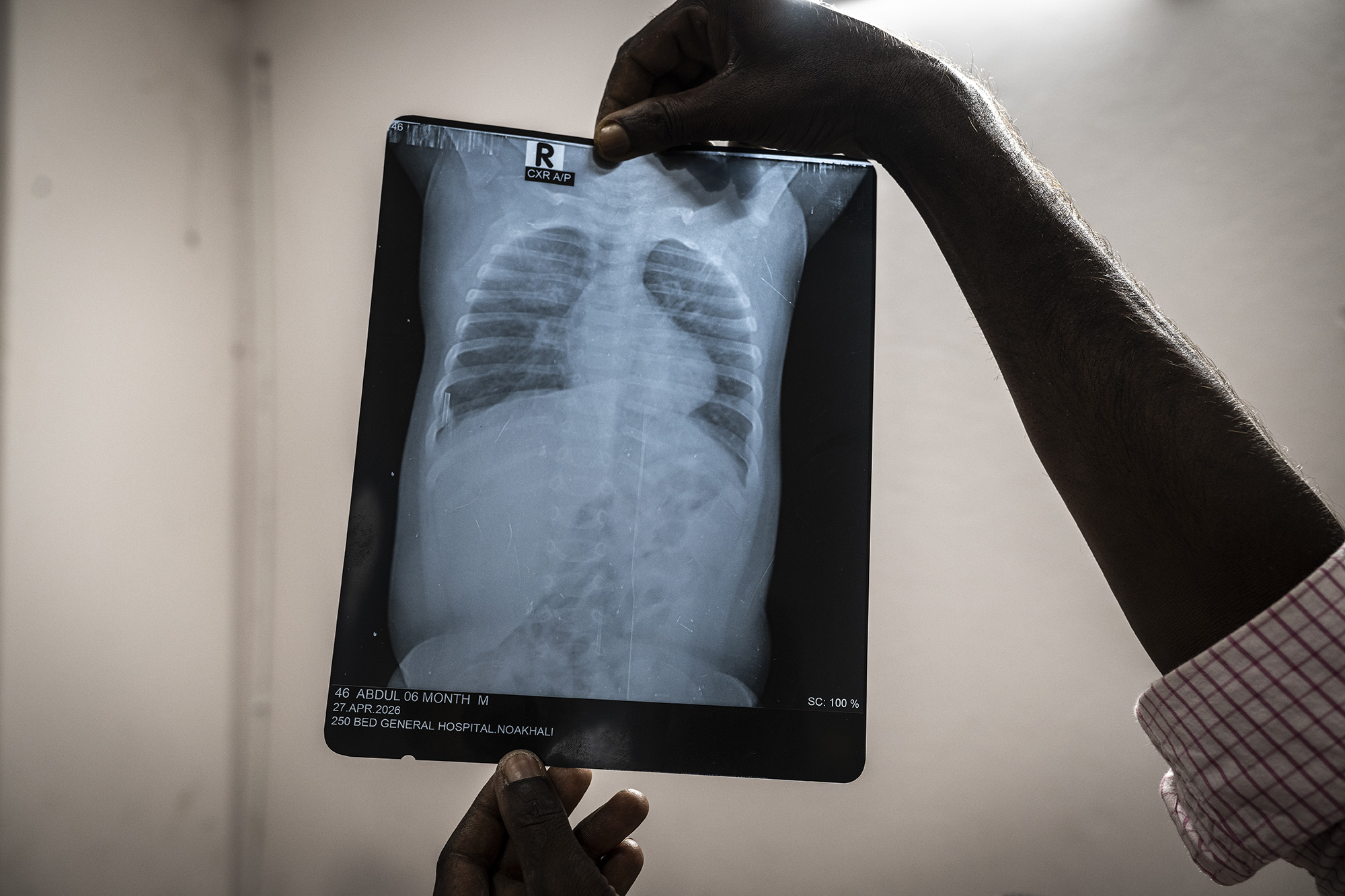
Pneumonia can ofter prove a fatal infection in measles patients.
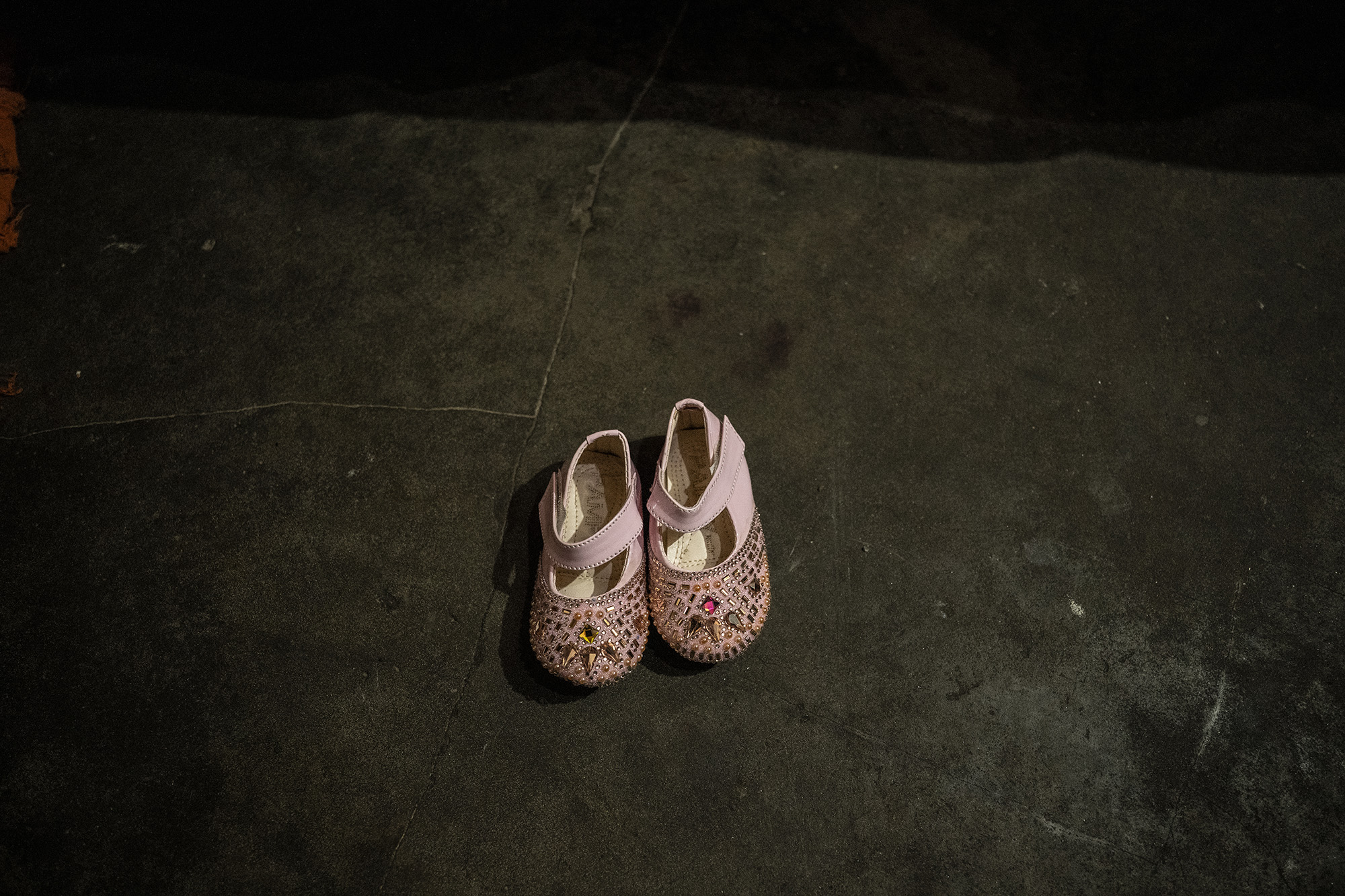
Unused shoes bought for 18 month old Jerin. who died as a result of measles. Dhaka, Bangladesh
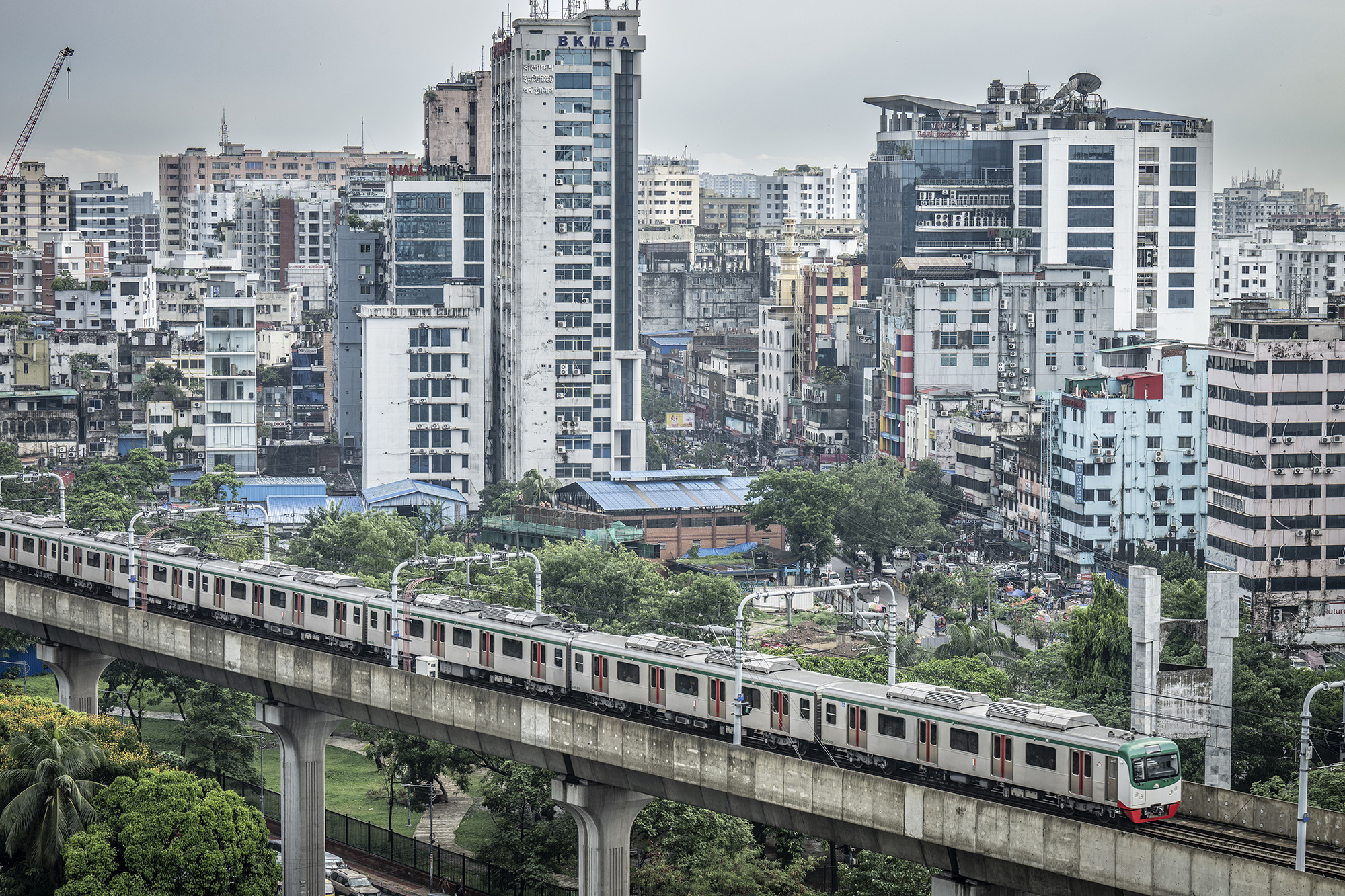
A train passes through downtown Dhaka. Bangladesh
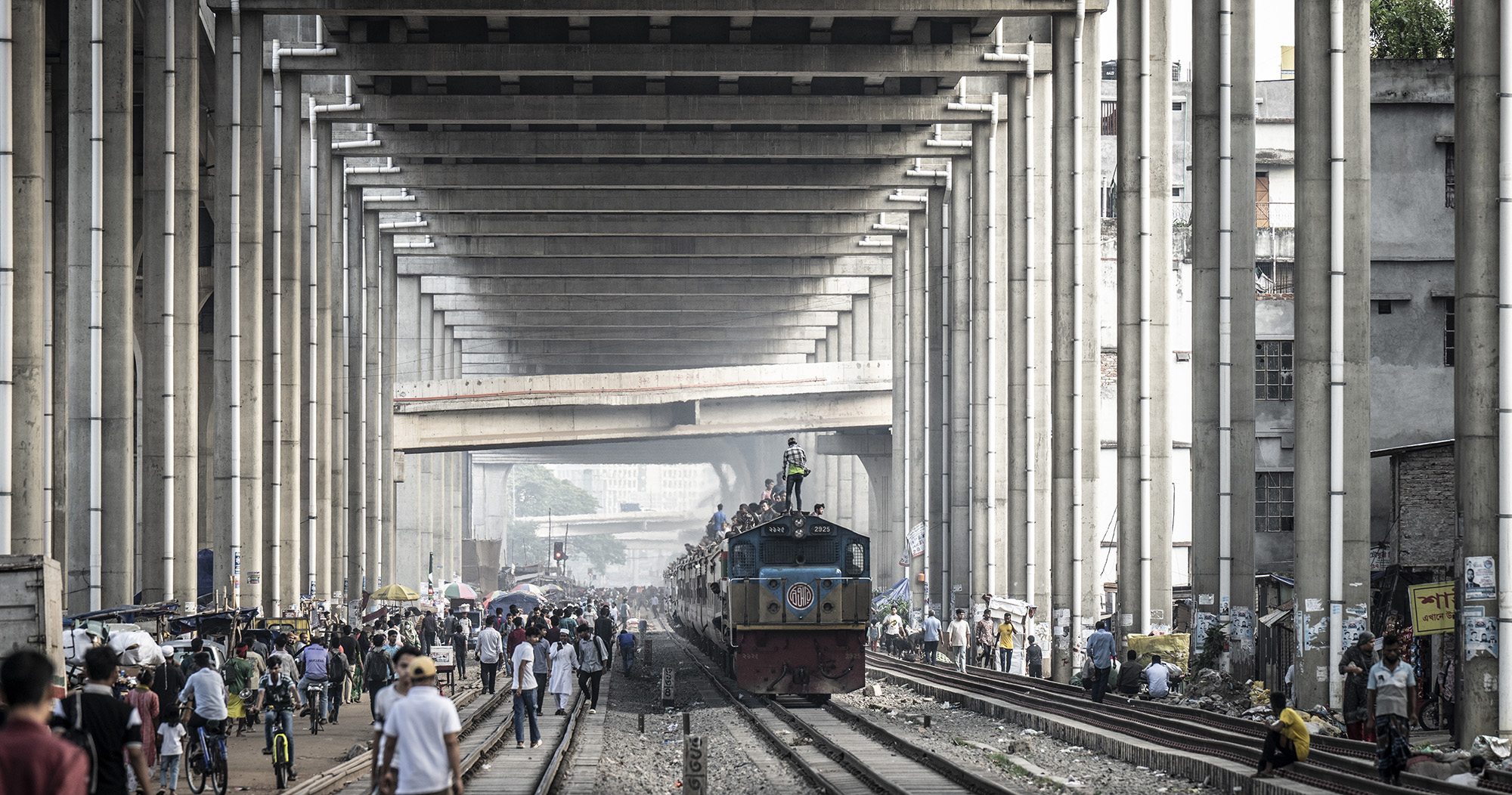
A train travels through downtown Dhaka, Bangladesh.
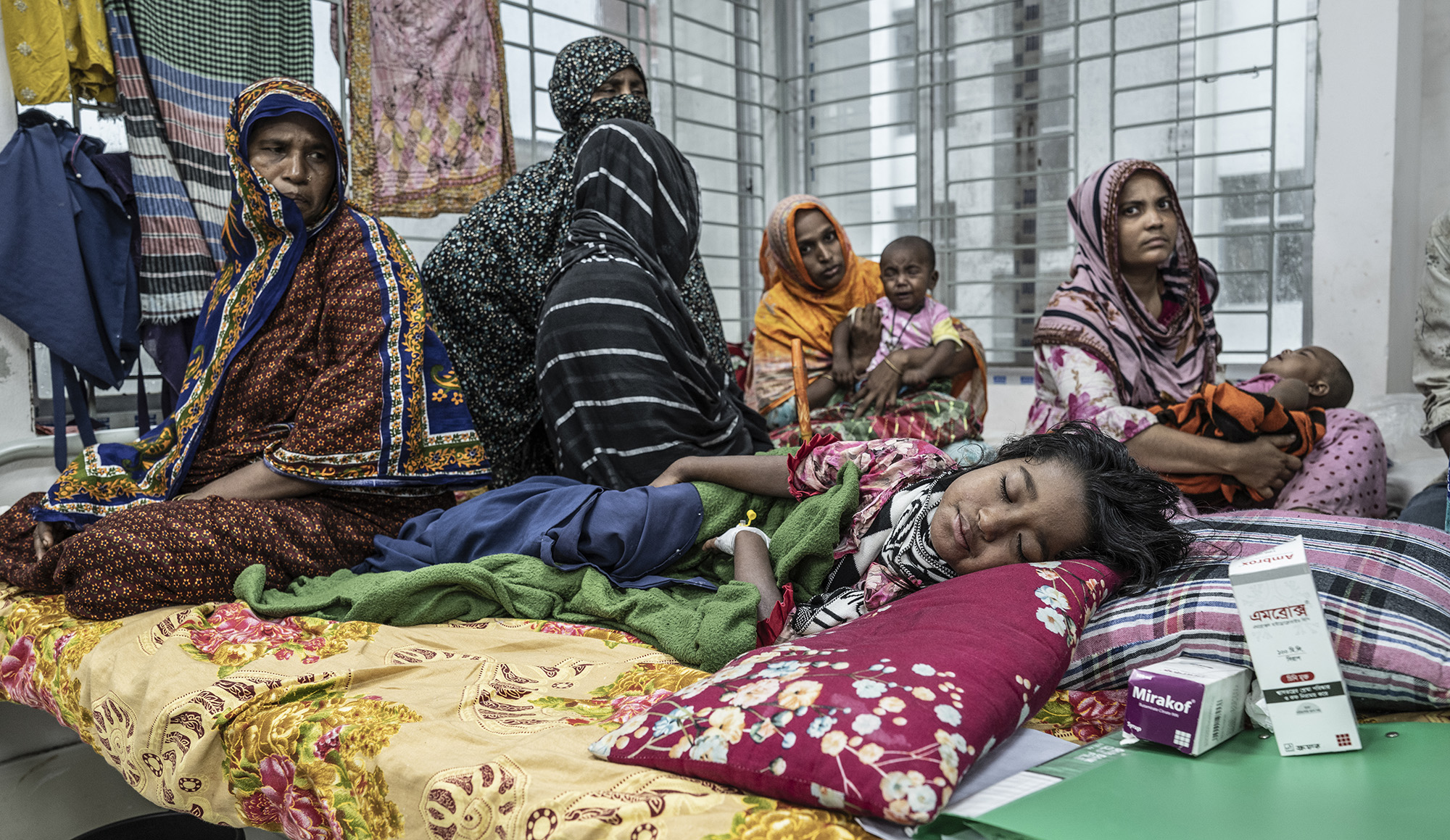
The measles overflow ward in an office building adjacent to Noakhali Government Hospital. Noakhali, Bangladesh
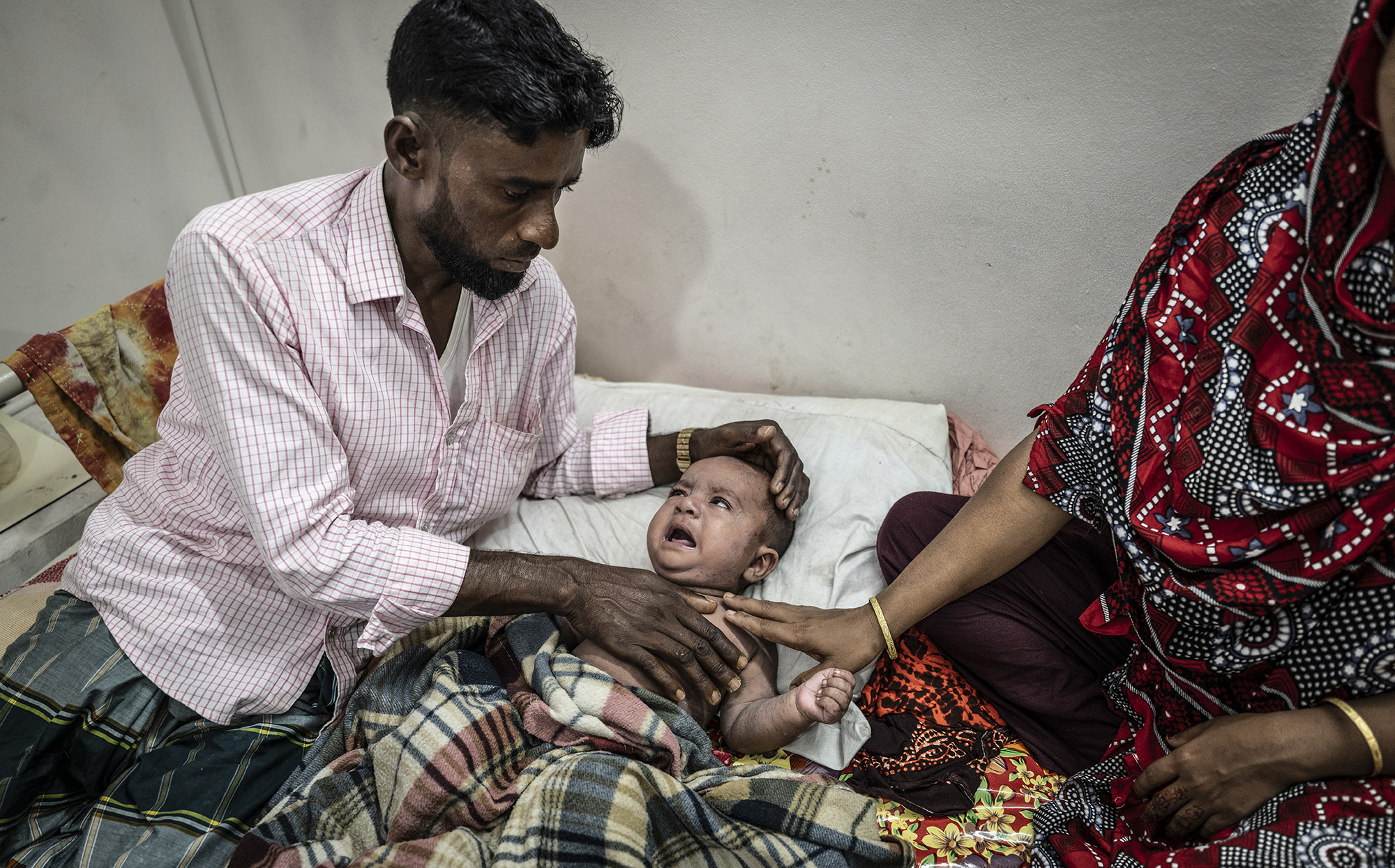
Mohammed Akbar comforts his 6 month old son Abdul who has been hospitalised with measles. Noakhali Government Hospital. Noakhali, Bangladesh
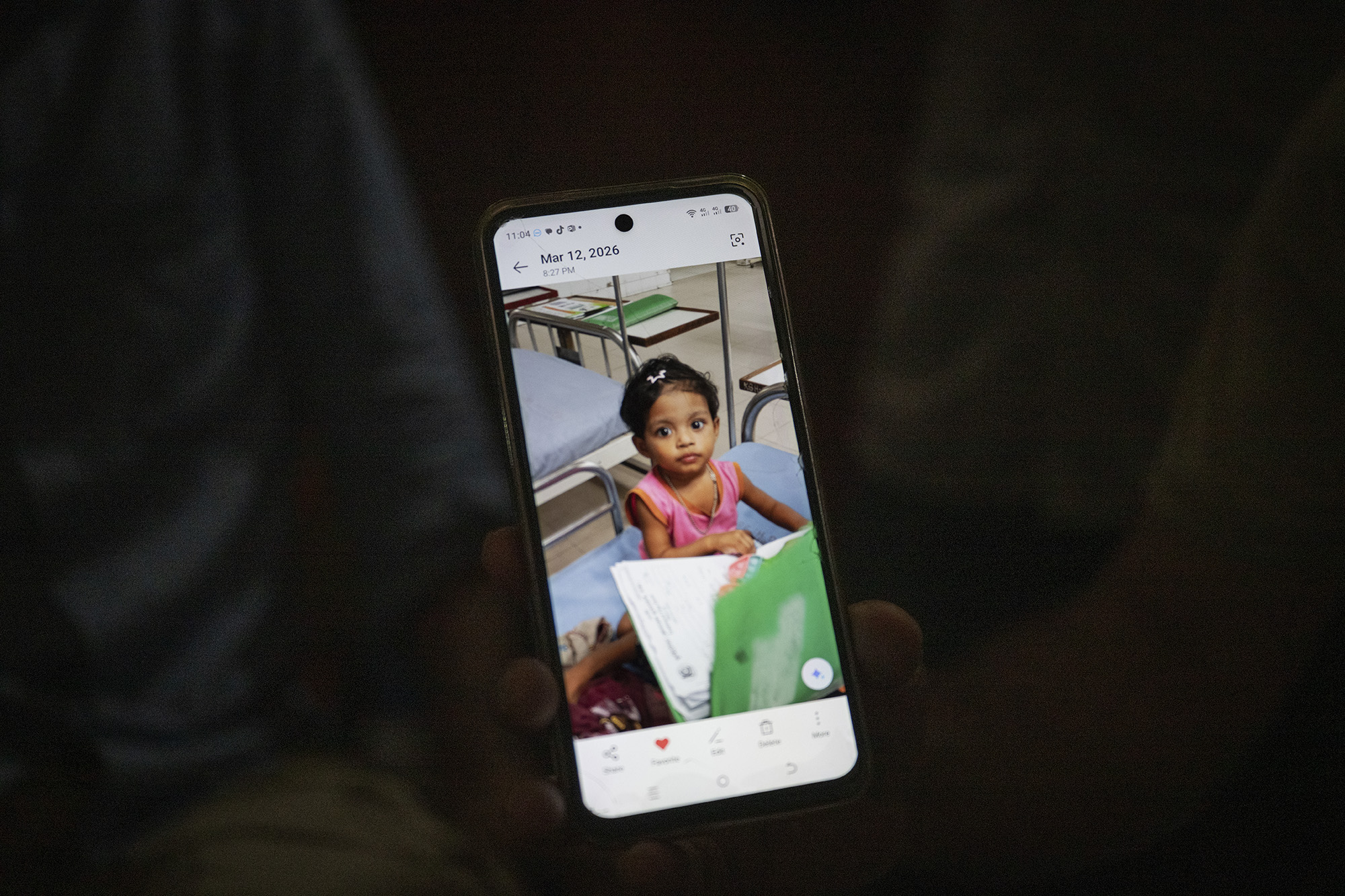
The last picture taken of 18 month old Jerin who died as a result of measles, in hospital Dhaka. Bangladesh
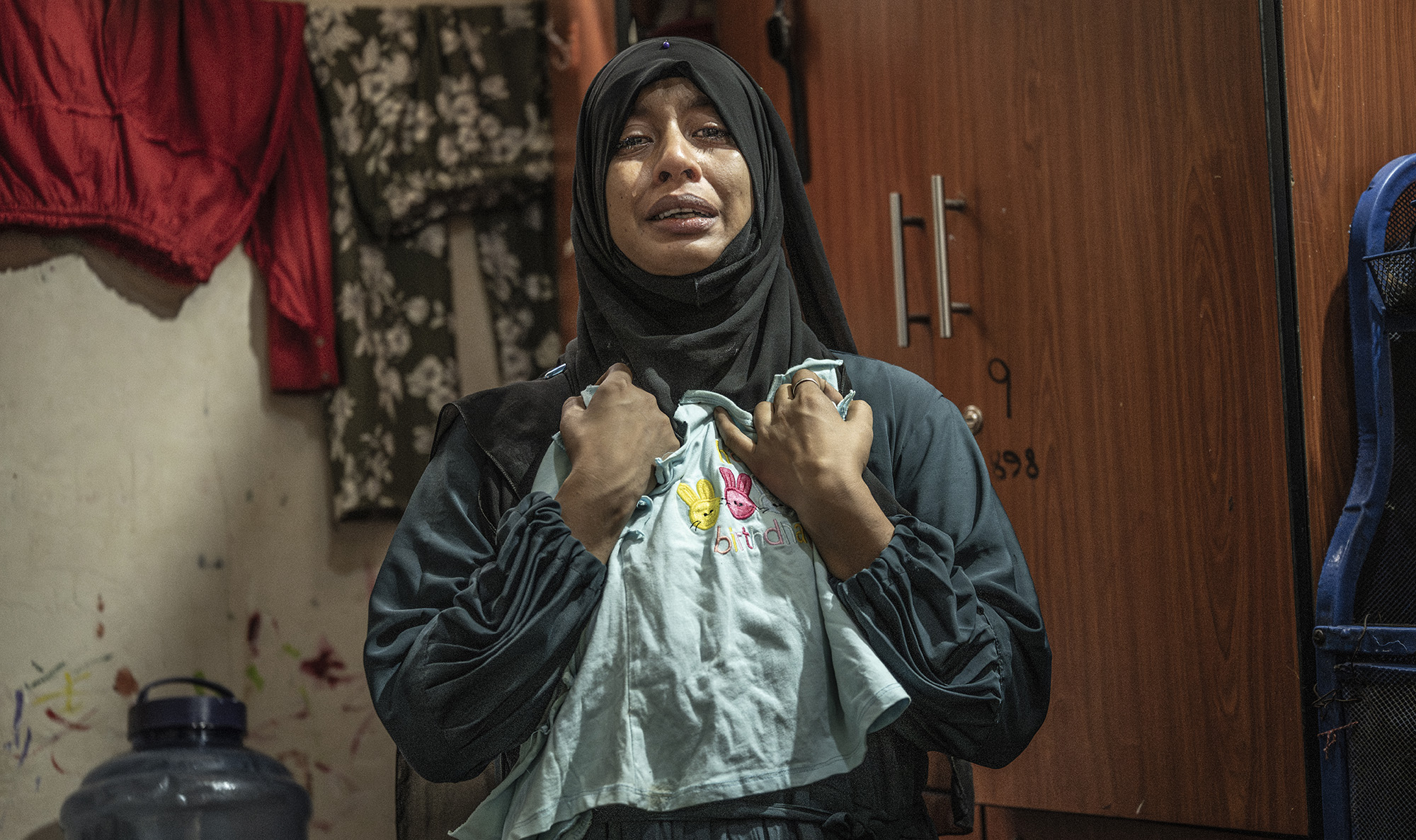
26 year old Moyna Khanam is overwhelmed with grief after losing her 18 month old daughter Jerin. She holds the clothes Jerin was wearing when she died. Dhaka, Bangladesh
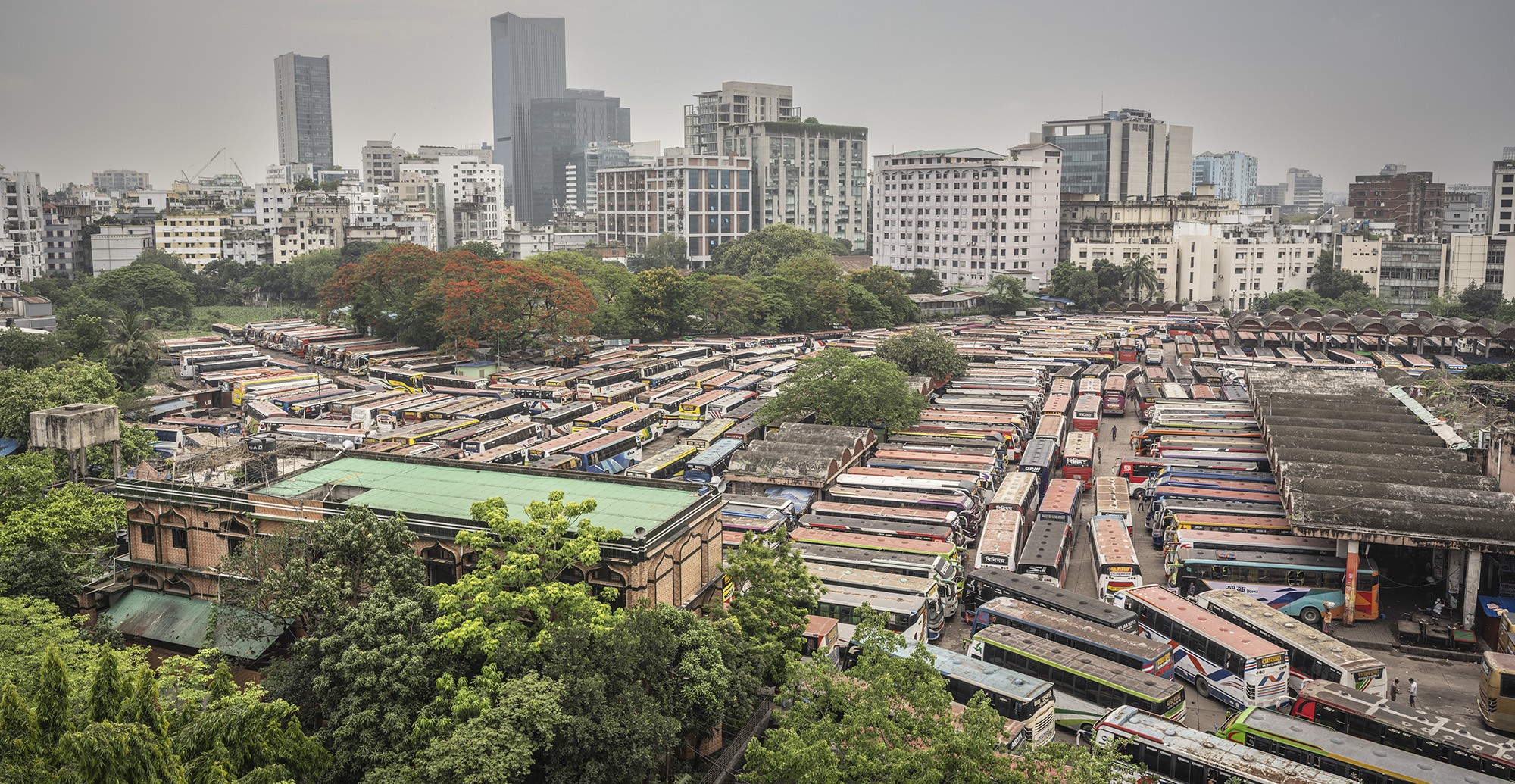
Bus station, downtown Dhaka Bangladesh
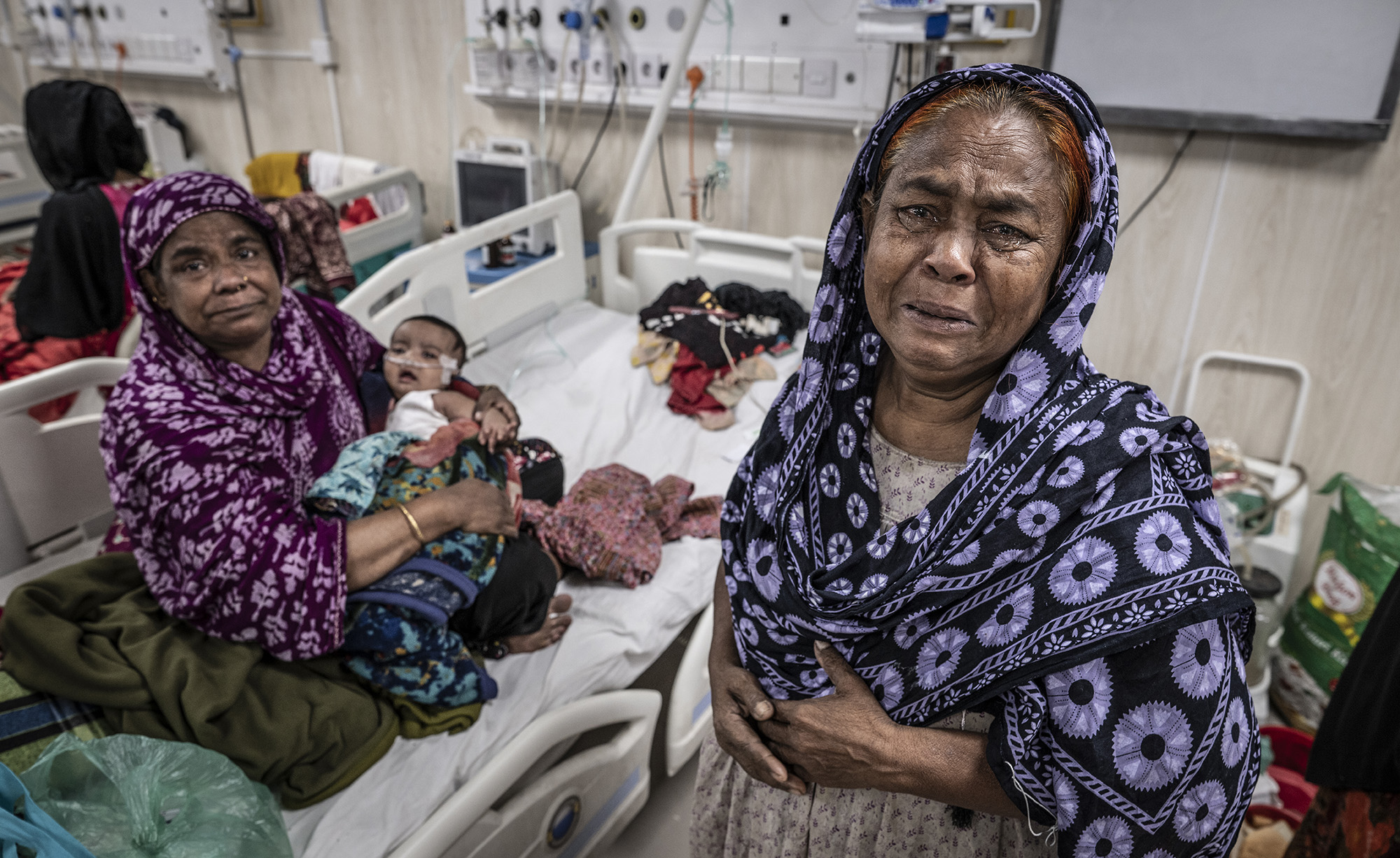
DNCC measles hospital intensive care ward. Grandmother Akhi Akhter (r) cries when she is told the need to leave the hospital because they can't afford to pay for treatment for 4 month old Shoabia Saba. who has developed pneumonia following measles. Shoabia's other grandmother Shisu Akhter holds her. Dhaka, Bangladesh
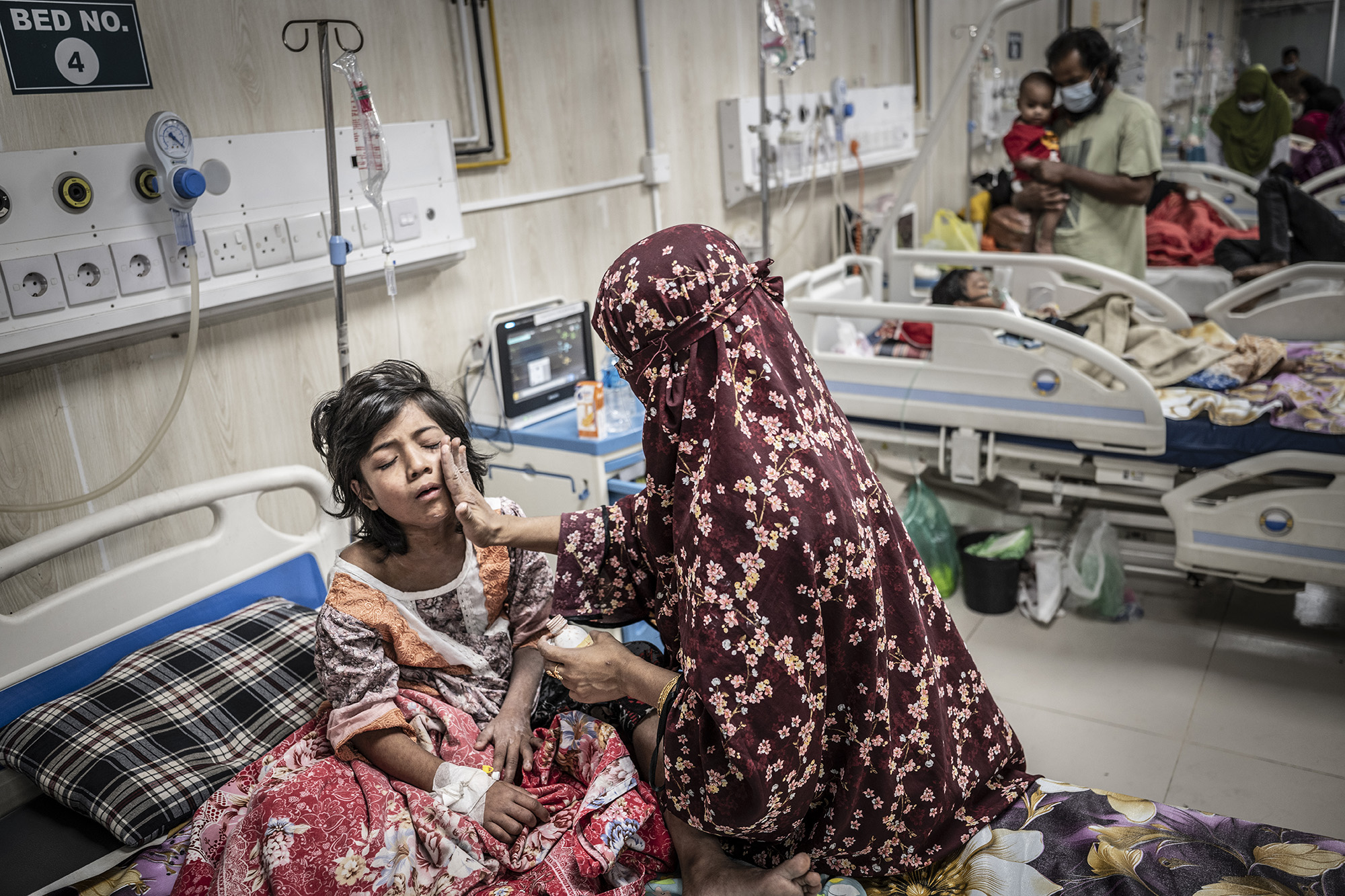
8 year old Salma with her mother Joynab Akhter in the DNCC measles hospital, Dhaka. Bangladesh
So many quiet tragedies are being absorbed into the frenetic chaos of Dhaka as the measles outbreak presses inexorably against its never-ending traffic. Peculiarly for such a noisy, crowded city, the cemetery in which 10-month-old Mohammed Yasin was buried at the end of March exists in an exclusive oasis of calm. Freshly dug plots are the final resting place of infant measles patients. In this beautiful, verdant spot, more like a public garden than a graveyard, sentry-still Ulfa prays silently, a potent symbol of the very real danger of neglecting the vaccine.
(text adapted from an article by © Tom Parry / Telegraph. For the full version, please get in touch with Panos)
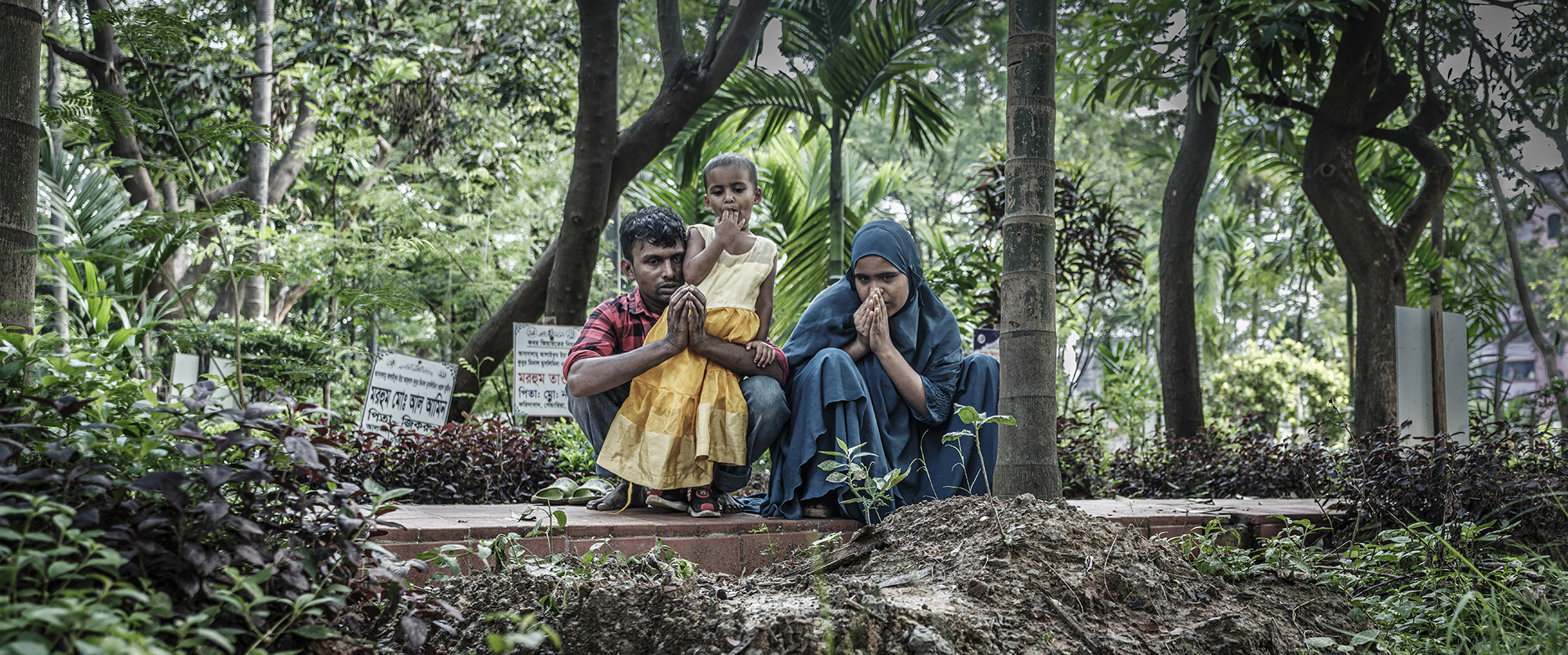
Visiting the Dhaka grave of 10 month old Yasim who died of measles three weeks ago. Father Wasim Hawlader; mother Ulfa Begum, sister Aysha 3 yrs. Dhaka, Bangladesh
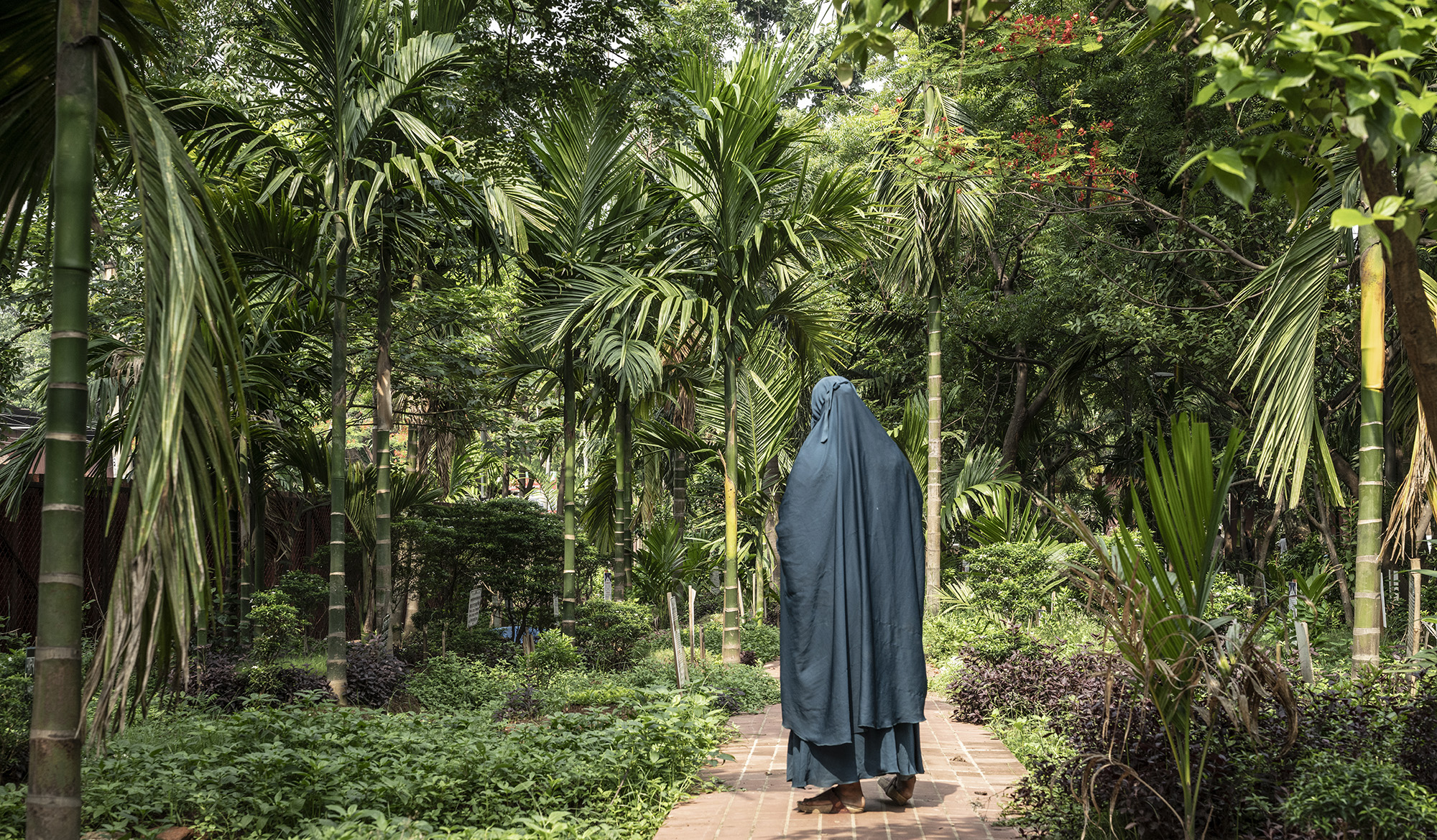
Visiting the grave of 10 month old Yasim who died of measles three weeks ago. Mother Ulfa Begum. Dhaka, Bangladesh