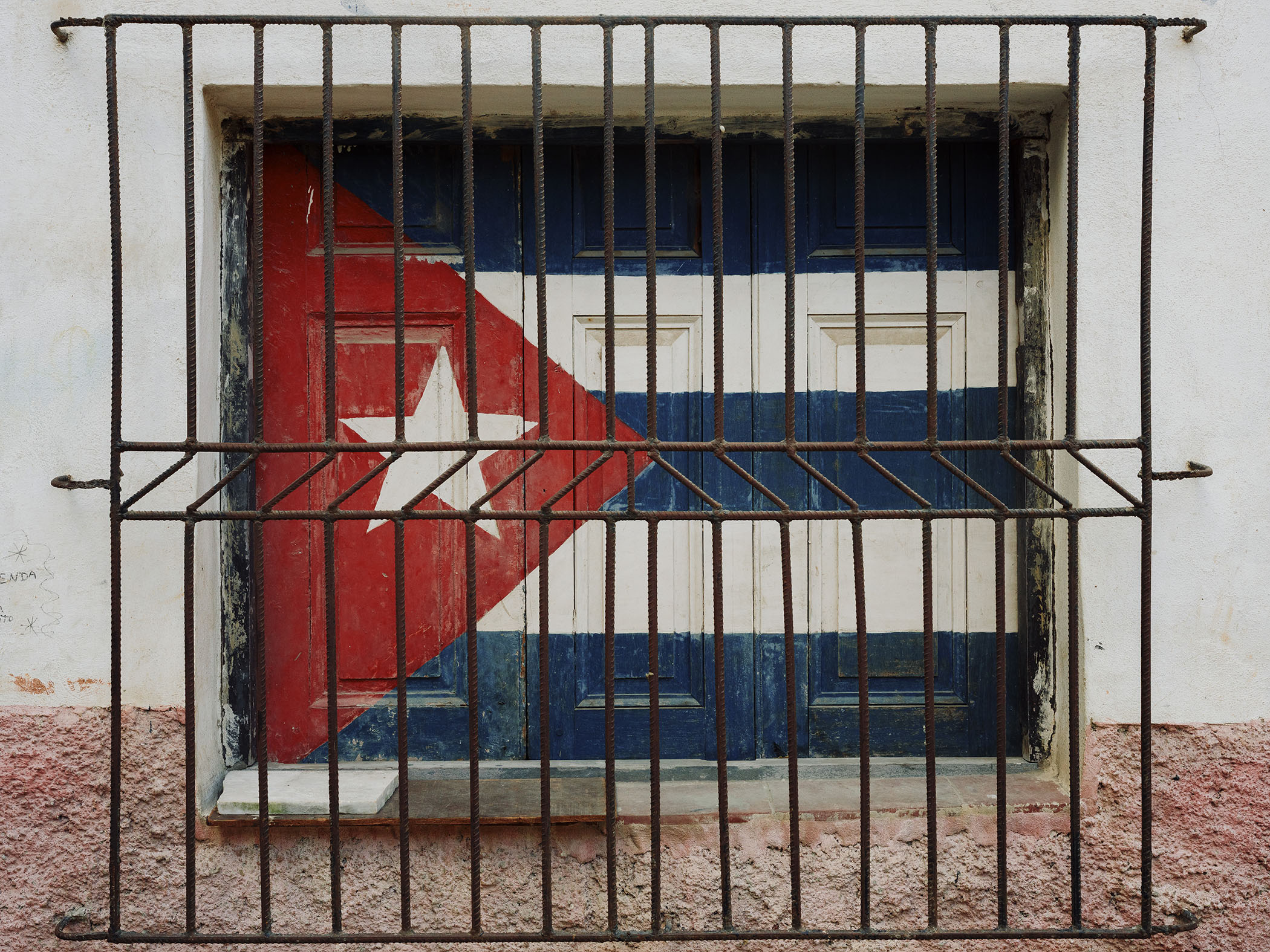
“We have absolutely no fuel [oil] and absolutely no diesel,” announced Cuba’s energy minister Vicente de la O Levy in May “We have no reserves.”
The Cuban state electric company struggles to provide even a few hours of power a day. In the countryside power cuts last for up to 30
hours at a time. Petrol stations have been empty for months. And for those who use gas canisters to cook, charcoal and even wood are now the only options. It is not uncommon to see people in Havana cooking on the street or on their balconies.
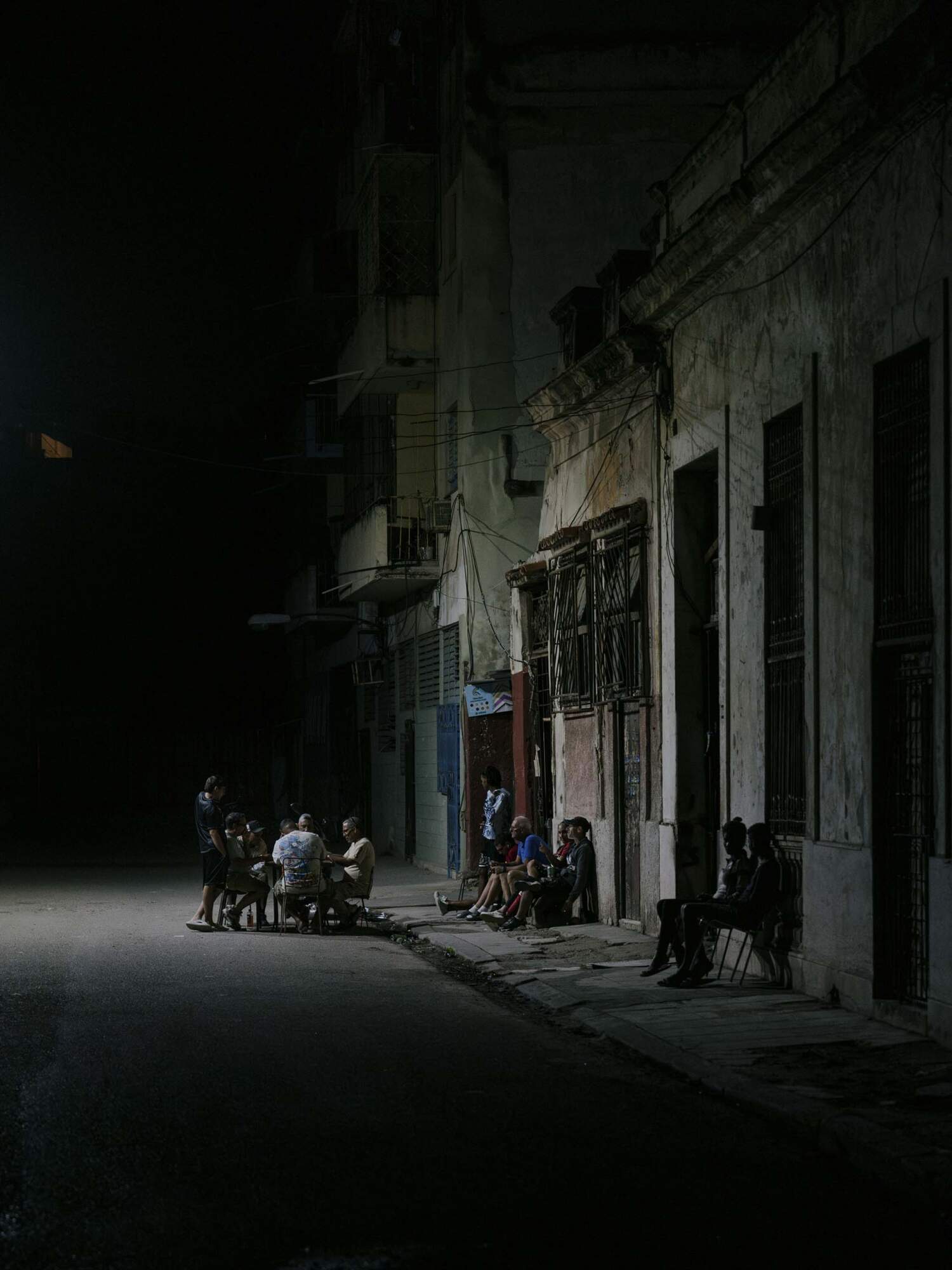
Havana, Cuba. At night most streets and houses are entirely without light. People gather outside in the few places where street lights work to meet, talk and play dominoes
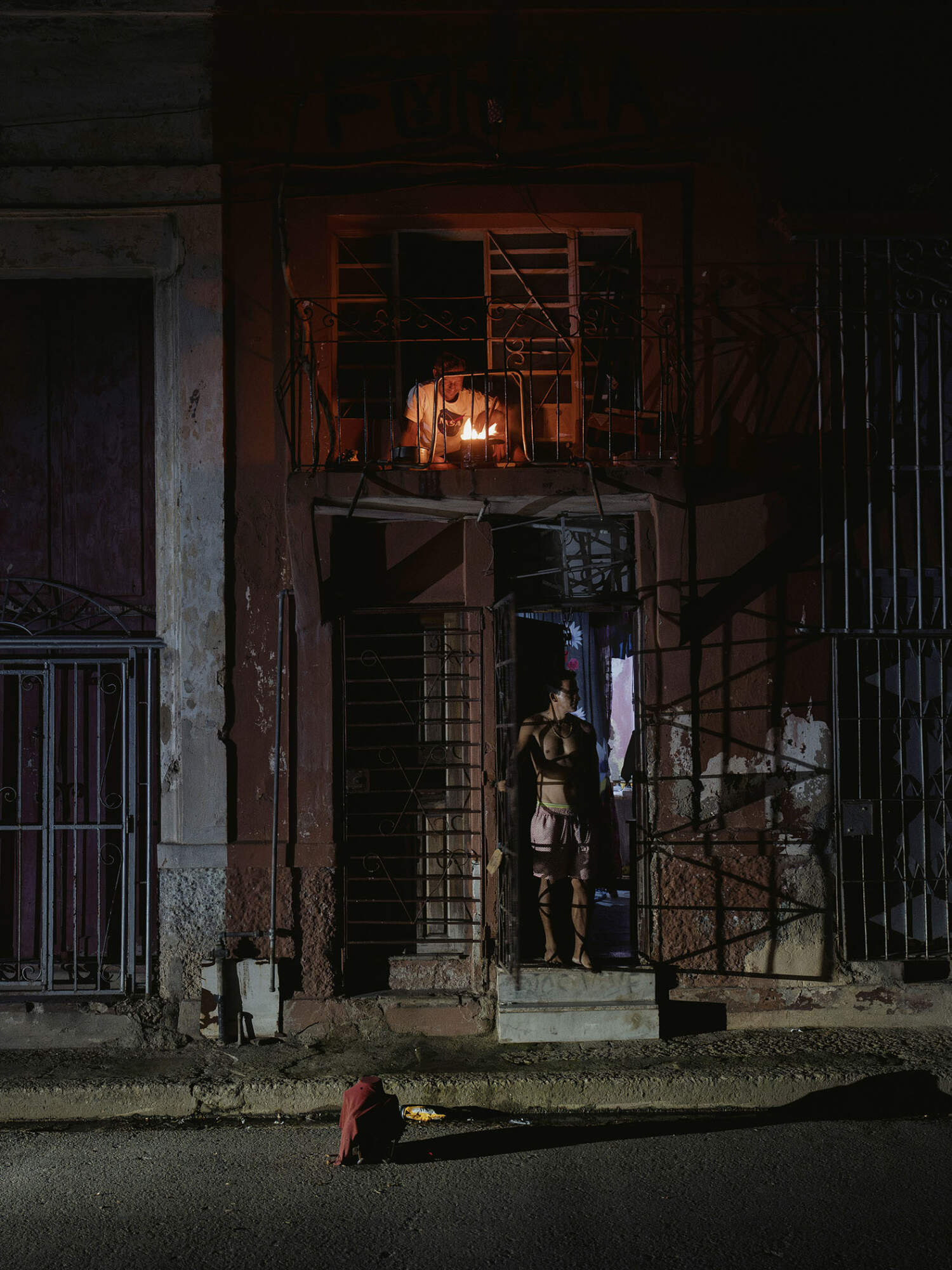
Havana, Cuba. A man cooking on his balcony at night. Due to the alomost total lack of cooking gas it is not uncommon to see people cooking outdoors on wood or charcoal fires.
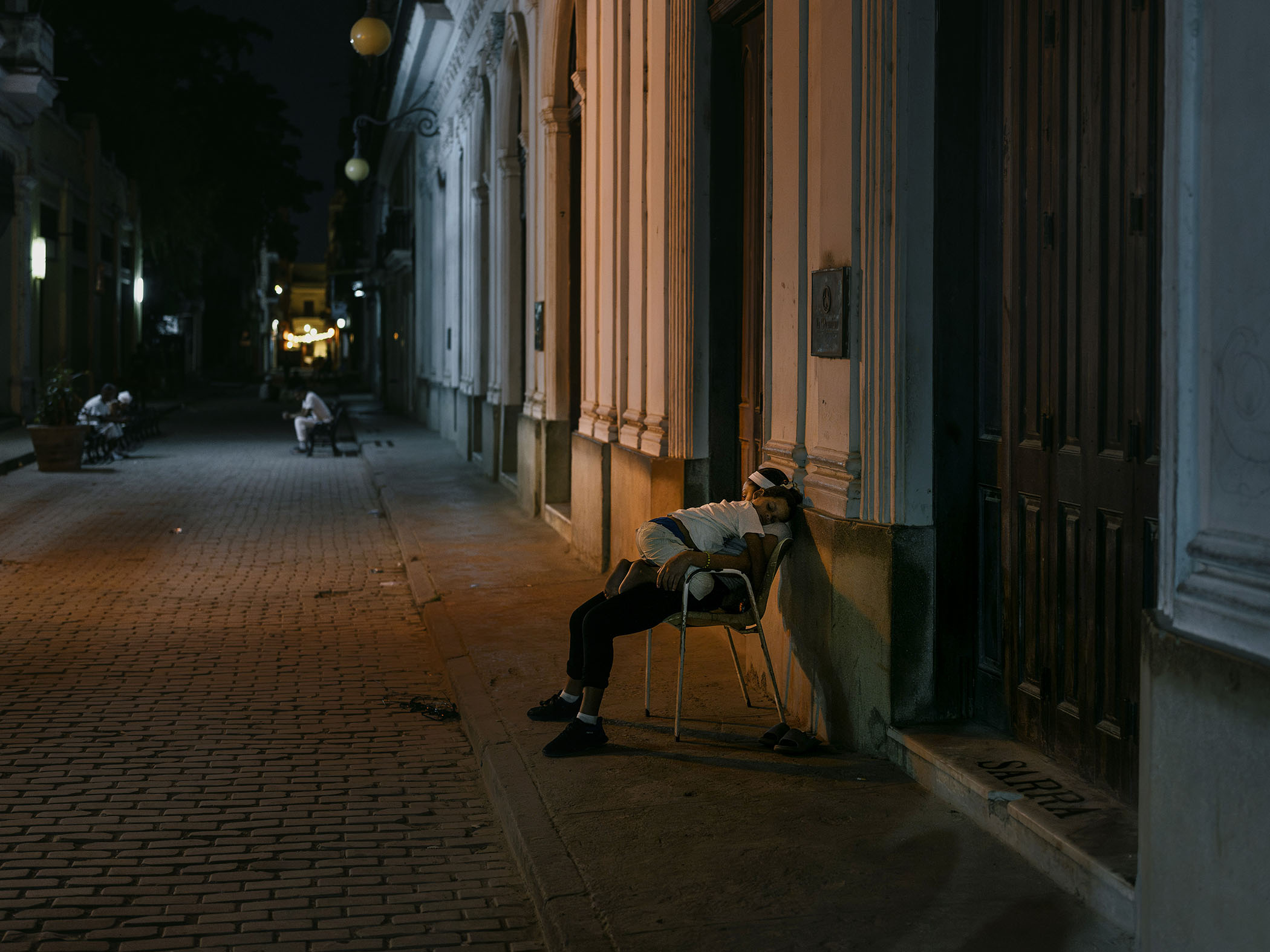
Havana, Cuba. A girl sleeps on her mother in the street at night. Without power to run fans sleeping indoors is difficult in the heat of Havana where it rarely drops below 25 degrees at night and with humidity @ 75%
This is the worst crisis Cuba has faced since the 1959 revolution. President Trump’s oil embargo is the most recent and most draconian in a long line of restrictions and embargos stretching back to 1962. Since the US imposed their oil blockade in January there has been one shipment of 700,000 barrels of Russian crude , which offered a temporary lifeline from the daily blackouts but still only provided enough for ten days supply.
“The Americans need to let us live a little, let us breathe,” Havana resident Ismael de la Luz, 67, told Reuters adding it was the people, not the government, suffering most from the blackouts and shortages. “We’re in a really bad way.”
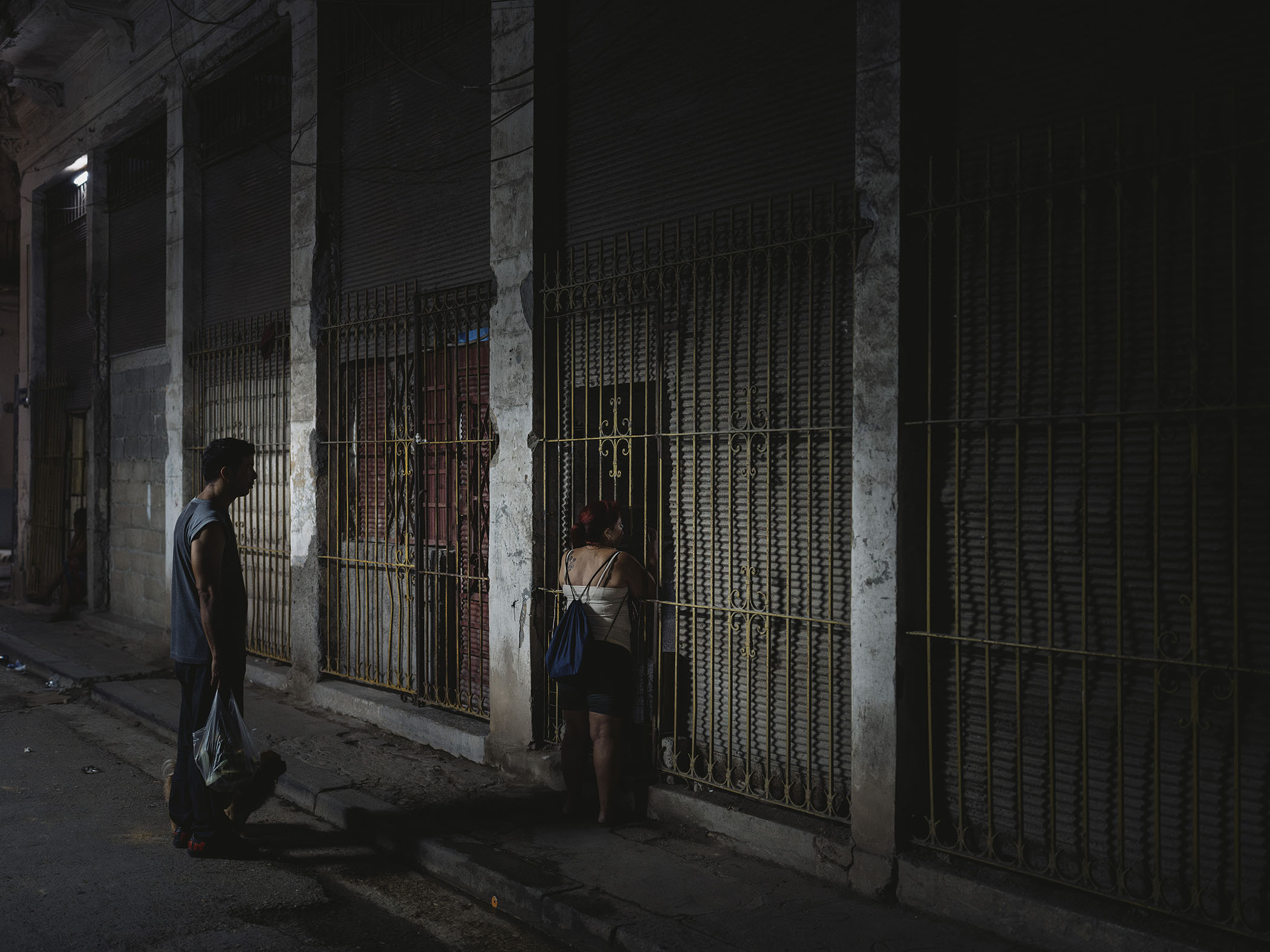
Havana, Cuba. People queuing at night at a tiny shop. Other than basic food stuffs very few goods are available to ordinary citizens
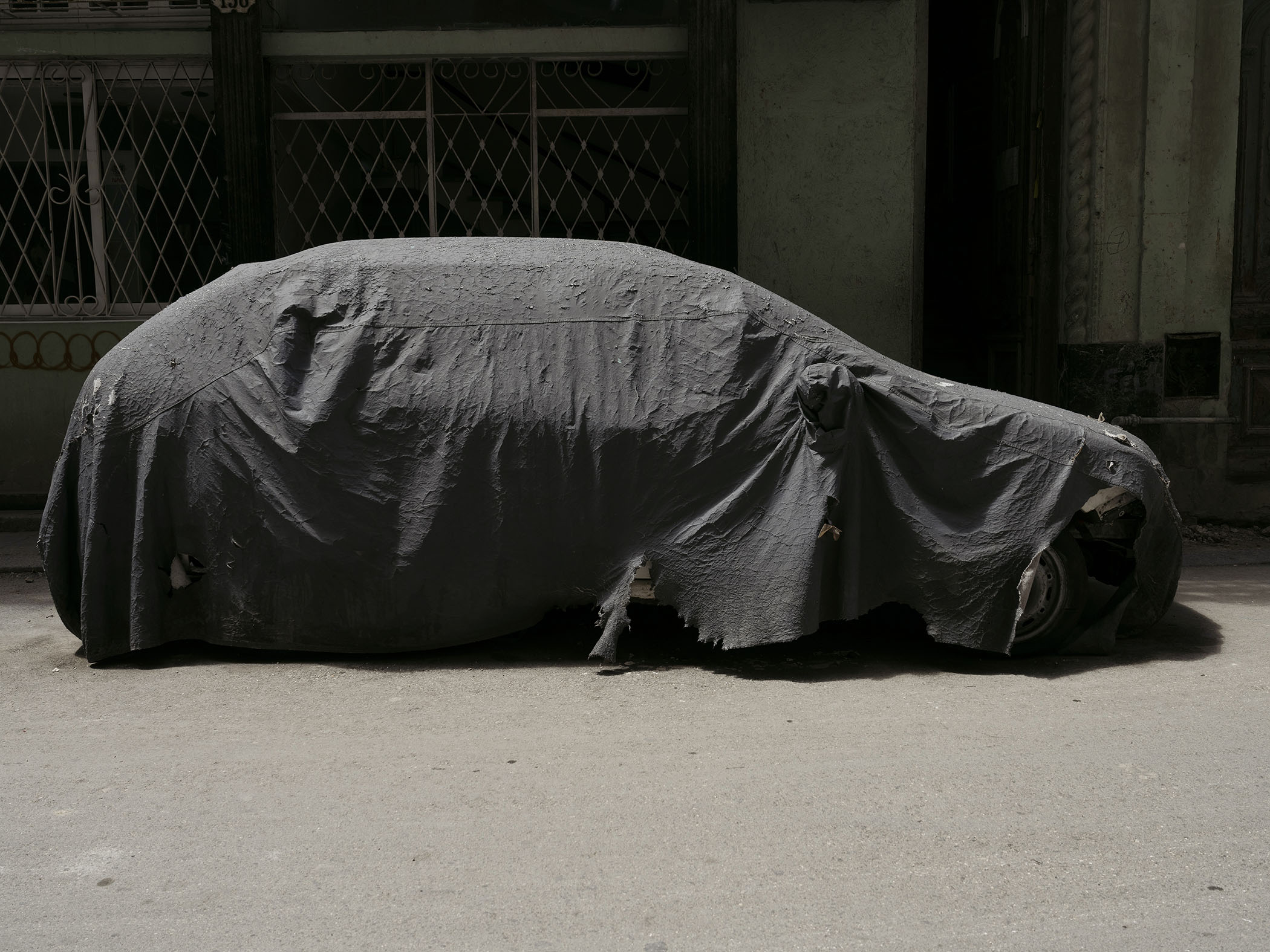
Havana, Cuba. Car covered with a black tarpaulin parked on the street. With no petrol available following the oil blockade there are few cars running
The majority of the population lives from hand to mouth. The average monthly wage is $15. Anything that can be recycled is used. Plastic carrier bags are cleaned and hung out to dry with the washing; old mattresses are stripped of their coverings and their metal springs recycled. Shop shelves lie empty and pharmacies struggle to even supply basic pain killers like paracetamol; syringes, surgical gloves and other basic medical equipment are sterlised and shared between families living in the same block. In one pharmacy Daniel visited the only item on sale was herbal tea.
At night the only properties with light are occupied by those with family living abroad who send remittances helping them to buy power packs to keep the lights and the fans on during the power cuts. With temperatures never dipping below 25 degrees at night and 75% humidity sleeping indoors without a fan is unbearable.
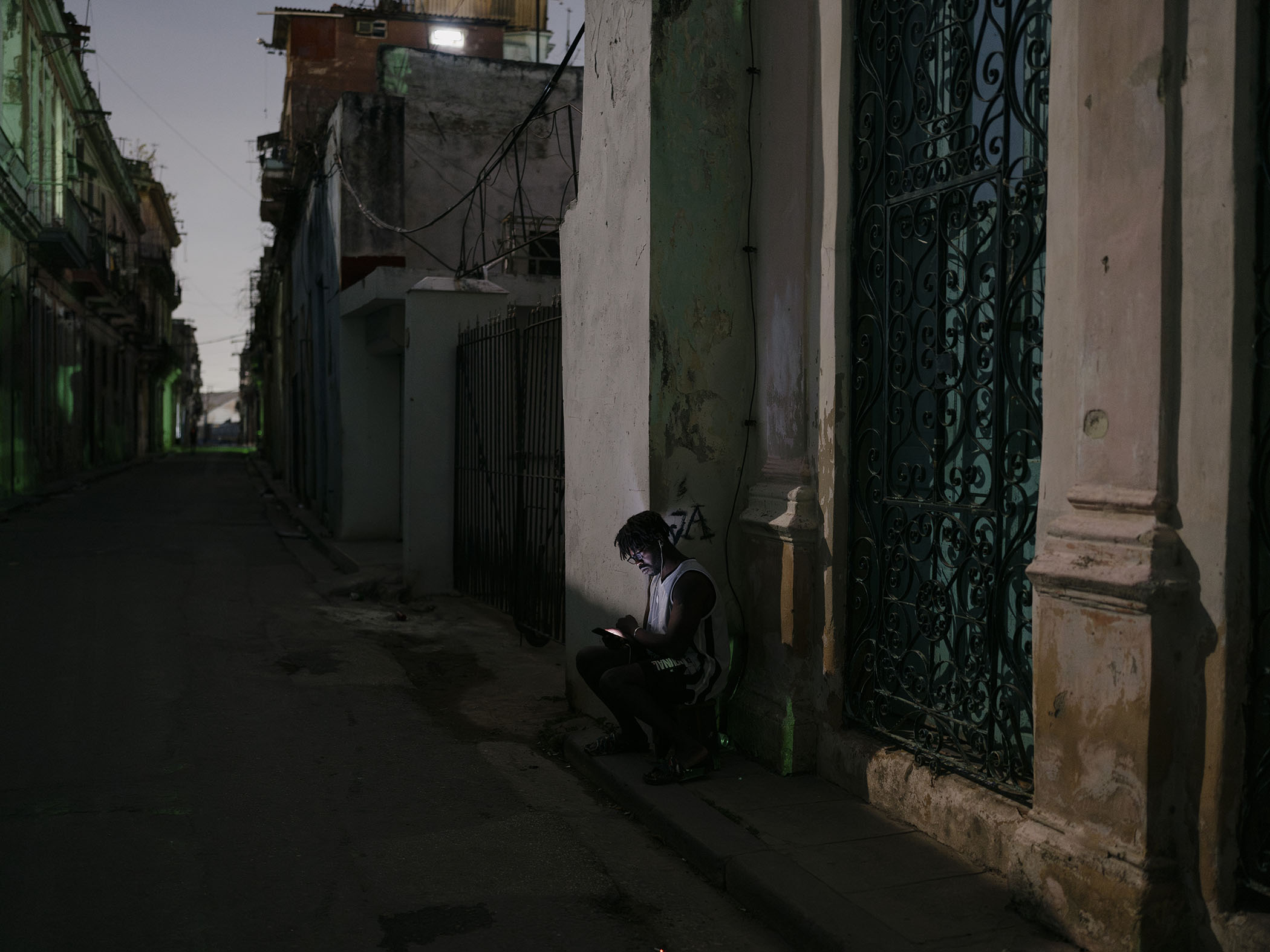
Havana, Cuba. A man looks at his mobile phone at night . Ever lengthening power cuts mean most homes are in total darkness at night
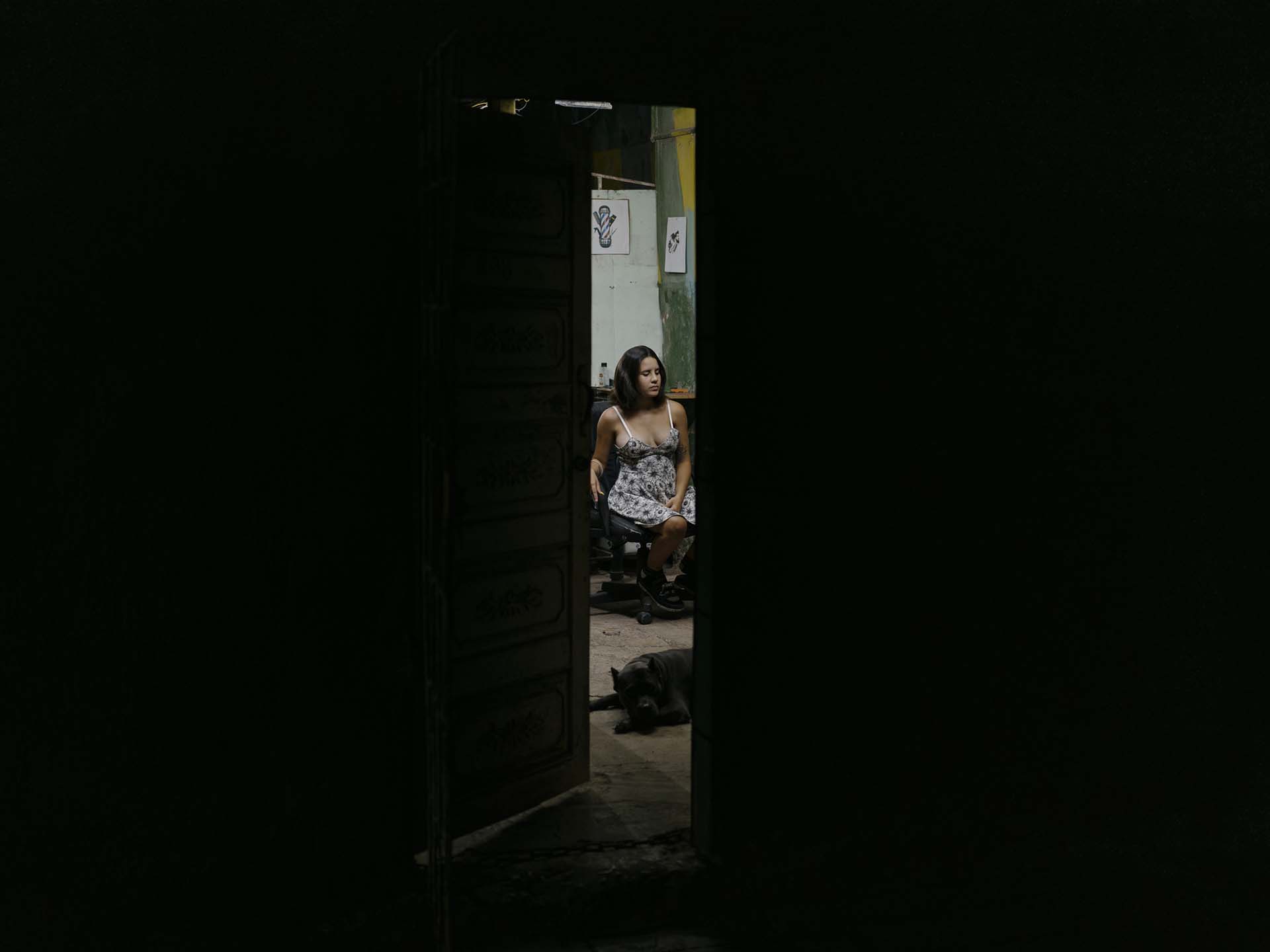
Havana, Cuba. A woman glimsped through an open door during a power cut. She is lucky to have light in her house - only those who have family living abroad are able to afford power banks or generators to keep the lights on during the blackouts.
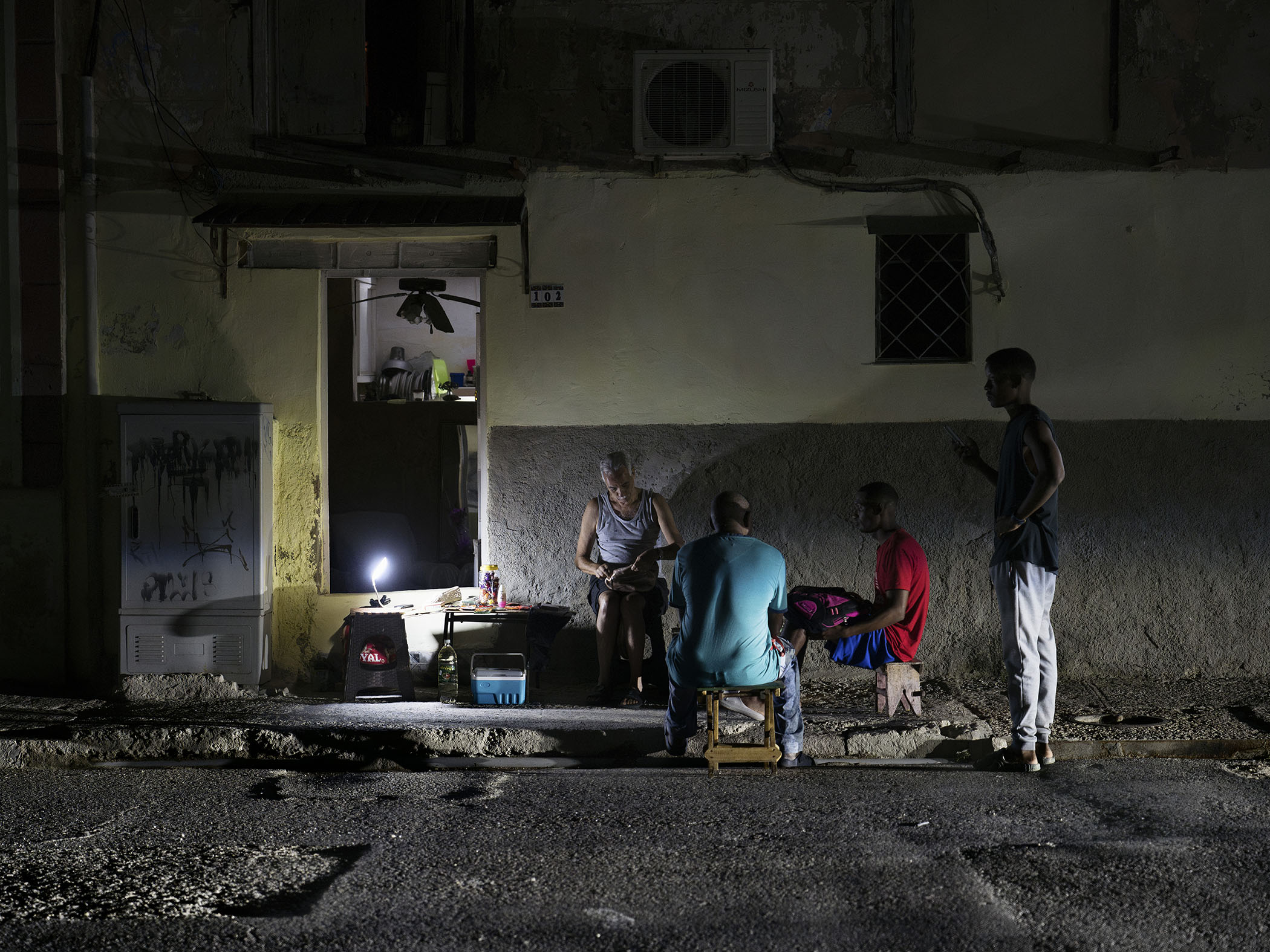
Havana, Cuba. Life on the street during a power cut - no street light so a battery powered light is brought out
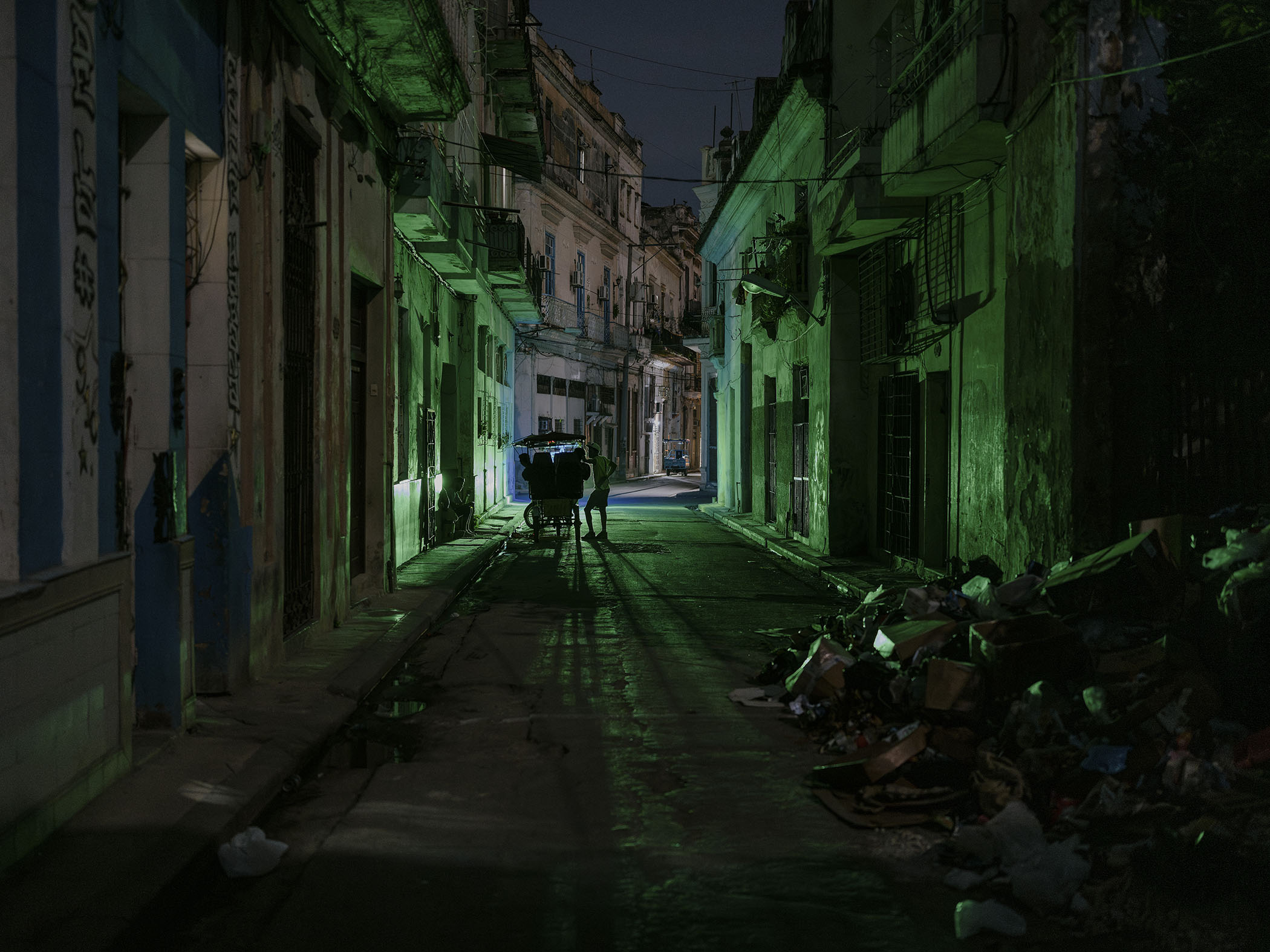
Havana, Cuba. Street scene at night lit by a green light from a bicycle rickhaw. The bicycle is the most common form or transport in Cuba.
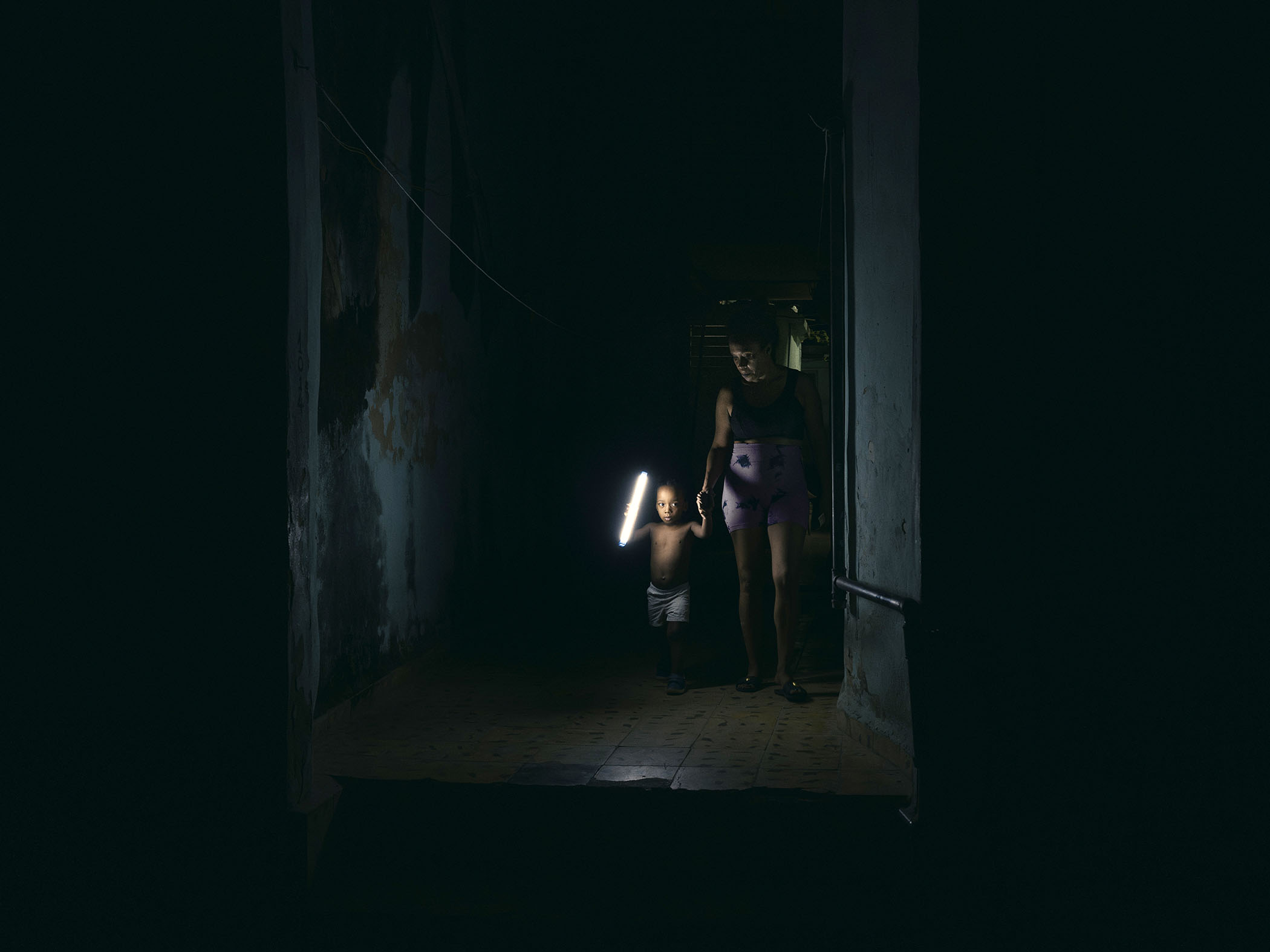
Havana, Cuba. During a blackout a mother and her child go out to buy food. The only points of light are from apartments occupied by people able to afford power banks funded by family members living abroad.
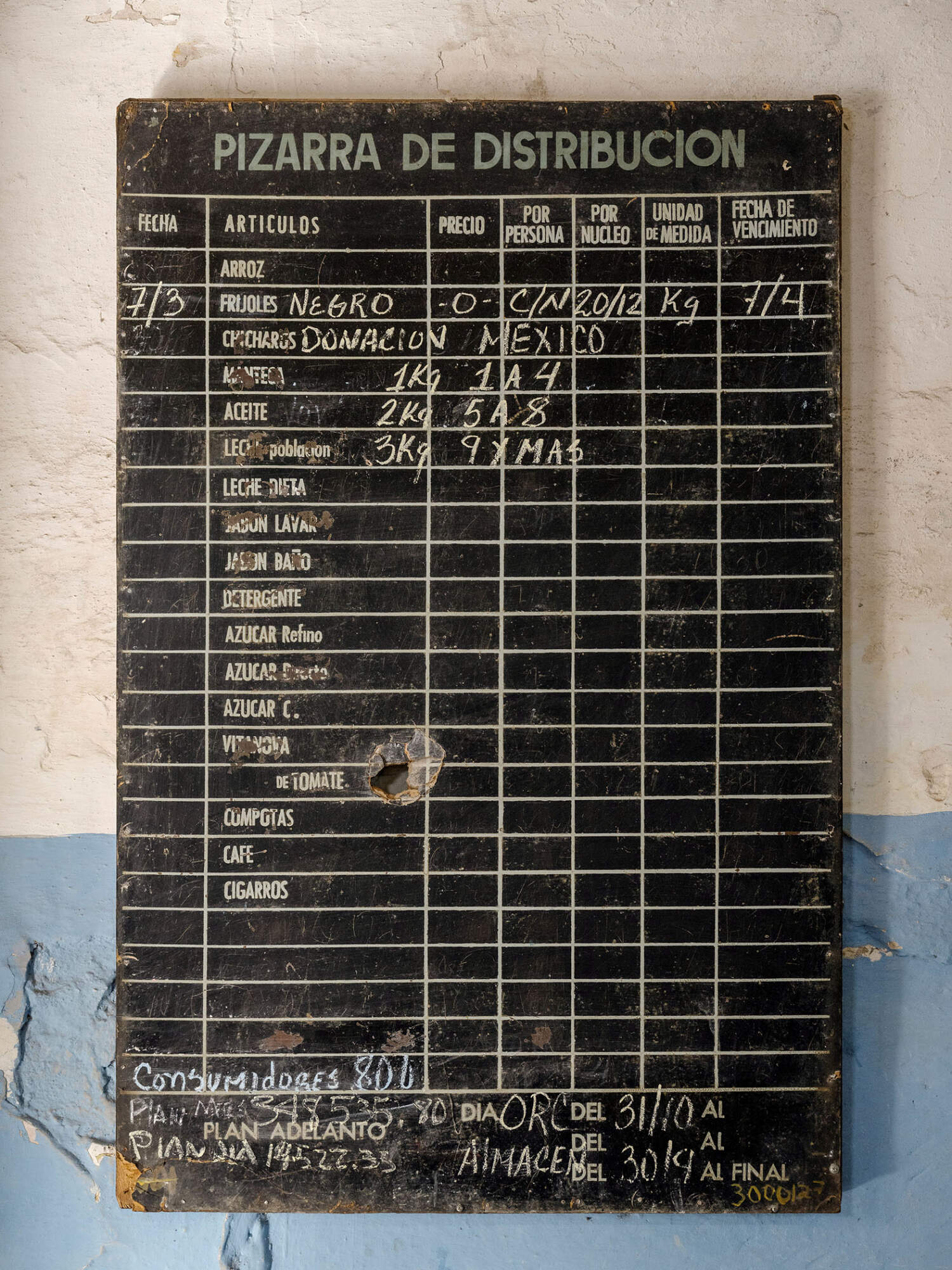
Havana, Cuba. Out of date notice board at a government food store. The only regularly available staples are rice and beans. During his time in Cuba Daniel never saw fresh milk for sale
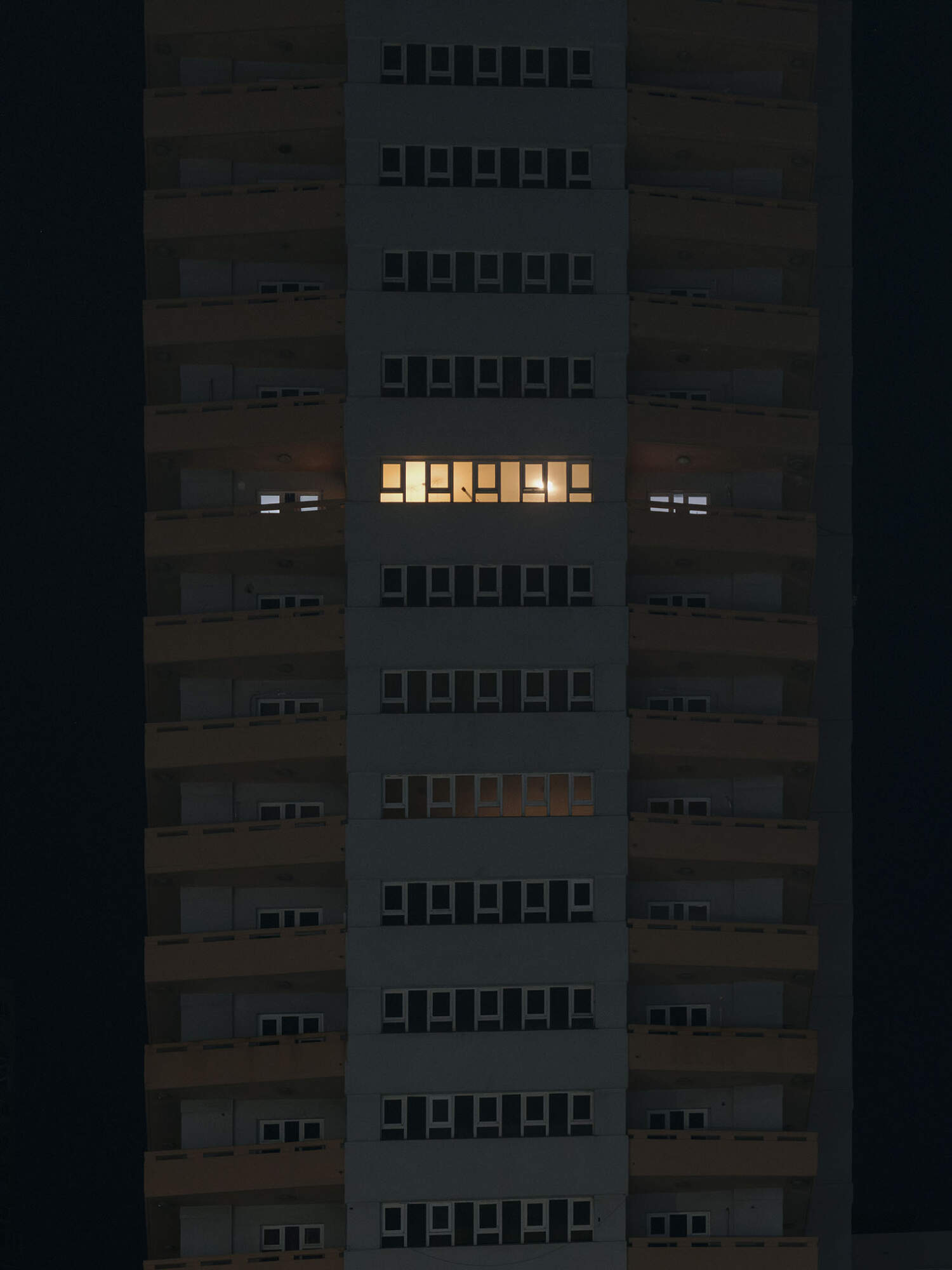
Havana, Cuba. A tower block at night during a black out. Only those with family living abroad and with access to foreign currency can afford power packs or generators to keep the lights on during the lengthy power cuts.
“When the power comes on, whatever time it is, there is a mad rush: to charge everything, to cook, to put the washing machine on, always with the fear that it will not last long,” says a teacher from Havana, who had just spent 15 hours without service.
“The worst thing is not the heat, or the mosquitoes, or the anxiety, or tossing and turning in bed at three, at four, at five,” the woman says. “The worst thing is opening your eyes and seeing everything dark, feeling that the night is swallowing you."
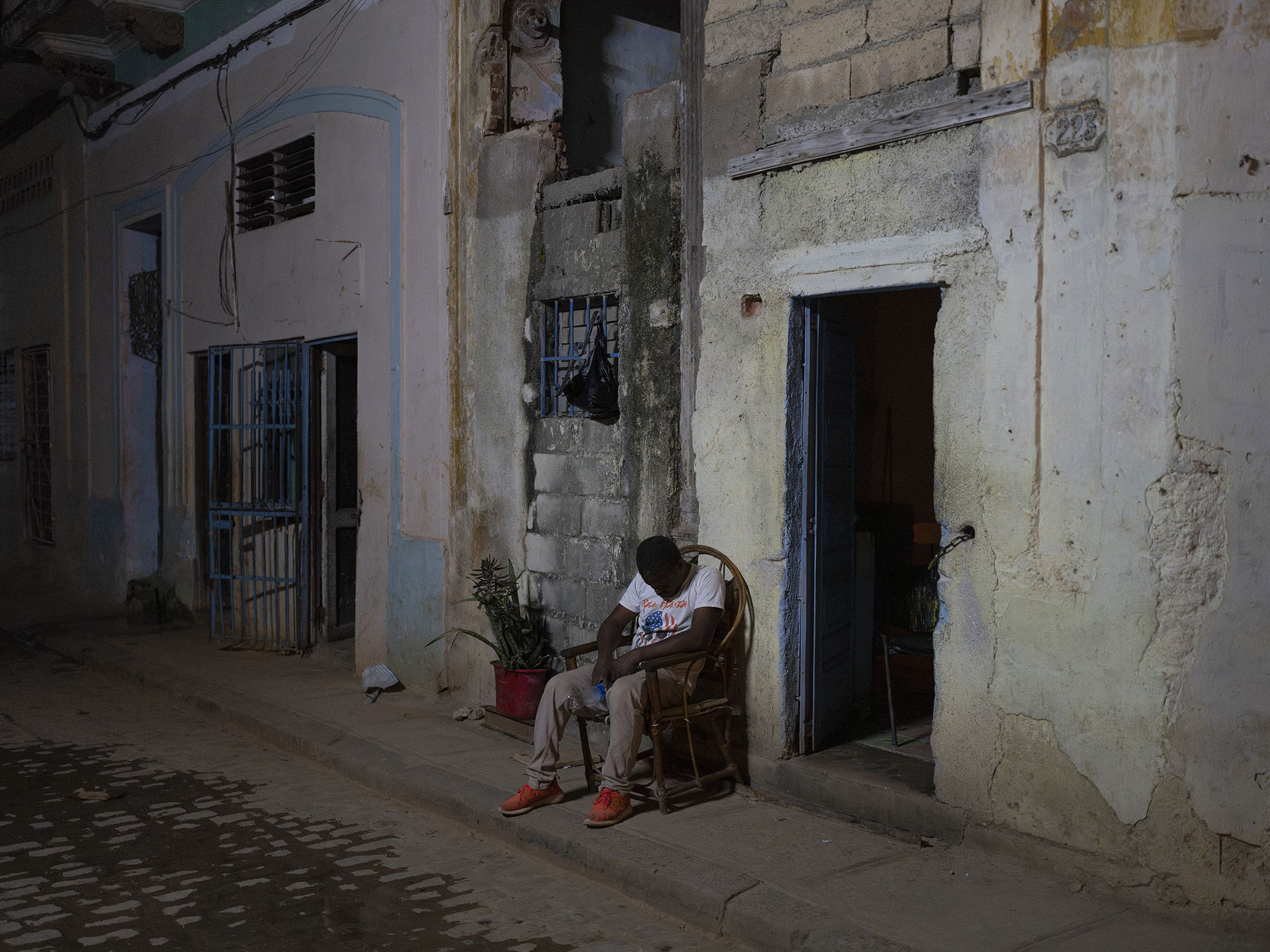
Havana, Cuba. A man sleeps outside his home at night. With no electricity to power fans nighttime temperatures of 25 degrees plus and over 75% humidity make sleeping indoors uncomfortable
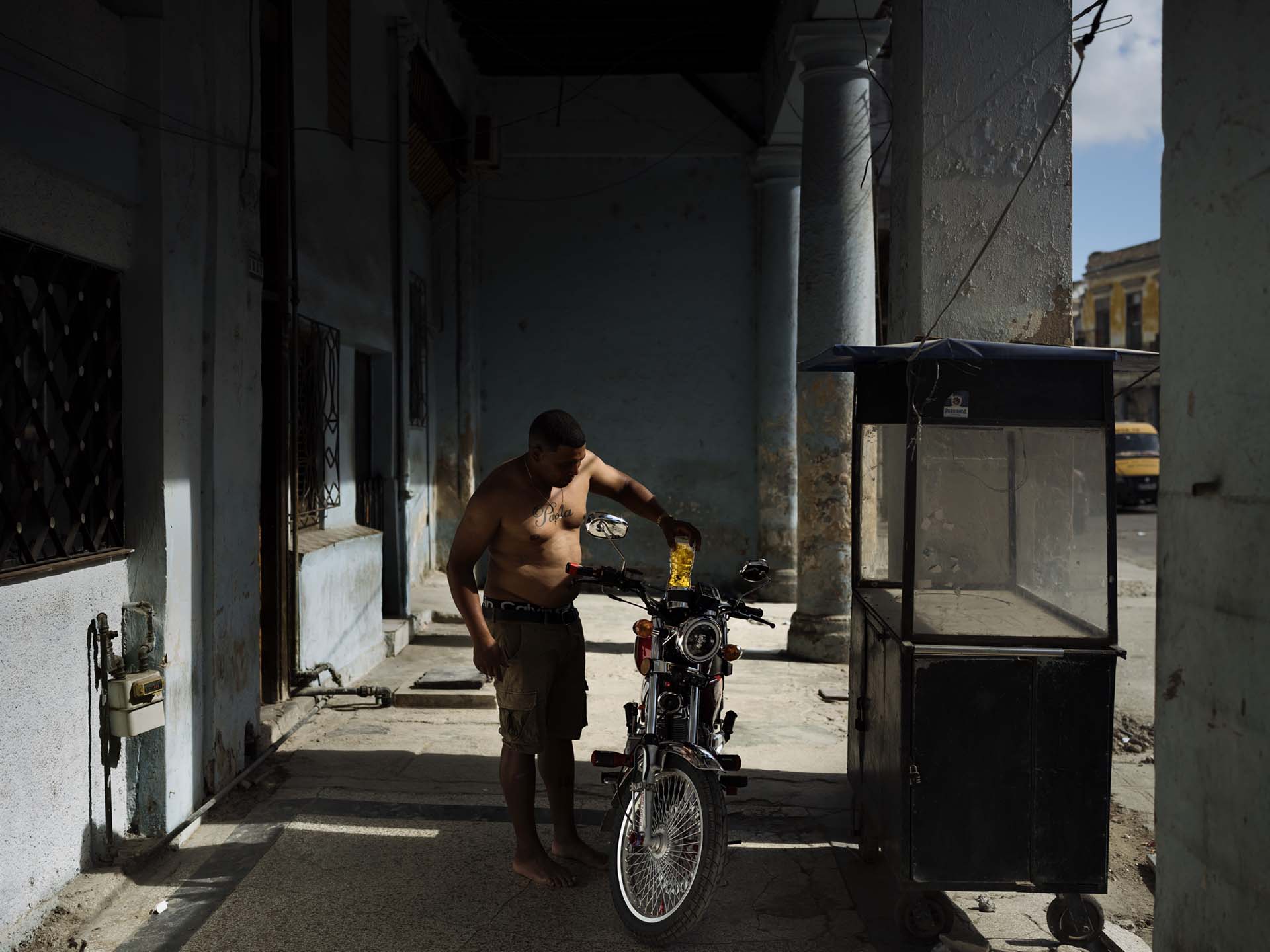
Havana, Cuba. A man pours petrol from a one litre bottle into the tank of his motorbike. Petrol stations are empty and it is even difficult to buy on the black market
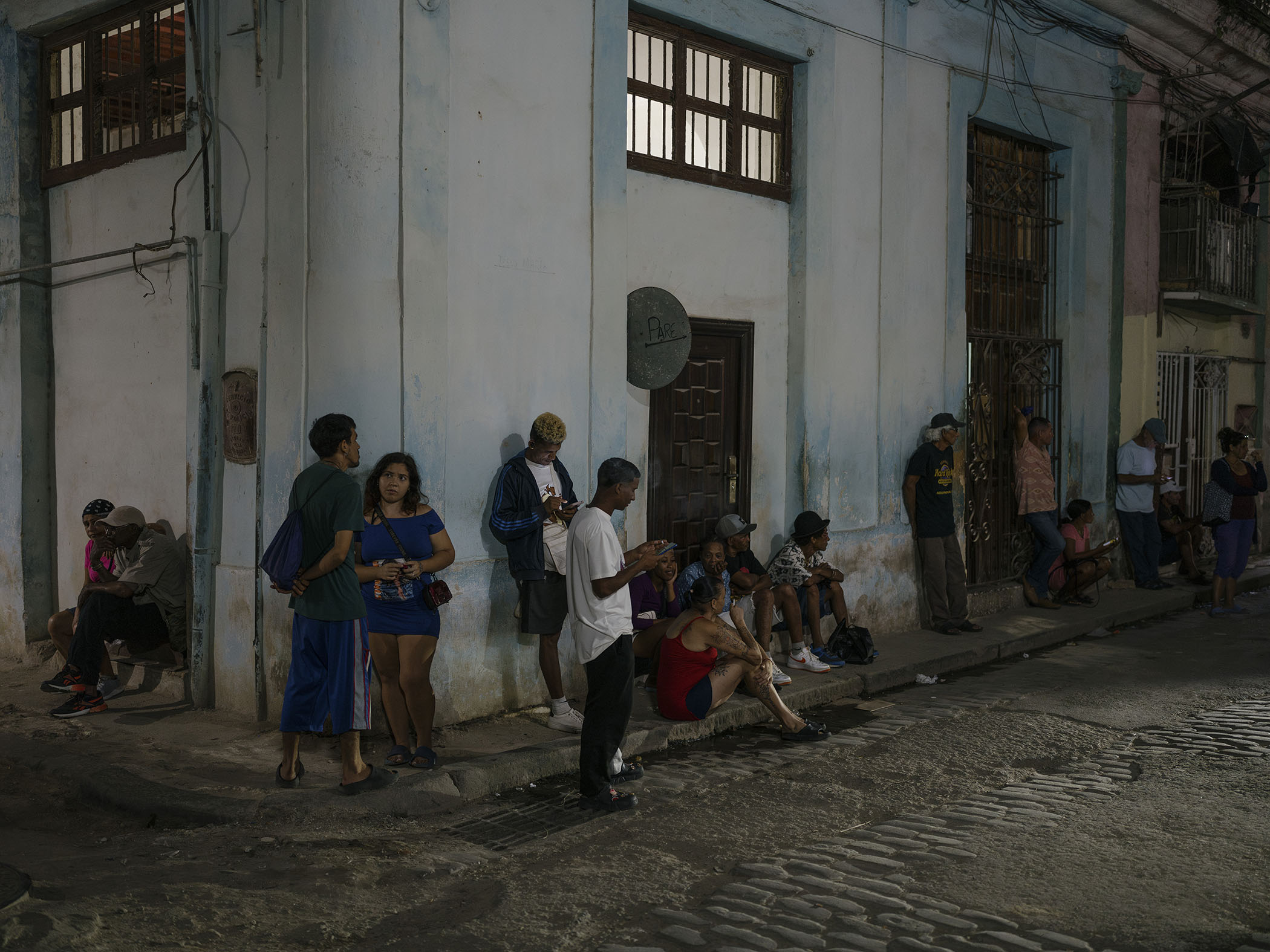
Havana, Cuba. With little else to do during the lenghty power power cuts people hang out on the street, talking and drinking
“In Cuba you cannot sleep, much less dream,” complains a resident of Regla
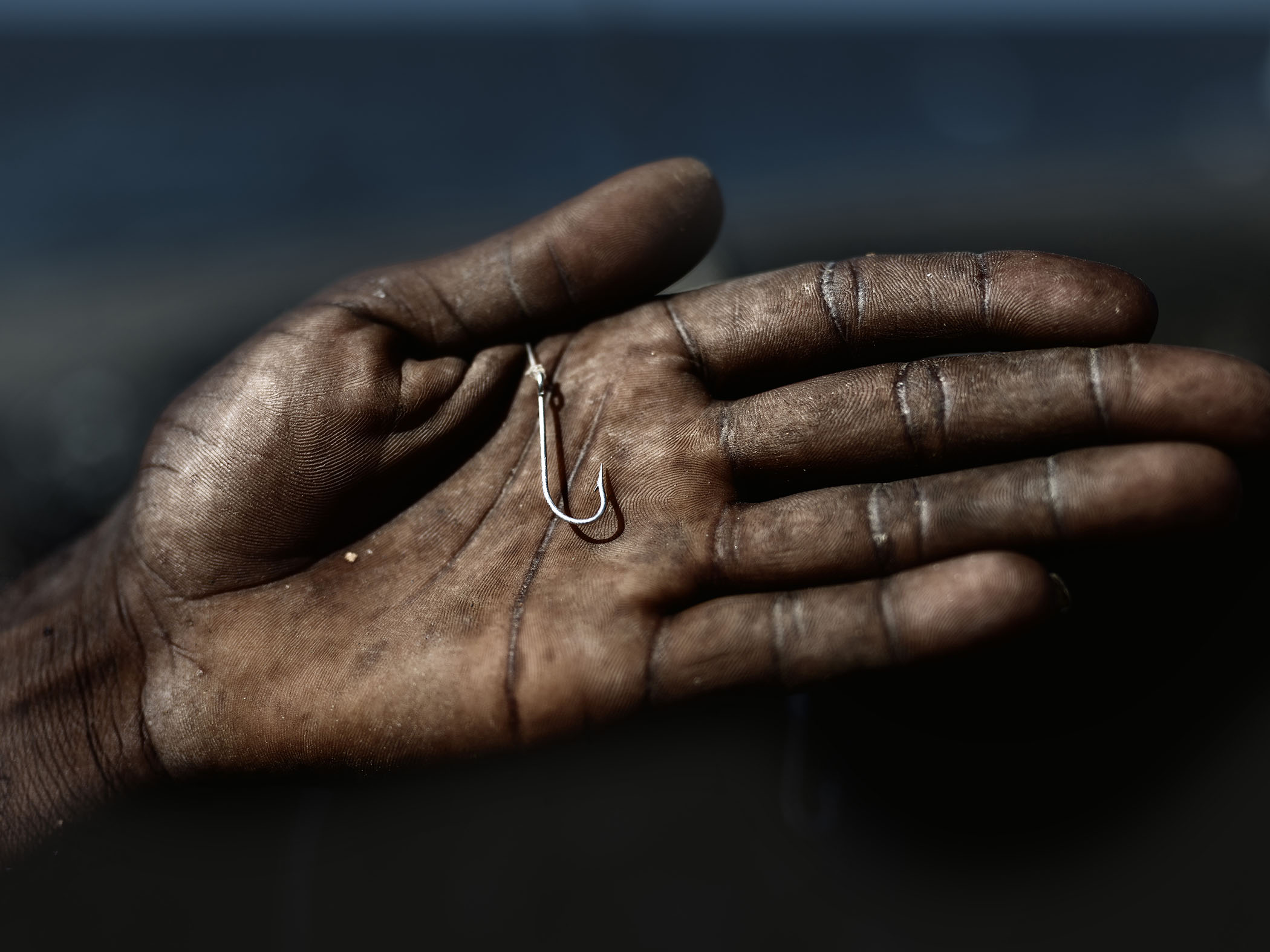
Havana, Cuba. Fish hook for fishing on the Malecon
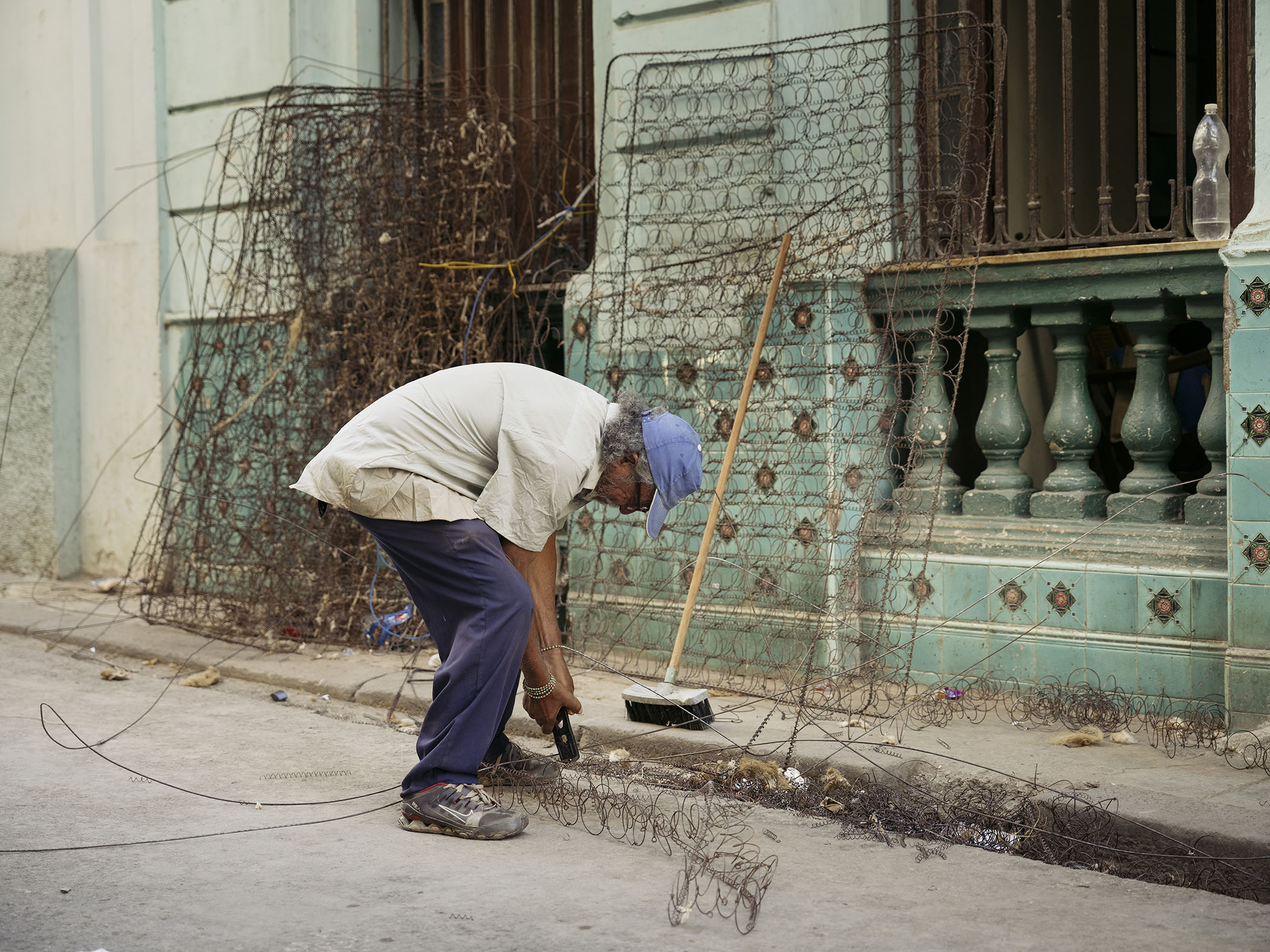
Havana, Cuba. A man cuts up and recycles metal from bed springs rescued from discarded mattresses. With nothing available in the shops and the average monthly salary as low as $15 everything is recycled and reused
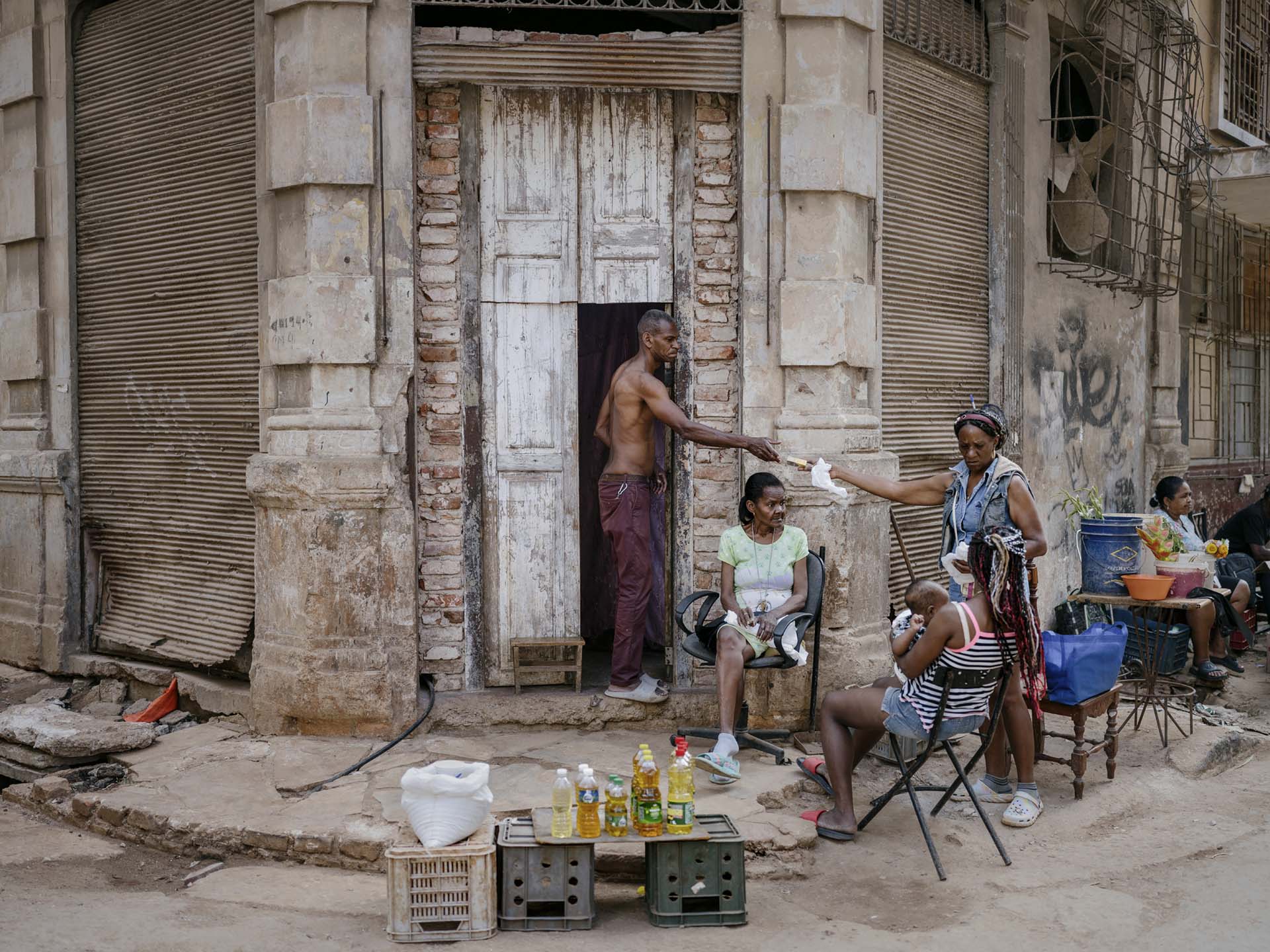
Havana, Cuba. Street stall with a meagre selection of cooking oil for sale
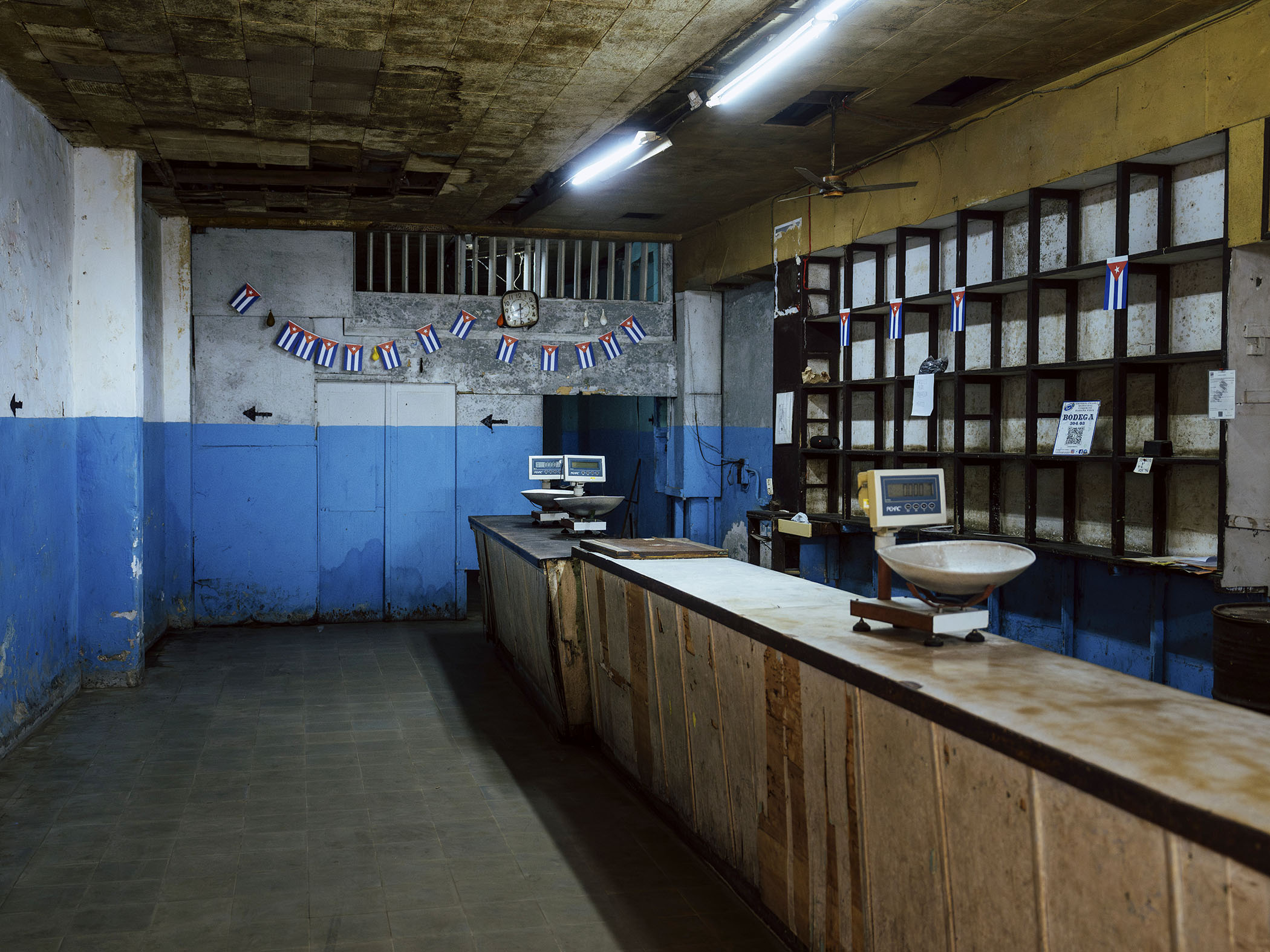
Havana, Cuba. A government run store with totally shelves
Yet with so few resources the residents of Havana have learnt to be resilient. They have had years of practice. What else can one do if the power goes down – drink and dance to escape the difficulties of the day to day existence.
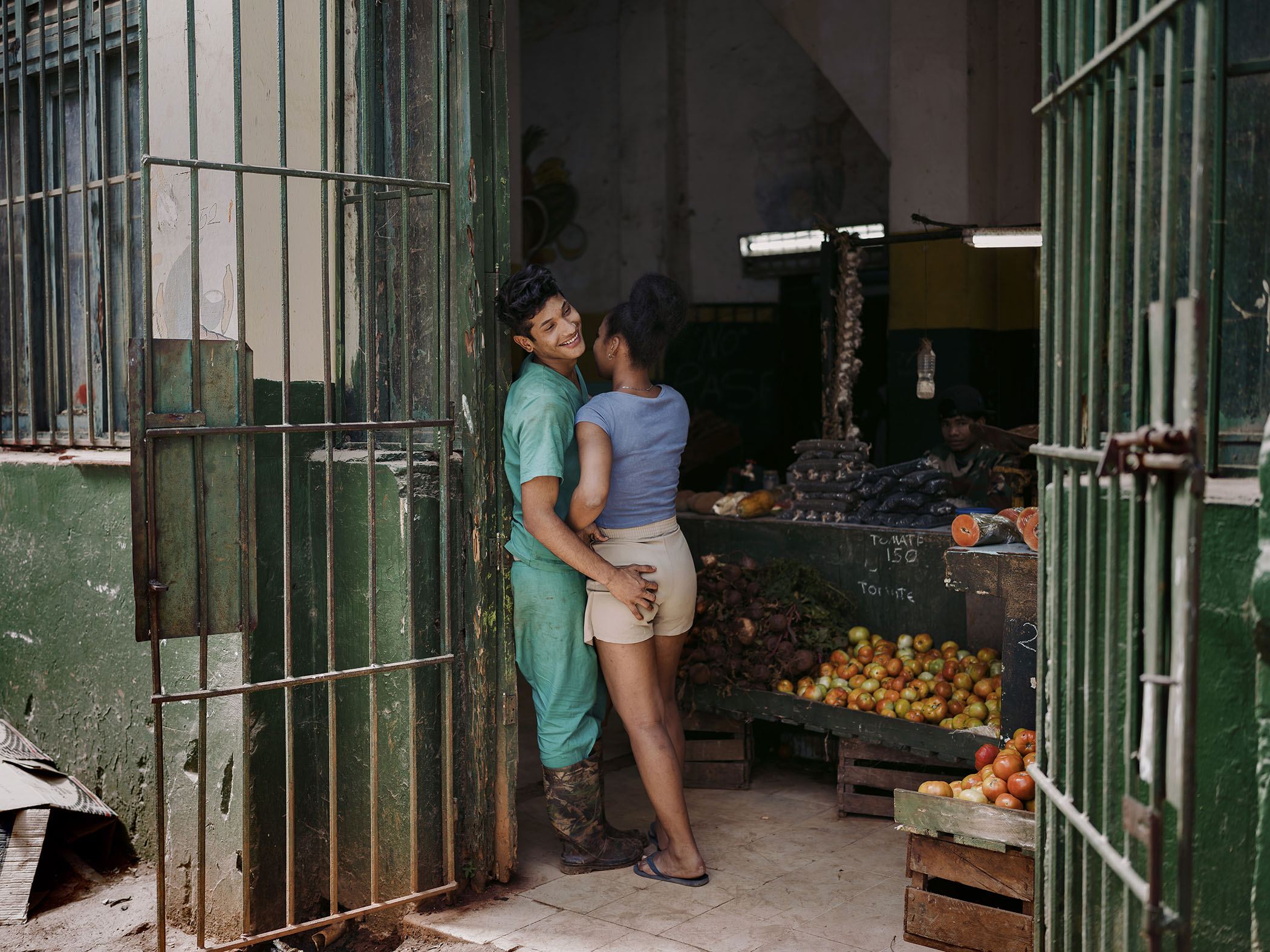
Havana, Cuba. A young man laughs and hugs his girlfriend at the entrance to a vegetable market.
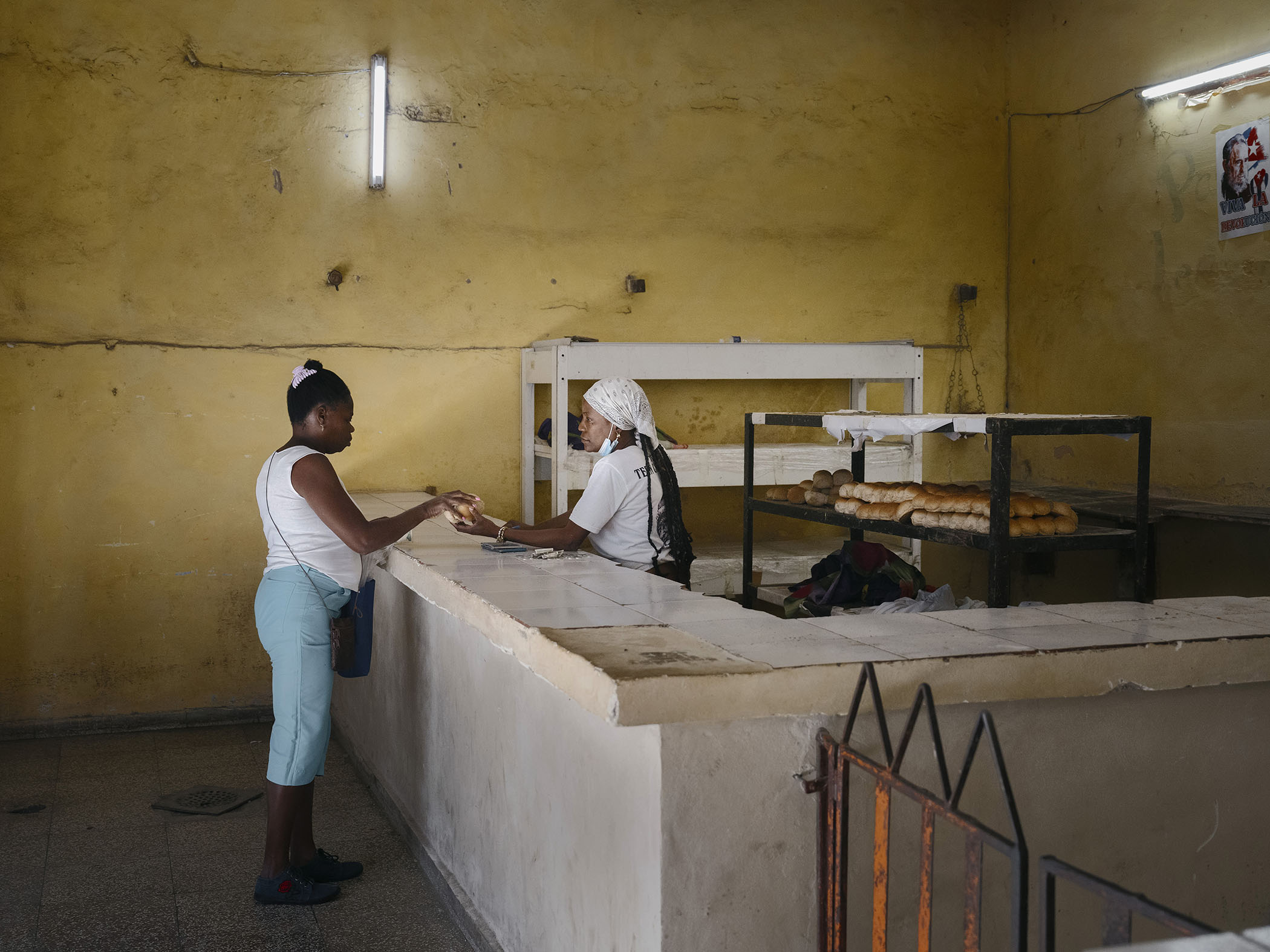
Havana, Cuba. Food is rationed in government run shops. Here a bakery has only product available - poor quality bread rolls
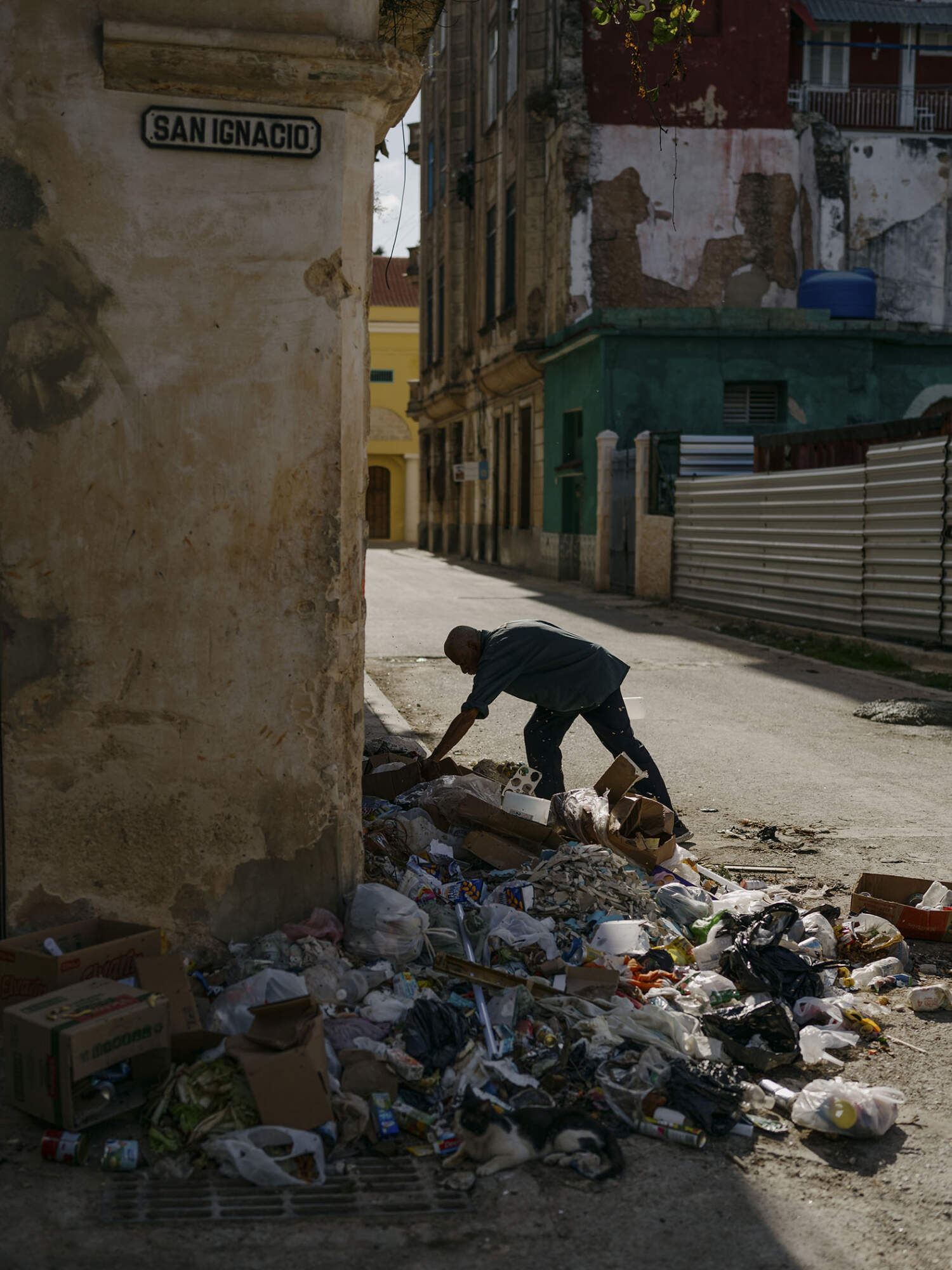
Havana, Cuba. A man sifts through rubbish piled up on a street corner.
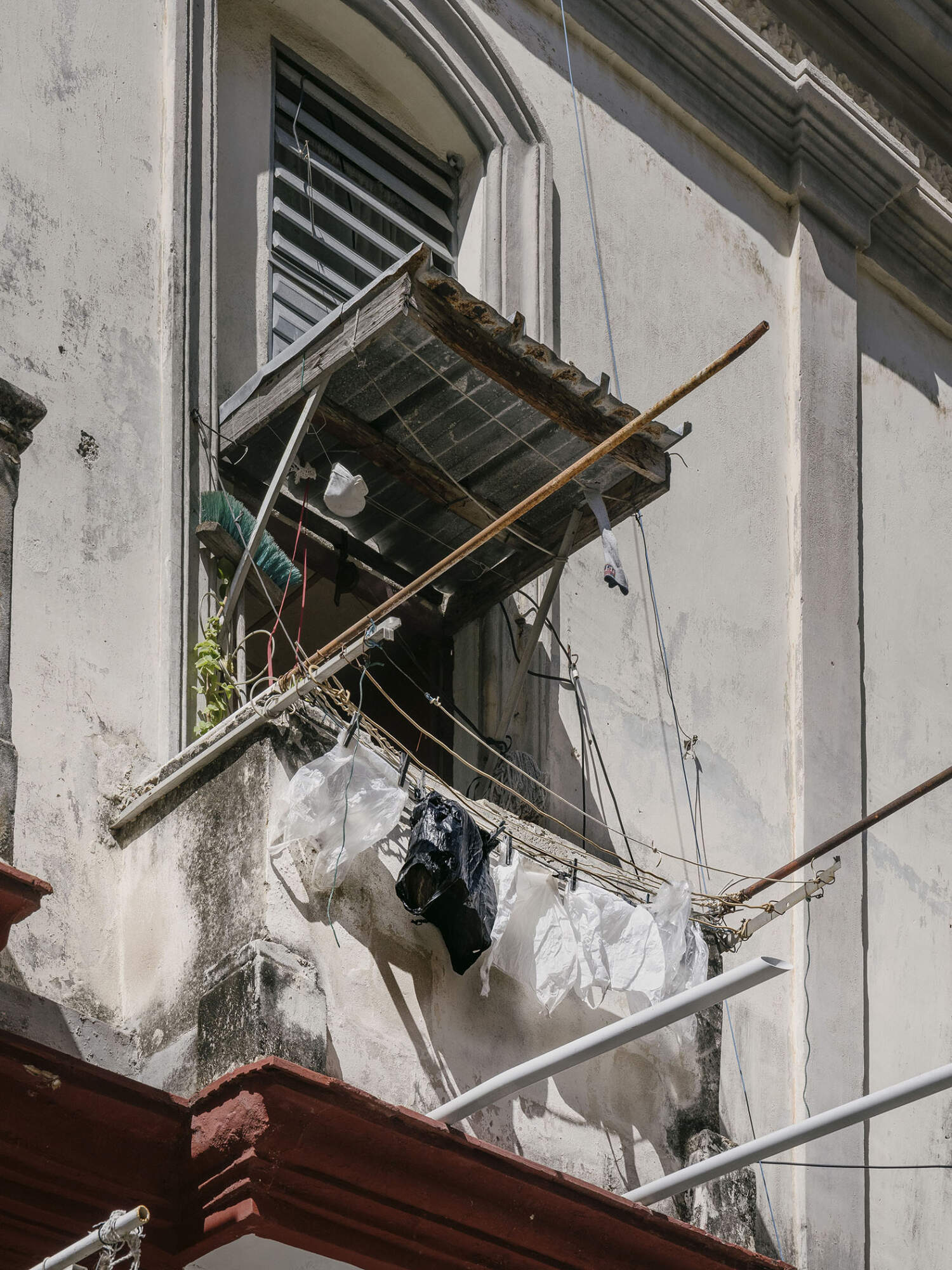
Havana, Cuba. Plastic carrier bags drying on a washing line outside an apartment. With nothing available in the shops and the average monthly salary only $15 everything is recycled and reused
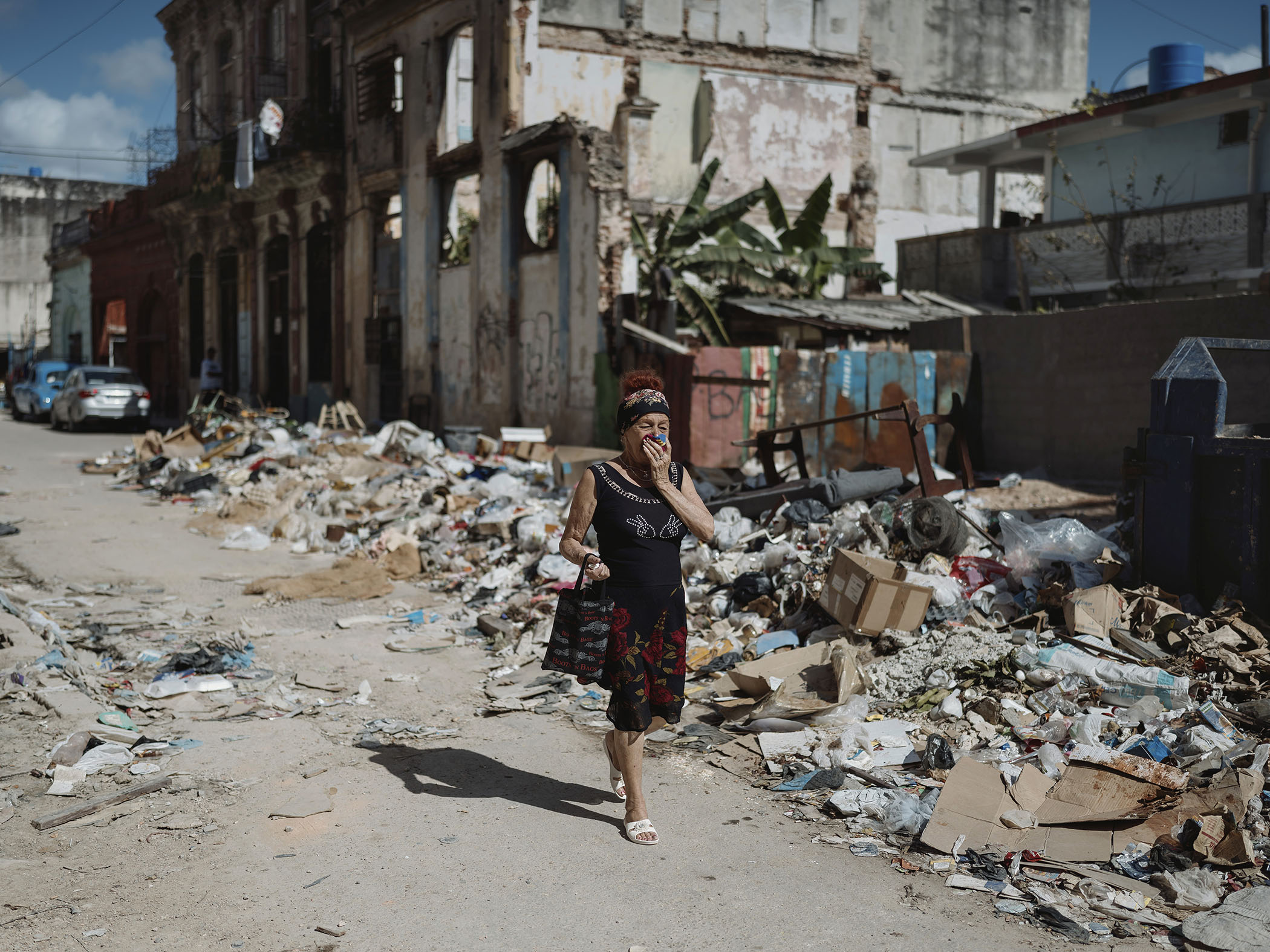
Havana, Cuba. A woman covers her face to stop the smell from the rubbish on the street
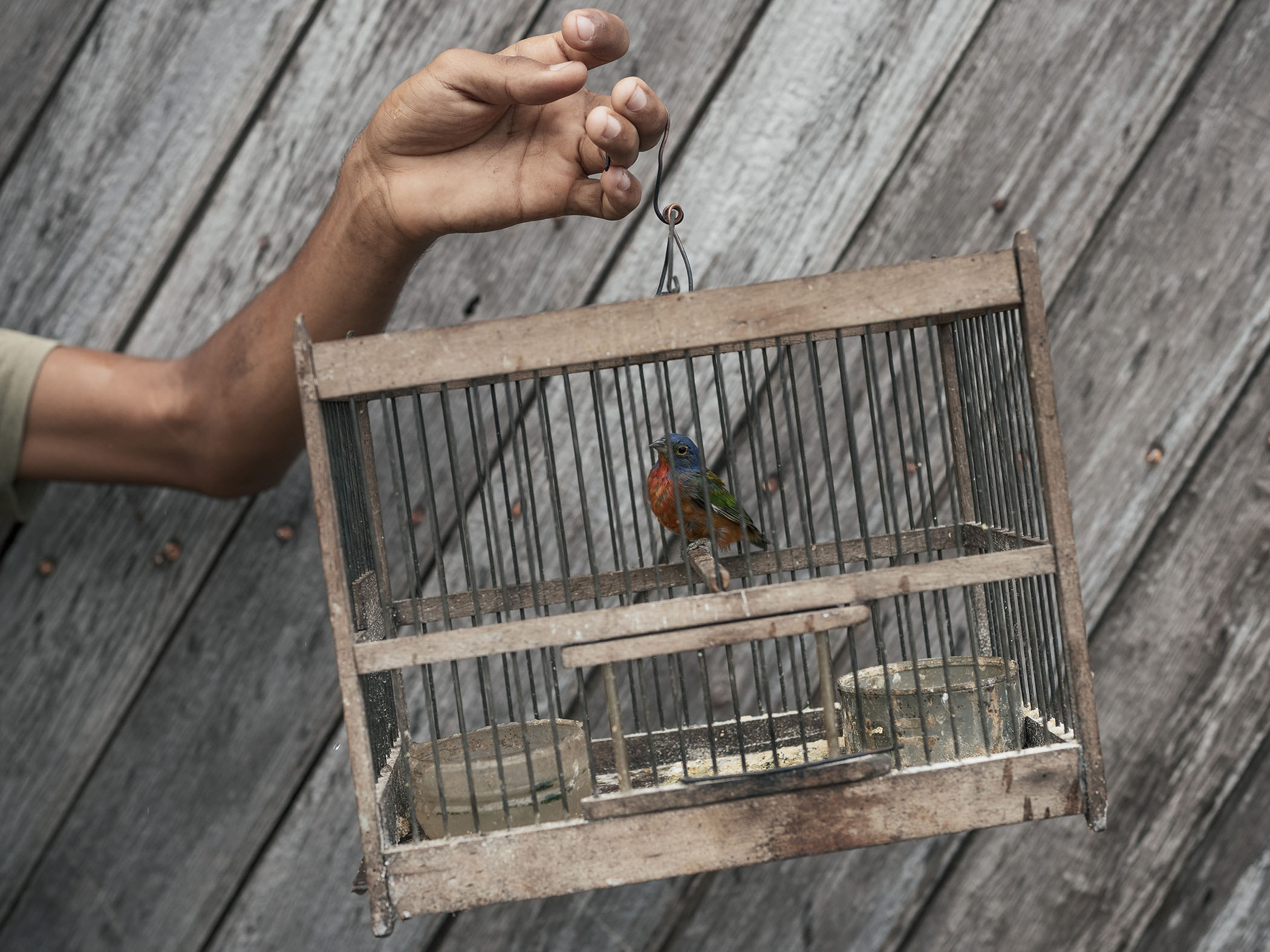
San Antonio de los Banos, Cuba. A caged bird for sale
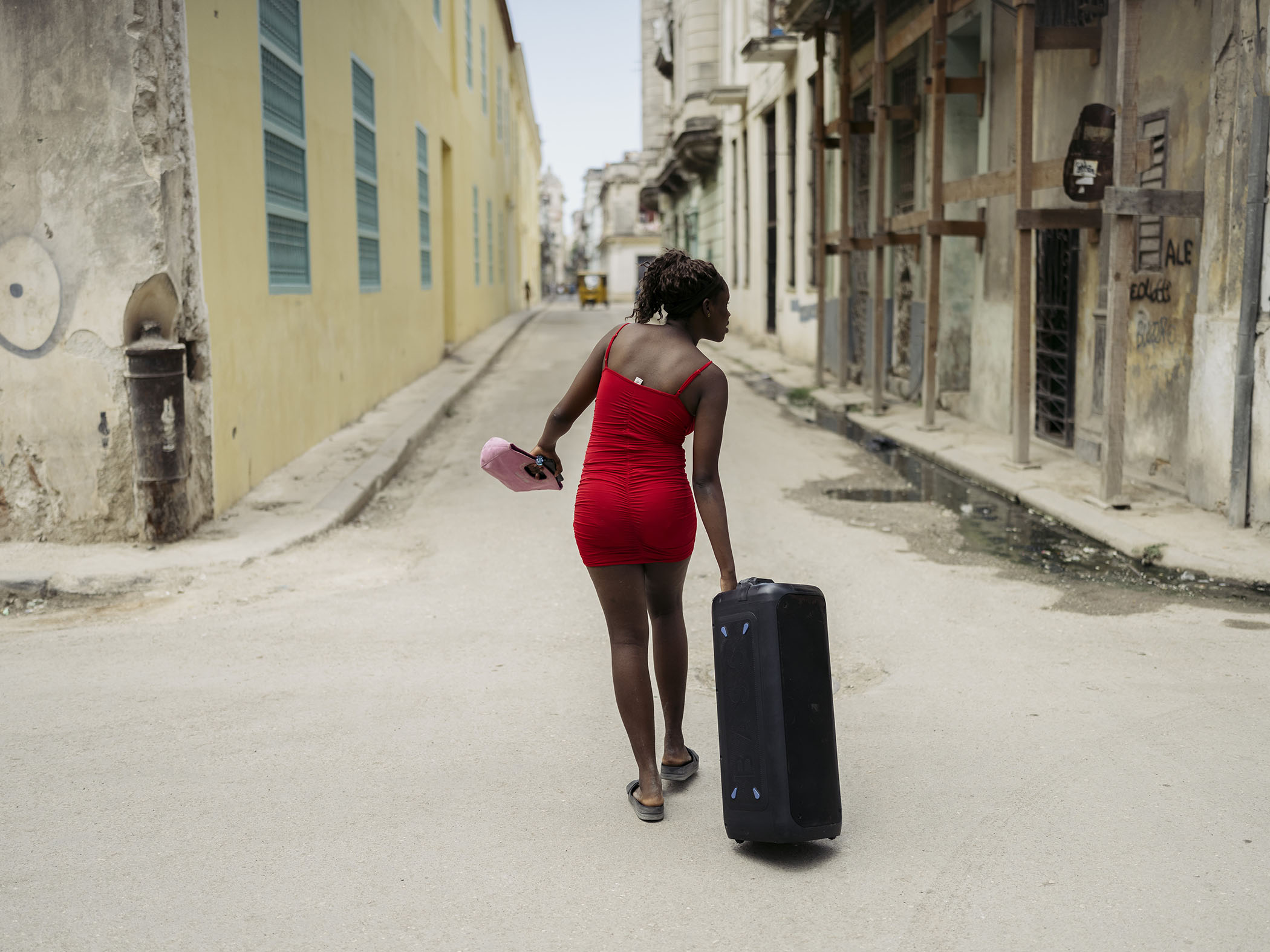
Havana, Cuba. A woman drags a speaker through the streets of Havana.
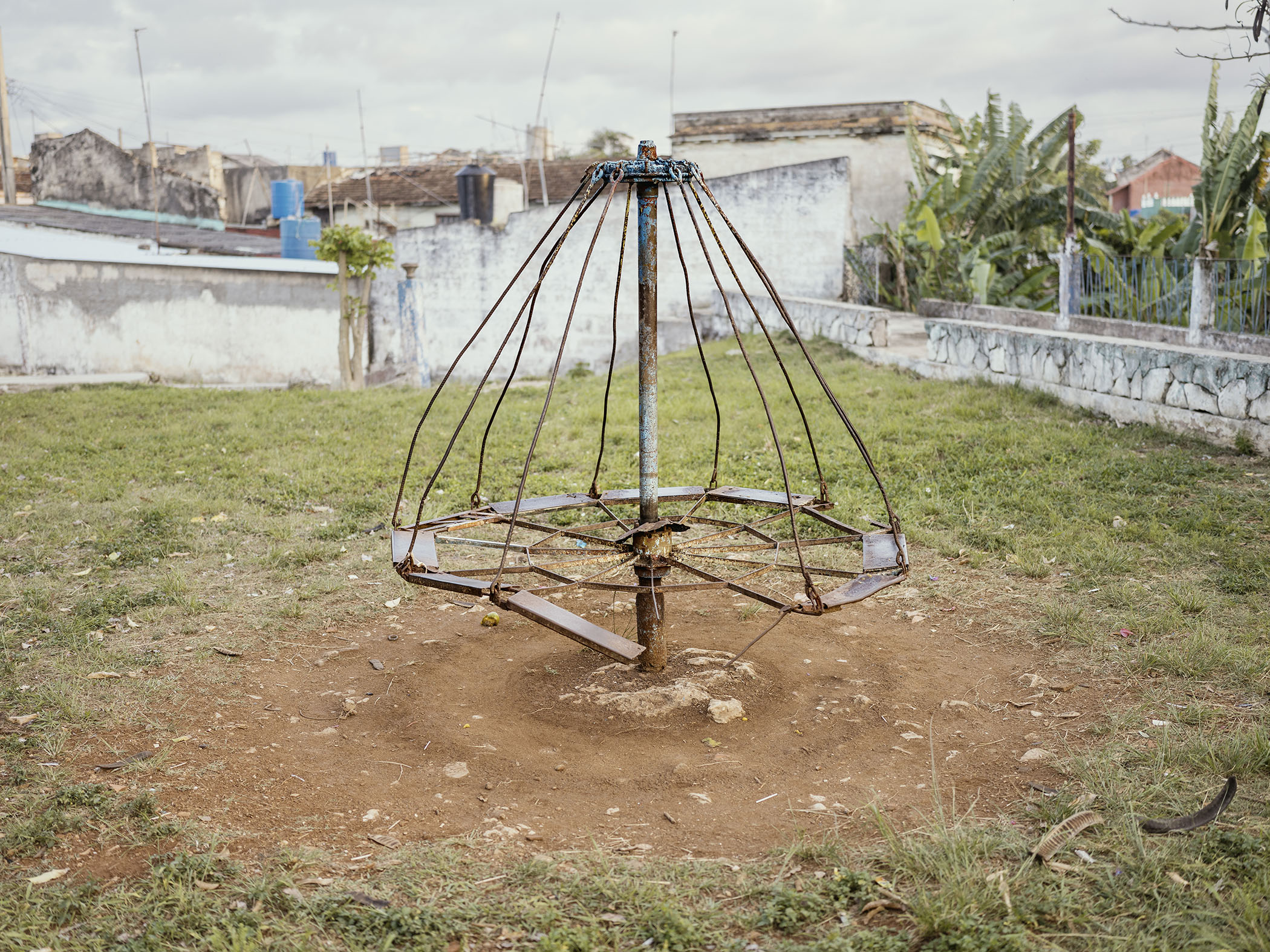
San Antonio de los Baños, Cuba. Broken playground equipment in this community 40 km outside Havana. Power cuts outside the city are even lengthier than in Havana, Many last for 30 hours at a time.
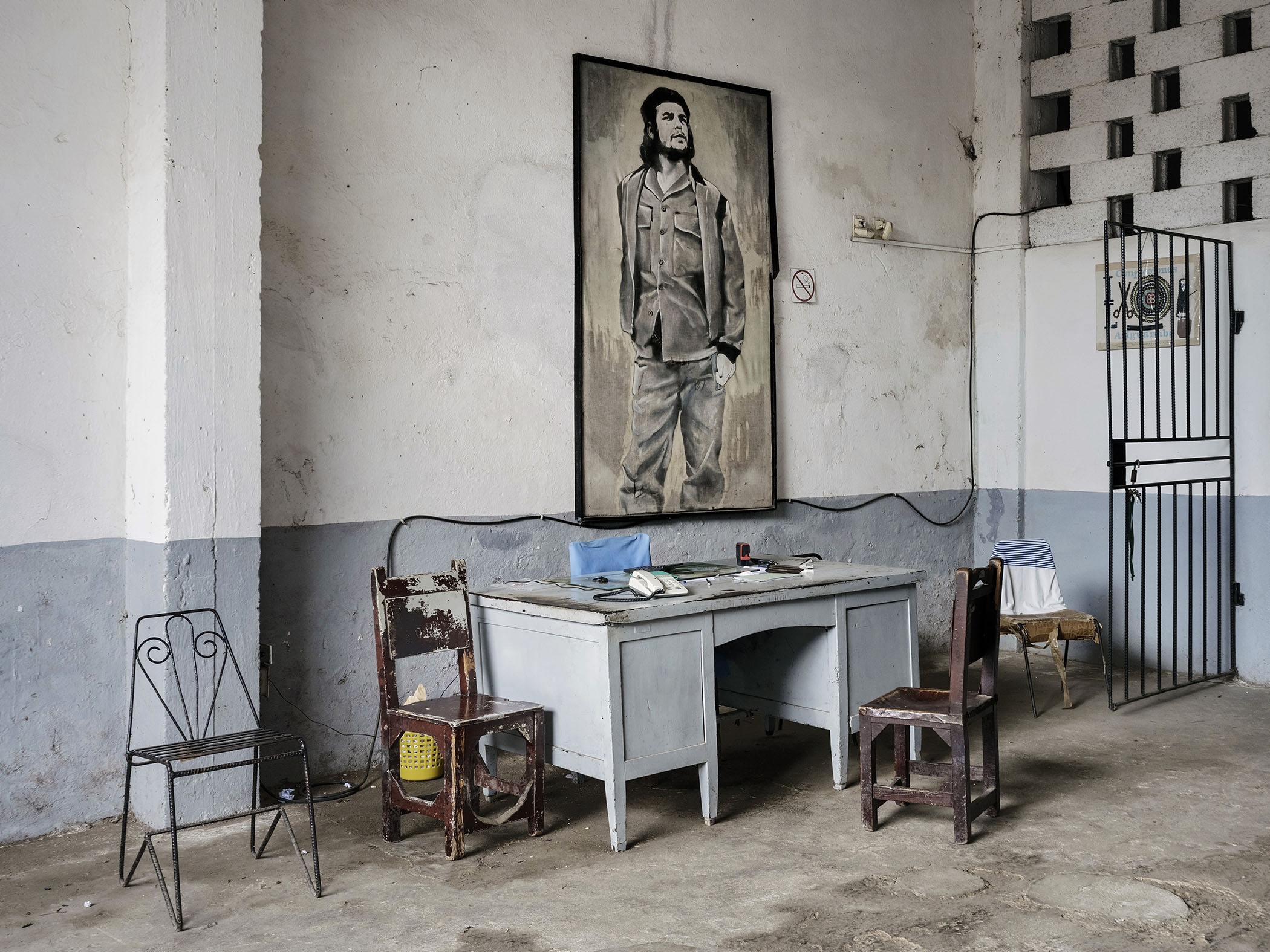
San Antonio de los Banos, Cuba. Government warehouse in a community 40km outside of Havana
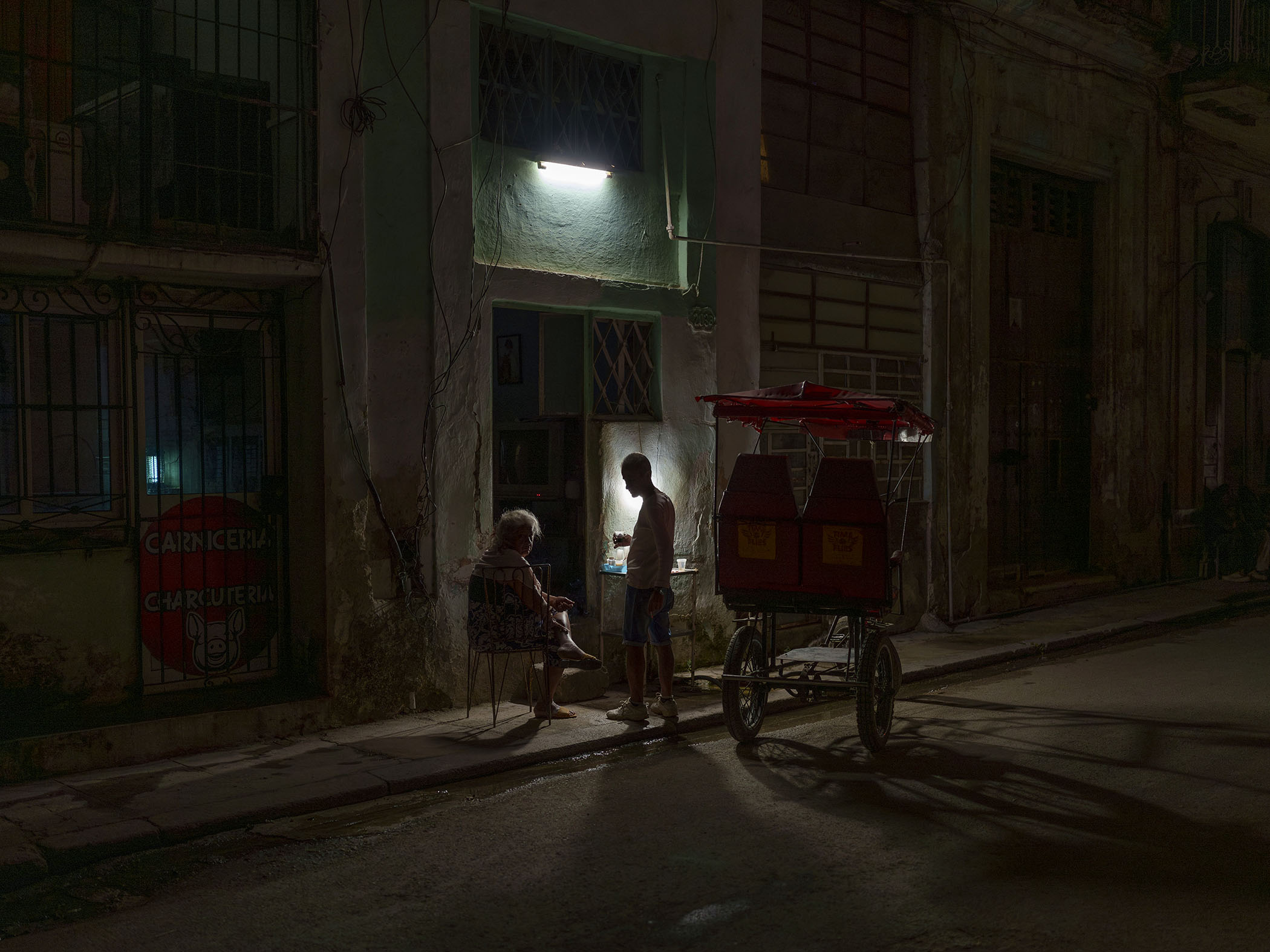
Havana, Cuba. Man with a bicyle rickshaw and a woman talking and drinking on the street during a blackout
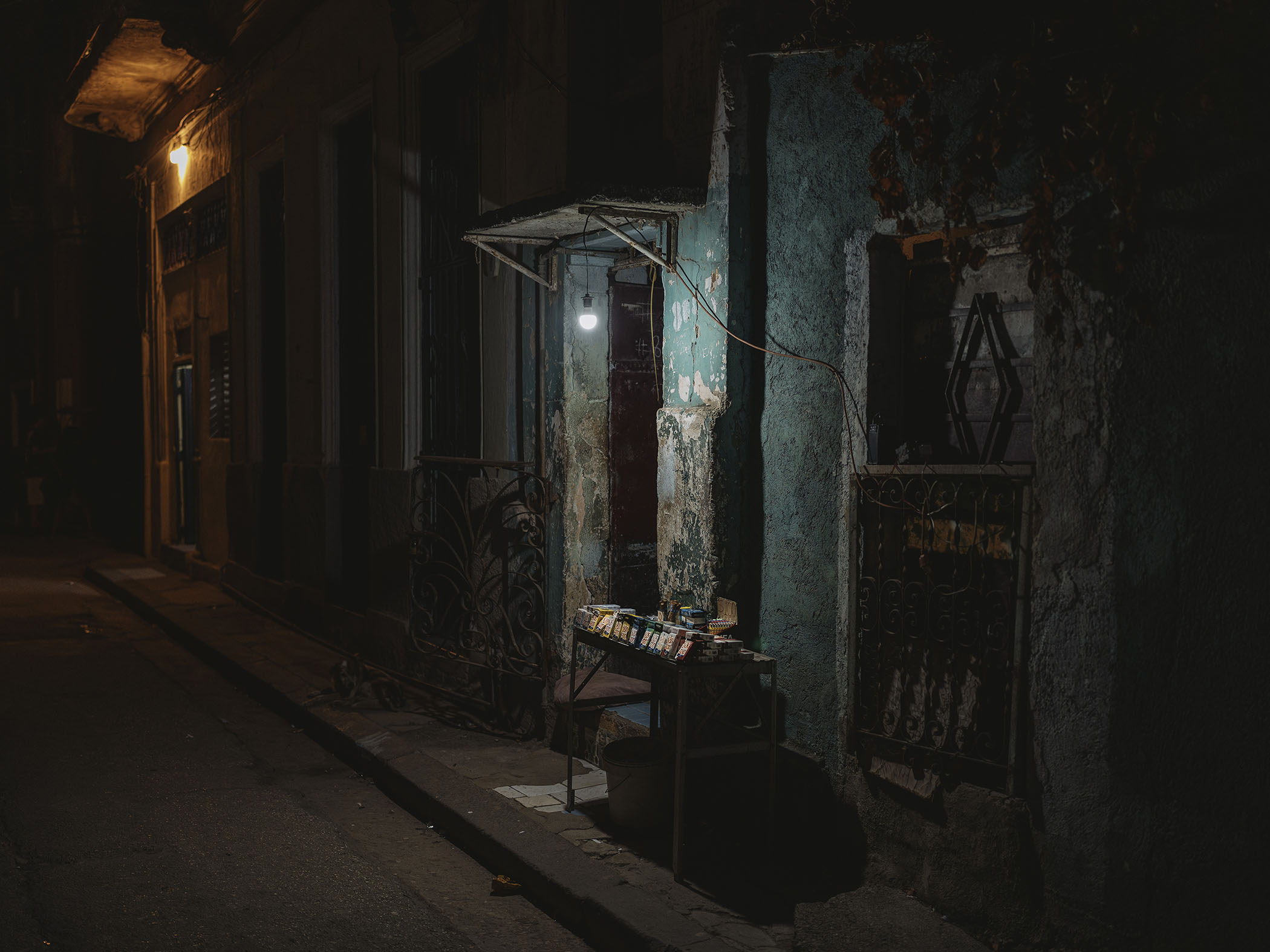
Havana, Cuba. A street cigarette stall at night lit by a single bulb run.
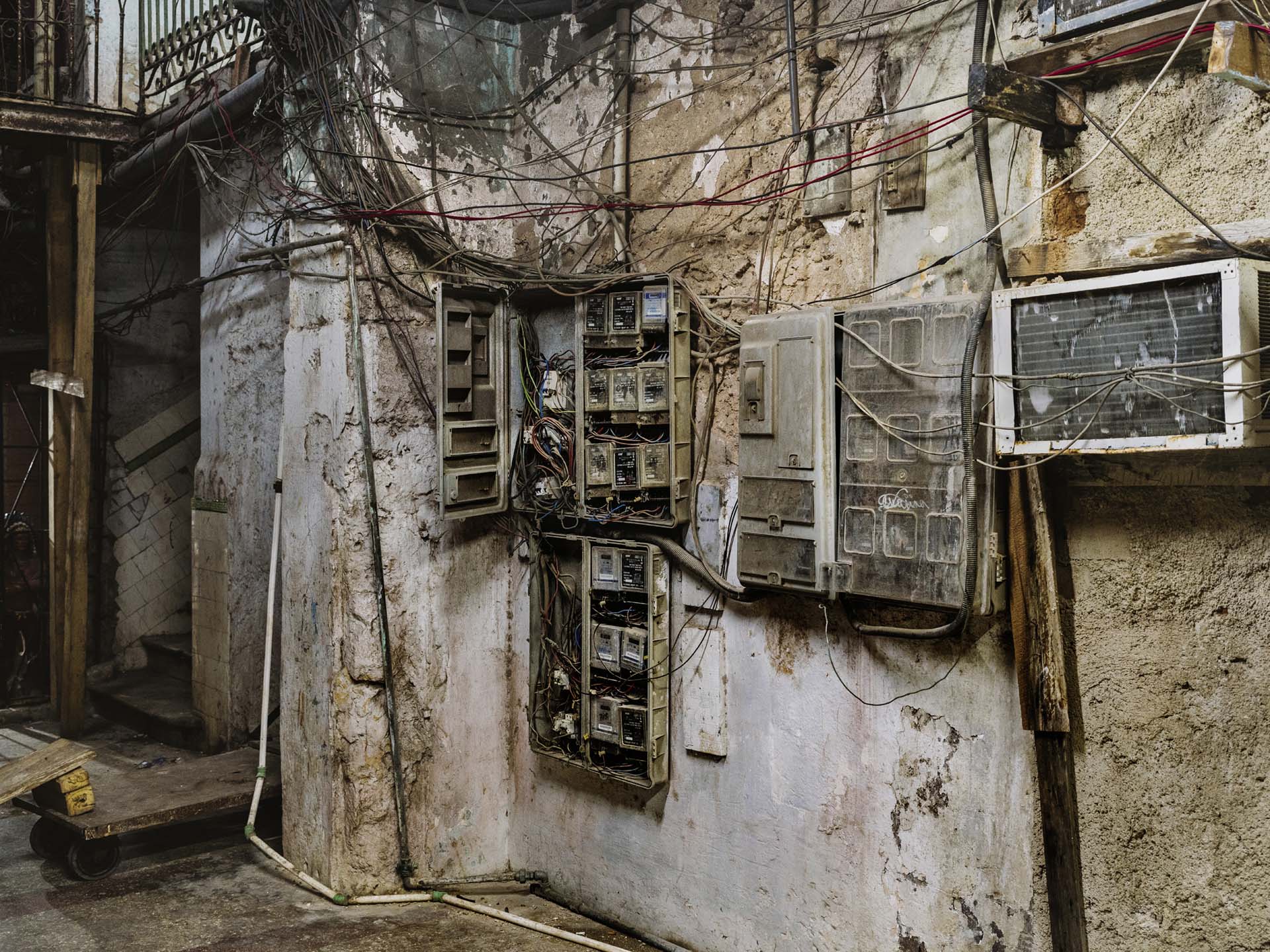
Havana, Cuba. A mess of wires of electricity metres in an residential block
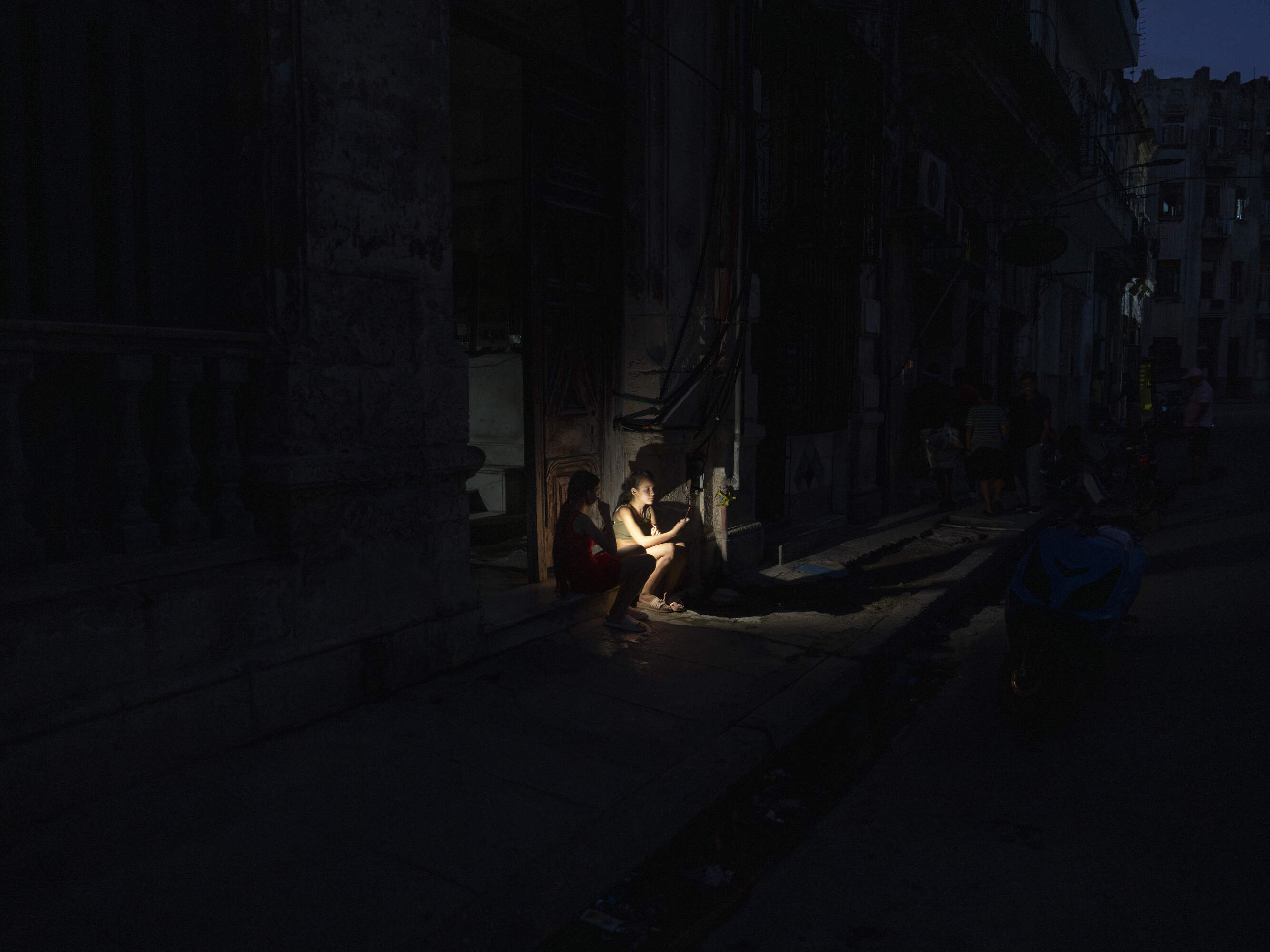
Havana, Cuba. A young gril sits outside with her friend using her phone as a light source during the nightly black out.
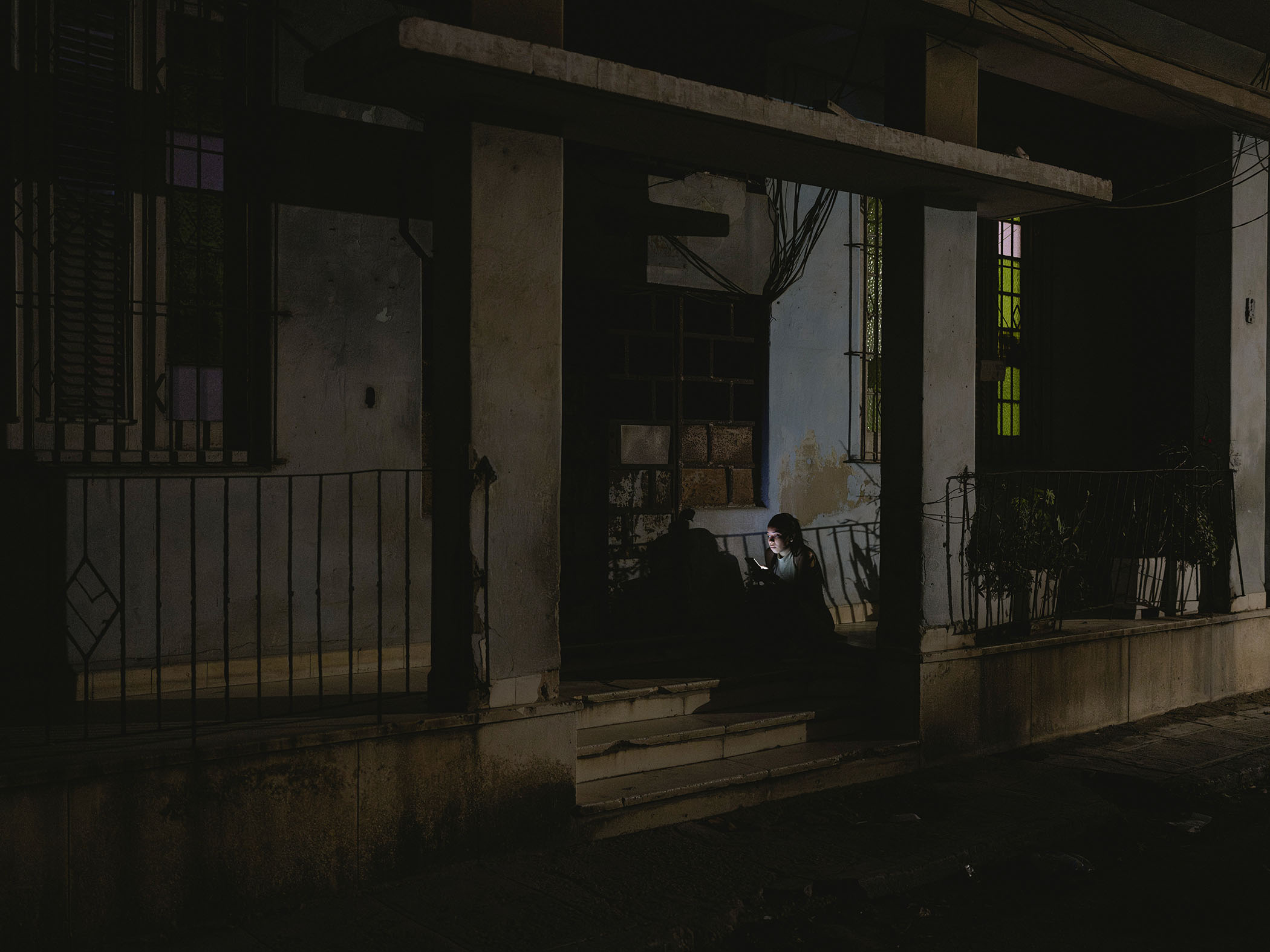
Havana, Cuba. A young gril sits and looks at her phone during the nightly black out.
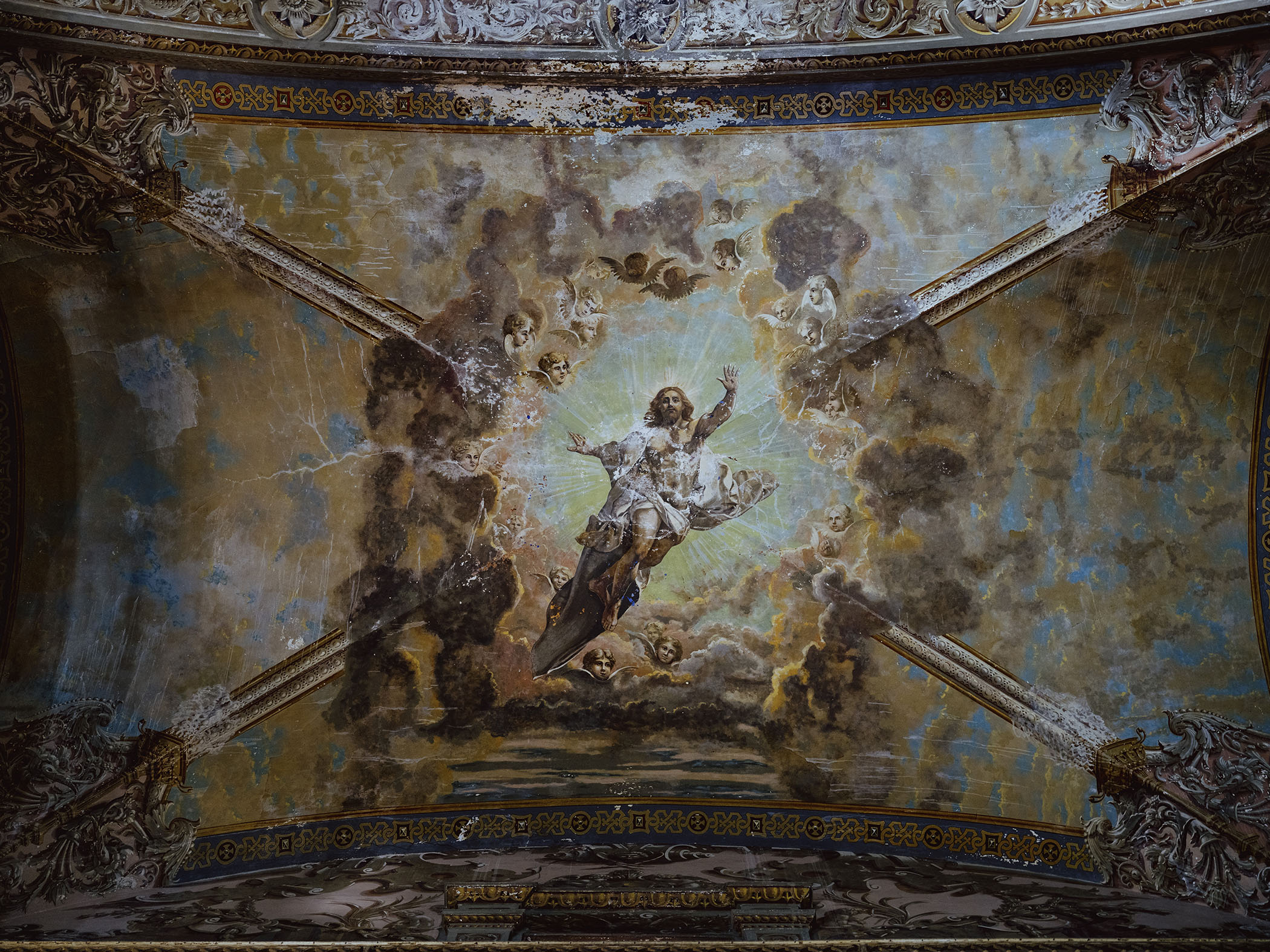
Havana, Cuba. A ceiling painting of Christ surrounded by putti in the Iglesia de la Merced in old Havana.
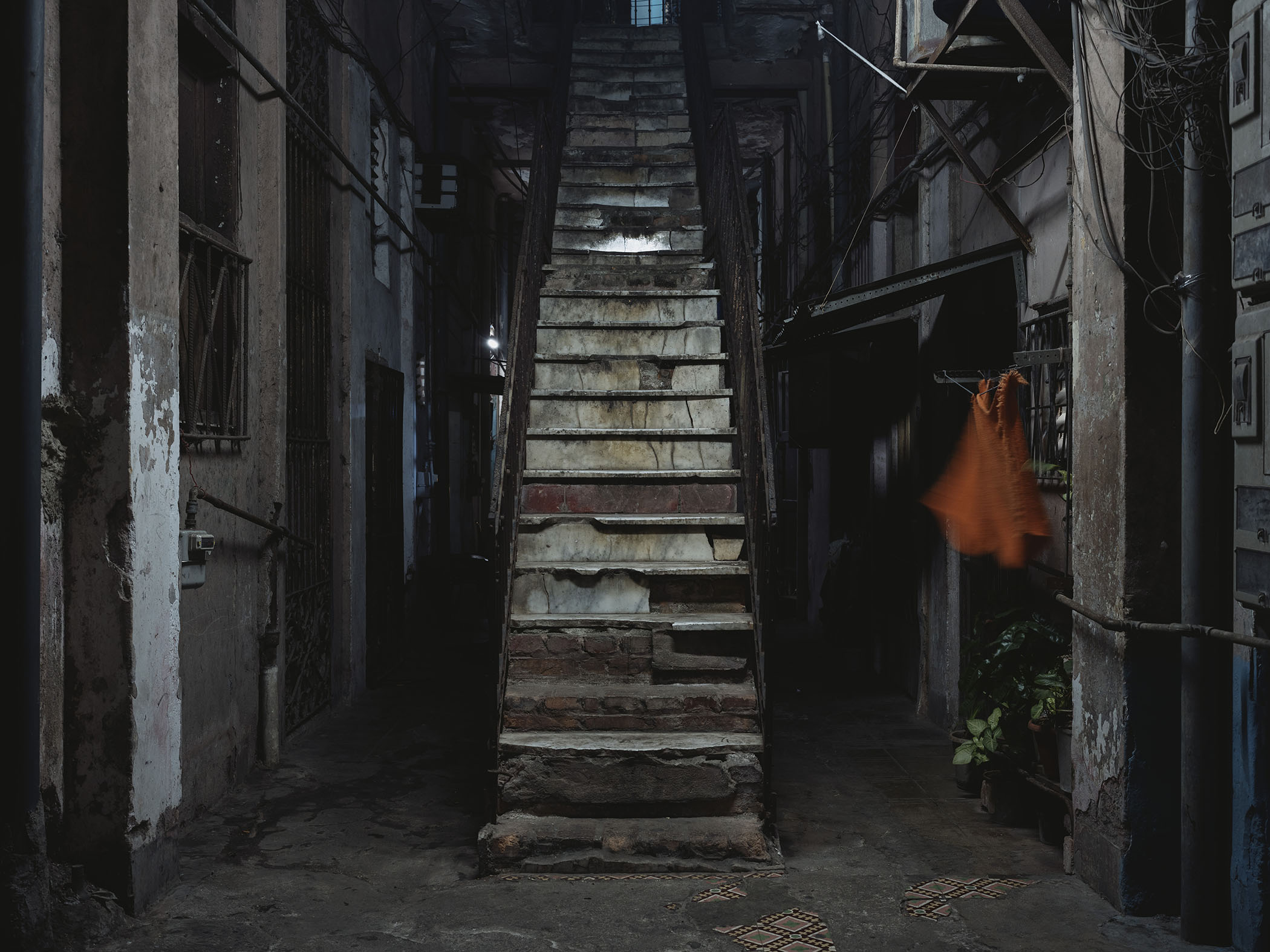
Havana, Cuba. Staircase in a residential block in downtown Havana during a power cut
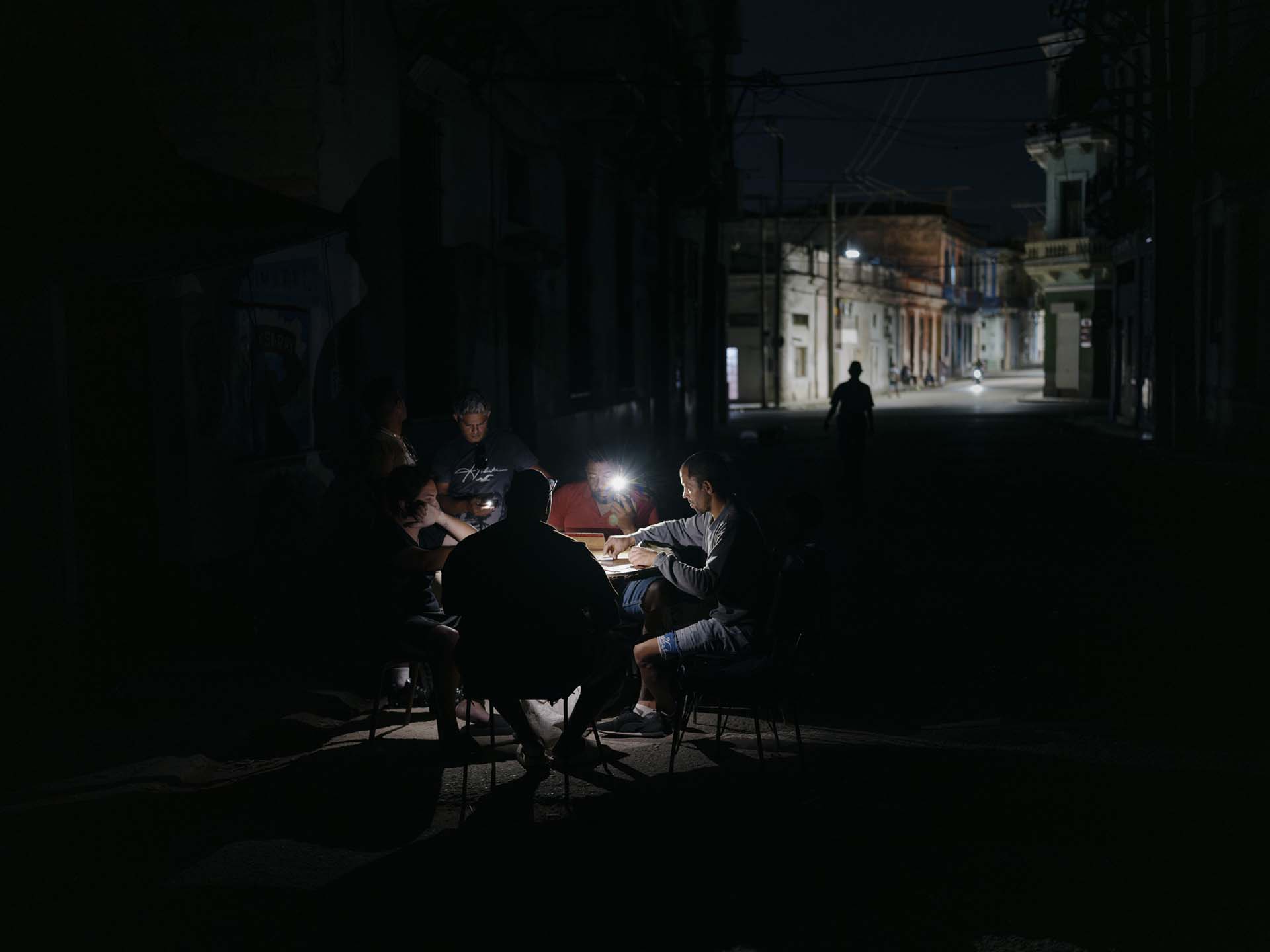
Havana, Cuba. Playing dominoes in the street at night during a power cut. The only light is from the players' mobile phones
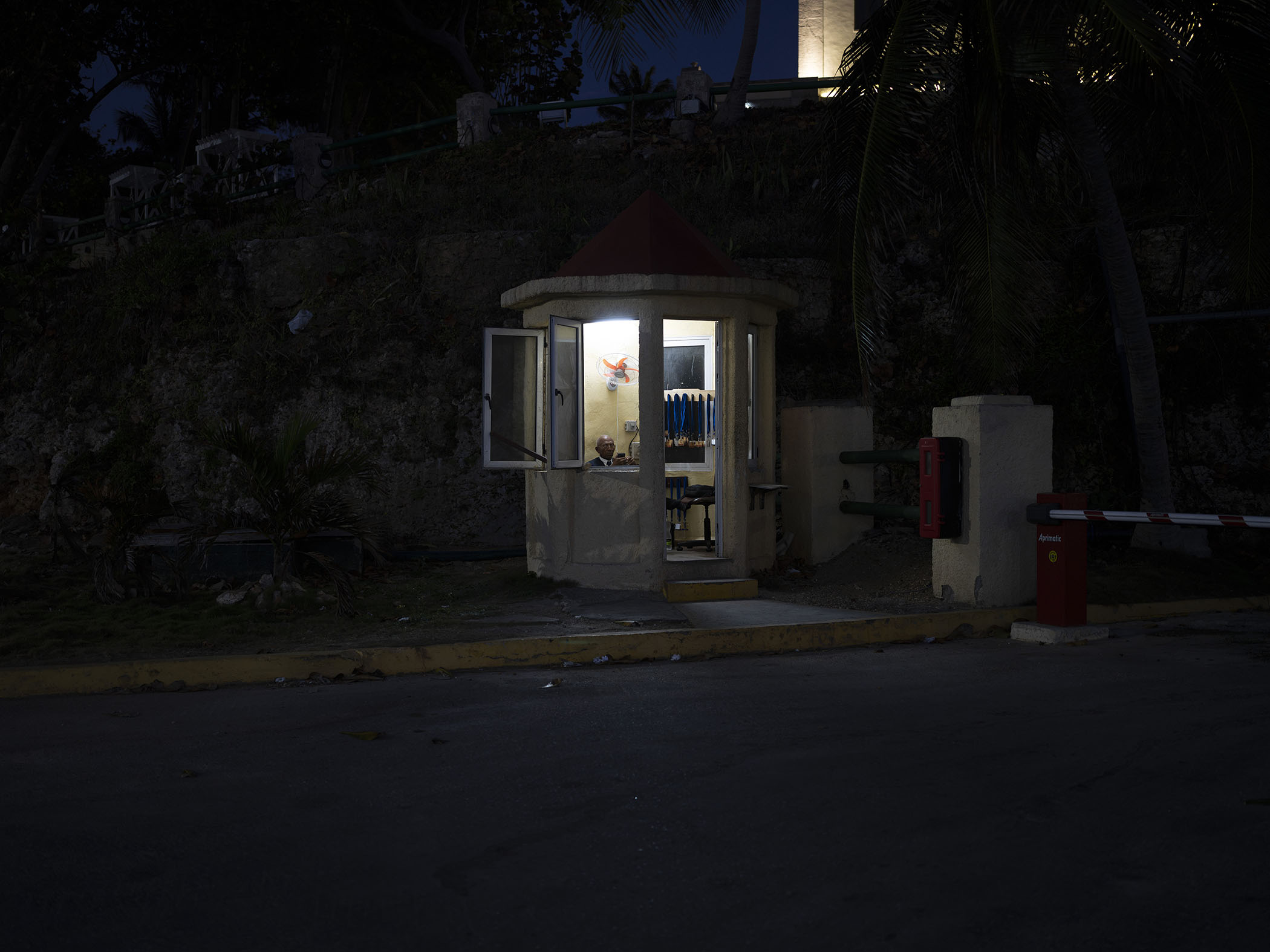
Havana, Cuba. A guard sits in a lit booth at the entrance to the Hotel Nacional one of the fews hotels still open in the city.
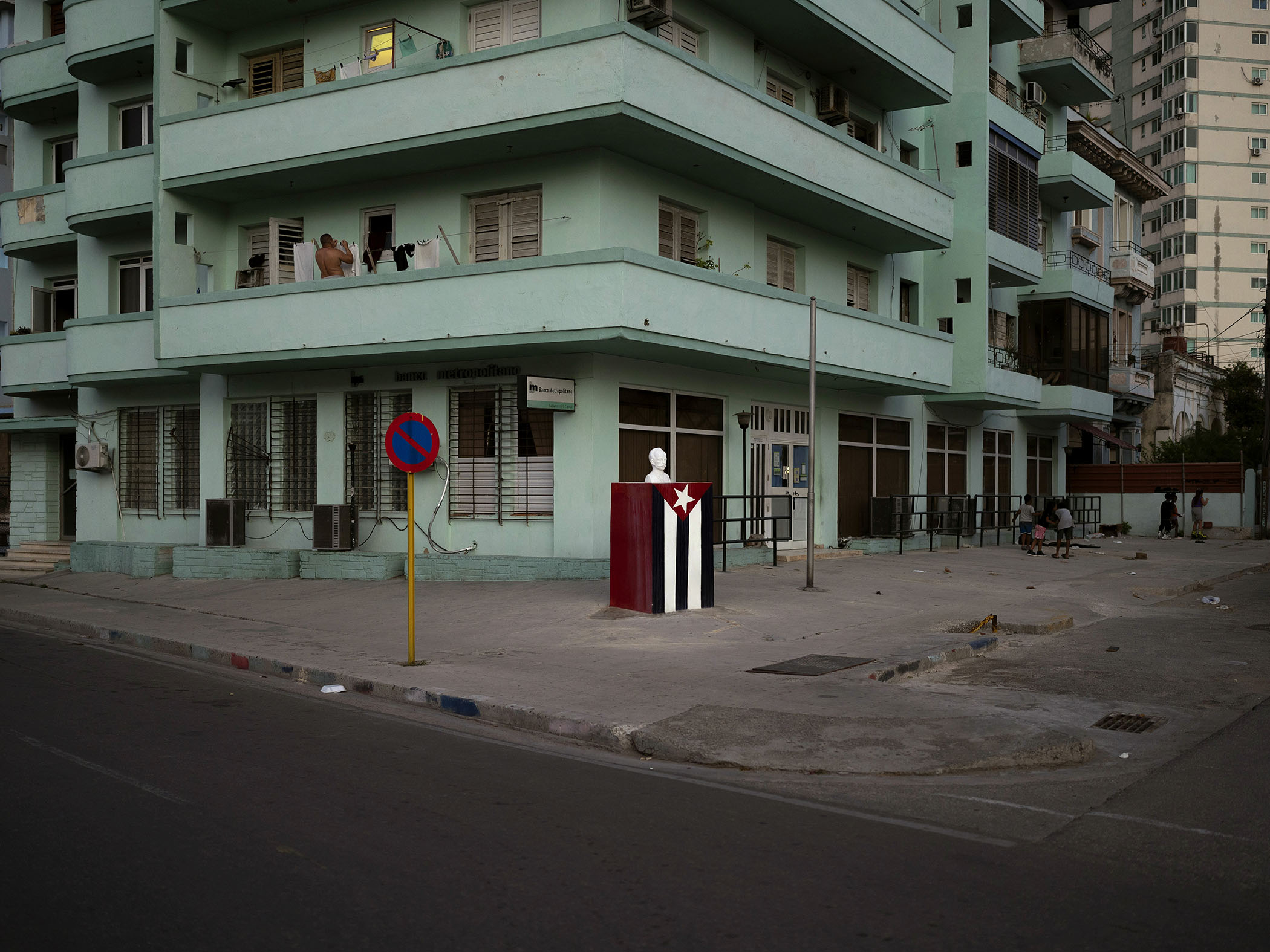
Havana, Cuba. A bust of Jose Marti, liberator of Cuba from Spanish rule, sits on a pedestal painted with the Cuban flag on a street corner in Havana at dusk. Marti's image is omnnipresent thoughout Cuba.
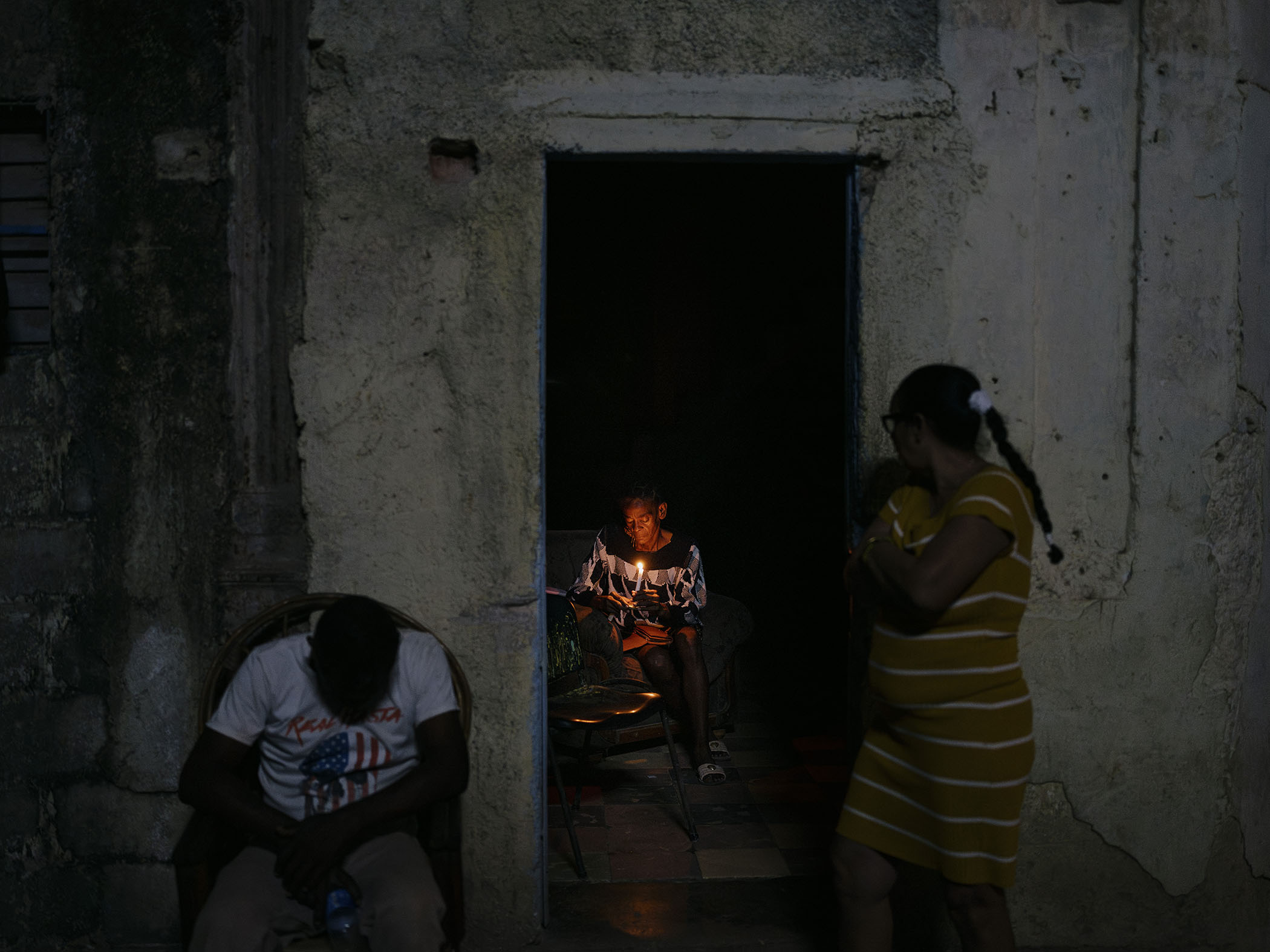
Havana, Cuba. A woman uses a candle to light her home and help see the food she is cooking on a charcoal stove during one of the city's daily black outs.
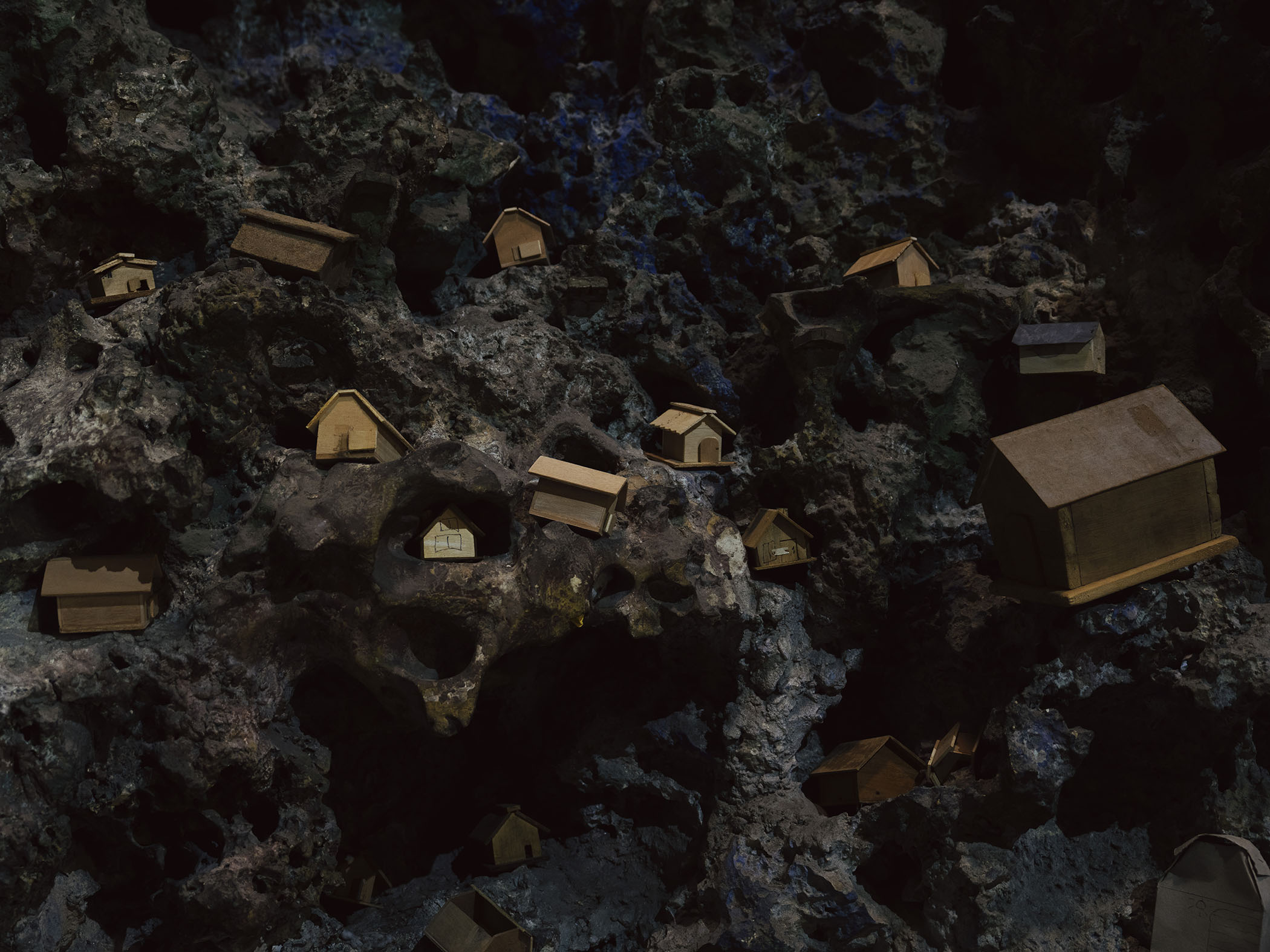
Havana, Cuba. Traditional minature wooden houses, offerings to La Virgen de la Caridad (Our Lady of Charity the patron saint of Cuba) for the protection of the home.
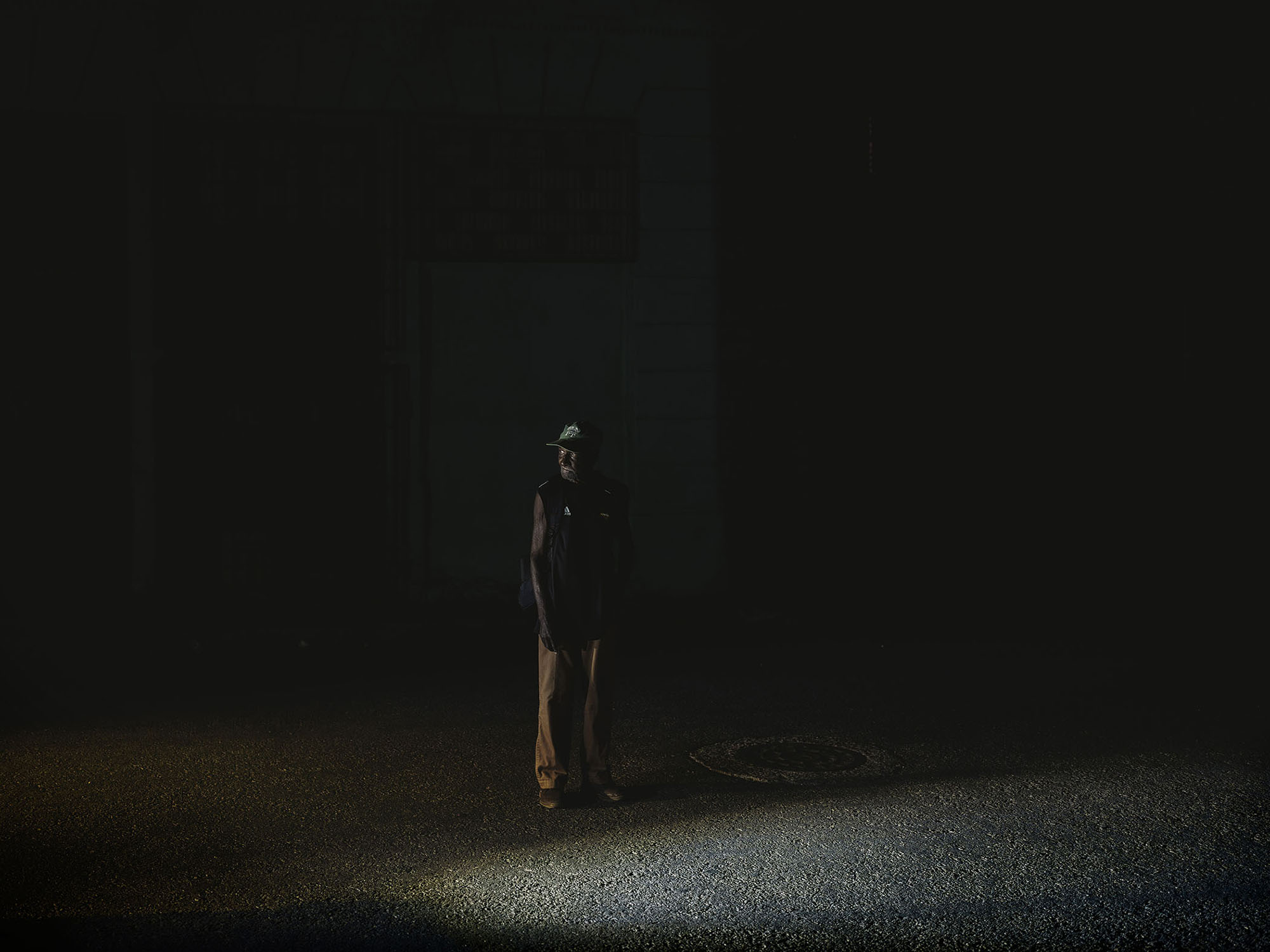
Havana, Cuba. A man stands alone by a small pool of light during one of the city's nightly black outs.