
We are living in the golden age of cocaine. Consumption and production have never been higher, despite more than 50 years of the War on Drugs. For many Europeans and North Americans cocaine is a party drug. For many Latin Americans it’s a source of bloodshed, violence, corruption and death.
“Sangre Blanca is my attempt to link a globalized, violent and confusing world. Over years of work across ten countries, I met people on every side of the cocaine trade and I realized how they all, in their own ways, are trying to break free—free from poverty, hopelessness, or meaninglessness; from violence, or from the noise inside their own minds. I was driven by a need to understand the system that connects us—the links between the world’s most violent cities and Europe’s hunger for intensity or instant pleasure. I witnessed a booming industry alongside a failing strategy, where the blame and the cost are largely offloaded onto already fragile communities. I came to realize that there is no such thing as pure cocaine. It is always soaked in blood.”
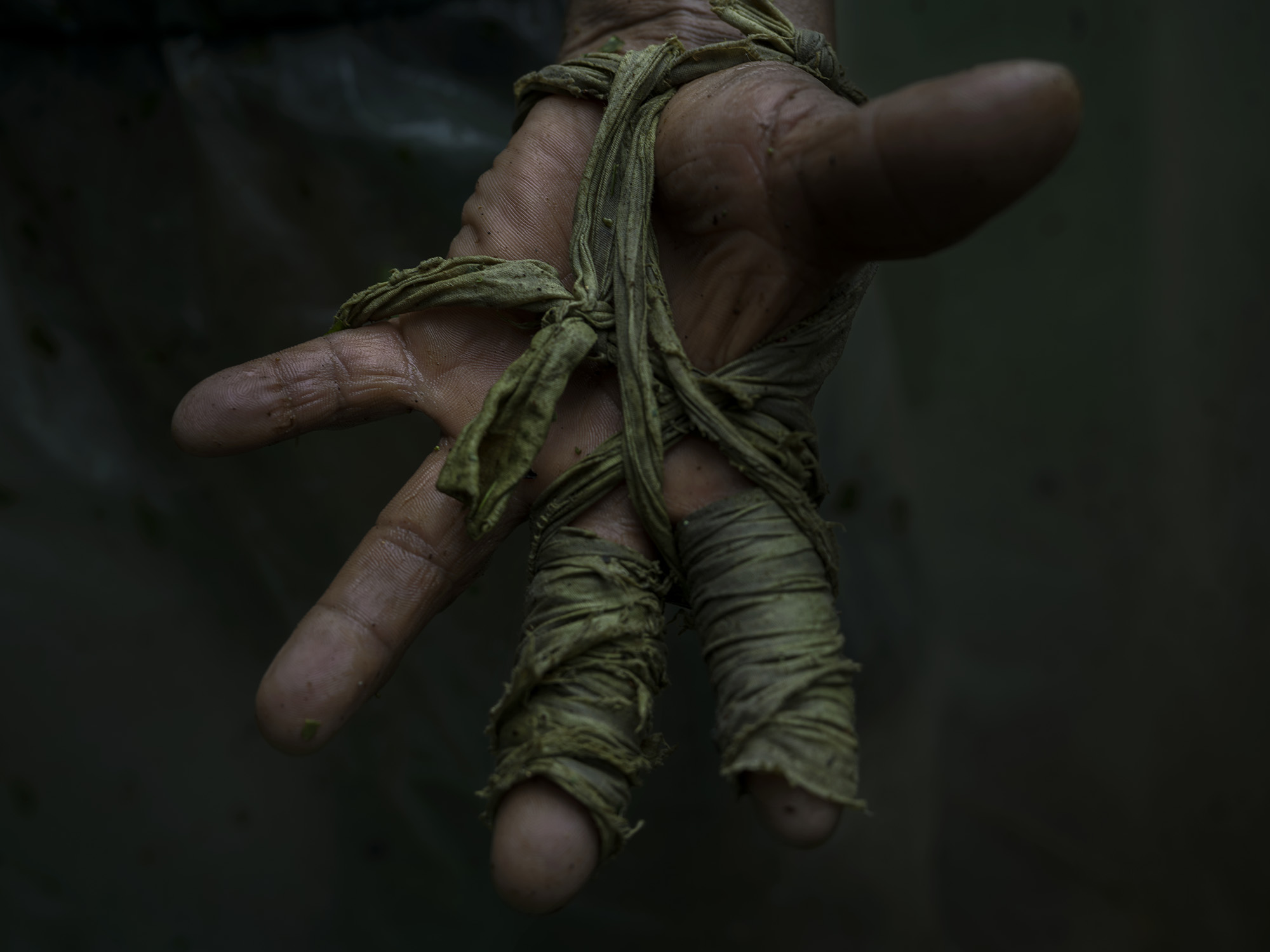
Cauca department, Colombia. The hand of a raspachín, a coca leaf picker. While cocaine is produced in both Peru and Bolivia, Colombia has dominated the trade since consumption and trafficking surged in the 1970s. A mix of ideal growing conditions, well-established smuggling routes, political instability, deep poverty, and the enduring presence of some of South America’s most powerful illegal armed groups has positioned Colombia as the source of up to 60-70 percent of the world’s cocaine.
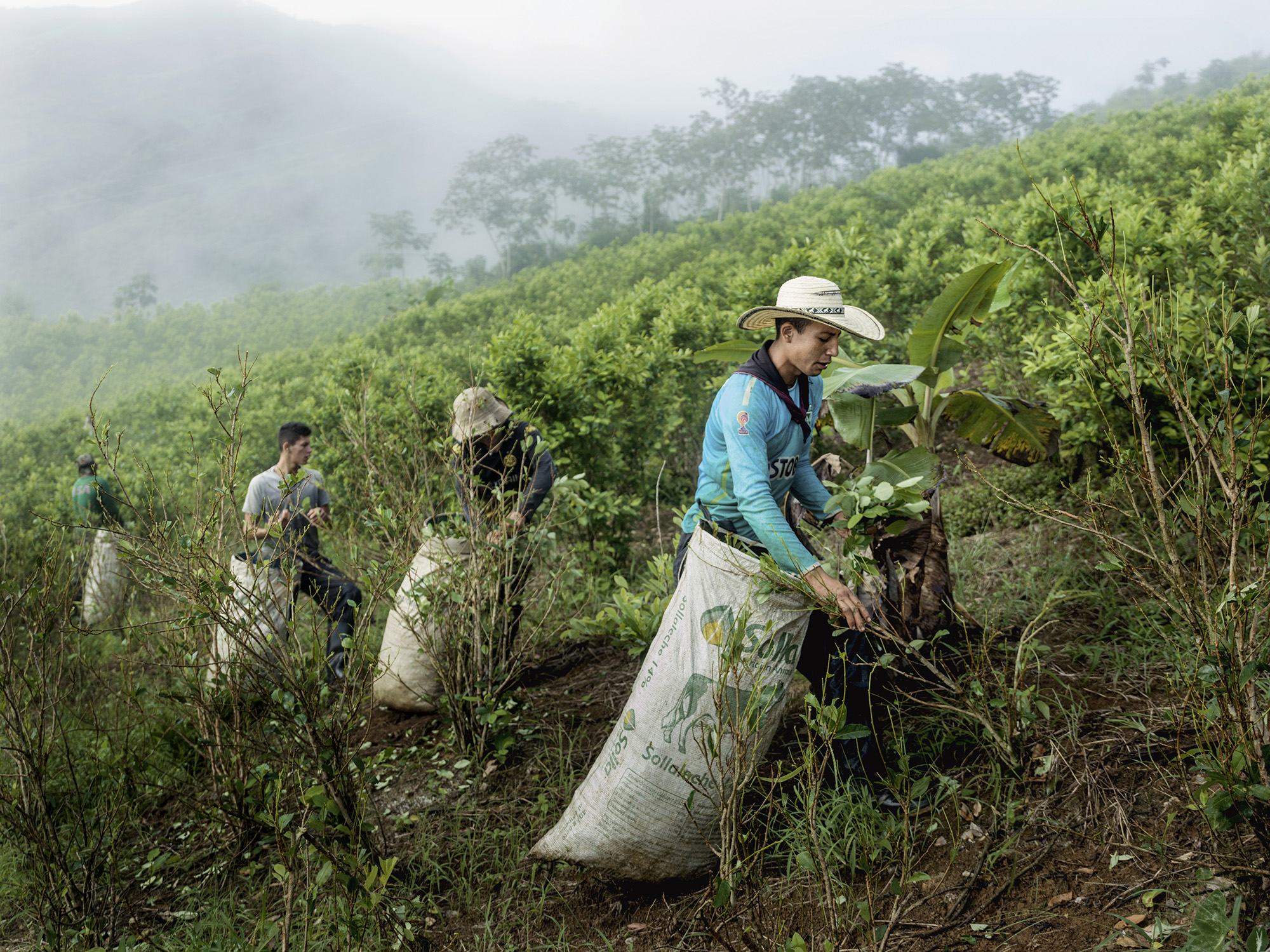
Nr Pueblo Nuevo, Cordoba, Colombia, Nineteen-year-old Ariel Albeiro Muñoz, collecting coca leaves near the village of Pueblo Nuevo, Colombia. The pay is double what he earns picking coffee. Ariel says he would never use cocaine, nor is he concerned with politics—he simply wants to save enough money to buy a motorbike and impress girls. But with coca comes conflict. For decades, the area has been marked by violence, landmines, aerial fumigation campaigns, and direct clashes between the national army and guerrilla groups vying for control of these mountains.
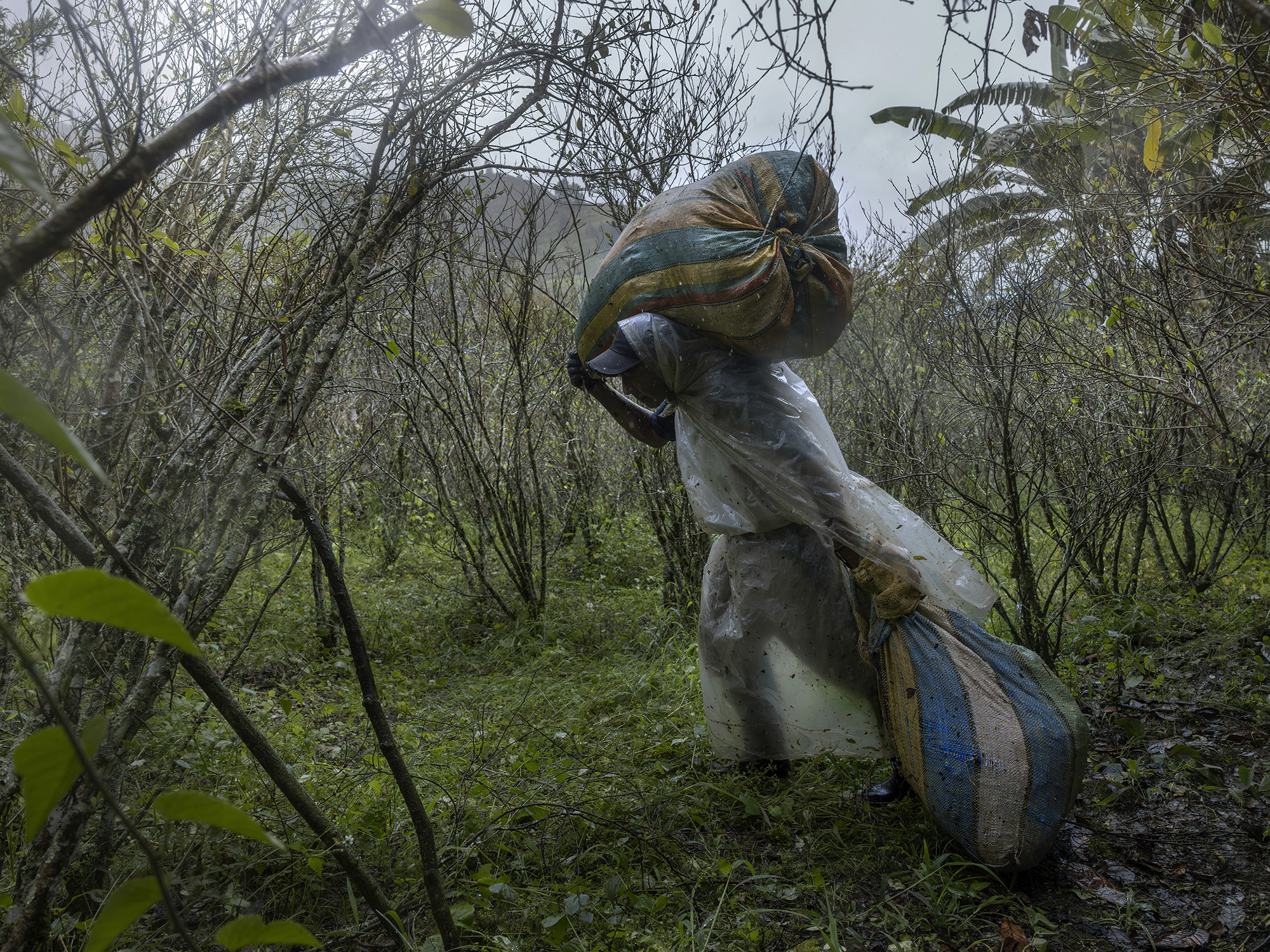
Cauca department, Colombia. 53 year old Ovidio carries heavy sacks filled with coca leaves he has gathered throughout the day. The landlord pays a 'raspachin', or coca leaf picker, by weight. Ovidio earns about $25 a day.
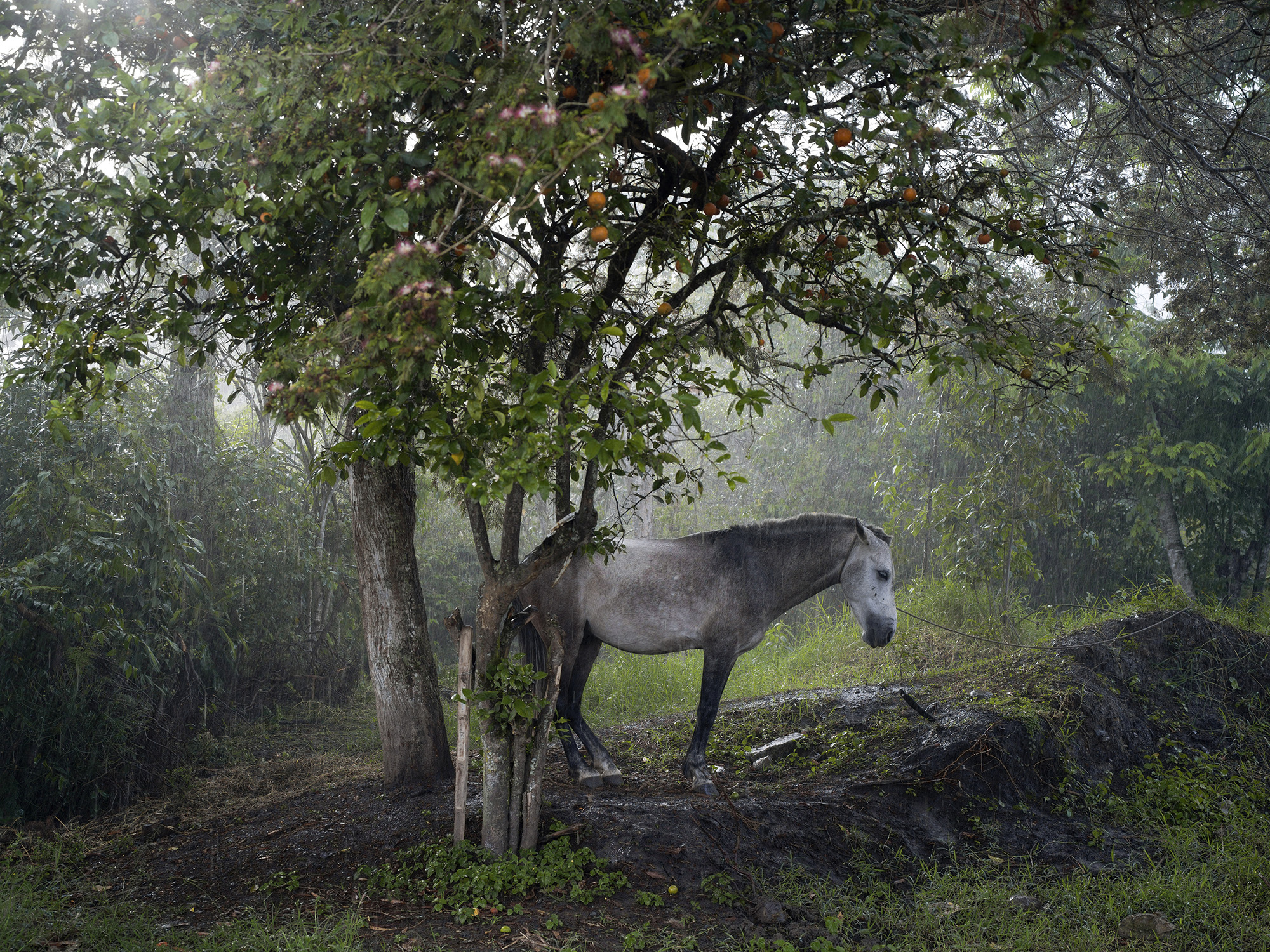
Colombia. A horse in a village in Cauca region.
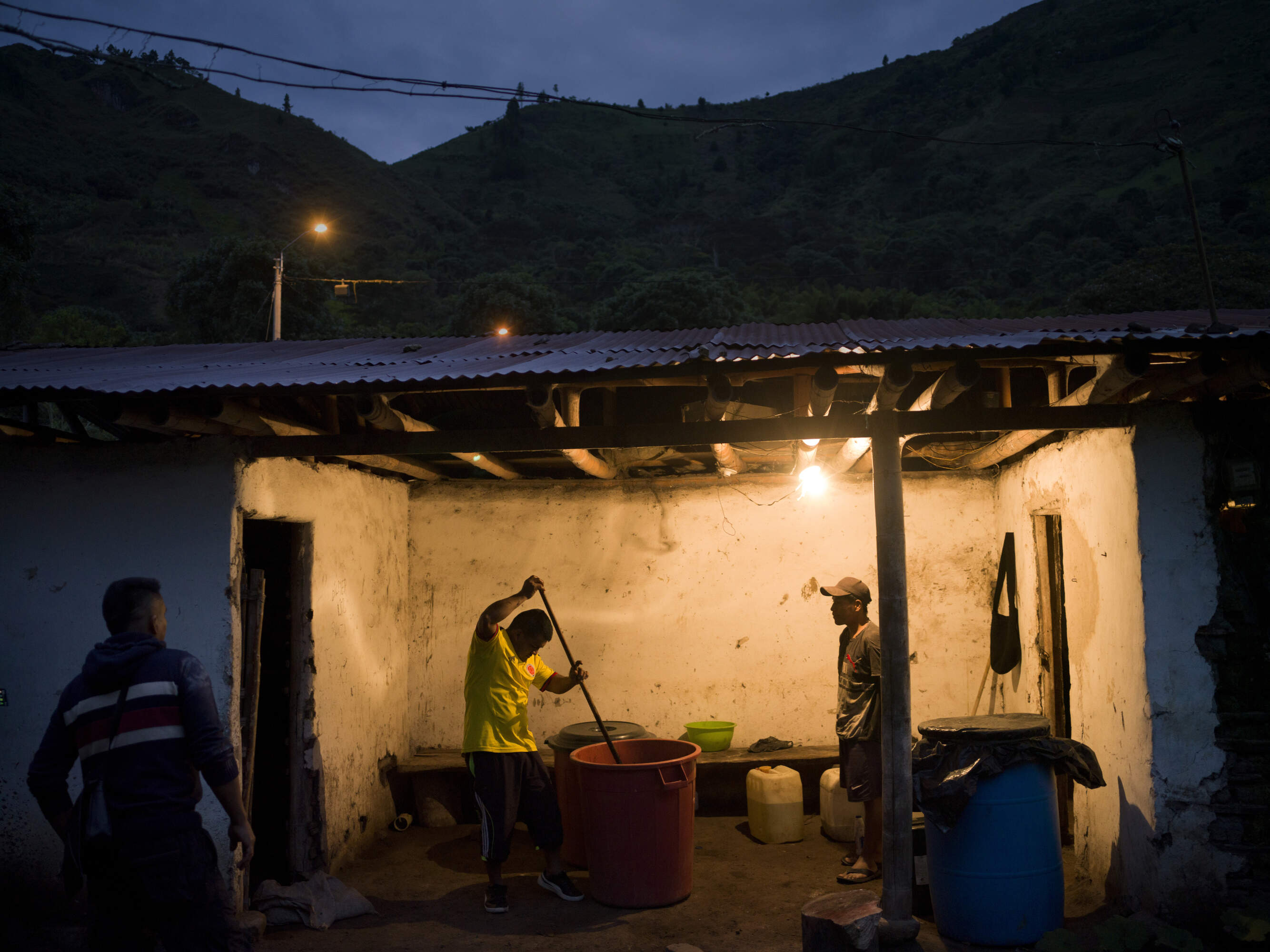
In the heart of a small village in Cauca, a modest house is being transformed into a makeshift cocaine laboratory. Inside, farmers stir their mixture of coca paste—base de coca—the crude form of the drug. The paste is then sold either to a middleman or directly to a business owner, who will refine it into its final form, cocaine hydrochloride, in a more sophisticated secondphase lab. Cauca department, Colombia
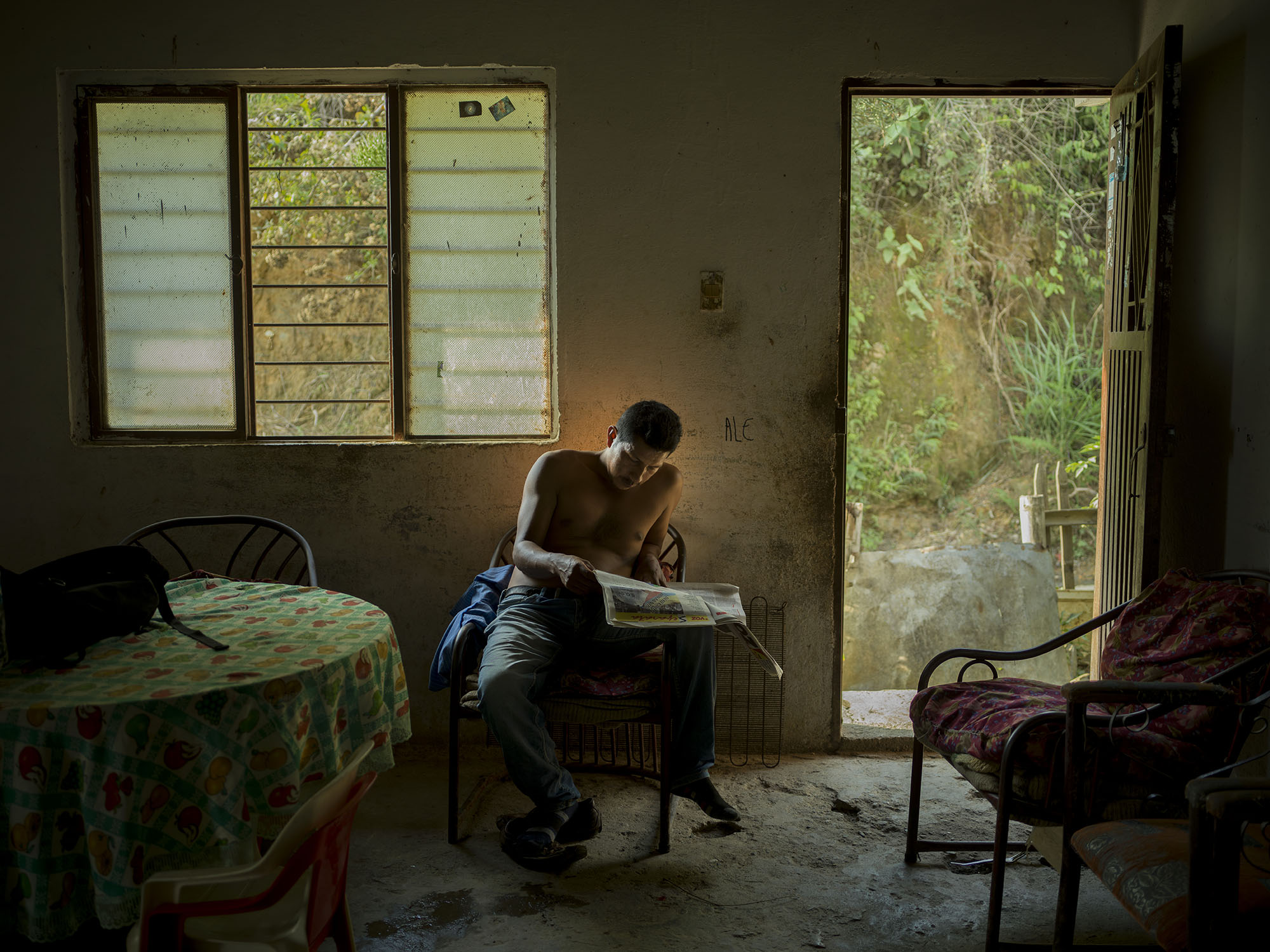
Leider and his family live in the mountains near Miranda, in Colombia’s Cauca region. Like most farmers in the area, they grow coca and illegal cannabis, yet poverty remains deeply entrenched. Over the years, Leider—like many of his neighbours— has repeatedly tried to grow tomatoes and other vegetables. Again and again, his harvests have been lost due to pests, disease, or the unpredictable market and poor infrastructure in these remote highlands, threatening his livelihood and pushing him back toward illicit crops. Cauca department, Colombia
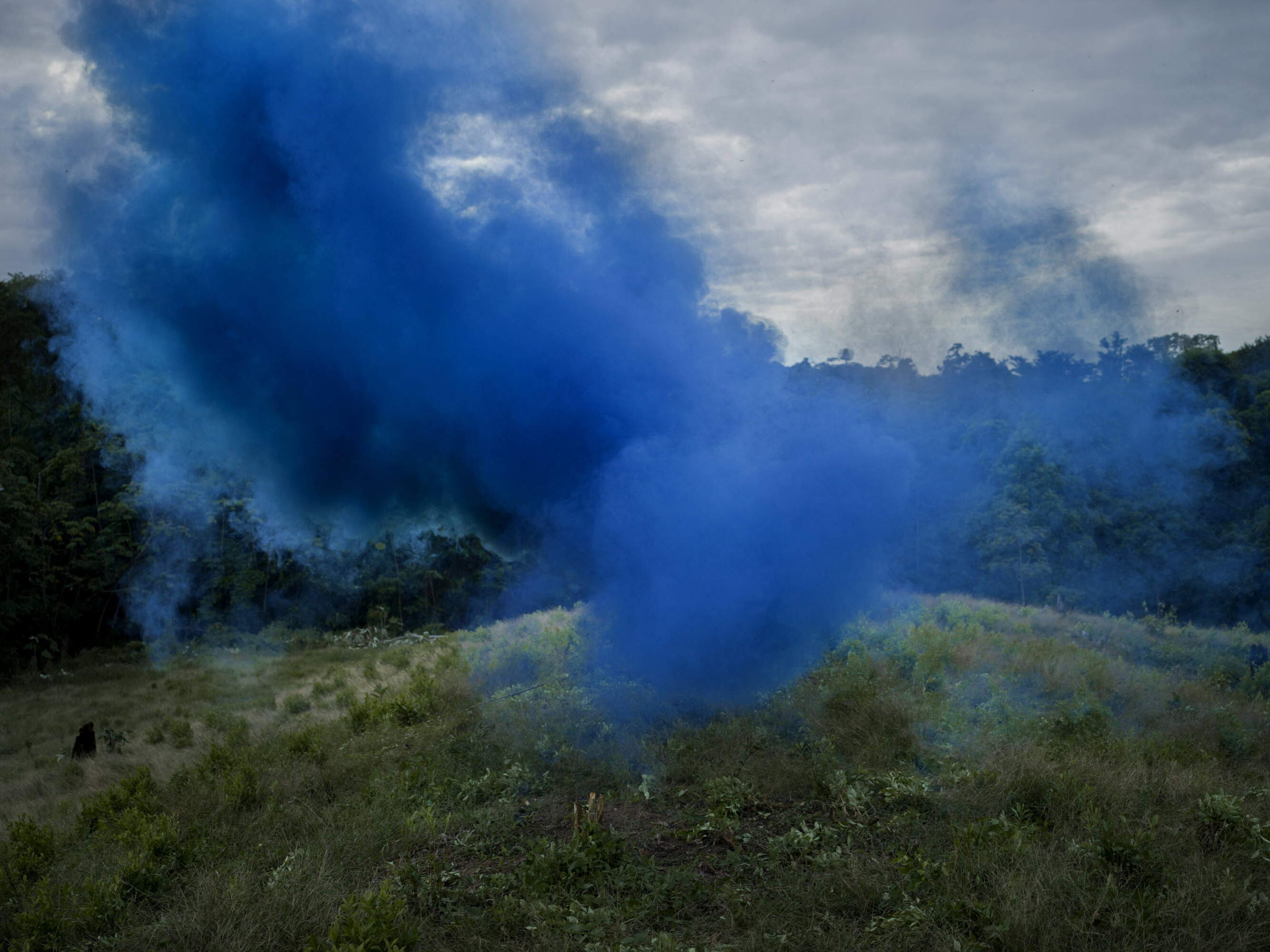
Blue smoke marks the landing spot for a military helicopter during a search and destroy mission at a coca plantation. Catatumbo, Colombia
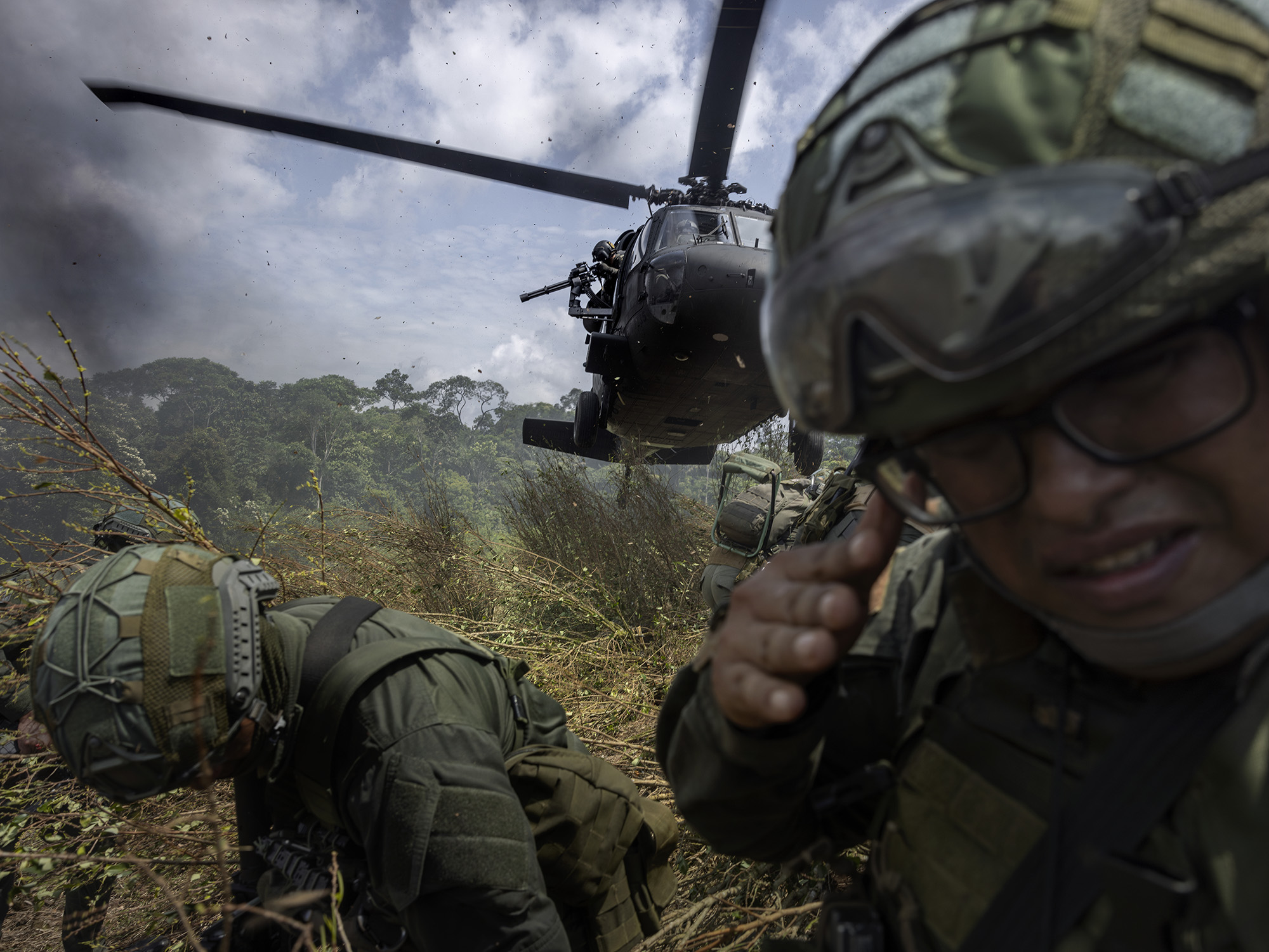
In the remote mountains of Putumayo, members of Los Comandos Jungla, an elite unit of Colombia's anti-narcotics police, are dropped into a dense coca field. Guided by aerial surveillance from a Black Hawk helicopter, their mission is to find and burn down the hidden cocaine laboratories scattered across the jungle.
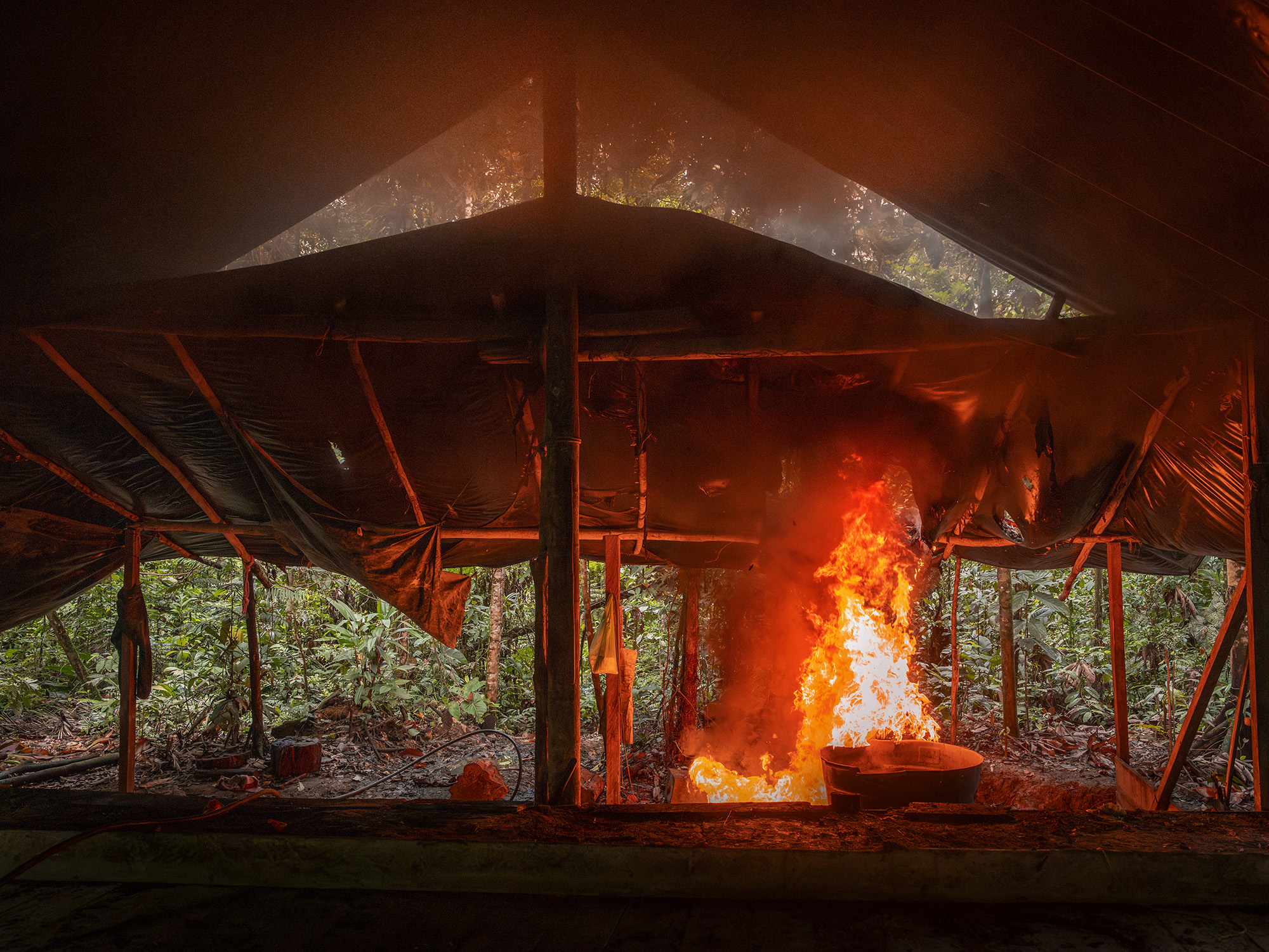
But they need to act fast, the police are outnumbered and on unfamiliar ground. Any moment the farmers, or the well-organised militia 'Comandos de la Frontera' (also known as CDF or La Mafia), can regroup and launch a counterattack when they see their business going up in flames. Putamayo, Colombia.
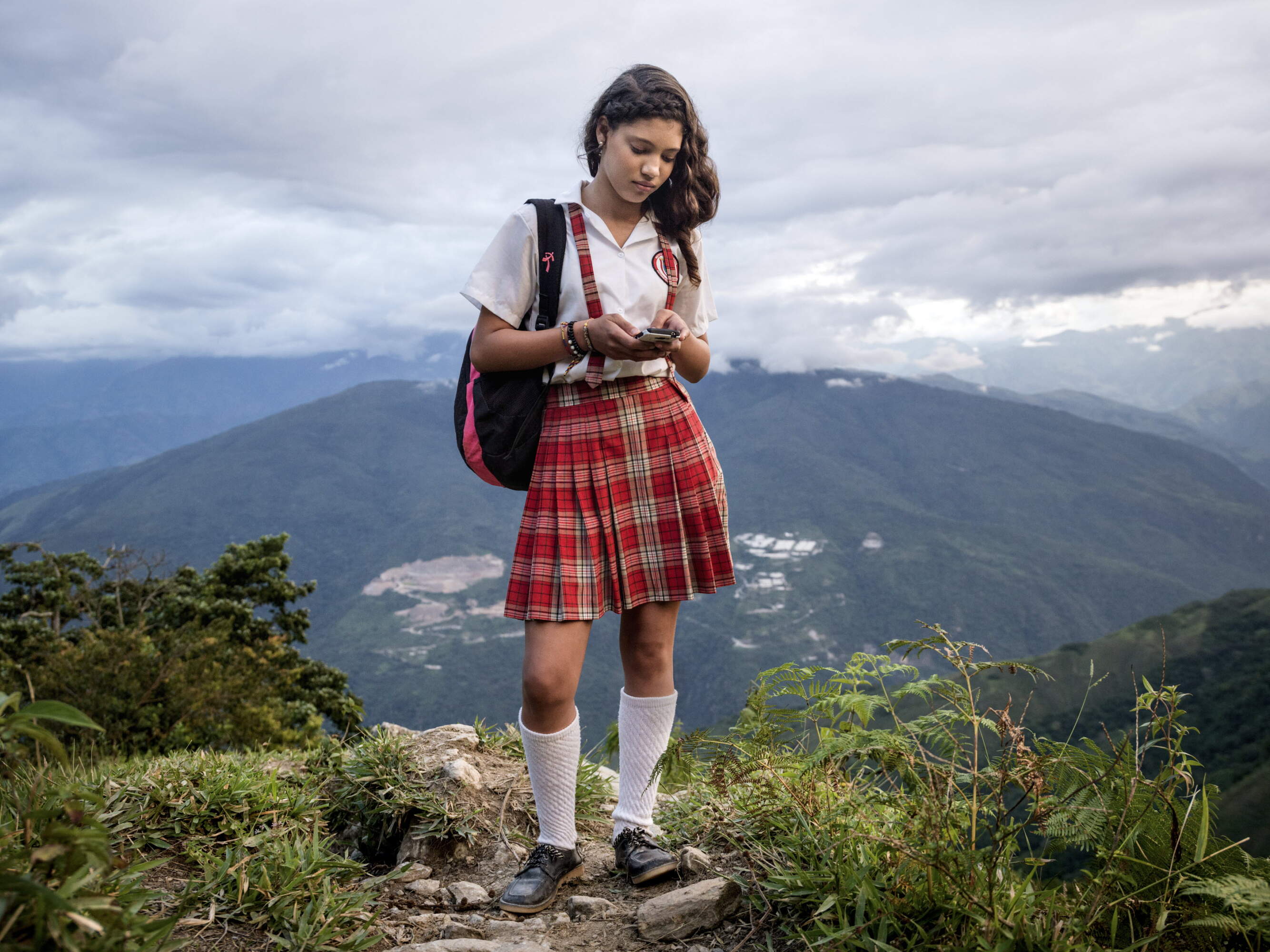
Twelve-year-old Alexandra Mazo walks down the mountain with her cellphone in hand after finishing her school day in Pueblo Nuevo, a village in Antioquia, Colombia, surrounded by vast coca plantations and armed groups.
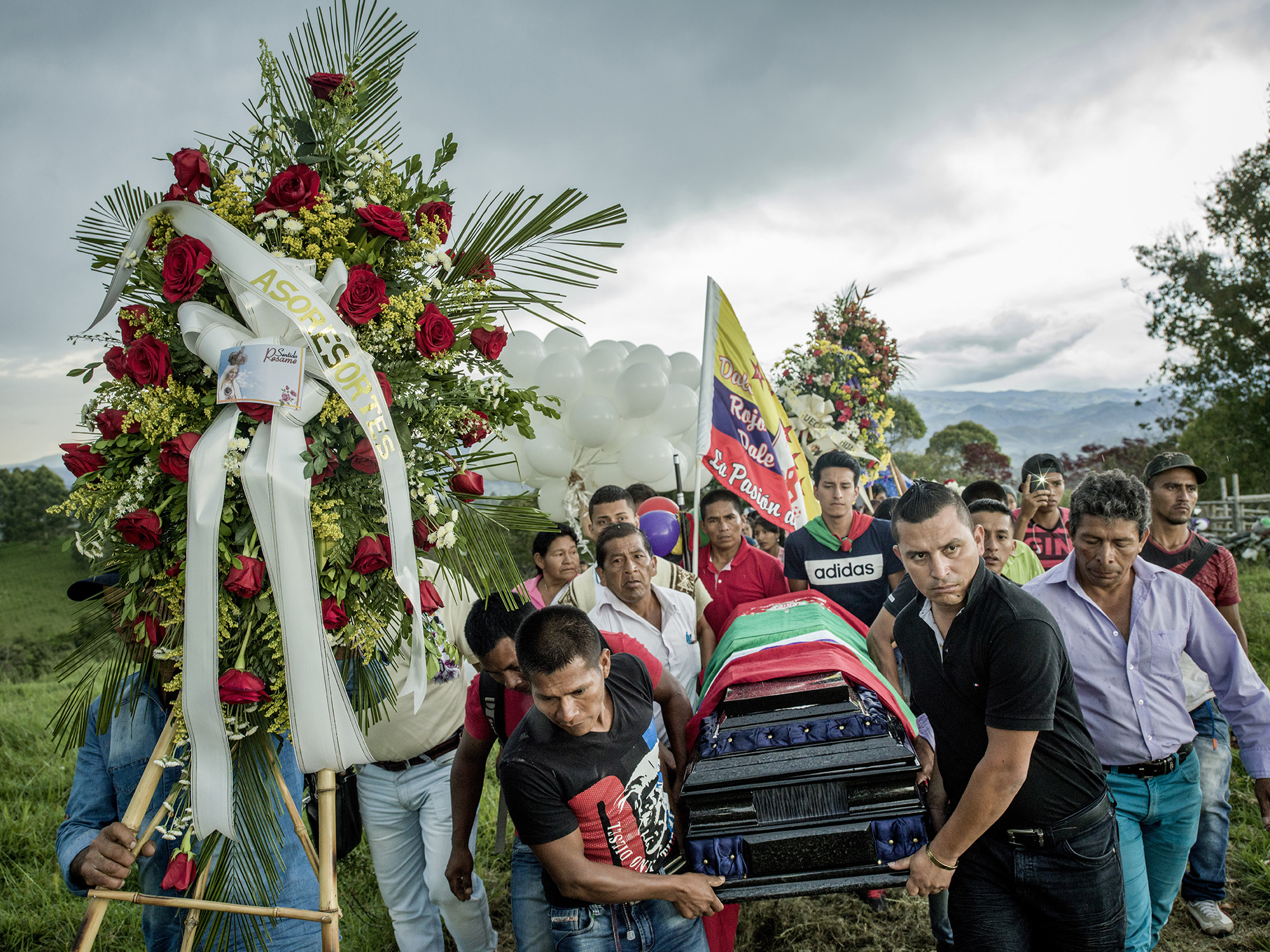
Surrounded by friends, family, and the entire community, Gerson Acosta is carried to his final resting place. At just 35-years-old, Acosta was already a governor and a respected Indigenous leader, known for his courage in standing up to armed groups attempting to take control of the Kite Kiwe ancestral territory. His defiance came at a high cost—he had received multiple death threats from a local paramilitary faction, a successor group of the far-right, drug-trafficking organisation AUC. On the afternoon of 19 April 2017, he was shot at close range outside his home. As the bullets were fired, Gerson managed to tell his 12-year-old son Daybi to run and escape. Timbío, Cauca, Colombia.
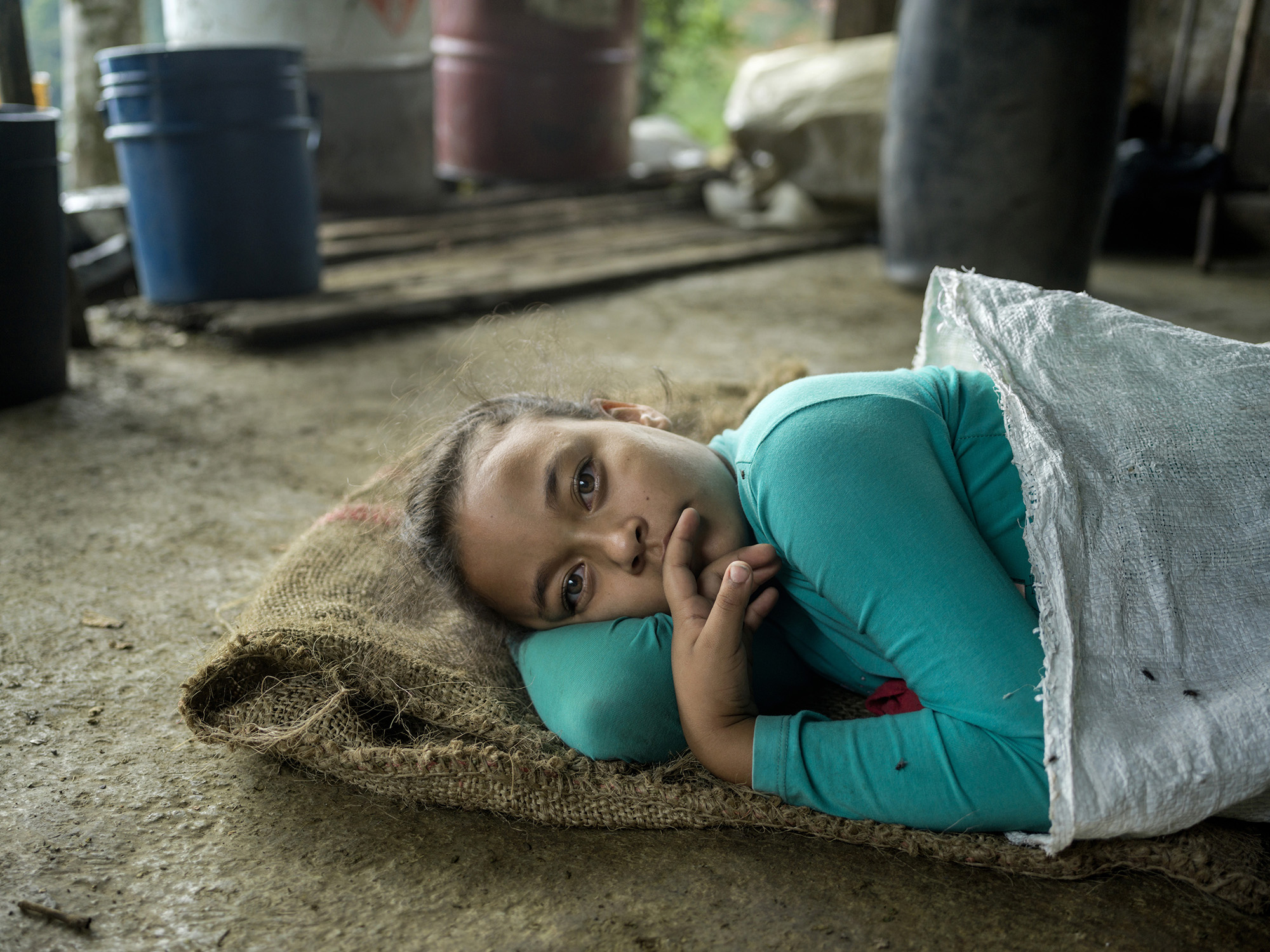
Diney Alexandra lies on the floor, taking a nap out of boredom at her father’s laboratory as the processing continues around her. It takes roughly 700 kilos of coca leaves along with substances such as cement, ammonium, sulfuric acid, sodium permanganate, caustic soda, and large quantities of gasoline—to produce just a single kilo of coca paste. The aim of the entire process is to extract and isolate the leaf’s most desired and valuable component: the cocaine alkaloid. Antioquia and Cauca, Colombia.
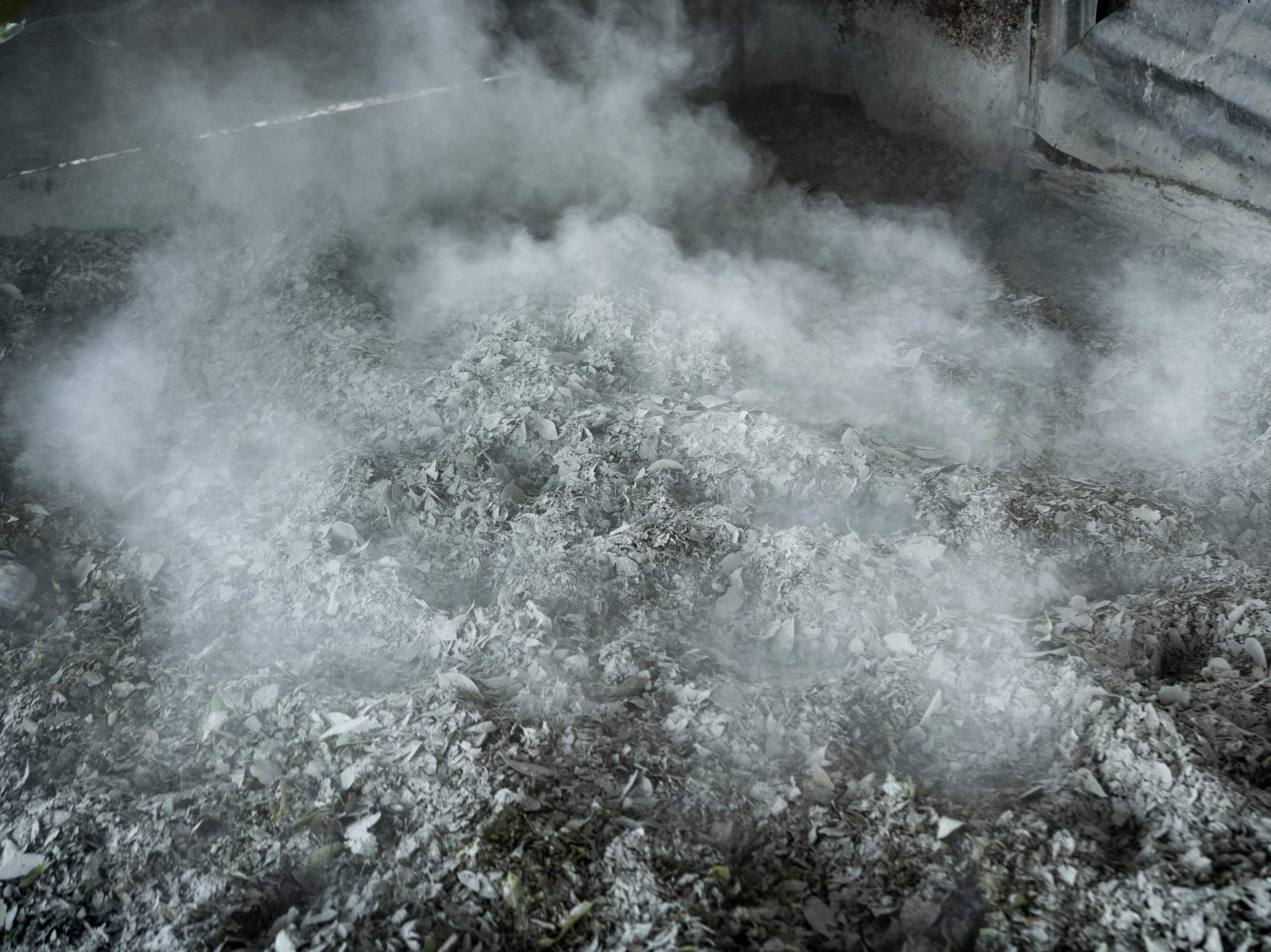
Cement is sprinkled onto coca leaves during the production of cocaine at a hidden laboratory. Santa Rosa de Osos municipality, Colombia
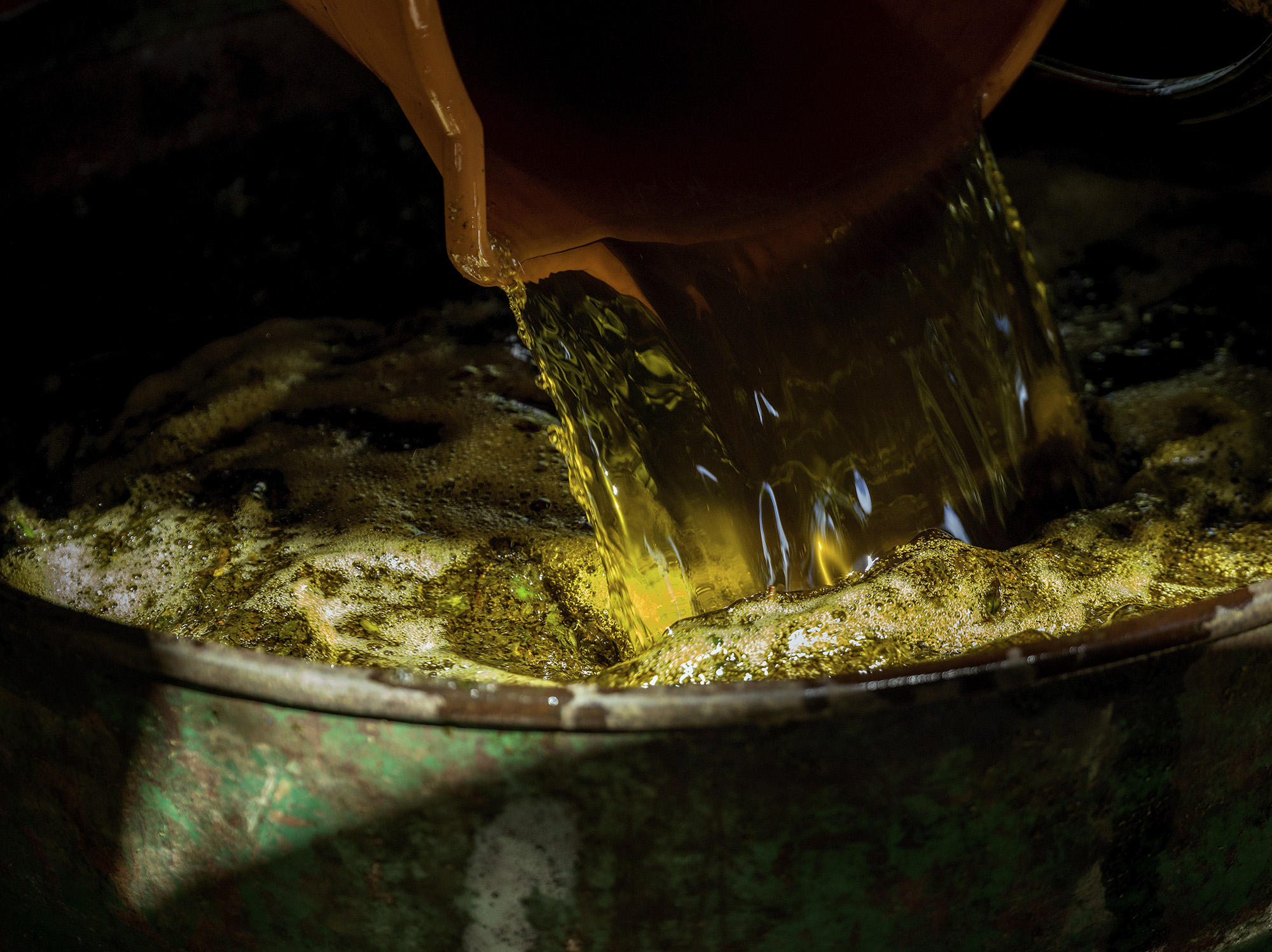
Gasoline is added to barrels of coca leaf, one of the production processes for making cocaine base taking place at an illicit, remote cocaine laboratory. Nr. Pueblo Nuevo, Cordoba, Colombia
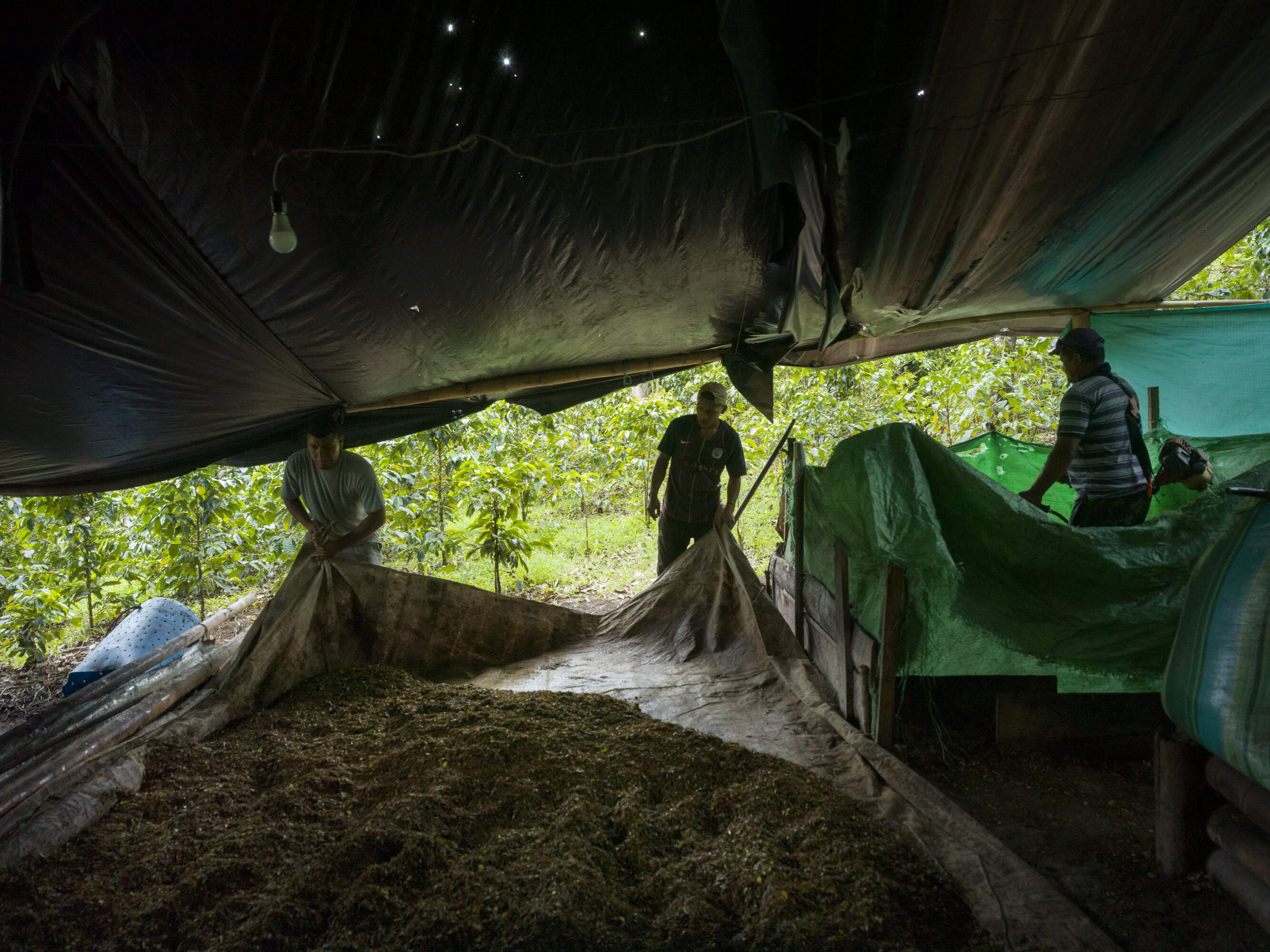
Coca leaves used in the production of cocaine base at a remote laboratory. Cauca region, Colombia
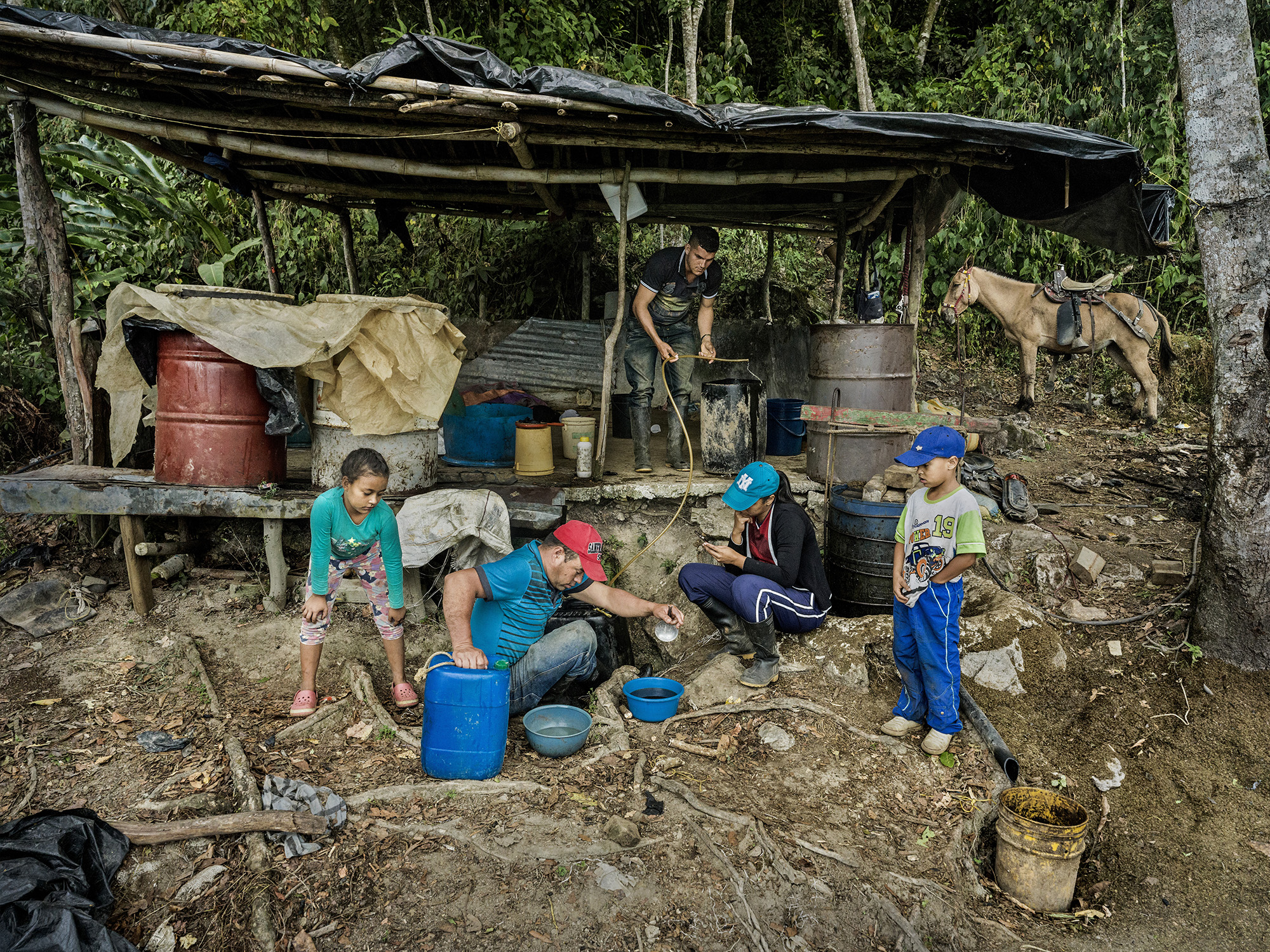
Accompanied by his wife, children, and a friend, 38-year-old Martín Osorio has spent the entire day working with coca leaves and chemicals in his laboratory in Antioquia, Colombia. Here, the family can produce a few kilos of coca paste at the time, mostly using leaves harvested from his own land. He remains intensely focused—the right timing and blend is crucial. But like many producers, Martín doesn’t rely much on measurements or samples during the process. Instead, he places a few drops on his tongue, and through taste and years of experience, he instinctively knows what the mixture needs to reach the highest yield and quality. In just a few moments, he’ll know the outcome. Antioquia, Colombia
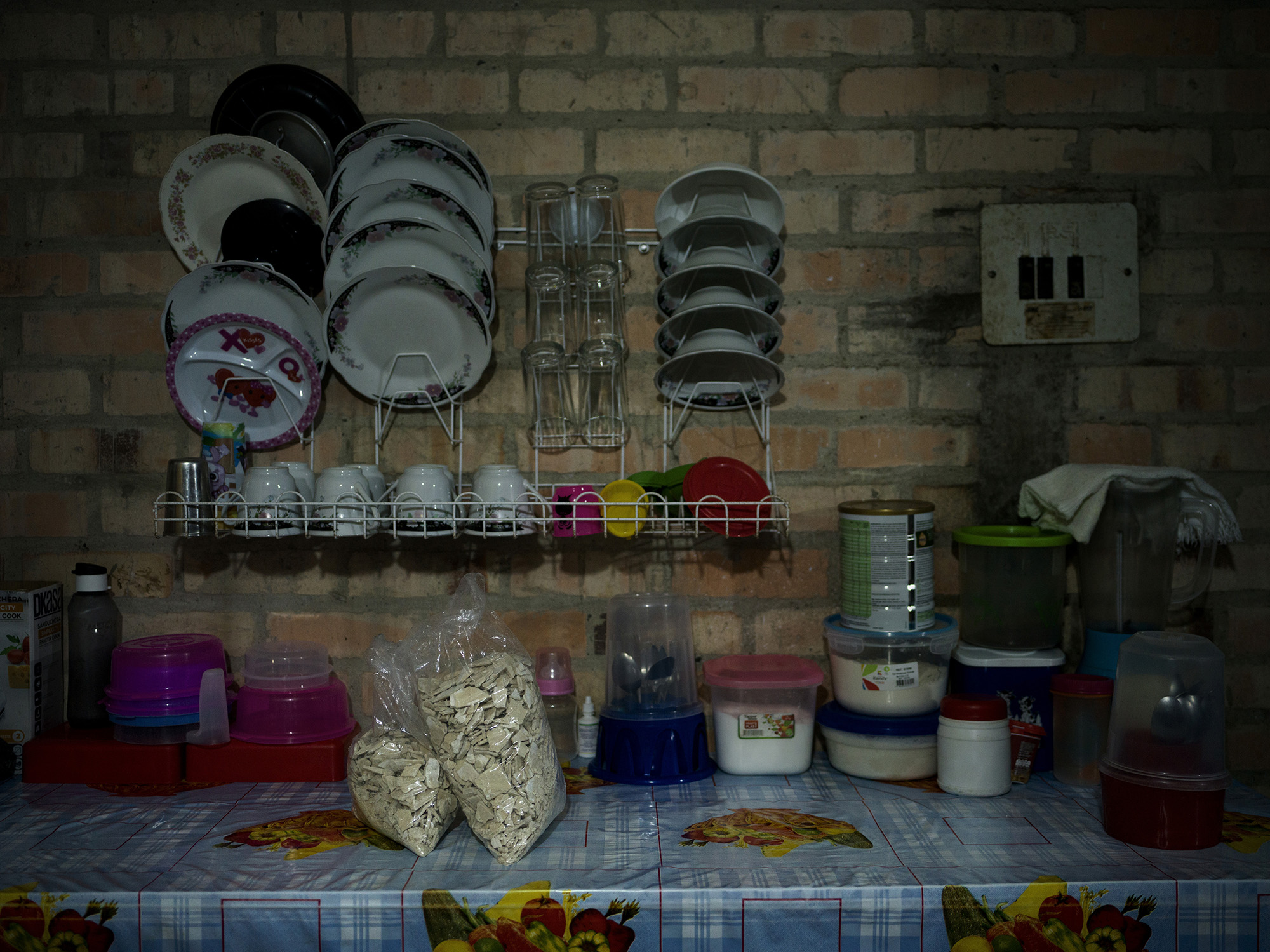
In a small farmhouse in Cauca, 2.5 kilos of coca paste sit in a plastic bag on the kitchen table. A middleman will soon collect it, bound for a second-phase lab where it will be refined into cocaine powder for export. The farmer receives $450 per kilo of paste but must cover the cost of 700 kilos of leaves and chemicals. In the lab, the paste is reduced to 0.8 kilos of cocaine powder, pushing the price up to $1,250 per kilo— far less in bulk. By the time it reaches the US or Europe, the cocaine is diluted and sold for $60 to $150 a gram—possibly 10-25,000 times more than what the farmer was paid. Cauca department, Colombia
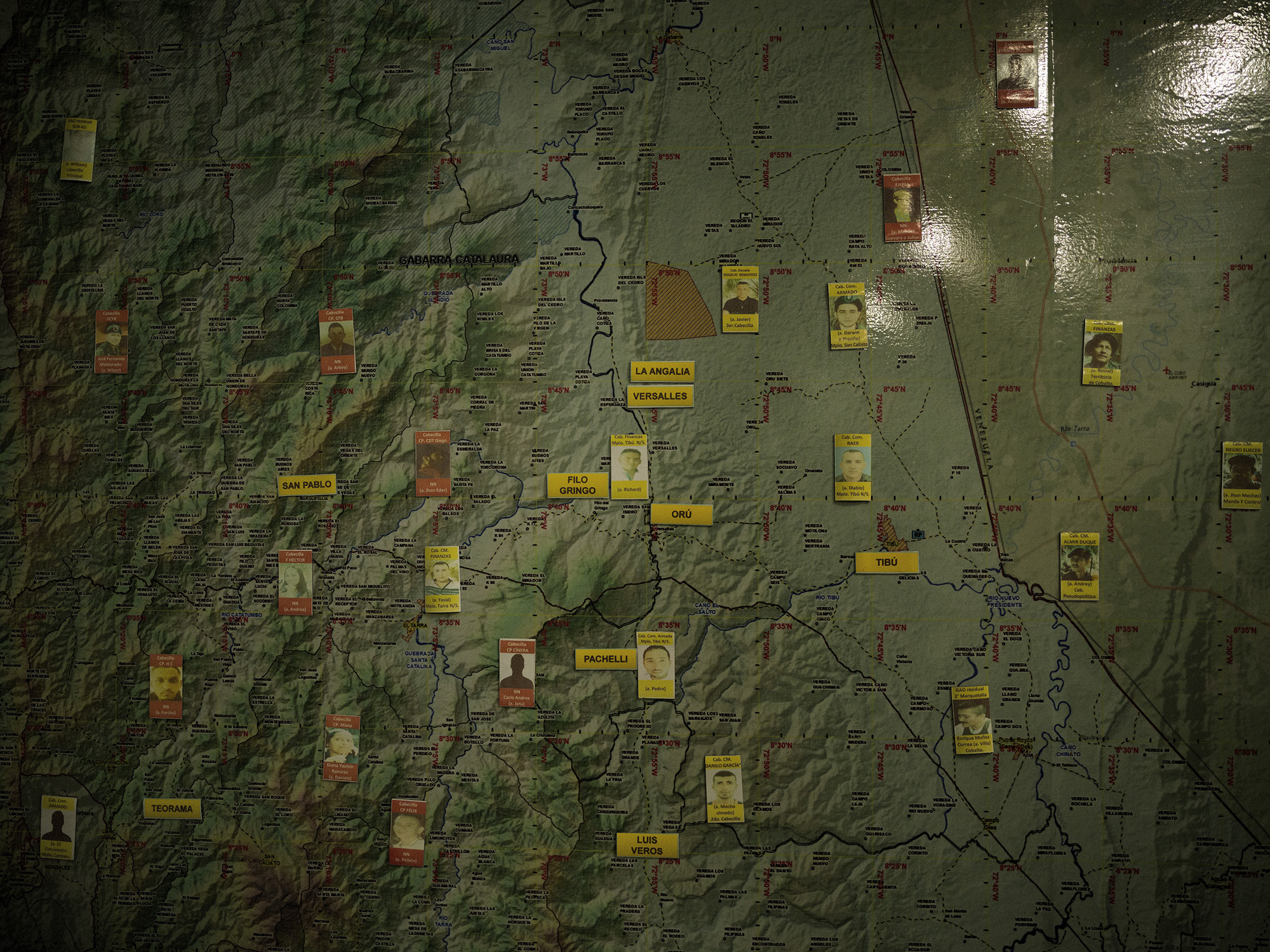
The faces of various capos—drug lords—are pinned across a military map of Catatumbo, one of the world’s most prolific cocaine-producing regions. Each capo controls a slice of territory, and with it, a share of the lucrative drug trade. For local farmers, daily life means navigating a volatile landscape. Balancing between warring militias like the ELN, FARC dissidents, and the Clan del Golfo (AGC), while also contending with sporadic raids and operations by the Colombian Army.
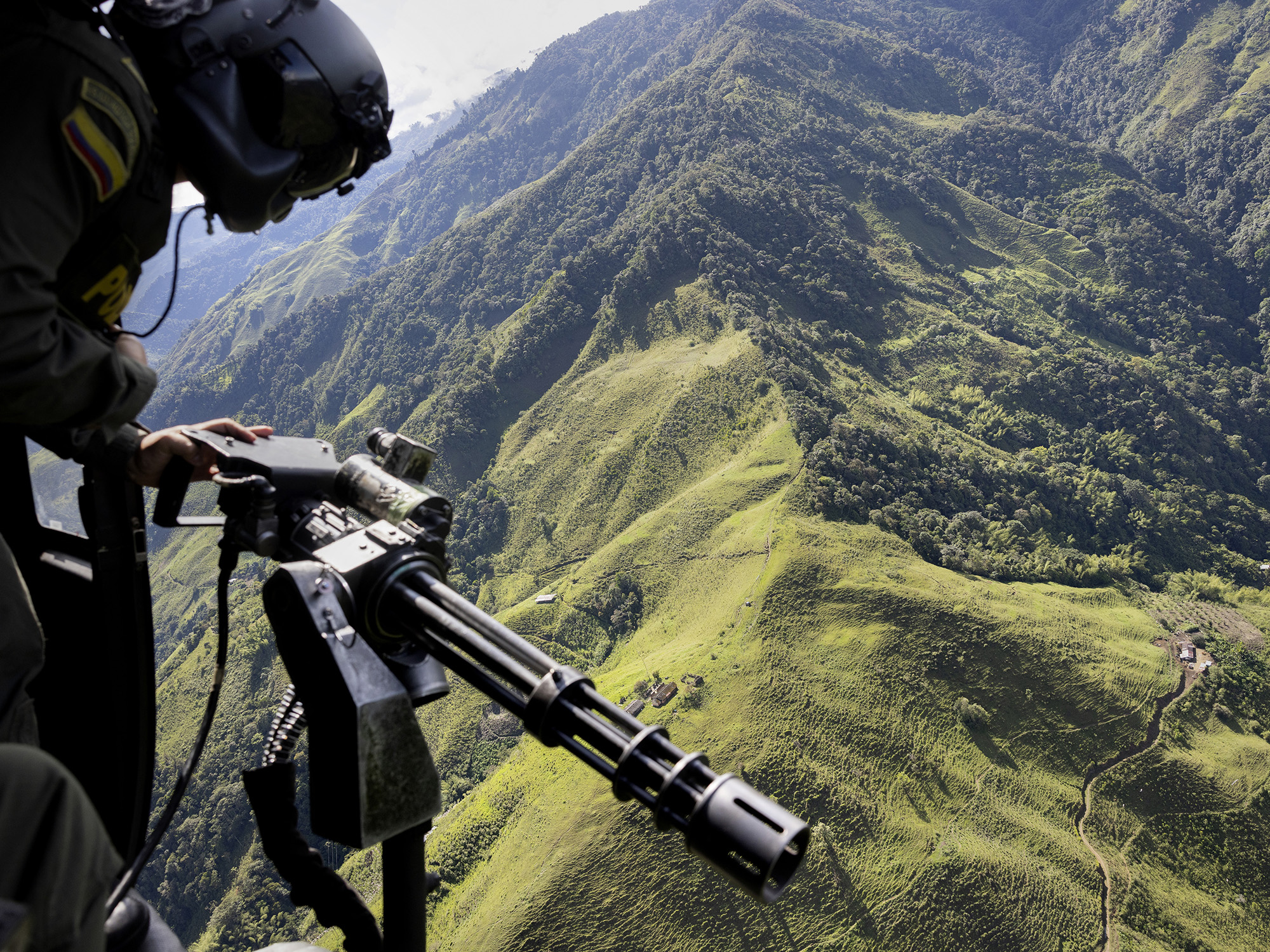
Los Comandos Jungla, an elite unit of Colombia’s anti-narcotics police, conduct operations to dismantle drug laboratories across the country. Their current mission targets the mountainous region near Sipí in Chocó, an area predominantly controlled by the left-wing guerrilla group Ejército de Liberación Nacional (ELN).
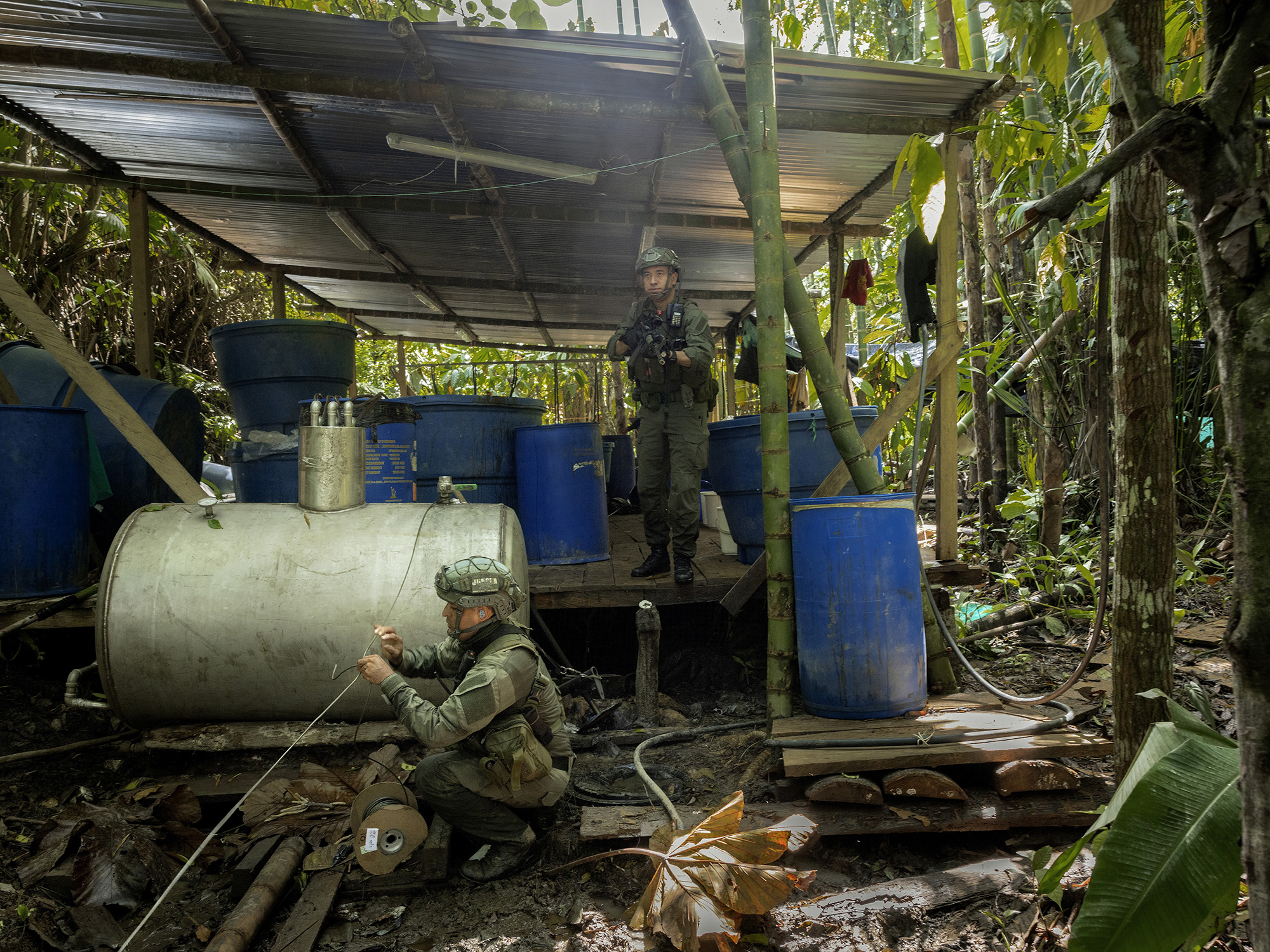
It’s a high-value target, but time is running out. Major Herrera and his police unit have only fifteen minutes to attack, secure, collect evidence, and set up explosives at this rare second-phase cocaine laboratory, capable of producing up to 500 kilos in just a week. The officers fear a counterattack or mass mobilisation of locals could occur at any moment. Despite being well-trained and heavily armed, the police force can easily be outnumbered, or caught by surprise if the ELN guerrilla launch an assault from the dense jungle.
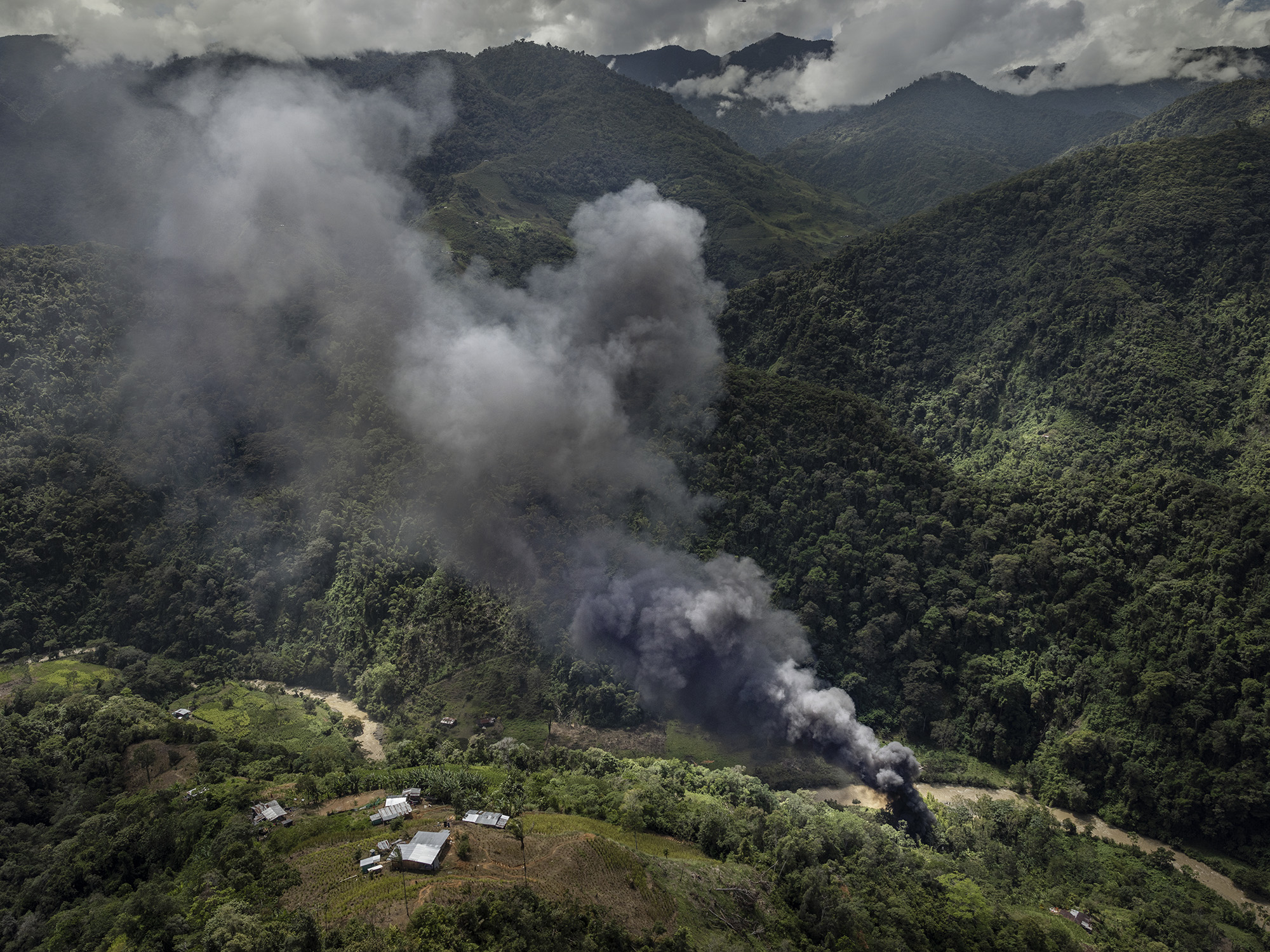
Smoke rises as the second-phase cocaine lab near Sipí explodes into flames. Within hours, Los Comandos Jungla have destroyed five coca paste sites and a high-value facility producing the final powder. Still, the mood is subdued. The operation required four helicopters and fifty-four of Colombia’s most highly-trained police officers—all exposing themselves to great danger. One officer expresses his disbelief: ‘By tomorrow, they can start producing again.
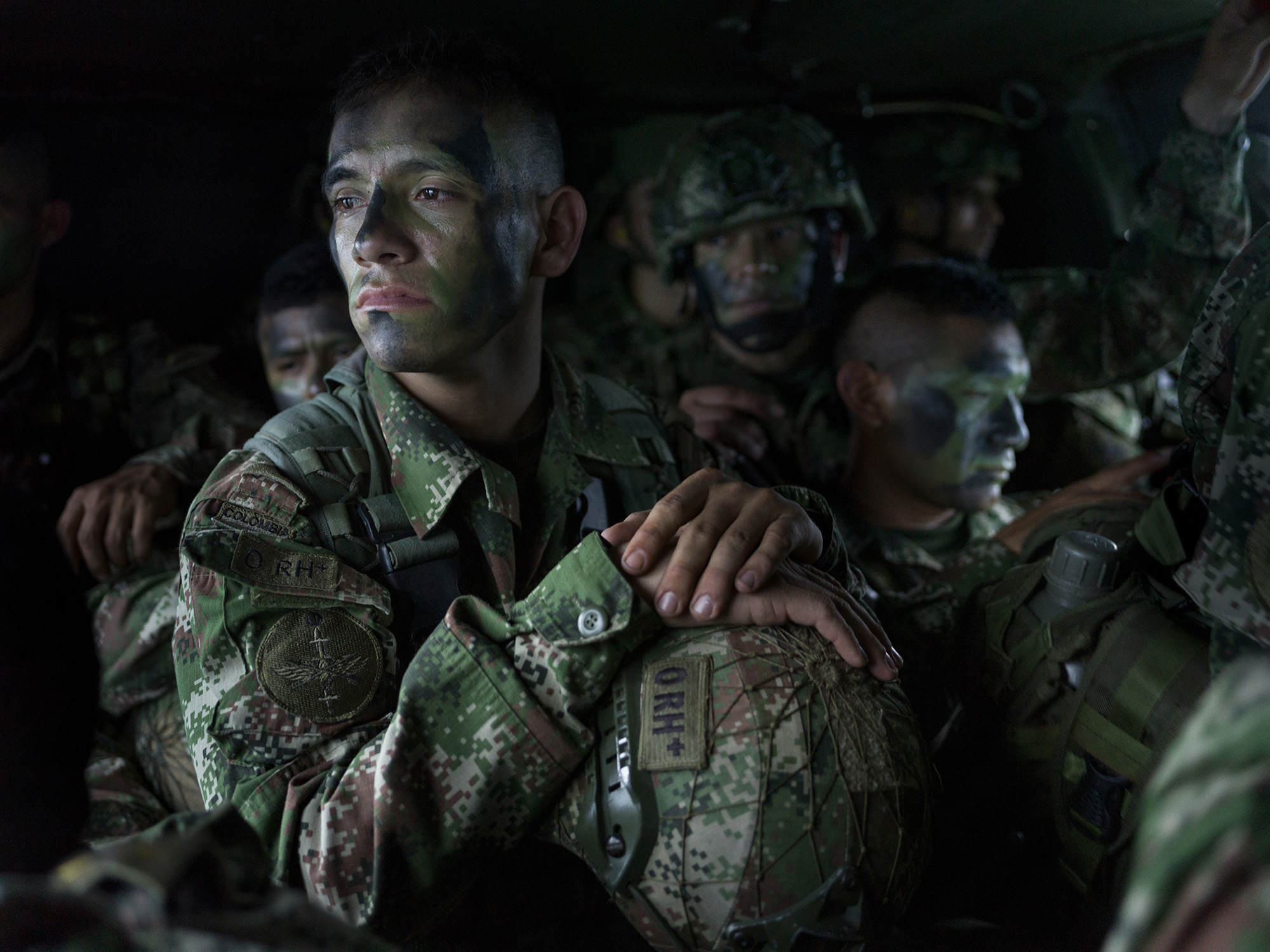
Soldiers leaving after a mission to destroy a plantation of coca crops.
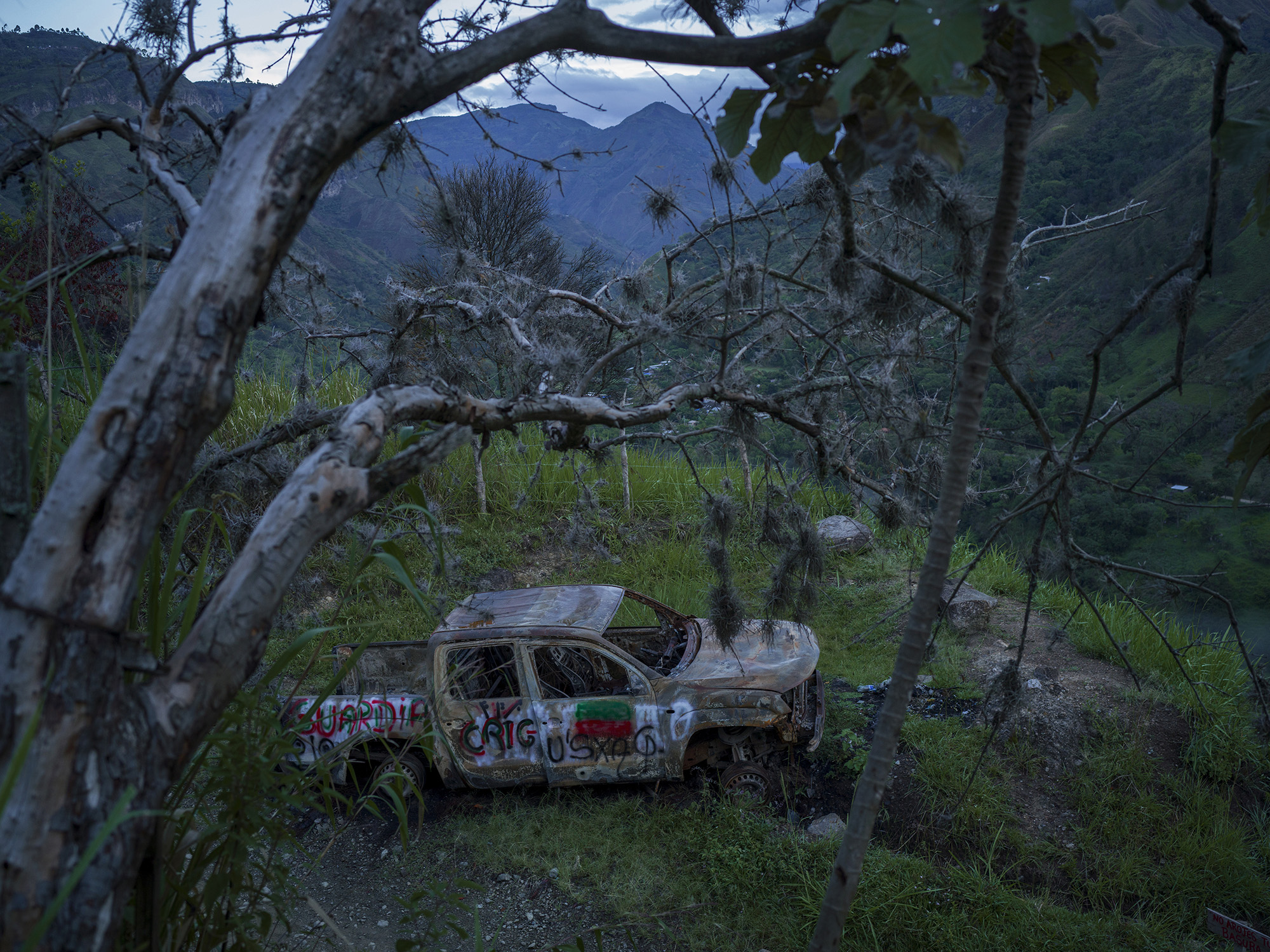
A burned out car after a firefight between illegal armed groups. The firefight involved the ELN guerrilla group which was trying to dislodge the Dagoberto Ramos Front that currently controls the area. The ELN was repelled and their burned out vehicle left behind, marked with graffiti by the Dagoberto Ramos. In turn, the Indigenous community repainted the car in the red and green colours of their own organisation CRIC, makign the point that this area belongs to them.
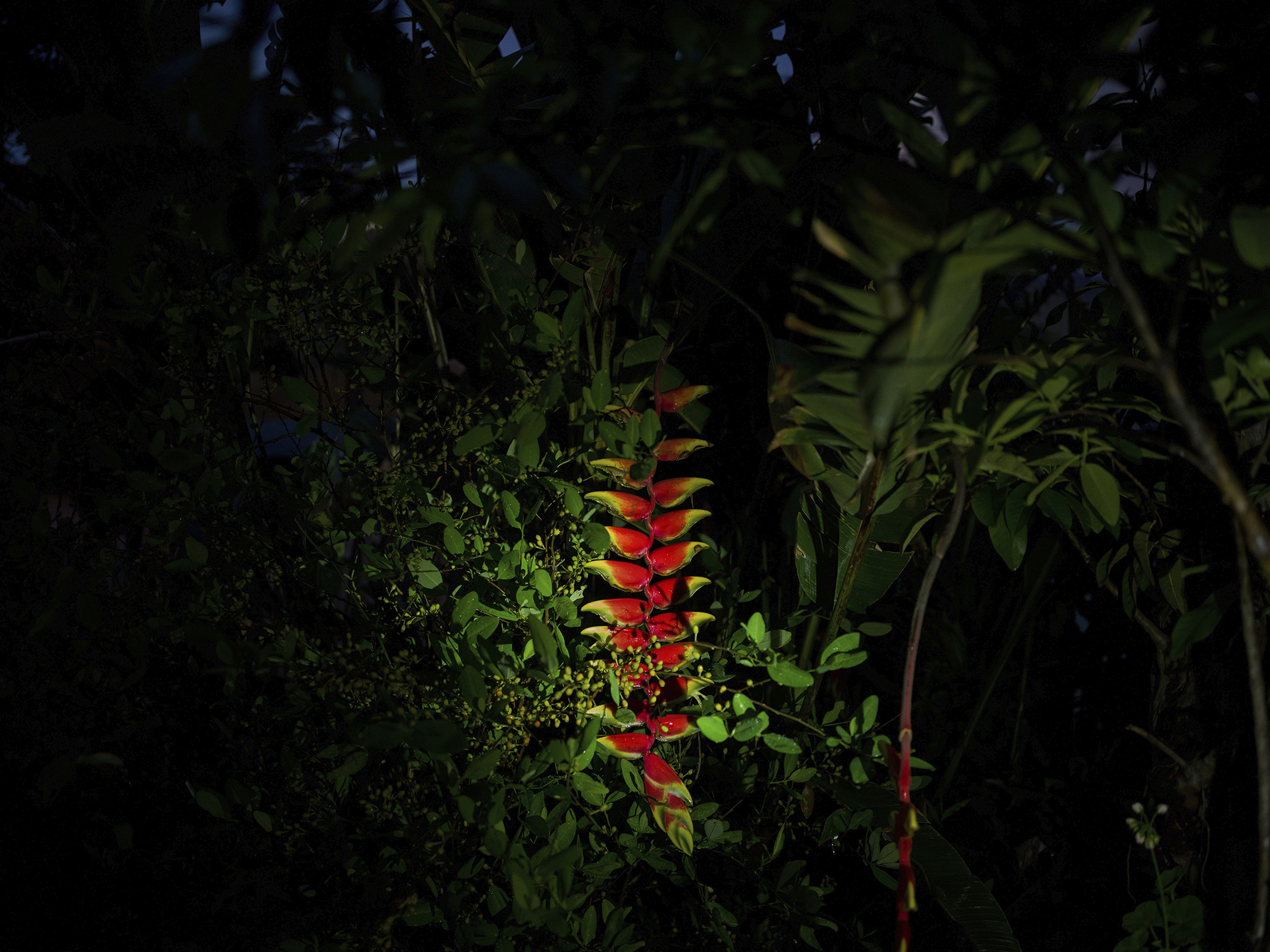
A coca plant in a private garden next to a banana palm (the flower). The sacred coca plant remains central to Indigenous life, revered for its medicinal and spiritual properties, and often cultivated in kitchen gardens. The coca plant, Erythroxylum coca, has been widely used by Indigenous groups across the Andes and Amazonas regions for at least 8,000 years. The plant is considered sacred, worshipped by many for its medical and spiritual benefits. Cauca region, Colombia
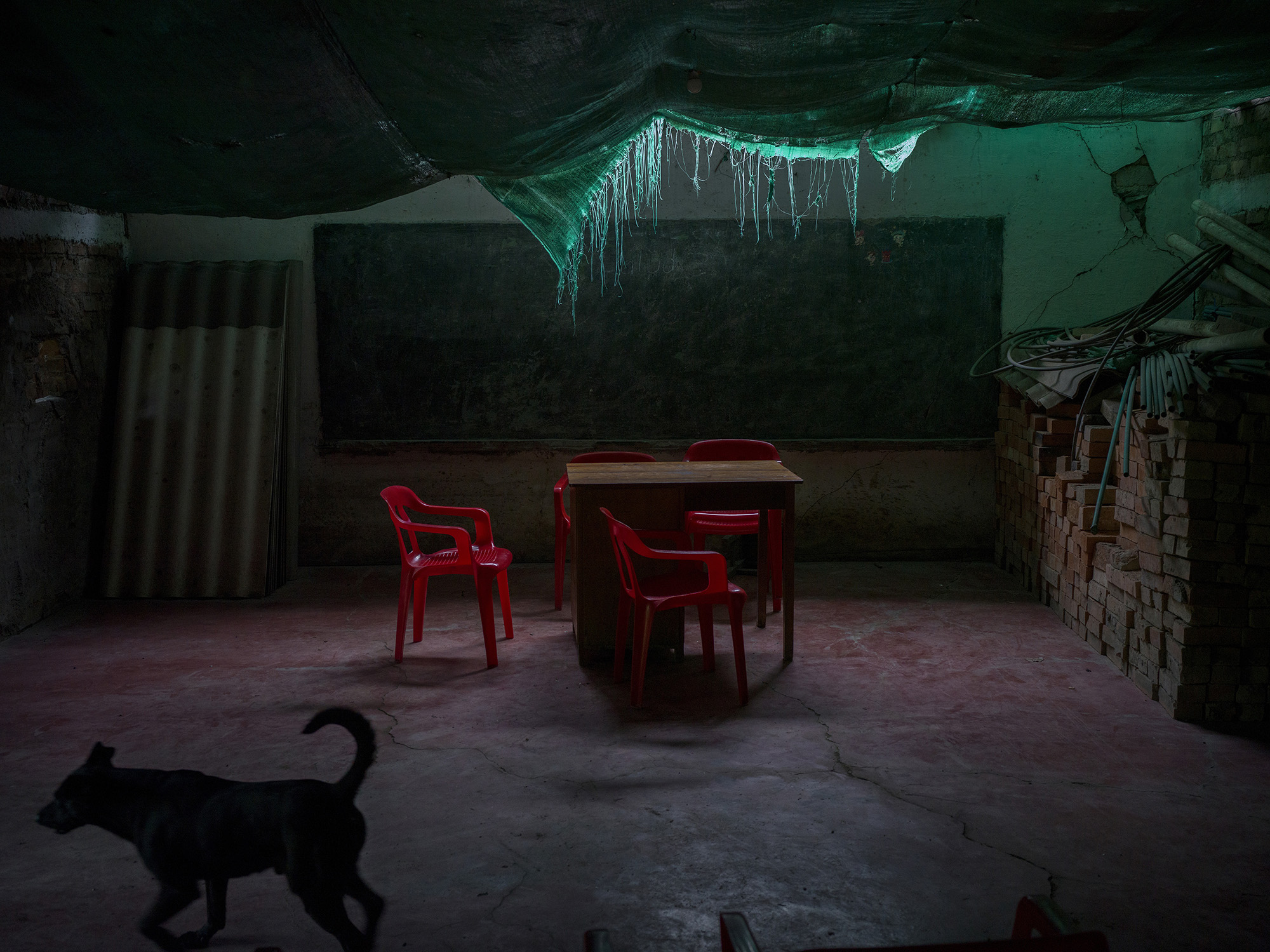
A house formely used as the village school. Colombia's Cauca region is admired for its rich soil and culture, but also respected for its well organised Indigenous communities and their long-standing resistance in defence of their ancestral land, traditional customs, and the right to self-governance. In villages like this one, the sacred coca plant remains central to Indigenous life
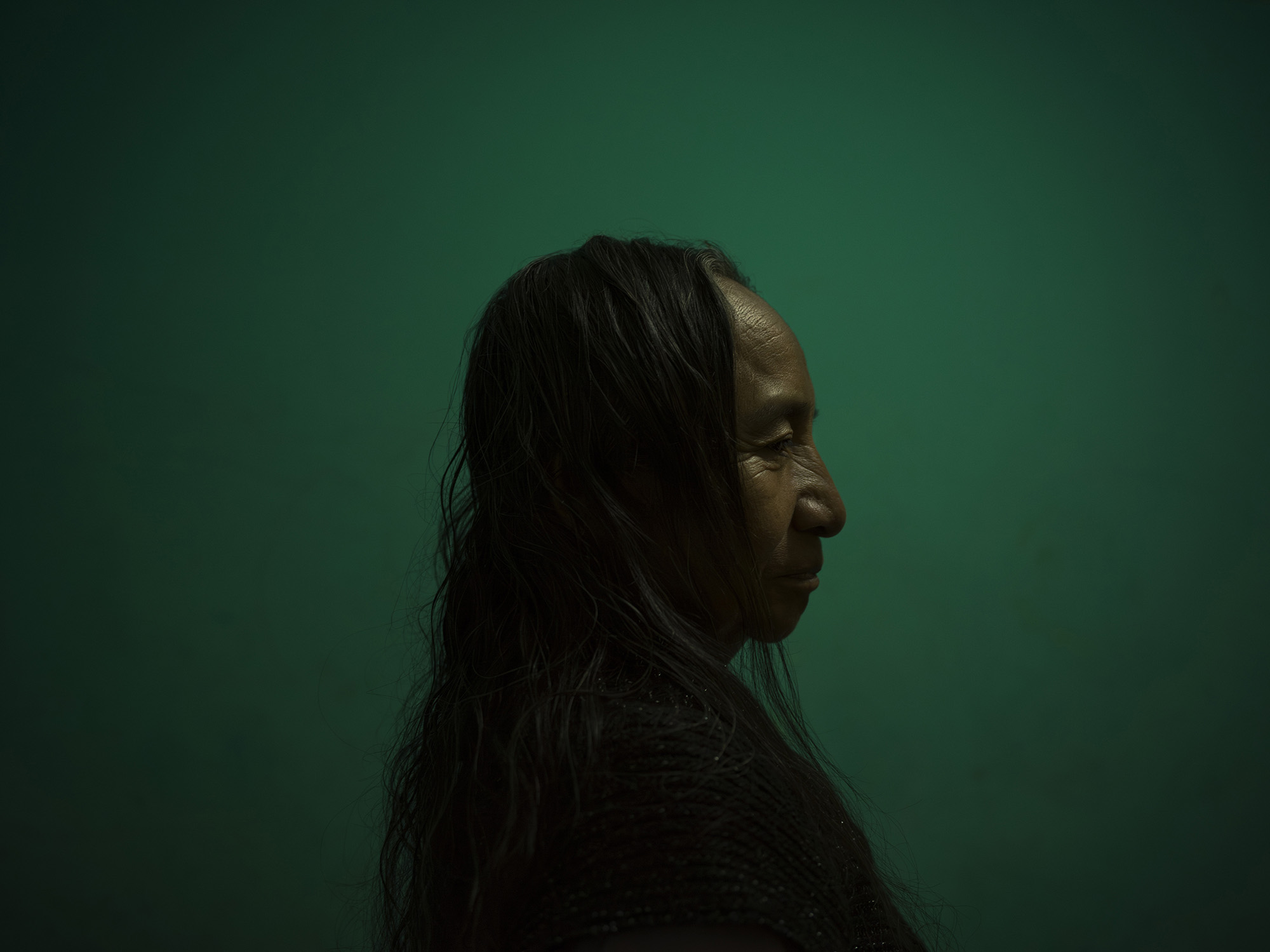
Estela, an indiginous community leader in the Cauca region. Colombia's Cauca region is respected for its well organised Indigenous communities and their long-standing resistance in defence of their ancestral land, traditional customs, and the right to self-governance. In villages like this one, the sacred coca plant remains central to Indigenous life, revered for its medicinal and spiritual properties, and often cultivated in kitchen gardens. But the rise of the cocaine industry has changed this dynamic. Now, money and new jobs have started pouring into these mountain communities, followed by the armed groups.
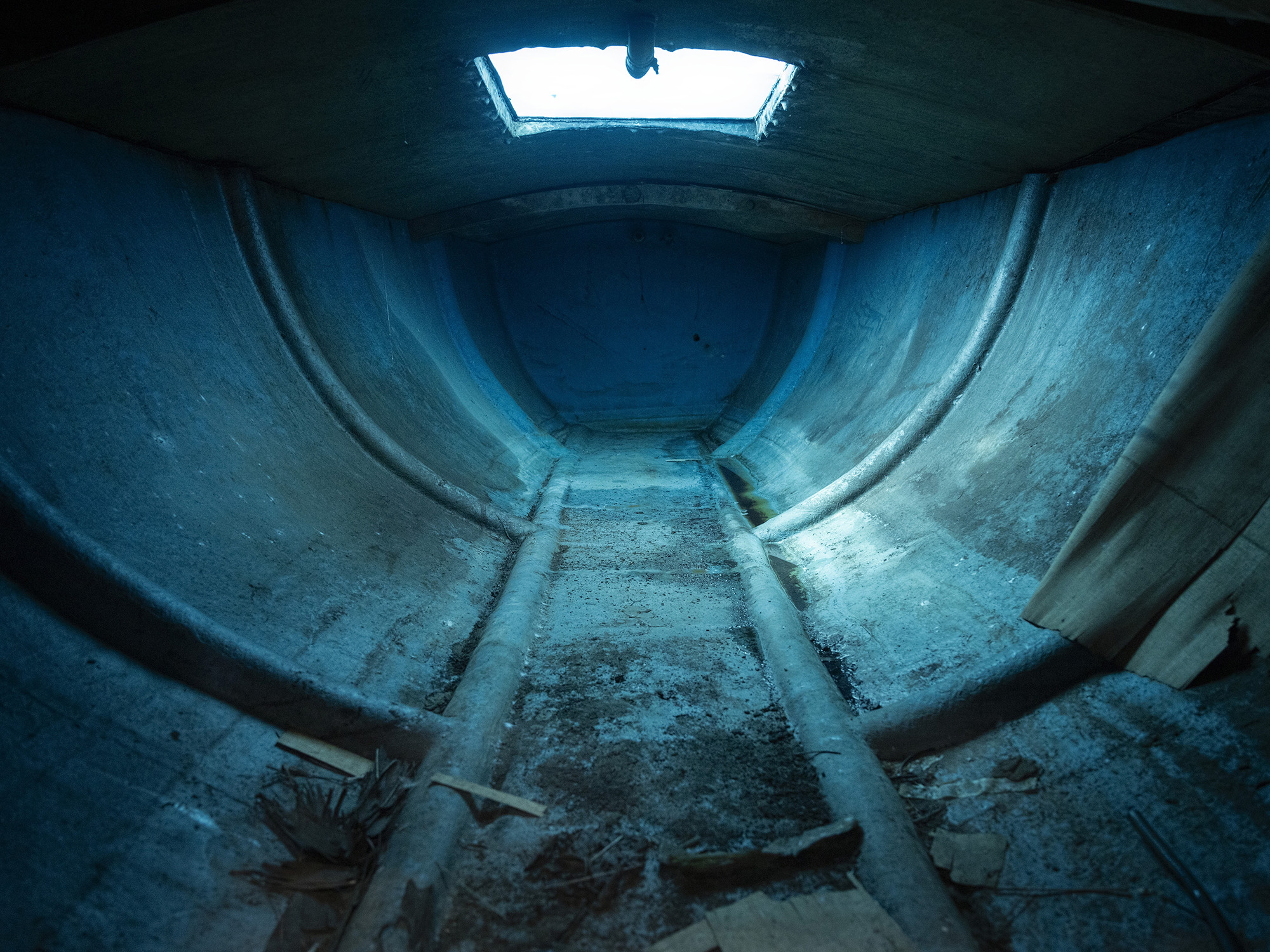
A narco-submarine near Tumaco, on Colombia's Pacific coast. Most cocaine is smuggled out in containers, on speed boats or inside one of these home-made submarines, which can carry 3-7 tonnes of cargo up the coast from Colombia to destinations such as Michoacan in Mexico, arriving two to three weeks later. As coast guard surveillance and radar systems improve, traffickers are constantly adapting and innovating. Colombia has tightened security and the port city of Guayaquil in neighbouring Ecuador is now seeing a big rise in smuggling. These submarines became known in the late 80s and have since become more and more sophisticated. Some are actual submarines that will navigate well below sea level, and some are semi-submersible vessels that float at sea level with the cockpit above the water to secure navigation and fresh air for the crew. During 2025, the U.S. military carried out at least 35 lethal strikes, killing around 115 people, on vessels it claims were trafficking drugs in the Caribbean and the eastern Pacific. Drug smuggling has been used as a central justification in U.S. efforts to accuse Venezuela's president, Nicolas Maduro, despite the fact that Venezuela does not produce cocaine and that only an estimated 5-8 percent of cocaine is trafficked through the country.
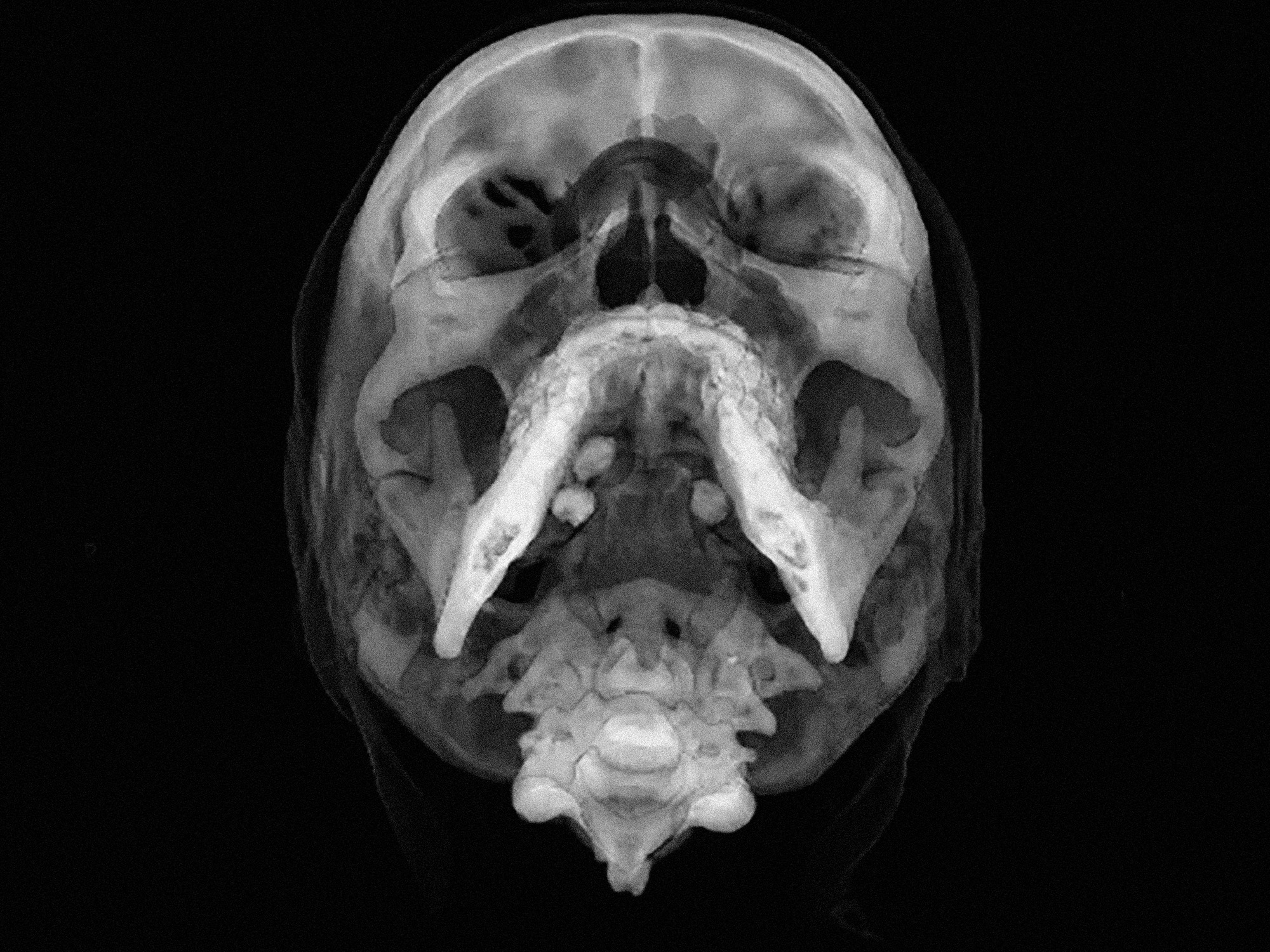
An X-ray of a male passenger who is carrying cocaine capsules concealed under his tongue. As part of the global fight against smuggling, travellers and goods are subjected to extensive inspections, examinations, testing and scanning. These images were taken by customs, anti-narcotics police and investigators in South America and Europe
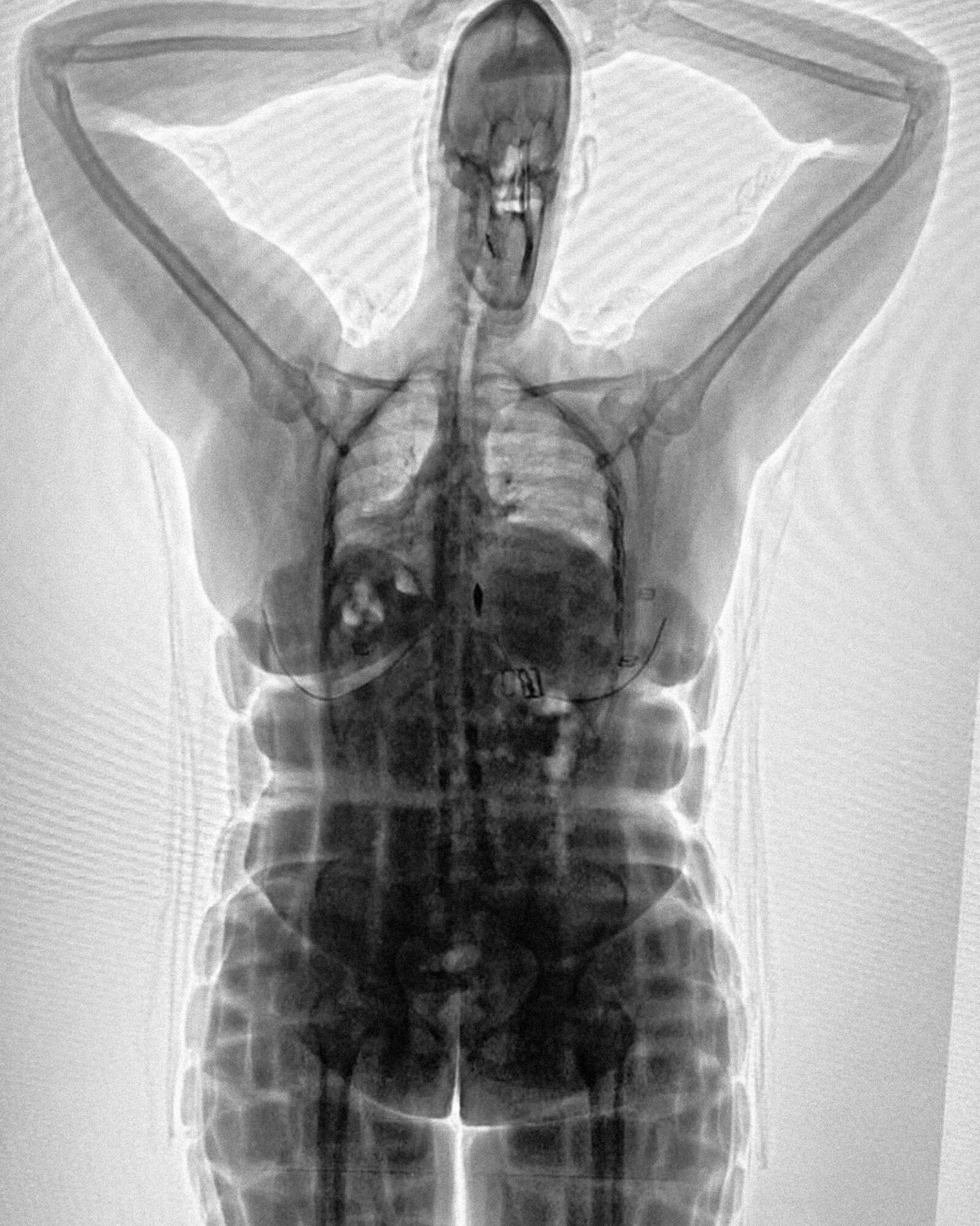
An X-ray of a female passenger who is carrying cocaine concealed around her abdomen. As part of the global fight against smuggling, travellers and goods are subjected to extensive inspections, examinations, testing and scanning. These images were taken by customs, anti-narcotics police and investigators in South America and Europe.
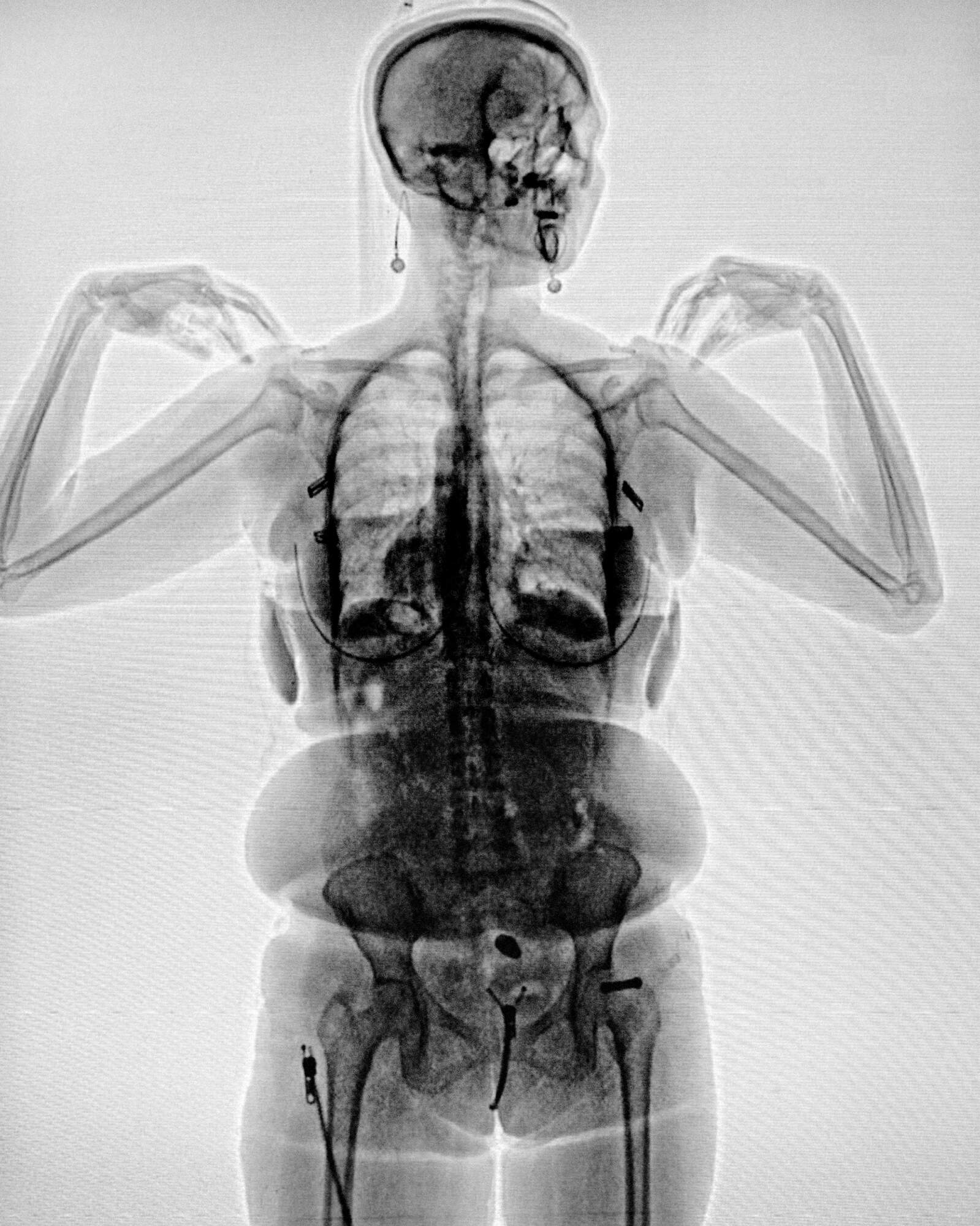
An X-ray of a female passenger who is carrying cocaine concealed around her abdomen.
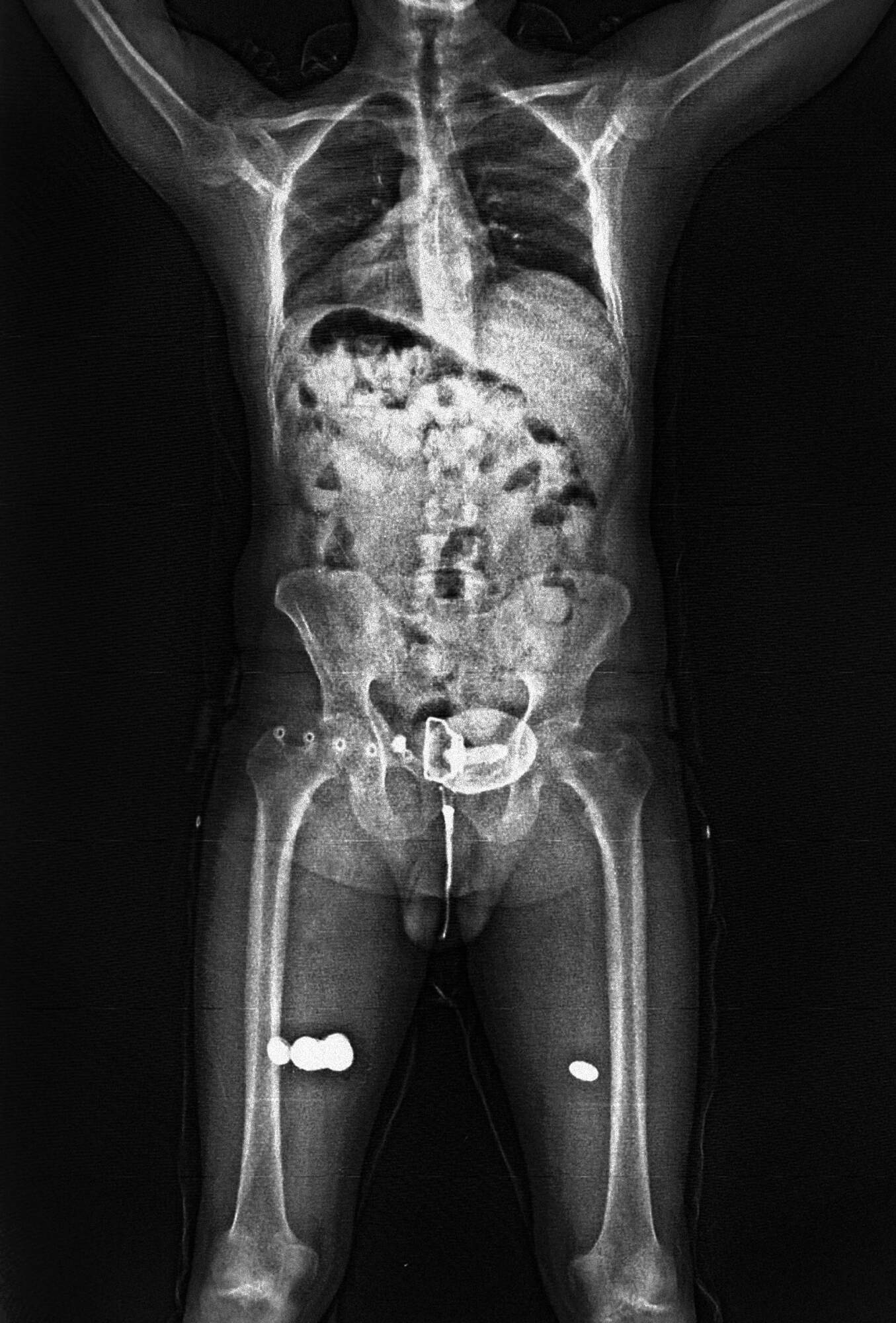
A male passenger with cocaine capsules concealed inside his body.
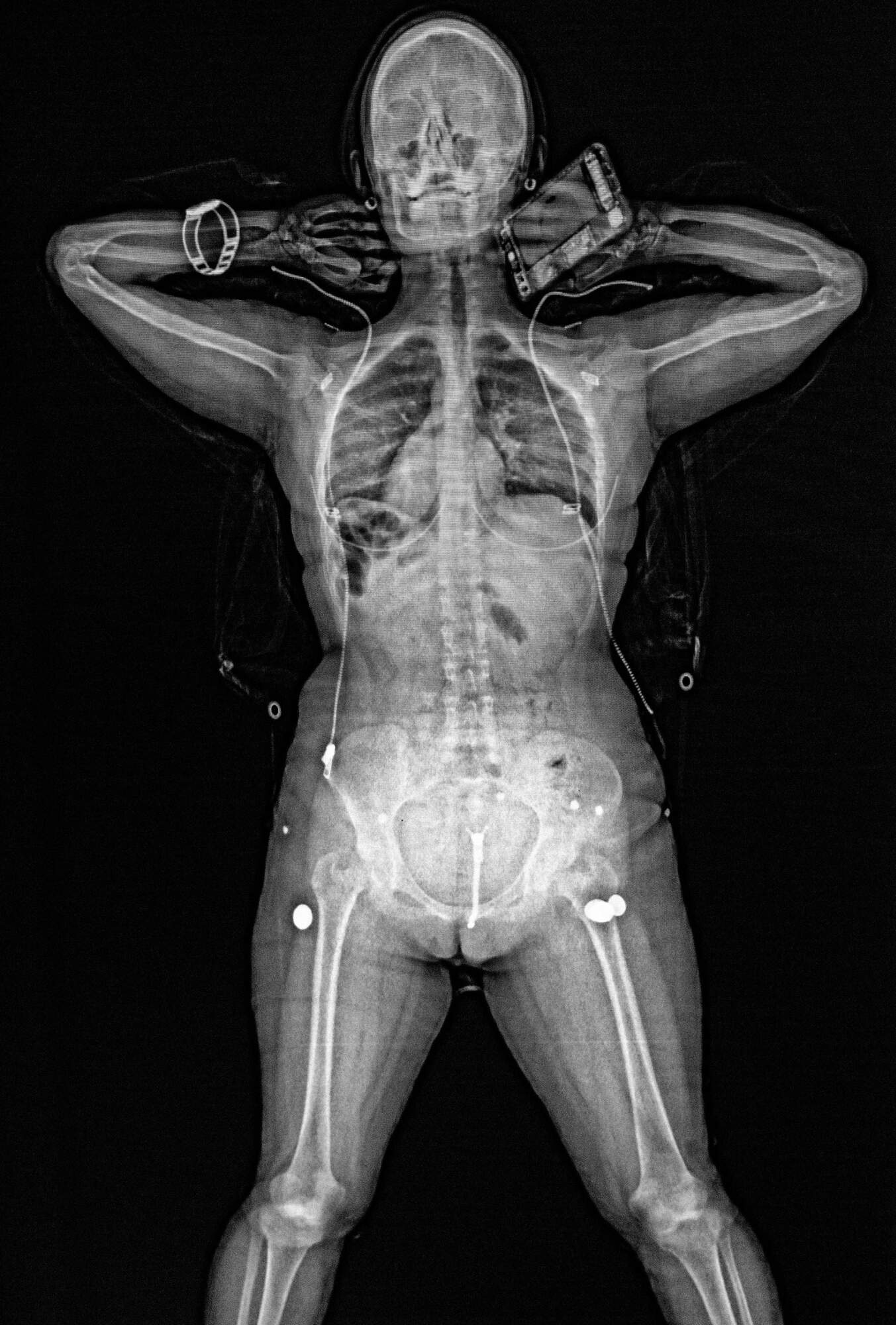
A female passenger is questioned, inspected and scanned, but nothing illegal is found. As part of the global fight against smuggling, travellers and goods are subjected to extensive inspections, examinations, testing, and scanning.
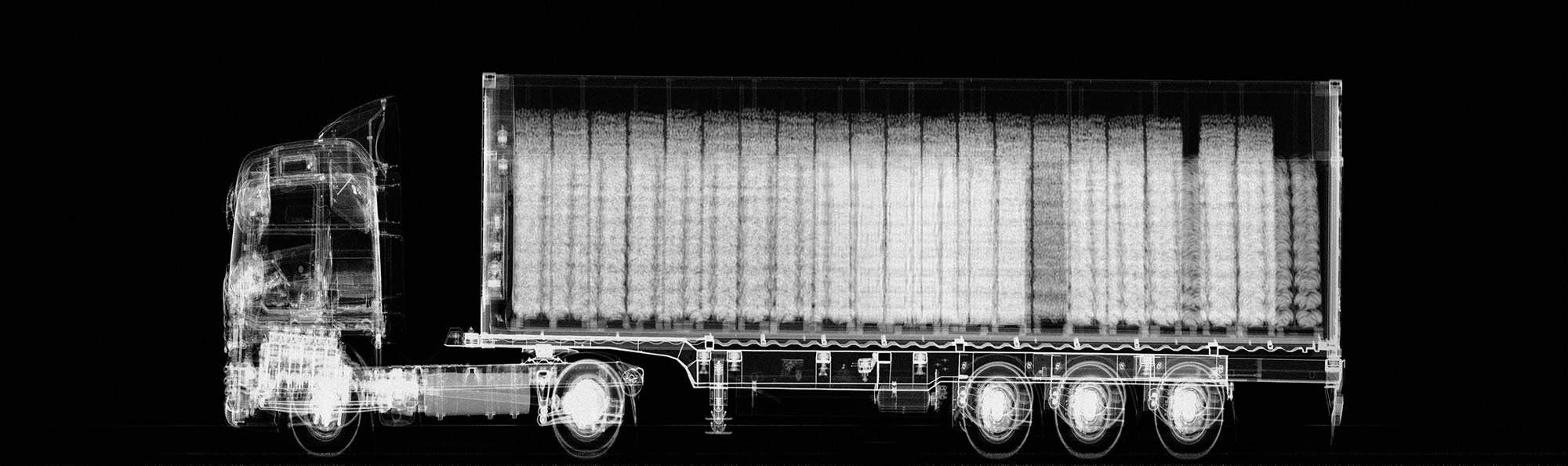
X-ray of a container carrying several tonnes of cocaine hidden between boxes (the darker areas in the centre-right) with bananas from Colombia. These images were taken by customs, anti-narcotics police, and investigators in Colombia
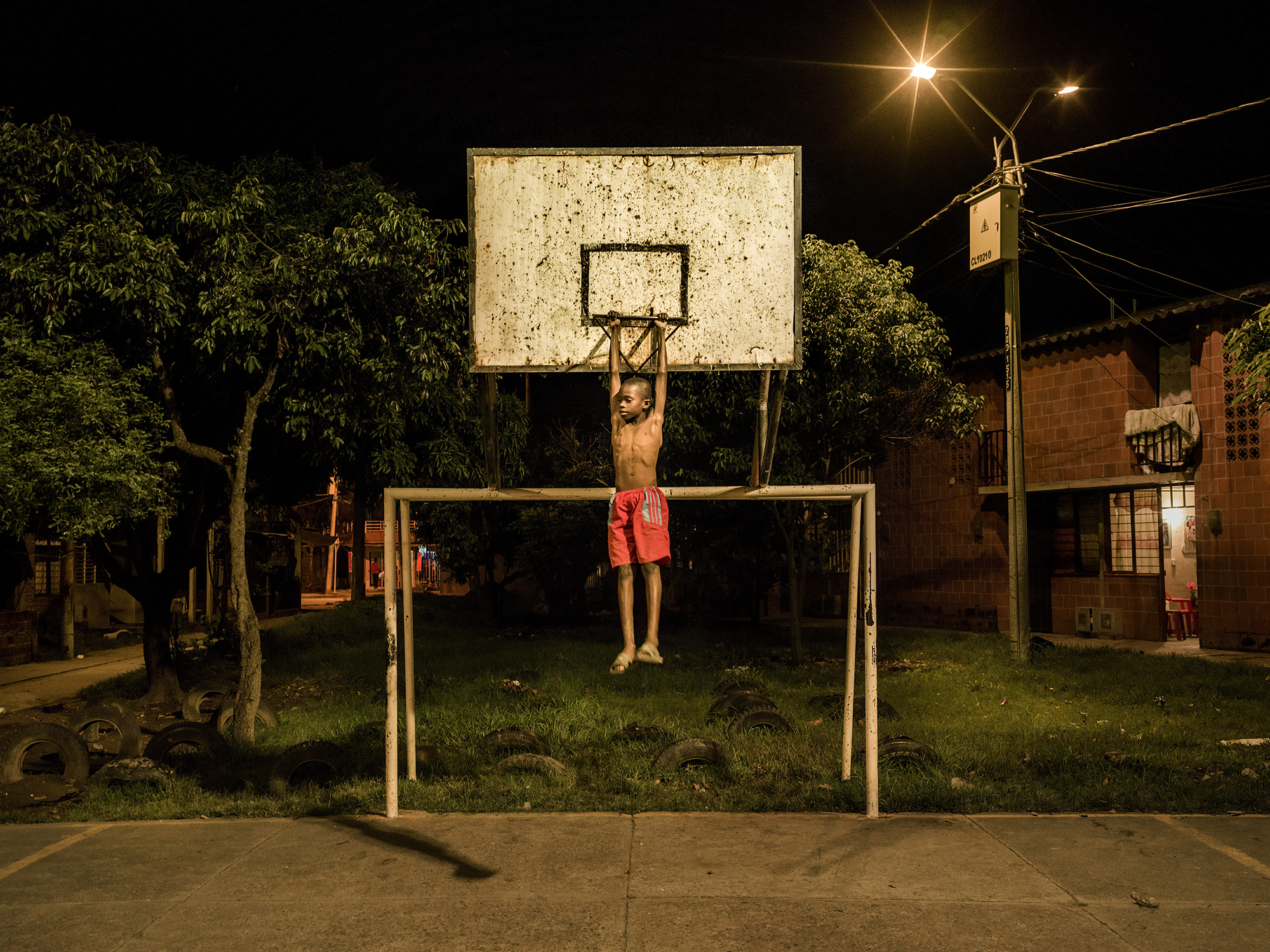
Nine-year-old Didiller Angulo, hangs on a bastketball hoop in Potrero Grande. Potrero Grande, a neighbourhood on the outskirts of Cali, lies beside the Cauca River— a key corridor for cocaine smuggling. It was likely this strategic location that attracted one of Colombia’s most powerful drug traffickers, Juan Carlos Ramírez Abadía, known as ‘Chupeta’ (Lollipop), who purchased the land years ago. Following Chupeta’s arrest, his land was seized, and his former ranch along the river was transformed into housing for families displaced by the Colombian civil war. While the new homes offered shelter, the deep-rooted poverty, unemployment, and social insecurity remained. As people realised they were living atop a cocaine corridor—new ambitions and alliances began to form. Despite their differences, street gangs and cartels are closely intertwined. Gangs receive backing and drugs for retail sale, while the cartels need the foot soldiers to make the cocaine flow unhindered to its destinations.
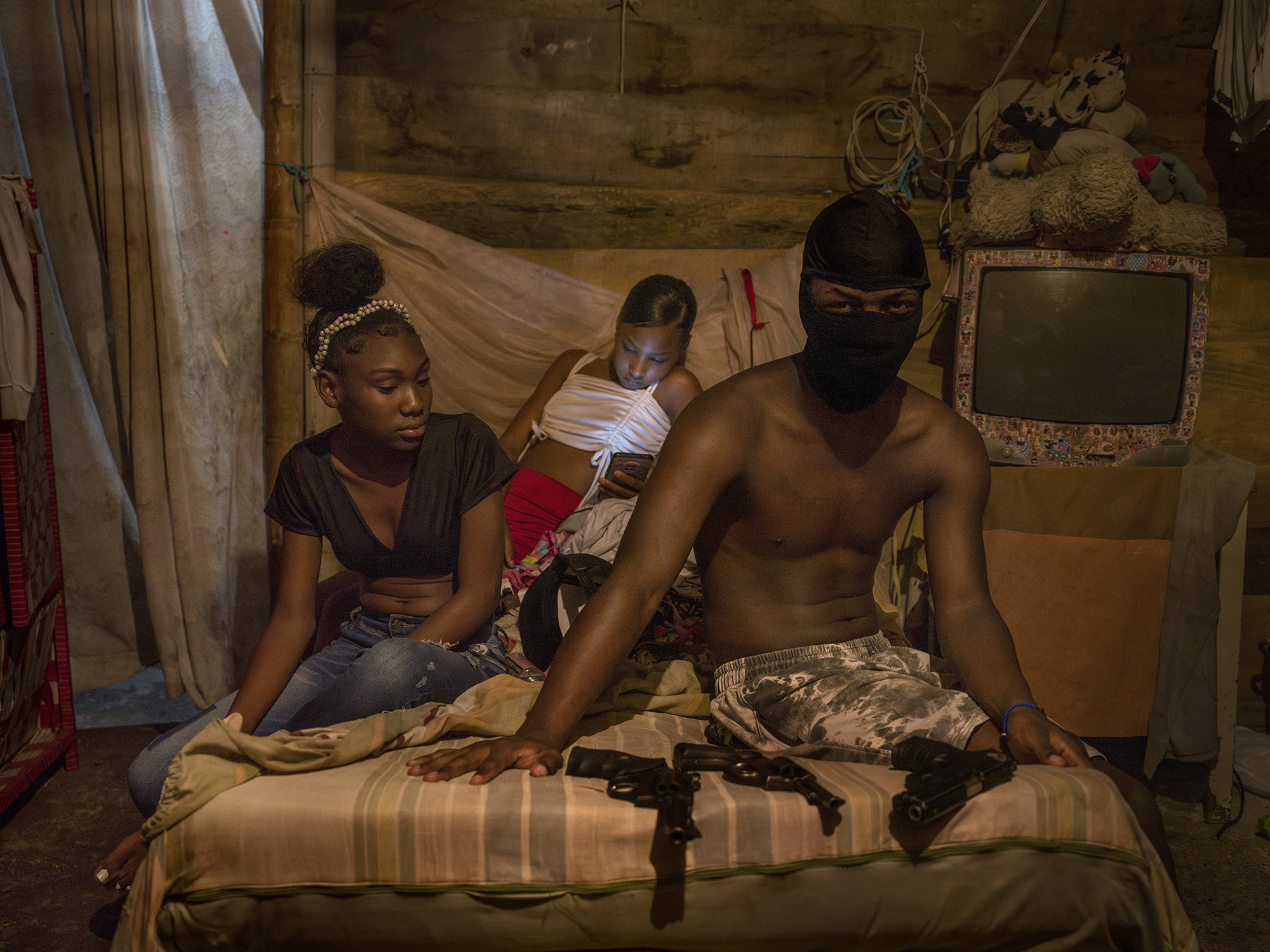
Twenty-two-year-old JJ sits on a bed in Potrero Grande, Colombia. He works for El Viejo (The Old Man), who from time to time hands him a photograph, a name, and a location. And anywhere between $1100 and $2200 when the job is done. Over the past year, JJ carried out fifteen killings.
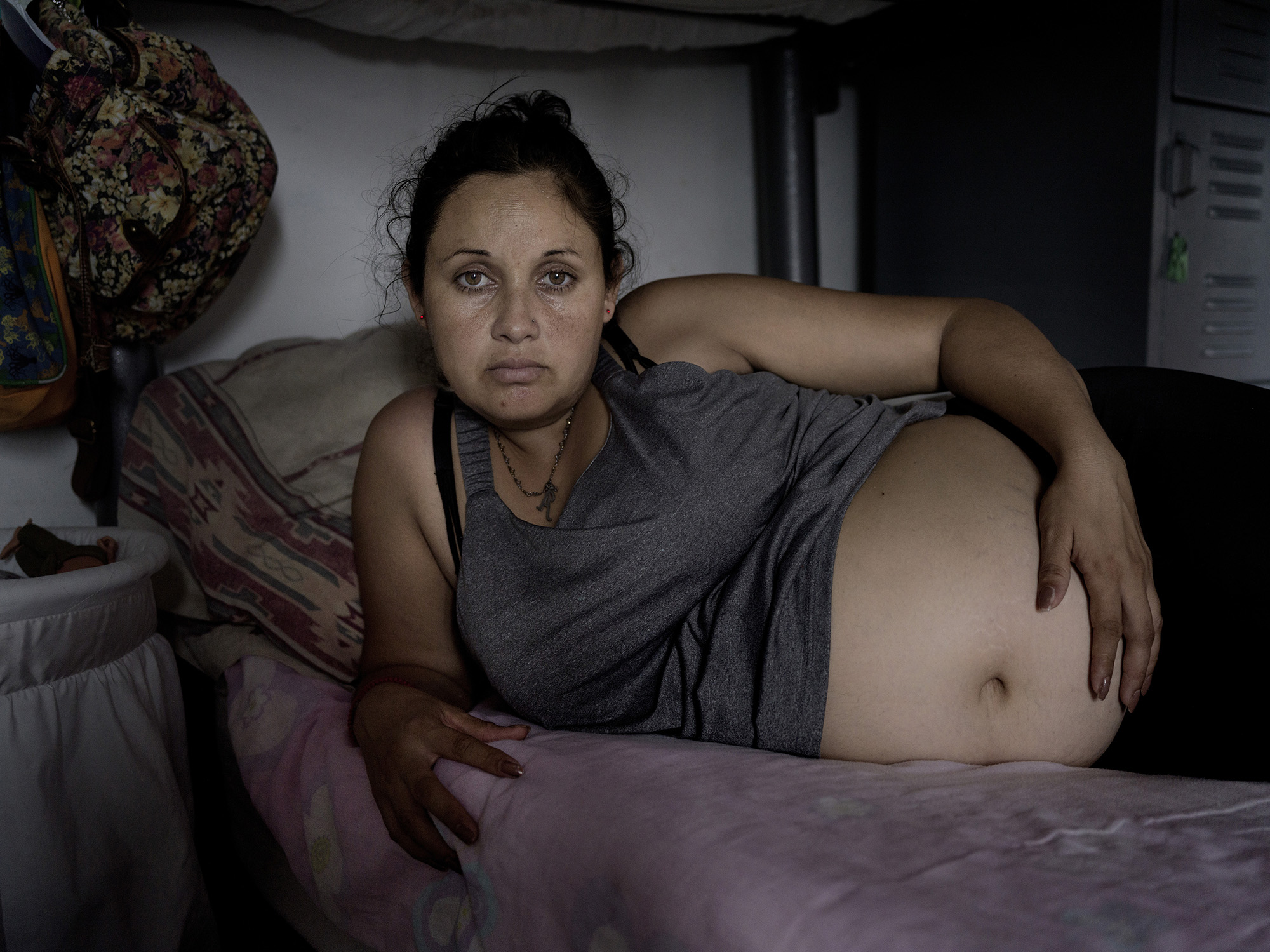
Thirty-one-year-old Adriana Itzel Rangel Arrilaga, is eight months pregnant and on the run with her two sons. She has fled to Ciudad Juárez from her home in Guerrero, Mexico, due to cartel violence and its forced recruitment of young teenagers— something Adriana fears could happen to her sons. Her dream is to reach the US before giving birth
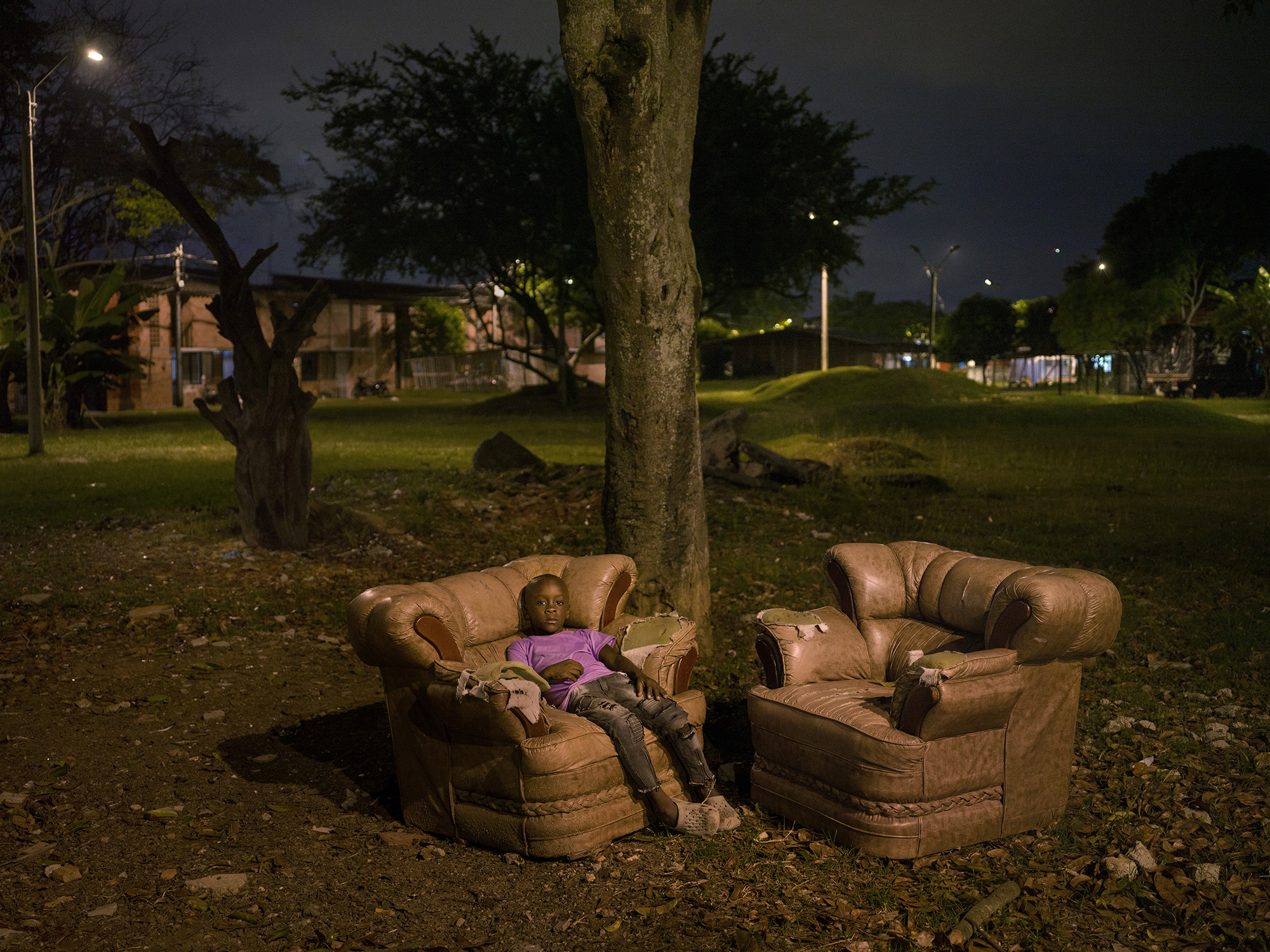
Jhonny sitting in a chair. On the night of 16 May 2020, a group of men arrived in Potrero Grande and began digging up this park where the drug lord Chupeta's ranch once stood. By morning, the men had vanished. Beneath the torn up grass, strange hidden concrete chambers had been exposed, opened and emptied. Until his capture in 2007, Chupeta lived in a luxury mansion in Brazil, surrounded by maximum security and almost unrecognisable due to multiple plastic surgeries. In addition to his 150 mobile phones, authorities discovered secret stashes of treasure worth at least 90 million USD in cash and jewelry around his many properties, often hidden inside floors, walls, or underground caskets. Colombia
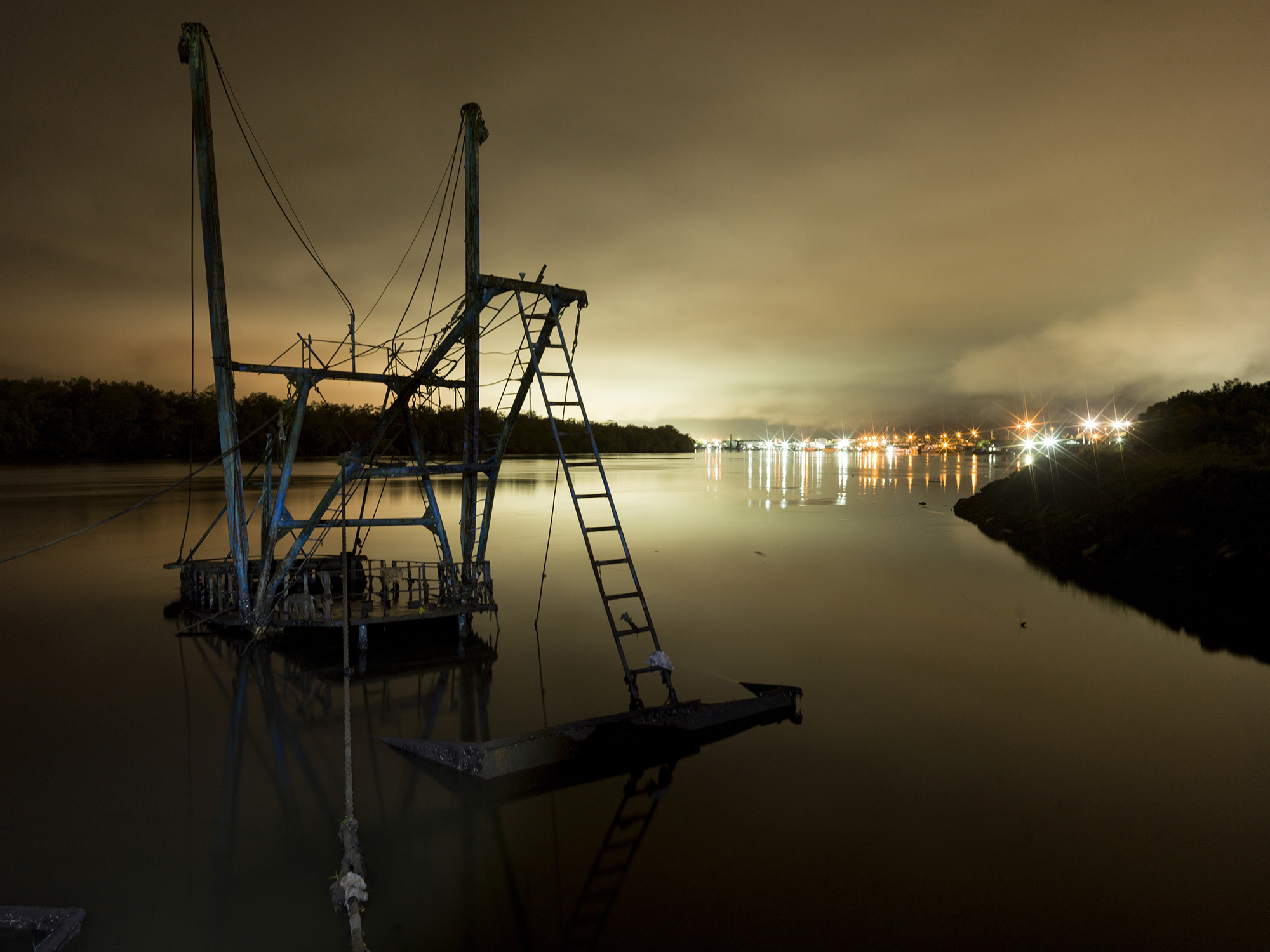
A former fishing dock in Buenaventura—just a few hours from Potrero Grande and Cali—has been taken over by smugglers, according to the local police. The smugglers load tonnes of cocaine onto fishing boats, which are later met at sea and offloaded onto high-speed vessels bound for Mexico. Colombia
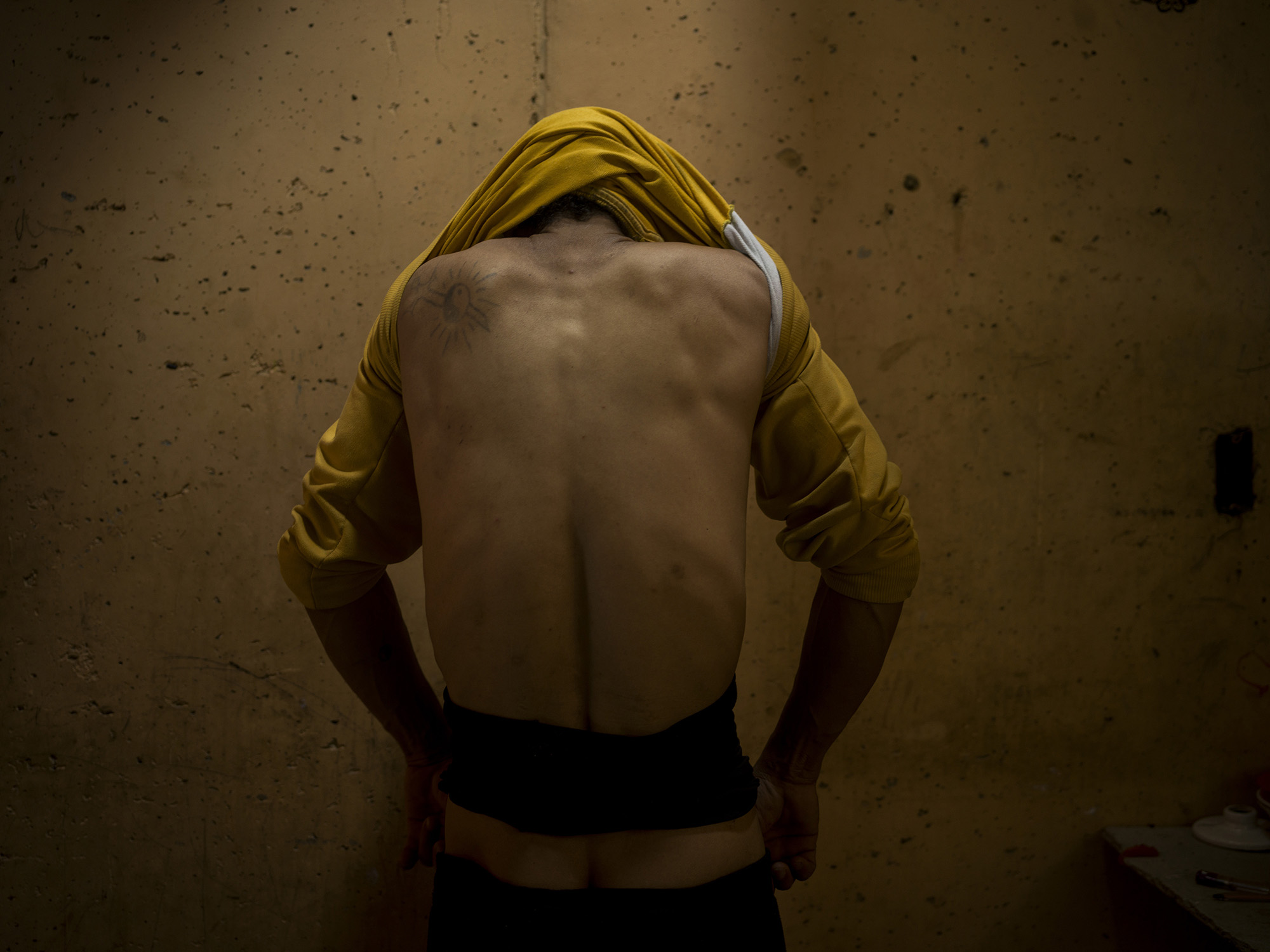
Juan David was shot multiple times as punishment for selling cocaine without permission in Potrero Grande. He survived, but now lives with constant pain and limited mobility. Struggling to feed his wife and four children, he’s returned to dealing— this time with the gang’s approval. Colombia
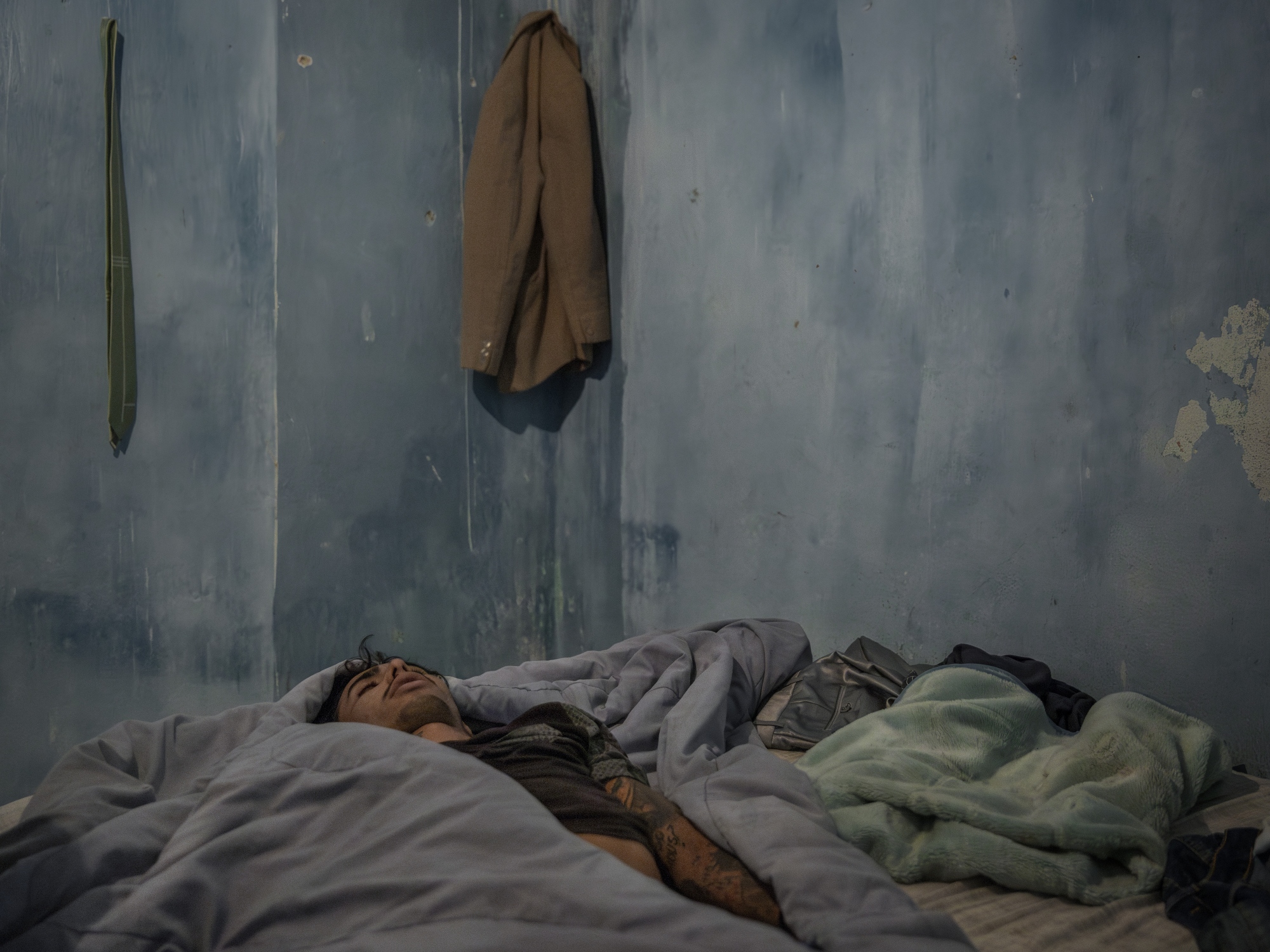
Twenty-one-year-old Enzo da Silva Dias, lies lifeless in a bed after a fatal overdose. Enzo was partying with his friends in São Paulo, Brazil—drinking heavily and using a mix of cocaine and a chemical drug known as Lança Perfume. Finally Enzo’s body gave out and he collapsed on the kitchen floor.
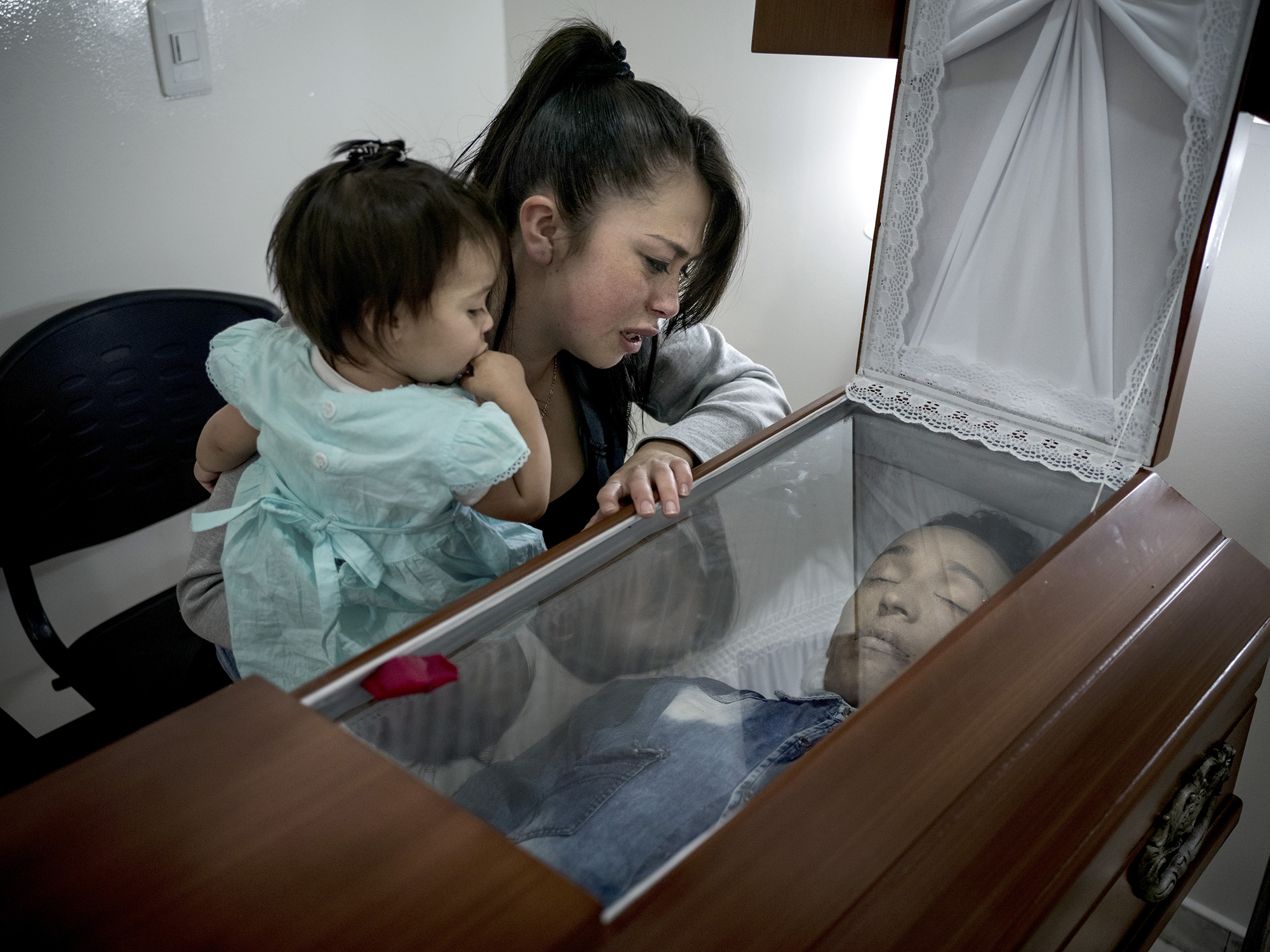
One-year-old Sharid Popayán, and her mother Nasly Martínez, next to her father’s coffin. Álvaro Steven was just 20-years-old when he was shot in a revenge killing during a gang war in Bogotá, Colombia.
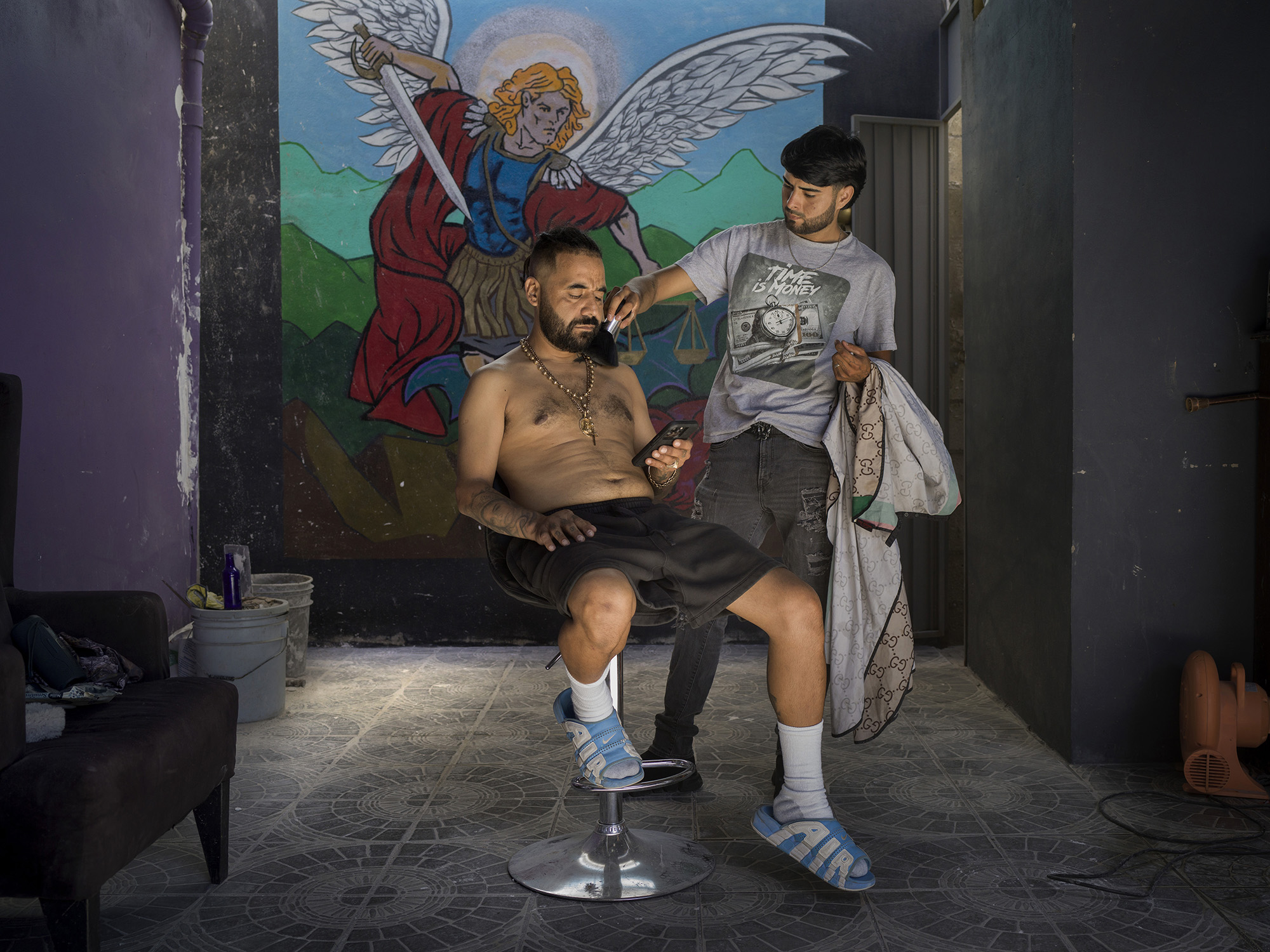
Mojino is a father of five. He provides for his family and neighbourhood, taking care of his siblings' university expenses and organising the annual Christmas party with presents for all the children in the community. He has also been accused of being a high-ranking member of the Tijuana cartel, involved in illegal activities along the US border. After surviving an assassination attempt in April 2024, when he was shot multiple times, he now prefers to have his hair cut at home, near his divine protector painted on the wall - Saint Michael the Archangel. The Mexican border city of Tijuana was once a vibrant holiday destination for American tourists but its location right on the US border, just a few hours from Los Angeles, makes it a crucial hub for organised crime and the smuggling of illegal immigrants and narcotics.
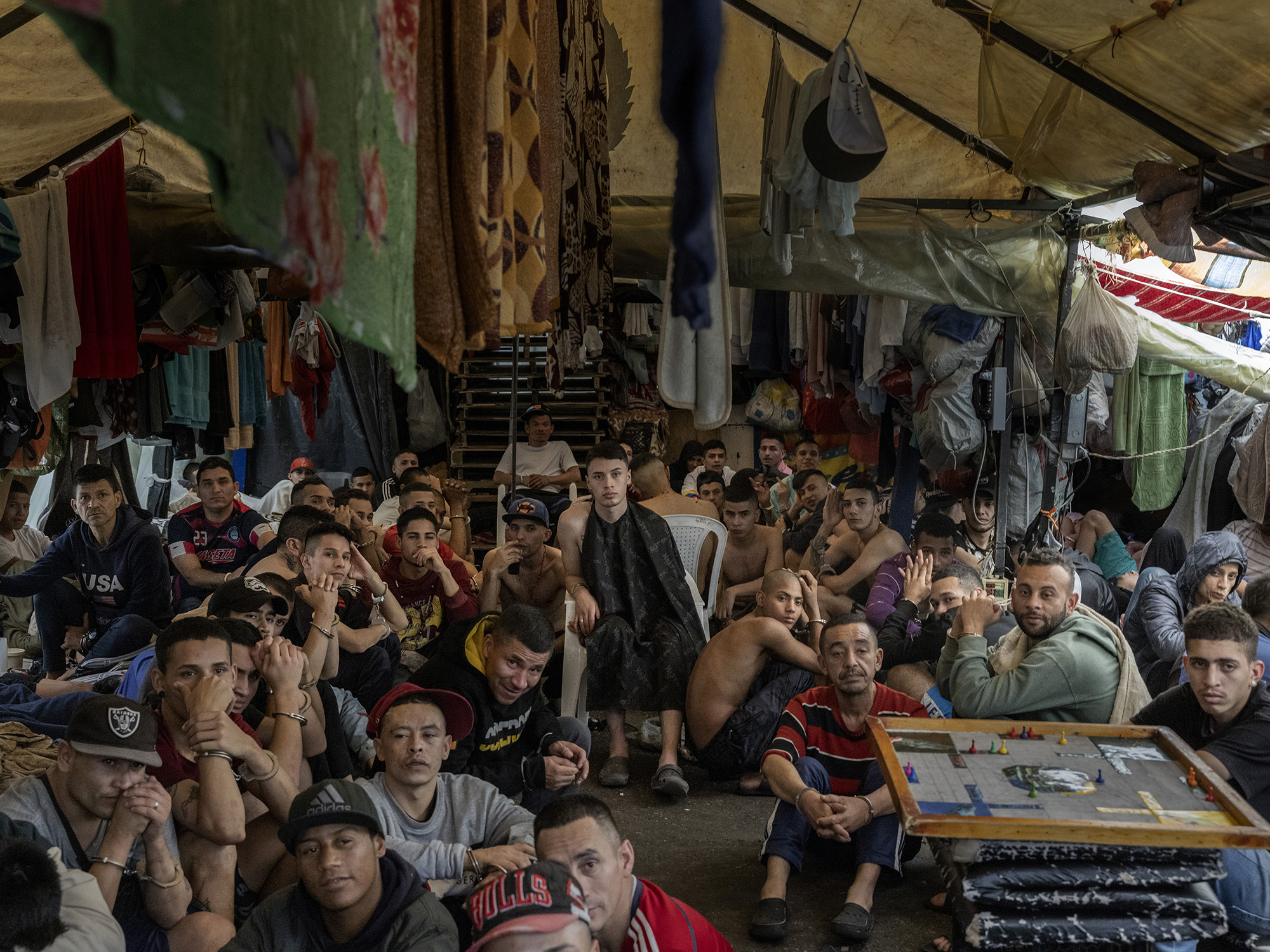
At the overcrowded detention centre inside the Kennedy Police Station in Bogotá, Colombia, a majority of the detainees are held for involvement in small-scale drug dealing, turf wars, or street robberies committed to support their own addiction.
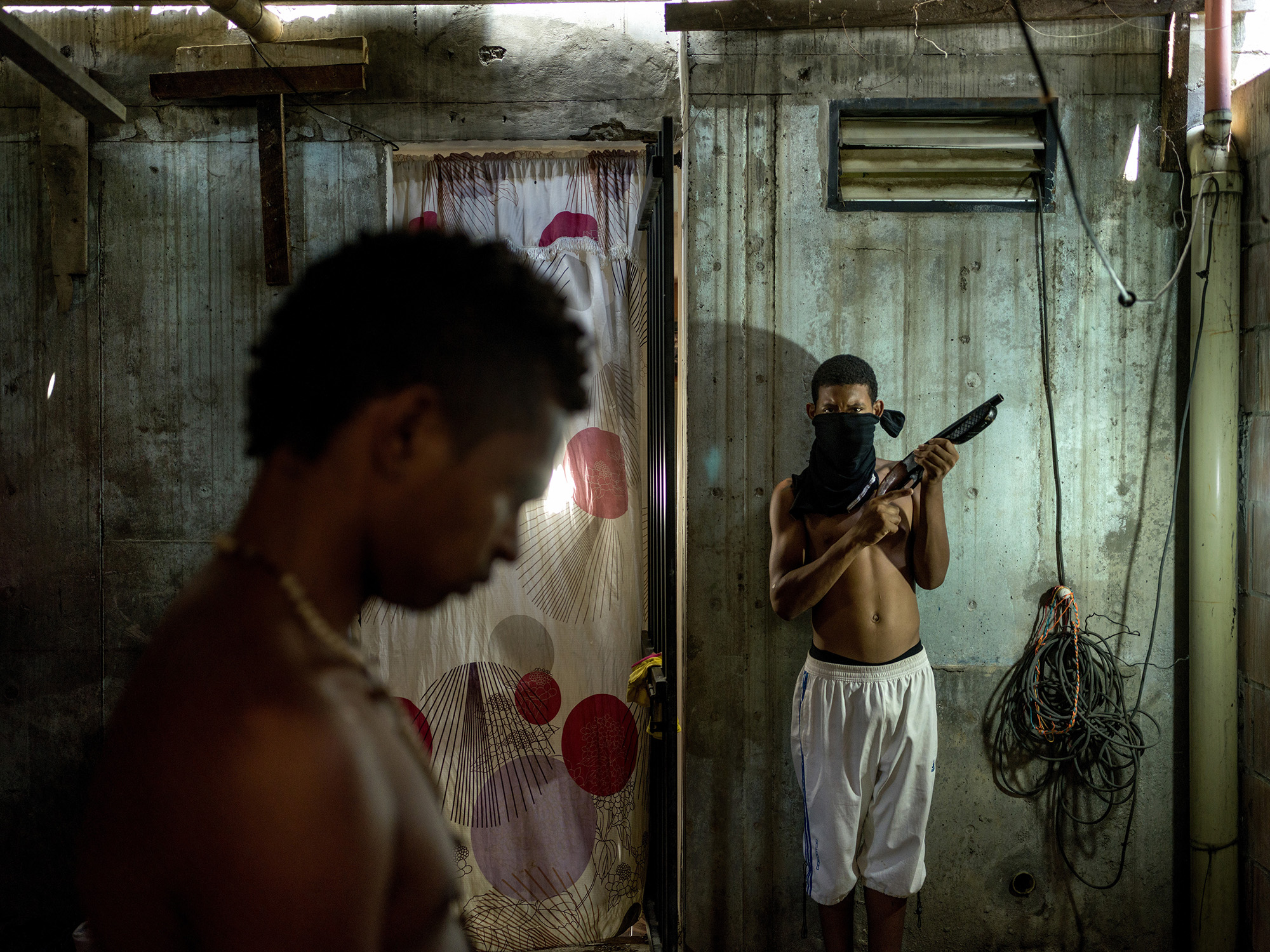
Twenty-three-year-old Chamuco and 16-year-old Reto make their living from robberies, thefts, drug trafficking—and occasionally as sicarios. Potrero Grande, Colombia.
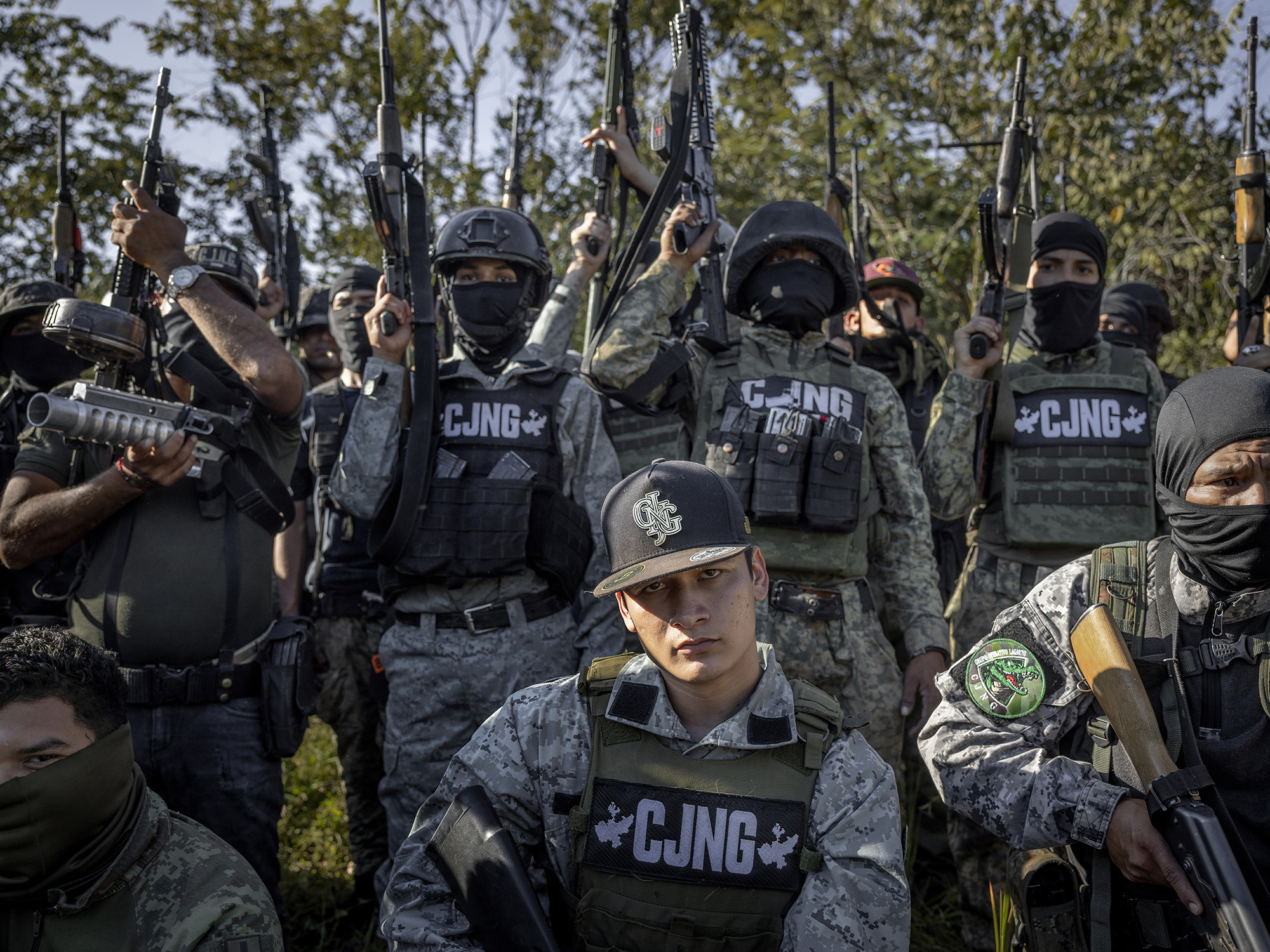
Heavily armed members of The Jalisco Cartel (C.J.N.G.), feared as the most dangerous and well-organised Mexican cartel, with an extreme taste for ultra-violence as a weapon to intimidate any potential enemies, patrol in territory under their control near the city of Uruapan.
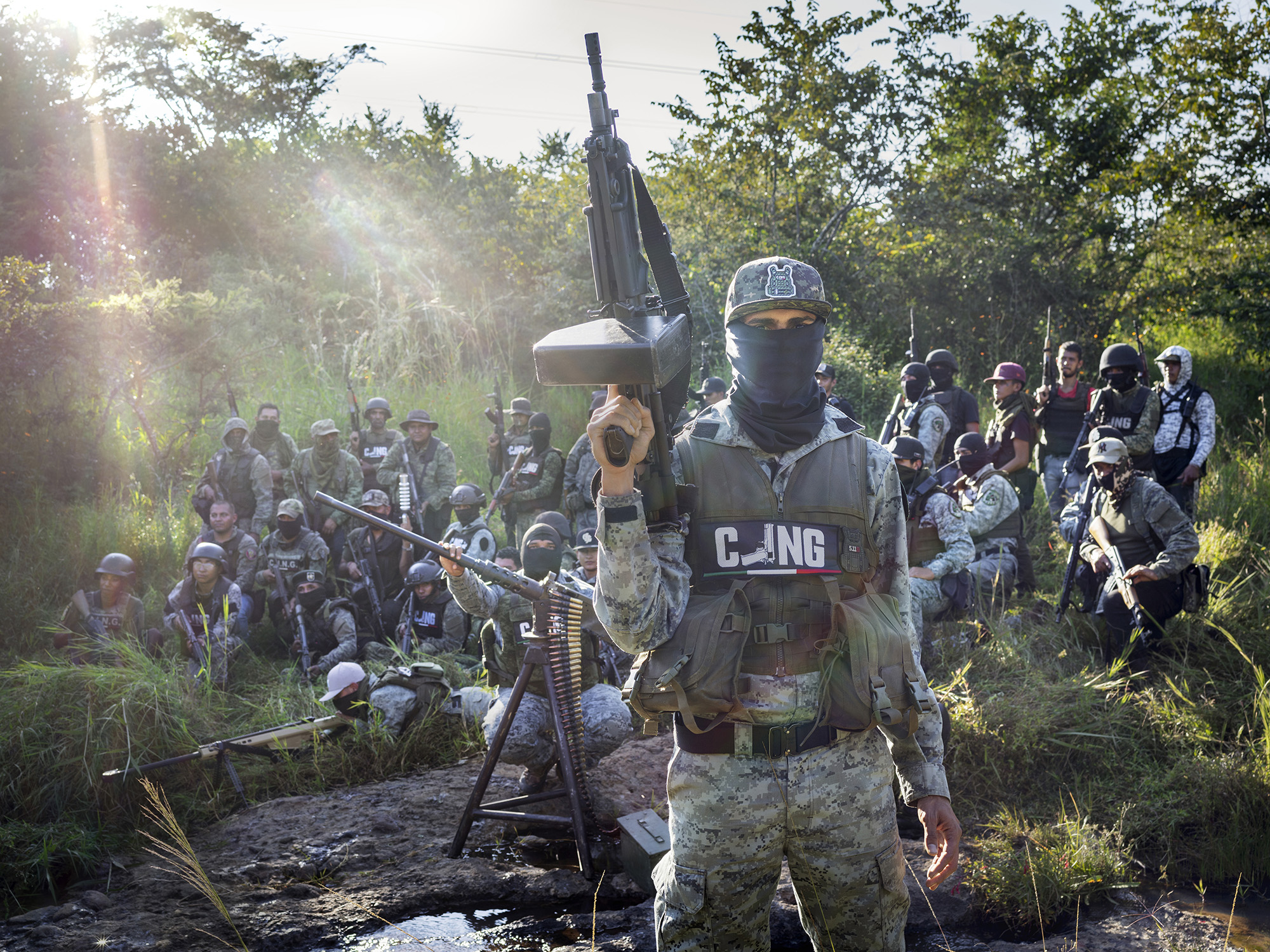
Members of the Jalisco New Generation Cartel (CJNG) photographed in the mountains of Michoacán, Mexico. The cartel is regarded as the most violent, organised, and powerful criminal organisations in Mexico right now. Michoacán plays a pivotal role in the cartel’s trafficking operations. The region’s bustling ports and unmonitored beaches along the Pacific Ocean serve as key entry points for narcotics. According to the US Drug Enforcement Administration (DEA), Mexico’s two dominant cartels—the CJNG and the Sinaloa Cartel—have a combined network of nearly 45,000 members, associates, and facilitators operating across more than 100 countries. A study published in Science further underscored the scale of their operations, estimating that Mexico’s criminal organisations collectively rank as the nation’s fifth-largest employer. Following the capture of El Chapo and the bloody in-fights of his Sinaloa cartel, the rivals at CJNG have been prompt to take the lead. The elusive CJNG-founder Nemesio Oseguera Cervantes (also known as ‘El Mencho’) and his sicarios continue to expand aggressively, both within Mexico and abroad. US officials now assess that the CJNG has the largest capacity to traffic cocaine, methamphetamine, and fentanyl into the US
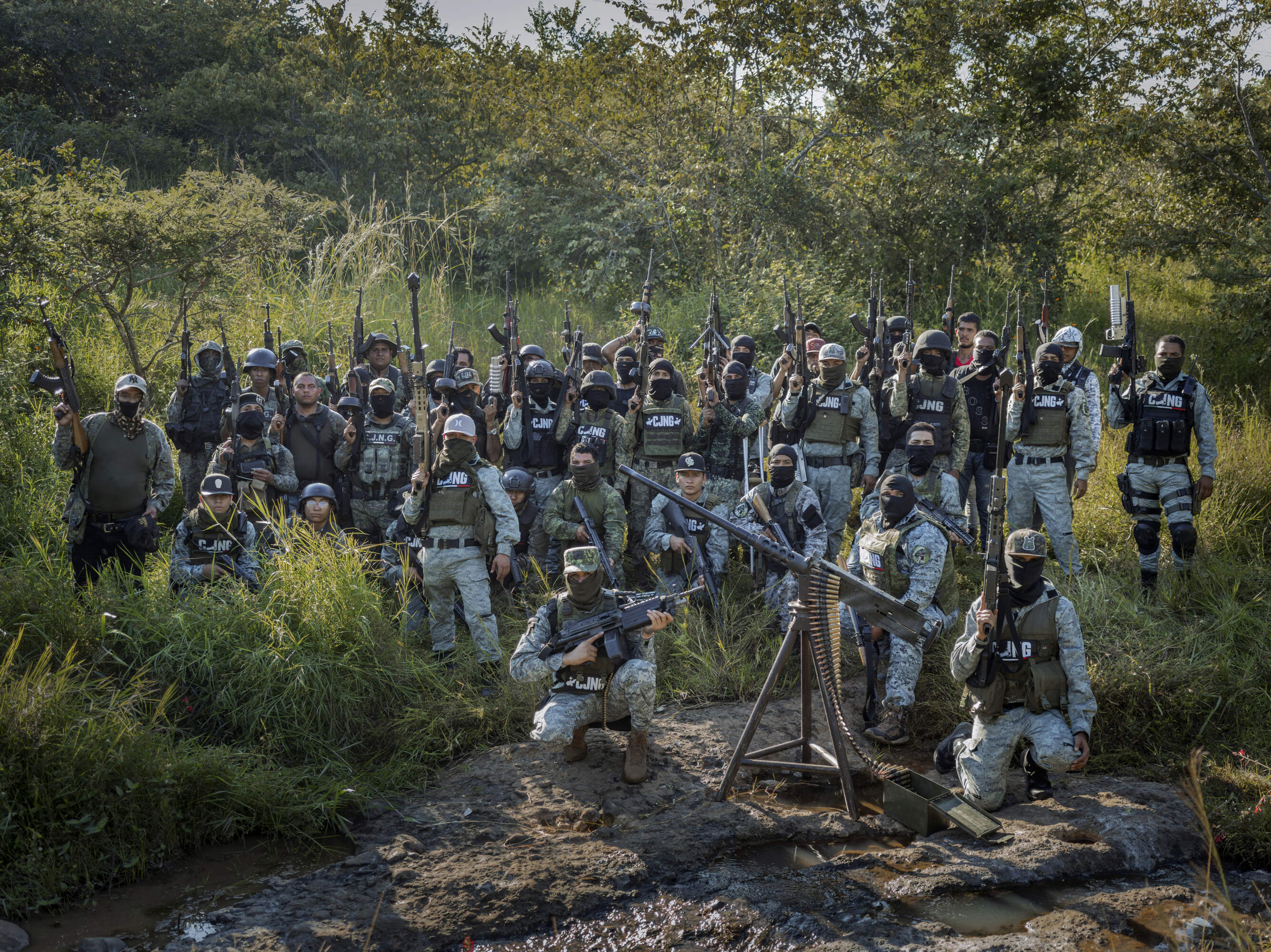
Heavily armed members of The Jalisco Cartel (C.J.N.G.), feared as the most dangerous and well-organised Mexican cartel, with an extreme taste for ultra-violence as a weapon to intimidate any potential enemies, patrol in territory under their control near the city of Uruapan.
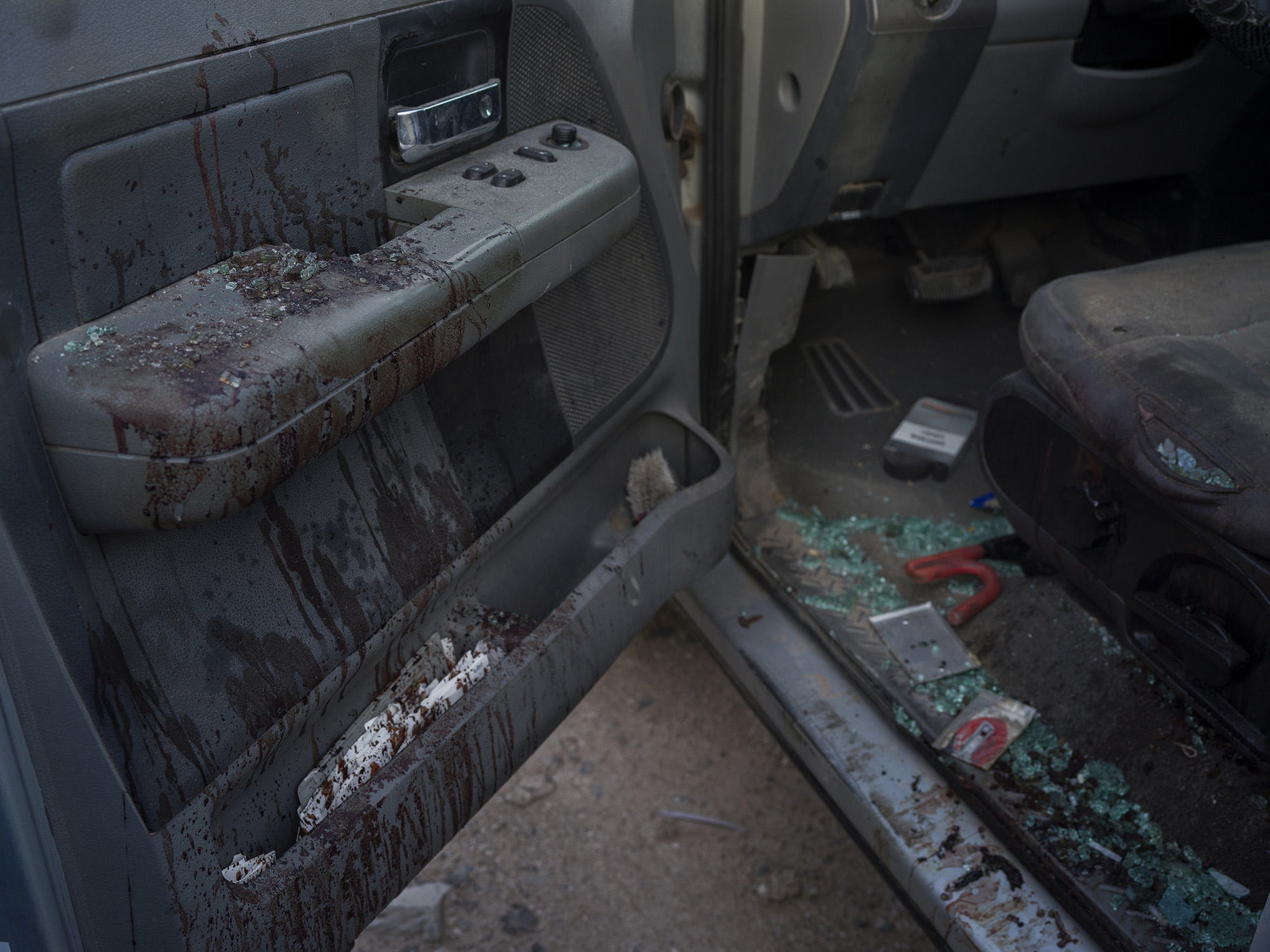
The interior of a car caovered in blood stains and broken glass after gunmen assaulted the businessman and his bodyguards who were all killed inside the vehicle. In 2023, Ciudad Juarez had the 3rd highest murder rate of any city in the world, number two was Tijuana, another Mexican border town. The six cities with the highest murder rates worldwide are all found in Mexico.
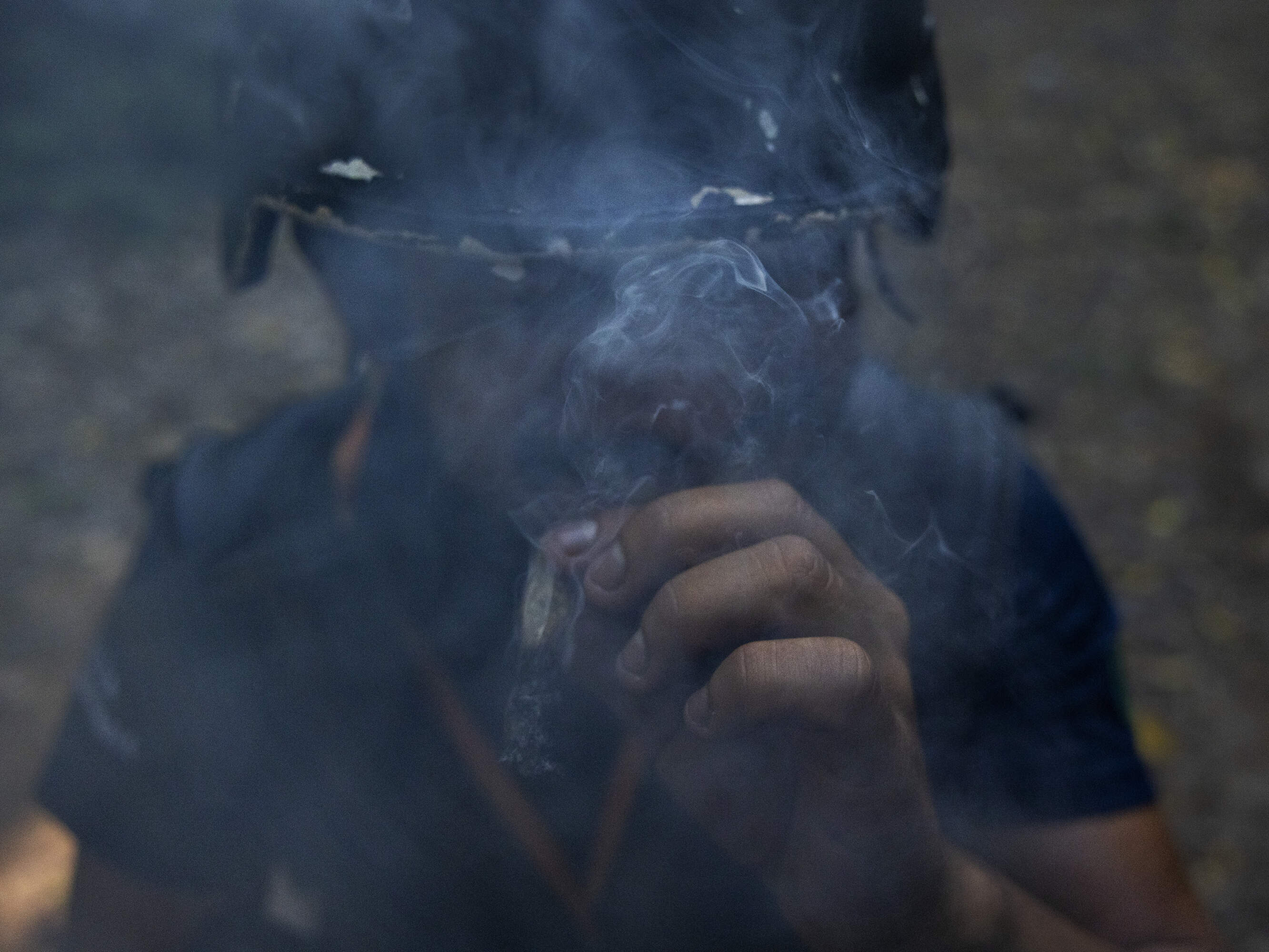
Members of Coahuayana’s self-defense militia take a smoke break while patrolling their territory in Michoacán. The militia are at war with the CJNG, which is pushing to seize control of the region’s coastline and the key trafficking routes leading north. In Mexico, law enforcement and government institutions are often deeply intertwined with the very criminal organisations they are supposed to fight. Time and again, Mexicans have witnessed police and soldiers not only turning a blind eye to cartel violence but actively carrying out operations on behalf of the cartel-bosses. In response to this impunity, communities across Michoacán began forming vigilante self-defense groups in 2013. In many cases, these militias succeeded in driving out both cartel forces and their corrupt allies within local law enforcement. Yet over time, the emergence of these groups has added a new layer of complexity to the Mexican conflict. Some militias have themselves become involved in criminal activities, forging new alliances with rival cartels to protect and enrich themselves from the trafficking.
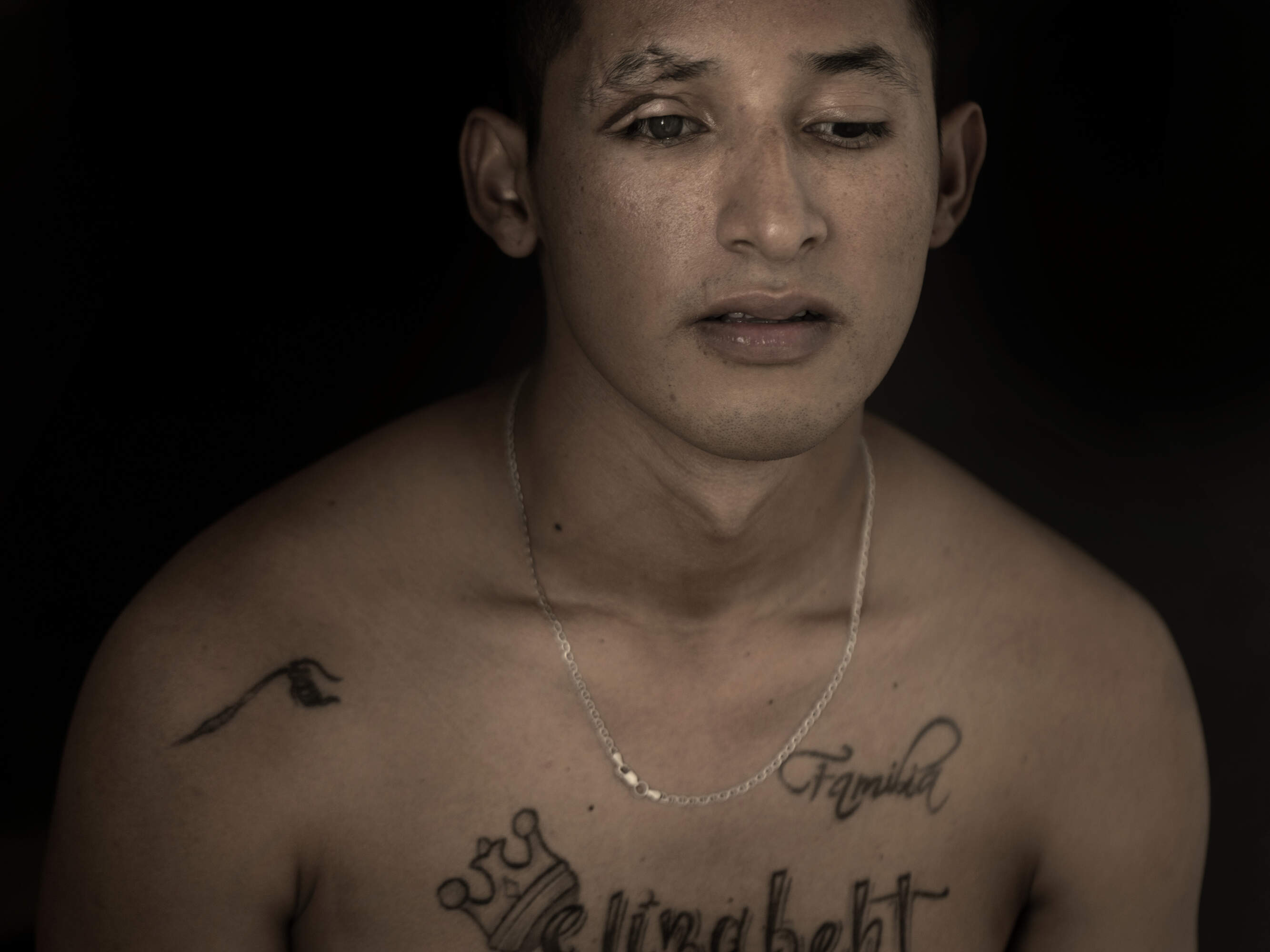
Jesus Bautista (25) a Colombian army soldier who was wounded when he stepped on a homemade anti-personal mine on 26 April 2021 in Catatumbo while fighting dissident FARC guerillas in an area known for it's lucrative coca plantations. He lost all sight in his left eye and his left leg from the knee and down. Colombia
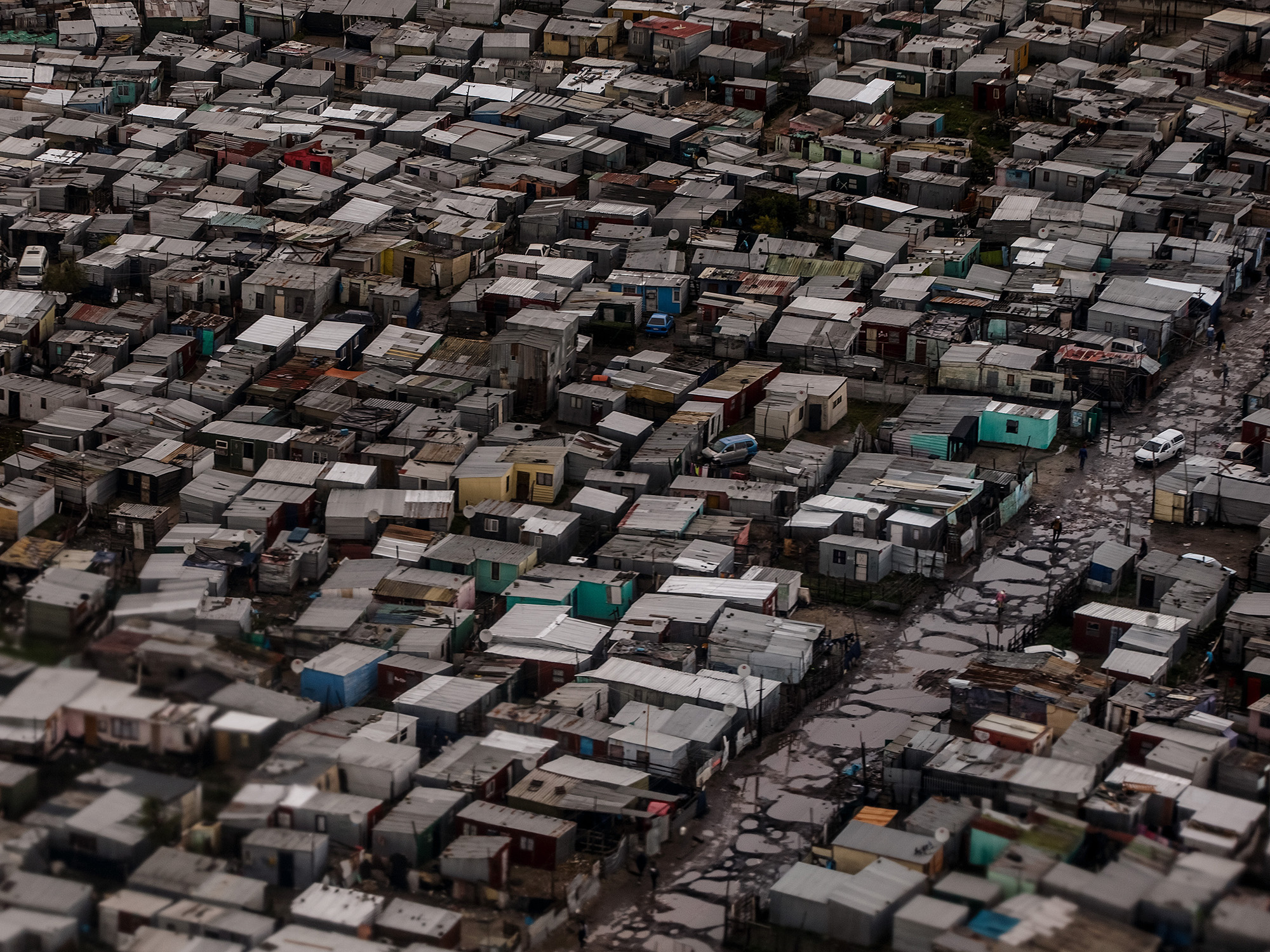
The port city of Cape Town serves as the gateway to South Africa with Africa’s largest cocaine market—as well as a key transit hub along global smuggling routes connecting Latin America, Europe and Asia. Wherever it arrives, the cocaine economy tends to create a fundamental change in the stability of the countries, regions, and cities it touches. Local consumption rises, along with corruption and violence. One such example is Guinea-Bissau, often labeled a narco-state— a term used to describe a country where a powerful drug economy effectively dominates the government. South Africa’s stability is already under strain. According to the World Bank, it is the most unequal country in the world, and with nearly half of its youth unemployed, the lure of drug trafficking and gang affiliation is strong. Criminal groups like the Americans, Hard Livings and Dixie Boys have deep roots in Cape Town’s townships, making it, like other transit hubs, among the most violent cities in the world. To fight the crime a new police unit has been formed in Cape Town—the Neighborhood Safety Team (NST)—which is intended to be more effective than the national police force (SAPS), which has been scandalised by allegations of selling arms and drugs back to the gangs.
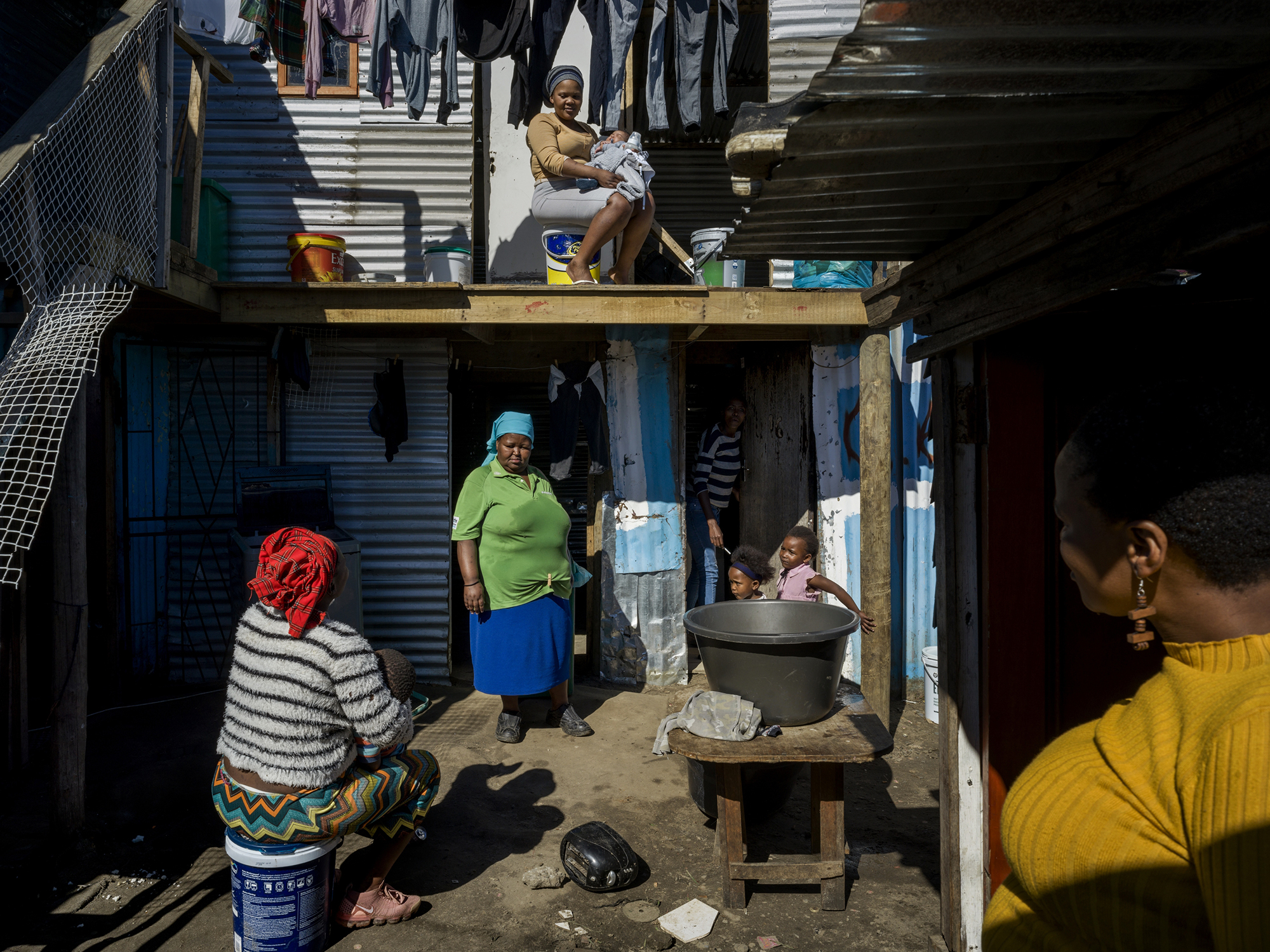
A street scene in the Dunoon township with women doing laundry and looking after children. Cape Town, South Africa
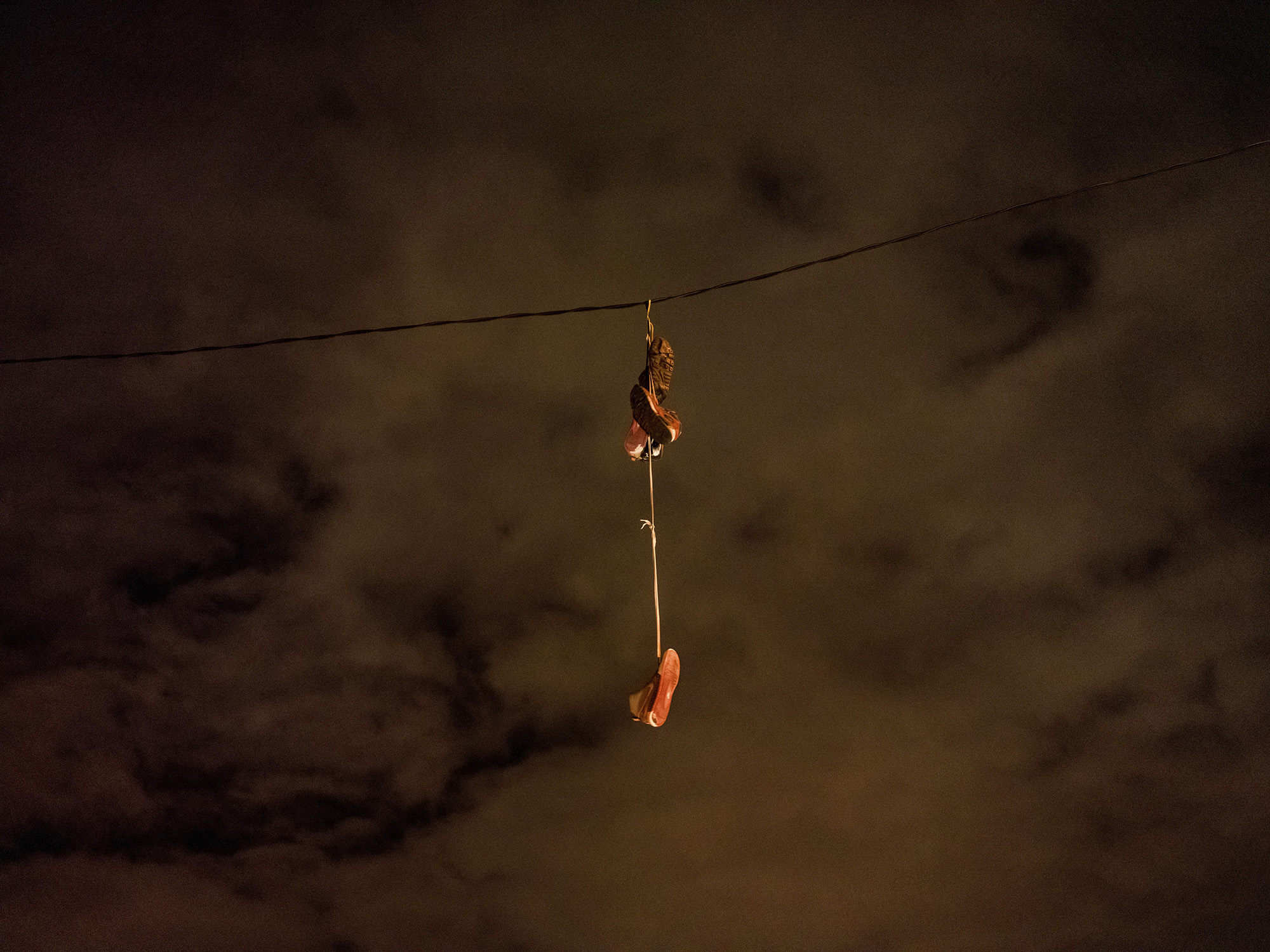
A pairs of training shoes dangling from a wire at an intersection, according to the police, this is a sign used by the gangs to show customers that drugs can be purchased at this spot. Bonteheuwel neighborhood is a densely populated shanty town in Cape Town, South Africa
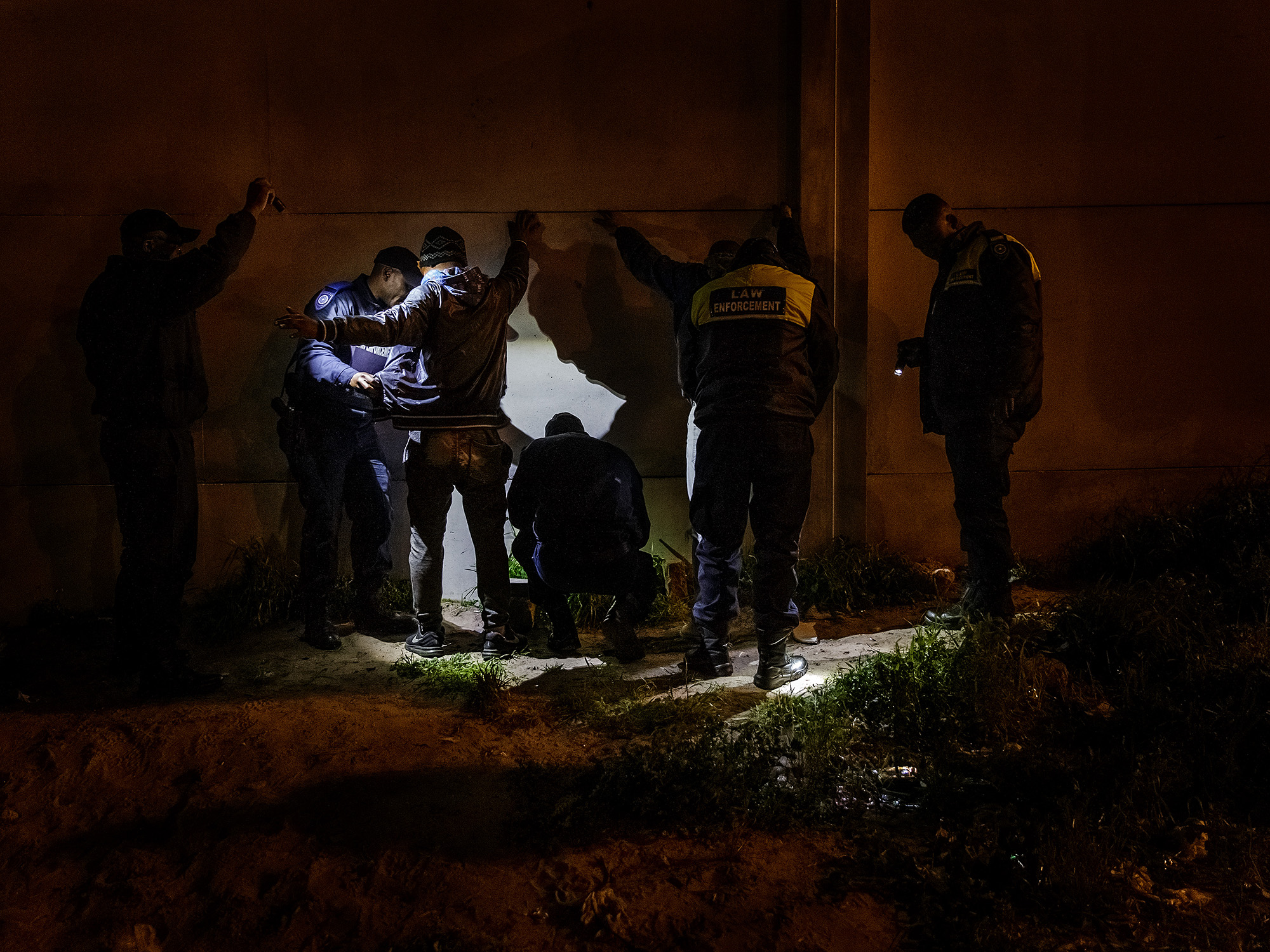
Police officers search for drugs and weapons in the Bonteheuwel township.
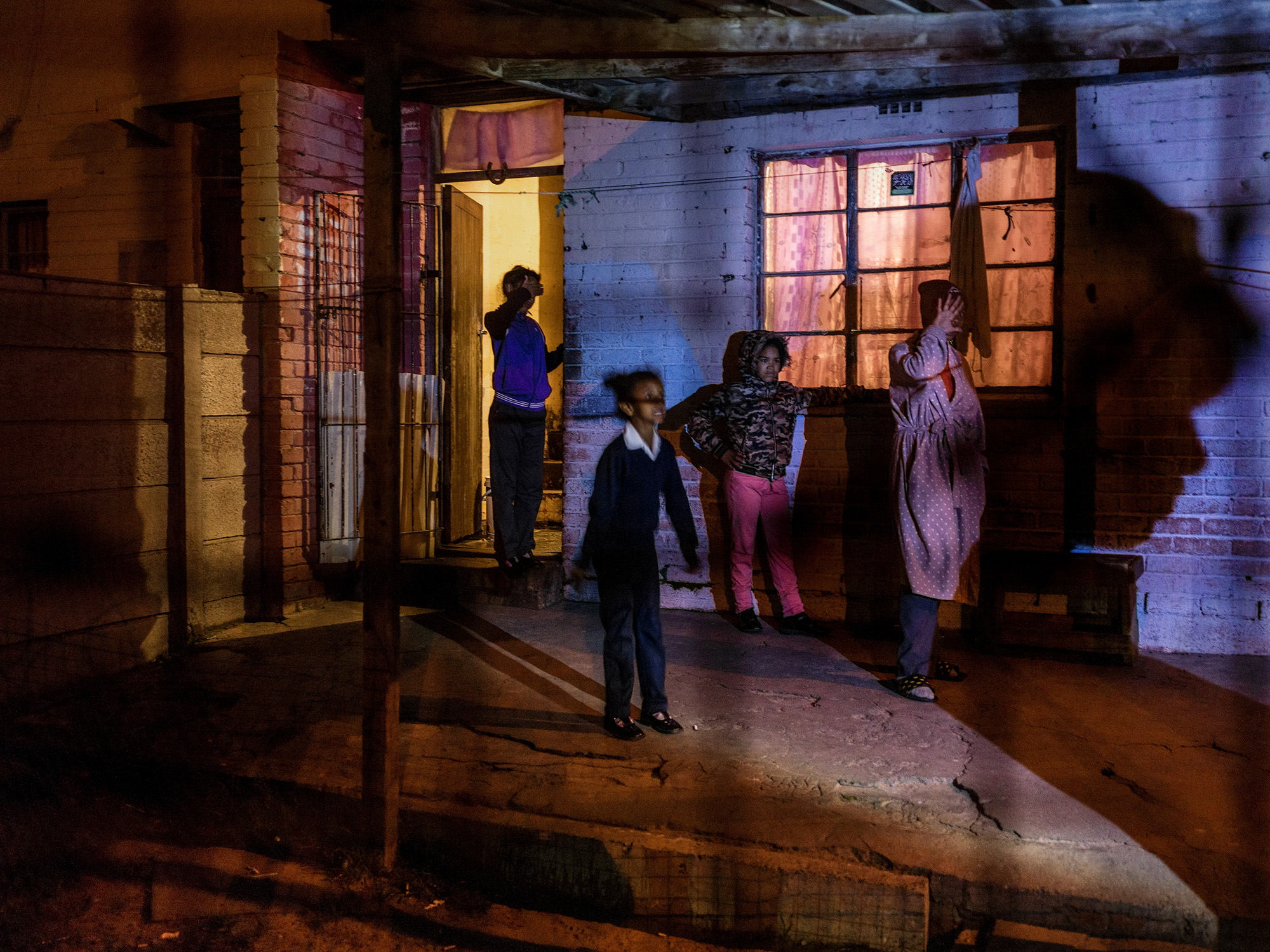
A group of children are woken from their sleep by police sirens, as a group of young men are body-searched just outside their house in the Bonteheuwel neighbourhood. Cape Town, South Africa
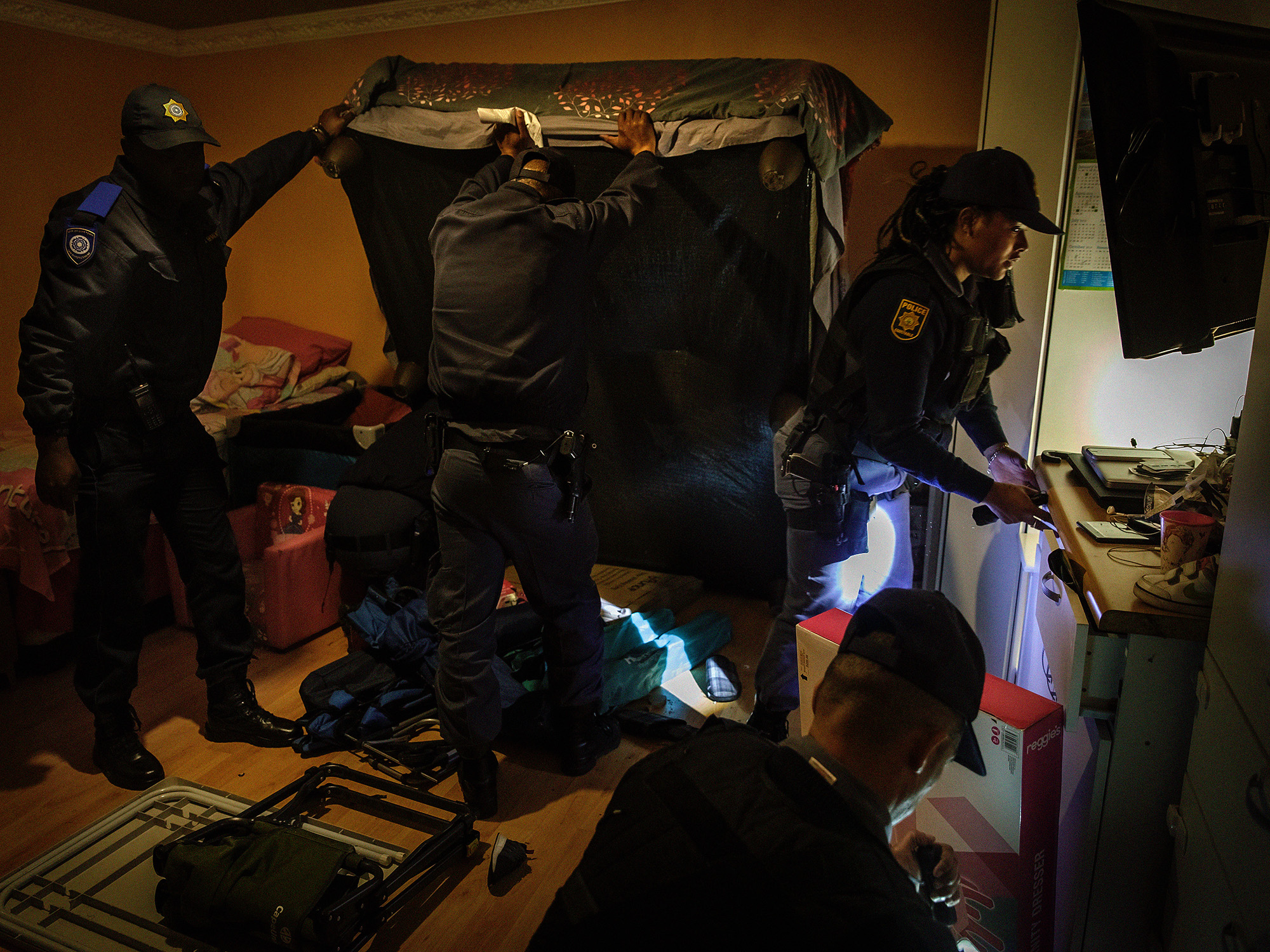
The newly formed police unit, NST, has received information from the national police (SAPS) that drugs and weapons are being stored inside this house. After an extensive search, nothing is found. The NST officers suspect they were misled by the SAPS, who may have had an interest in humiliating them—or in protecting a criminal gang that paid them off. Cape Town, South Africa

A woman visits the Santa Muerte (a skeletal folk saint symbolising death) temple on the night of the dead and gives thanks for a favour she asked for that has come true. The temple is associated with The Jalisco Cartel, whose four-letter initials C.J.N.G. can be found in the temple. Santa Ana Chapitro, Michoacan, Mexico
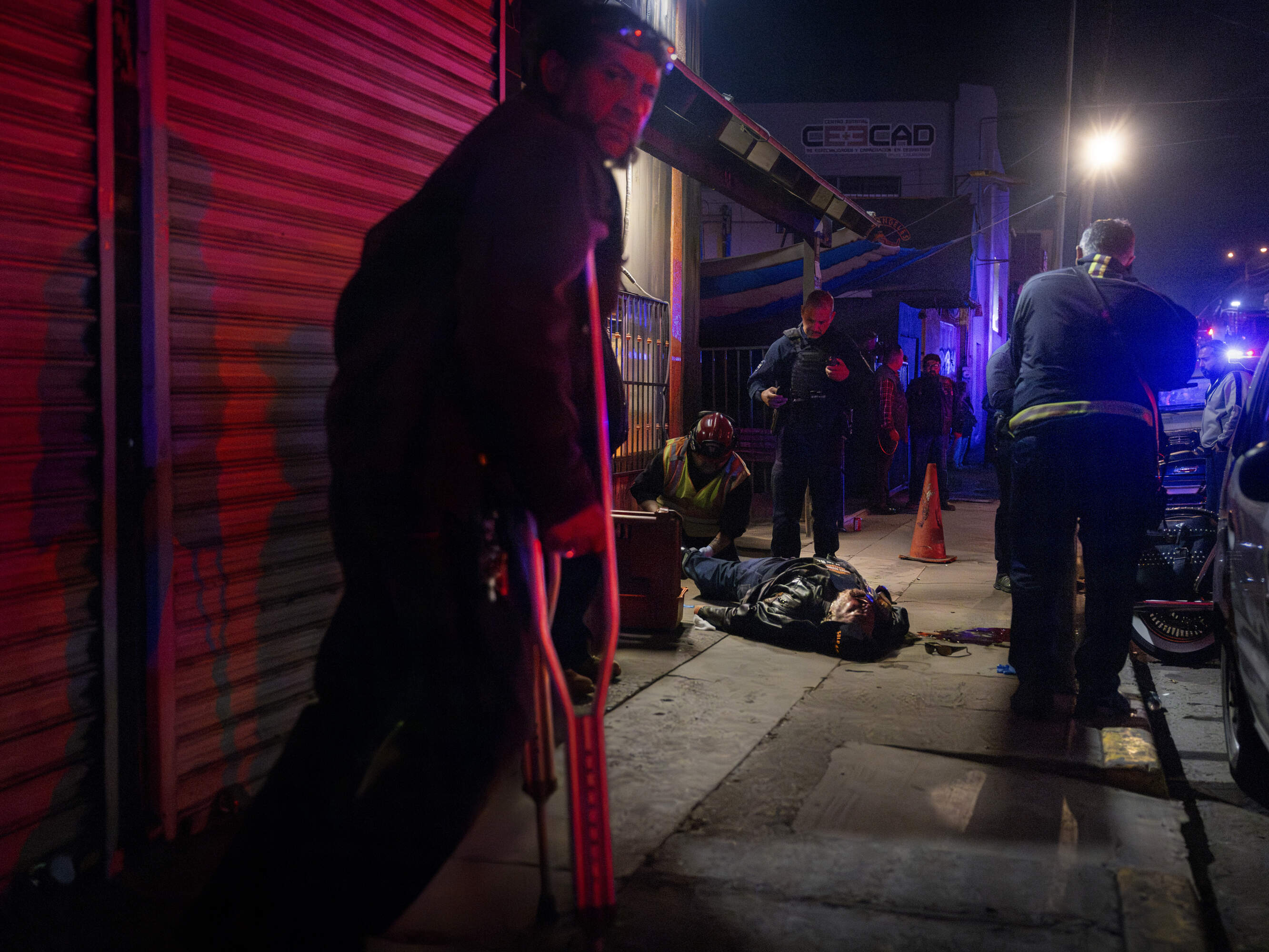
According to witnesses a dark Audi pulled up to the Solo Angeles motorcycle clubhouse in the early evening of Friday January 19th, 2024. Several gun shots were fired leaving a man wounded and the 66-year-old club member, and retired Captain of the Tijuana Fire Department, Jose 'El Chato' Angel Laguna Gonzalez mortally wounded on the pavement outside of the clubhouse. Solo Angeles MC has previously been linked to the motorcycle gang Hells Angels, whose members have a long record of organised crime, but in a statement released by the Solo Angeles MC in Tijuana, it was claimed that the murder was completely random and not related to the clubs' activities. Jose 'El Chato' Angel Laguna Gonzalez's murder marked the 86th homicide in Tijuana that January. The Mexican border city of Tijuana was once a vibrant holiday destination for American tourists, but a significant rise in violence and organised crime have left the city in a downward spiral. Murder rates in Tijuana have soared, with 2023 marking one of the deadliest years on record and a murder rate of 105 per 100.000 inhabitants, the second highest in the world that year. The violence is often brutal, with victims falling prey to targeted assassinations, cartel executions, and collateral damage from turf battles. Tijuana's location right on the US border, only a few hours from Los Angeles, makes it a crucial hub for organised crime and smuggling of illegal immigrants and drugs.
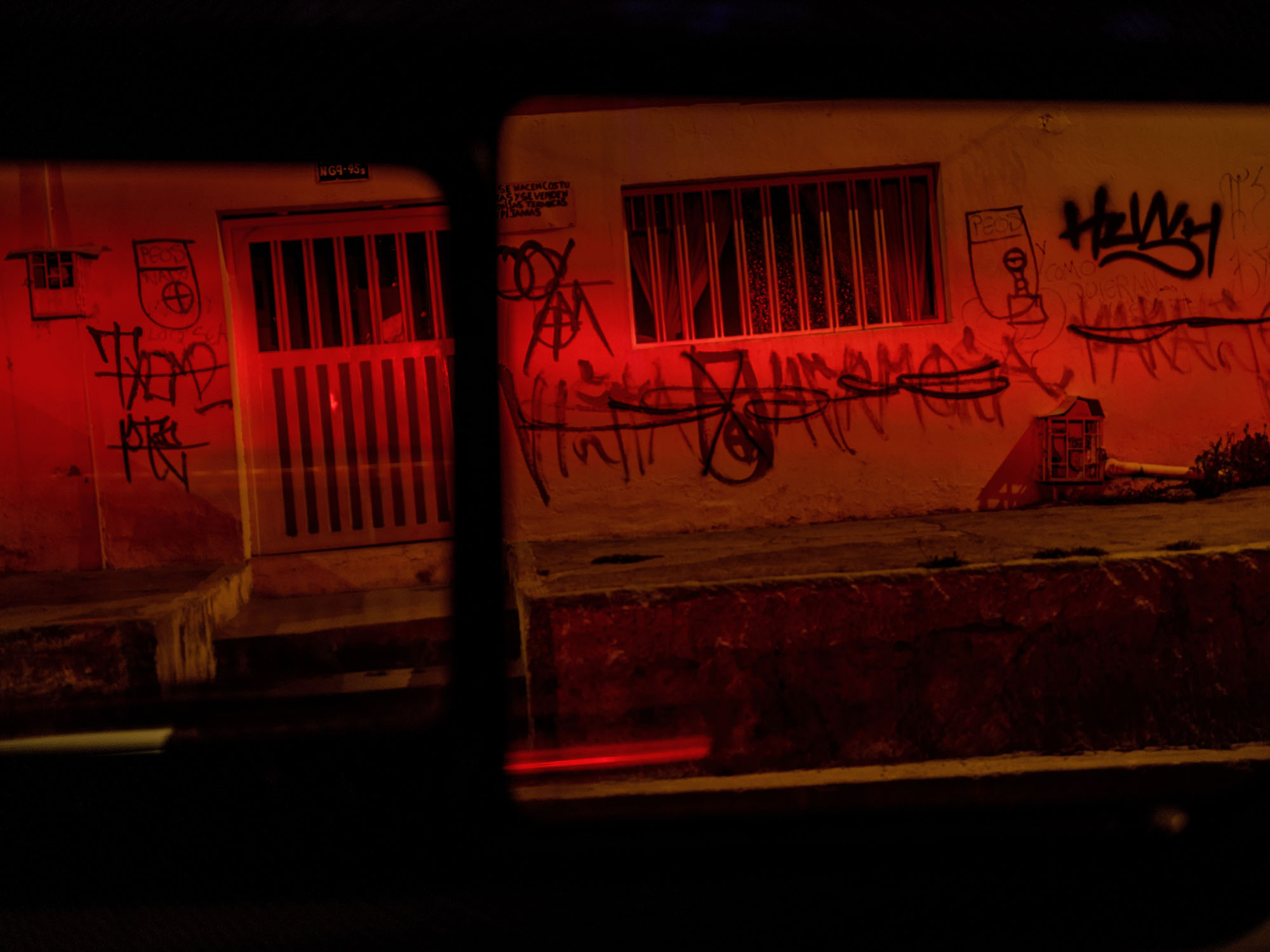
Graffiti on the side of a building south of the capital Bogota.
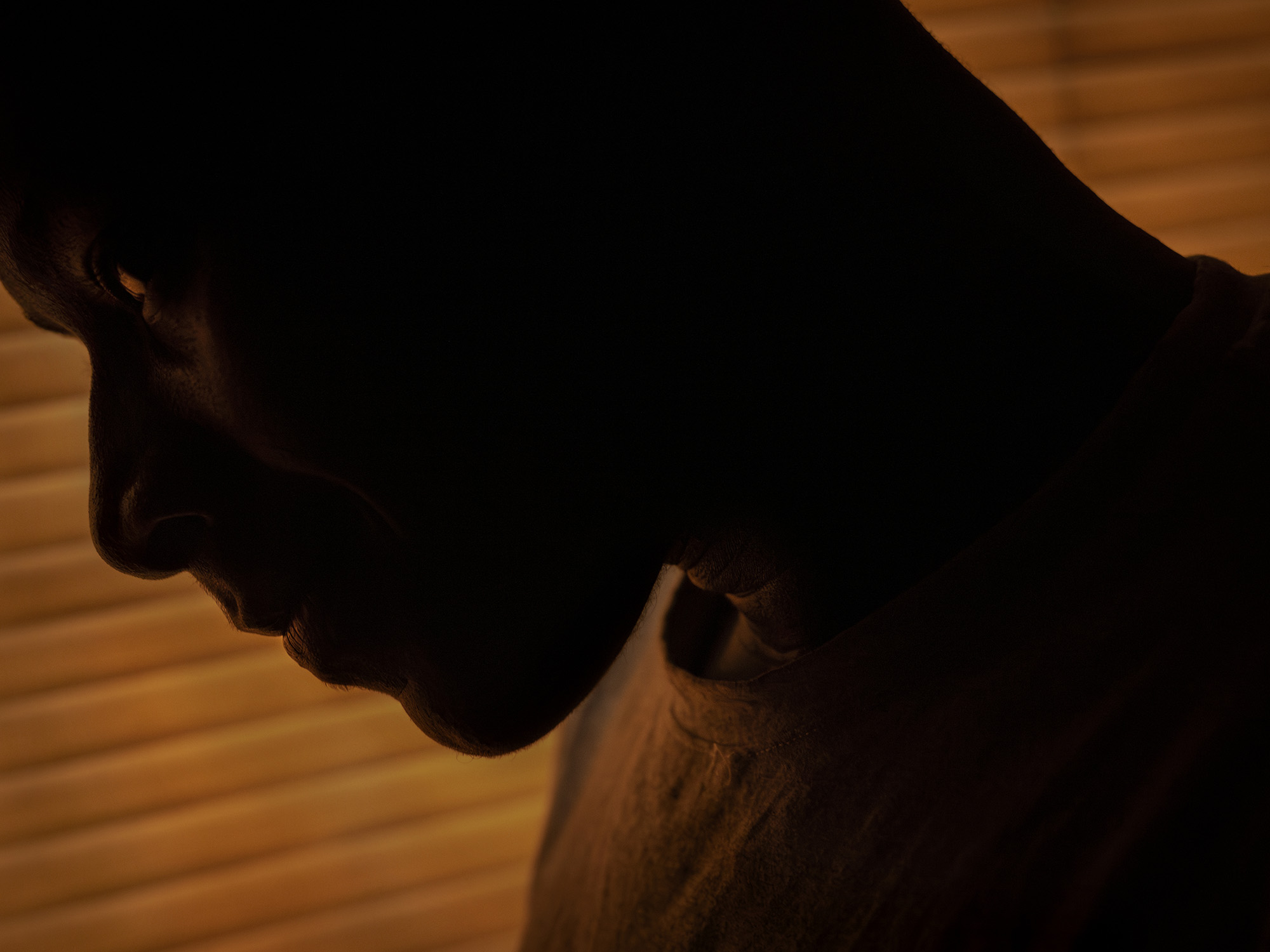
Alejandro (20), four days after deserting the outlawed armed group, FARC-EP, Frente Jaime Martinez, he had been fighting with for four years. He says that something changed when his girlfriend became pregnant and he deserted the group and escaped. The area around Corinto in Cauca is a hot spot for Colombia's cocaine production. Currently the town itself is under the control of the government, but the surrounding mountains are under the rule of dissidents of the former FARC guerillas. In the neighbouring city of Corinto the groups regularly attack the police station and a recently a car bomb damaged the city hall.
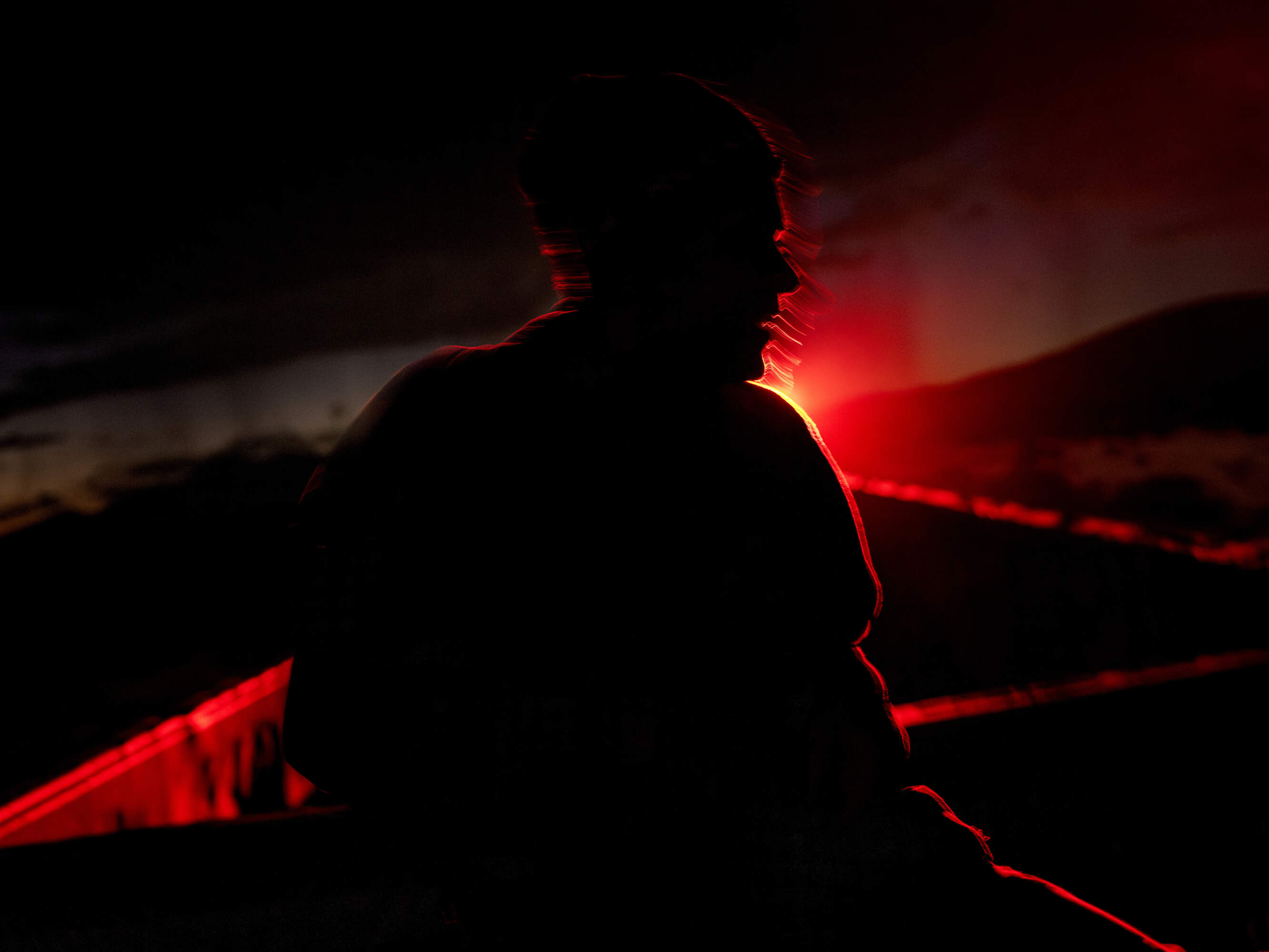
A light casts a red glow around the silhouette of a migrant travelling illegally through Mexico on the freight train known as 'La Bestia' and hoping to reach the US border.
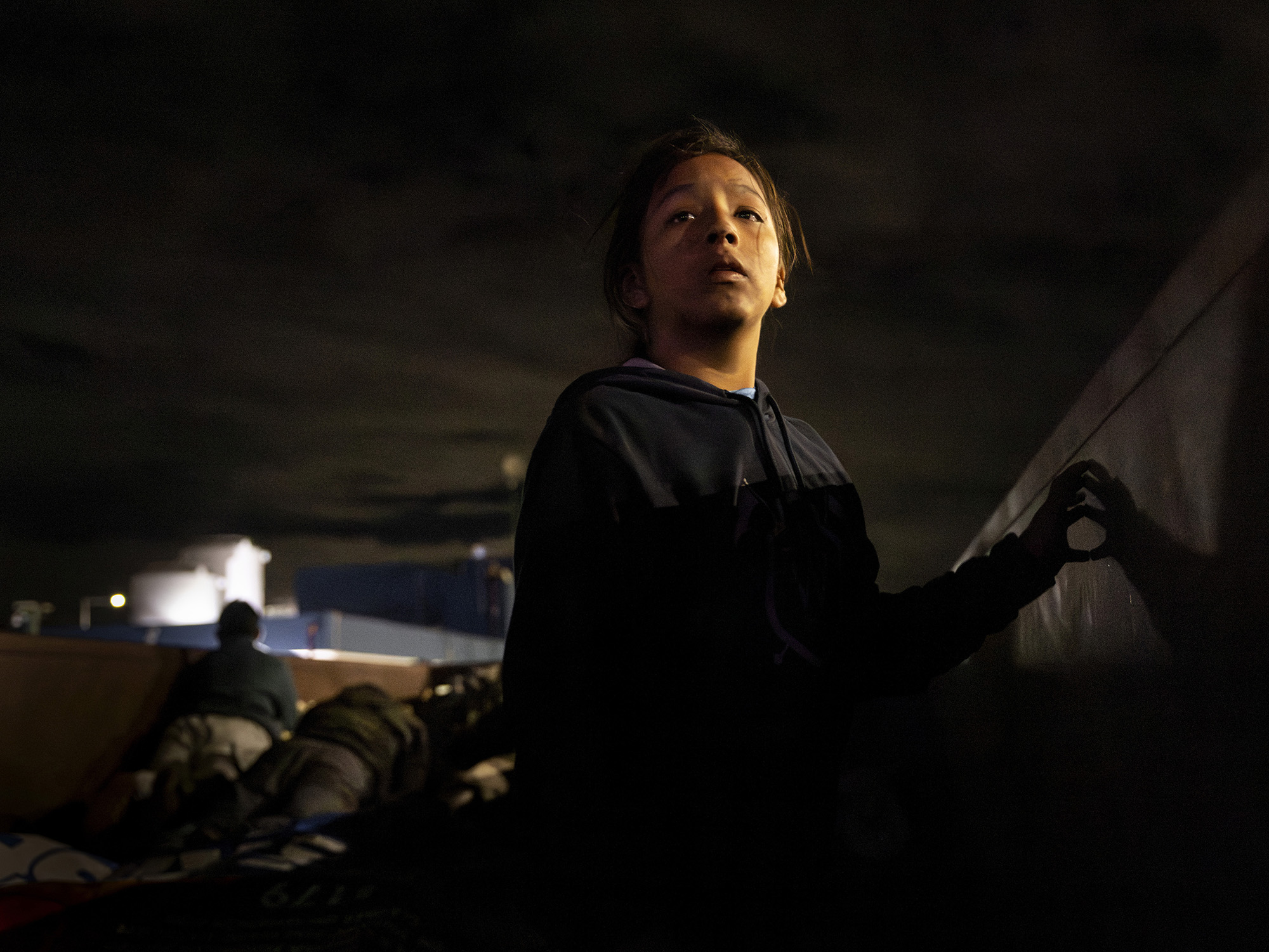
Twelve-year-old Noemí Jara crouches, in silence, trying to avoid detection by Mexican immigration patrols. Their footsteps echo along the train cars where she and other migrants are hiding. If caught, they risk robbery, assault, deportation— or being handed over to cartels that exploit and extort them. Noemí holds her breath. Nine months ago, Noemí fled with her father, mother, and six siblings from Guayaquil, Ecuador, hoping to reach safety in the US. Criminals had been extorting the family, but when their home was sprayed with bullets—nearly killing the youngest child, Génesis—they finally decided to flee.
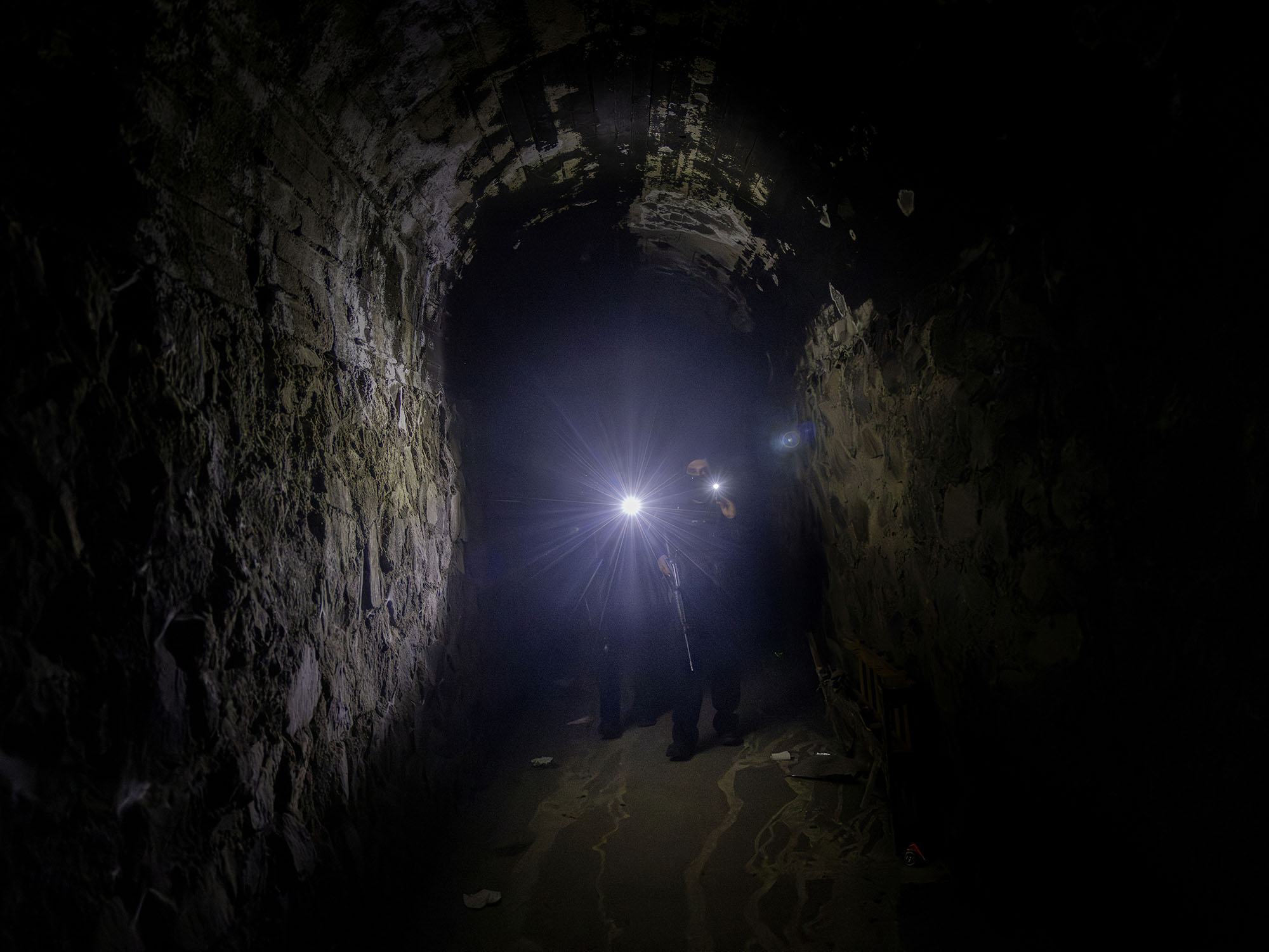
Mexican police officers pass through a tunnel that, until recently, was frequently used to smuggle people and narcotics from Tijuana into California beneath the US border wall.
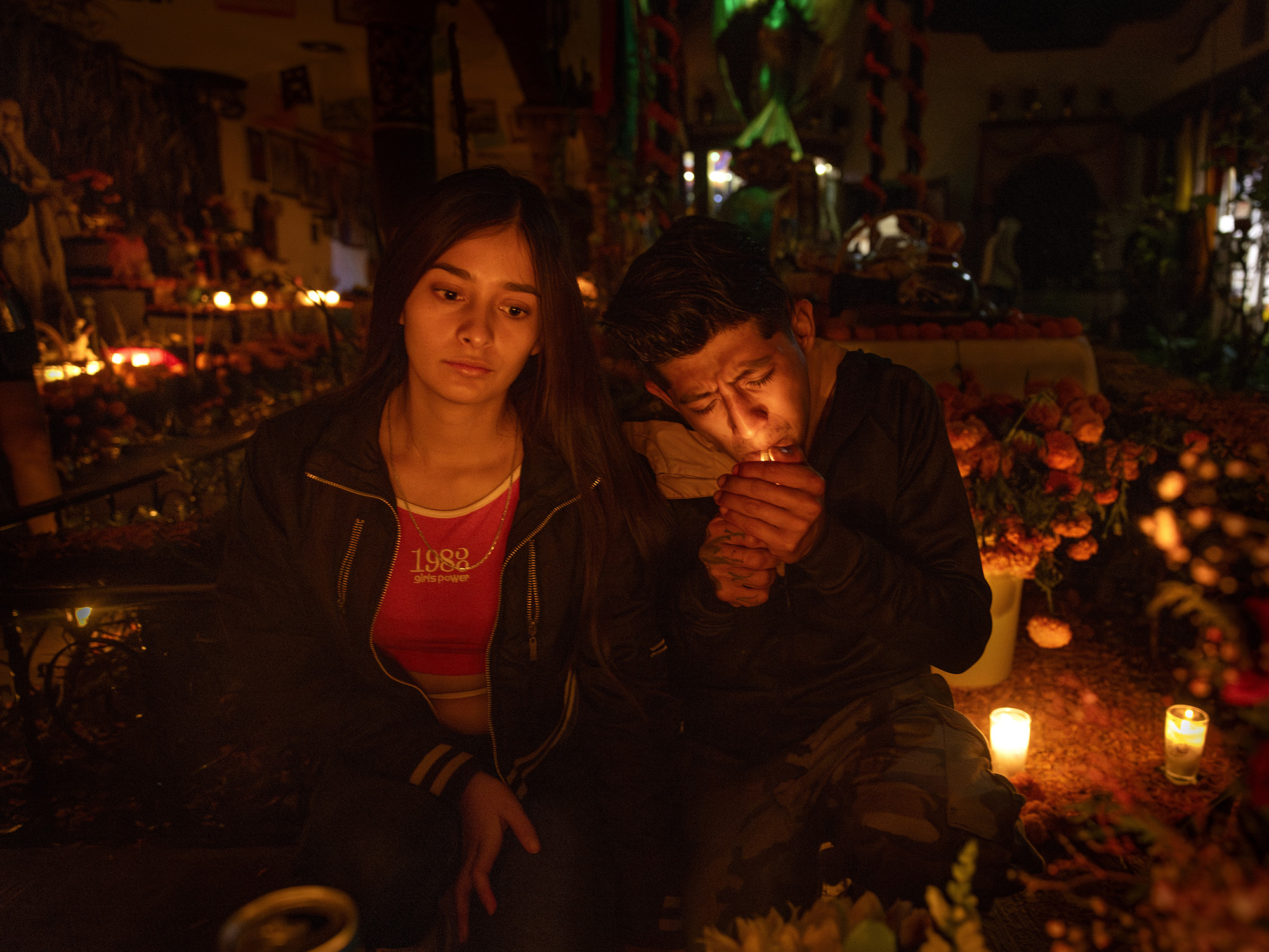
Twenty-three-year-old ‘Bélico’ and his girlfriend Yveth kneel before Santa Muerte—the goddess of death—at a temple in Michoacán, Mexico. Bélico prays for a way out: away from fear, war, and his life as a sicario—a footsoldier—for the Jalisco New Generation Cartel (CJNG). His dream is to save a little more money, buy a car, if possible a blue one, and become an Uber driver.
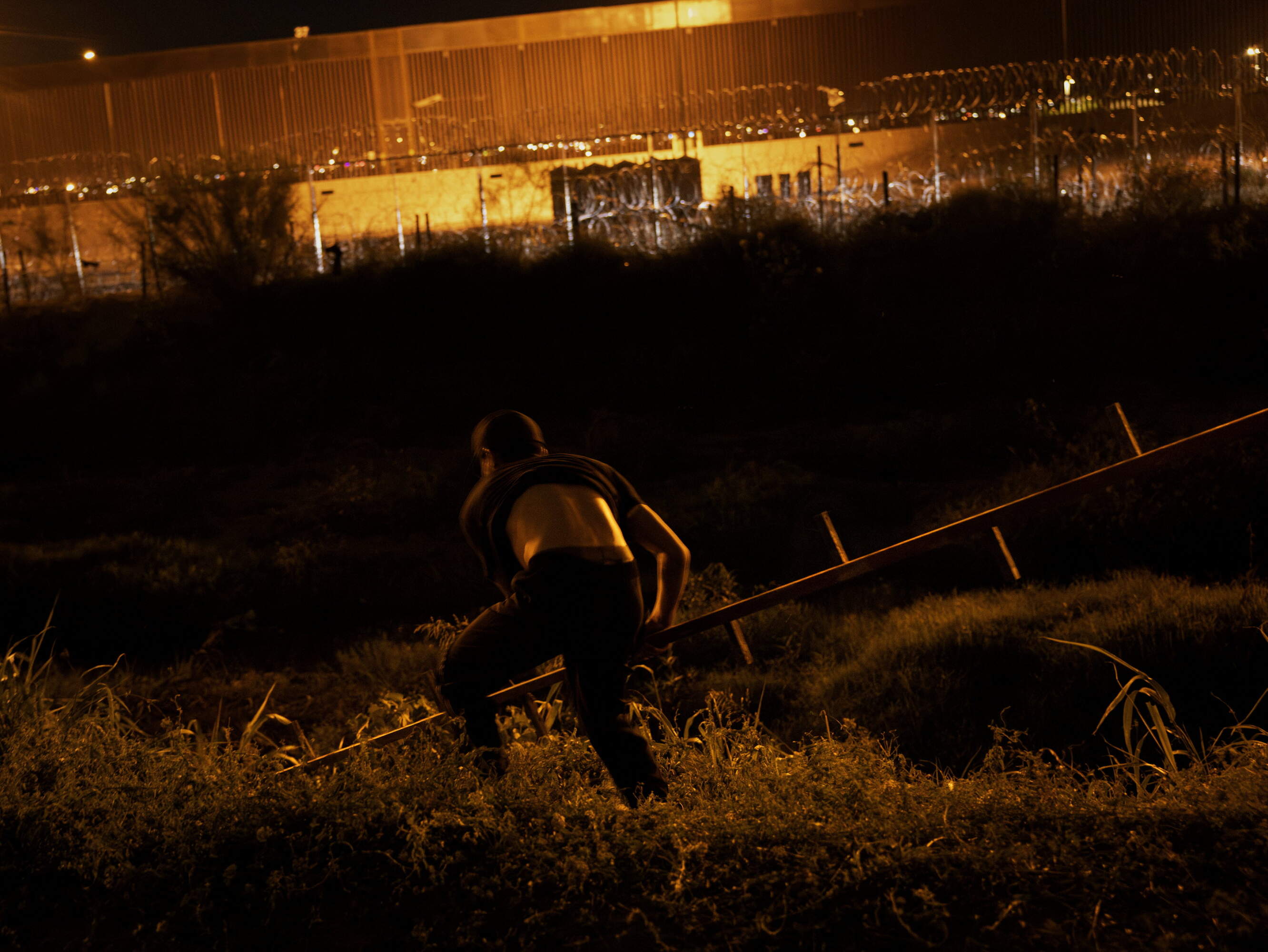
At the border separating Mexico and the US, two smugglers wrestle with a makeshift ladder hidden among the reeds lining the Rio Grande. Once the coast is clear, it takes only a few minutes to attach the ladder to scale the border wall, and disappear into the night in El Paso, Texas.
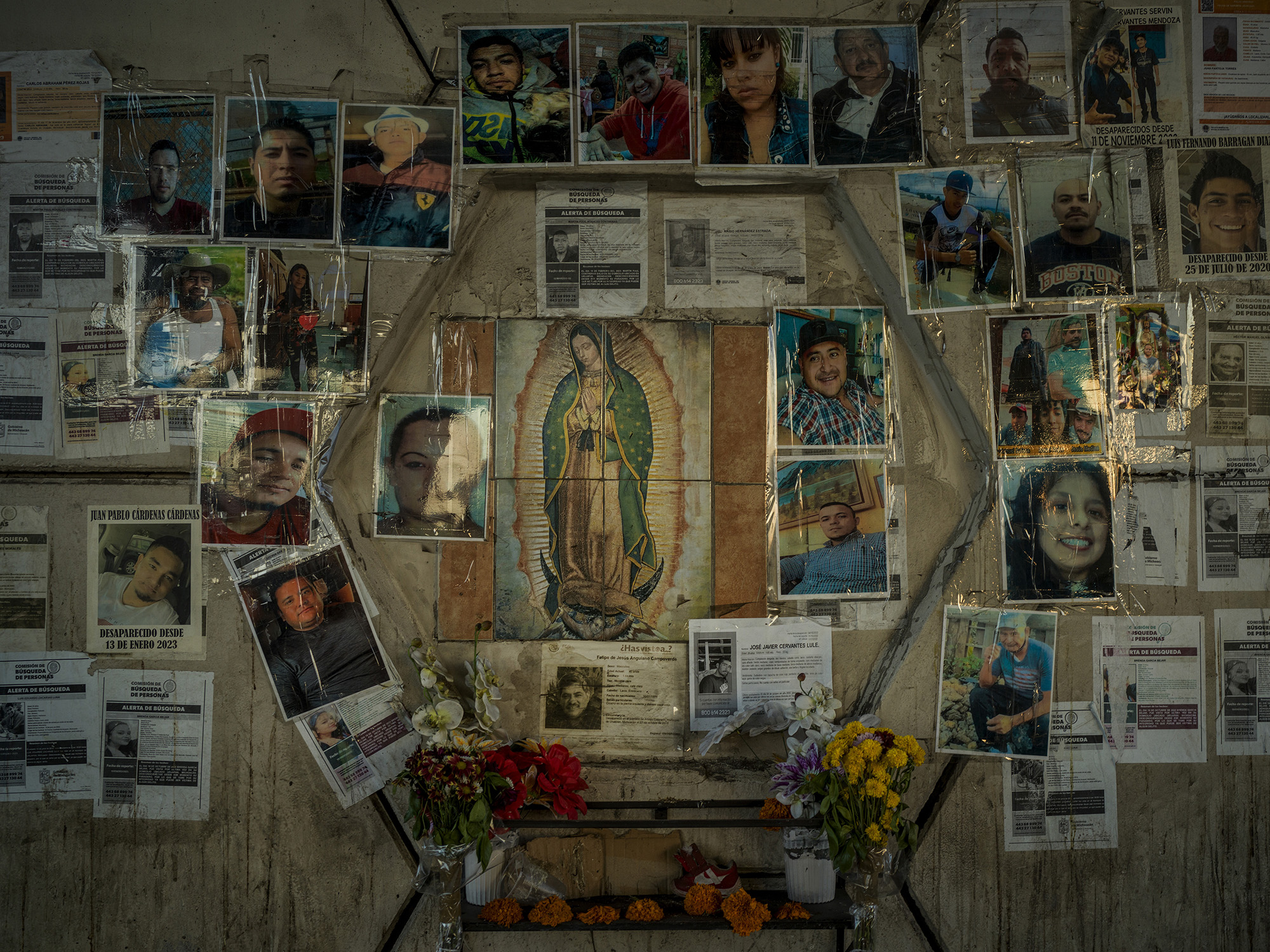
Posters of missing people hang on a wall under a bridge in the city of Uruapan. The bridge made international headlines in August 2019 when CJNG sicarios, in a violent push to seize control of Uruapan, hung nine bodies from the overpass alongside a banner threatening a rival cartel. Dismembered body parts from ten more victims were found dumped by a nearby road. The CJNG is considered the most violent, organised, and powerful criminal organisation in Mexico today, and it is striving to gain full control of Michoacán’s ports, unmonitored coastline, and trafficking routes leading north as
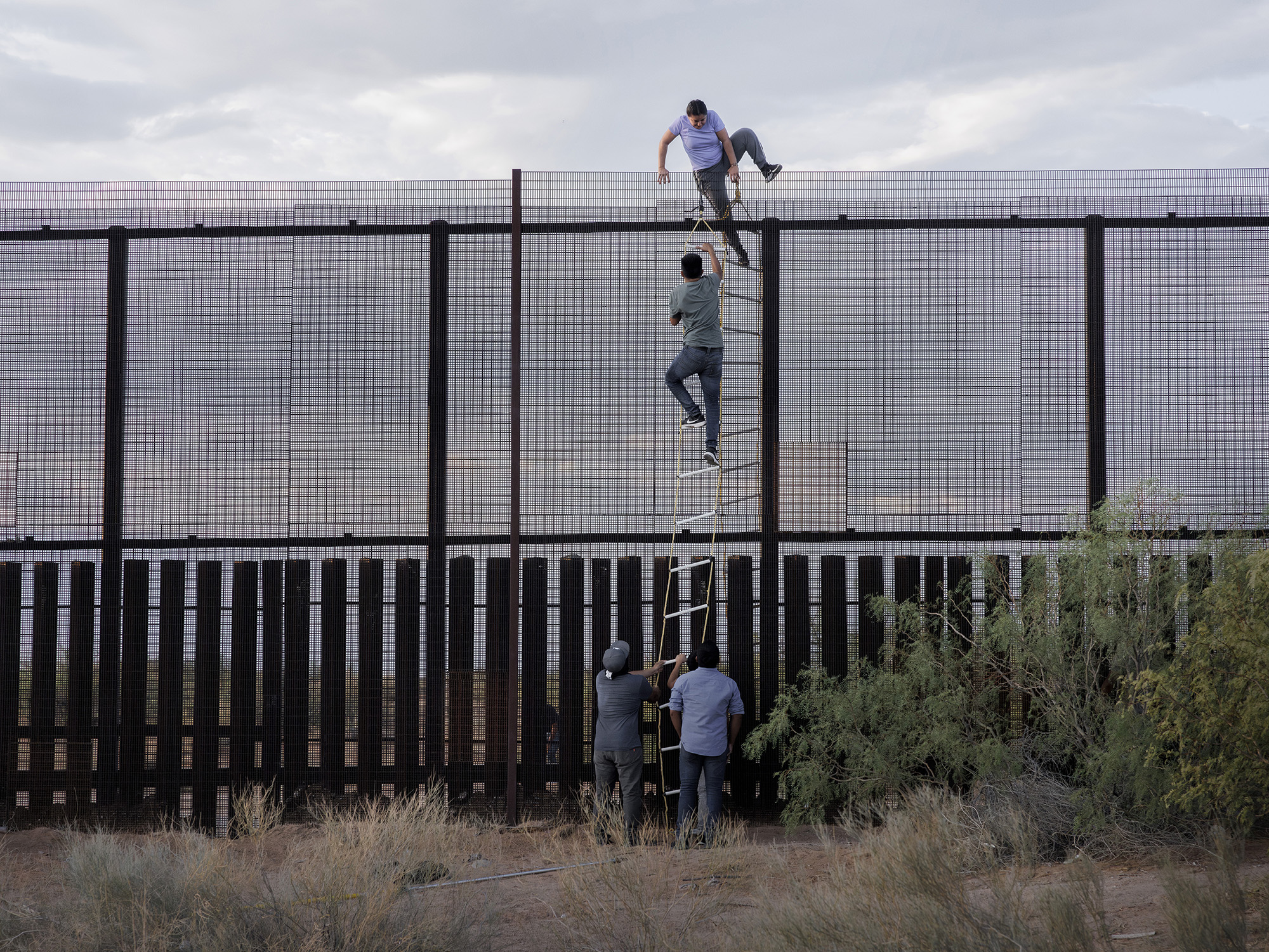
In the desert near El Paso, Texas, two young men from the La Línea cartel assist a group of migrants into the US using a makeshift ladder. Controlling the land and routes, they demand payments ranging from $500 to $20,000 from anyone attempting to cross. La Línea does not operate globally like the CJNG or the Sinaloa Cartel. Instead, they leverage their dominance along the Chihuahua–Texas border to secure logistics and safe passage of illegal migrants and shipments
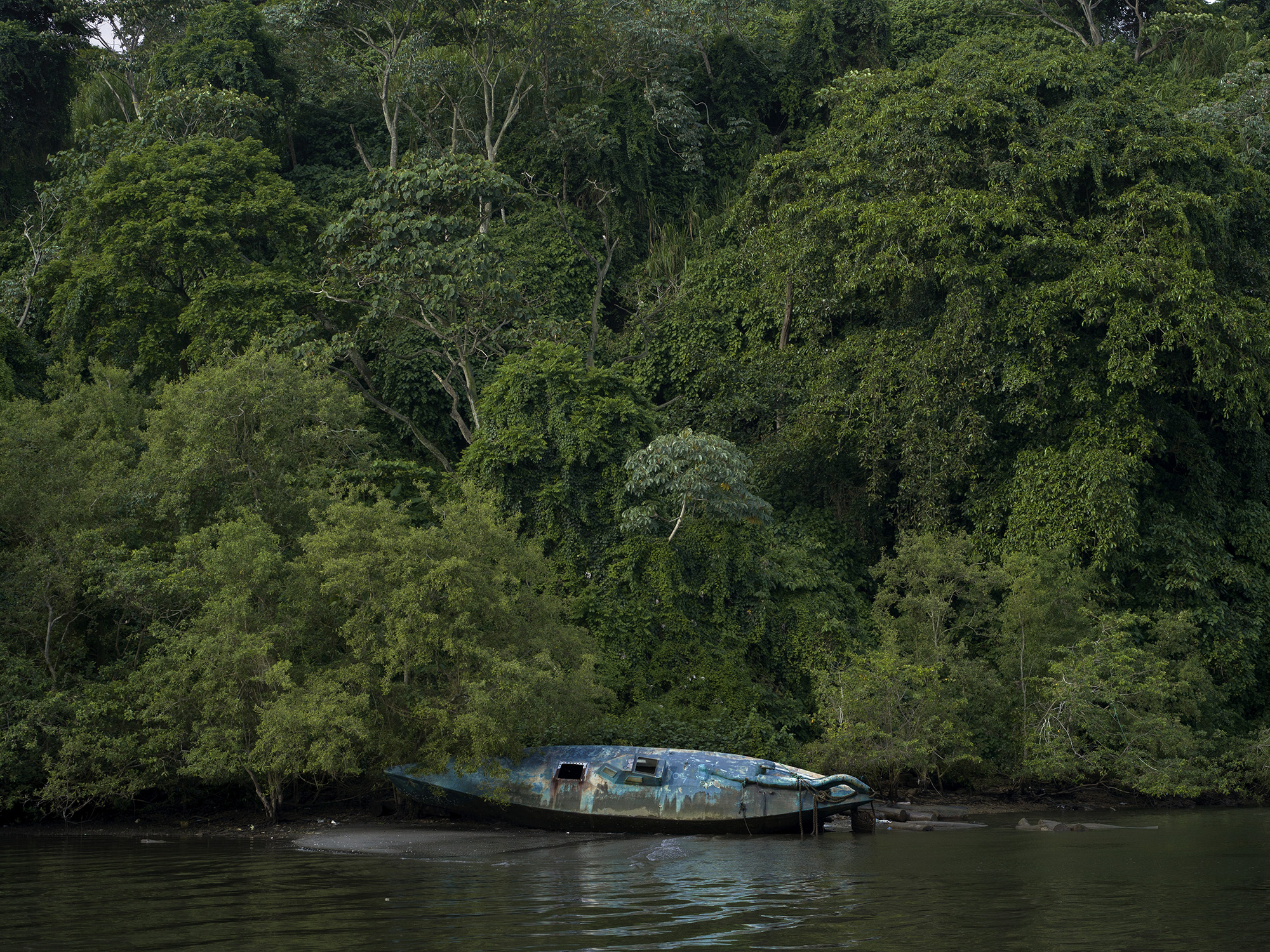
A so-called ‘narco-submarine’ abandoned near Tumaco, on Colombia’s Pacific coast. Most cocaine is smuggled out in containers, on ‘go-fast boats,’ or inside one of these self-made semi-submarines, which can carry 3-7 tonnes of cargo up the coast from Colombia to destinations such as Michoacán, Mexico, arriving two to three weeks later. As coast guard surveillance and radar systems improve, traffickers are constantly adapting and innovating. Colombia has tightened security and the port city of Guayaquil in neighbouring Ecuador is now seeing a staggering rise in smuggling.
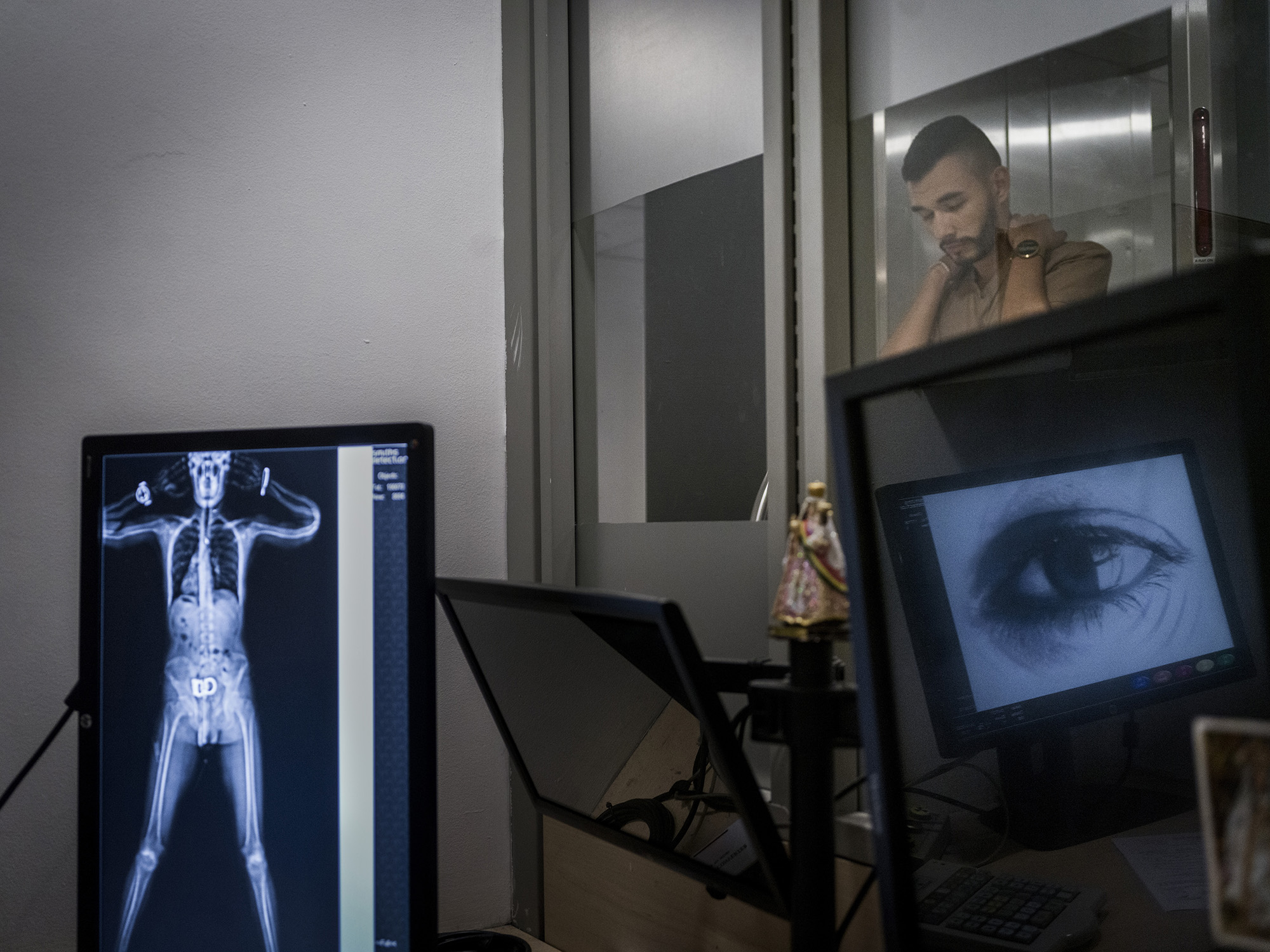
Body-scan images of Juan Pablo’s intestines reveal thirteen capsules—each containing twenty grams of cocaine—that the 26-year-old is carrying inside his body. At El Dorado International Airport in Bogotá, Juan Pablo was profiled by anti-narcotics police and taken to a body scanner, where unusual spots on the image can reveal the so-called ‘mules’— cocaine smugglers. Juan Pablo says he was coerced into smuggling by a street gang to whom his family owed money. ‘If you can’t pay, something bad will happen,’ they threatened. ‘Or you just bring this to Madrid.’
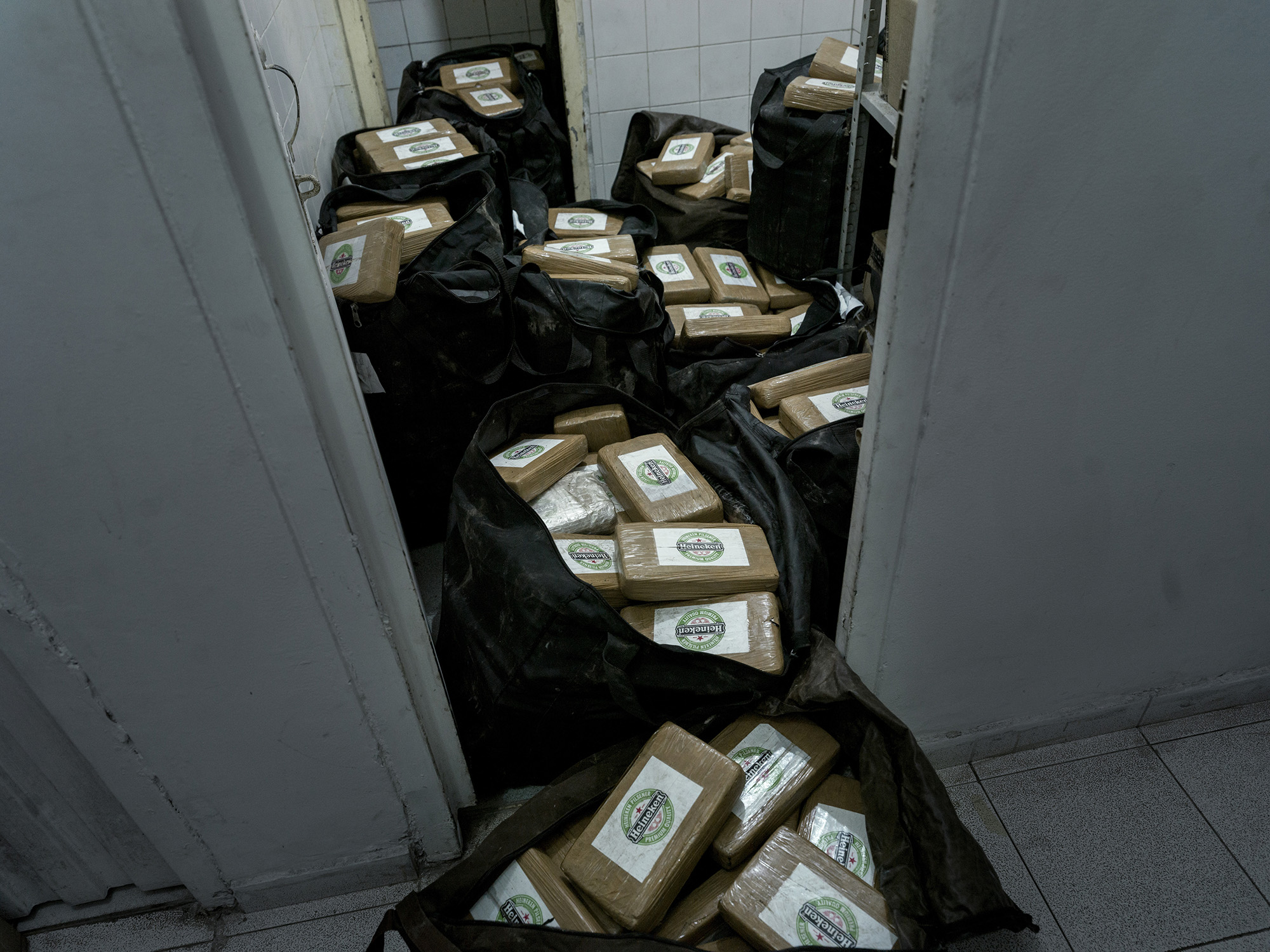
Six hundred and two kilos of cocaine confiscated by the Colombian police inside a container heading from Buenaventura to Spain. Each kilo is marked with a logo, such as ’Heineken,’ ‘Gucci’ or just a random drawing. These logos are stamped onto the kilos by the laboratories and serve as a guarantee of the quality which—in theory—should enable the end-buyer to hold the producer and middle-men accountable if the product is bad or diluted.
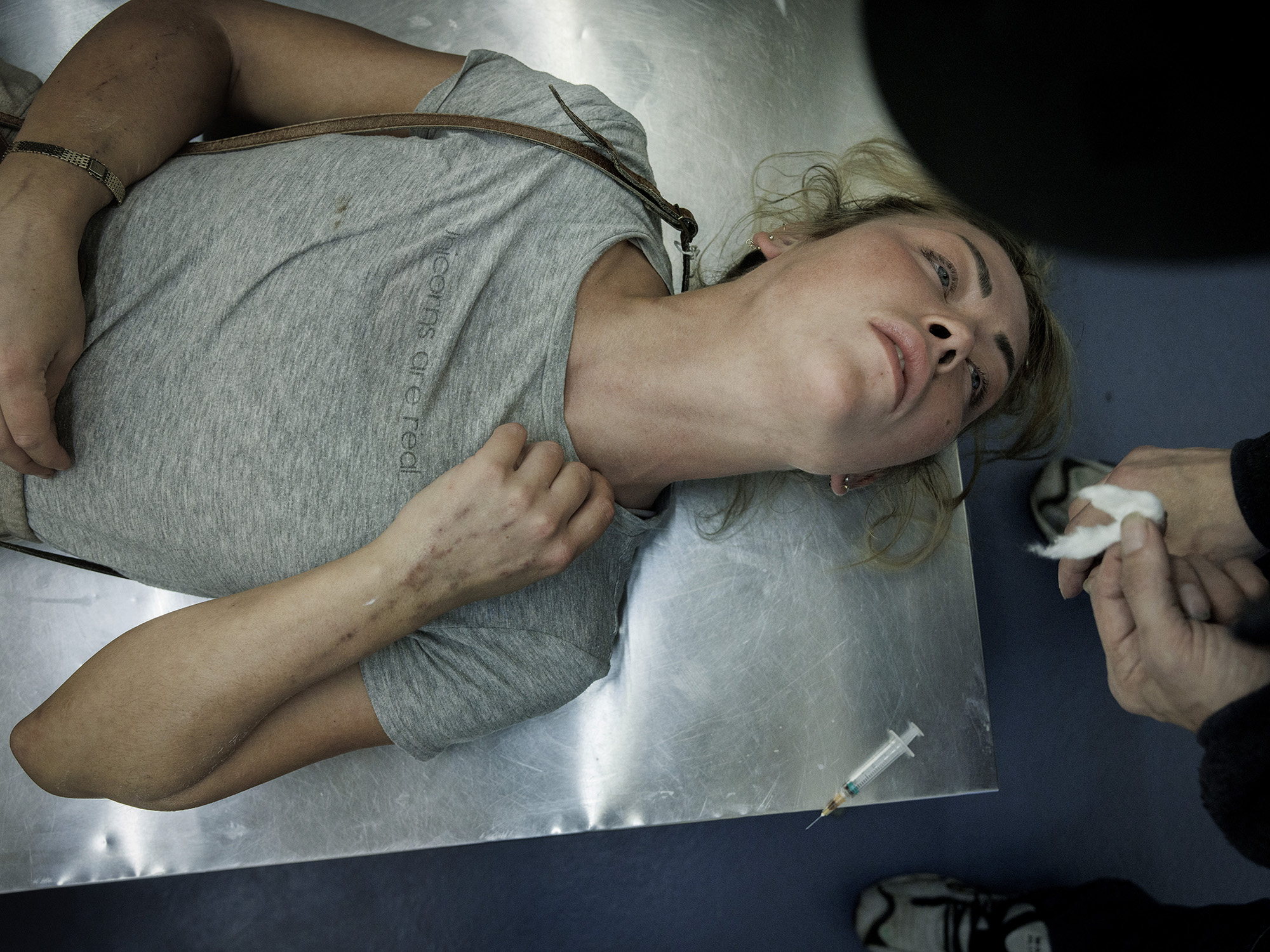
Twenty-seven-year-old Victoria Barbo lies on a metal gurney as an experienced friend prepares to inject her into the carotid artery - for many, the most intense way to consume cocaine. She is fighting to break free from a cocaine addiction. At the age of twenty, she tried a 'speedball', a mixture of heroin and cocaine, for the first time. She overdosed, but was saved, and remembers her first words upon waking were: 'I want more!' After a period of sobriety, she has relapsed. For Victoria Barbo, drug use is closely intertwined with prostitution. Selling sex finances the drugs, but also deepens the craving for more.
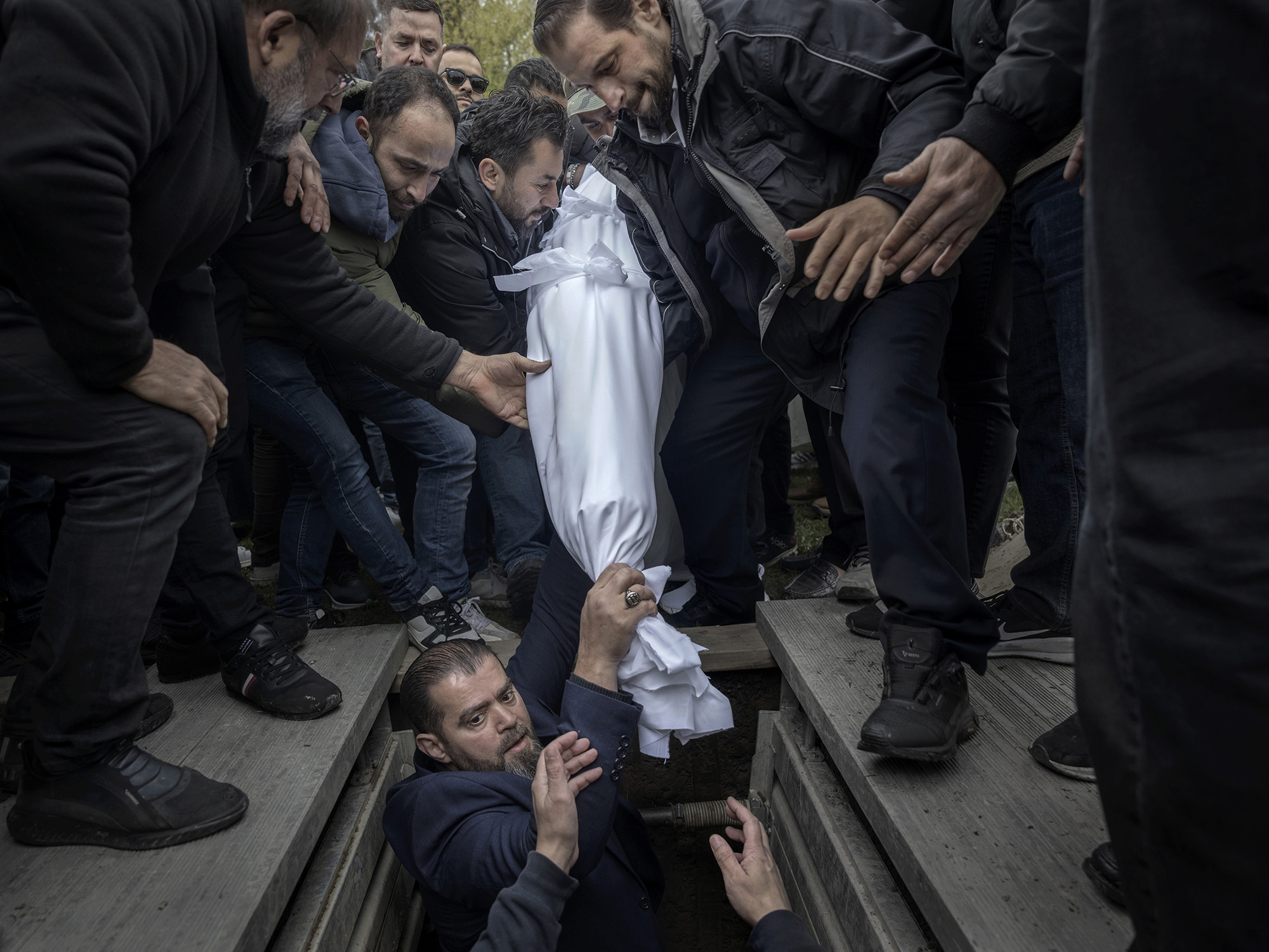
The body of 15-year-old Aiham Ahmad, wrapped in a white shroud, is lowered into a grave by members of the congregation where it is received by his father, Aiman, and a funeral director. 'Aiham was too pure in his heart for this world', his father Aiman says. 'I don't feel hate, I just hope that Aiham's love and kindness can now spread and inspire other young people.' On 29 Tuesday April 2025, a gunman entered a hair dressing salon and opened fire, killing three teenage boys. One of them was Aiham Ahmad who had come in for a haircut before joining the traditional Swedish Valborg celebrations. Nothing indicates that Aiham Ahmad was the target of the shooting or involved in any criminal activity, he was simply in the wrong place at the wrong time, in a country now experiencing an unprecedented surge in gang-related crime, violence and murders. Five young men stand accused of involvement in the murders of Aiham Ahmad (15), Omar Jibril (16) and Milkeas Michael (20). According to the indictment a 20-year-old man travelled to Uppsala with the intention of killing for money. Also known as 'crime-as-a-service'. He was armed with two weapons and considered himself a professional killer. The first shots were fired on the street at two men. One of them fled, while the other ran into a hair salon and locked himself in the bathroom. The shooter followed him inside, where three customers, including 15-year-old Aiham Ahmad, had tried to take cover. Uppsala, Sweden
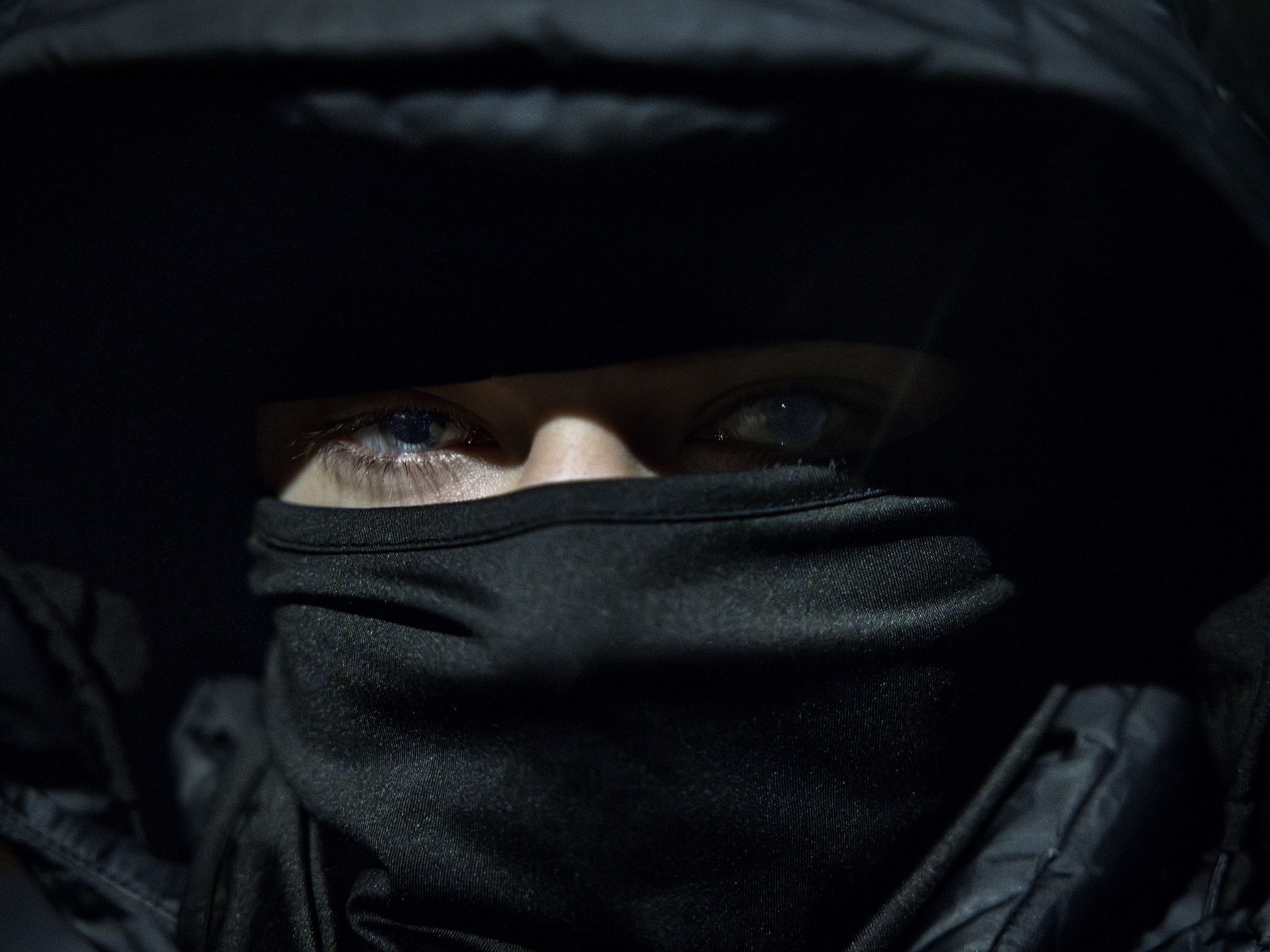
Despite being only 14, this boy has already taken part in several bombings, planting homemade pipe bombs at targets front doors, for example, picked out by the elder leaders of the gang. With a friend, he also runs a growing drug operation, supplying 'the rich kids' at his school with cocaine and other drugs. He does not see himself as a criminal, but as an entrepreneur, someone simply seizes the opportunities in front of him. Undisclosed location, Sweden.
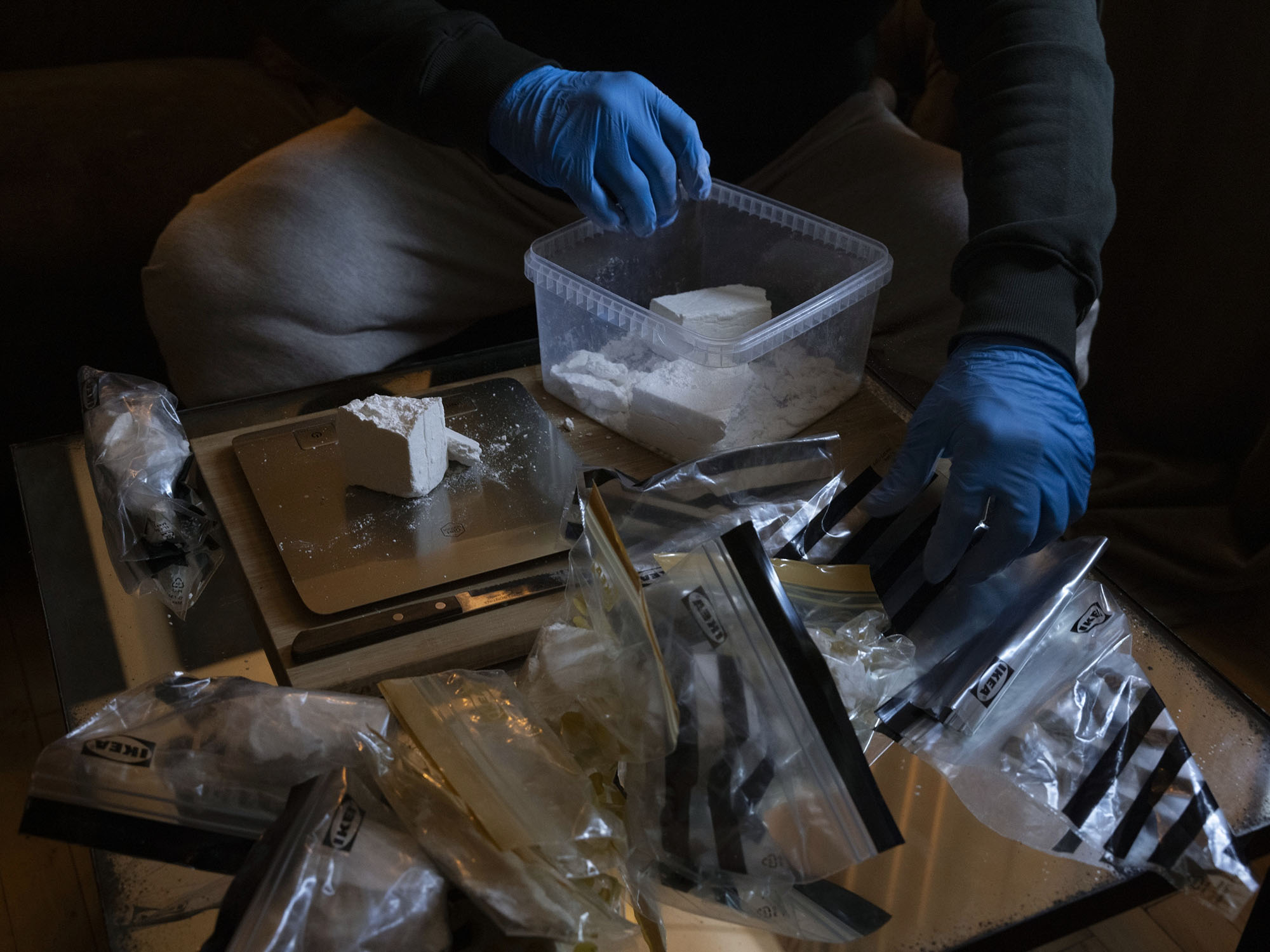
In an apartment in Copenhagen, a kilo of cocaine is expertly divided into blocks of 100 and 50 grams and placed into small plastic bags from Ikea. A kilo of cocaine can result in four years in prison, or enemies and competitors may storm the apartment. So, the bags must quickly be sent out the door and onto the next link in the chain. Illegal drugs now make up the world’s largest black market and Europe has recently overtaken the US as the leading consumer of cocaine. Most cocaine enters Europe through the ports, where its typically offloaded by criminal networks that rely on it’s corrupt dock workers, security personnel, or shipping company employees to move the product through undetected. Once ashore, the cocaine is repackaged and sometimes diluted to stretch the volume. Larger batches may be hidden inside cargo trucks, but in many cases, a courier picks up a few kilos and simply drives them across open EU borders to the next middleman.
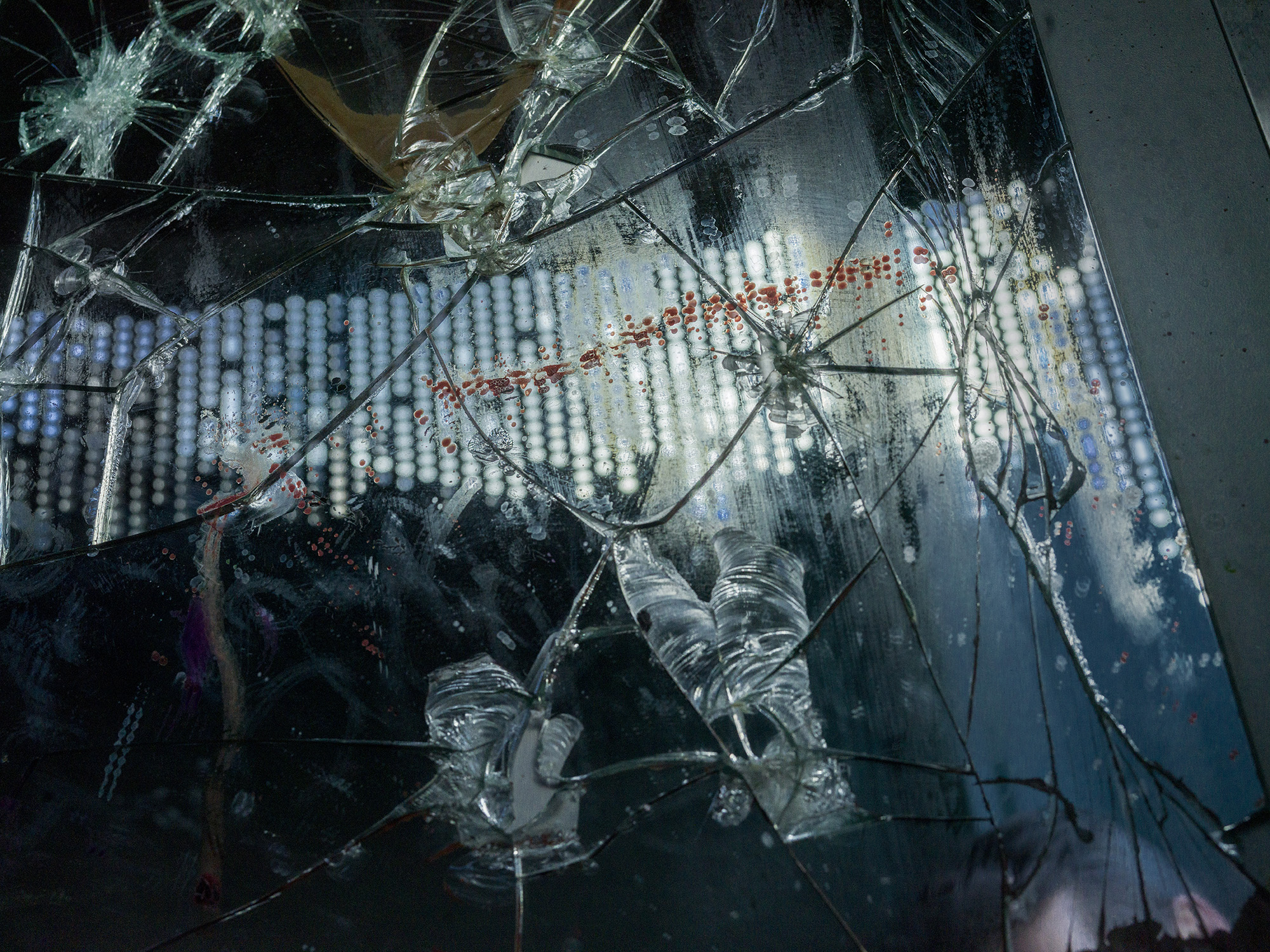
A cracked mirror in a public toilet, stained with blood and powder residues, which has been used for drug consumption. Copenhagen, Denmark.
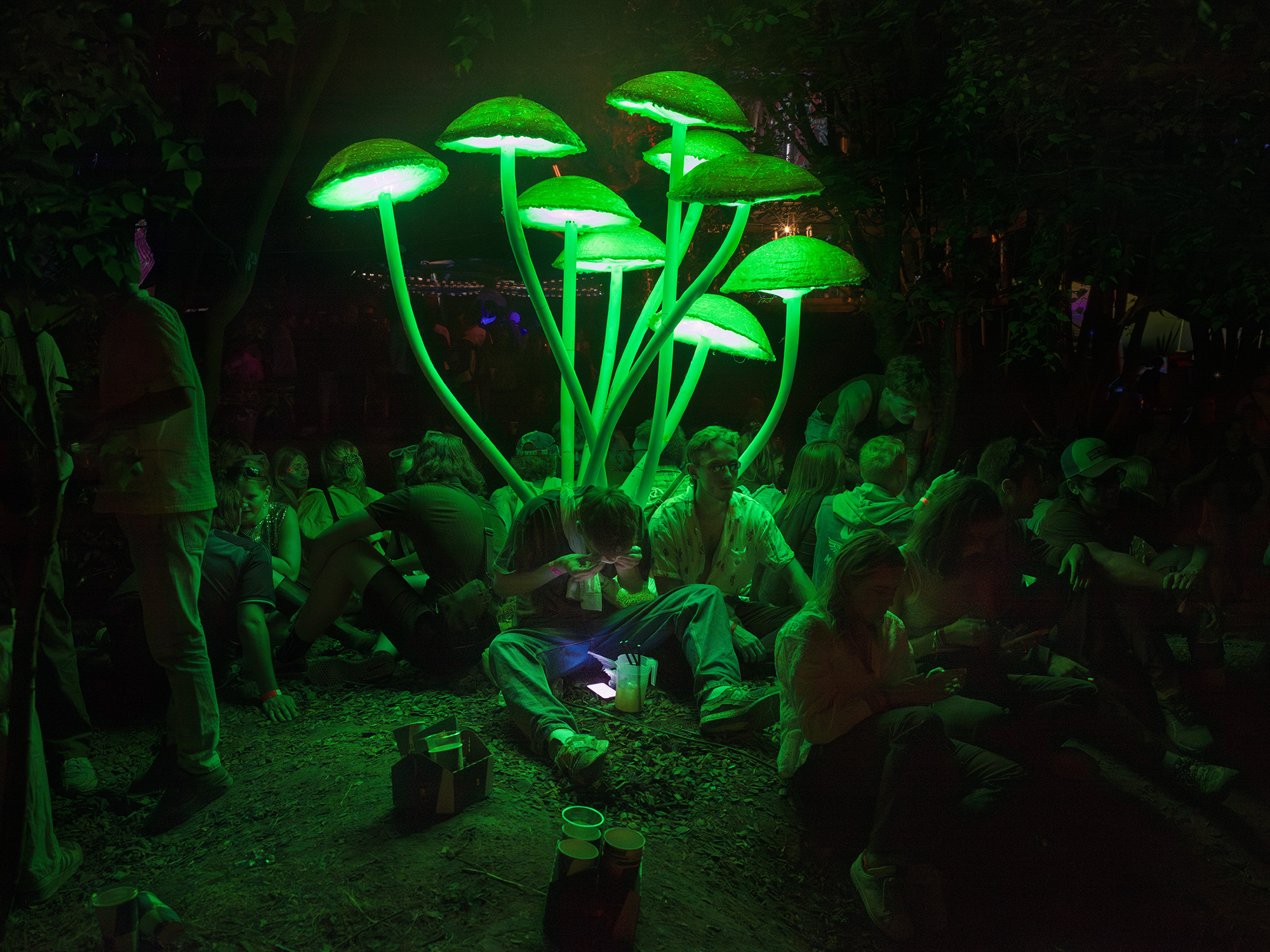
A group of young people relax beneath an art installation designed to resemble magic mushrooms at Distortion, an electronic music festival. The festival has faced criticism for the widespread consumption of illegal drugs by those attending, but the party shows no signs of slowing down. With over 100,000 participants, Distortion aims to cement its reputation as 'the craziest party on the planet'. Copenhagen, Denmark

Alison snorting cocaine in the neighbourhood of Santa Fe, Bogata. In the past, all of Colombia's cocaine was exported, but with the plentiful domestic supply and low price, it is now increasingly being used inside the country as well. Bogata, Colombia

It’s past 3am, but for Natali and the crowd at Culture Box—a techno nightclub in Copenhagen— the night is just getting started. Since its emergence in the 1980s, the culture surrounding techno music has been driven by a longing for transcendence and hedonism, with MDMA, hallucinogenic mushrooms, and cocaine amplifying the experience. For many young Europeans, techno represents freedom and a break from the noise and pressure. Copenhagen, Denmark
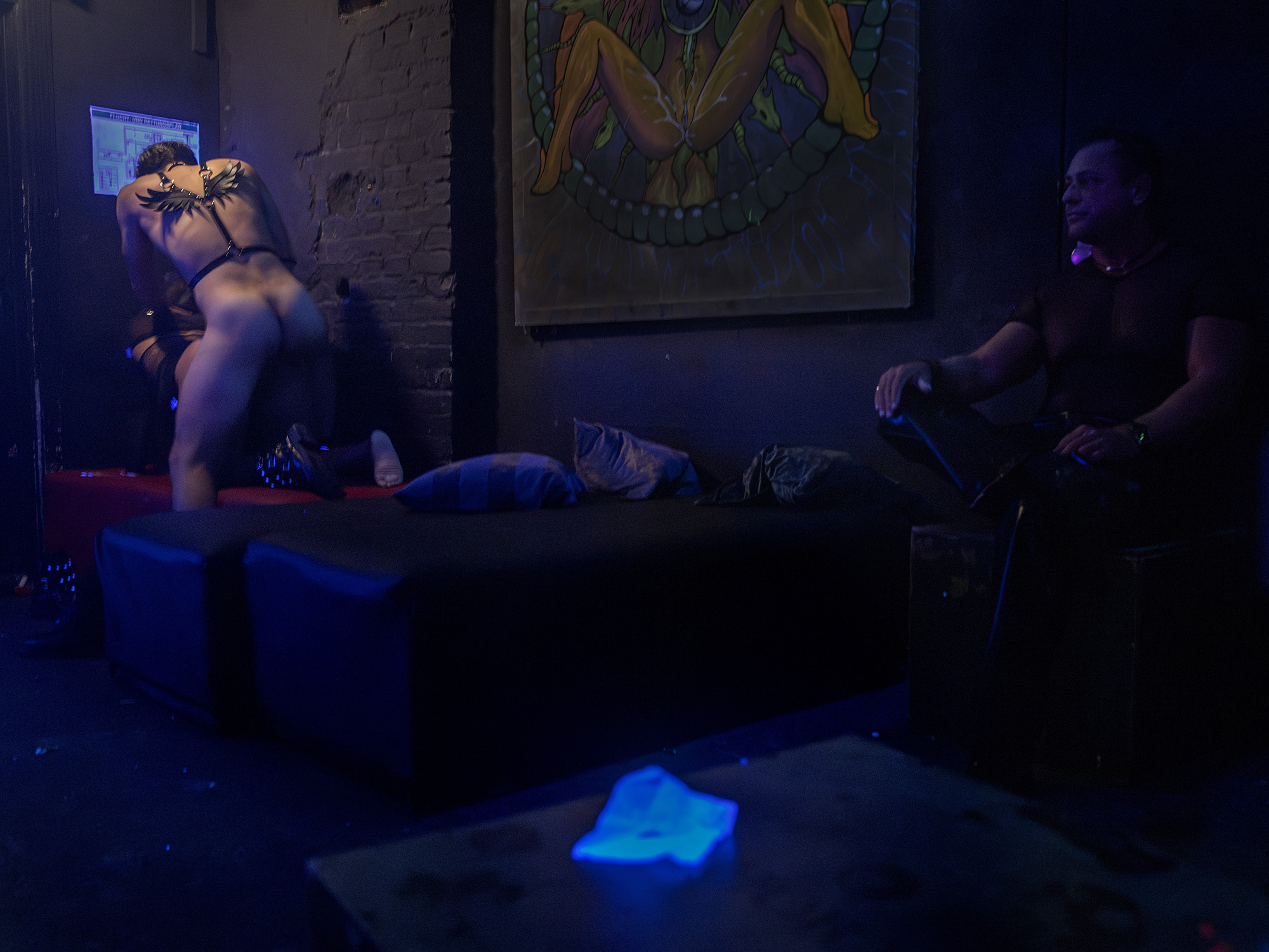
People engaged in sexual activity at the KitKatClub. The nightlife in the German capital is known for being among the most intense and unrestrained in the world. While the city wakes up, the parties continue in dimly lit halls and basements all over town, like here at the KitKatClub. Berlin, Germany
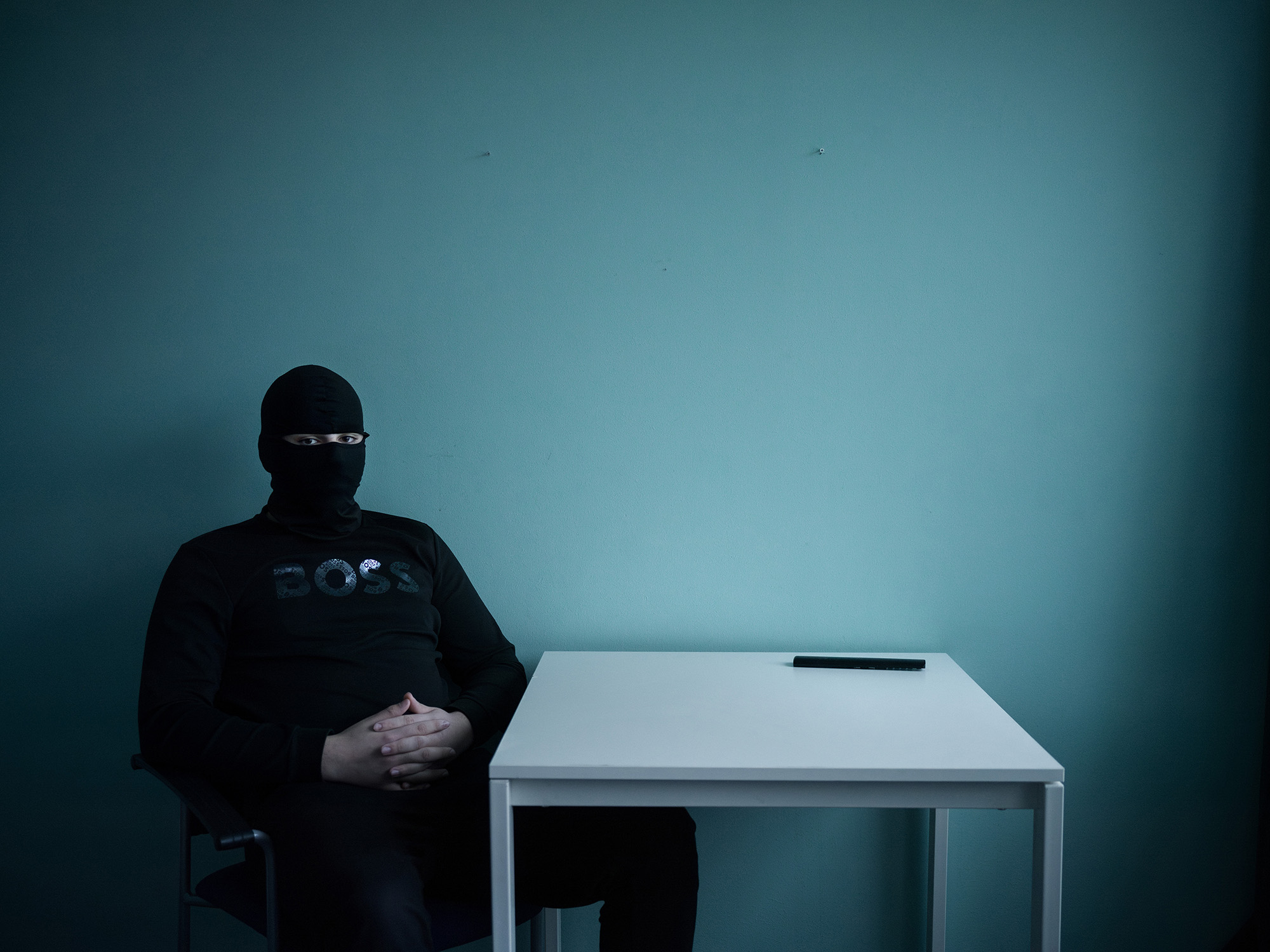
'I'd describe myself as a friendly person, a happy person, actually', the 15-year-old boy explains. He is affiliated with the Swedish gang Foxtrot, and last year he was placed in a youth home after a violent incident with another teenager. In a subsequent police raid officers found a Colt 1911 semi-automatic pistol, cash worth the equivalent of USD 19,000 and 65 grams of cocaine. Since then his reputation and ties inside the Swedish underworld have only strengthened. For the sake of his mother, he attends school and tries to stay out of street fights, while growing his reputation and drug business. 'People label me as a criminal, but I'm not like those ordinary, clueless criminals, I'm smarter', he claims. Undisclosed location, Sweden.