
18 November 2025, Independence Park, Kingston, Jamaica. 35,000 Jamaicans, two hundred Curaçaoans. The tenth minute of stoppage time. Then the final whistle. The sensation is complete: Curaçao, a Caribbean island with a population the size of Cambridge, will travel to the World Cup in the USA this summer as the smallest country to have qualified in the competition's history.
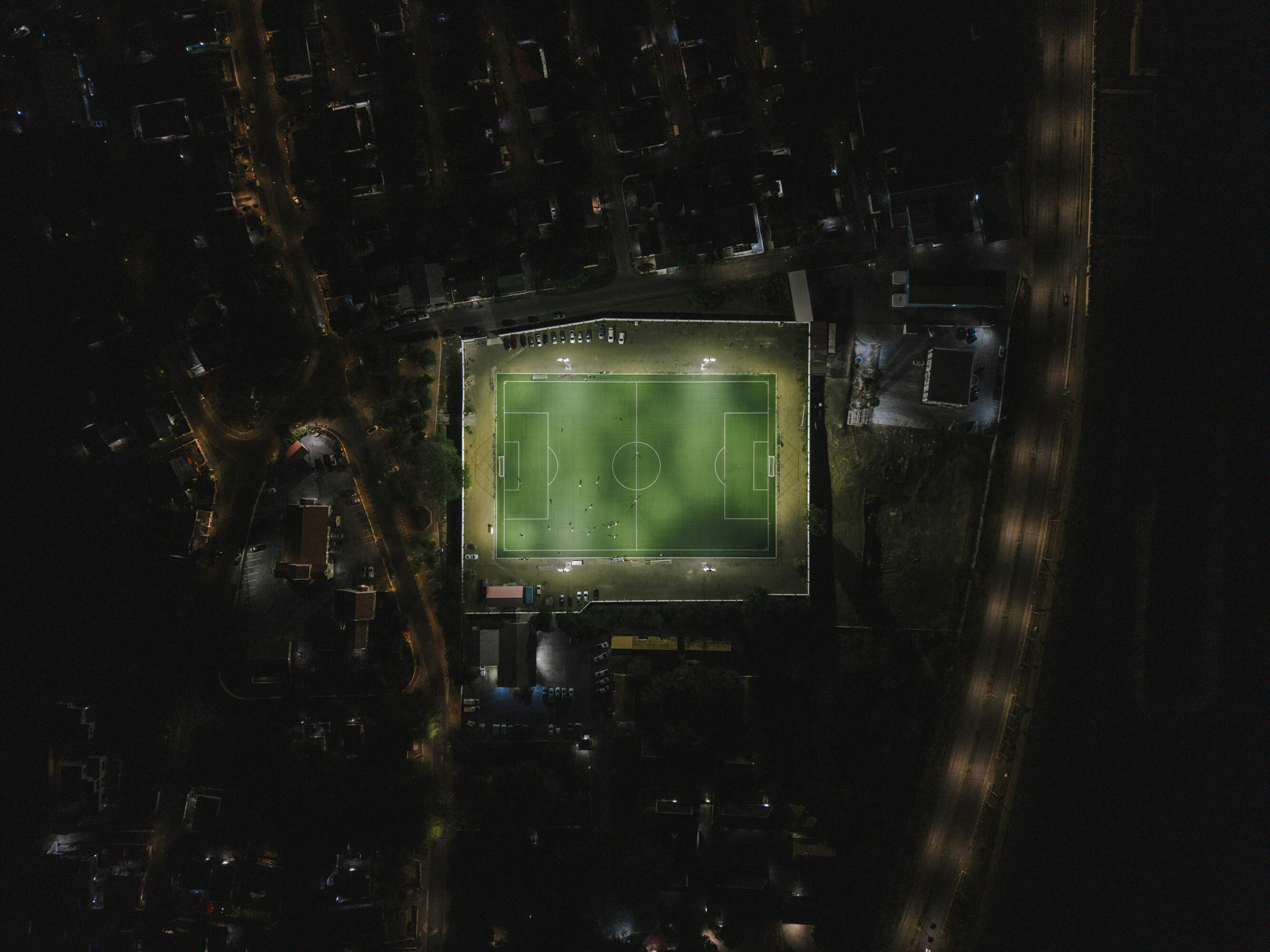
The training ground of CRKSV Jong Holland, the island's oldest and most successful football club founded in 1919. The island's top league, the First Division (Prome Divishon), is semi-professional, most players hold regular day jobs and train in the evenings and play on weekends.
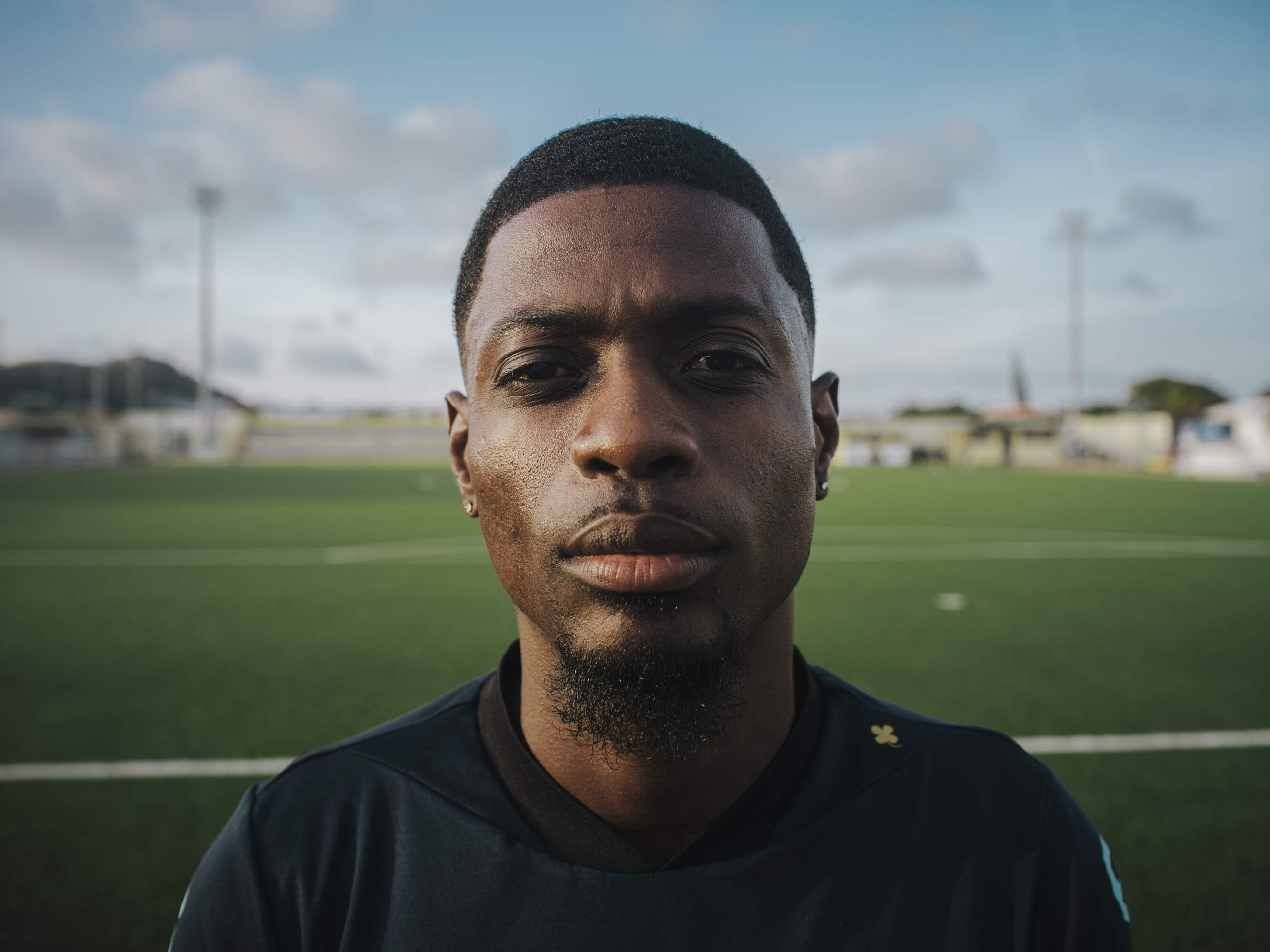
Bryan (33) has played for CRSKV Jong Holland for many years and is the club's captain. He has had around ten call-ups for the national team. For the younger generation, social media has made it easier to get trial opportunities in Europe. But he admits that local players have almost no chance of making the national team anymore and says 'That is really demotivating.'
“When the referee blew the final whistle, I almost cried,” recalls Stephany Seinpaal. Black curls, blue shirt, friendly smile. Sint Michiel, a quiet neighbourhood in the west of Curaçao. This is where Stephany lives with her mother and her two children. Colourful houses behind fences, dogs that bark as you walk past. Stephany works in the finance department of a hospital. She got into football through her son, who plays himself. Stephany attended every home match of the national team and made a special trip to Kingston for the decisive match. “After the final whistle, we were attacked by Jamaican fans throwing plastic bottles,” she says. Immediately afterwards, Stephany and her friends went to a church in Kingston to give thanks and pray for protection on their journey home. Meanwhile, the streets of Curaçao were in uproar. Families poured out of their homes. Strangers embraced one another. For days on end, the inhabitants of an island that hardly anyone knows celebrated. A national team that, historically, has lost more matches than it has won. And now the World Cup. How is that possible?
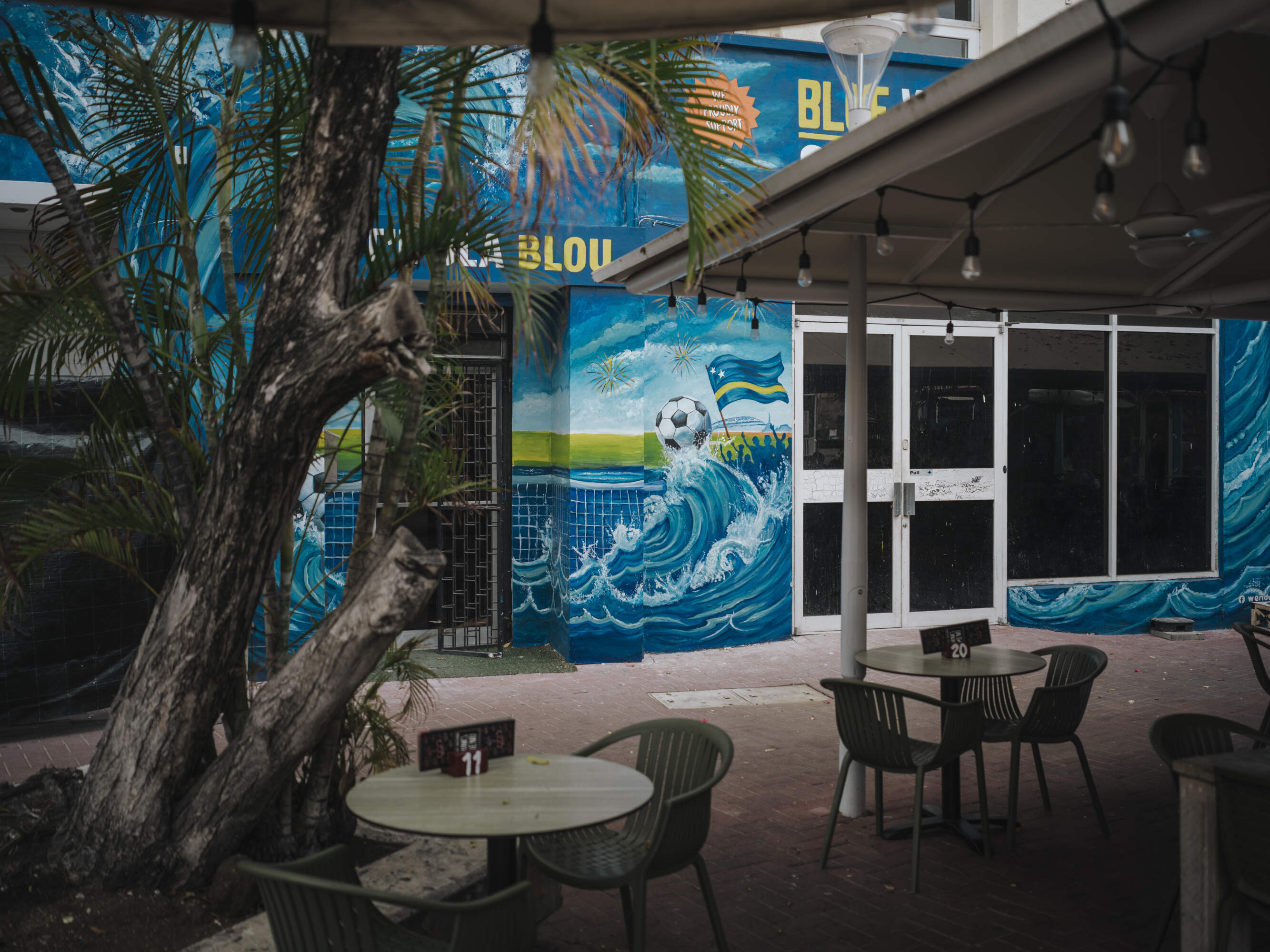
A football themed mural on a bar's wall.
Valdemar Marcha sits on the veranda of his house in Jan Thiel, wearing a turquoise polo shirt, shorts and thick-rimmed glasses. It is just before midday, and the heat is starting to become stifling. His wife brings water with ice cubes. In the living room behind him, you can hear grandchildren playing. On the wall hangs a faded world map, dotted with pins. Marcha has spent his life trying to understand Curaçao: cultural anthropologist, university rector, airline president, author. He knows the island inside out. On the table lies a stack of books he has written himself. Marcha reaches for the top one. It shows a smiling man balancing a football on his index finger. “Ergilio Hato,” says Marcha. “The Black Panther.” Goalkeeper, national hero. The greatest footballer Curaçao has ever produced. Ajax, Feyenoord, Real Madrid, they all came to Curaçao and made him offers. Hato turned them down. He never wanted to leave the island. As a child, Marcha’s father took him to the stadium to watch Hato play. “I saw a man nearly two metres tall, flying like a bird,” he says. After his career, Hato worked as an assistant in the catering department of Marcha’s airline ALM. They became friends. In his old age, Marcha looked after him.
Ergilio Hato was one of those who stayed in Curaçao. Today’s national team players know the island, if at all, only as a holiday destination. Almost all of them were born in the Netherlands and grew up there, where their parents and grandparents once sought work and a better future. “Our players have one foot in the world,” explains Marcha. “One foot in the country where they grew up, where they learnt to think, feel and act. The other foot in the land of their fathers and grandfathers, who have passed on values, norms, rituals, heroes and symbols to them through invisible yet palpable channels.”
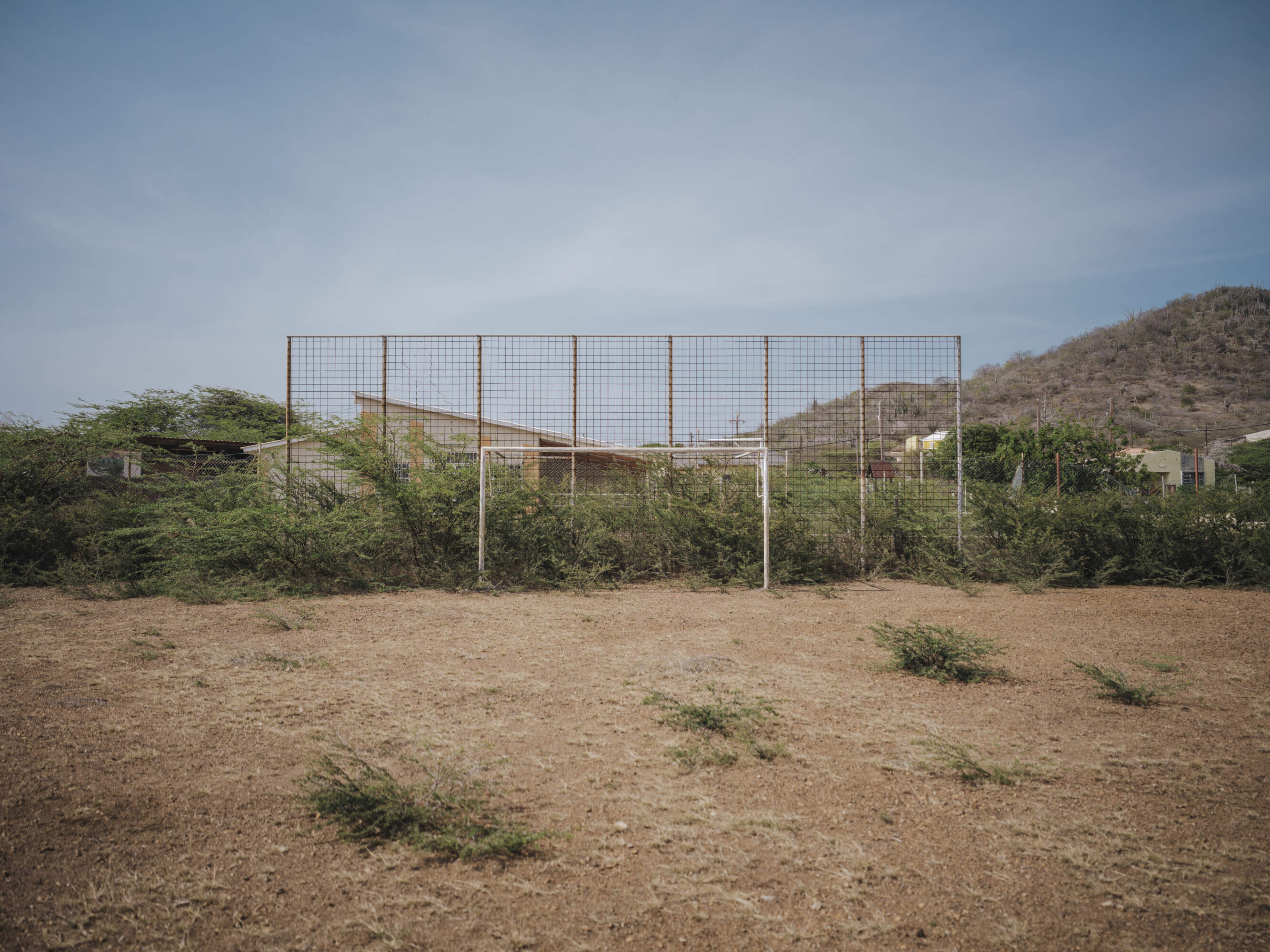
Football goal posts on a pitch that has been dried out by the sun. Football has been played in Curacao since 1909, when the local population first took on a team comprised of Dutch navy personnel.
The ancestors of these fathers and grandfathers did not come to this island of their own free will. Almost all Curaçaoans are descendants of people who were shipped here, sold, and sent on. The original inhabitants, the Caquetio, were deported by the Spanish. In 1634, the Dutch took over and turned Curaçao into the largest slave trading hub in the Caribbean. On 17 August 1795, a slave named Tula refused to go to work. He moved from plantation to plantation. Hundreds of slaves joined him. For a month, the uprising shook the island. Then Tula was captured and publicly tortured to death. Slavery continued for another 68 years. For centuries, he was regarded as a criminal by the Dutch. It was not until 2023 that the Dutch state rehabilitated him. “We were their colony,” says Marcha. “And informally, we still are. Economically, at any rate. When Curaçao wins, it’s a Dutch victory. When we lose, we’re suddenly something else.”
What qualification means for Curaçao, he says, is one thing above all: recognition. He points to the faded world map on the wall. Among the many pins, there is one in orange in the Caribbean, on a patch of land that is barely visible. “A small island with 160,000 people, half the size of the FC Bayern Munich fan club. And now the world knows it.” But immediately afterwards, his voice turns serious. “Now everyone’s talking about the Blue Wave, the Blue Wave. But it’s not the little guy who’ll be making the money. What comes after the Blue Wave?”
“We can only answer that question later,” says Stephany Seinpaal with a shrug. A little later, on the coast of Boka Sint Michiel. On a concrete football pitch with broken goals, young men play barefoot and call out to each other in Papiamentu, the island’s Creole language. It sounds like a conversation between birds, lyrical and rapid. Stephany greets them warmly as she walks past. Down on the beach, she sits on a boat and gazes out at the blue-and-orange glistening ocean. The sun is slowly setting.
The Bacuna family comes from this very place. Two of their sons now play for the national team, Juninho and Cuco, both born in Holland but with their roots here. Stephany’s son dreams of following the same path. He is 16; this week he was in Holland with a Curaçaoan youth squad, playing friendly matches against teams such as FC Twente. They lost every game. Stephany herself once went to the Netherlands to study law. Then she became pregnant, came back, and never finished her degree. “But I still believe in him,” she says. Then she laughs briefly. “Every mother says that, of course. I’ve always told him: I’ll be proud of you, no matter what you choose in life. But whatever you do, give it your all.”
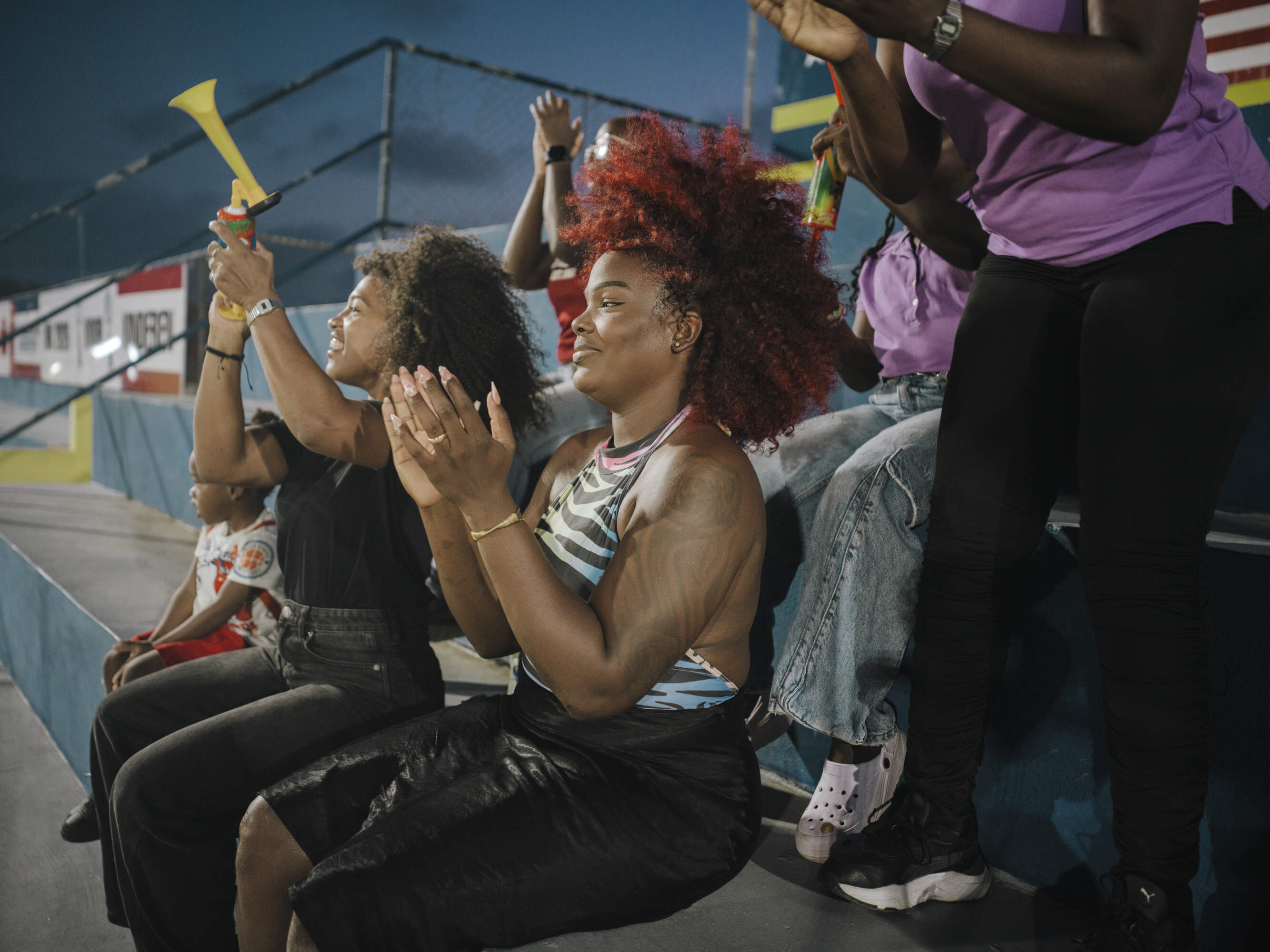
Fans applaud the teams at a First Division (Prome Divishon) match.
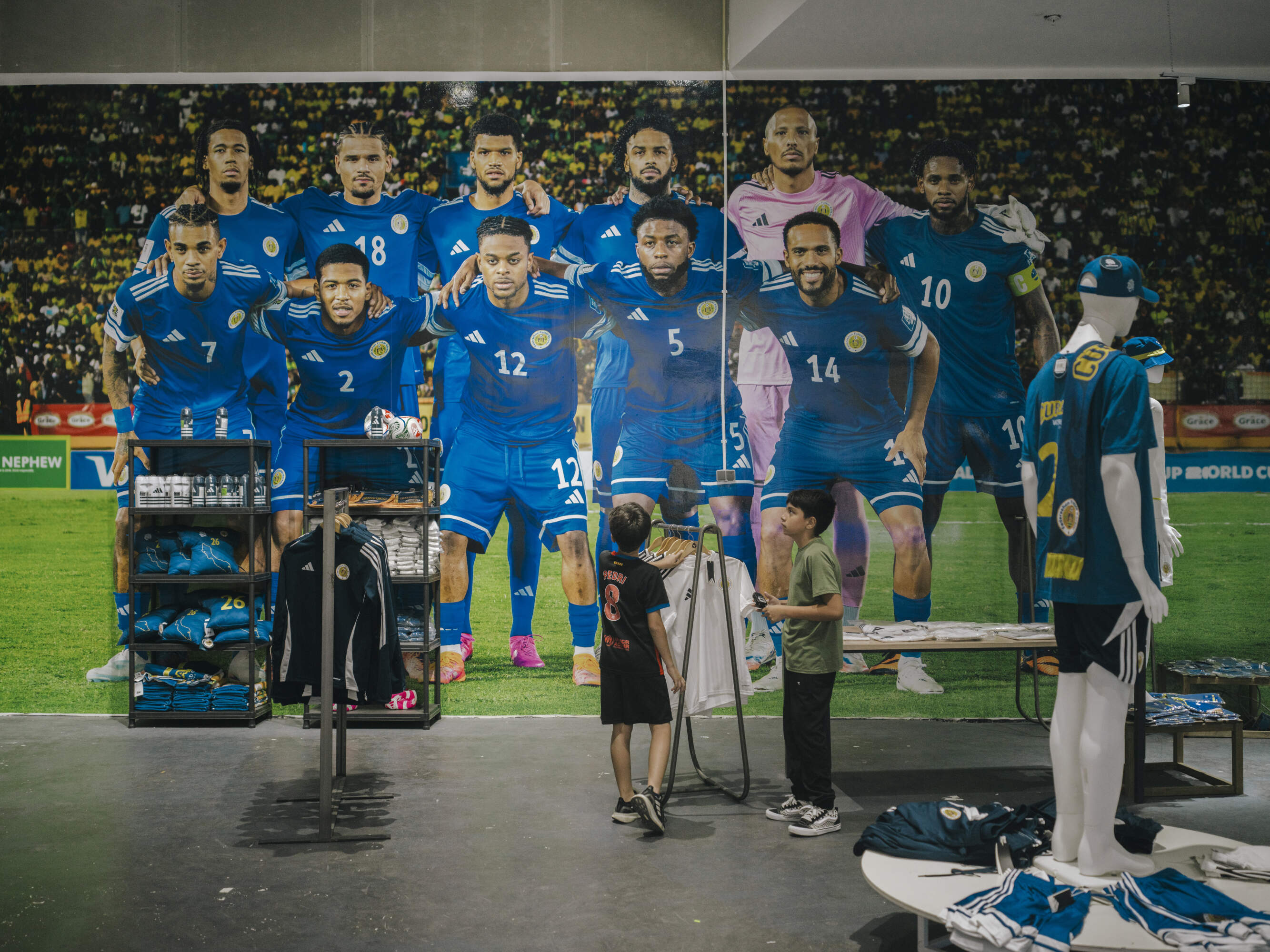
Child stand beside the national team squad portrait in Curacao's fan shop. Dick Advocaat, 78, had led the island to the World Cup but resigned in Feburary 2026 for personal reasons. His successor Fred Rutten takes charge of the smallest nation in World Cup history. In the group stage, Curacao faces Germany, Ecuador and Ivory Coast.
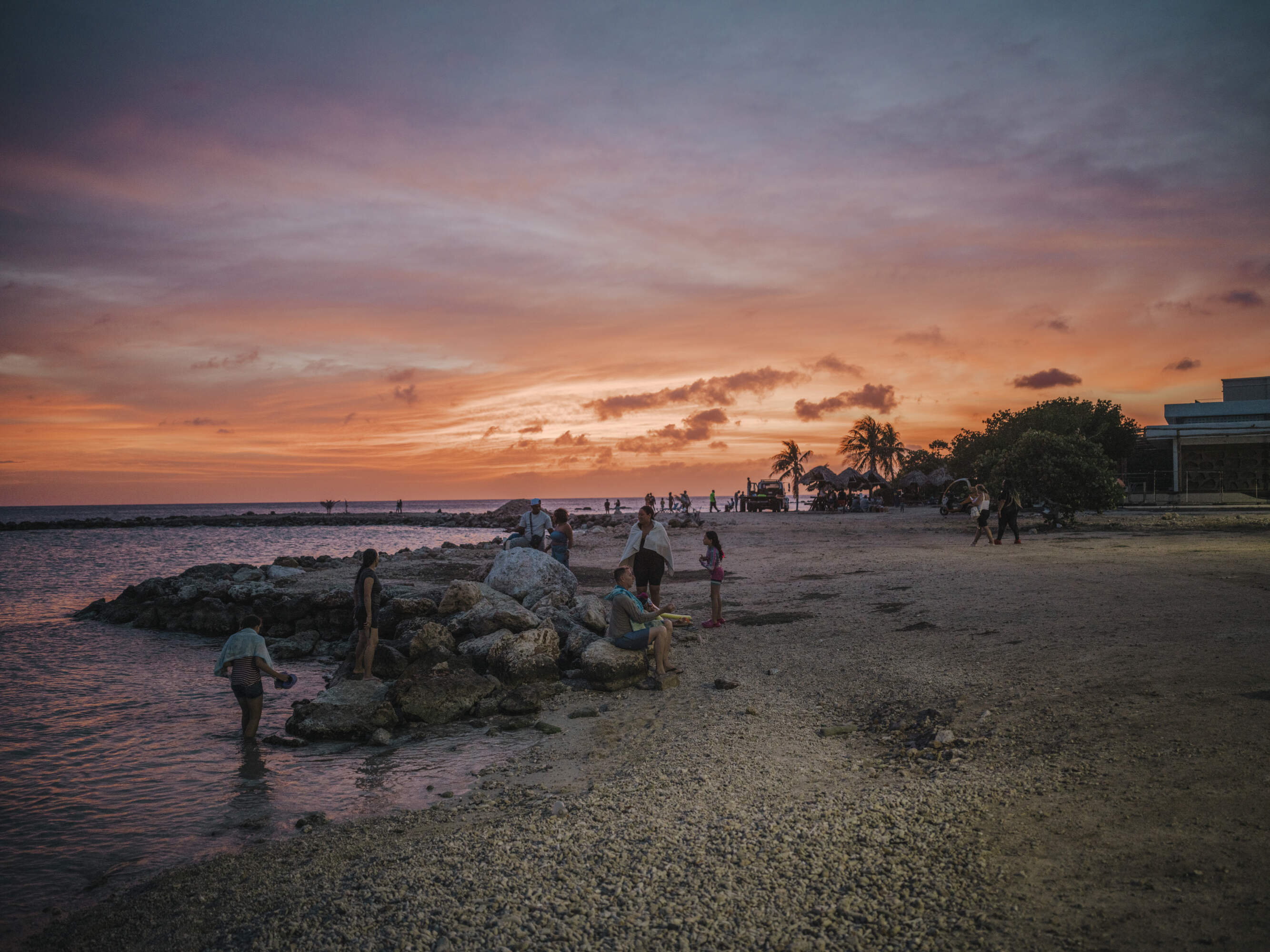
People ralax on a beach as the sun sets, leaving a golden horizon.
The sun has now almost sunk into the sea. Stephany gazes thoughtfully into the distance. There are Dutch people who look down on Curaçaoans, she says. But the locals themselves are partly to blame for that. They don’t finish school, they don’t take any risks, they rely on others to make decisions for them. “Many people here just accept things as they are,” she says. “But you have to stand up and say: I am no longer your slave. I am not your enemy. If you don’t do that, they will always treat you like this.”
She sees the hardship in everyday life. When she thinks about her son’s future on the island, she feels no confidence. “I don’t see anything changing,” she says. “The government gives you your tax refund, and a few days later petrol and electricity prices go up. The money’s gone before it’s even in your hands.” She knows a woman with four children, whose husband is unable to work and earns the minimum wage. Sometimes she calls. “Hey, can you help me? I need food until I get paid.” Stephany helps when she can. “Then at night you ask yourself: Have the children eaten? Do they have electricity?”
This makes her all the more torn when it comes to the question of who should play for Curaçao. Deep down, she’d love to see local players at the World Cup. But then she considers what the association has built up over the last few years. Big Dutch names have taken charge of the team – Kluivert, Hiddink, Advocaat. One after another, they’ve professionalised the structure, the preparation and the mentality. “We have plenty of local talent,” says Stephany. “But when you see how they play here in the local league and then the players from Holland, you have to be honest: their standard is far above ours.”
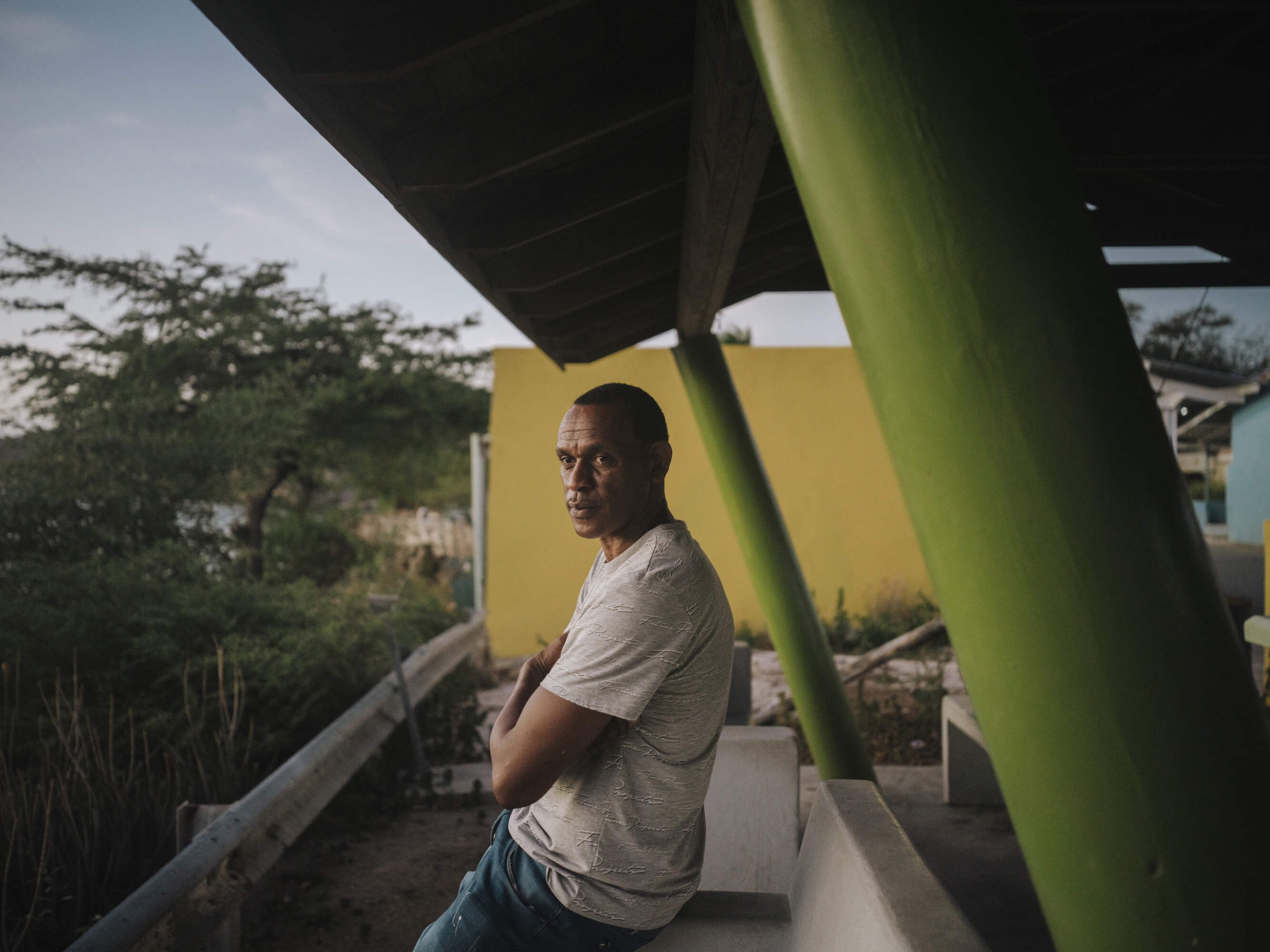
Xavier, 50, spent 20 years as goalkeeper at CRKSV Jong Colombia, one of the island's most successful clubs . By day, he works in a prison. 'The Dutch think badly of us', he says. 'They automatically associate Curacao with durgs and crime.'
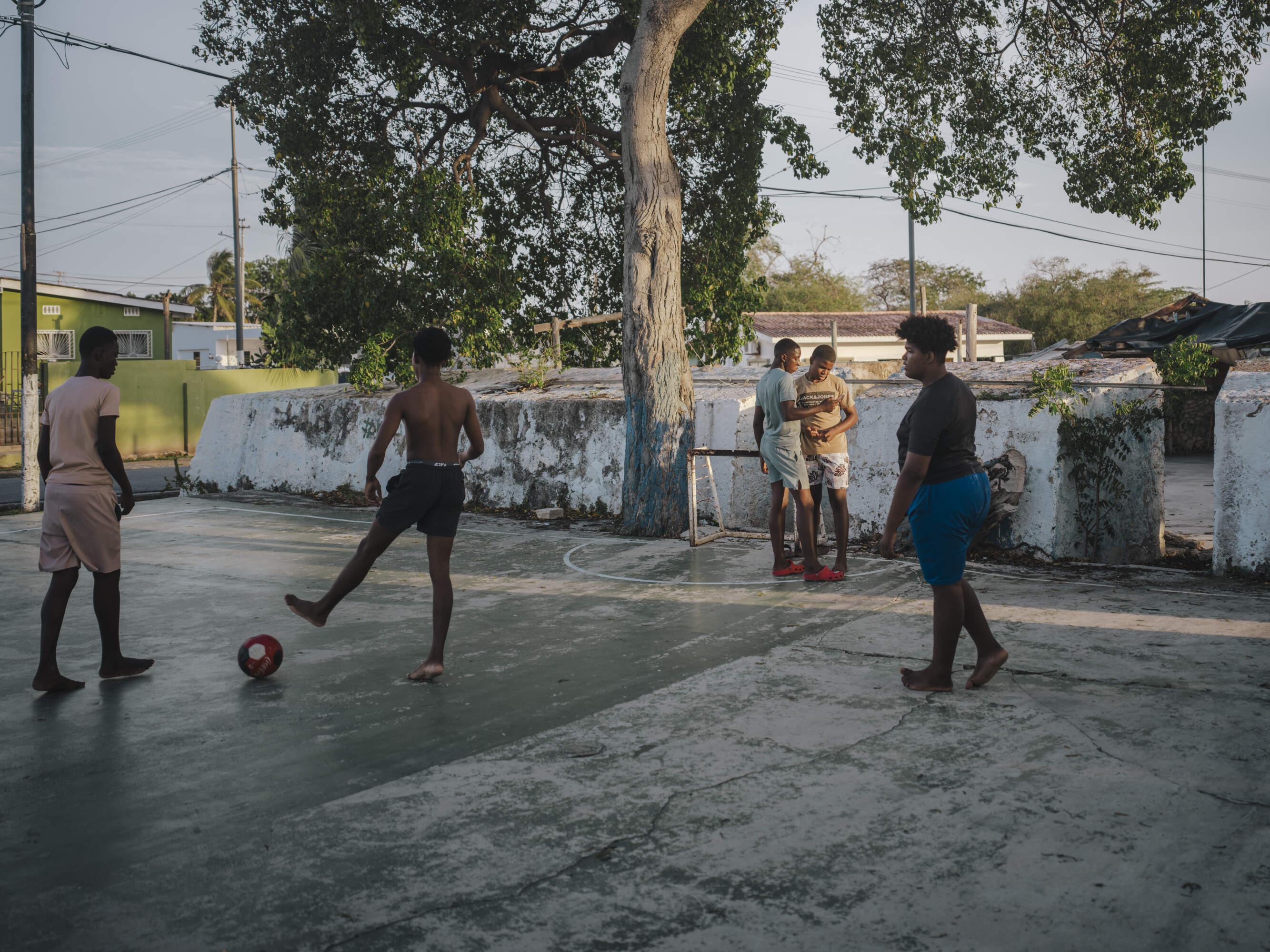
Curaçao. Children play football in Boka Siunt Michiel, a coastal village west of Willemstad. Once one of the island's largest plantations, today a neighgbourhood where fooballers dream of a future that almost alwasy runs through the Netherlands first.
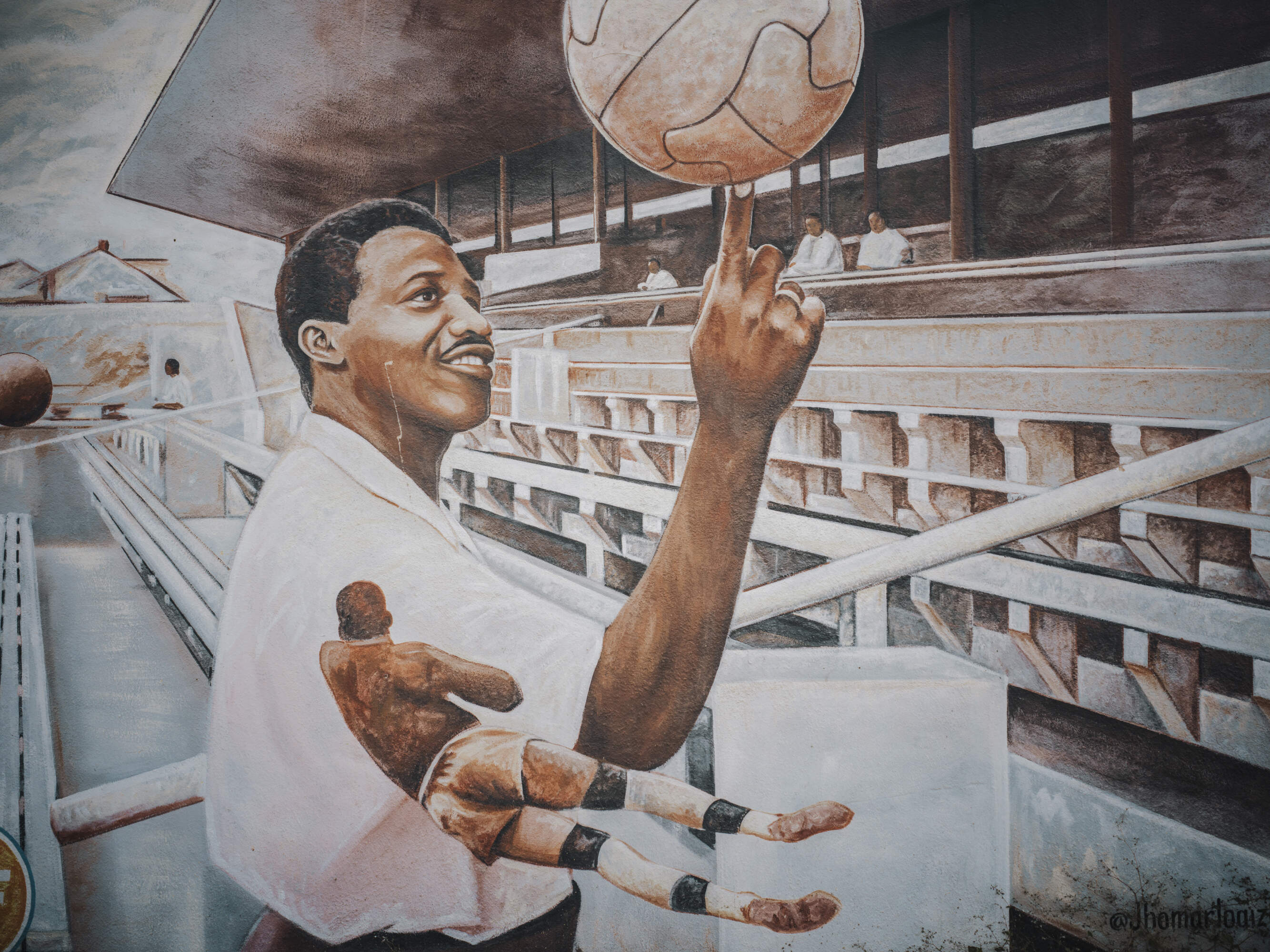
A portrait of Ergilio Hato, considered the best footballer in Curaçao's history. Known as 'Pantera Negra' (black panther) and 'Vliegende Vogel' (flying bird), he was offered lucrative contracts with Real Madrid, Ajax and Feyenoord, but rejected them all pursuing a career at Antillean Airlines and playing for local club CRSKV Jong Holland.
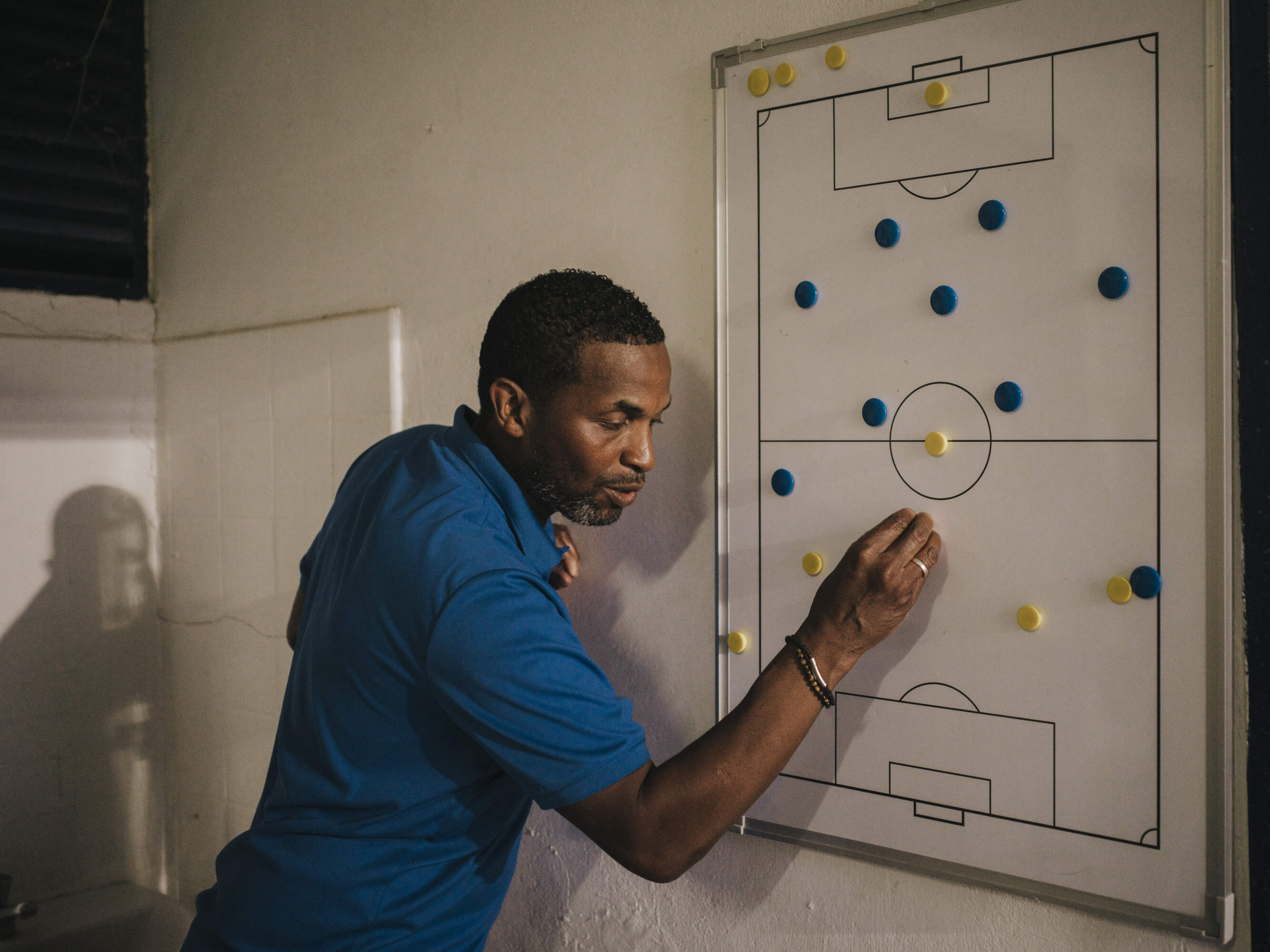
Lennox Mauris, coach of CRSKV Jong Holland, goes through tactics with his squad. The 49 year old played for the Netherlands Antilles national team and later served as assistant coach of the national side. Today he coaches the island's reigning champions.
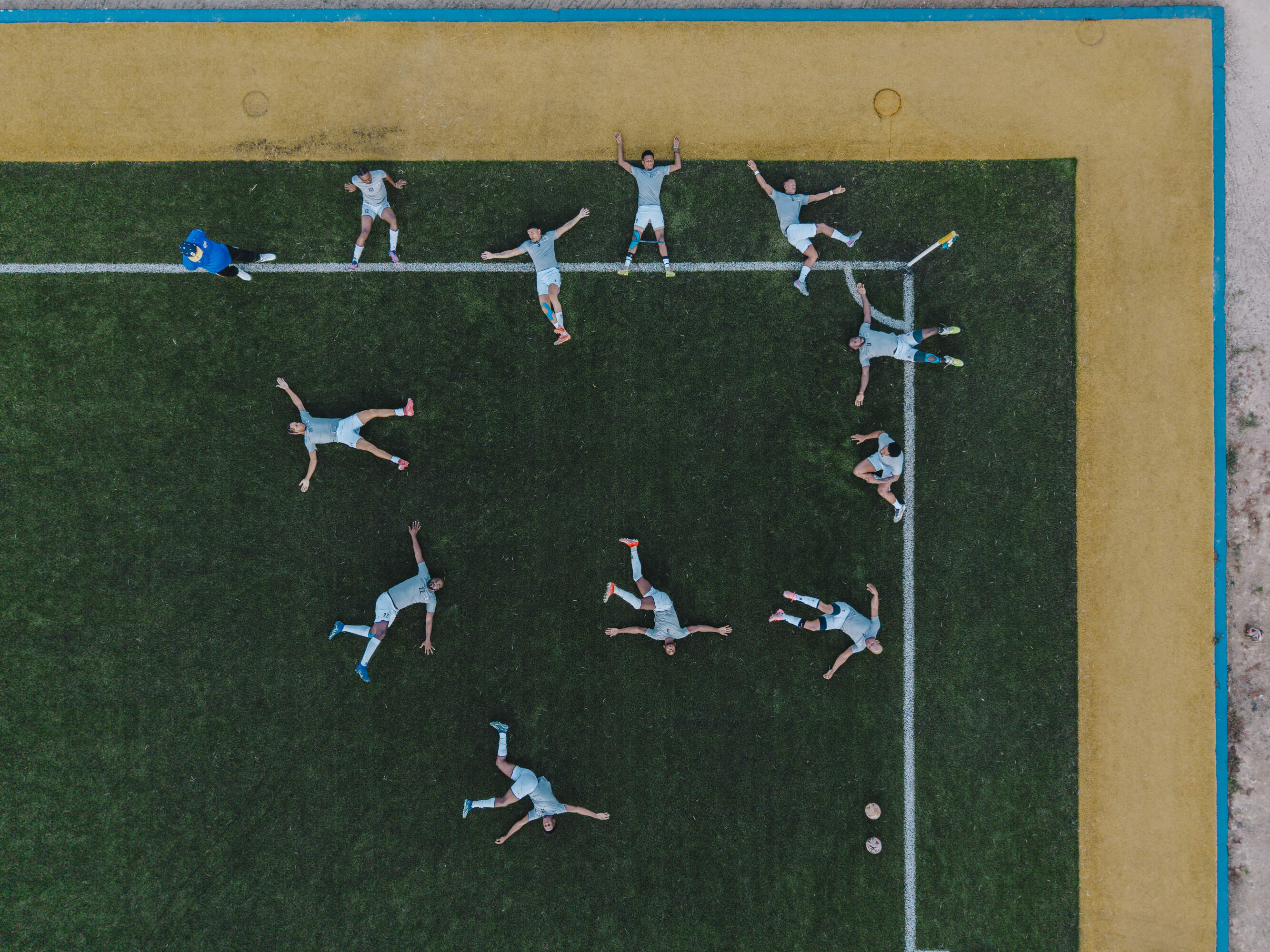
Players warming up on an artificial turf pitch.
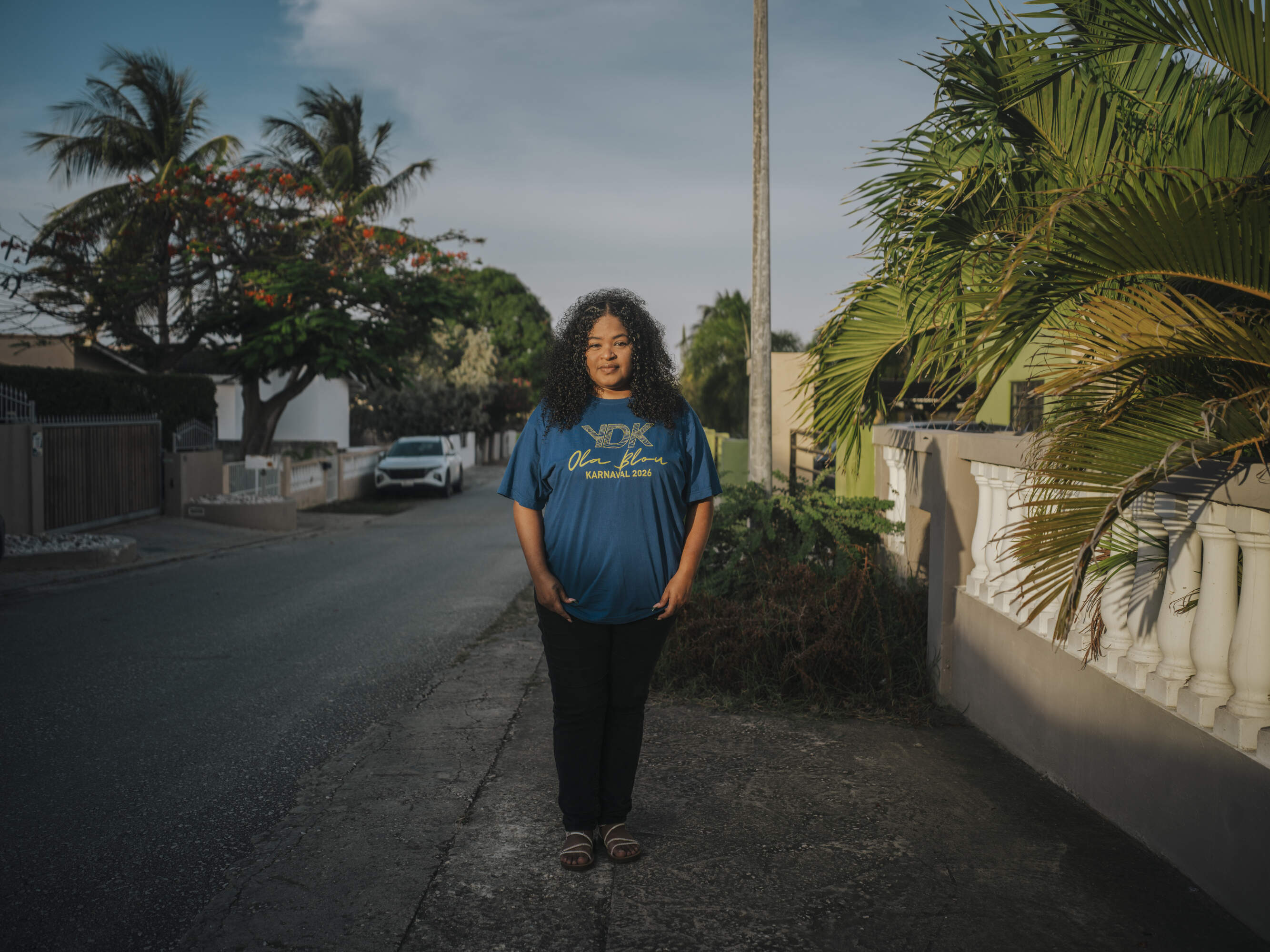
Stephanie is a member if the island's largest supporters' club and never misses a game played by the national team. Her son is currently trialing for a club in the Netherlands, chasing a path so many Curacaoan footballers have taken before.
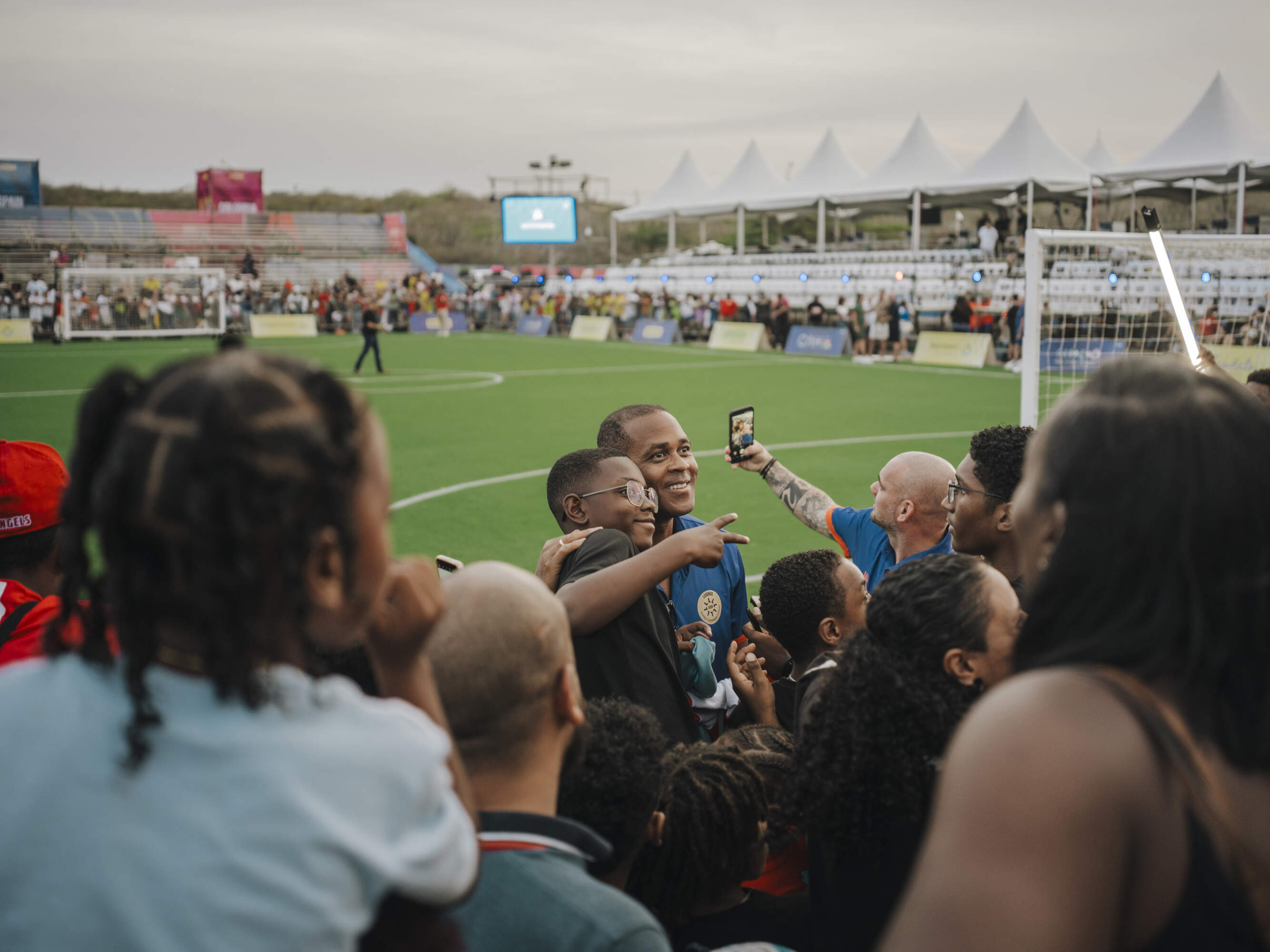
Retired football player Patrick Kluivert, whose mother is from Curacao, takes a selfie with a fan at a 'Legend's Tournament'. Regarding the island's diaspora he says: 'It's a chicken and egg problem. Without Holland, Curacao would never play at a World Cup. But the best players will always end up playing for Holland.'
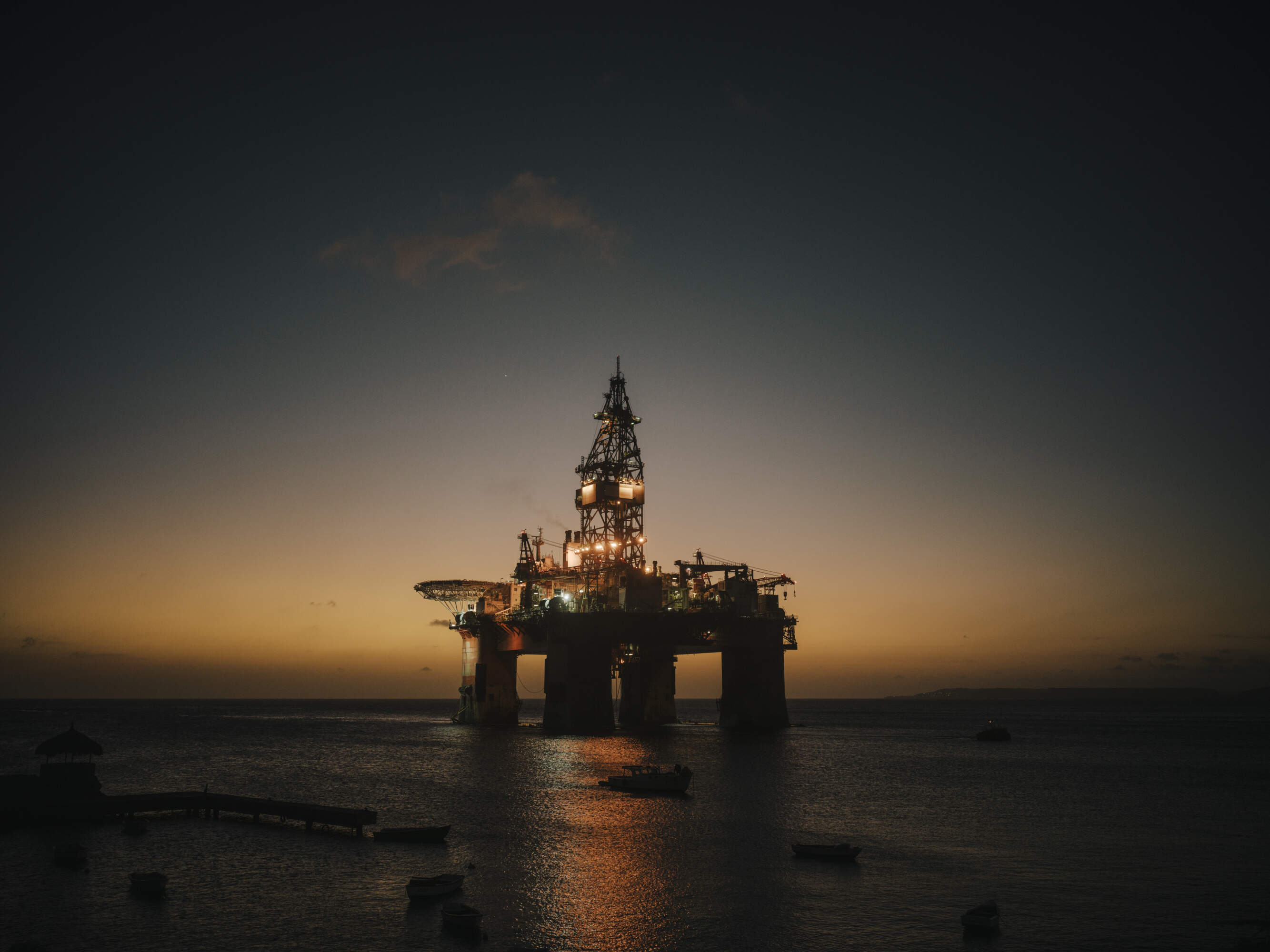
Curaçao. The drilling platfform Independencia 2 off the coast of Curaçao. In 1918, Royal Dutch Shell built waht was then the largest refinery in the world here. In 2019 it closed. Thousdands of jobe disappeared. Whether it will every reopen remains unanswered.
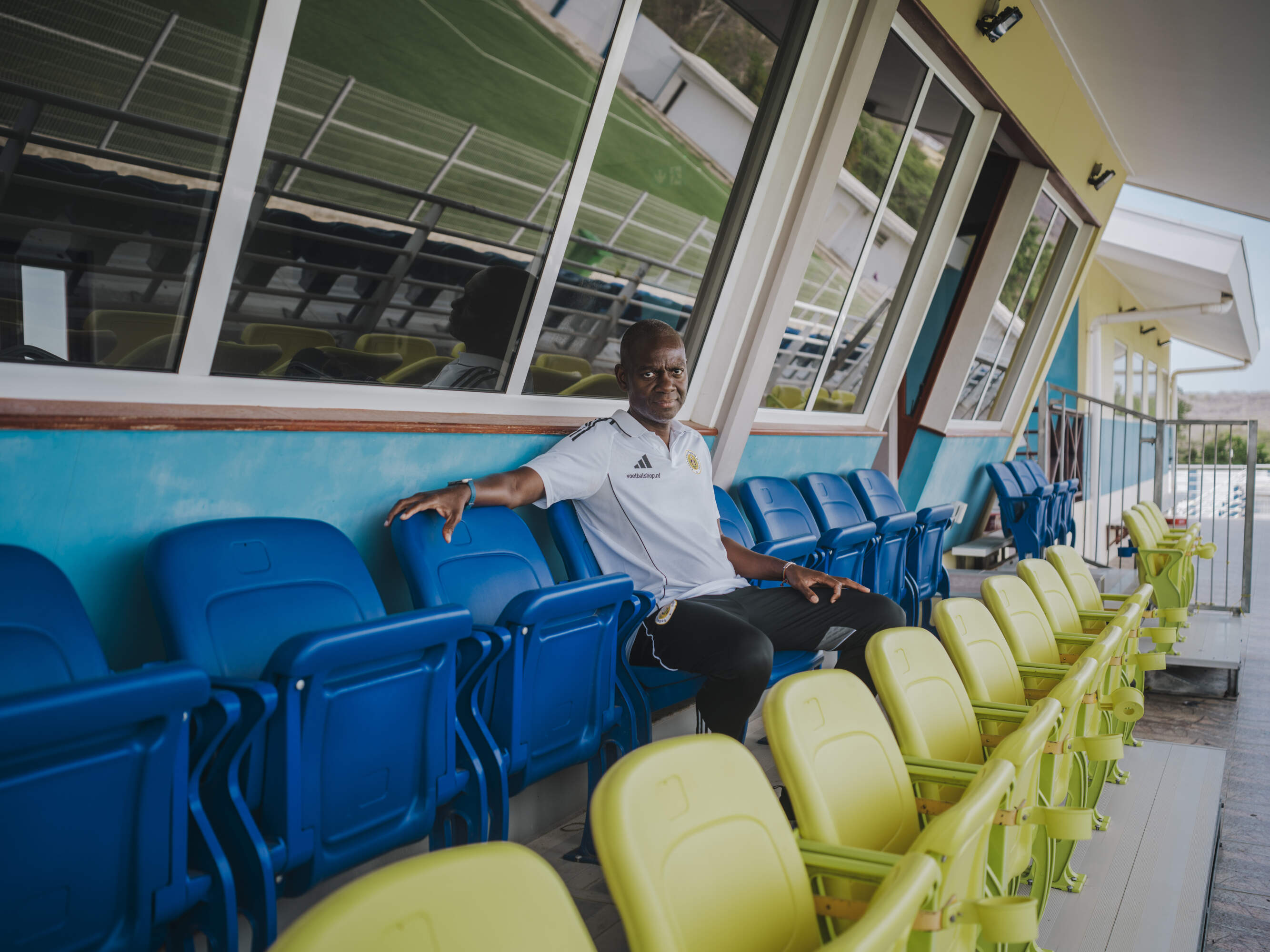
Gilbert Martina, president of the Curacao Football Federation and former CEO of the island's hospital, who recently published a book titled 'Healthy Minds, Healthy Nation' in which he argues that Curacao needs to heal. People must understand what colonisation did to them, but also learn to let go. He wants a national team built not around money, but around people. Asked: 'Does FIFA work the same way?' Maring laughs. That question, he says, is better directed at Gianni Infantino.
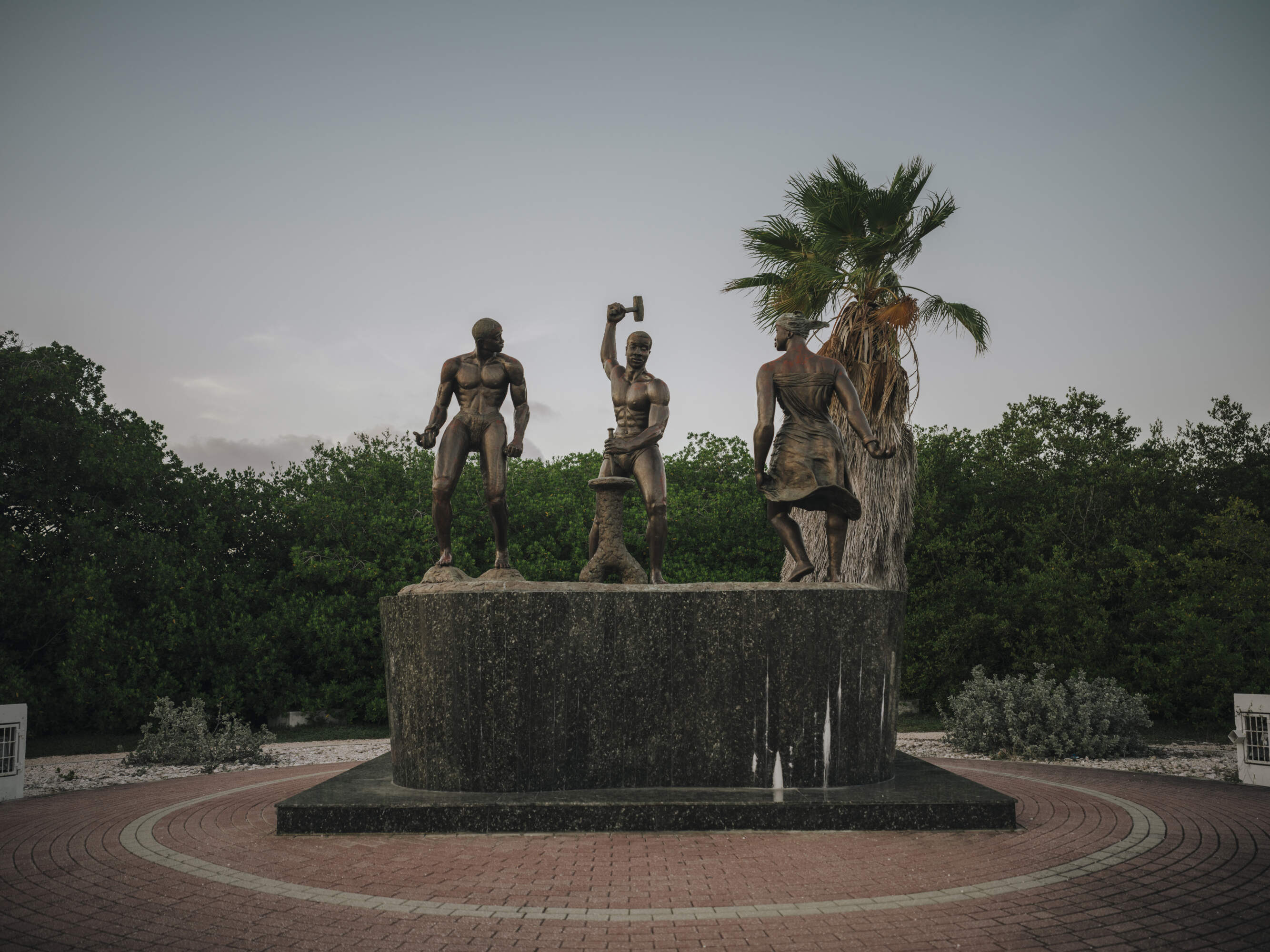
A monument to Tula 'Rigaud' who led the Curacao Slave Revolt of 1795.
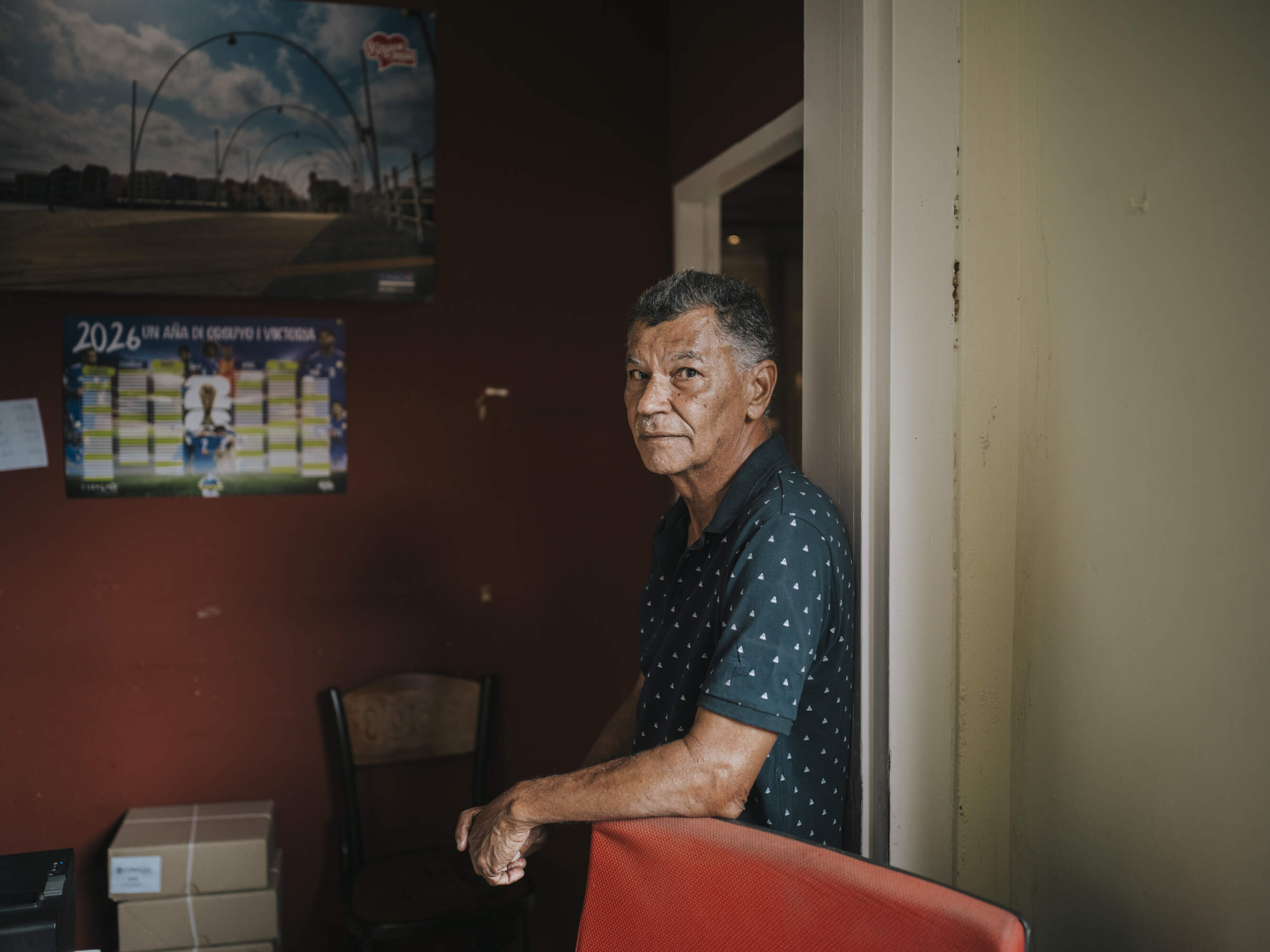
Edgar works at the Kura Hulanda museum which is built on the grounds of a former slave market. Three of his four children live in the Netherlands. He has tickets for Curacao's opening World Cup match against Germany, but his family is afraid to travel to America amidst the conflict between the US and Iran. He says: 'If Curacao plays well the Dutch will say: 'That is our team'. If Curacao plays badly they will say: 'That team belongs somewhere else.'
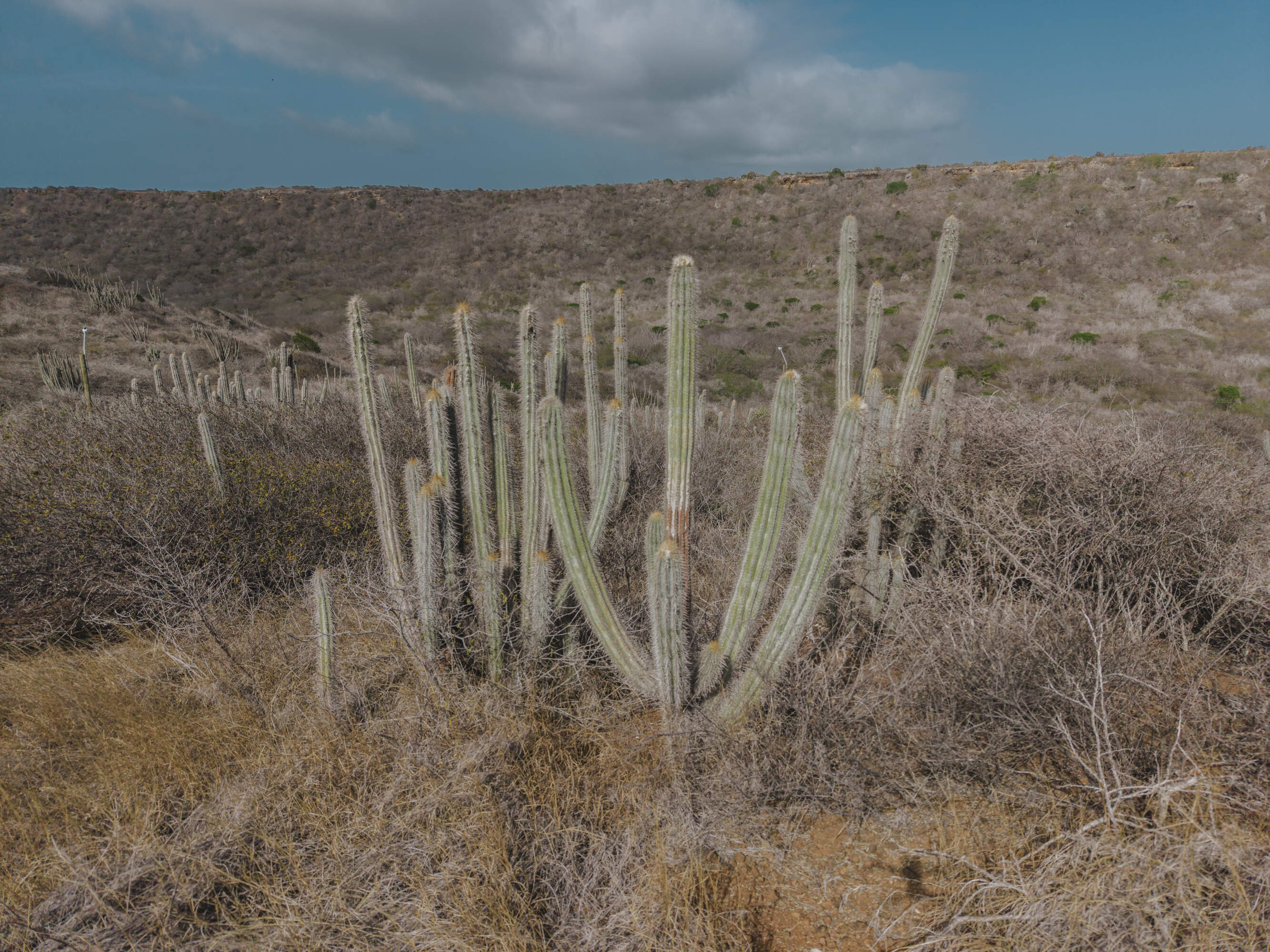
Curaçao. Landscape on the island's interior.
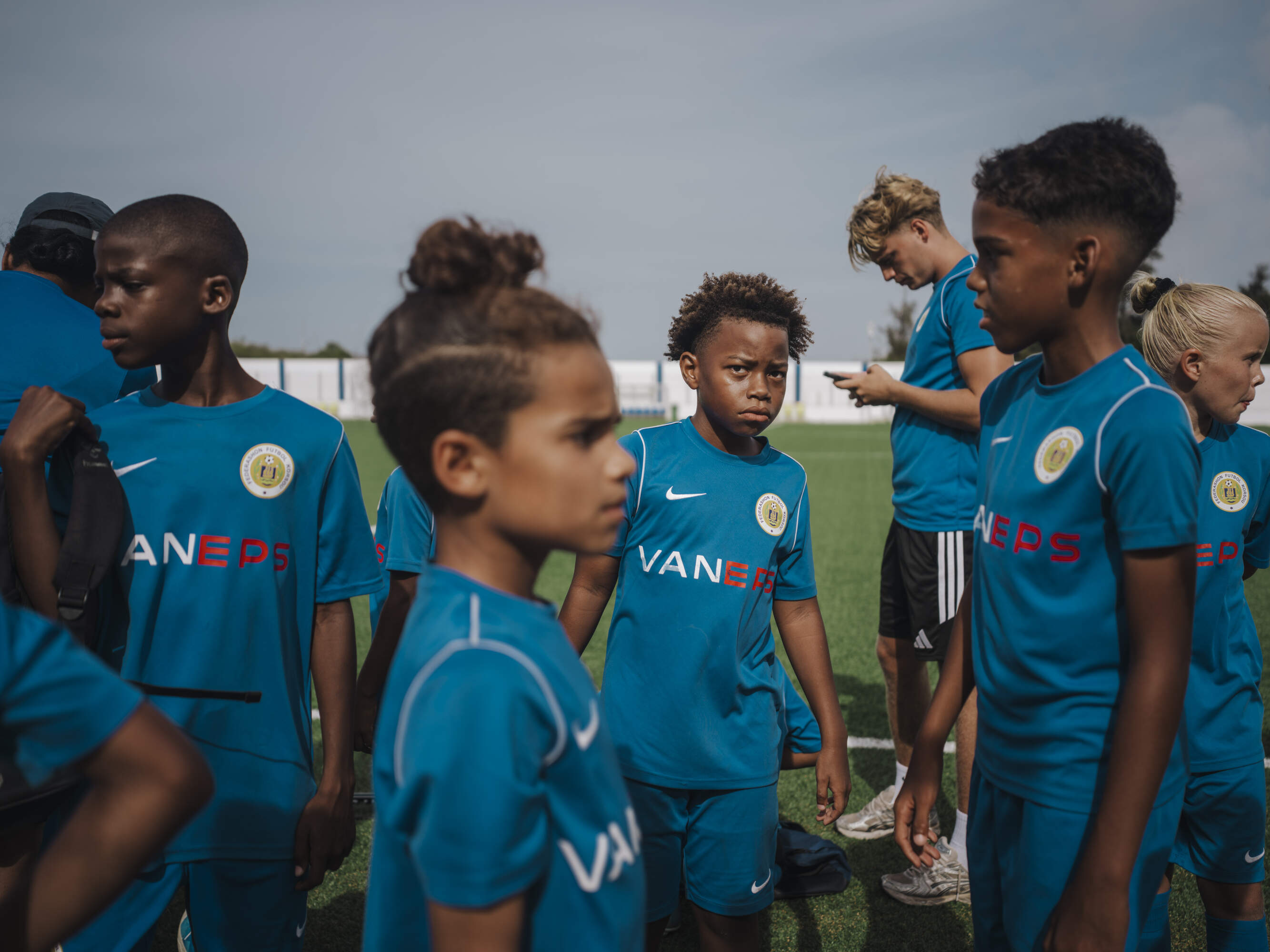
Wilemstadt, Curaçao. Youth training of the national team. Those who are god enough on the iusland will sooner or later move to the Netherlands where the academies, the leagues and the opportunities are. Almost every player in teh currenbt World Cup squqd has taken that path.
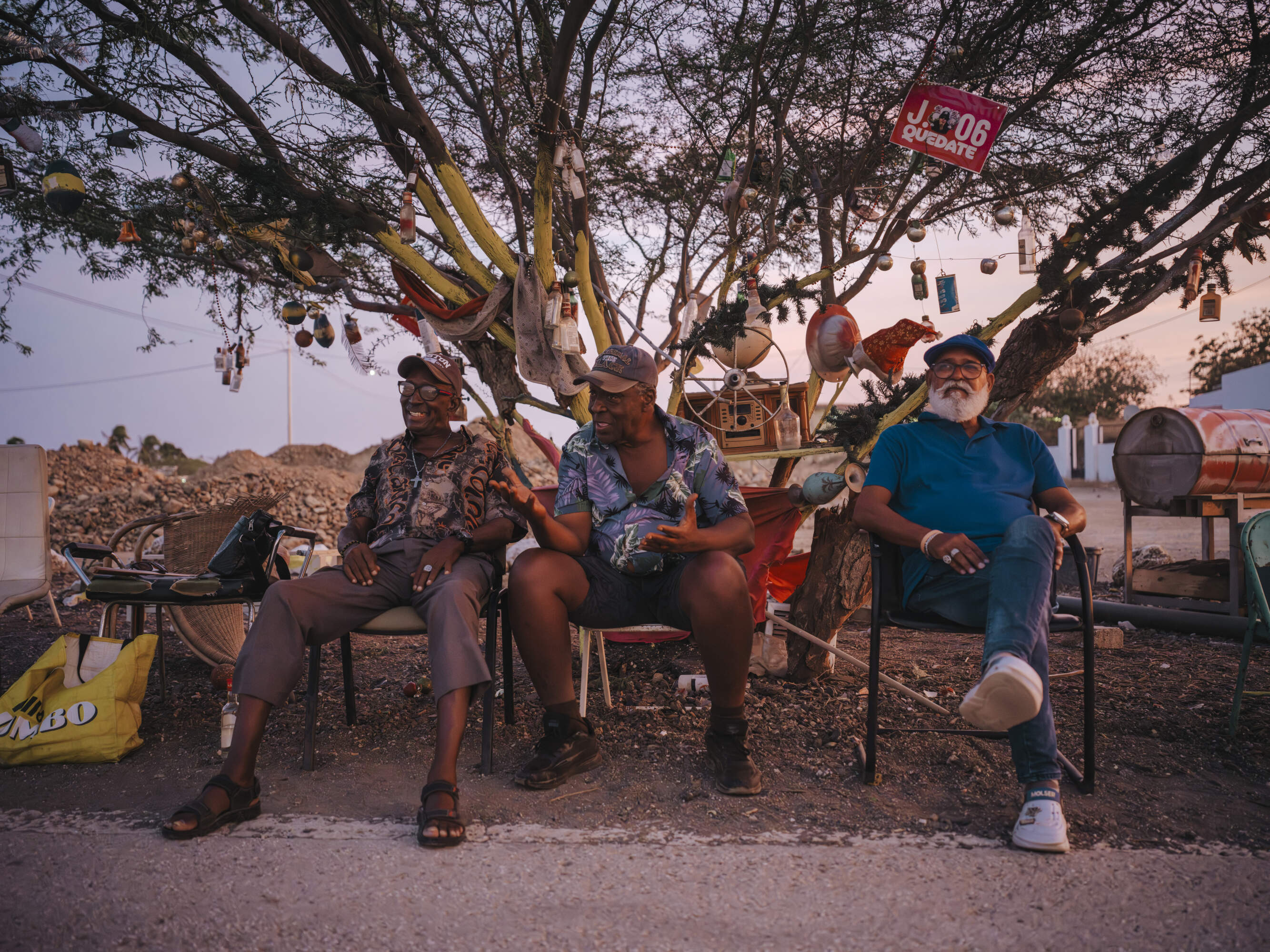
Three men relax under the shade of a tree at the roadside on the island where the day has no fixed ending. The men spend the evening where they always spend it, under the same tree, on the same street.
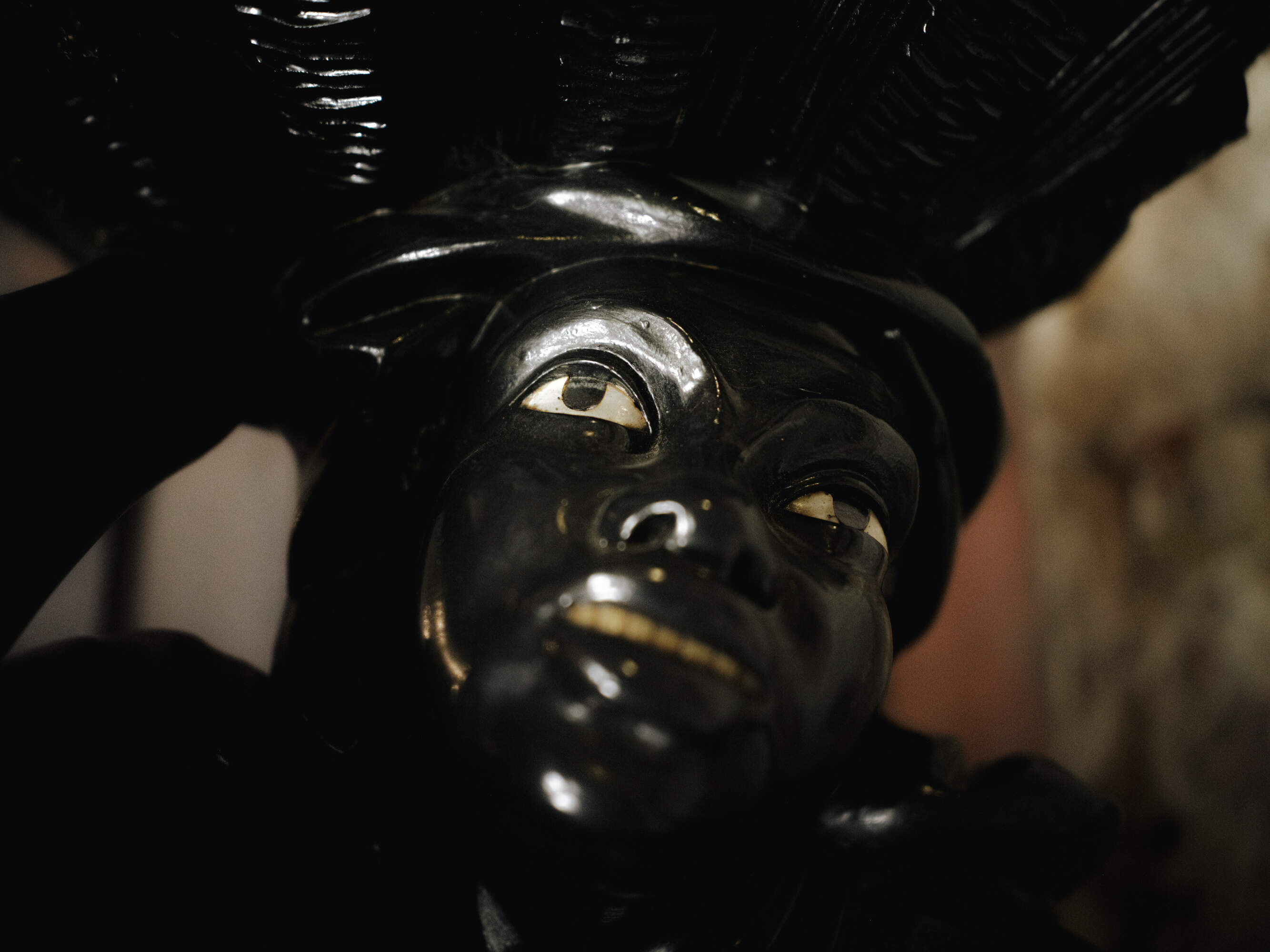
A colonial-era statue of an African slave. Between 1650 and 1750 the Dutch shipped an estimated 400,000 people from West Africa to Curacao, which was then one of the largest slave trading hubs in the western hemisphere. The island was not a plantation economy but a trading post where enslaved people were held, to be sold and shipped on to the Americas.
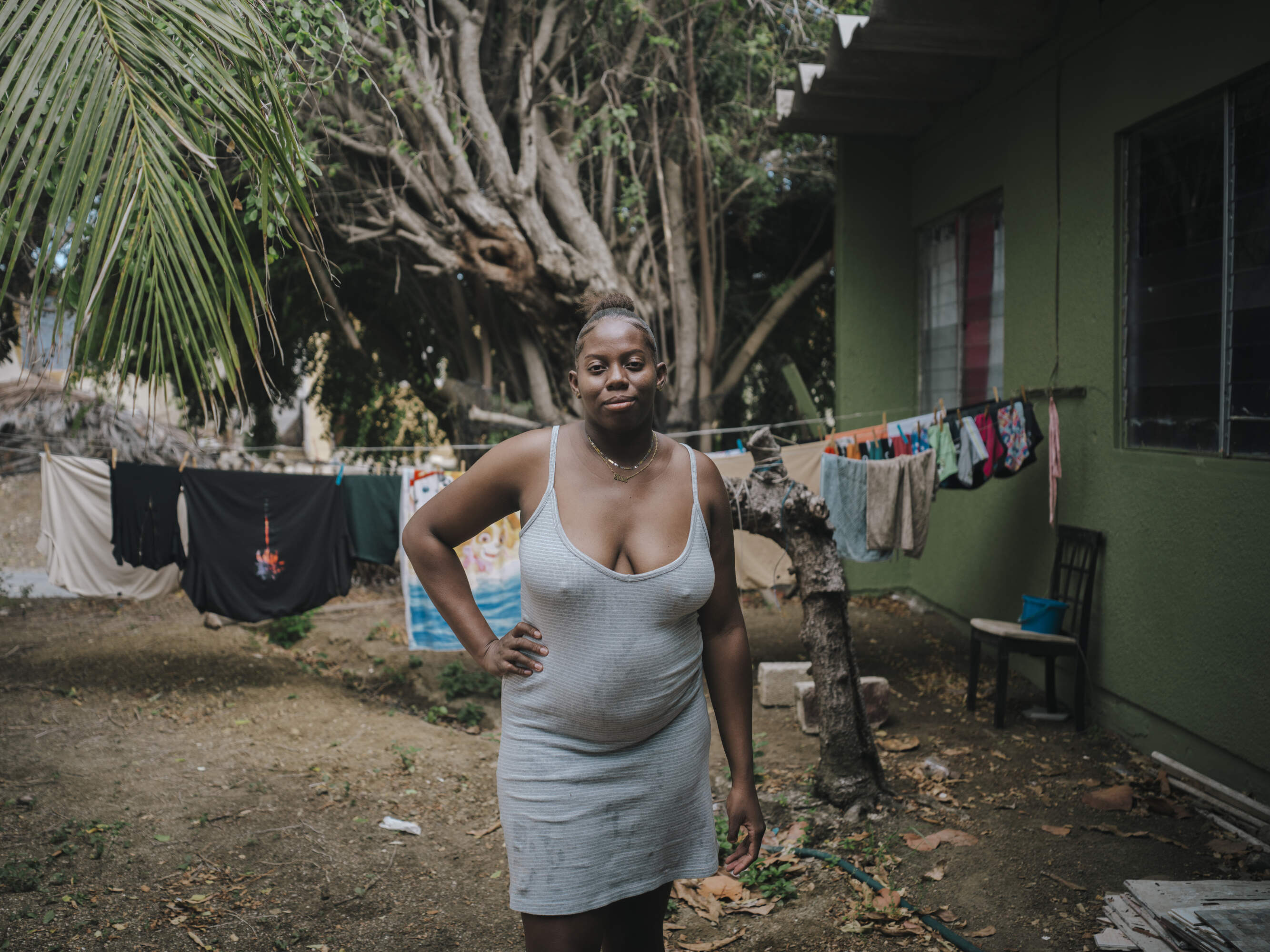
Milanshela has two chiuldren and says she is barely making ends meet. She lives in one of Curacao's poorest neighbourhoods, where the cost of living weighs heavily. She is saving to one day move to the Netherlands with her family. 'People need to find more solidarity with each other', she says.
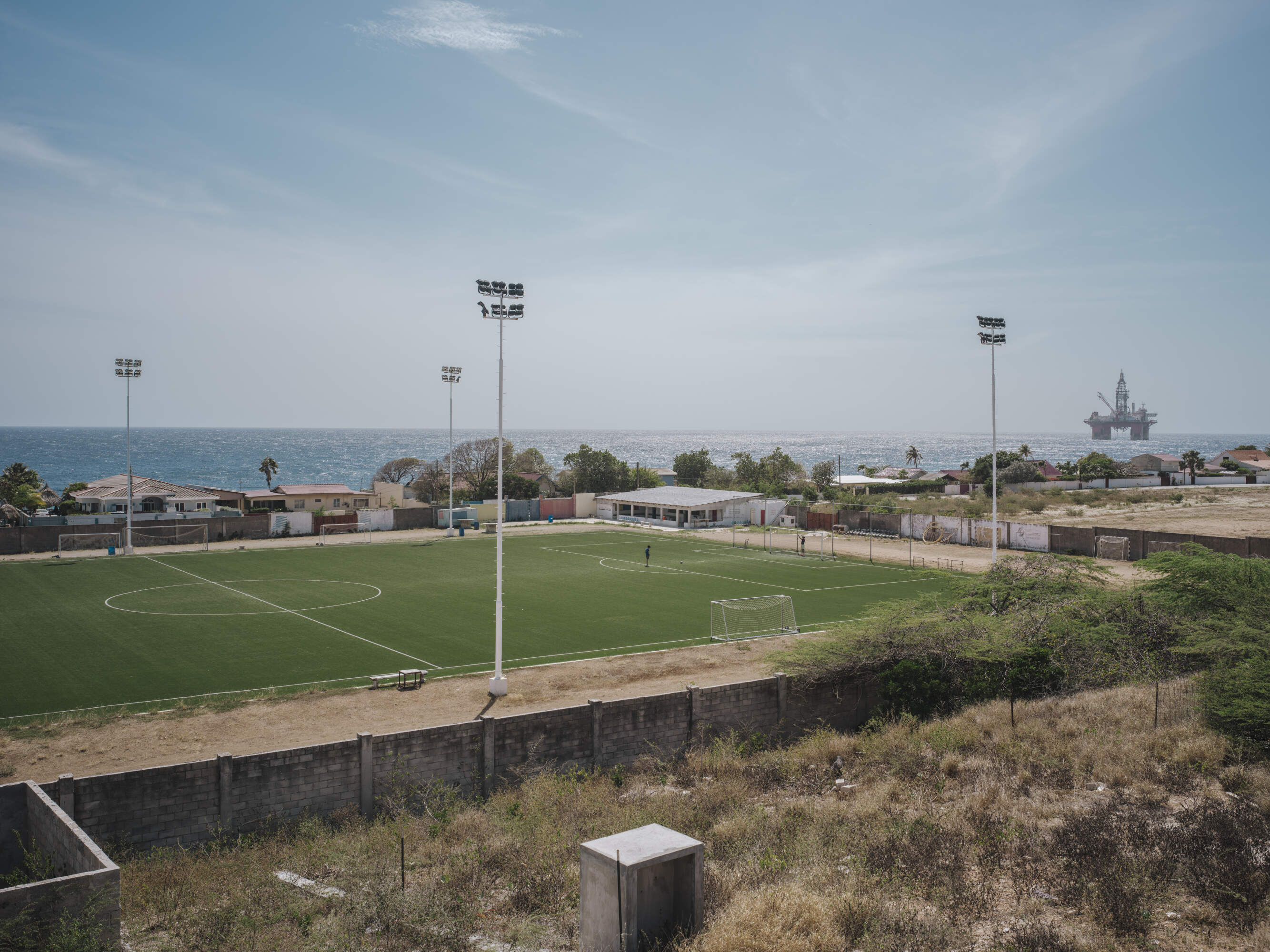
Football pitch of Jong Colombia in Sint Michiel. The local league, the Promé Divishon, has existed since 1921 and has faced structural challenges in recent years. It is semi- professional: played after work, in the evenings, on weekends. Football as everyday life.
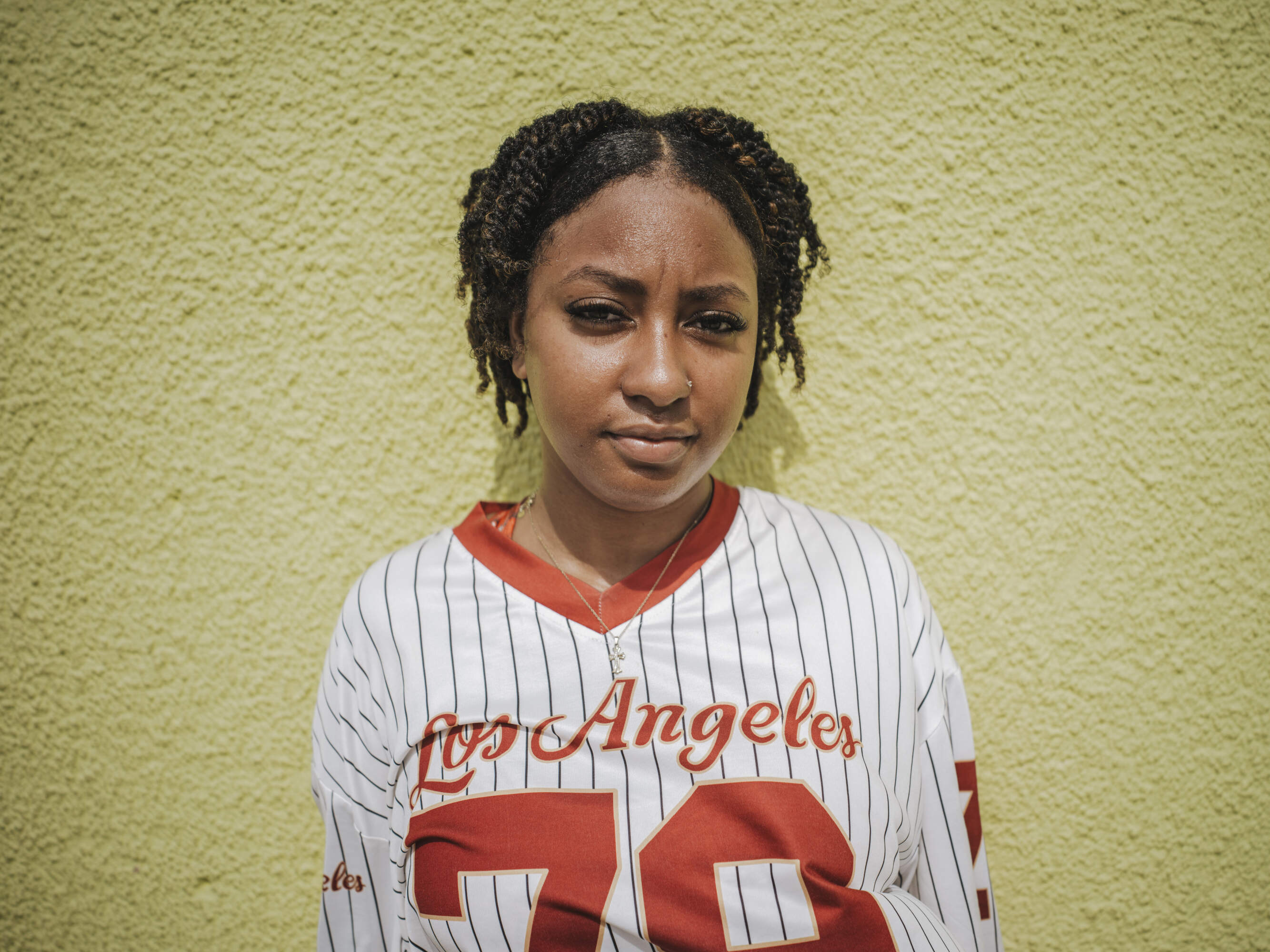
Kim was born in Curacao but grew up in the Netherlands. Her parents, both from the Dominican Republic, left the island when she was one year old, in search of better education. At school she was often the only person of colour and was bullied, in November 2025, aged 19, she retuned to the island for the first time with her mother and decided to stay.
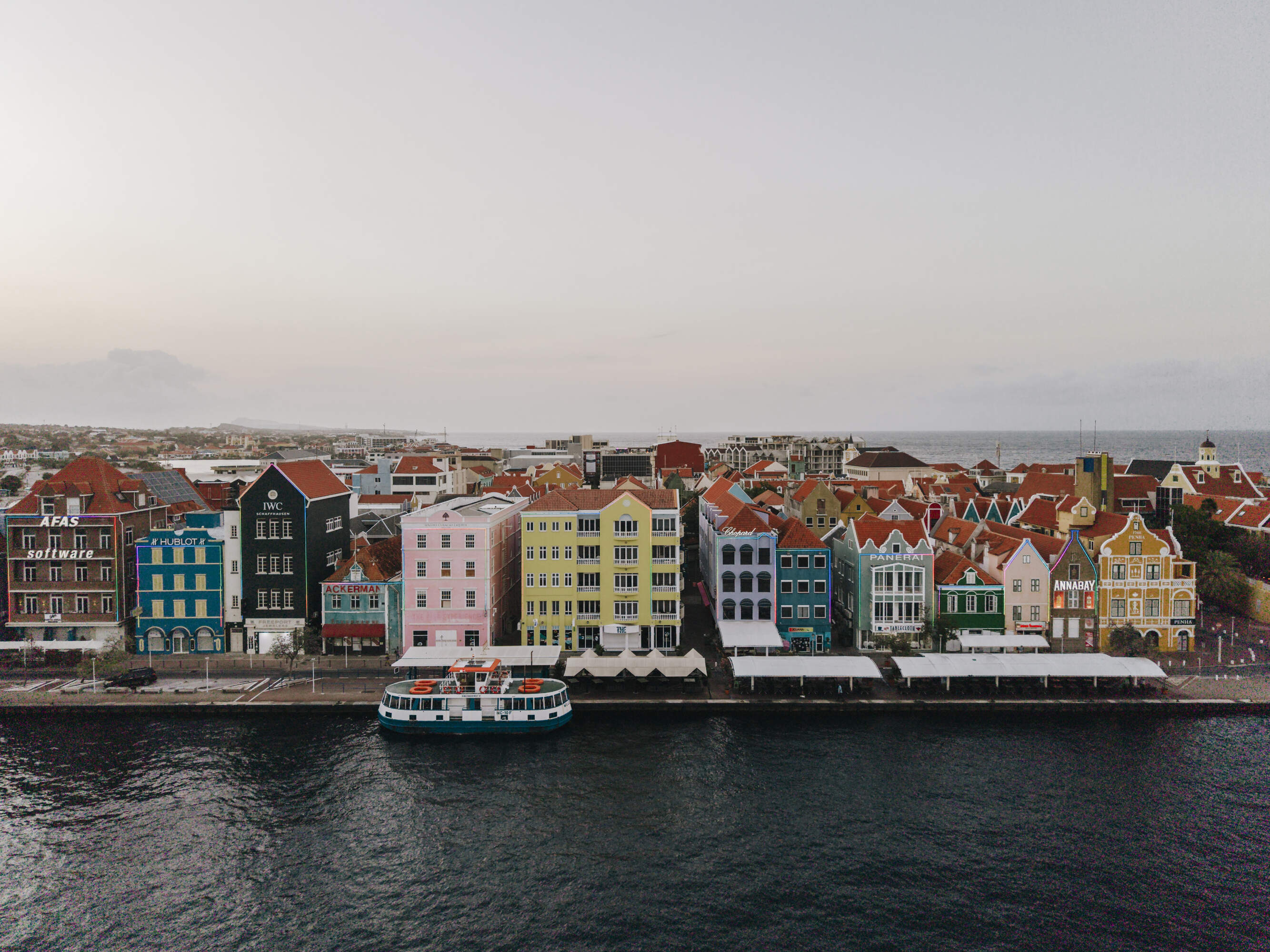
Capital of the island and UNESCO World Heritage site, the colourful colonial-era facades of the Handelskade reflect in the waters of Sint Anna Bay (Sint Annabaai). Built by Dutch merchants, financed through the slave trade and oil, is today the most recognisable postcard image in the Dutch Caribbean.
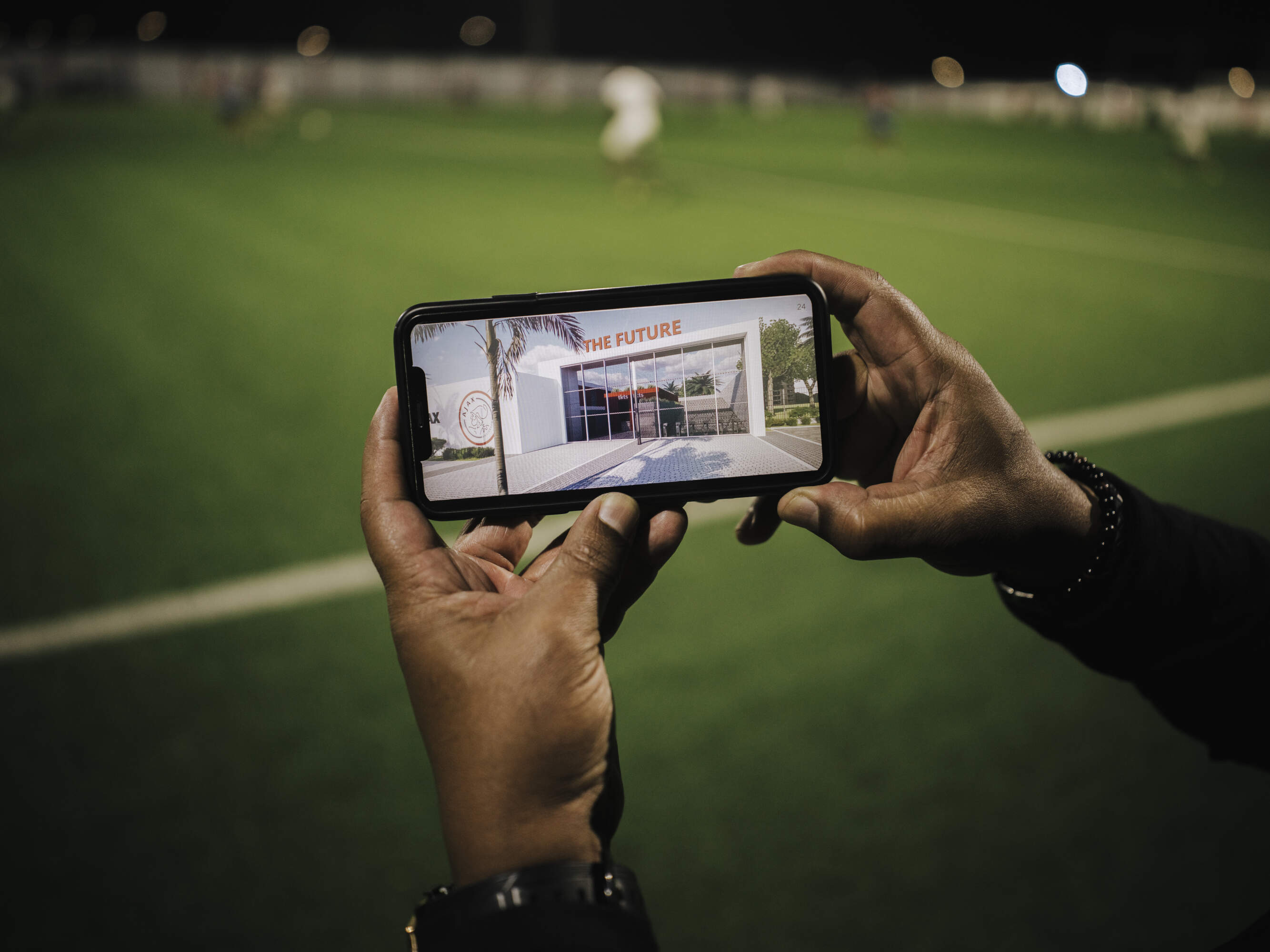
A visualisation of the football campus top Dutch side Ajax planned to establish in Curacao. However, Ajax's intention was not to develop local talent, but to bring young players from across the region to the island to train and send only the best on to the Netherlands. FIFA intervened and shut the project down amid allegations of child trafficking.
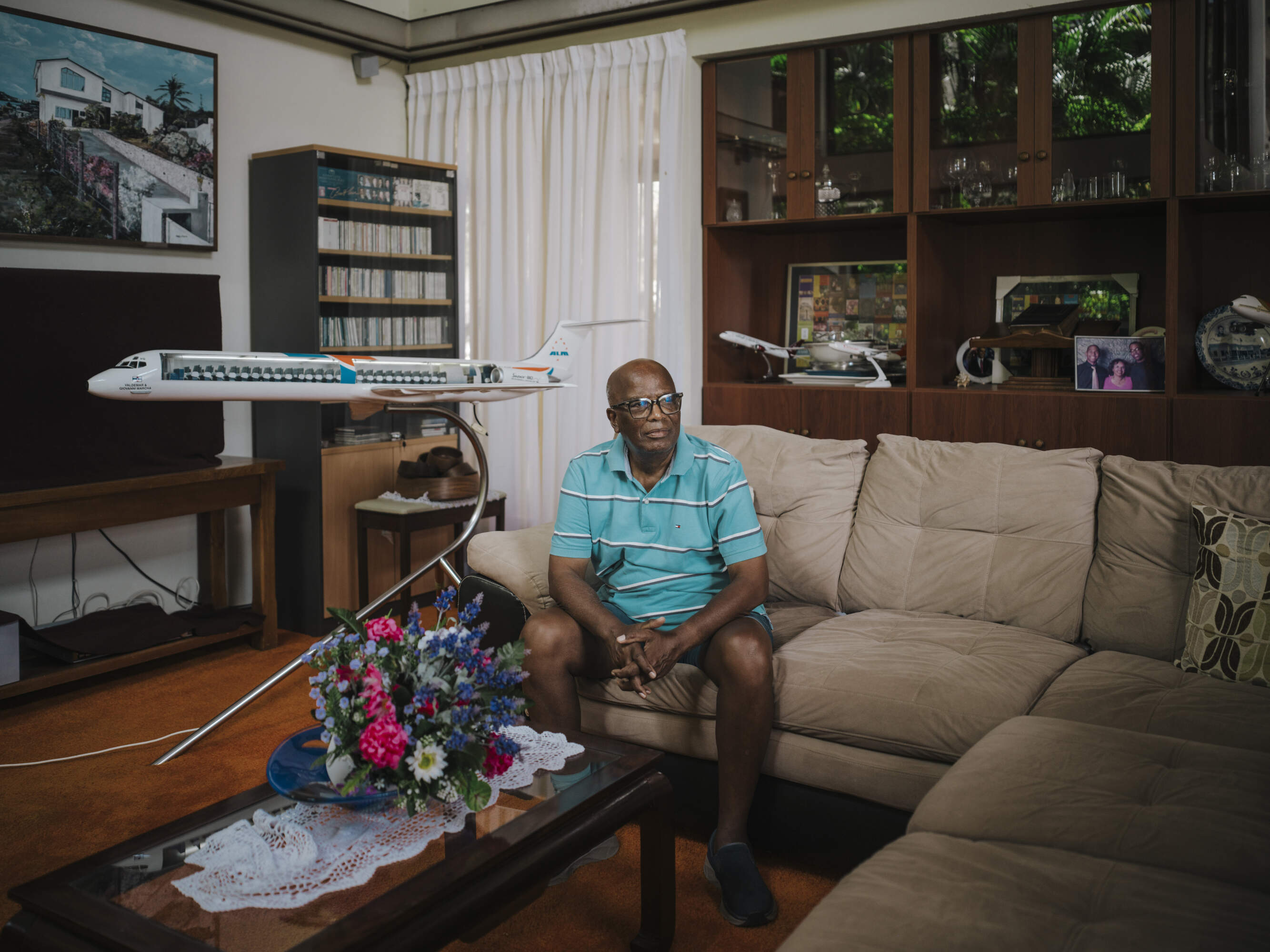
Valdemar Marcha, who has written a book about 100 years of football in Curacao and was president of Antillean Airlines. On the World Cup euporia he says: 'Blue Wave, Blue Wave. Everyone talks about it. But what comes after the wave? What really changes for the people on this island?'
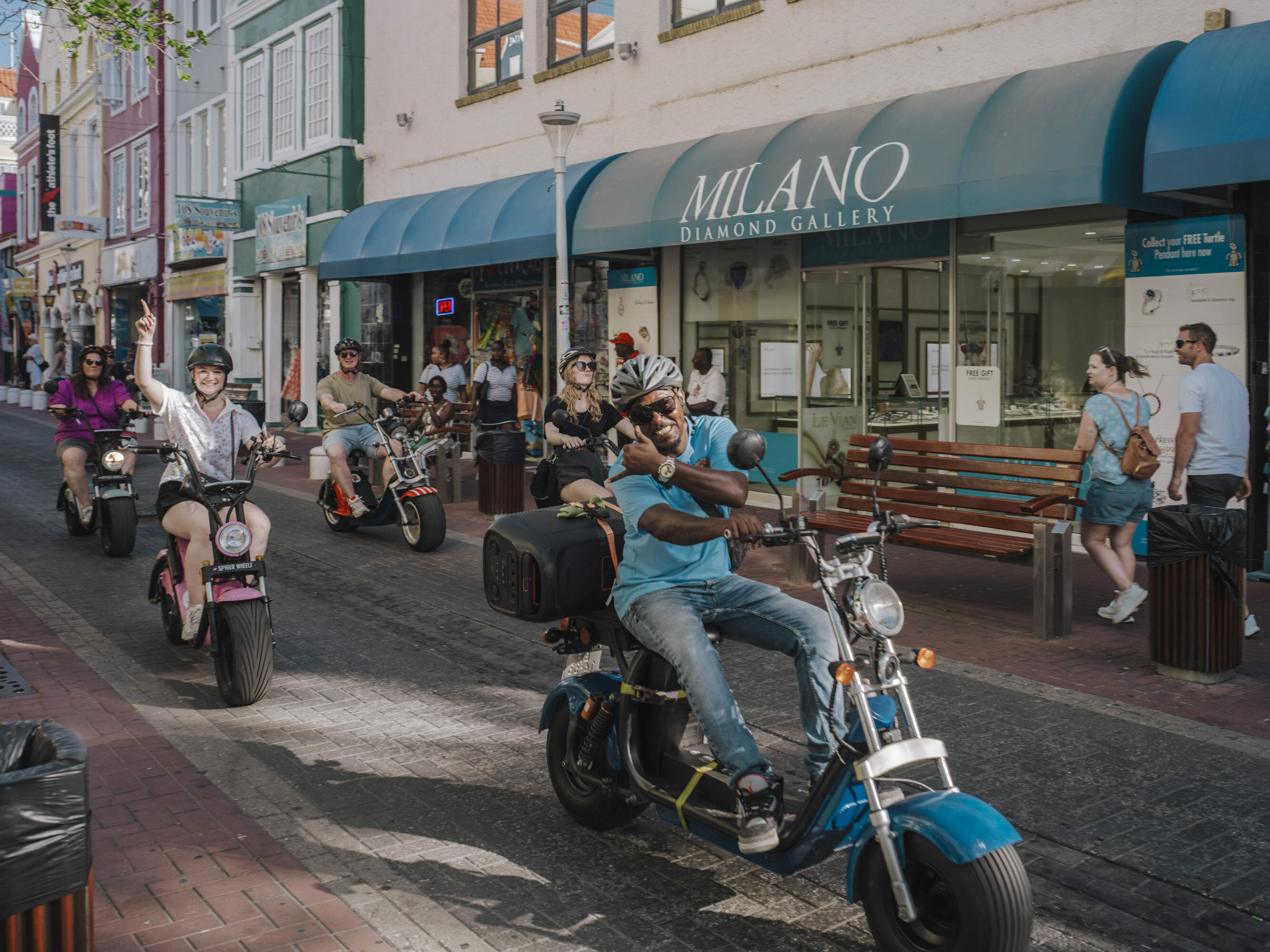
Tourist drive electric scooters through the city centre. Tourism accounts for 48% of Curacao's GDP, long surpassing the oil refinery that closed in 2018. The largest group of visitors comes from the Netherlands.
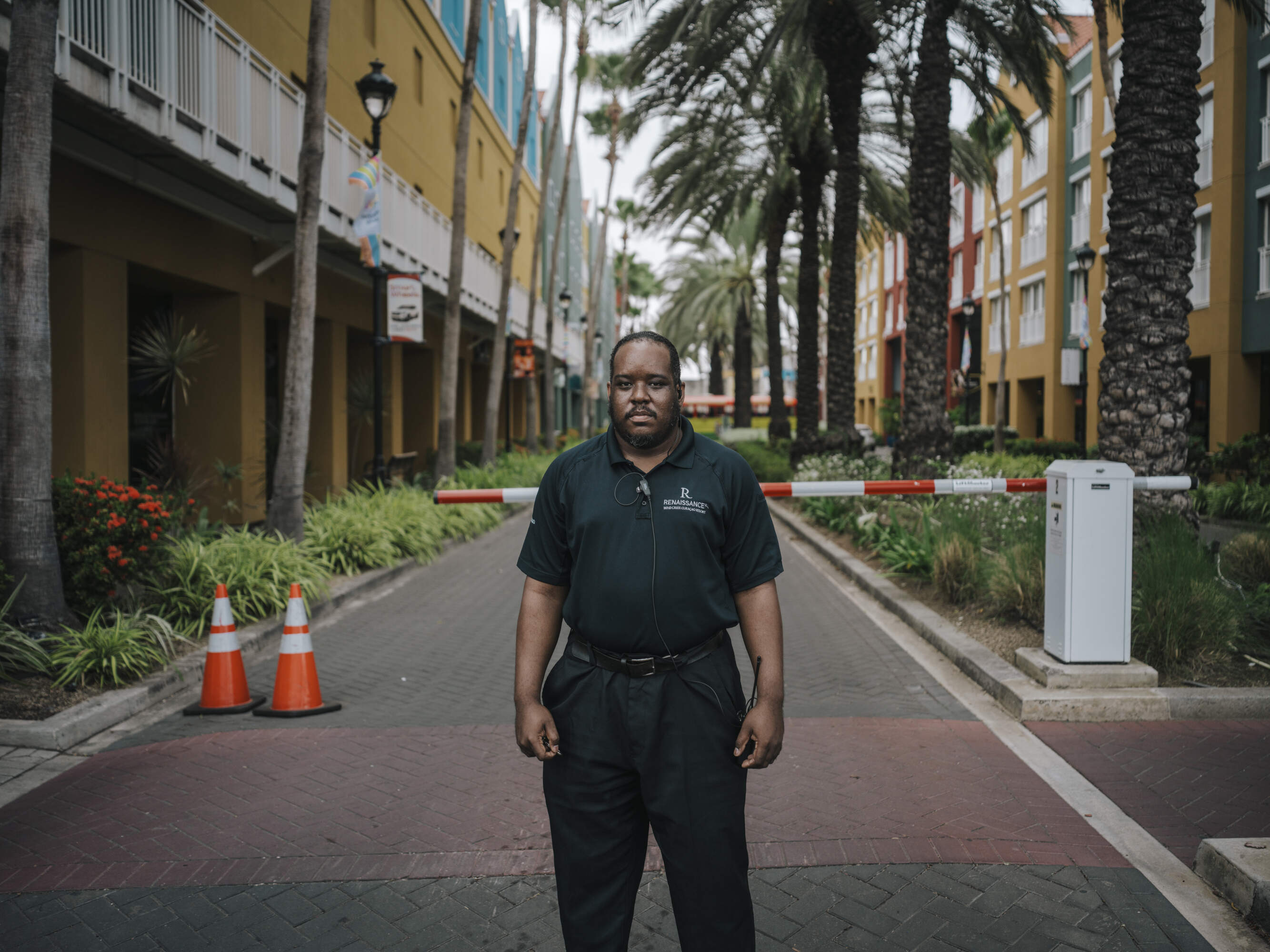
Arson, a security guard, who says he is a huge football fan. Of all teams he says he is a Germany supporter and Curacao's first World Cup match will be against Germany. He will be cheering for Curacao but watching at home as he sometimes gets loud. Regarding the island's colonial history, he says: 'That was a long time ago, it doesn't bother me. My father might see it differently'.
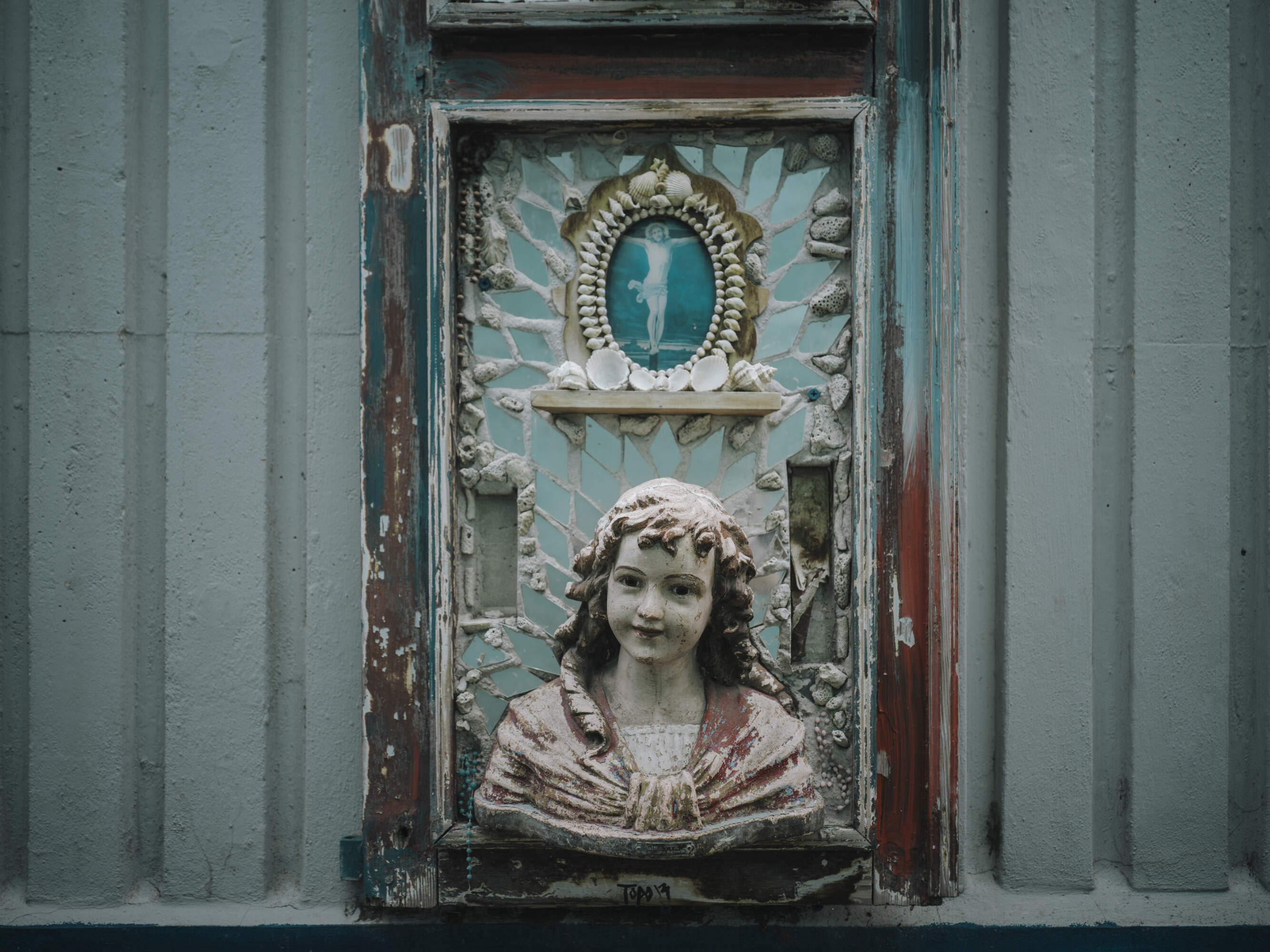
A Catholic wall shrine featuring an bust of a 'European' girl and decorated with shells.
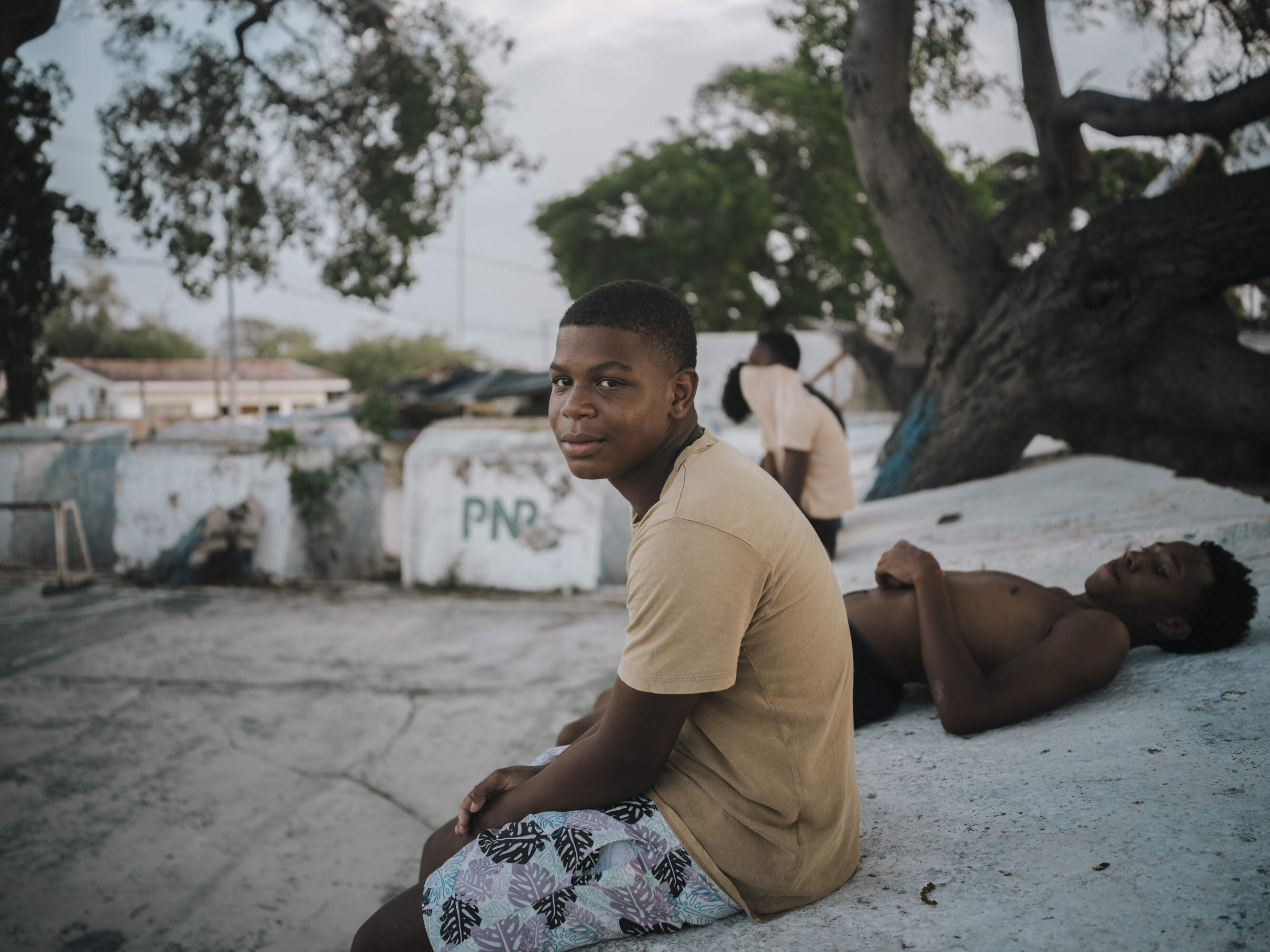
Children rest while playing football on a hard court in Boka Sint Michiel, a coastal village west of the capital. Once one of the island's largest plantations, today a neighbourhood where footballers dream of a future that almost always runs through the Netherlands first.
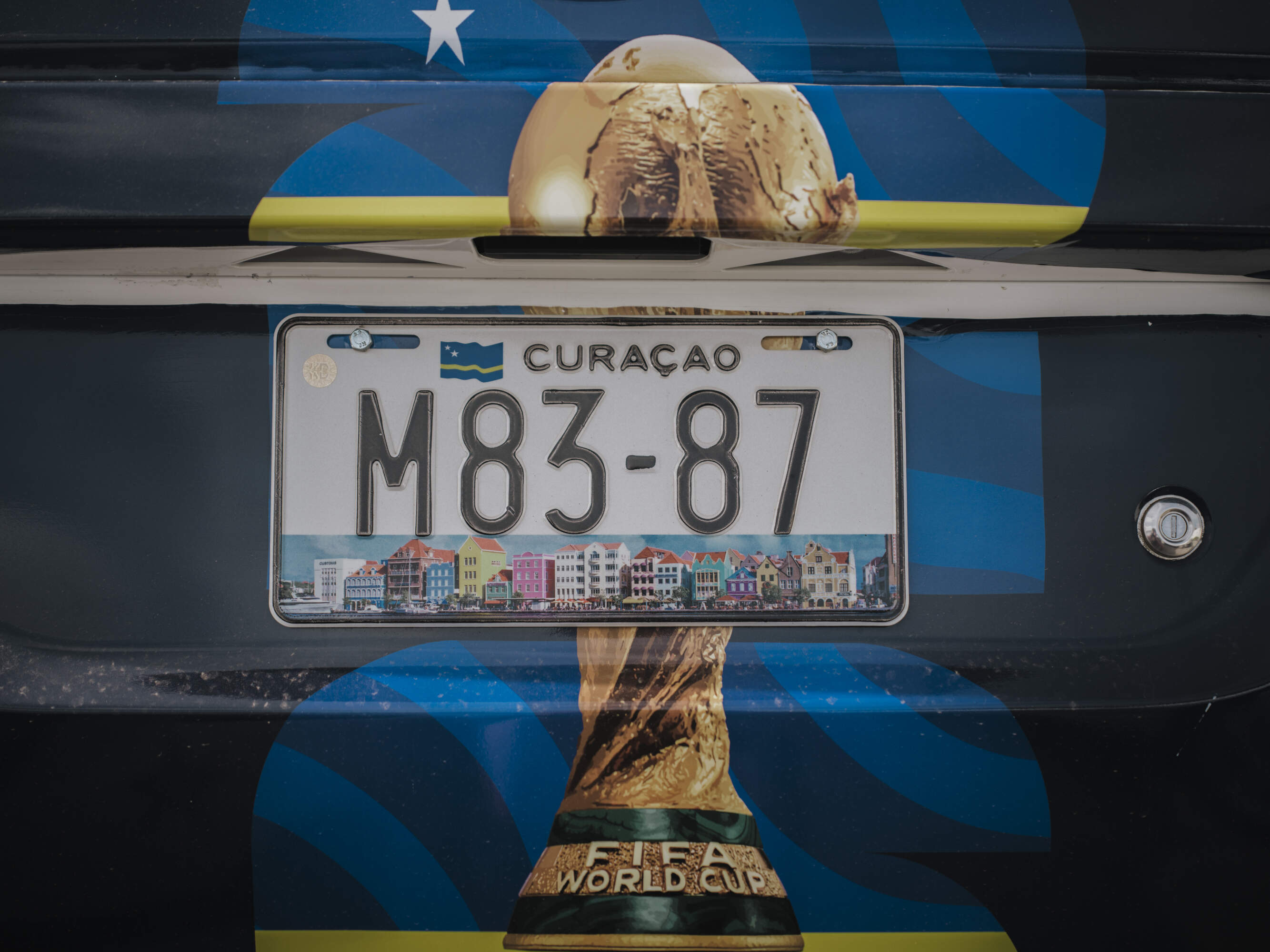
A vehicle's number plate featuring the national flag and iconic Handelskade seafront fixed over an image of the Jules Rimet trophy.